
1 Corinthians 9:3
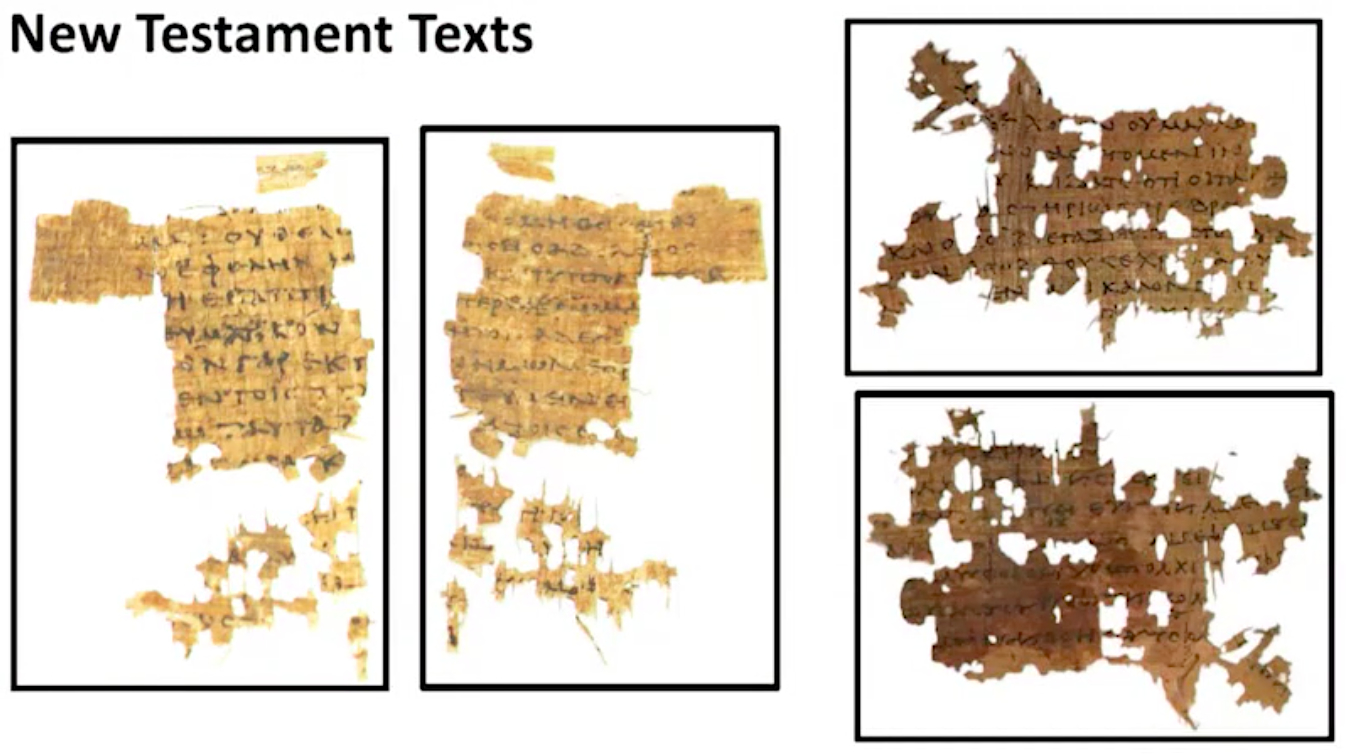
Papyrus 129 (Scan 1)
This manuscript contains parts of 1 Corinthians. It is notable not only for its early date but also for its recent history; in 2019, it was revealed that a fragment of it had been sold without authorization to the Museum of the Bible by Professor Dirk Obbink, though it has since been returned to the Egypt Exploration Society in Oxford.
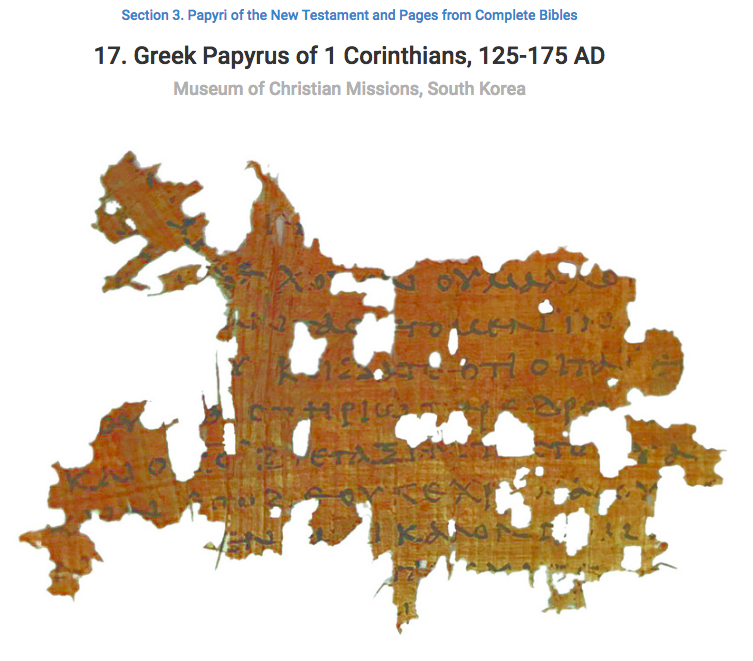
Papyrus 129 (Scan 2)
This manuscript contains parts of 1 Corinthians. It is notable not only for its early date but also for its recent history; in 2019, it was revealed that a fragment of it had been sold without authorization to the Museum of the Bible by Professor Dirk Obbink, though it has since been returned to the Egypt Exploration Society in Oxford.
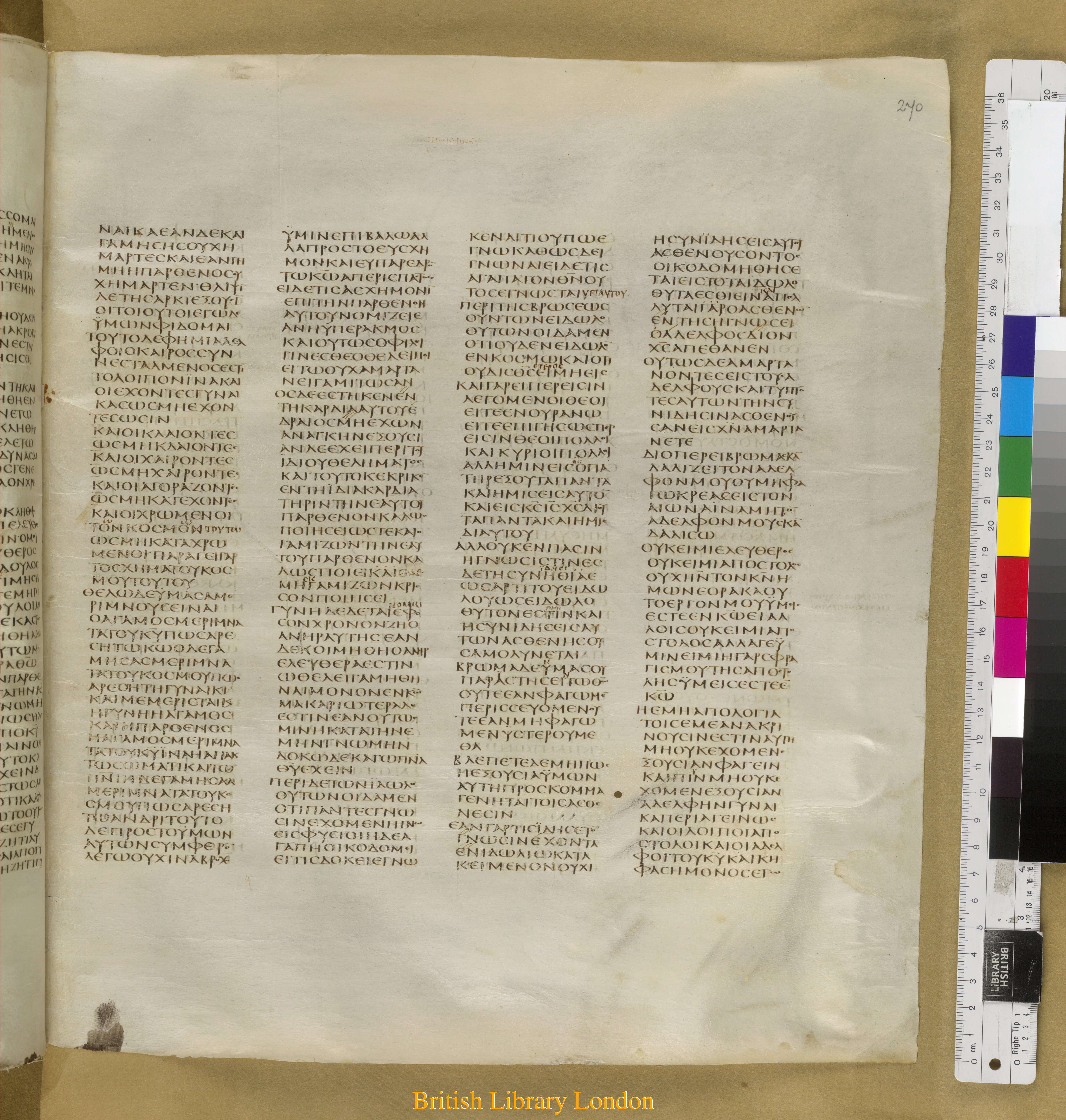
Codex Sinaiticus
It is one of the four great uncial codices and contains the oldest complete copy of the New Testament. Discovered by Constantin von Tischendorf in 1844, it remains one of the most important Greek texts for biblical scholarship.
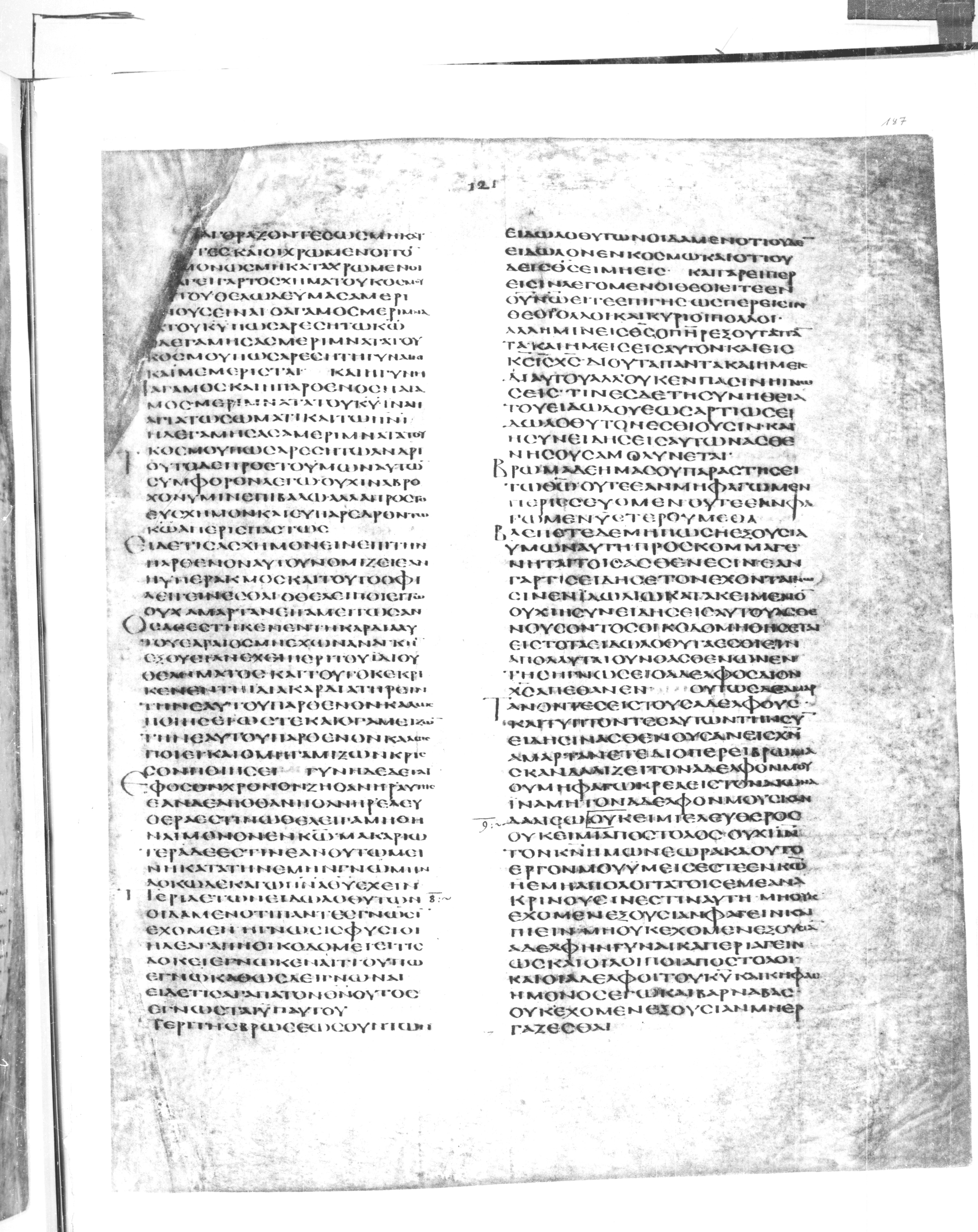
Codex Alexandrinus
Codex Alexandrinus is one of the four Great uncial codices and among the earliest and most complete manuscripts of the Bible. It is the oldest manuscript to use larger letters to indicate new sections, and it was the first manuscript of great importance and antiquity to be extensively used by textual critics.
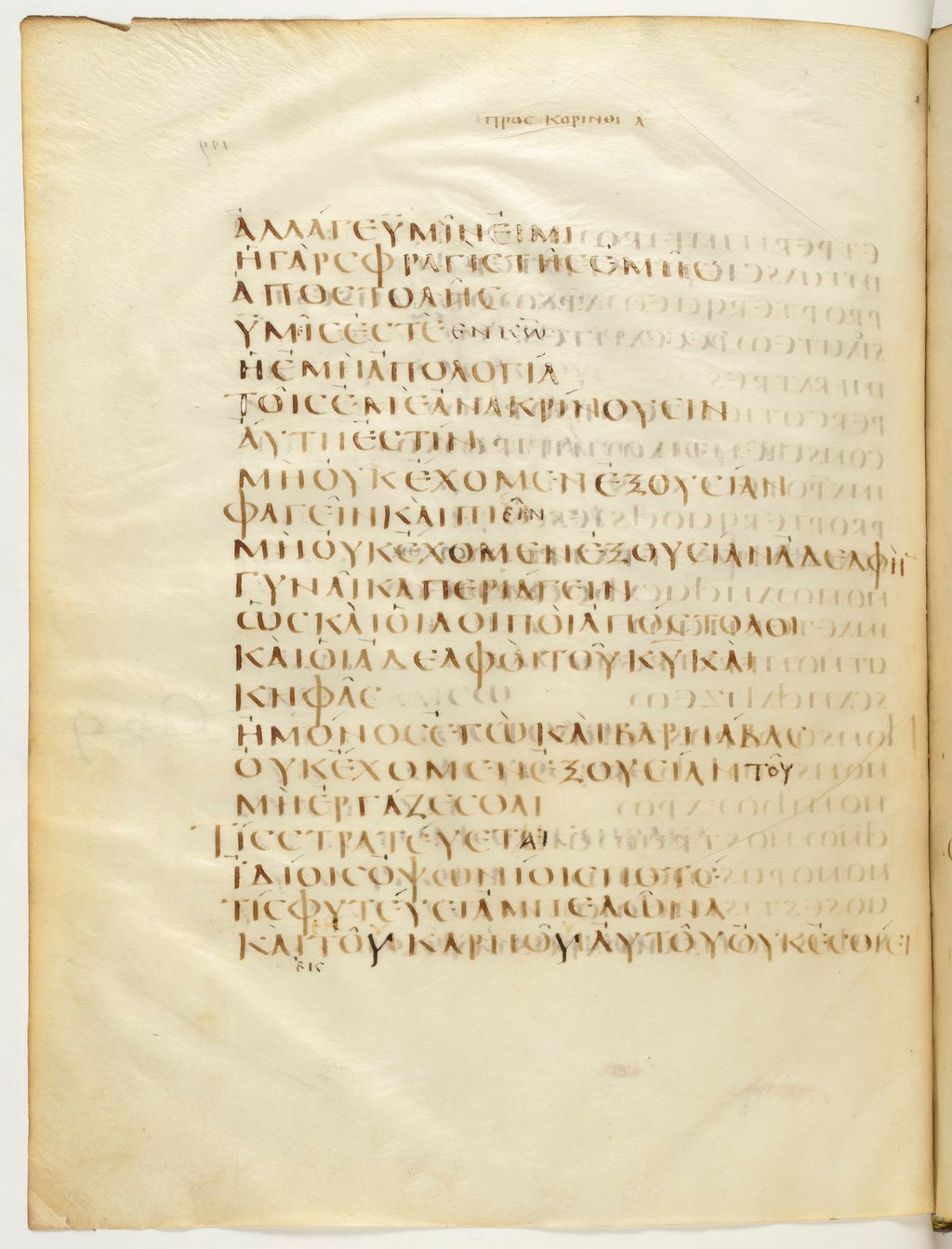
Codex Claromontanus (Scan 1)
Codex Claromontanus is a 5th or 6th-century Greek-Latin diglot manuscript containing the Pauline Epistles and Hebrews. It is notable for having Greek and Latin texts on facing pages and for containing an early stichometric catalogue of Old Testament books.
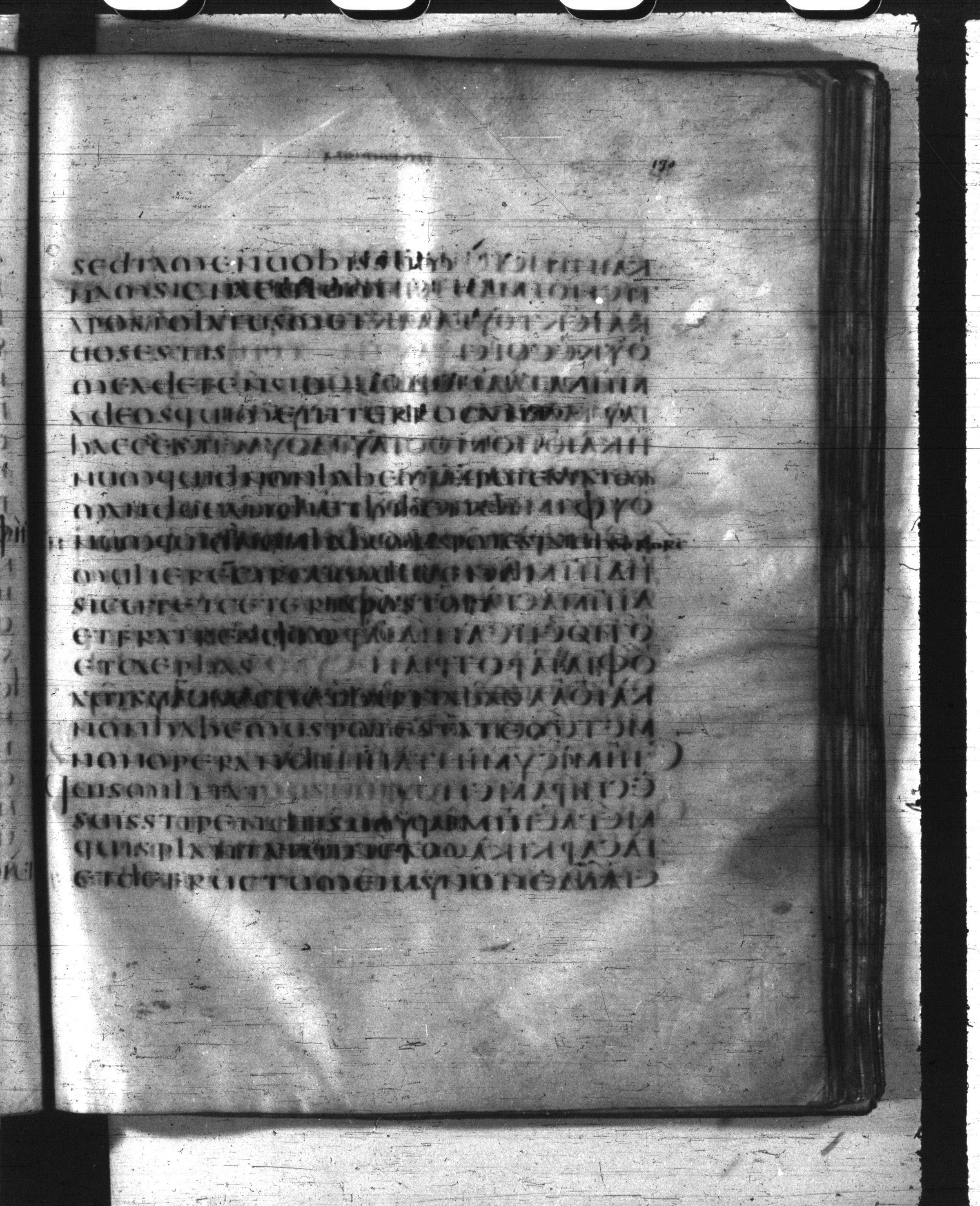
Codex Claromontanus (Scan 2)
Codex Claromontanus is a 5th or 6th-century Greek-Latin diglot manuscript containing the Pauline Epistles and Hebrews. It is notable for having Greek and Latin texts on facing pages and for containing an early stichometric catalogue of Old Testament books.
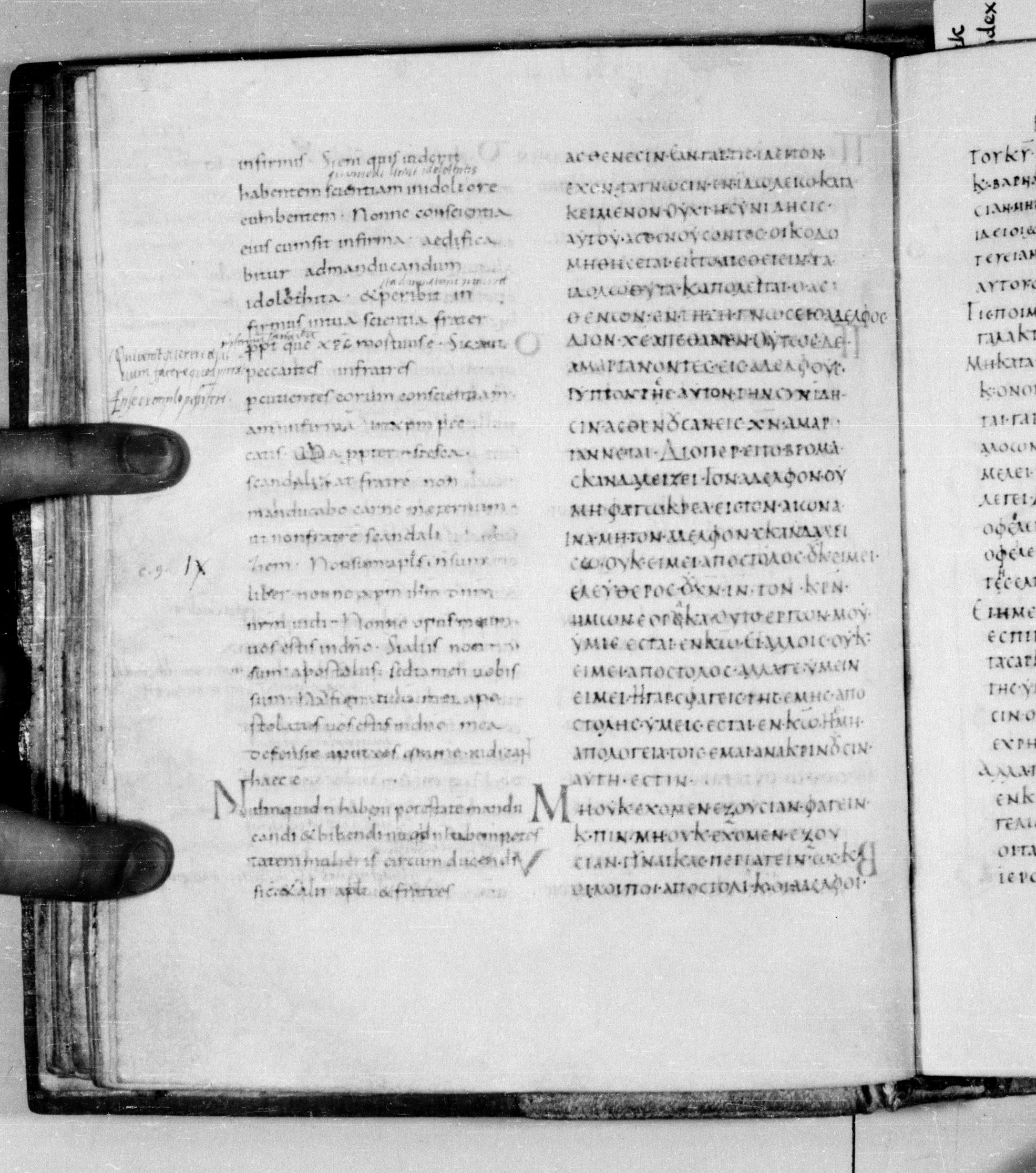
Codex Augiensis
Codex Augiensis is a 9th-century diglot uncial manuscript of the Pauline Epistles containing double parallel columns of Greek and Latin. It is noted for its strong textual relationship with Codex Boernerianus.
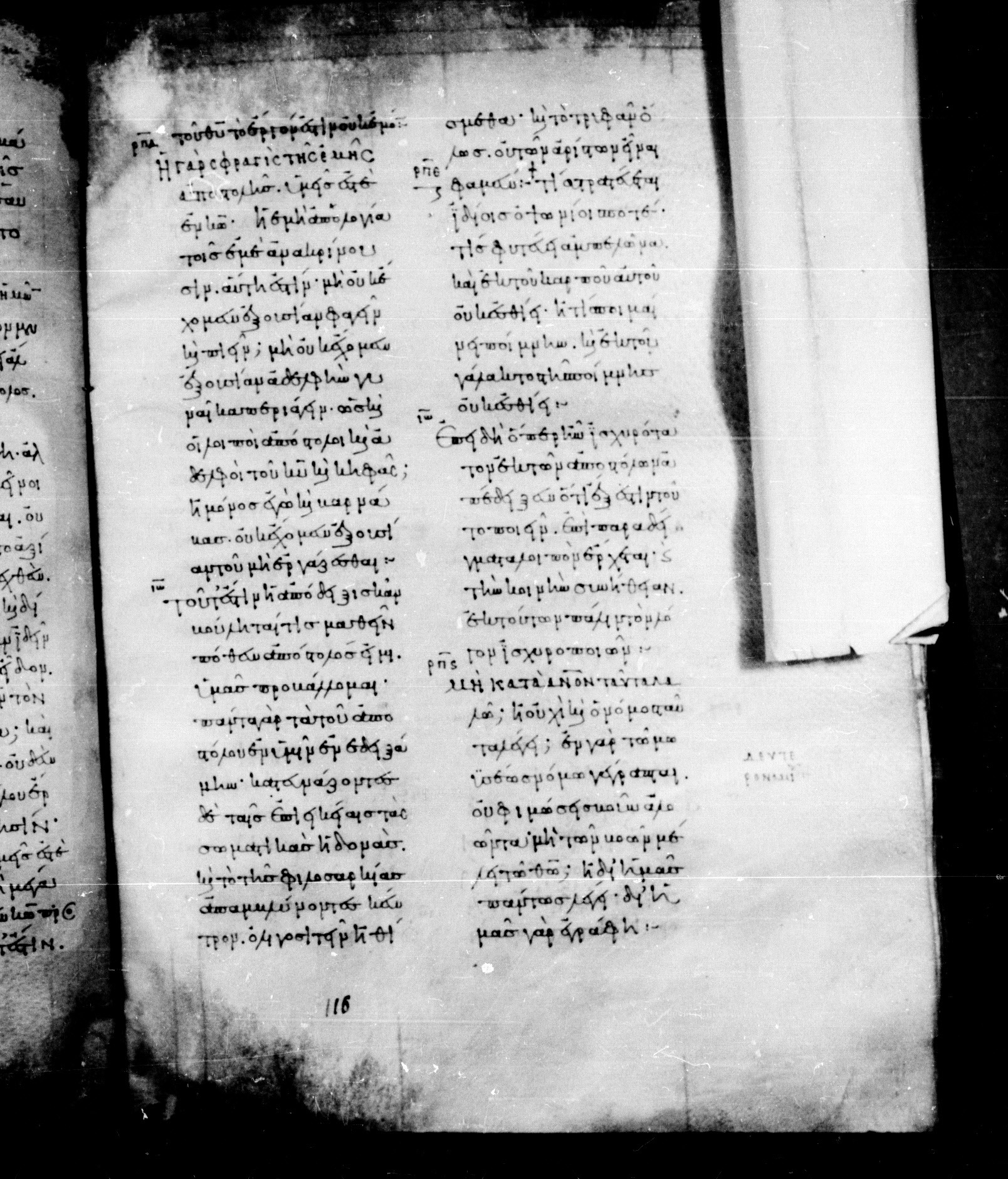
Codex Mosquensis I
Contains an almost complete text of the Catholic and Pauline epistles. The manuscript features scholia at the foot of the pages attributed to John Chrysostom, and the uncial text is separated into paragraphs by comments written in minuscule script.
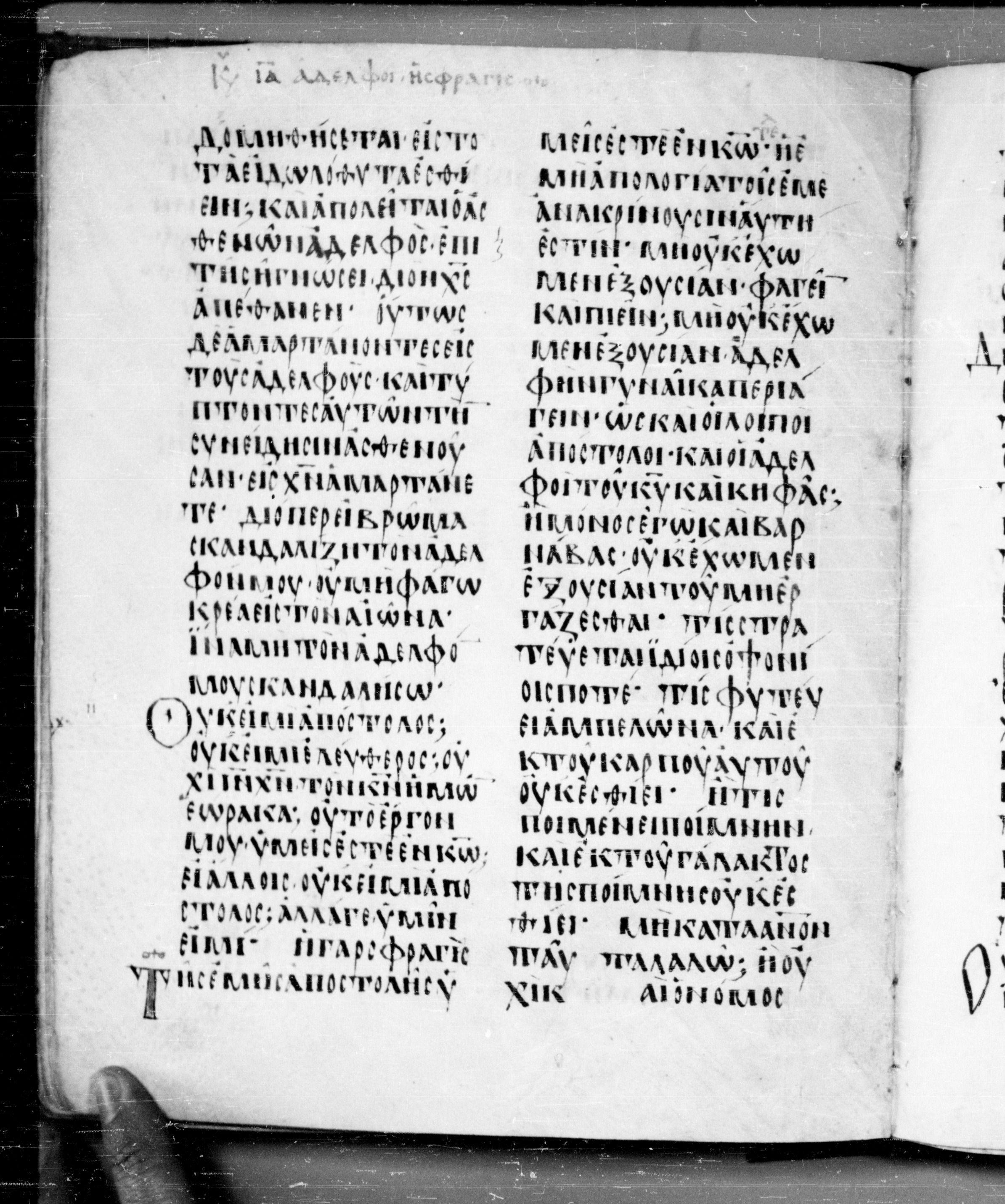
Codex Angelicus
It contains large lacunae in Acts 1:1-8:10 and in Hebrews 13:10-25.
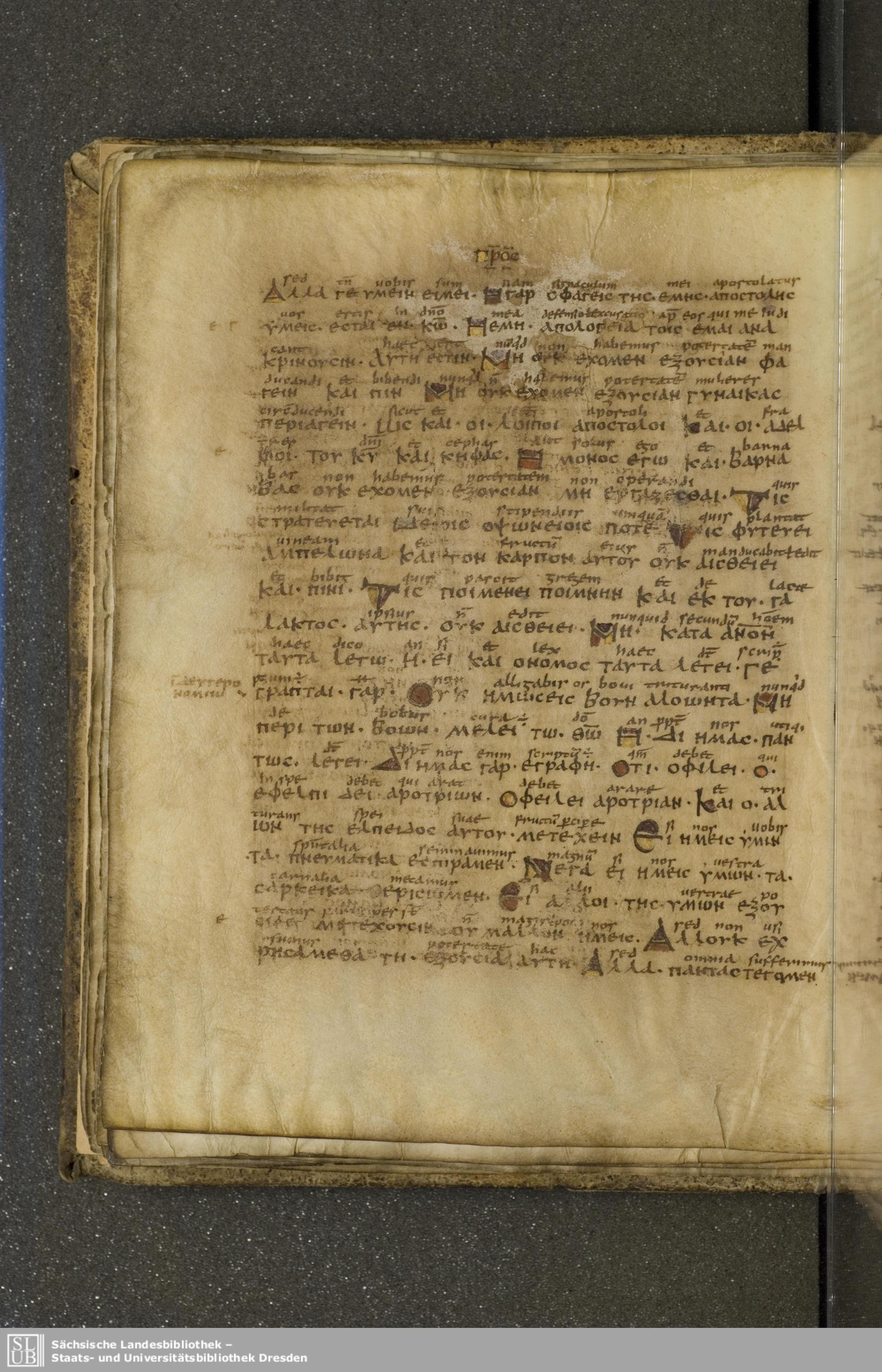
Codex Boernerianus
It is a Greek/Latin diglot containing an Old Irish verse on folio 23v written by a disappointed pilgrim. The manuscript suffered severe water damage during World War II.