
Exodus 13:16
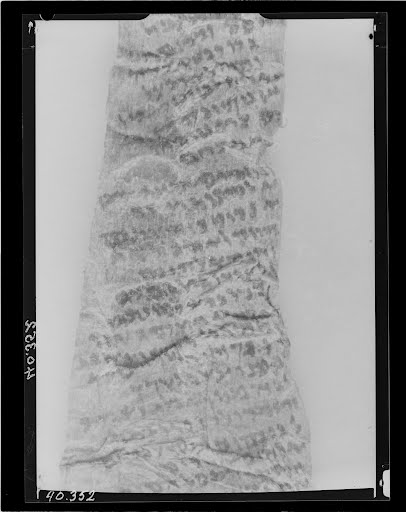
Mur4 (Wadi Murabba'at Phylacteries) (Scan 1)
Phylacteries (Tefillin) found in Wadi Murabba'at containing passages from Exodus and Deuteronomy.
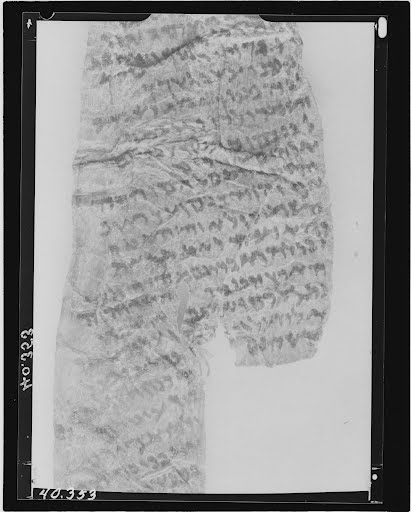
Mur4 (Wadi Murabba'at Phylacteries) (Scan 2)
Phylacteries (Tefillin) found in Wadi Murabba'at containing passages from Exodus and Deuteronomy.
4Q Exodus
An exceptionally early Hebrew scroll containing passages from the Book of Exodus, discovered in Cave 4 at Qumran. Dated to the Hasmonean period, this parchment manuscript is believed by scholars to have been copied as a special excerpted collection for liturgical or educational use.
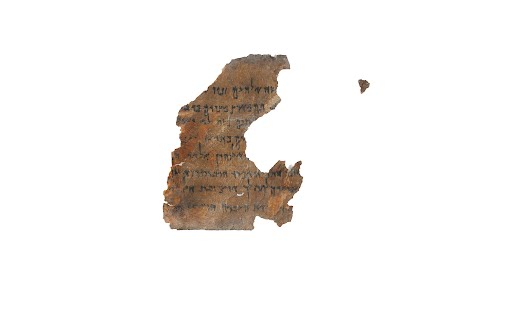
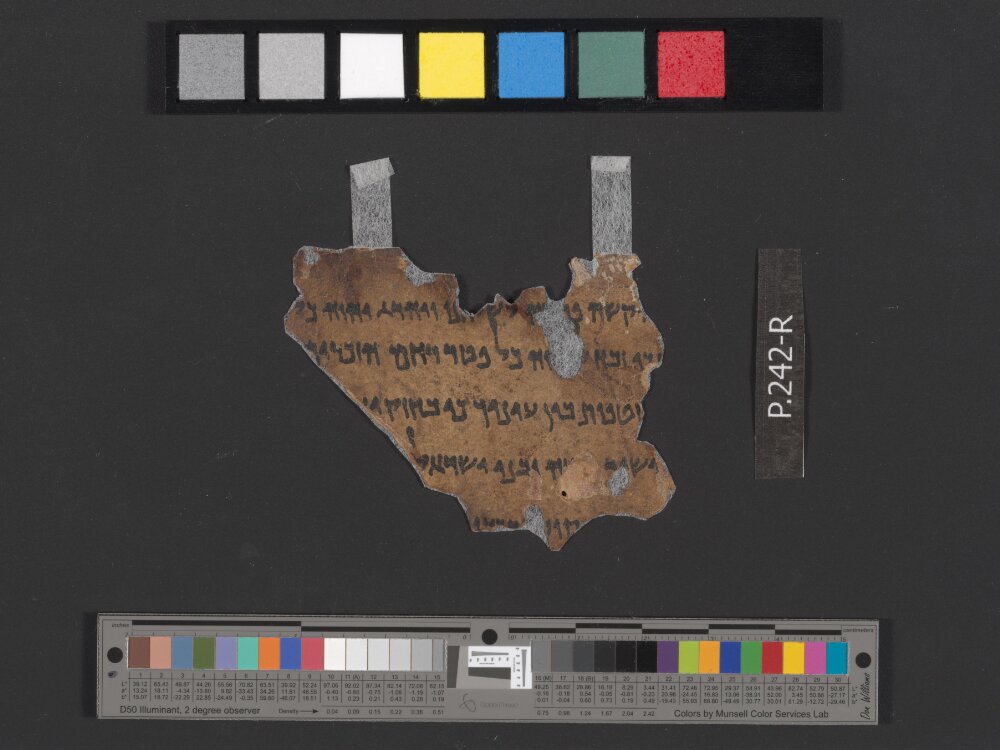
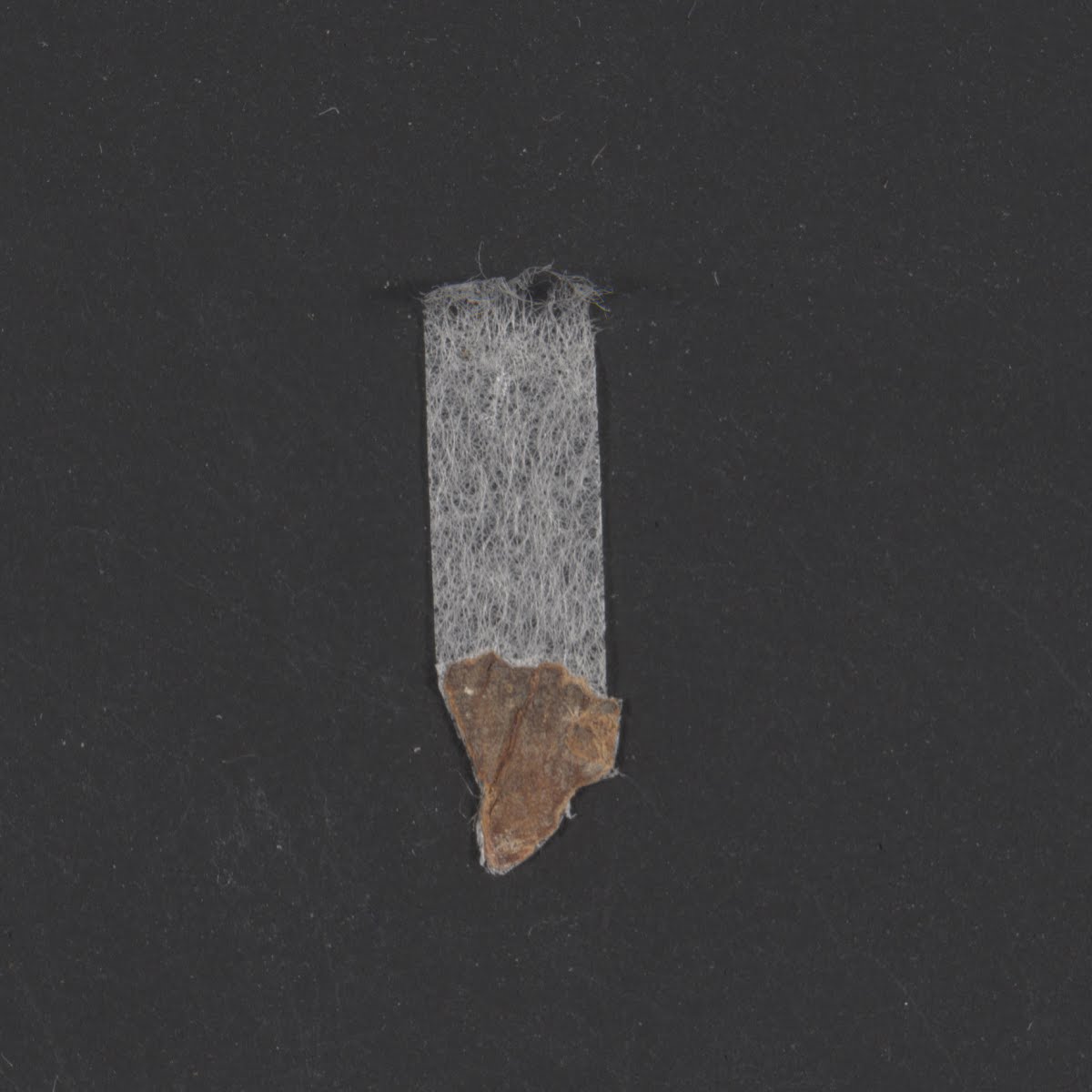
4Q Exodus e (Scan 1)
A Hasmonean-period Hebrew manuscript containing fragments of the Book of Exodus, including early passages about the Passover and the month of Abib. Due to its compact size, scholars suggest this fragment may have been used for liturgical readings or personal study.
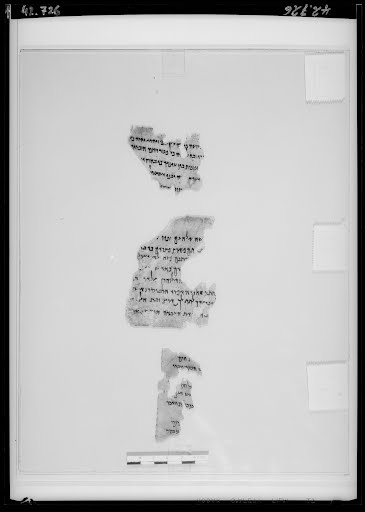
4Q Exodus e (Scan 2)
A Hasmonean-period Hebrew manuscript containing fragments of the Book of Exodus, including early passages about the Passover and the month of Abib. Due to its compact size, scholars suggest this fragment may have been used for liturgical readings or personal study.
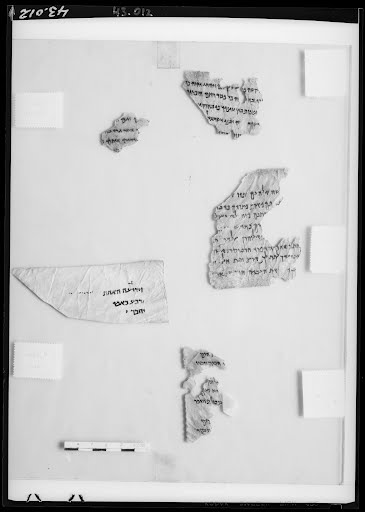
4Q Exodus e (Scan 3)
A Hasmonean-period Hebrew manuscript containing fragments of the Book of Exodus, including early passages about the Passover and the month of Abib. Due to its compact size, scholars suggest this fragment may have been used for liturgical readings or personal study.
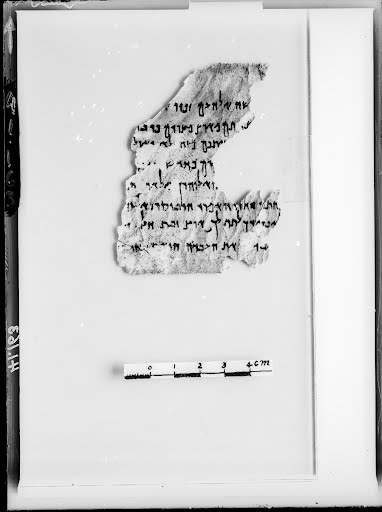
4Q Exodus e (Scan 4)
A Hasmonean-period Hebrew manuscript containing fragments of the Book of Exodus, including early passages about the Passover and the month of Abib. Due to its compact size, scholars suggest this fragment may have been used for liturgical readings or personal study.
4Q Exodus e (Scan 5)
A Hasmonean-period Hebrew manuscript containing fragments of the Book of Exodus, including early passages about the Passover and the month of Abib. Due to its compact size, scholars suggest this fragment may have been used for liturgical readings or personal study.
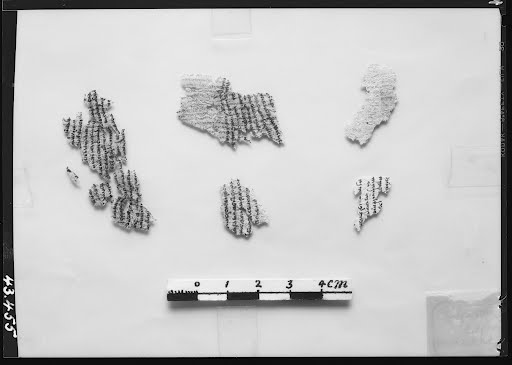
4Q Phylacteries B
An ancient Hebrew phylactery (tefillin) slip discovered in Cave 4 at Qumran. It contains biblical passages from Exodus and Deuteronomy written on both sides of a single piece of parchment, demonstrating the early Jewish practice of wearing scriptural passages during prayer.
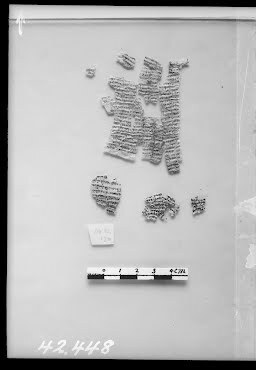
4Q Phylacteries C
An ancient Hebrew tefillin (phylactery) slip discovered in Cave 4 at Qumran, containing biblical passages from Exodus and Deuteronomy. Written on parchment during the Hellenistic-Roman period, it is an important historical witness to early Jewish worship and liturgical practices during the Second Temple period.
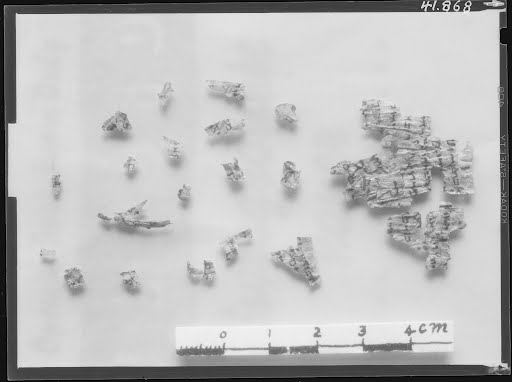
4Q Phylacteries F (Scan 1)
An ancient tefillin (phylactery) slip preserving verses from Exodus 13:11–16. Discovered in Qumran Cave 4, it was written on both sides of the parchment (an opisthograph) to fit inside a single leather capsule alongside other early ritual scrolls.
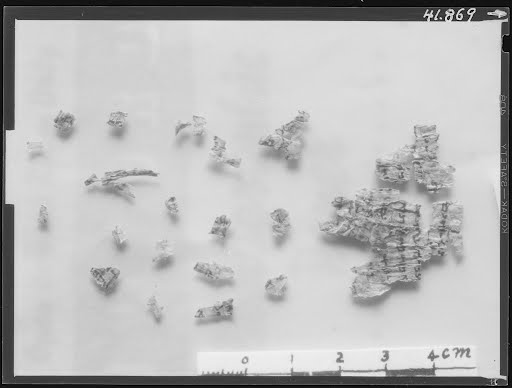
4Q Phylacteries F (Scan 2)
An ancient tefillin (phylactery) slip preserving verses from Exodus 13:11–16. Discovered in Qumran Cave 4, it was written on both sides of the parchment (an opisthograph) to fit inside a single leather capsule alongside other early ritual scrolls.
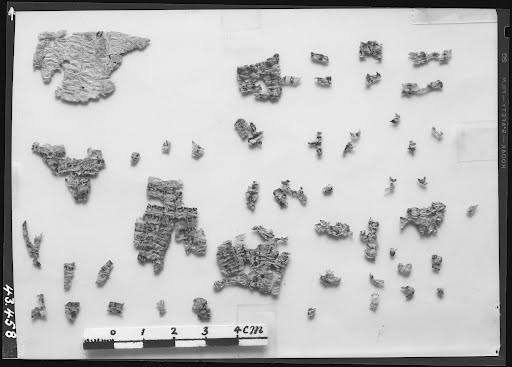
4Q Phylacteries F (Scan 3)
An ancient tefillin (phylactery) slip preserving verses from Exodus 13:11–16. Discovered in Qumran Cave 4, it was written on both sides of the parchment (an opisthograph) to fit inside a single leather capsule alongside other early ritual scrolls.
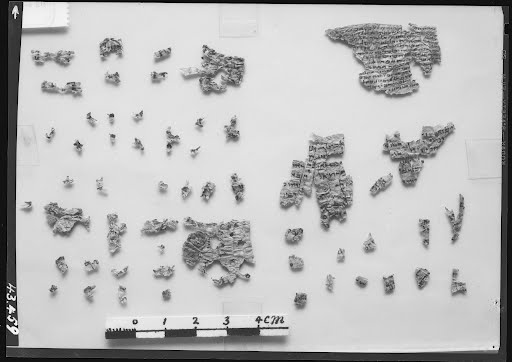
4Q Phylacteries F (Scan 4)
An ancient tefillin (phylactery) slip preserving verses from Exodus 13:11–16. Discovered in Qumran Cave 4, it was written on both sides of the parchment (an opisthograph) to fit inside a single leather capsule alongside other early ritual scrolls.
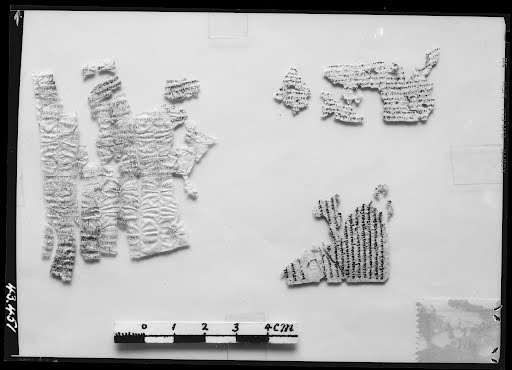
4Q Phylacteries H (Scan 1)
An ancient Hebrew tefillin (phylactery) parchment slip containing passages from the Torah, specifically Deuteronomy 5:22–6:5 (including the Shema) on one side and Exodus 13:14–16 on the other. Discovered in Cave 4 at Qumran, this two-sided (opisthographic) scroll shows the early Jewish devotional practice of binding scriptural passages to the body for prayer.
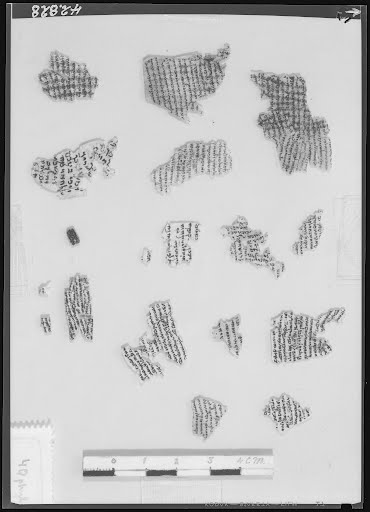
4Q Phylacteries H (Scan 2)
An ancient Hebrew tefillin (phylactery) parchment slip containing passages from the Torah, specifically Deuteronomy 5:22–6:5 (including the Shema) on one side and Exodus 13:14–16 on the other. Discovered in Cave 4 at Qumran, this two-sided (opisthographic) scroll shows the early Jewish devotional practice of binding scriptural passages to the body for prayer.
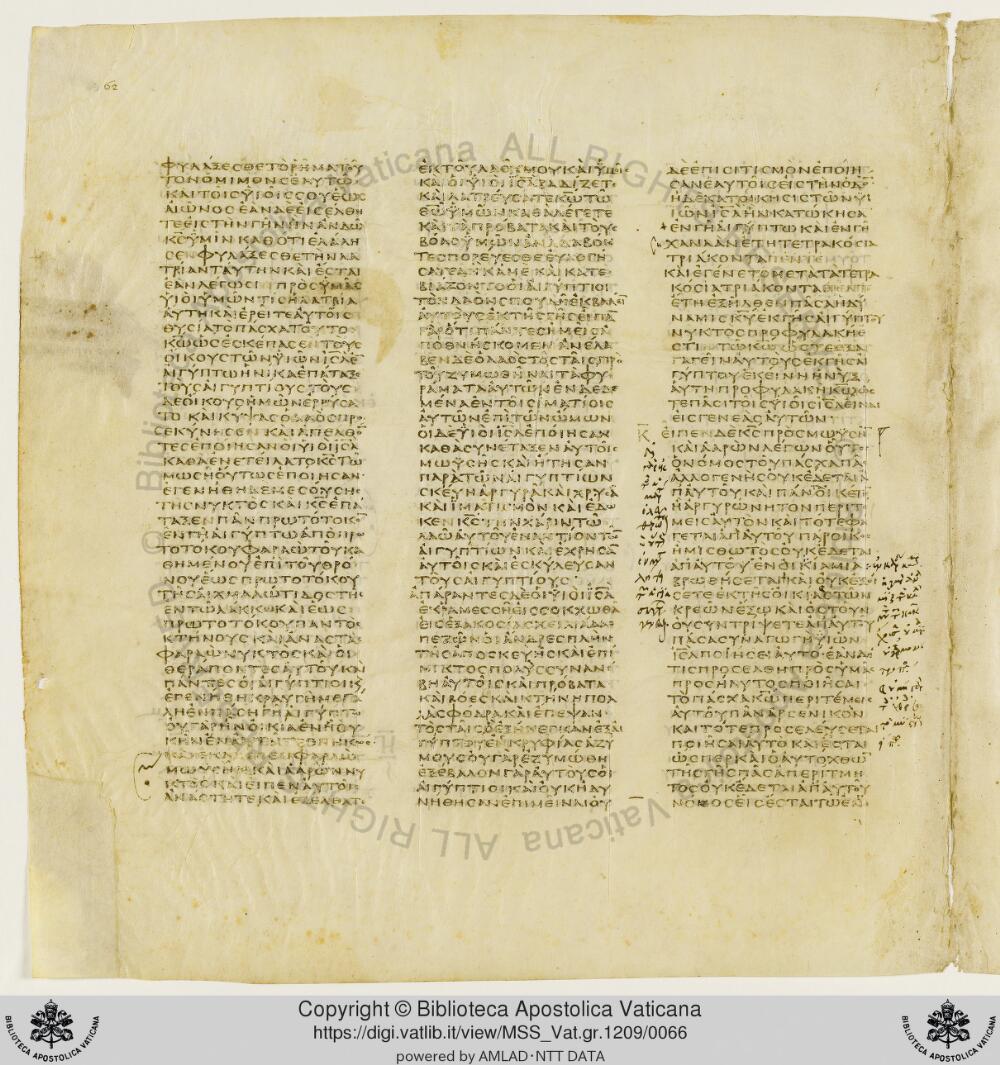
Codex Vaticanus
Codex Vaticanus is one of the oldest and most valuable surviving manuscripts of the complete Greek Bible. It has been securely housed in the Vatican Library since at least the late 15th century and is celebrated for its elegant script written on very high-quality vellum.
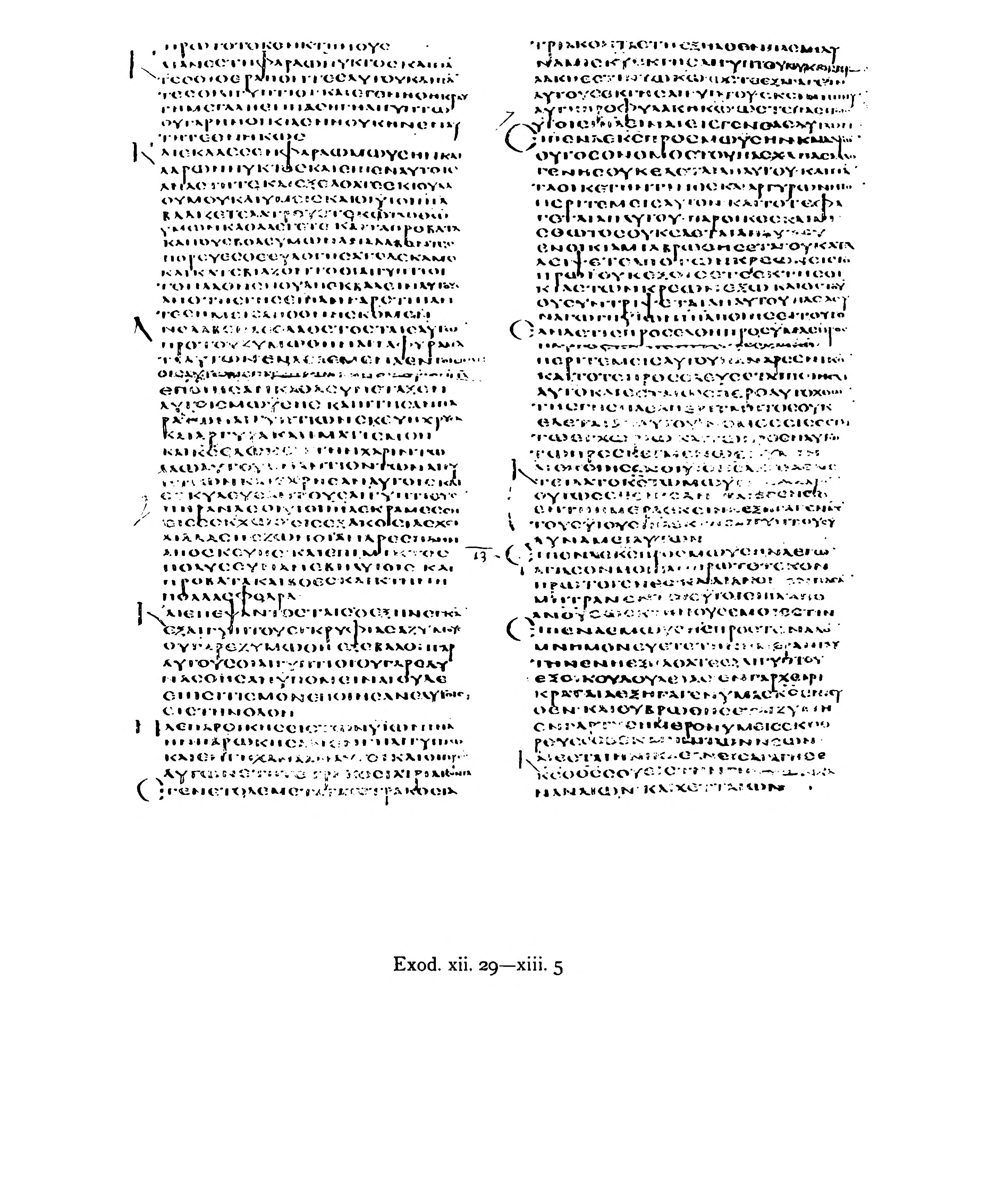
Codex Alexandrinus
Codex Alexandrinus is one of the four great uncial codices of the Greek Bible. It contains the vast majority of the Septuagint and New Testament, and was the first of the great uncials to become accessible to modern scholars.