
Exodus 4:6

4QGenesis-Exodus a (Scan 1)
4Q1 is one of the earliest biblical manuscripts found at Qumran, preserving fragments of both Genesis and Exodus written in a square Hasmonean script.

4QGenesis-Exodus a (Scan 2)
4Q1 is one of the earliest biblical manuscripts found at Qumran, preserving fragments of both Genesis and Exodus written in a square Hasmonean script.
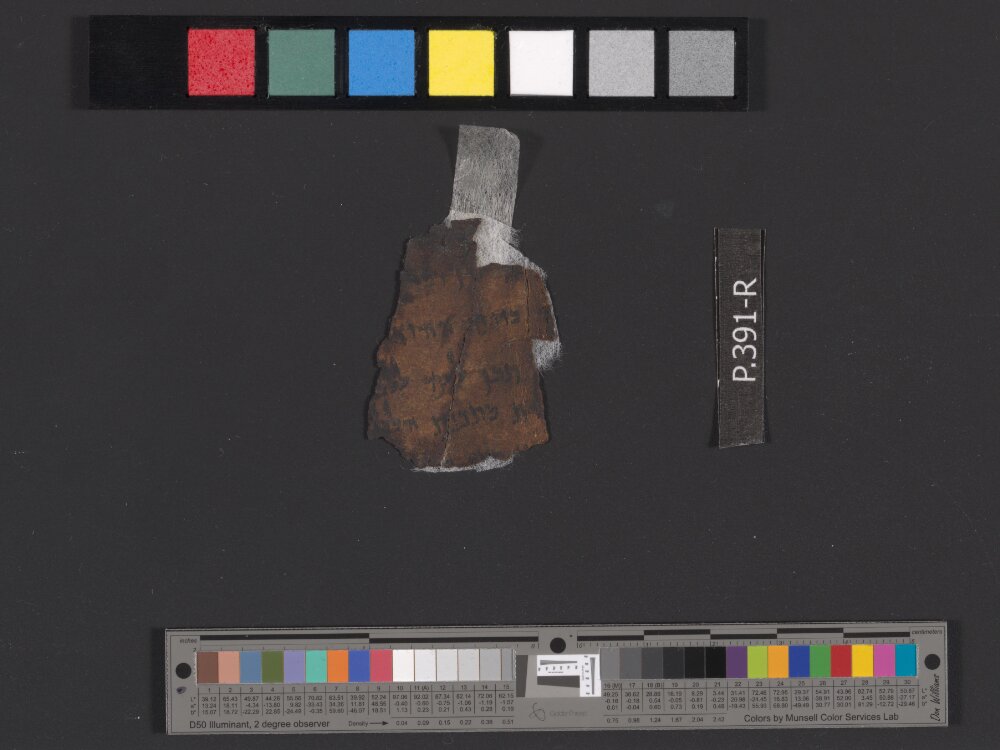
4QGenesis-Exodus a (Scan 3)
4Q1 is one of the earliest biblical manuscripts found at Qumran, preserving fragments of both Genesis and Exodus written in a square Hasmonean script.

4QGenesis-Exodus a (Scan 4)
4Q1 is one of the earliest biblical manuscripts found at Qumran, preserving fragments of both Genesis and Exodus written in a square Hasmonean script.
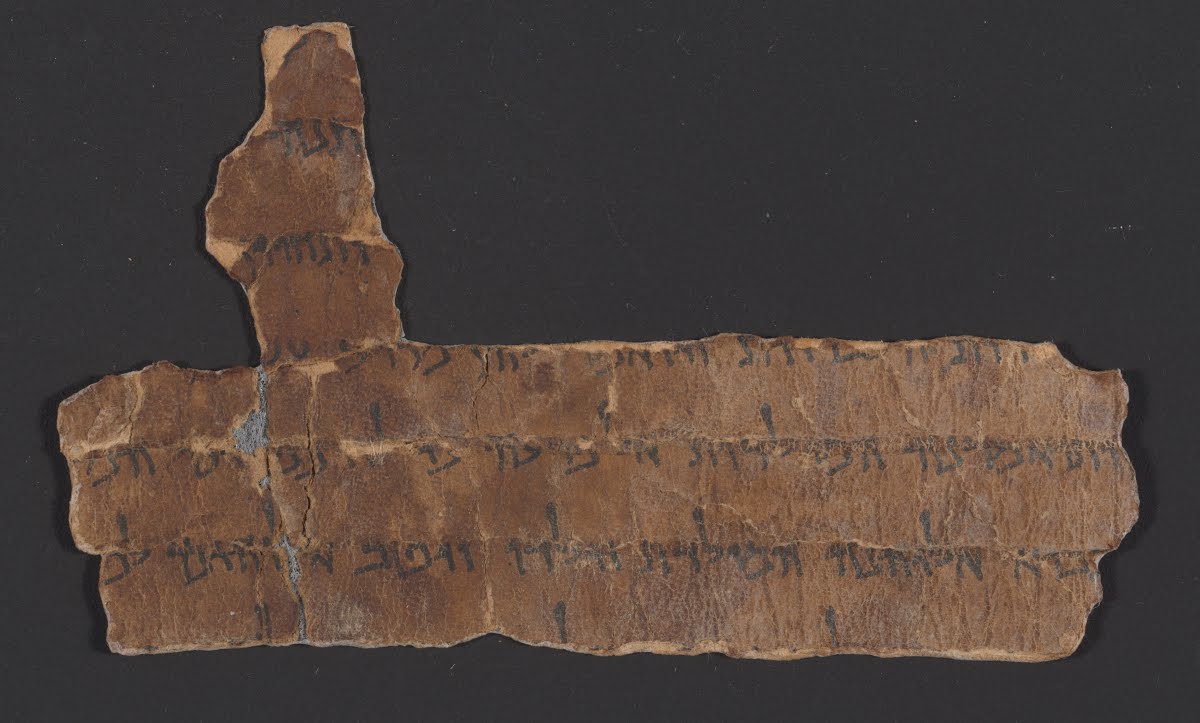
4QExodus b (Scan 1)
An ancient Hebrew scroll of the Book of Exodus discovered in Cave 4 at Qumran, written in a clear Herodian script. Dating from the late first century BC to the mid-first century AD, this manuscript preserves early chapters of the narrative of Israel in Egypt and the Exodus, serving as a vital physical witness to the antiquity of the biblical text.
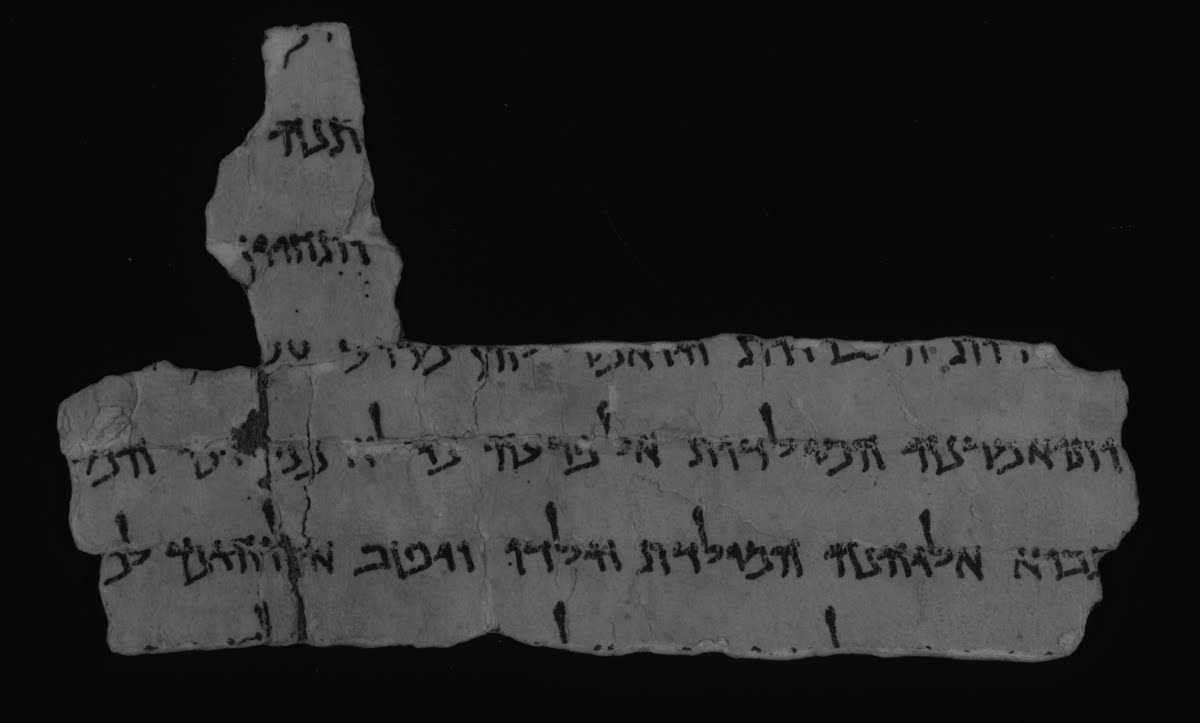
4QExodus b (Scan 2)
An ancient Hebrew scroll of the Book of Exodus discovered in Cave 4 at Qumran, written in a clear Herodian script. Dating from the late first century BC to the mid-first century AD, this manuscript preserves early chapters of the narrative of Israel in Egypt and the Exodus, serving as a vital physical witness to the antiquity of the biblical text.
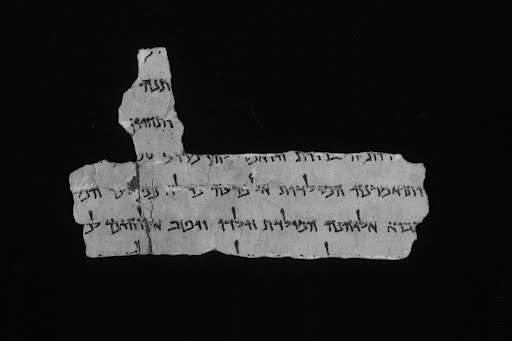
4QExodus b (Scan 3)
An ancient Hebrew scroll of the Book of Exodus discovered in Cave 4 at Qumran, written in a clear Herodian script. Dating from the late first century BC to the mid-first century AD, this manuscript preserves early chapters of the narrative of Israel in Egypt and the Exodus, serving as a vital physical witness to the antiquity of the biblical text.
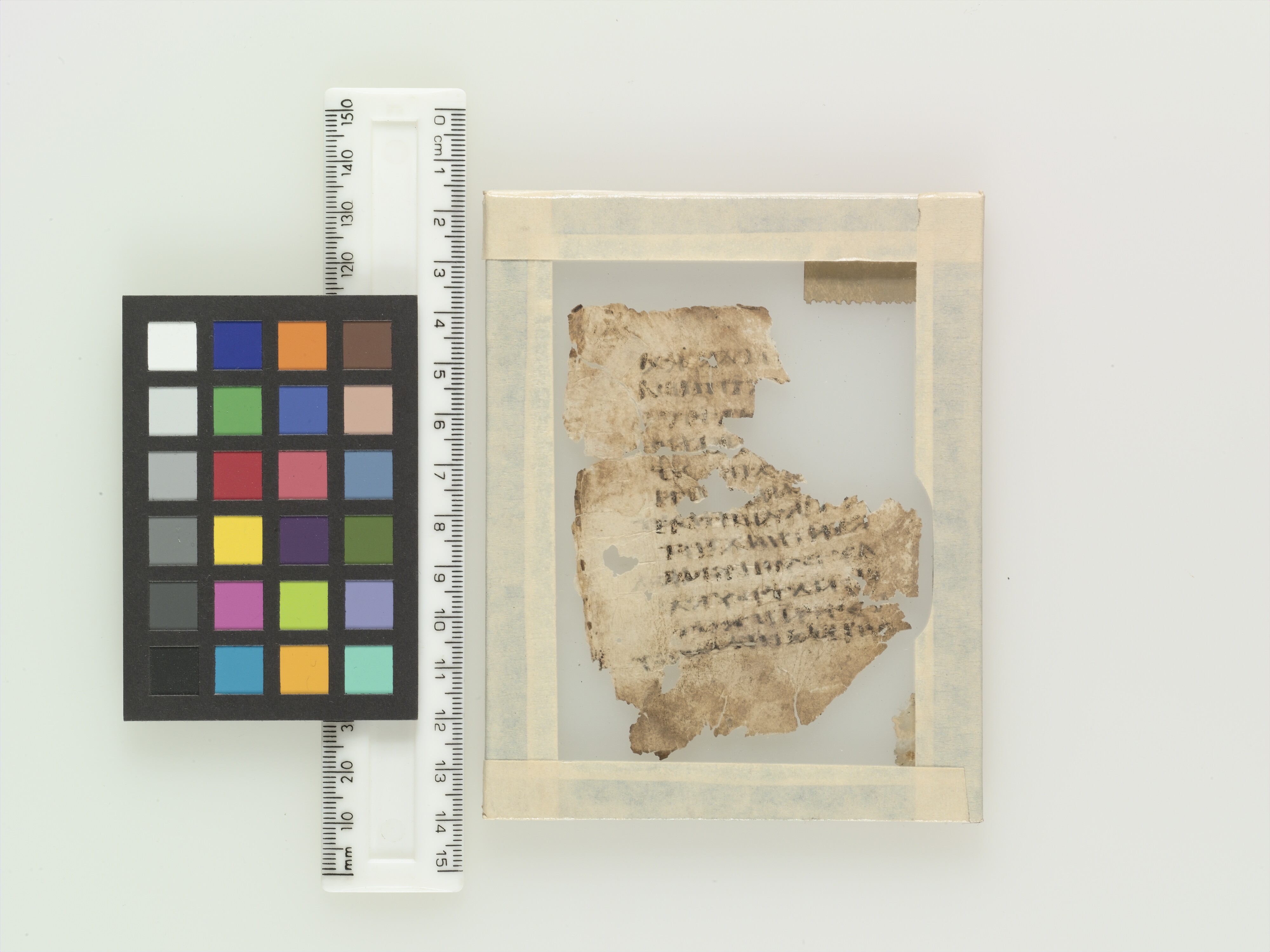
Rahlfs 843
A miniature Greek parchment codex fragment from the 4th or 5th century AD containing the account of God giving Moses miraculous signs in Exodus 4. This small leaf preserves the narrative where Moses' staff turns into a serpent and his hand becomes diseased, serving as a notable early Septuagint witness.
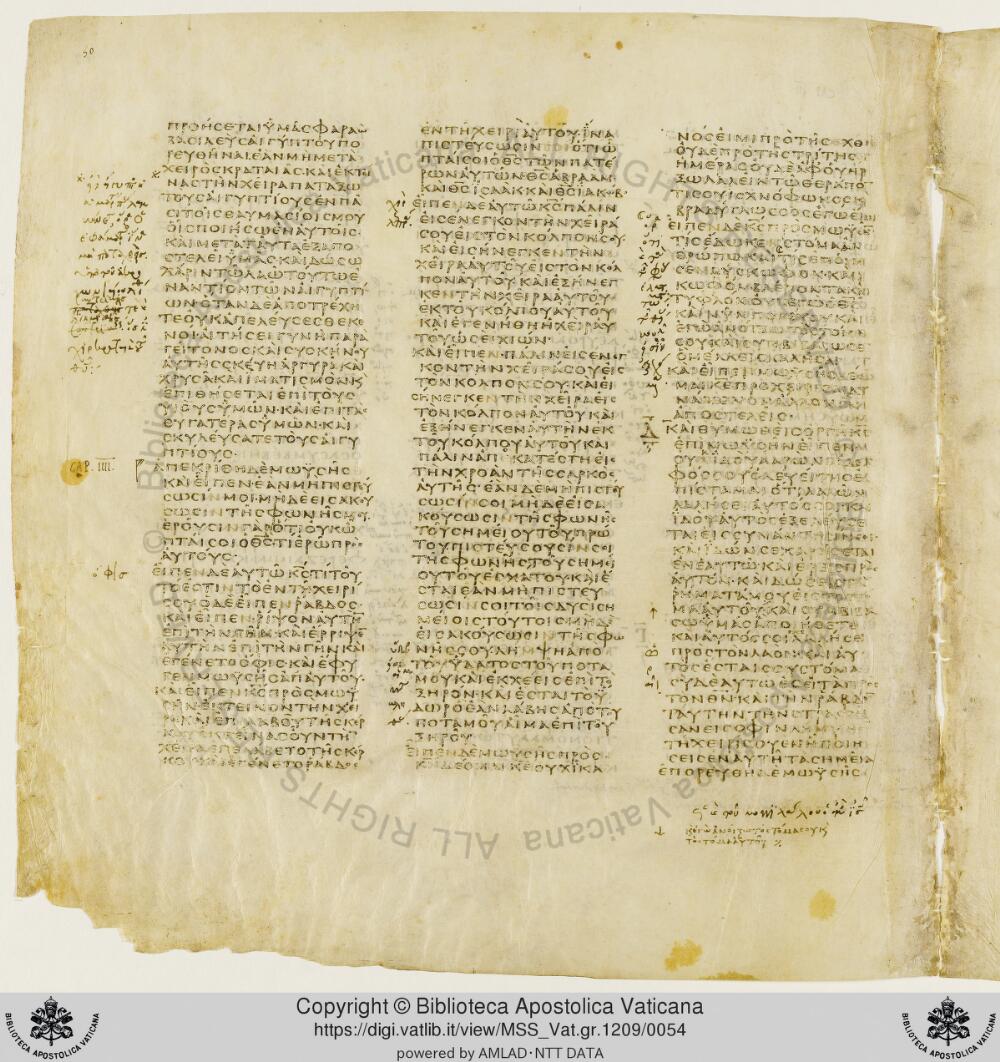
Codex Vaticanus
Codex Vaticanus is one of the oldest and most valuable surviving manuscripts of the complete Greek Bible. It has been securely housed in the Vatican Library since at least the late 15th century and is celebrated for its elegant script written on very high-quality vellum.
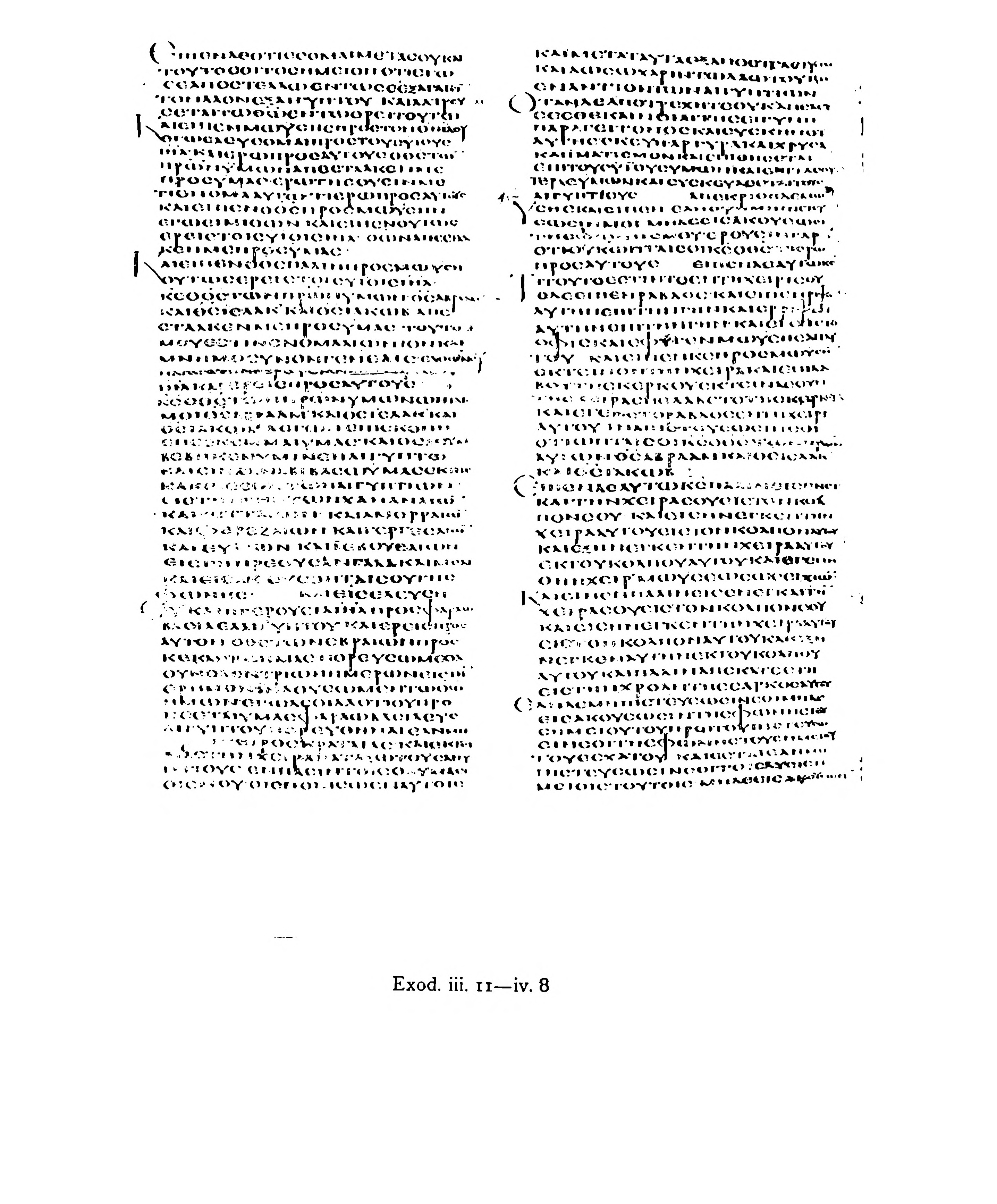
Codex Alexandrinus
Codex Alexandrinus is one of the four great uncial codices of the Greek Bible. It contains the vast majority of the Septuagint and New Testament, and was the first of the great uncials to become accessible to modern scholars.