
Leviticus 15:2
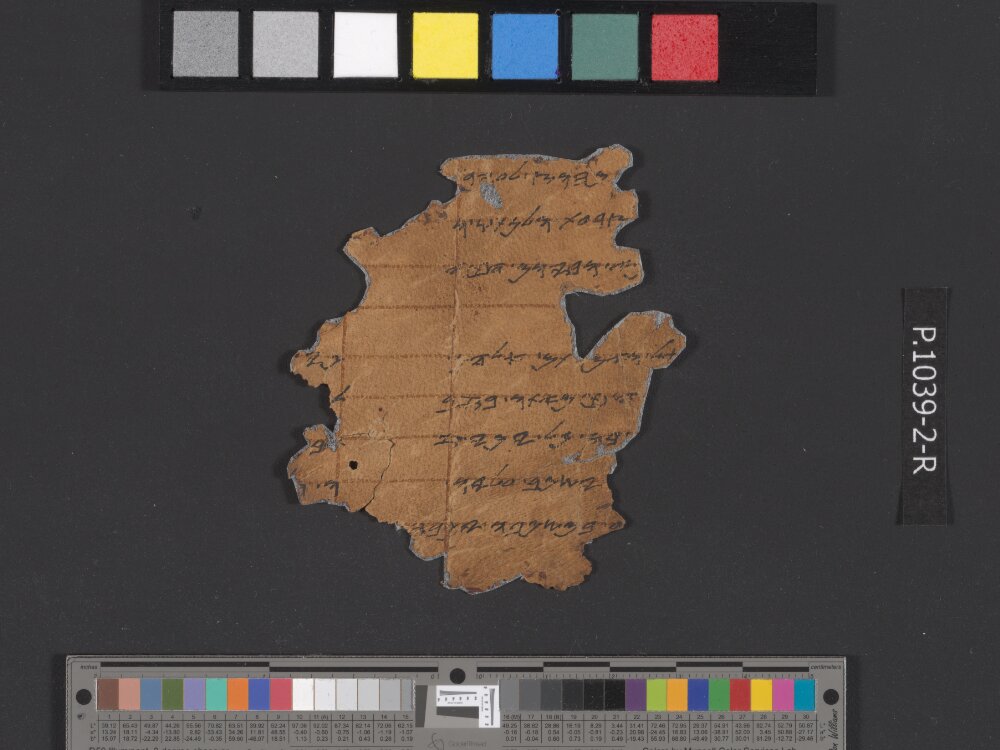
11QpaleoLev (The Paleo-Hebrew Leviticus Scroll)
Discovered in 1956 in Cave 11 at Qumran, this manuscript is famous for being written in the archaic paleo-Hebrew script rather than the standard square script. It preserves portions of the final six columns of the book of Leviticus on parchment. The scroll is an important historical artifact from the Herodian period.
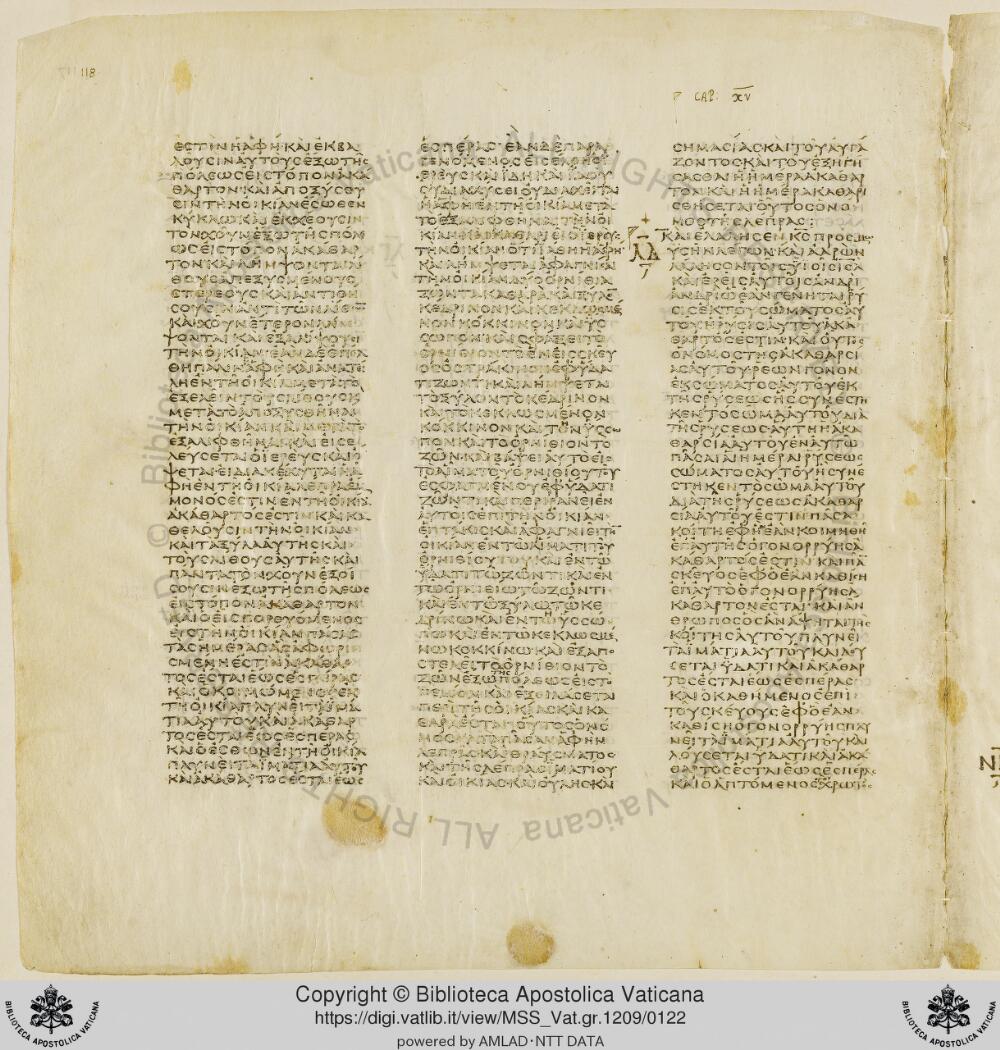
Codex Vaticanus
Codex Vaticanus is one of the oldest and most valuable surviving manuscripts of the complete Greek Bible. It has been securely housed in the Vatican Library since at least the late 15th century and is celebrated for its elegant script written on very high-quality vellum.
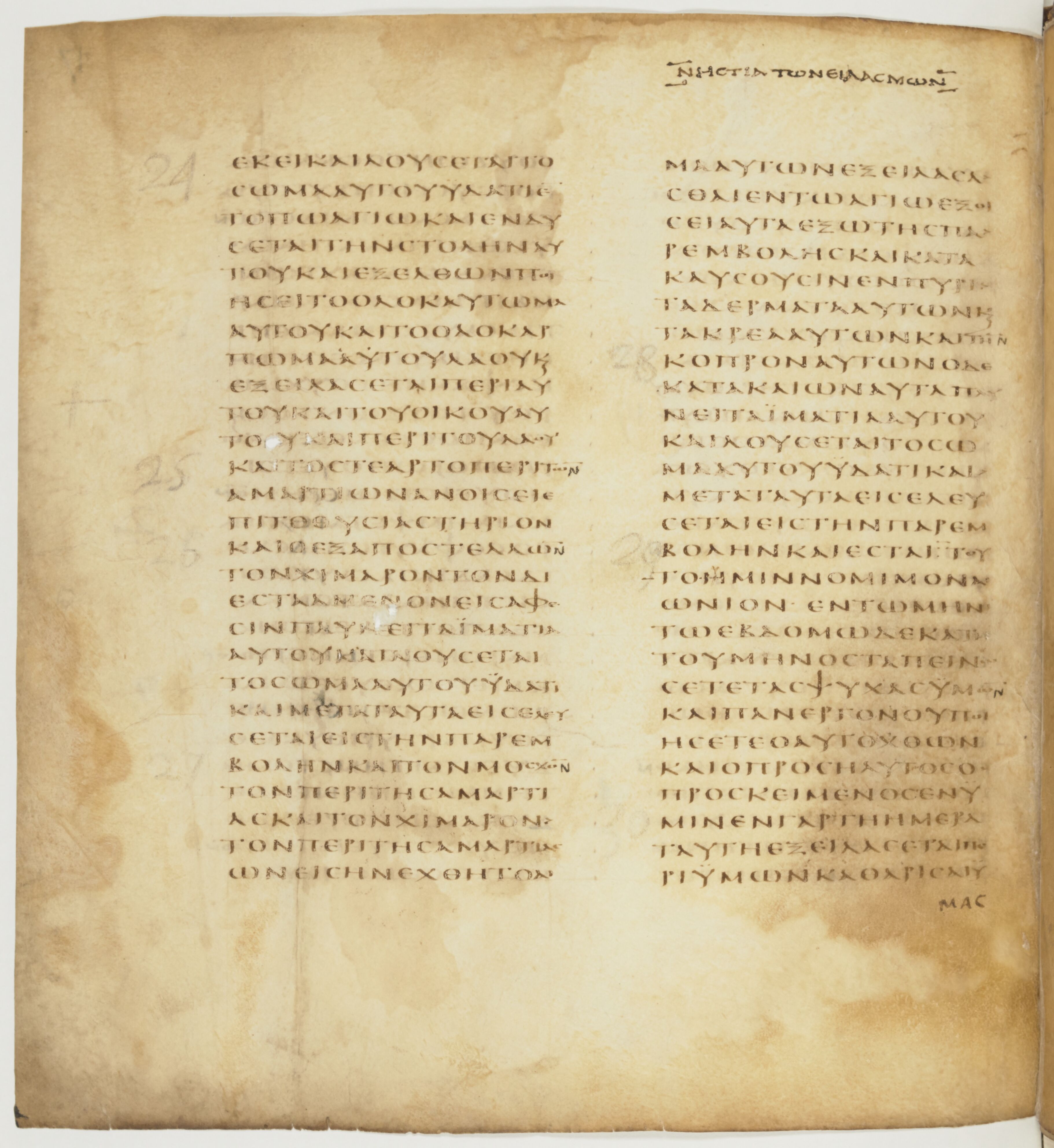
Codex Colberto-Sarravianus
A stunning Greek uncial manuscript from the late 4th or early 5th century containing parts of the Old Testament Octateuch. Originally produced in Egypt, its surviving leaves are now preserved in three different European libraries. It is highly treasured for its beautiful script and its key role in the historical study of the Greek Old Testament.
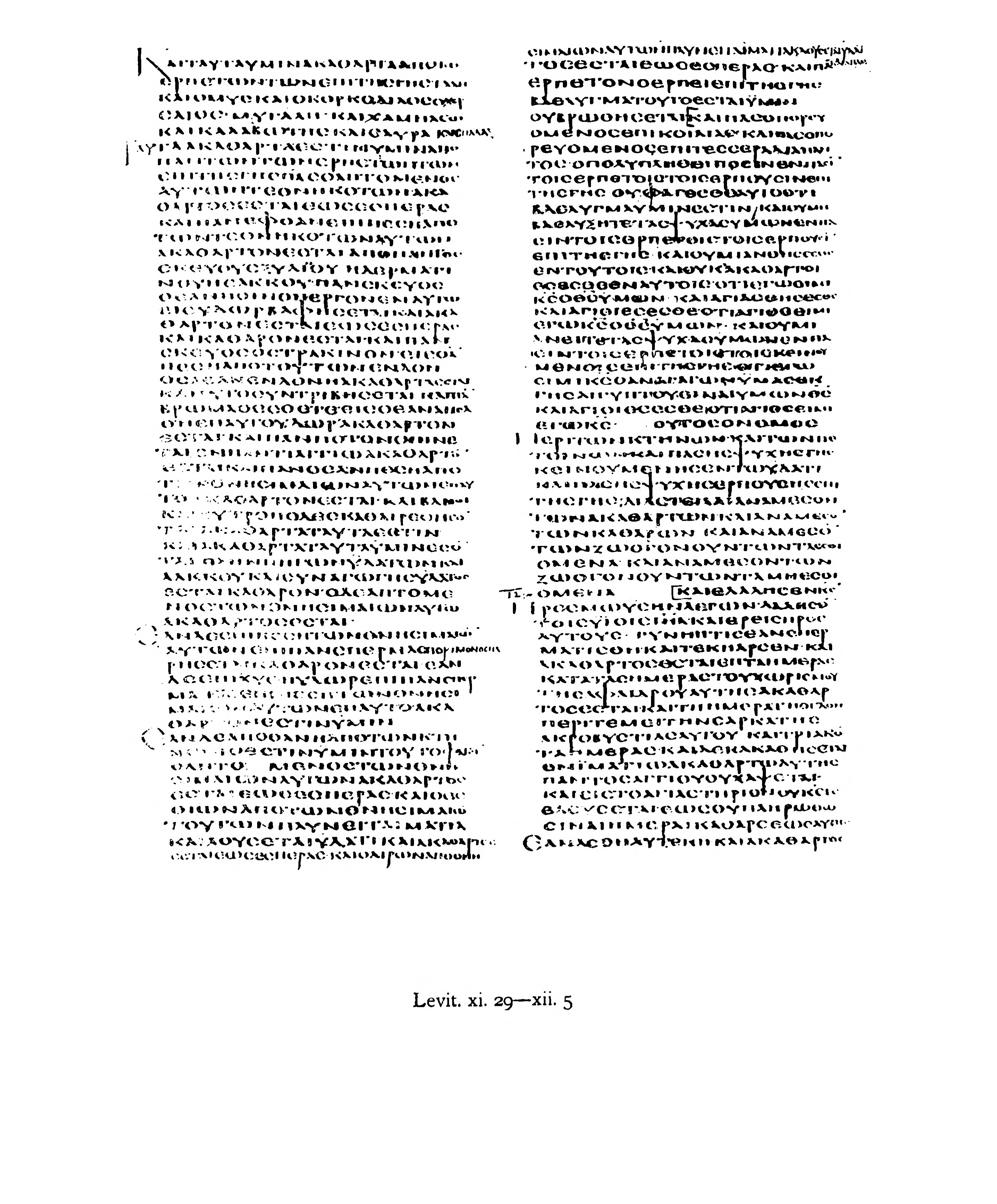
Codex Alexandrinus (Scan 1)
Codex Alexandrinus is one of the four great uncial codices of the Greek Bible. It contains the vast majority of the Septuagint and New Testament, and was the first of the great uncials to become accessible to modern scholars.
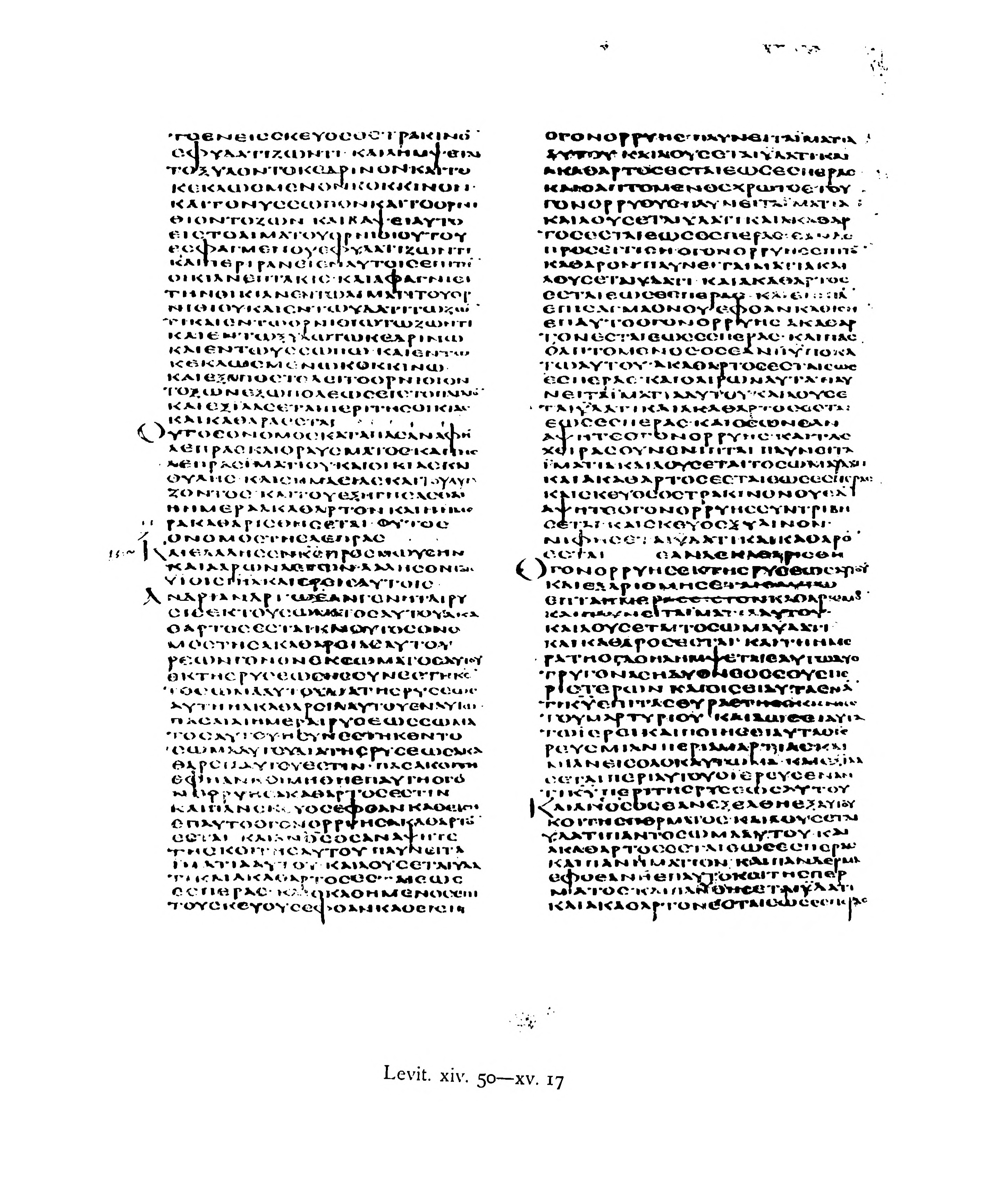
Codex Alexandrinus (Scan 2)
Codex Alexandrinus is one of the four great uncial codices of the Greek Bible. It contains the vast majority of the Septuagint and New Testament, and was the first of the great uncials to become accessible to modern scholars.