
Surah 1:0
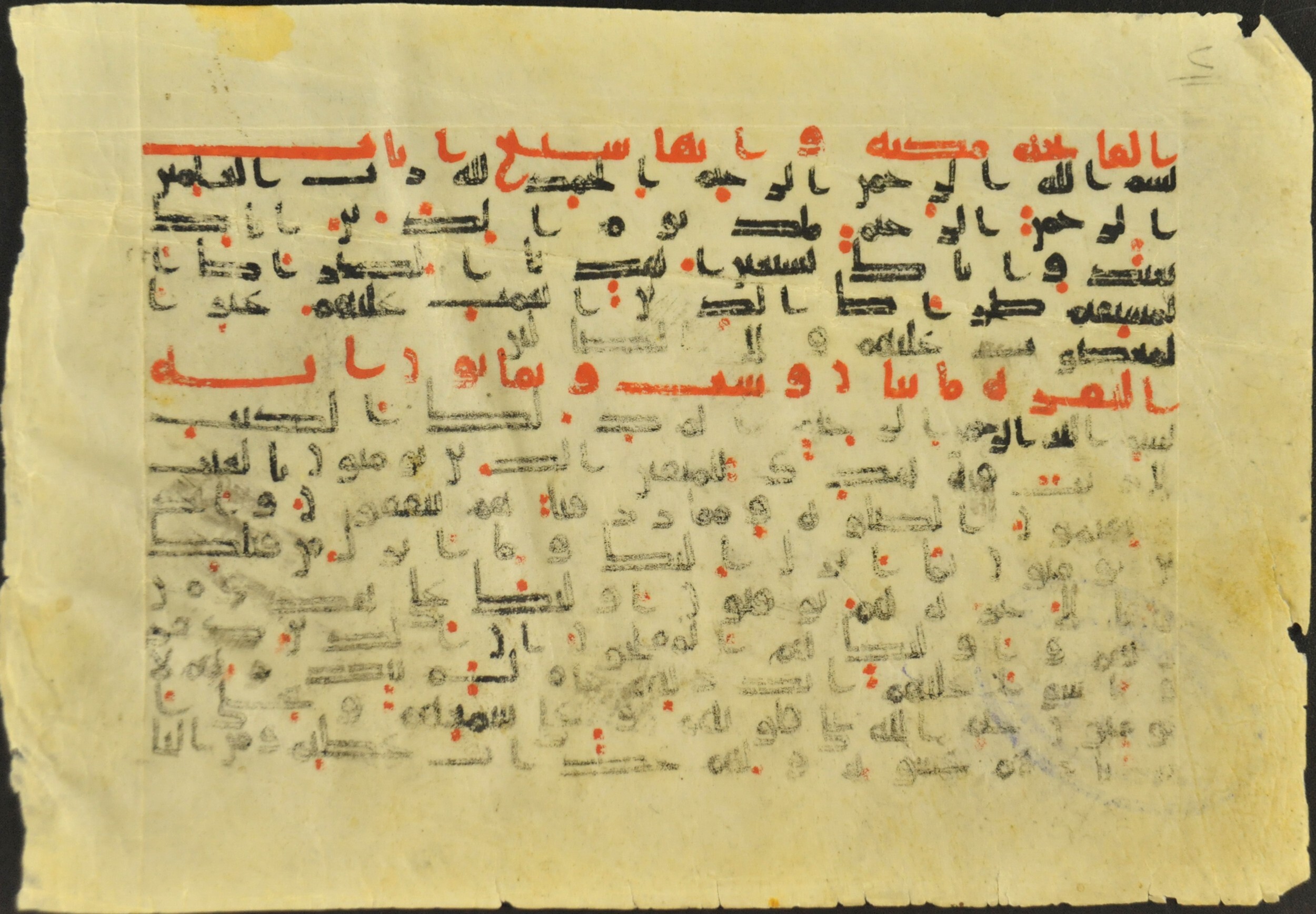
Muṣḥaf of Najaf Ashraf (Codex 1 of Imām ʿAlī Library)
This codex contains a colophon attributing it to ʿAlī ibn Abī Ṭālib and dating it to 40 AH (660 AD), though scholars believe this colophon was added later. It also features a waqf (endowment) deed written on the first page in 1775 AD.
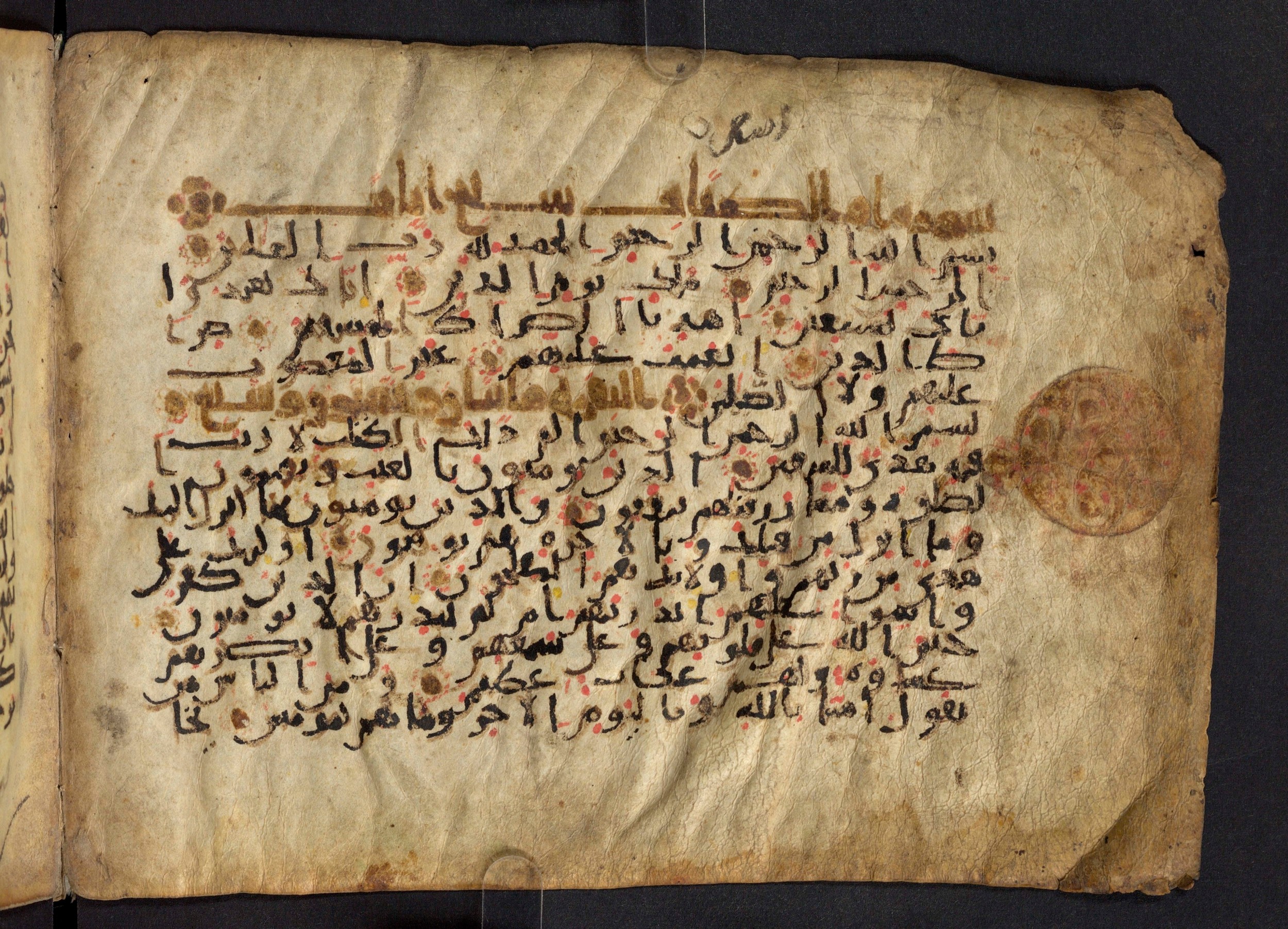
Paris, Bibliothèque nationale de France, Arabe 324 (c) (Scan 1)
Carbon dating of fragments from Arabe 324 (c) places its origin between 660-780 AD. The manuscript is part of a composite codex, where Arabe 324 (c) and Gotha Ms. orient. A 462 are original leaves, while other sections such as Arabe 324 (a) and (d) were added centuries later to replace damaged or missing pages.
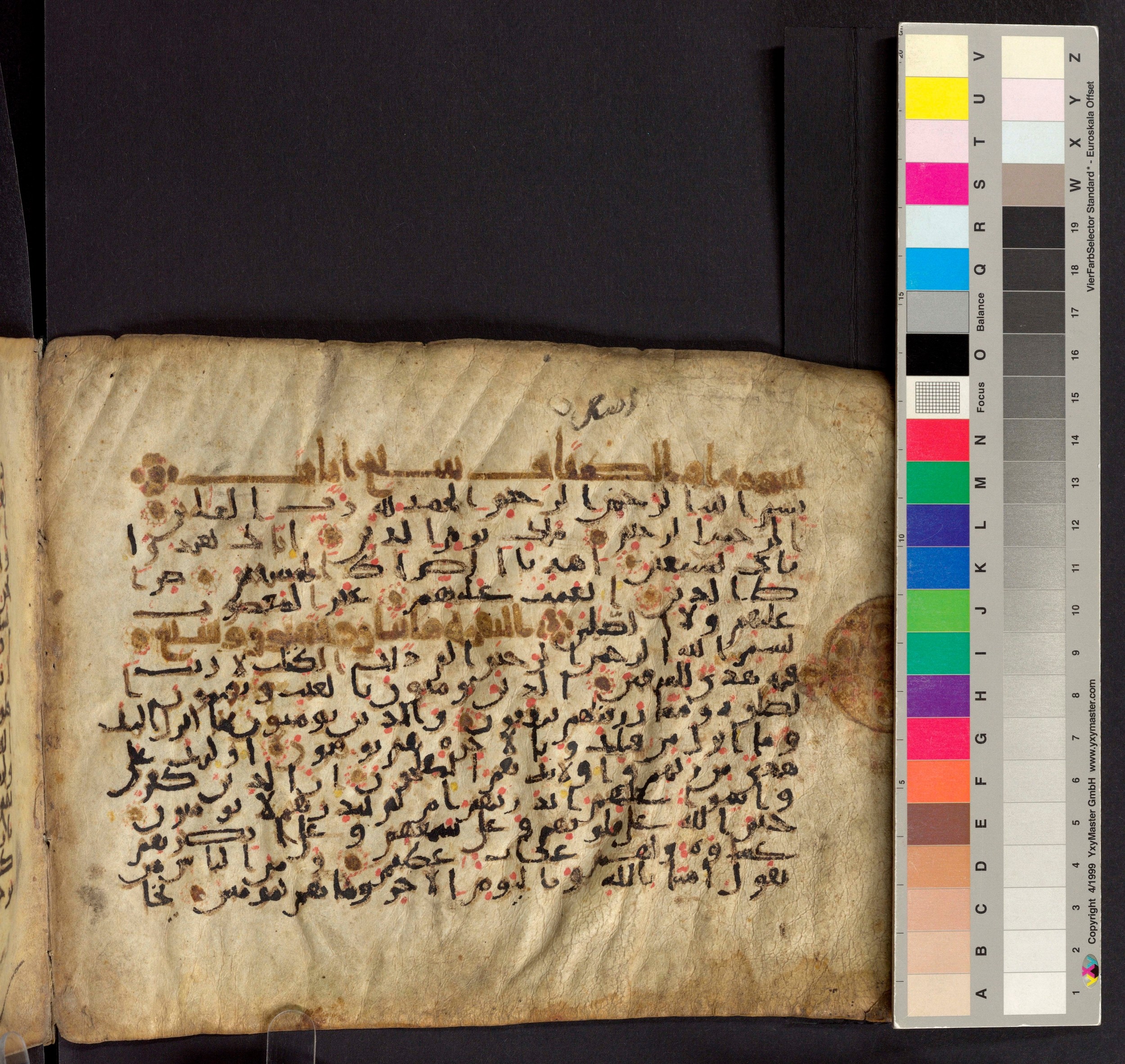
Paris, Bibliothèque nationale de France, Arabe 324 (c) (Scan 2)
Carbon dating of fragments from Arabe 324 (c) places its origin between 660-780 AD. The manuscript is part of a composite codex, where Arabe 324 (c) and Gotha Ms. orient. A 462 are original leaves, while other sections such as Arabe 324 (a) and (d) were added centuries later to replace damaged or missing pages.
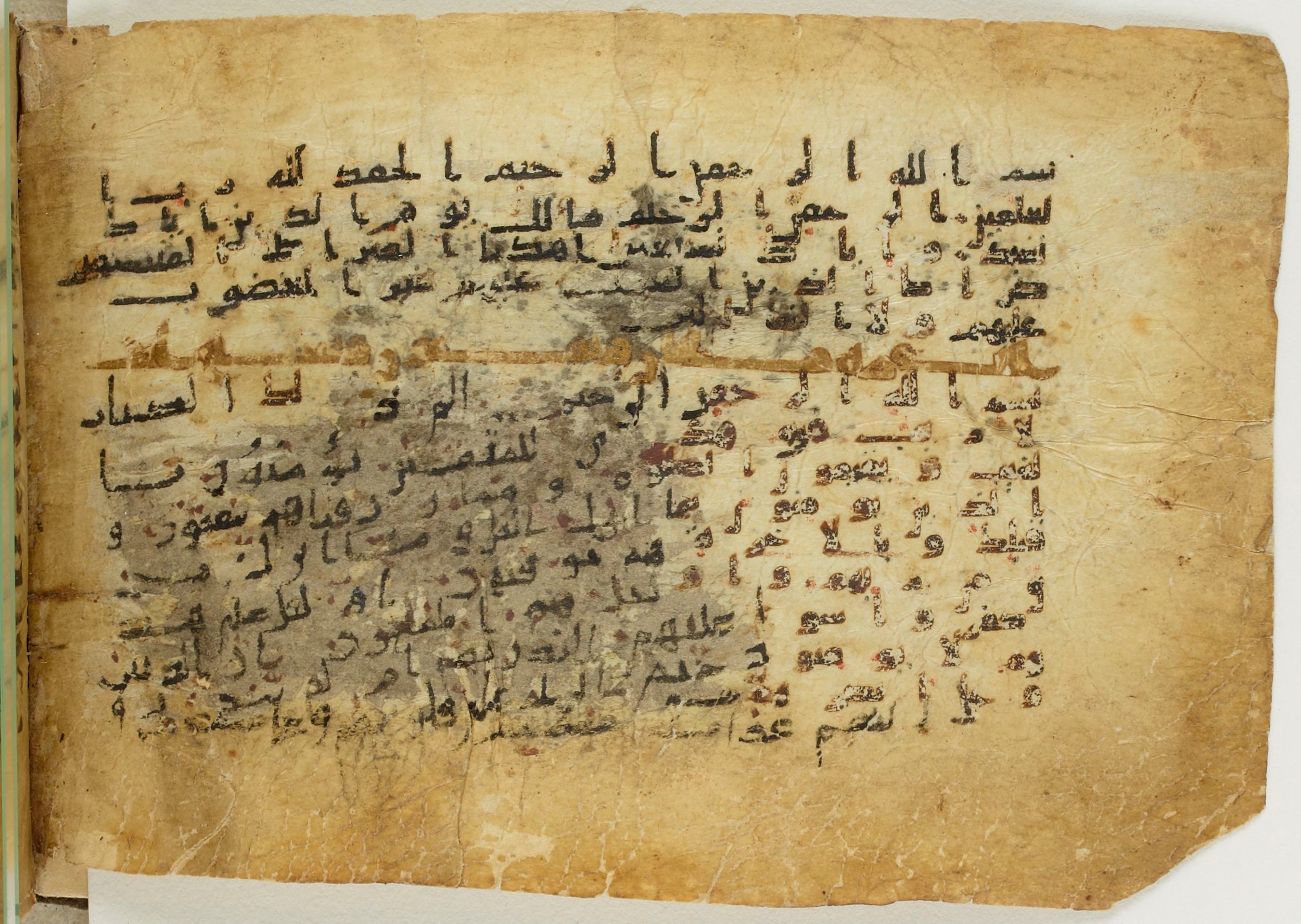
Paris, Bibliothèque nationale de France, Arabe 5122
This nearly complete 8th-century Quranic manuscript is notable for its extensive preservation, containing text from the very beginning of the Quran to its final Surah. Curiously, folio 134 has been reported missing from the French National Library since approximately 2000, and no microfilm image of it survives.
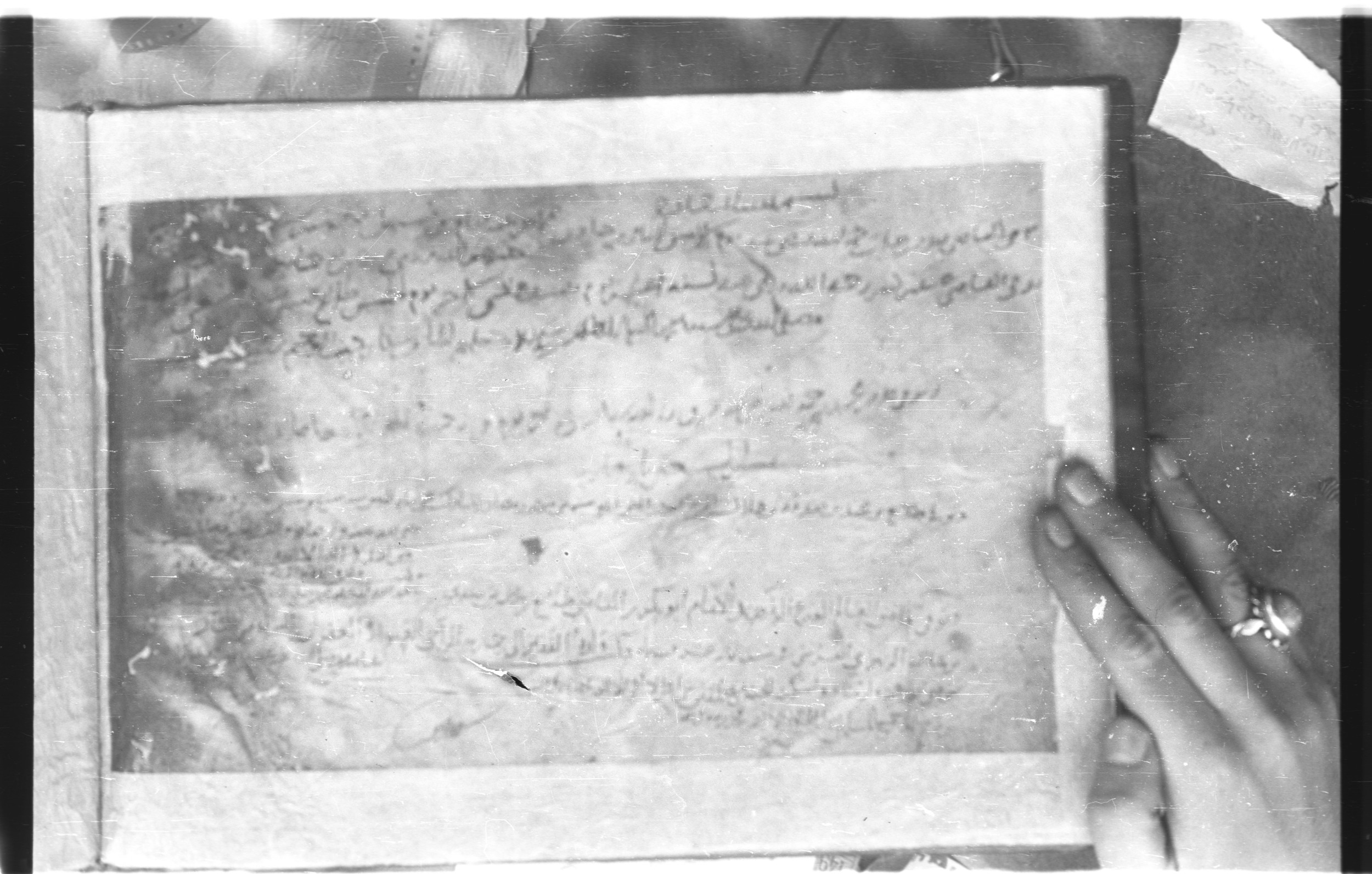
Topkapı Palace Museum, Saray 50395
This nearly complete codex is an exceptional document, as complete codices in Kūfī D script style are extremely rare. The manuscript features illuminated pages for the first three and last six folios, as well as at surah beginnings.
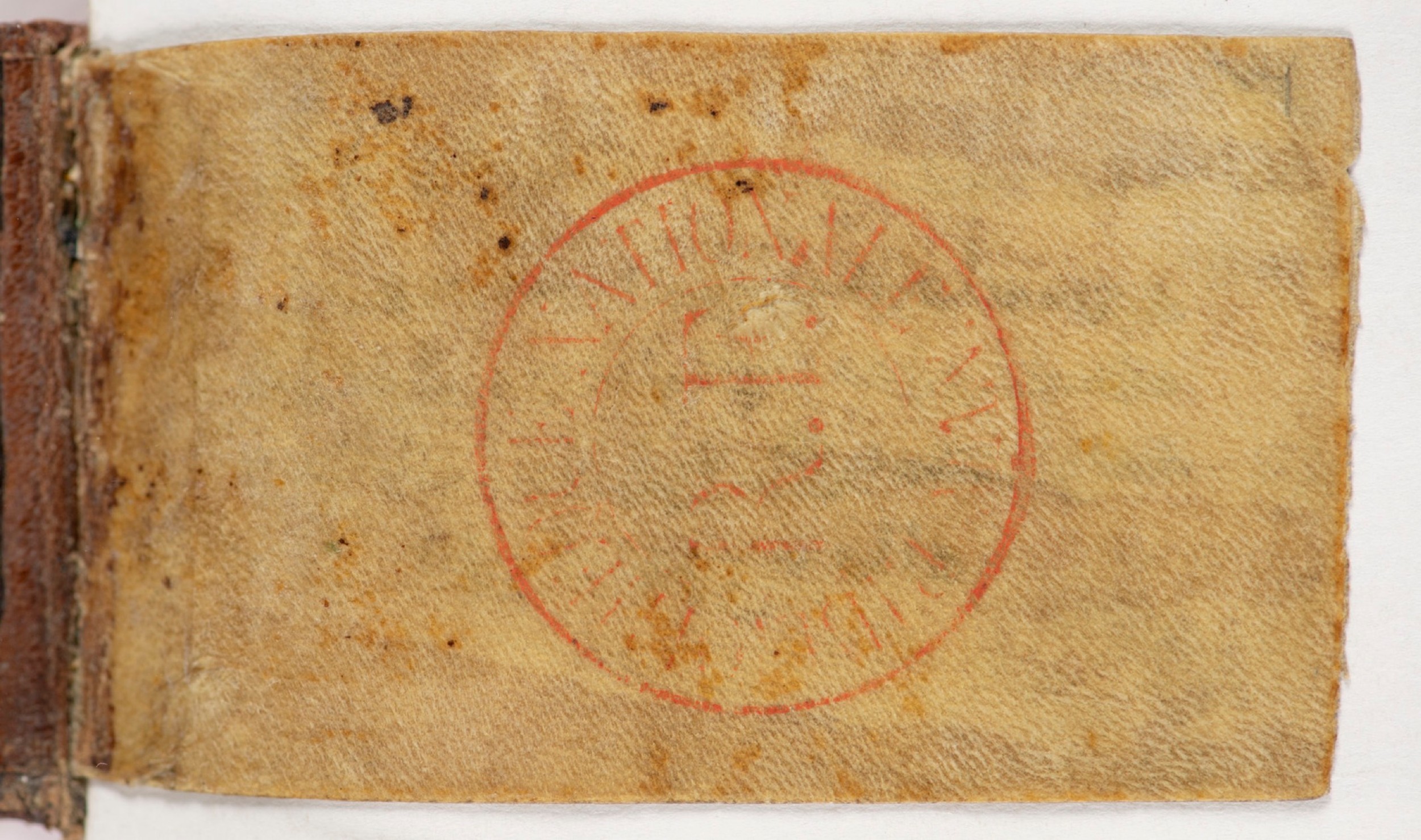
Arabe 399
This manuscript features a forged colophon claiming it was copied in 798 AD by order of Caliph Harun al-Rashid. An old legend also suggested it was a diplomatic gift sent to Charlemagne, though scholars have proven both the attribution and the legend to be false.
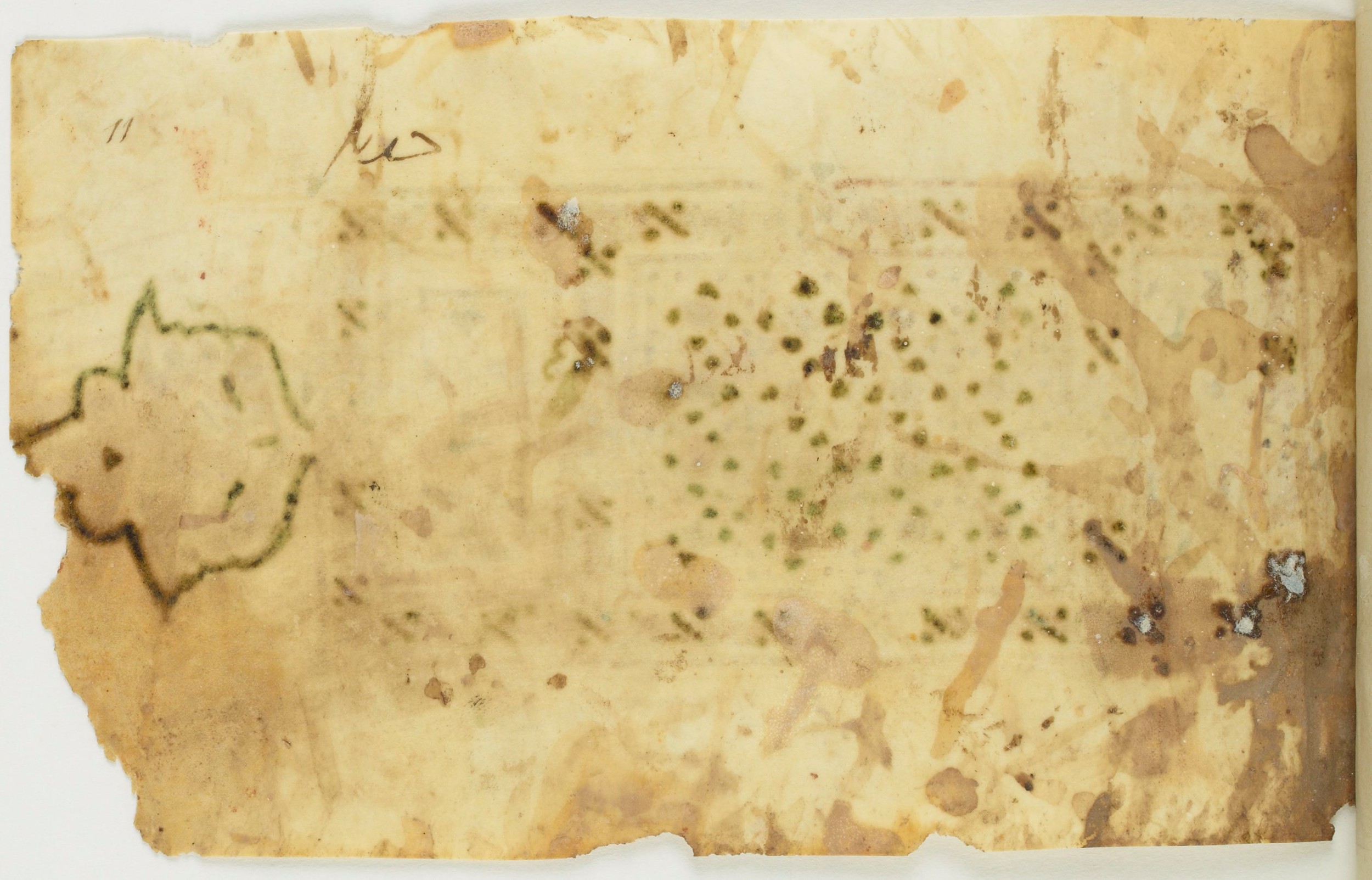
Paris, Bibliothèque nationale de France, Arabe 353 (a) (Scan 1)
This manuscript is notable for its elaborate geometric and vegetal full-page illuminations on the first and last folios, utilizing golden loops and stylized motifs. It also includes early diacritics and vocalization indicators in the form of partial red dots.
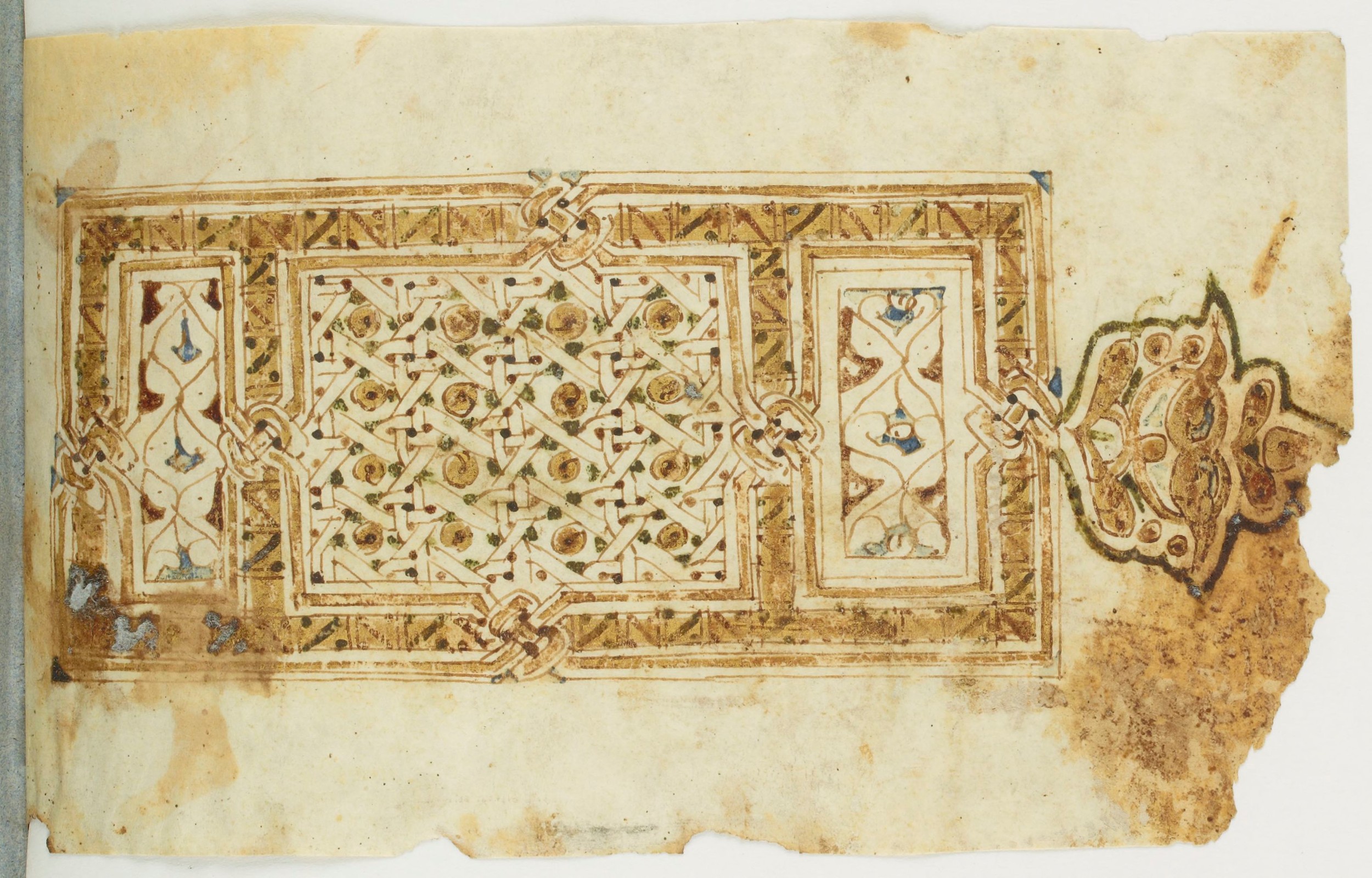
Paris, Bibliothèque nationale de France, Arabe 353 (a) (Scan 2)
This manuscript is notable for its elaborate geometric and vegetal full-page illuminations on the first and last folios, utilizing golden loops and stylized motifs. It also includes early diacritics and vocalization indicators in the form of partial red dots.
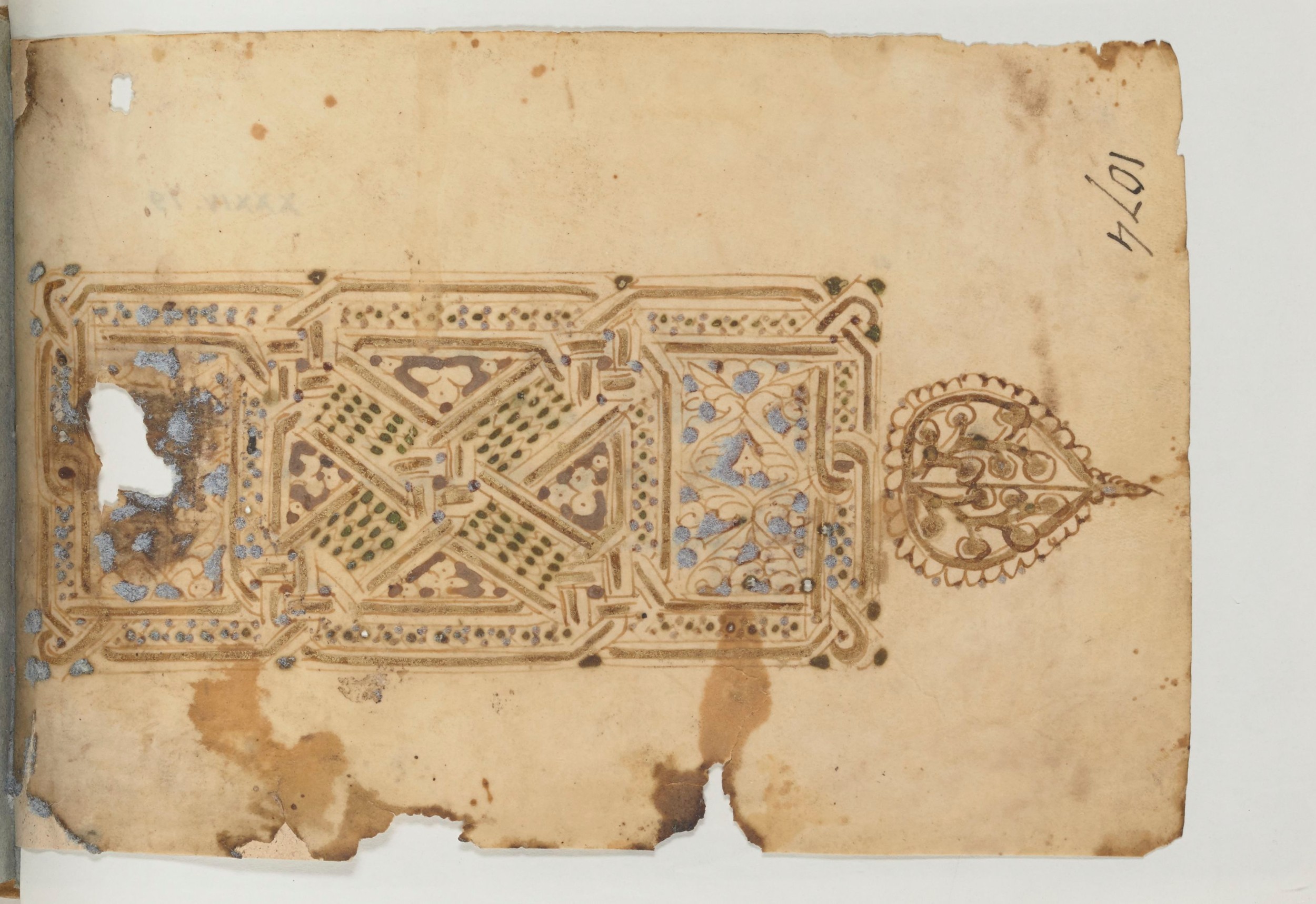
Paris, Bibliothèque nationale de France, Arabe 361 (b)
This folio features an intricate full-page decoration marking the end of the fifth of the seven parts of the Quran. The design includes a stylized Saint Andrew's cross and vegetal motifs drawn in ink, enhanced with red and green dots, and set against a wine-colored background.
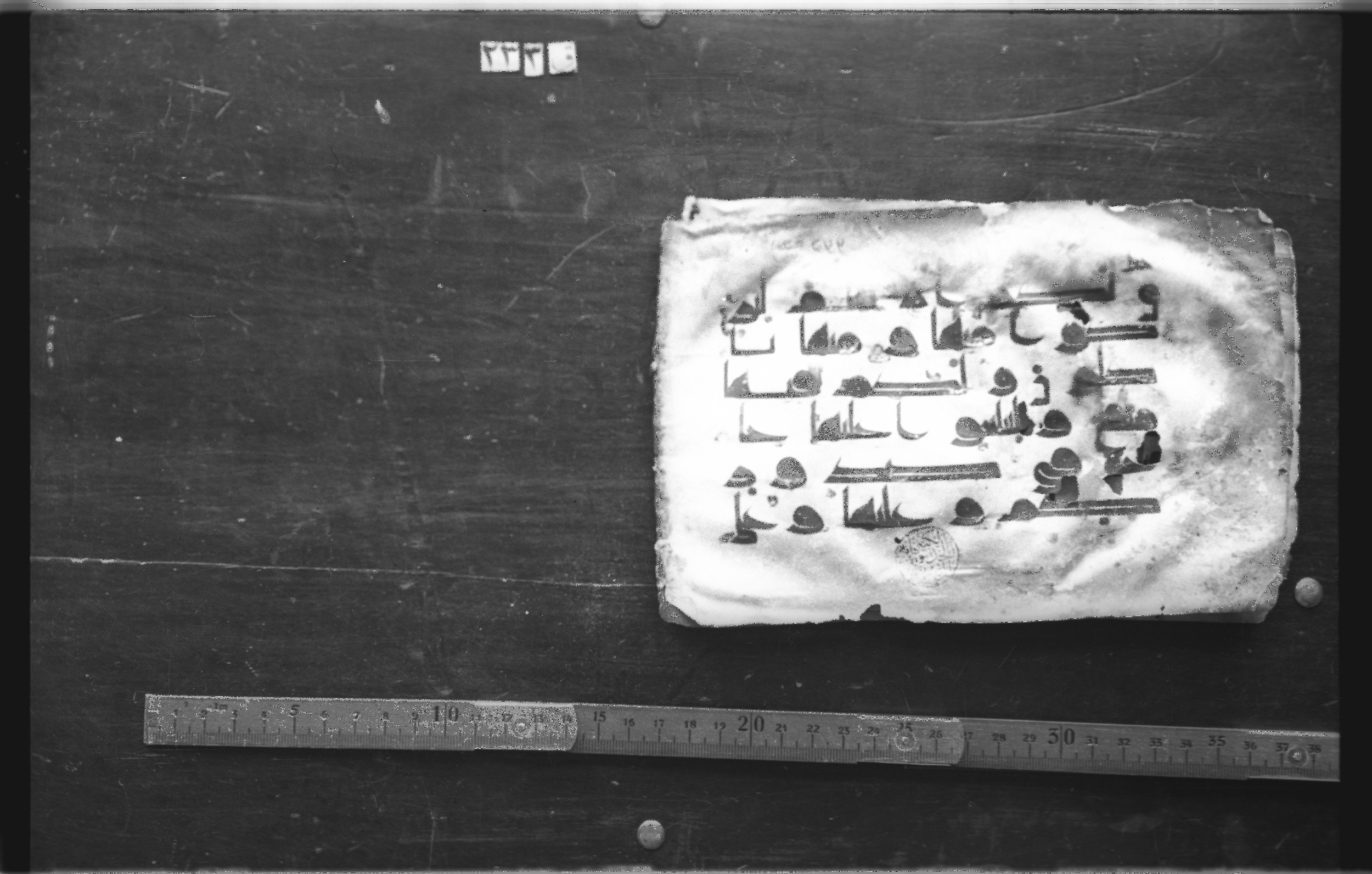
Qāf 233 (Gotthelf Bergsträßer archives) (Scan 1)
This manuscript is documented through black-and-white photographs from the Gotthelf Bergsträßer Archive taken around 1930. While originally kept at the Khedivial Library in Cairo, the actual modern shelf number of the original fragments is presently unknown.
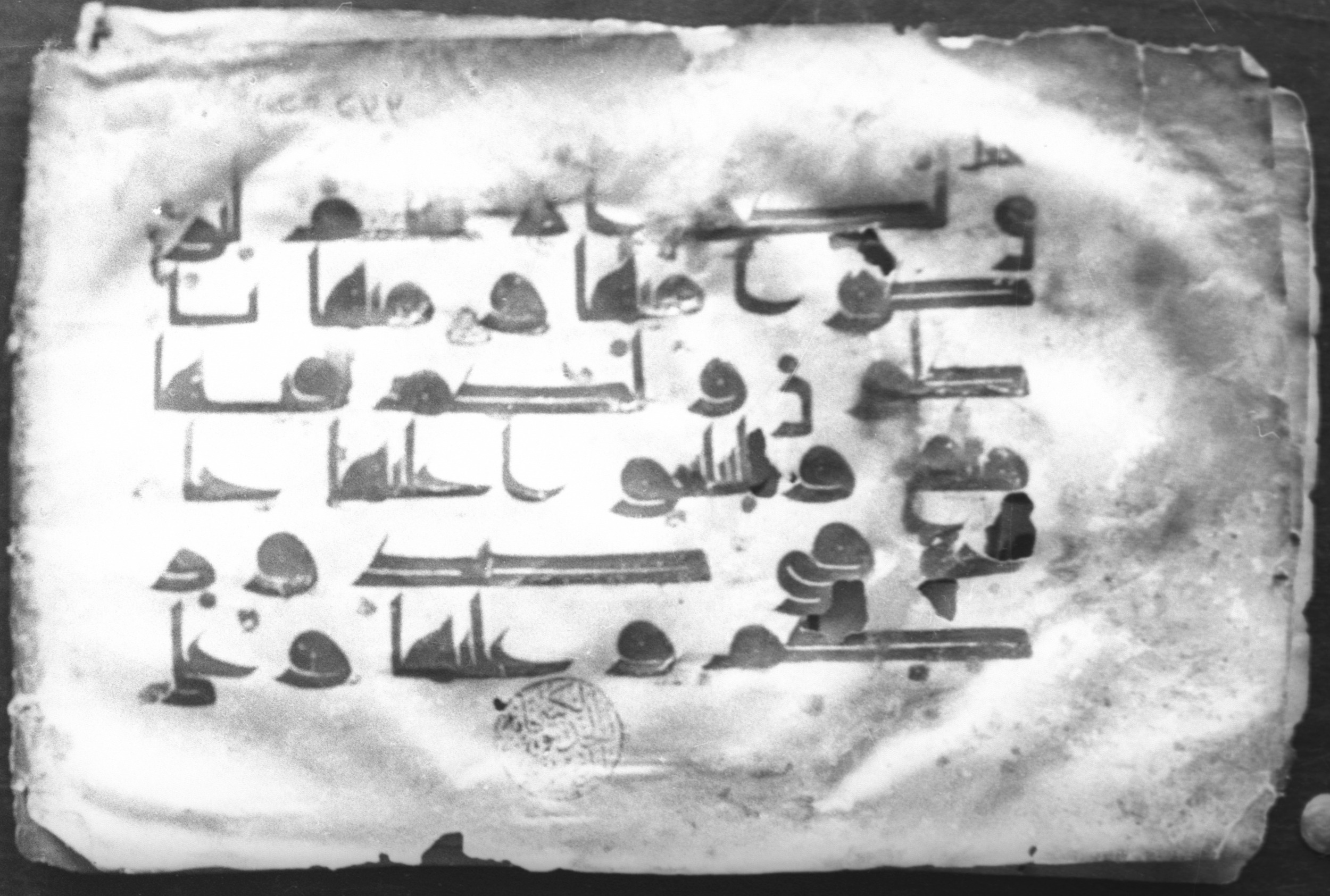
Qāf 233 (Gotthelf Bergsträßer archives) (Scan 2)
This manuscript is documented through black-and-white photographs from the Gotthelf Bergsträßer Archive taken around 1930. While originally kept at the Khedivial Library in Cairo, the actual modern shelf number of the original fragments is presently unknown.
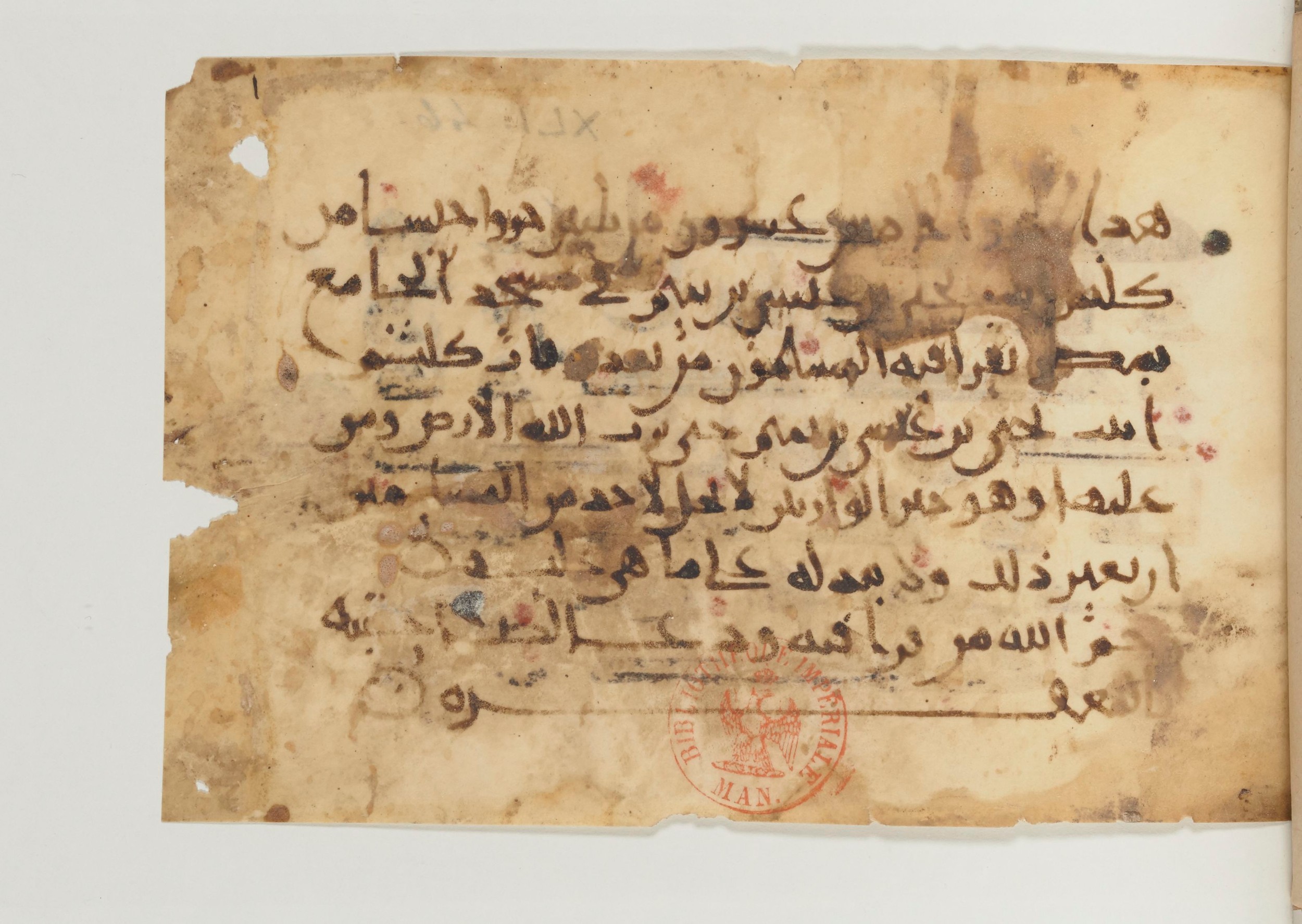
Paris, Bibliothèque nationale de France, Arabe 361 (a)
This manuscript features a note on its first folio stating that it is the 25th volume of a 30-volume set, deposited in the Great Mosque of Fustat by Kulthum bint Yahya. It separates verses with triangular clusters of three golden dots.
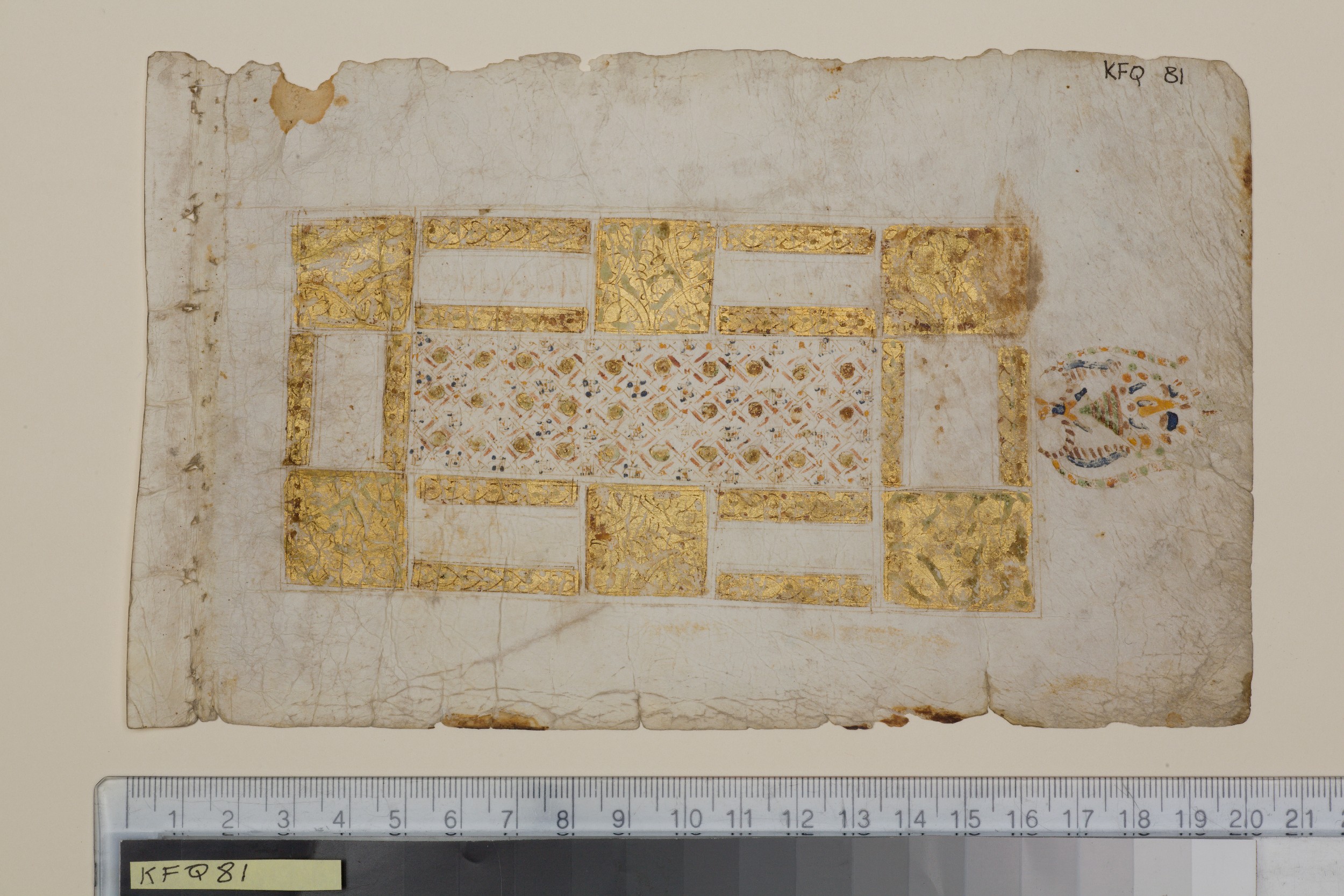
London, The Khalili Collections, KFQ 81
This single parchment folio was likely the first leaf of a manuscript, as its recto features a note detailing the total number of folios. The verso displays a stunning illuminated panel decorated with plant-based compositions, undulating lines, and rows of gold heart-shapes.
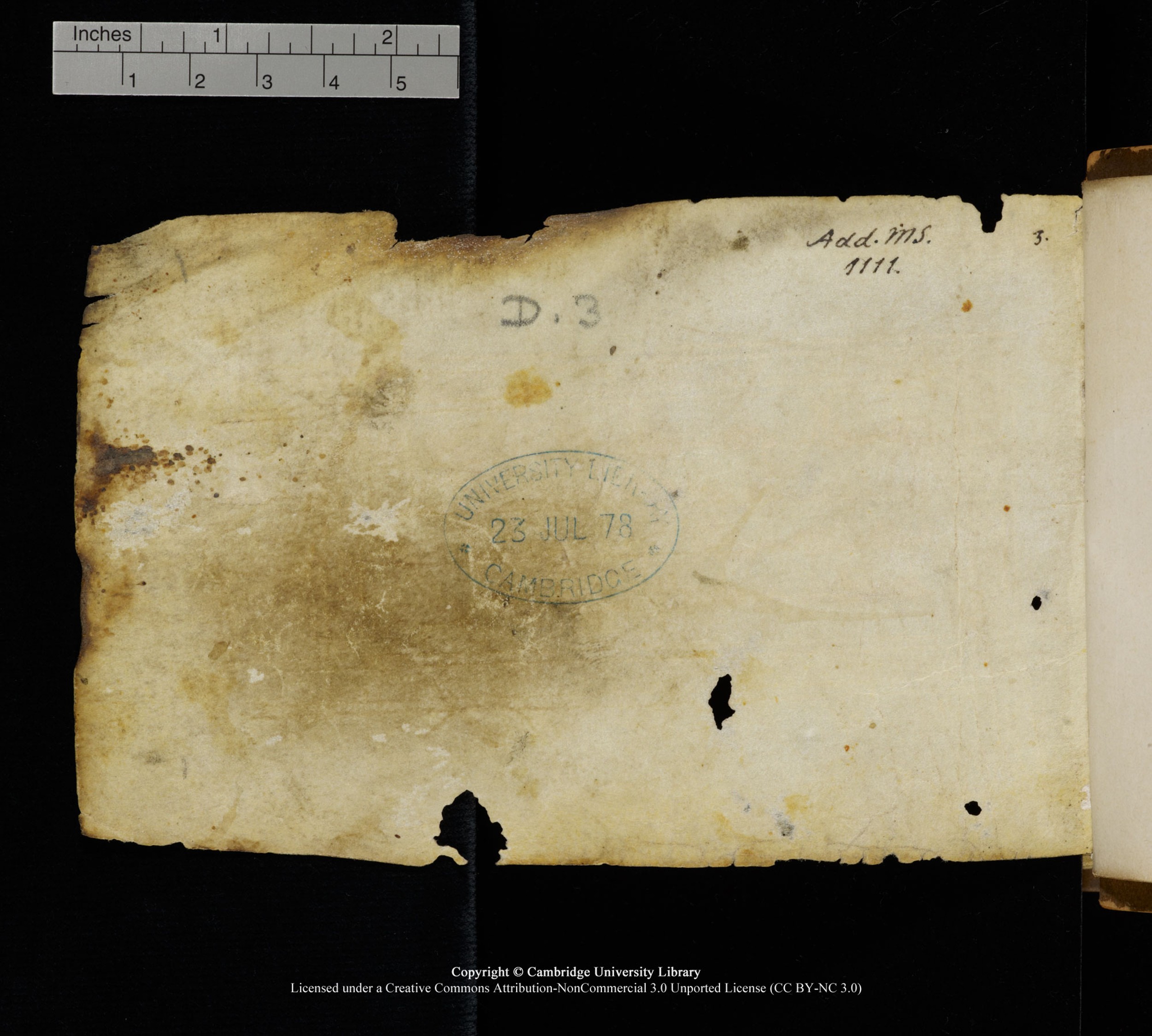
Cambridge, Cambridge University Library, MS Add.1111
This Abbasid-era manuscript features verses inscribed in a gilded frame, with several folios decorated with rectangular gilded panels. It was acquired by Edward H. Palmer during an 1878 research trip to the Sinai Peninsula.
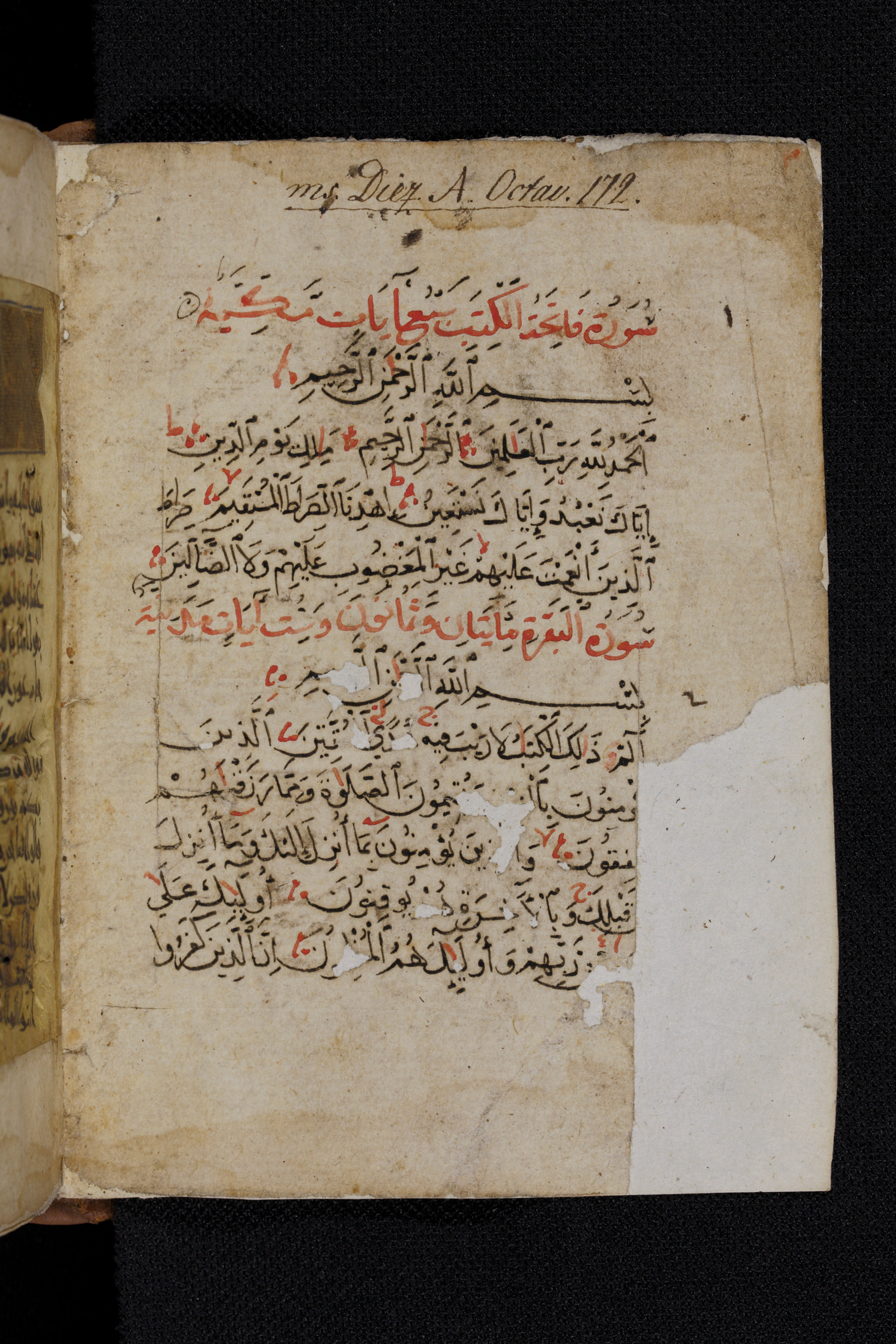
Diez A oct 172
This codex is largely complete, containing the entire Quran, though the first folio and a few other leaves were supplied by a later hand. Written on parchment, the manuscript represents an important transitional stage in the evolution of the Arabic script toward the Maghrebi style. While generally well-preserved, some of the early and late folios exhibit water damage and have been repaired.
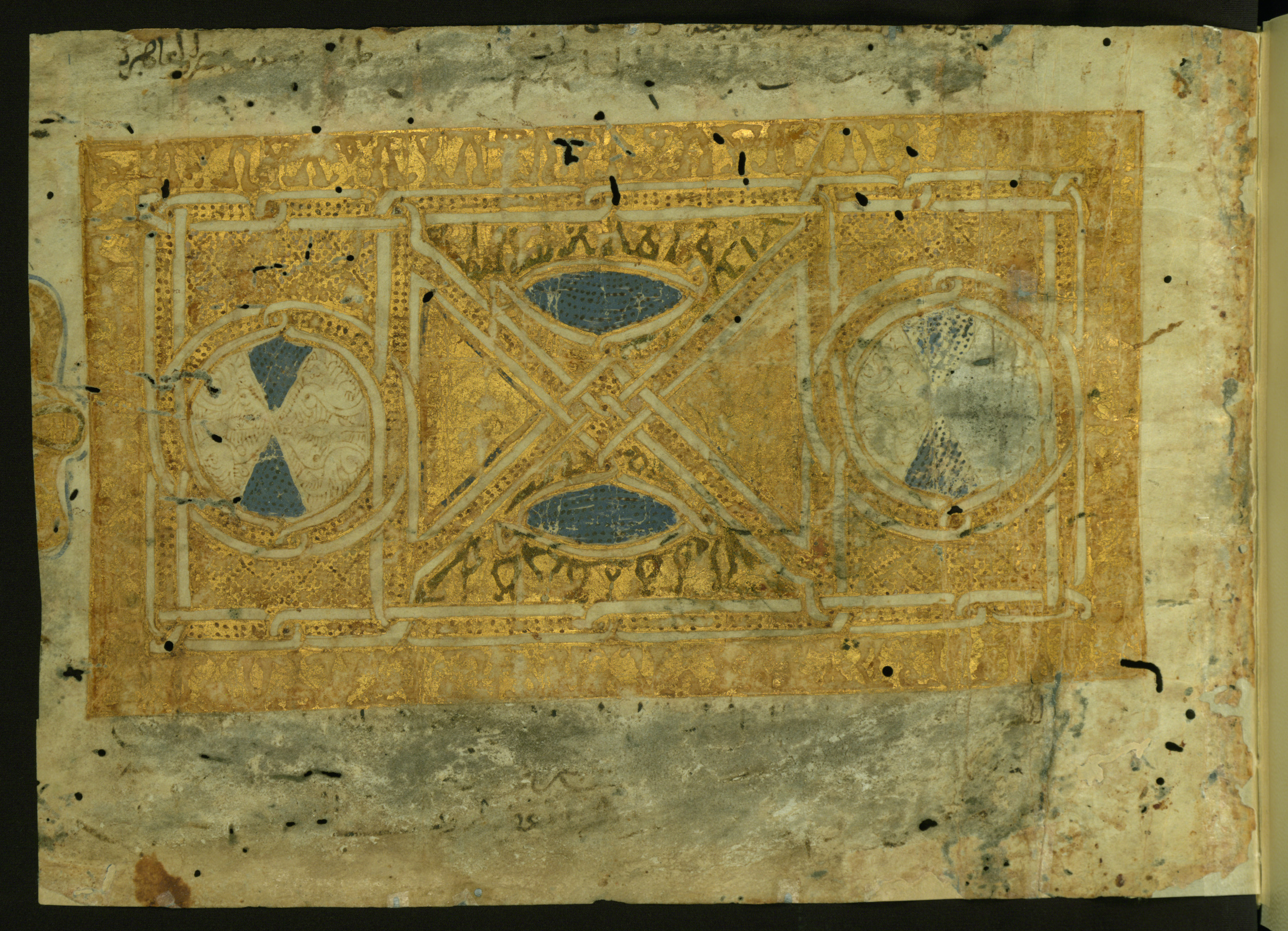
Walters W.554
The codex features an illuminated frontispiece of geometric design and a similarly decorated finispiece. Its blind-tooled black goatskin binding is attributable to Egypt and represents an important example of early Islamic bookbinding.
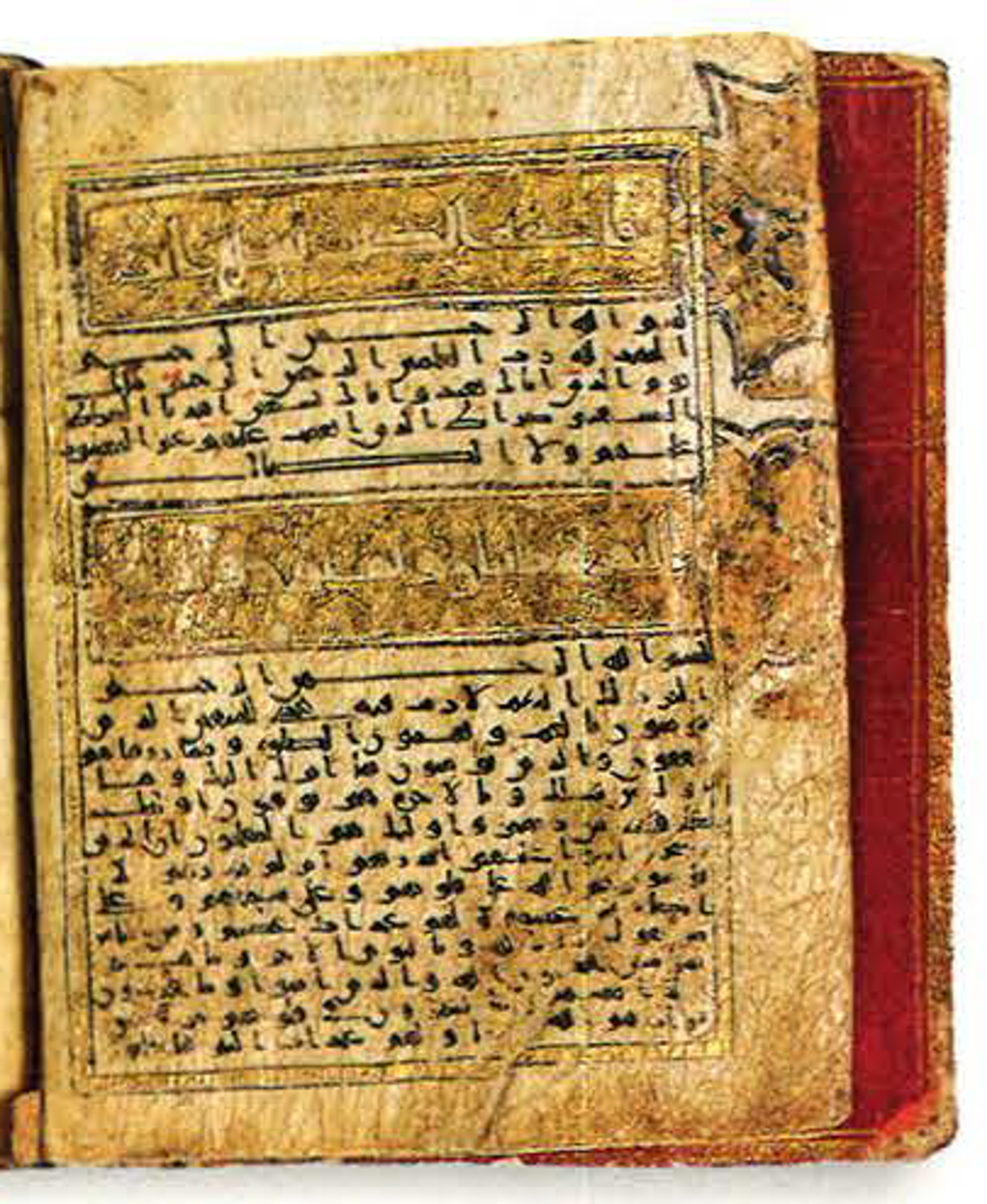
London, The Khalili Collections, QUR 430 (Scan 1)
This miniature single-volume manuscript features extremely small folios measuring just 7.3 x 6 cm. It is written in a miniature form of the New Style script, and currently has later lacquer covers with floral decoration and a black leather spine.
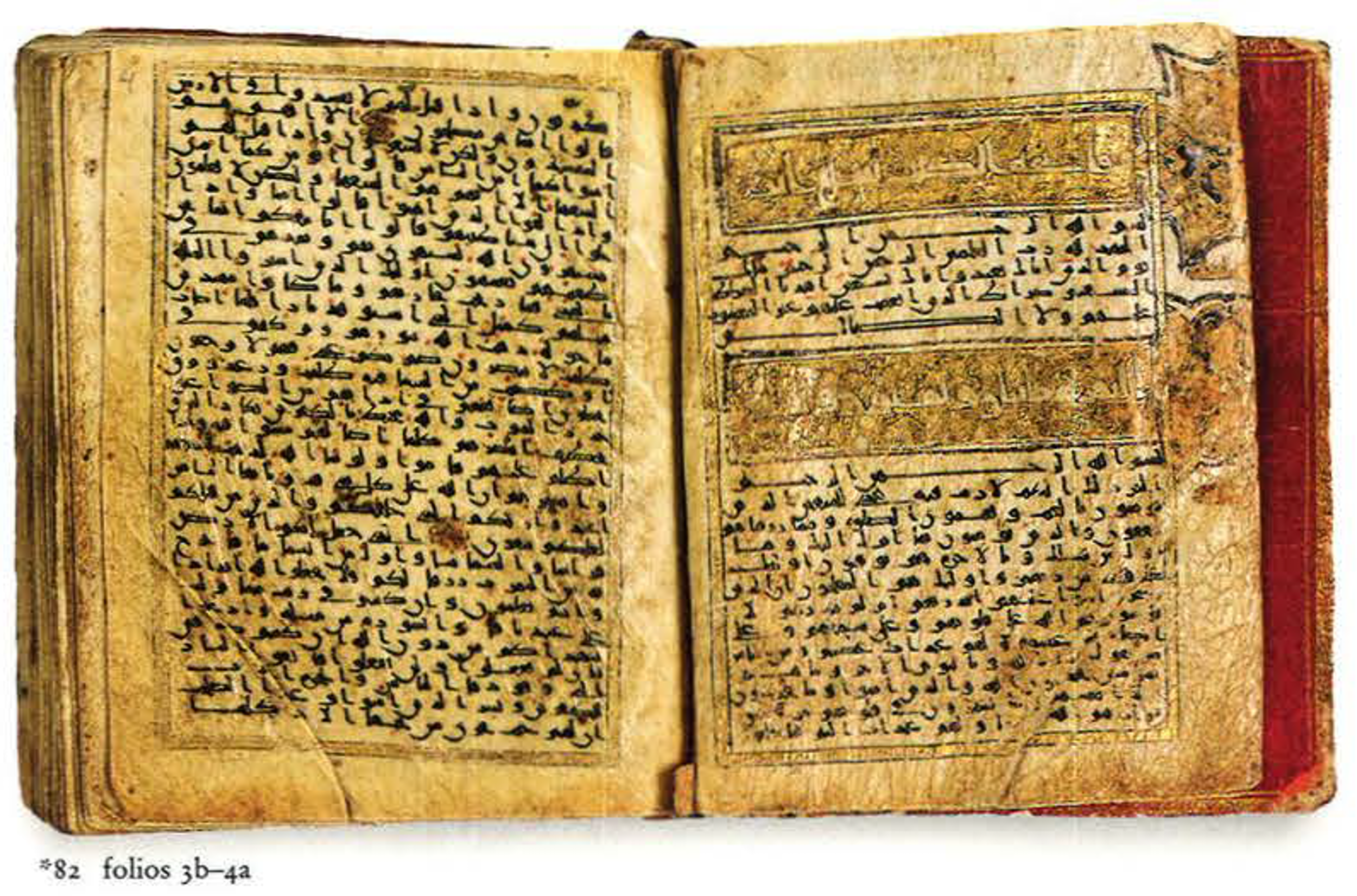
London, The Khalili Collections, QUR 430 (Scan 2)
This miniature single-volume manuscript features extremely small folios measuring just 7.3 x 6 cm. It is written in a miniature form of the New Style script, and currently has later lacquer covers with floral decoration and a black leather spine.
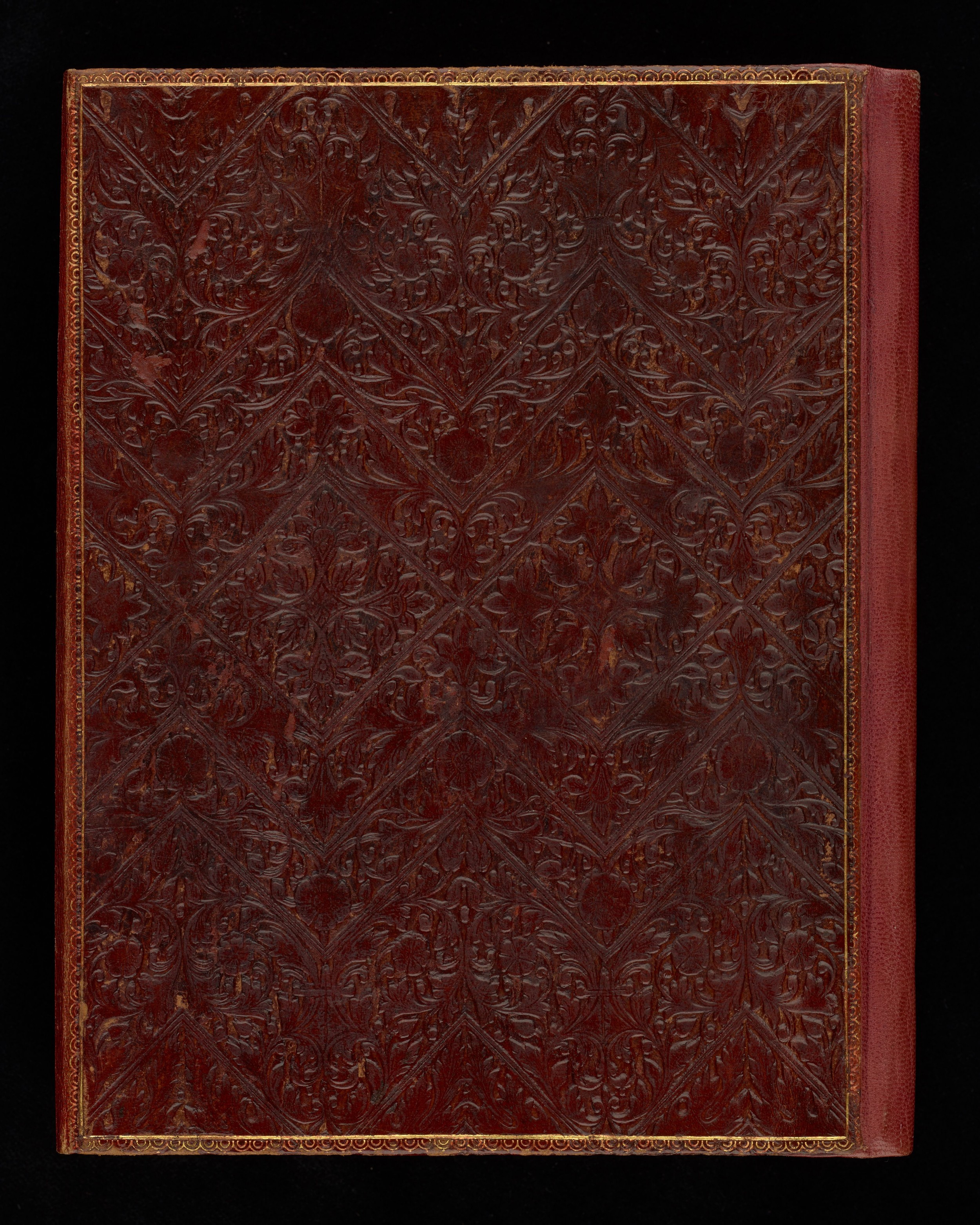
Dublin, Chester Beatty Library, Is 1431 (Scan 1)
This complete Quran was produced in Baghdad by the renowned calligrapher ʿAlī b. Hilāl, also known as Ibn al-Bawwāb, around 1000-1001 AD. He is a significant figure in Islamic art, closely associated with the adoption of the round Naskh script to transcribe the Quran.
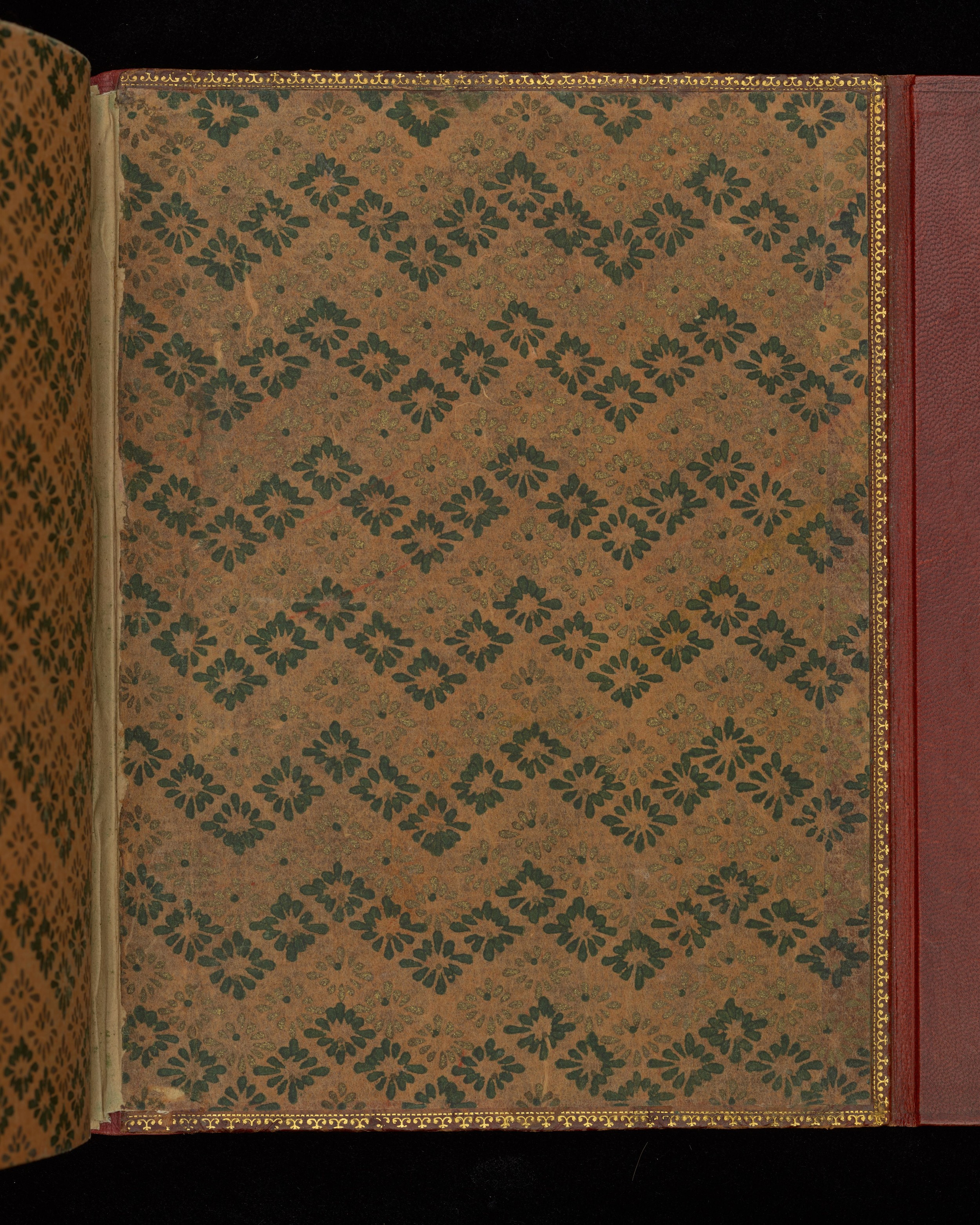
Dublin, Chester Beatty Library, Is 1431 (Scan 2)
This complete Quran was produced in Baghdad by the renowned calligrapher ʿAlī b. Hilāl, also known as Ibn al-Bawwāb, around 1000-1001 AD. He is a significant figure in Islamic art, closely associated with the adoption of the round Naskh script to transcribe the Quran.
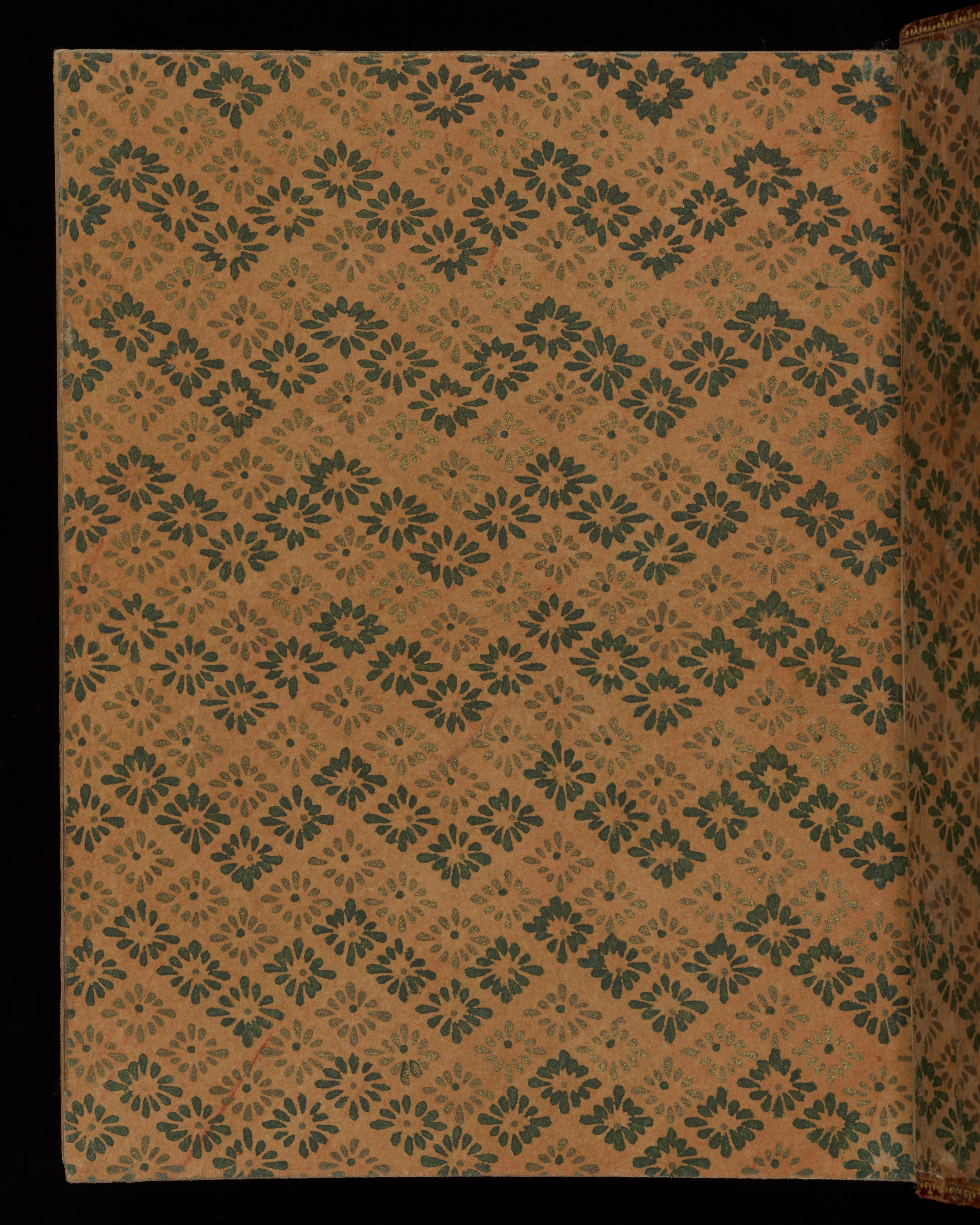
Dublin, Chester Beatty Library, Is 1431 (Scan 3)
This complete Quran was produced in Baghdad by the renowned calligrapher ʿAlī b. Hilāl, also known as Ibn al-Bawwāb, around 1000-1001 AD. He is a significant figure in Islamic art, closely associated with the adoption of the round Naskh script to transcribe the Quran.
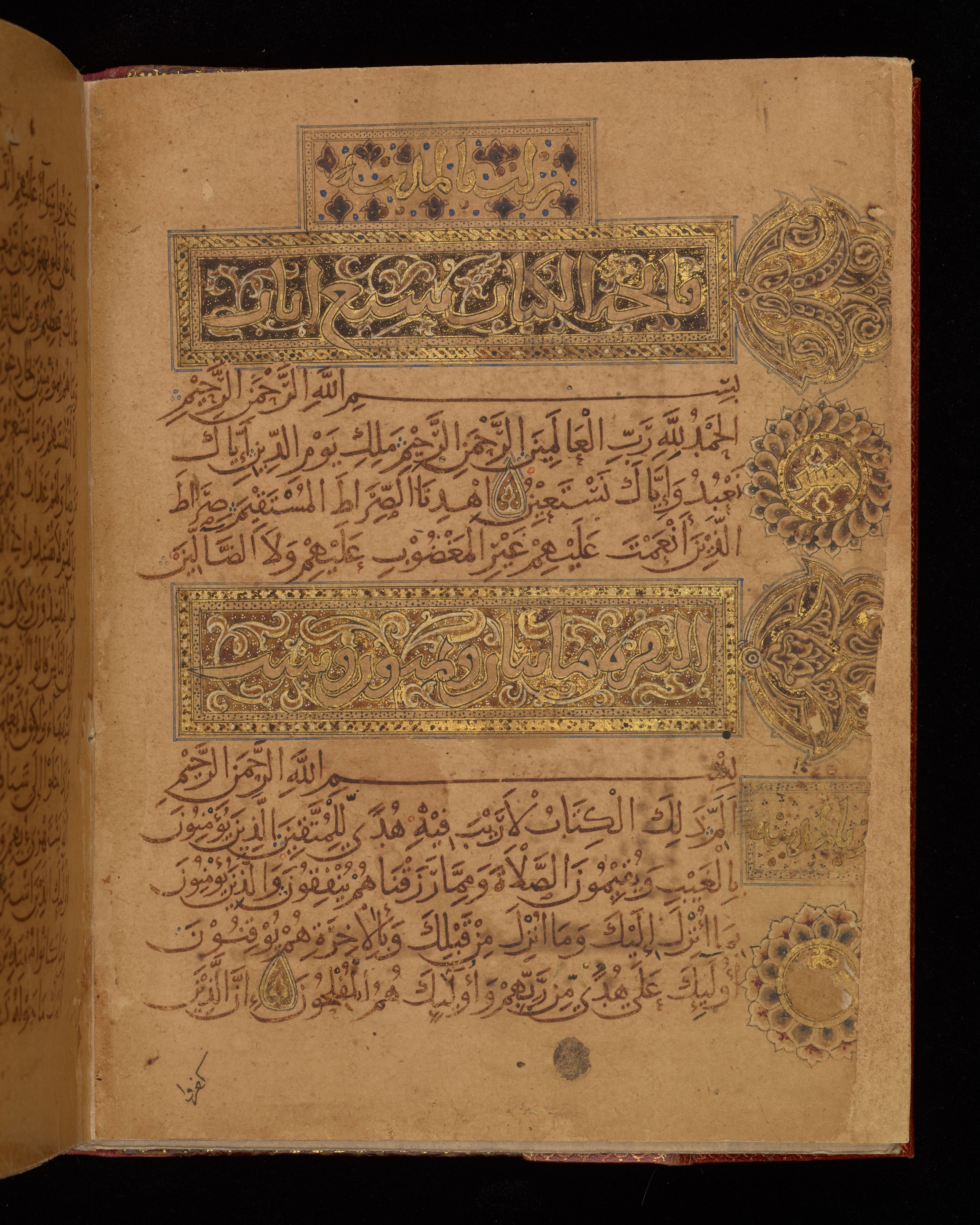
Dublin, Chester Beatty Library, Is 1431 (Scan 4)
This complete Quran was produced in Baghdad by the renowned calligrapher ʿAlī b. Hilāl, also known as Ibn al-Bawwāb, around 1000-1001 AD. He is a significant figure in Islamic art, closely associated with the adoption of the round Naskh script to transcribe the Quran.
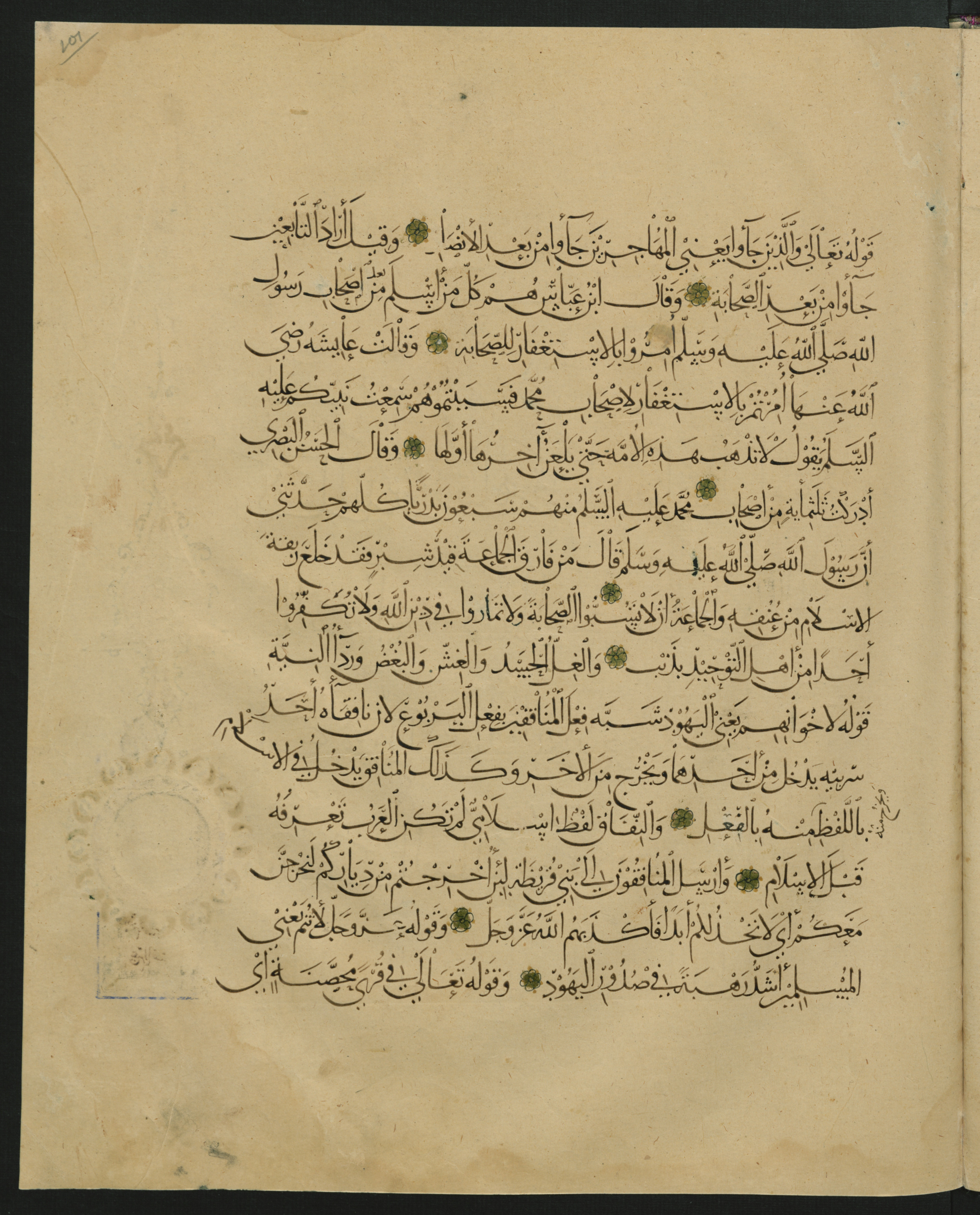
Berlin, Staatsbibliothek zu Berlin, Landberg 822 (Ahlwardt 914) (Scan 1)
This manuscript is a rare case where a Quranic codex is precisely dated by a colophon (completed on May 5, 1204 AD) and the scribe, al-Faḍl b. ʿUmar ar-Rāʾiḍ, is a known Iraqi scholar mentioned in Muslim scholarly literature. It also contains an exegetical compilation detailing circumstances of revelation, abrogated verses, and variant readings.
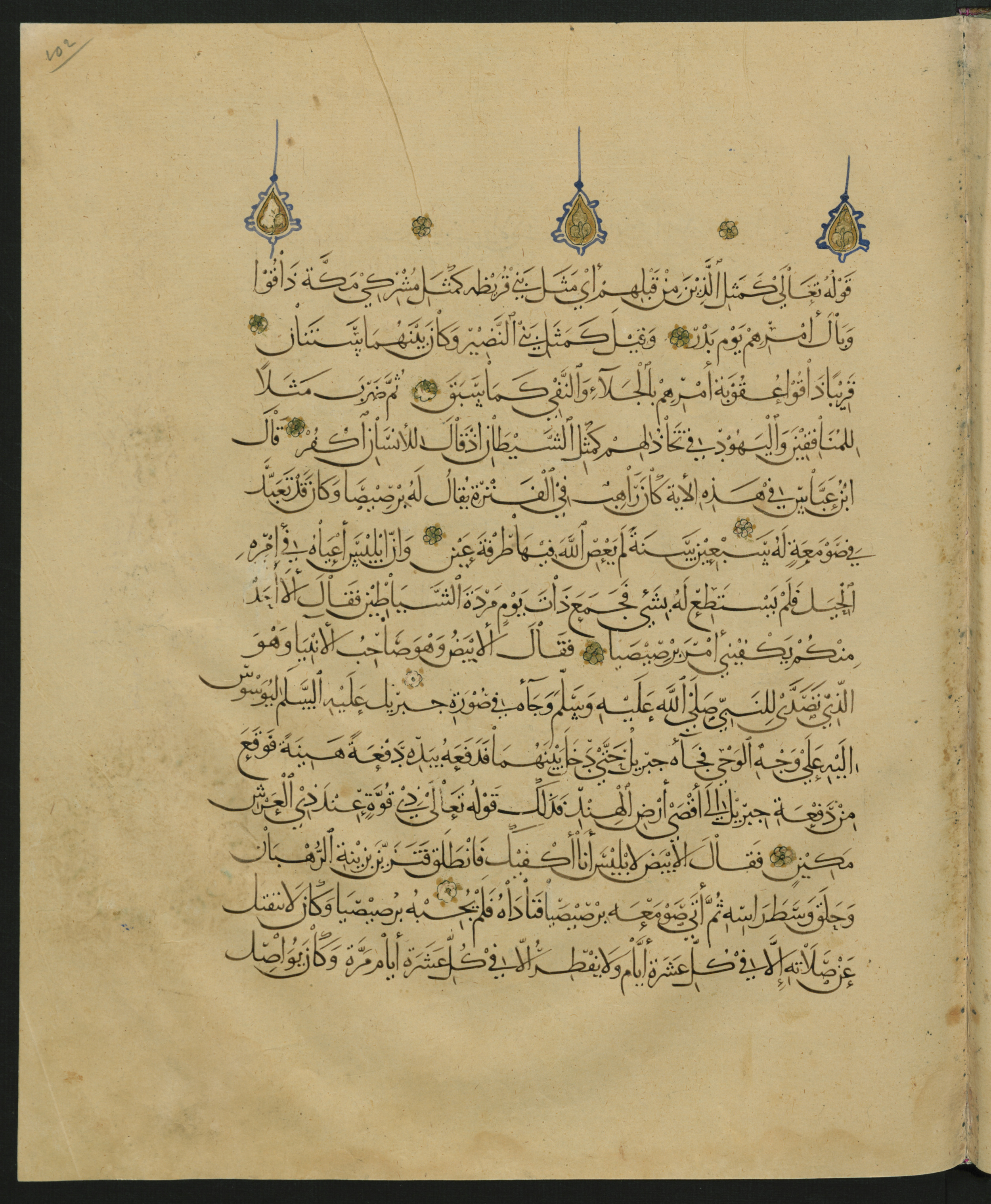
Berlin, Staatsbibliothek zu Berlin, Landberg 822 (Ahlwardt 914) (Scan 2)
This manuscript is a rare case where a Quranic codex is precisely dated by a colophon (completed on May 5, 1204 AD) and the scribe, al-Faḍl b. ʿUmar ar-Rāʾiḍ, is a known Iraqi scholar mentioned in Muslim scholarly literature. It also contains an exegetical compilation detailing circumstances of revelation, abrogated verses, and variant readings.
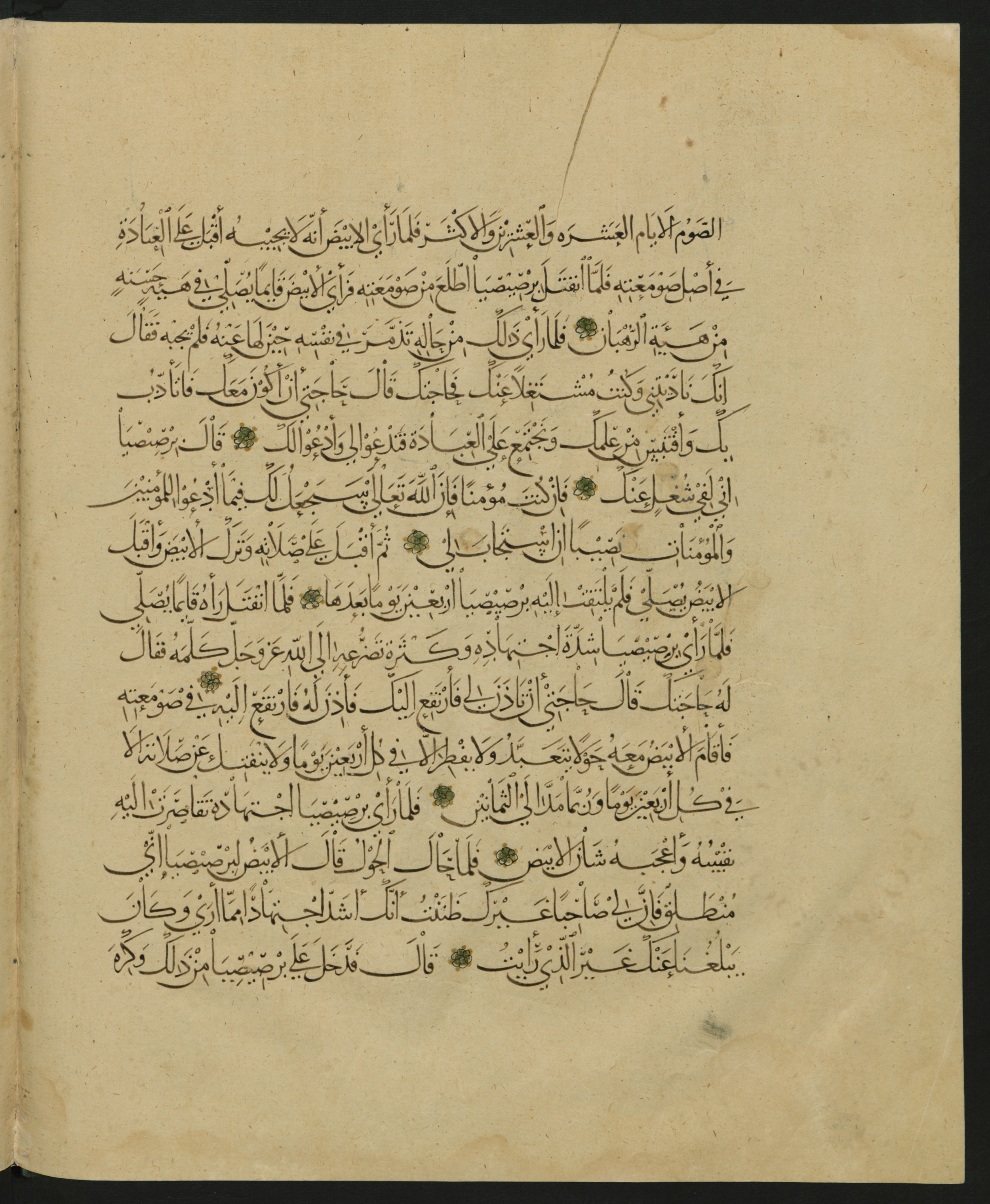
Berlin, Staatsbibliothek zu Berlin, Landberg 822 (Ahlwardt 914) (Scan 3)
This manuscript is a rare case where a Quranic codex is precisely dated by a colophon (completed on May 5, 1204 AD) and the scribe, al-Faḍl b. ʿUmar ar-Rāʾiḍ, is a known Iraqi scholar mentioned in Muslim scholarly literature. It also contains an exegetical compilation detailing circumstances of revelation, abrogated verses, and variant readings.
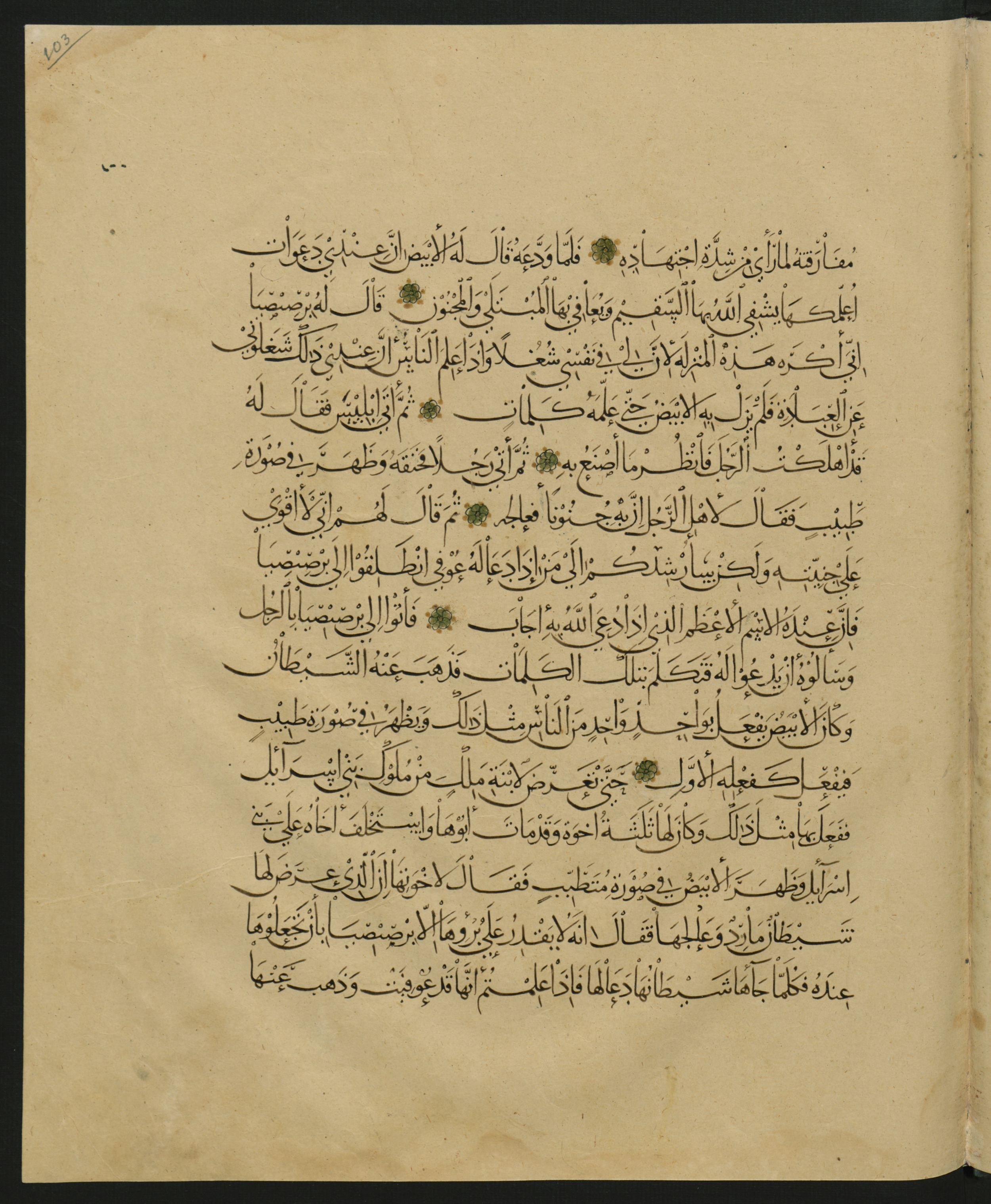
Berlin, Staatsbibliothek zu Berlin, Landberg 822 (Ahlwardt 914) (Scan 4)
This manuscript is a rare case where a Quranic codex is precisely dated by a colophon (completed on May 5, 1204 AD) and the scribe, al-Faḍl b. ʿUmar ar-Rāʾiḍ, is a known Iraqi scholar mentioned in Muslim scholarly literature. It also contains an exegetical compilation detailing circumstances of revelation, abrogated verses, and variant readings.
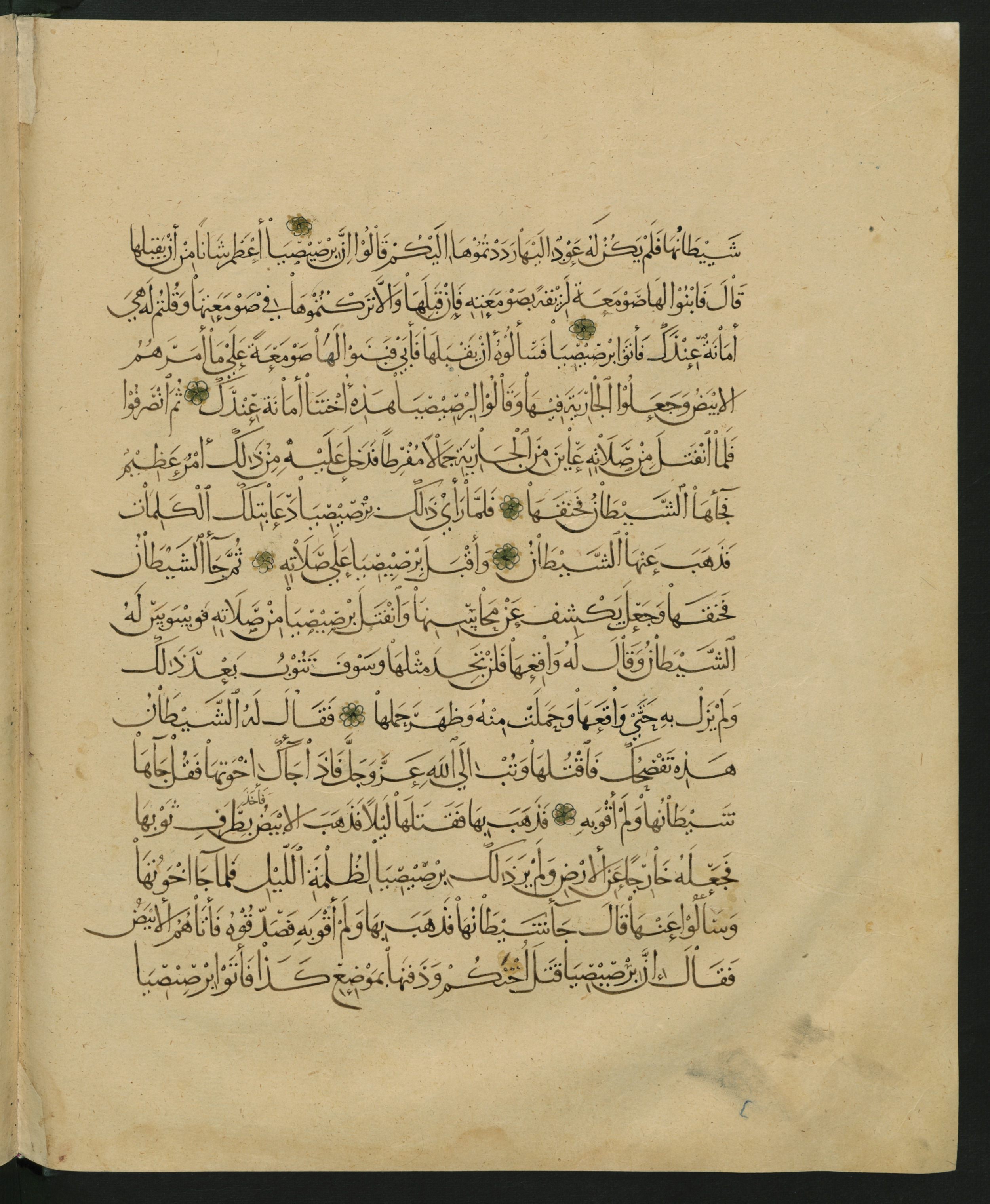
Berlin, Staatsbibliothek zu Berlin, Landberg 822 (Ahlwardt 914) (Scan 5)
This manuscript is a rare case where a Quranic codex is precisely dated by a colophon (completed on May 5, 1204 AD) and the scribe, al-Faḍl b. ʿUmar ar-Rāʾiḍ, is a known Iraqi scholar mentioned in Muslim scholarly literature. It also contains an exegetical compilation detailing circumstances of revelation, abrogated verses, and variant readings.
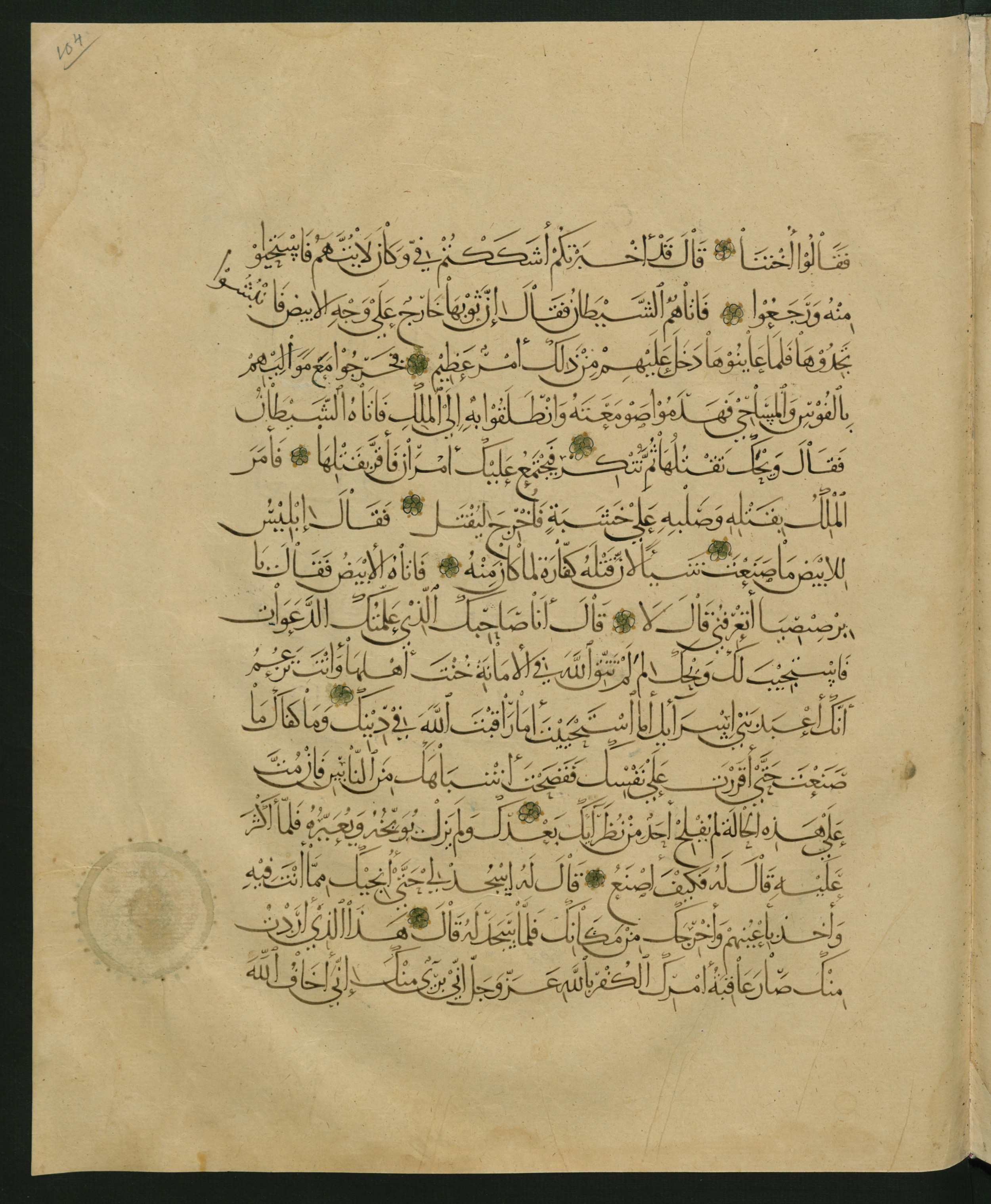
Berlin, Staatsbibliothek zu Berlin, Landberg 822 (Ahlwardt 914) (Scan 6)
This manuscript is a rare case where a Quranic codex is precisely dated by a colophon (completed on May 5, 1204 AD) and the scribe, al-Faḍl b. ʿUmar ar-Rāʾiḍ, is a known Iraqi scholar mentioned in Muslim scholarly literature. It also contains an exegetical compilation detailing circumstances of revelation, abrogated verses, and variant readings.
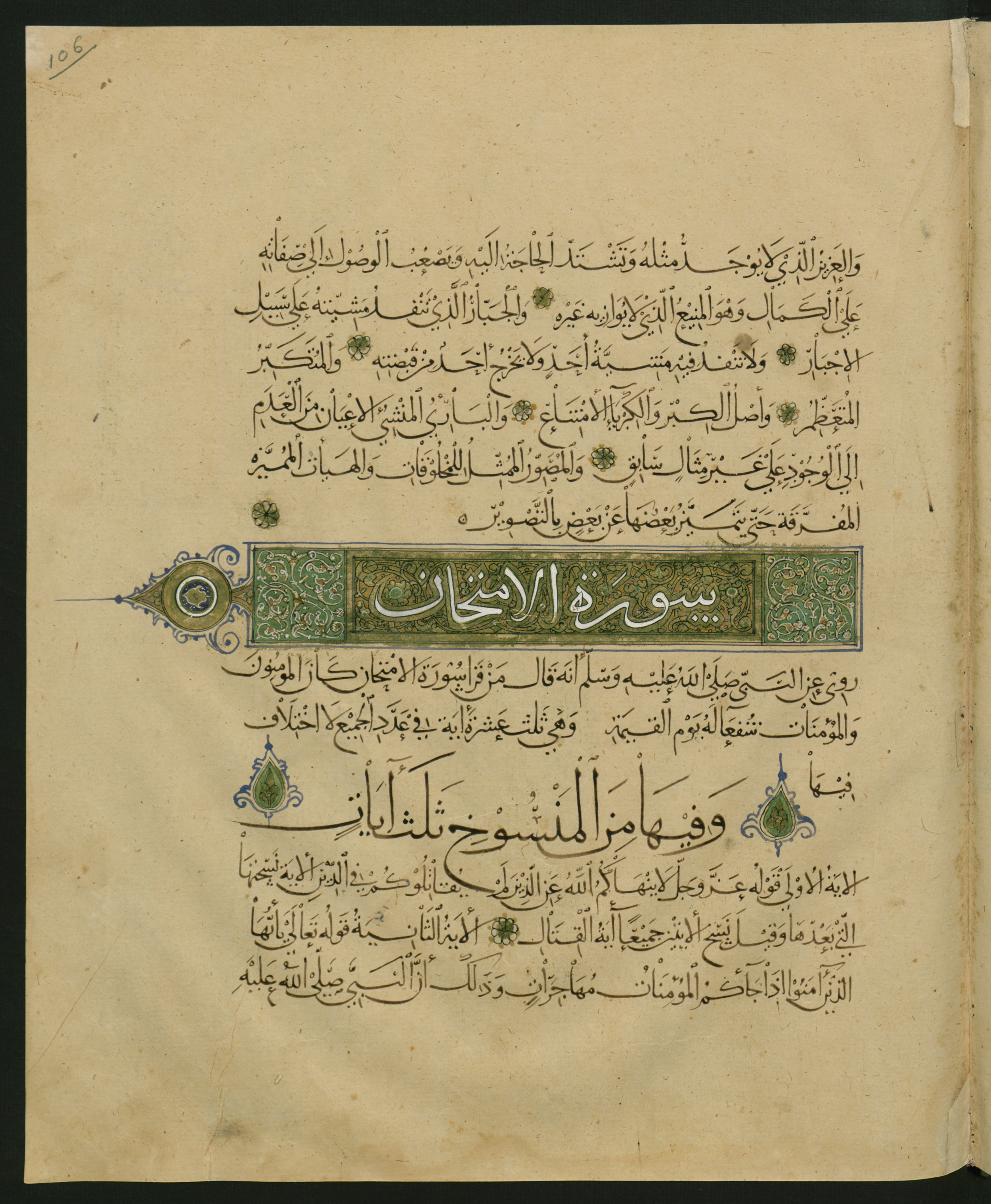
Berlin, Staatsbibliothek zu Berlin, Landberg 822 (Ahlwardt 914) (Scan 7)
This manuscript is a rare case where a Quranic codex is precisely dated by a colophon (completed on May 5, 1204 AD) and the scribe, al-Faḍl b. ʿUmar ar-Rāʾiḍ, is a known Iraqi scholar mentioned in Muslim scholarly literature. It also contains an exegetical compilation detailing circumstances of revelation, abrogated verses, and variant readings.
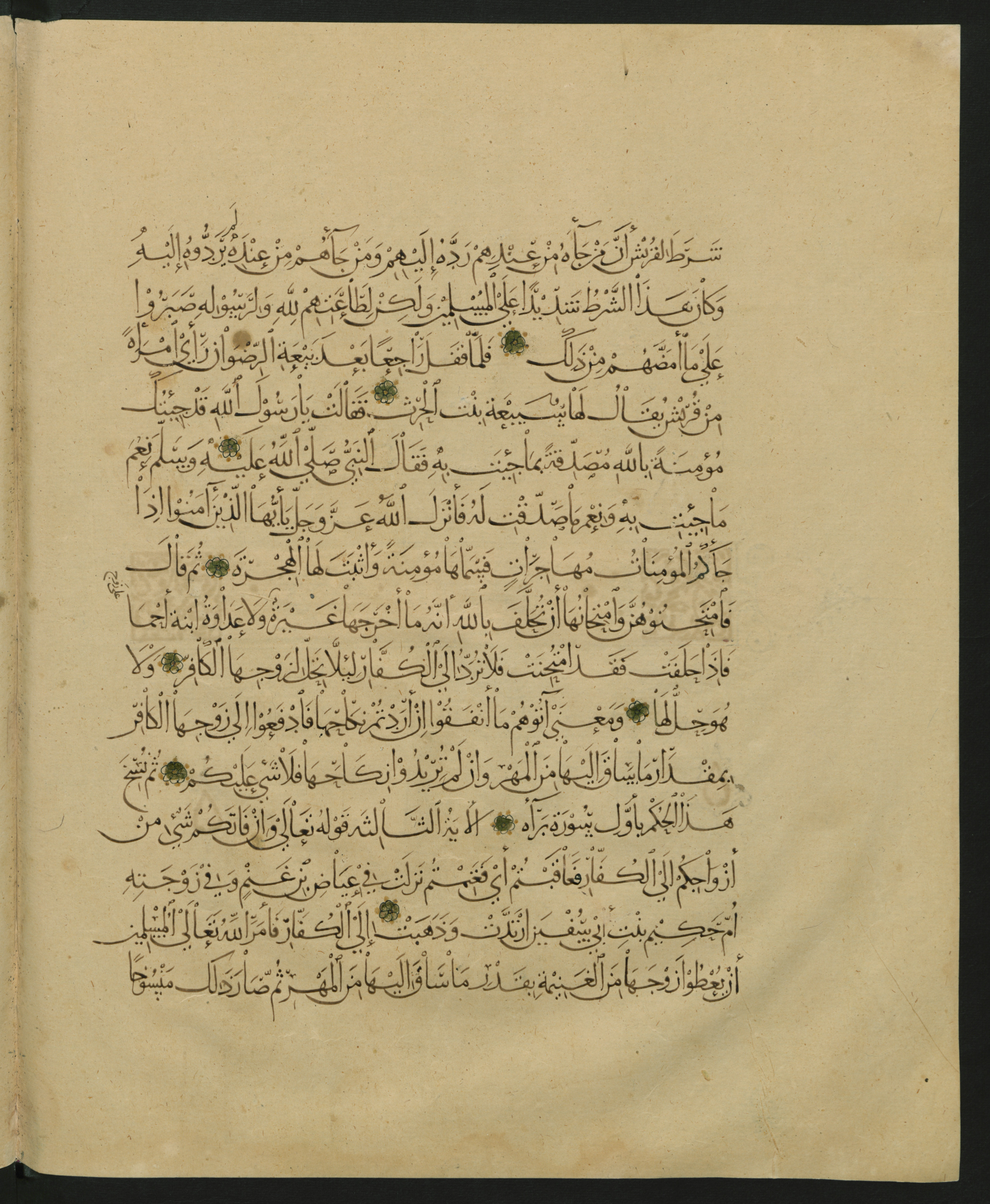
Berlin, Staatsbibliothek zu Berlin, Landberg 822 (Ahlwardt 914) (Scan 8)
This manuscript is a rare case where a Quranic codex is precisely dated by a colophon (completed on May 5, 1204 AD) and the scribe, al-Faḍl b. ʿUmar ar-Rāʾiḍ, is a known Iraqi scholar mentioned in Muslim scholarly literature. It also contains an exegetical compilation detailing circumstances of revelation, abrogated verses, and variant readings.
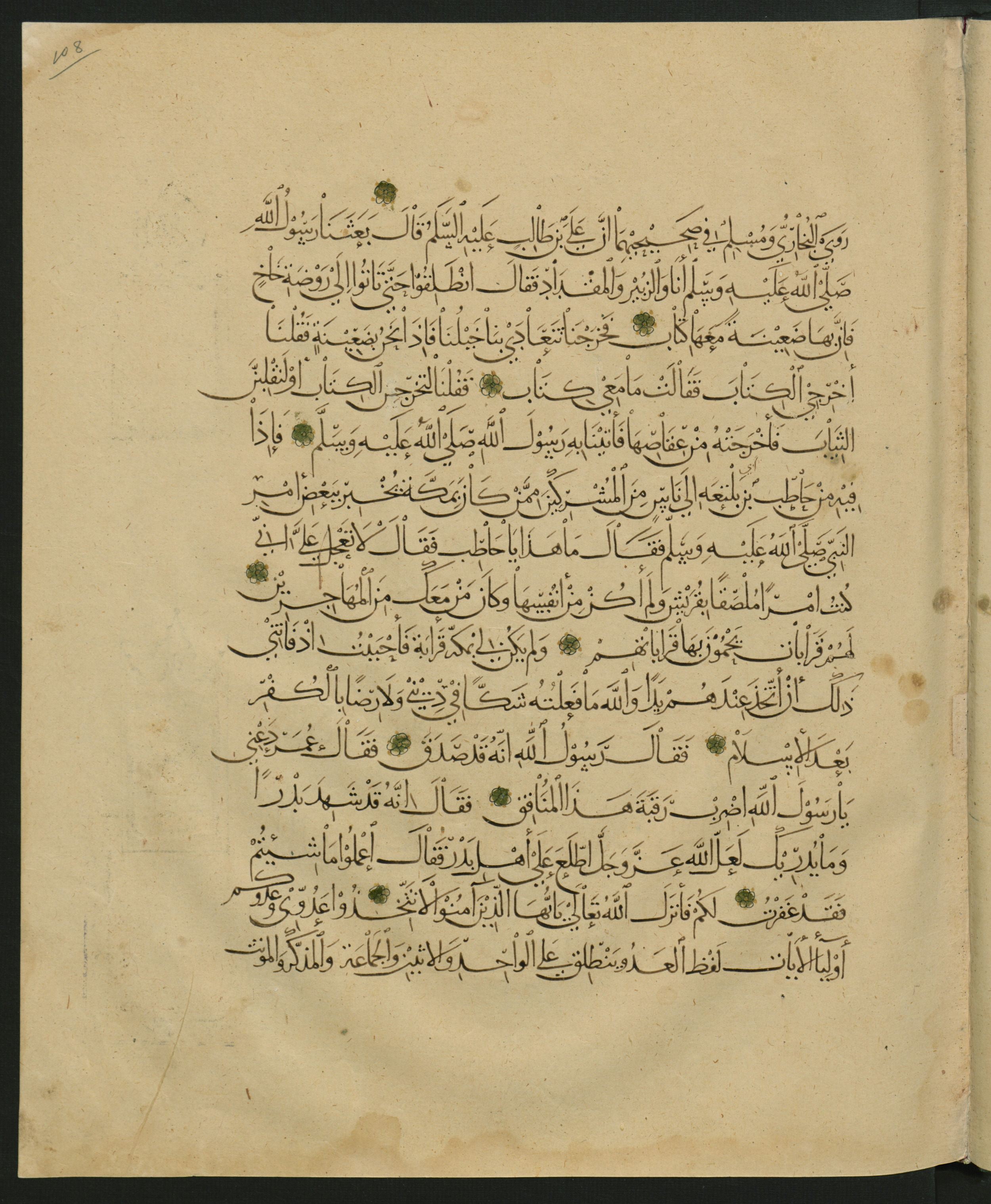
Berlin, Staatsbibliothek zu Berlin, Landberg 822 (Ahlwardt 914) (Scan 9)
This manuscript is a rare case where a Quranic codex is precisely dated by a colophon (completed on May 5, 1204 AD) and the scribe, al-Faḍl b. ʿUmar ar-Rāʾiḍ, is a known Iraqi scholar mentioned in Muslim scholarly literature. It also contains an exegetical compilation detailing circumstances of revelation, abrogated verses, and variant readings.
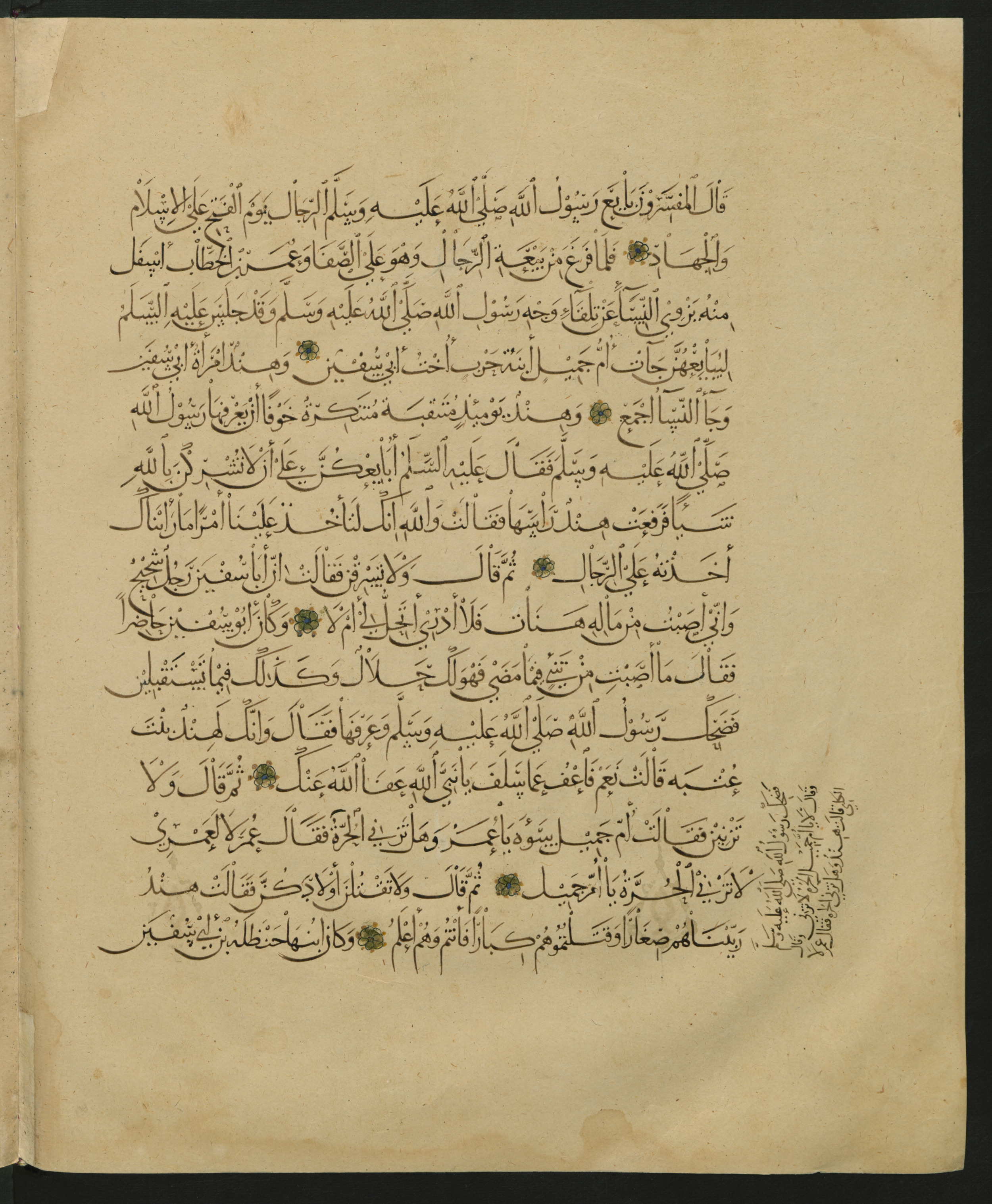
Berlin, Staatsbibliothek zu Berlin, Landberg 822 (Ahlwardt 914) (Scan 10)
This manuscript is a rare case where a Quranic codex is precisely dated by a colophon (completed on May 5, 1204 AD) and the scribe, al-Faḍl b. ʿUmar ar-Rāʾiḍ, is a known Iraqi scholar mentioned in Muslim scholarly literature. It also contains an exegetical compilation detailing circumstances of revelation, abrogated verses, and variant readings.
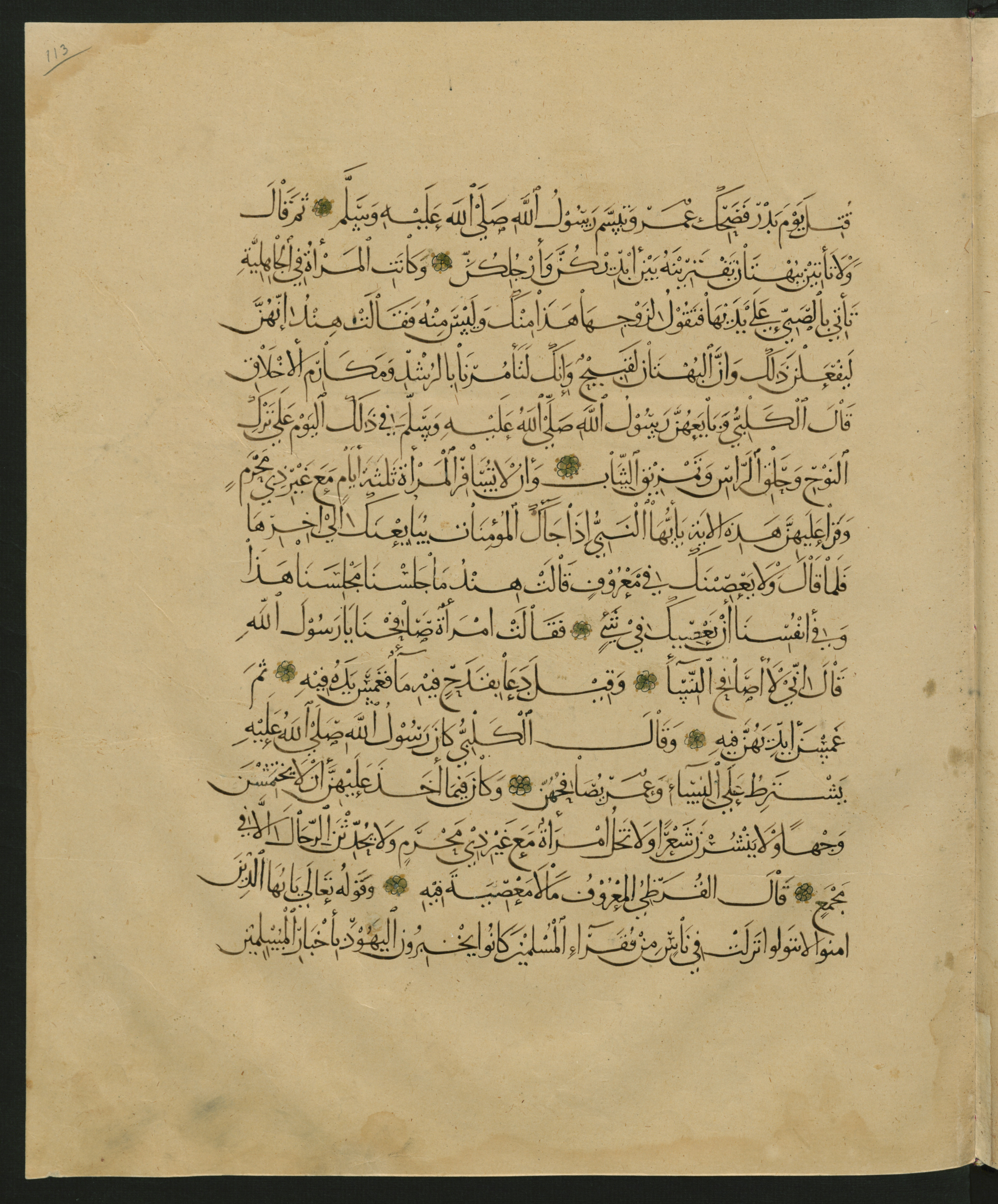
Berlin, Staatsbibliothek zu Berlin, Landberg 822 (Ahlwardt 914) (Scan 11)
This manuscript is a rare case where a Quranic codex is precisely dated by a colophon (completed on May 5, 1204 AD) and the scribe, al-Faḍl b. ʿUmar ar-Rāʾiḍ, is a known Iraqi scholar mentioned in Muslim scholarly literature. It also contains an exegetical compilation detailing circumstances of revelation, abrogated verses, and variant readings.
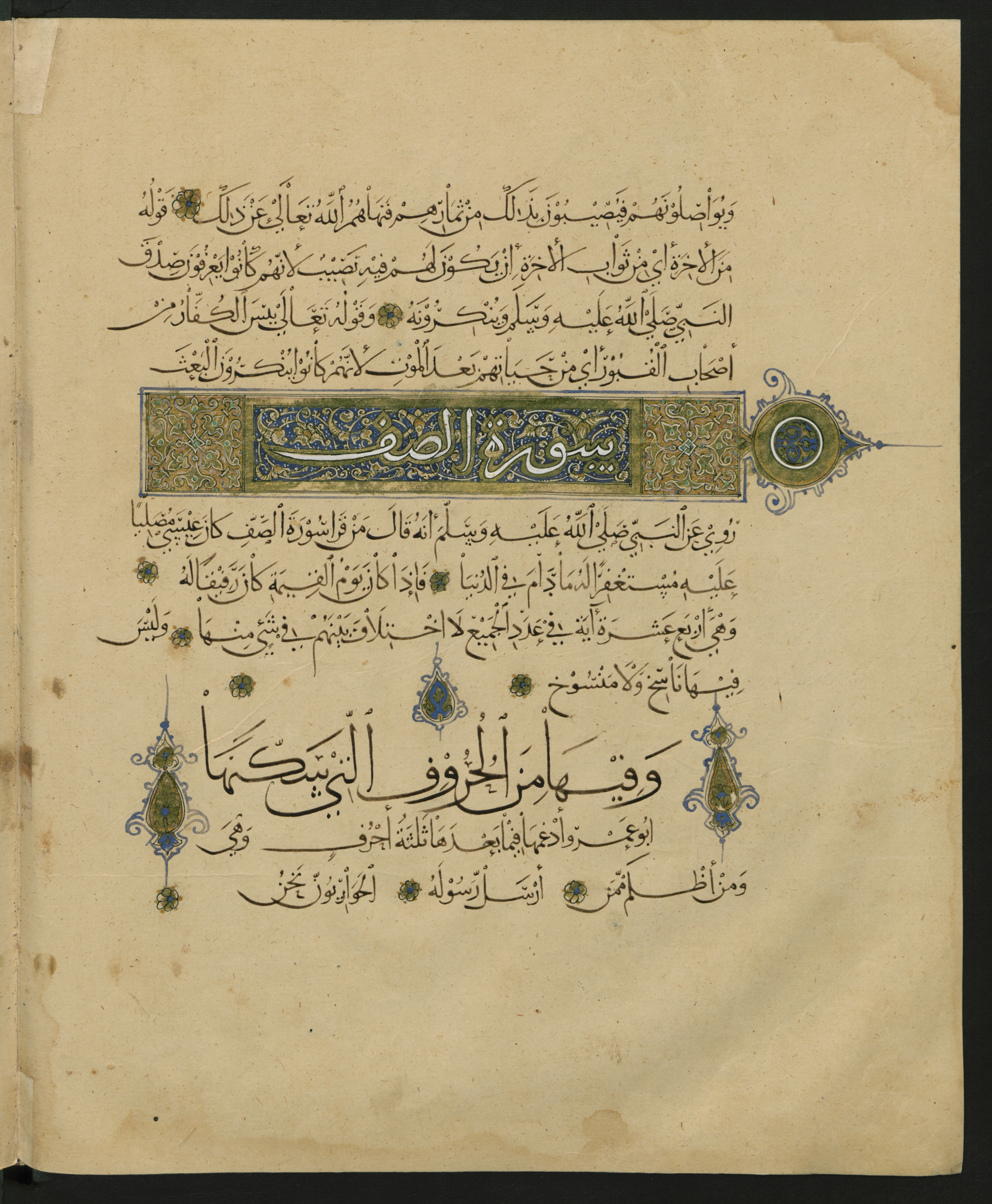
Berlin, Staatsbibliothek zu Berlin, Landberg 822 (Ahlwardt 914) (Scan 12)
This manuscript is a rare case where a Quranic codex is precisely dated by a colophon (completed on May 5, 1204 AD) and the scribe, al-Faḍl b. ʿUmar ar-Rāʾiḍ, is a known Iraqi scholar mentioned in Muslim scholarly literature. It also contains an exegetical compilation detailing circumstances of revelation, abrogated verses, and variant readings.
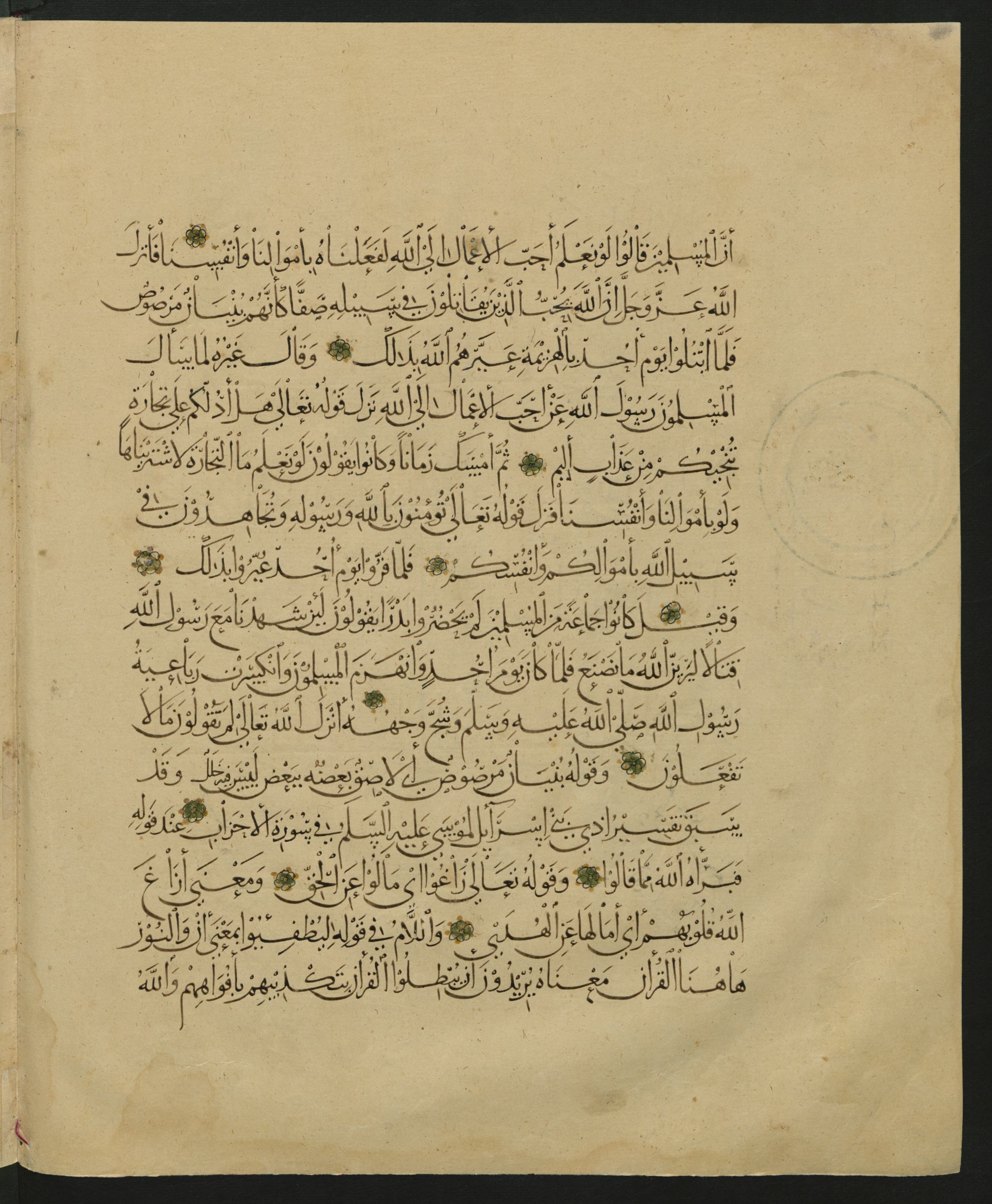
Berlin, Staatsbibliothek zu Berlin, Landberg 822 (Ahlwardt 914) (Scan 13)
This manuscript is a rare case where a Quranic codex is precisely dated by a colophon (completed on May 5, 1204 AD) and the scribe, al-Faḍl b. ʿUmar ar-Rāʾiḍ, is a known Iraqi scholar mentioned in Muslim scholarly literature. It also contains an exegetical compilation detailing circumstances of revelation, abrogated verses, and variant readings.
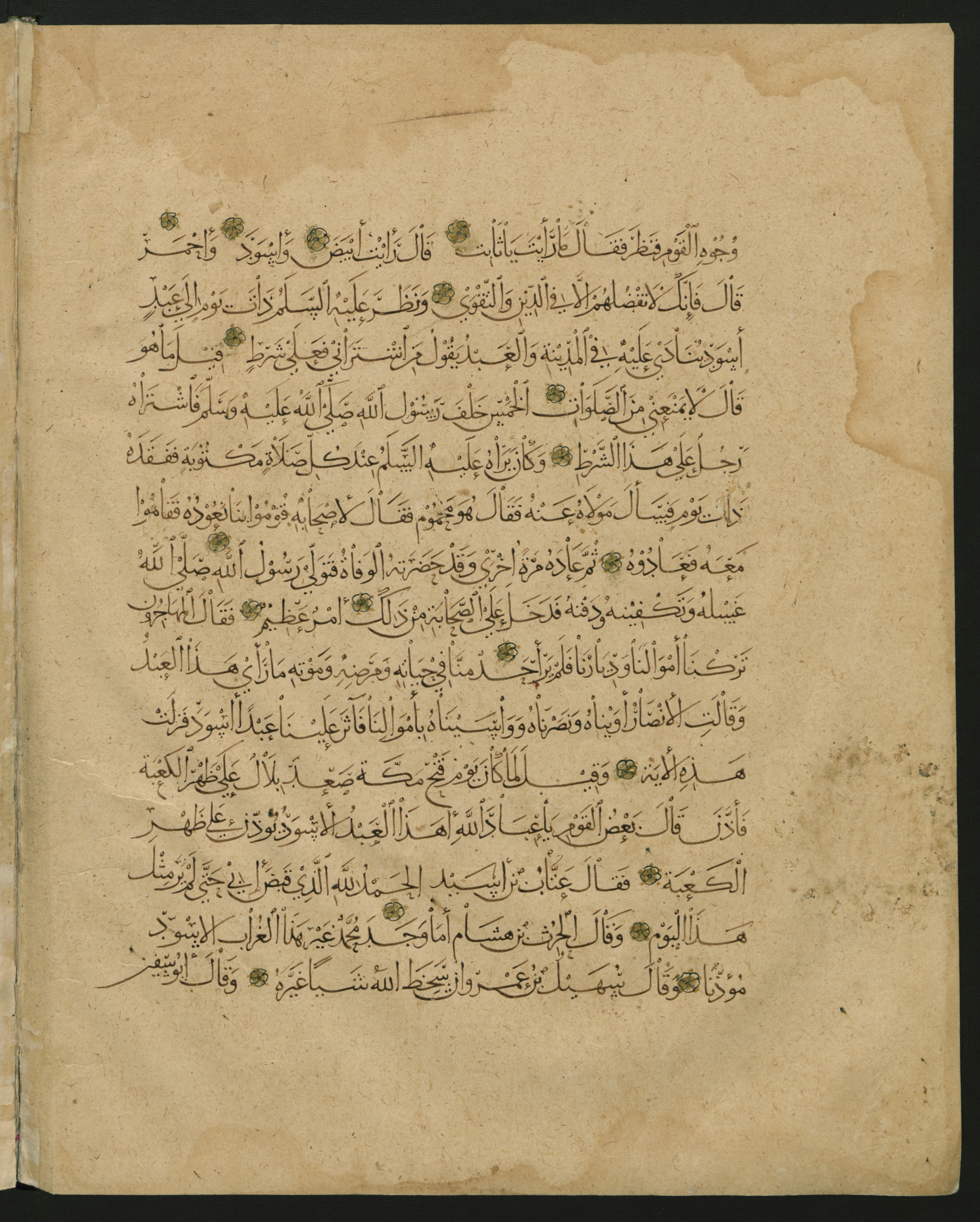
Berlin, Staatsbibliothek zu Berlin, Landberg 822 (Ahlwardt 914) (Scan 14)
This manuscript is a rare case where a Quranic codex is precisely dated by a colophon (completed on May 5, 1204 AD) and the scribe, al-Faḍl b. ʿUmar ar-Rāʾiḍ, is a known Iraqi scholar mentioned in Muslim scholarly literature. It also contains an exegetical compilation detailing circumstances of revelation, abrogated verses, and variant readings.
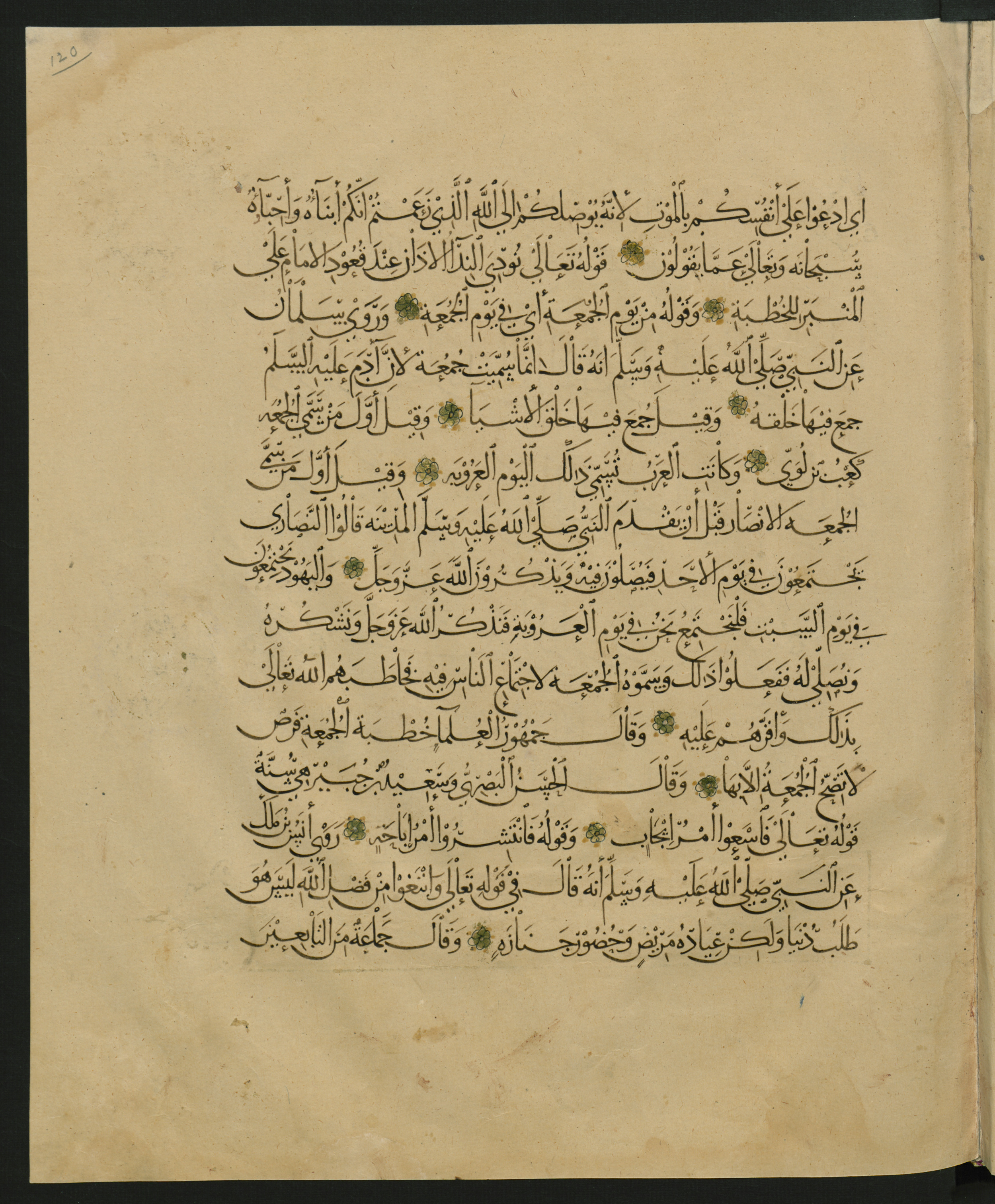
Berlin, Staatsbibliothek zu Berlin, Landberg 822 (Ahlwardt 914) (Scan 15)
This manuscript is a rare case where a Quranic codex is precisely dated by a colophon (completed on May 5, 1204 AD) and the scribe, al-Faḍl b. ʿUmar ar-Rāʾiḍ, is a known Iraqi scholar mentioned in Muslim scholarly literature. It also contains an exegetical compilation detailing circumstances of revelation, abrogated verses, and variant readings.
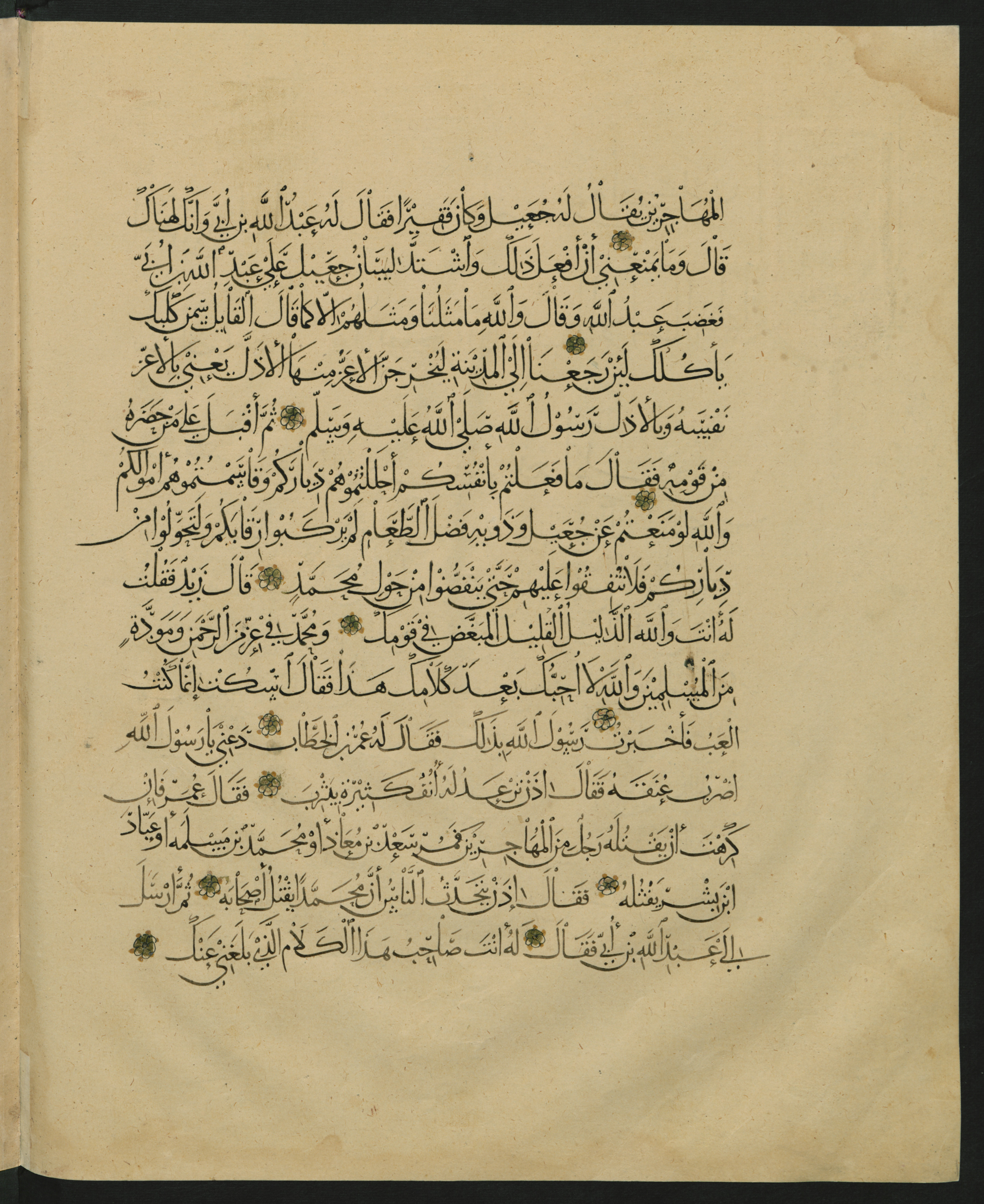
Berlin, Staatsbibliothek zu Berlin, Landberg 822 (Ahlwardt 914) (Scan 16)
This manuscript is a rare case where a Quranic codex is precisely dated by a colophon (completed on May 5, 1204 AD) and the scribe, al-Faḍl b. ʿUmar ar-Rāʾiḍ, is a known Iraqi scholar mentioned in Muslim scholarly literature. It also contains an exegetical compilation detailing circumstances of revelation, abrogated verses, and variant readings.
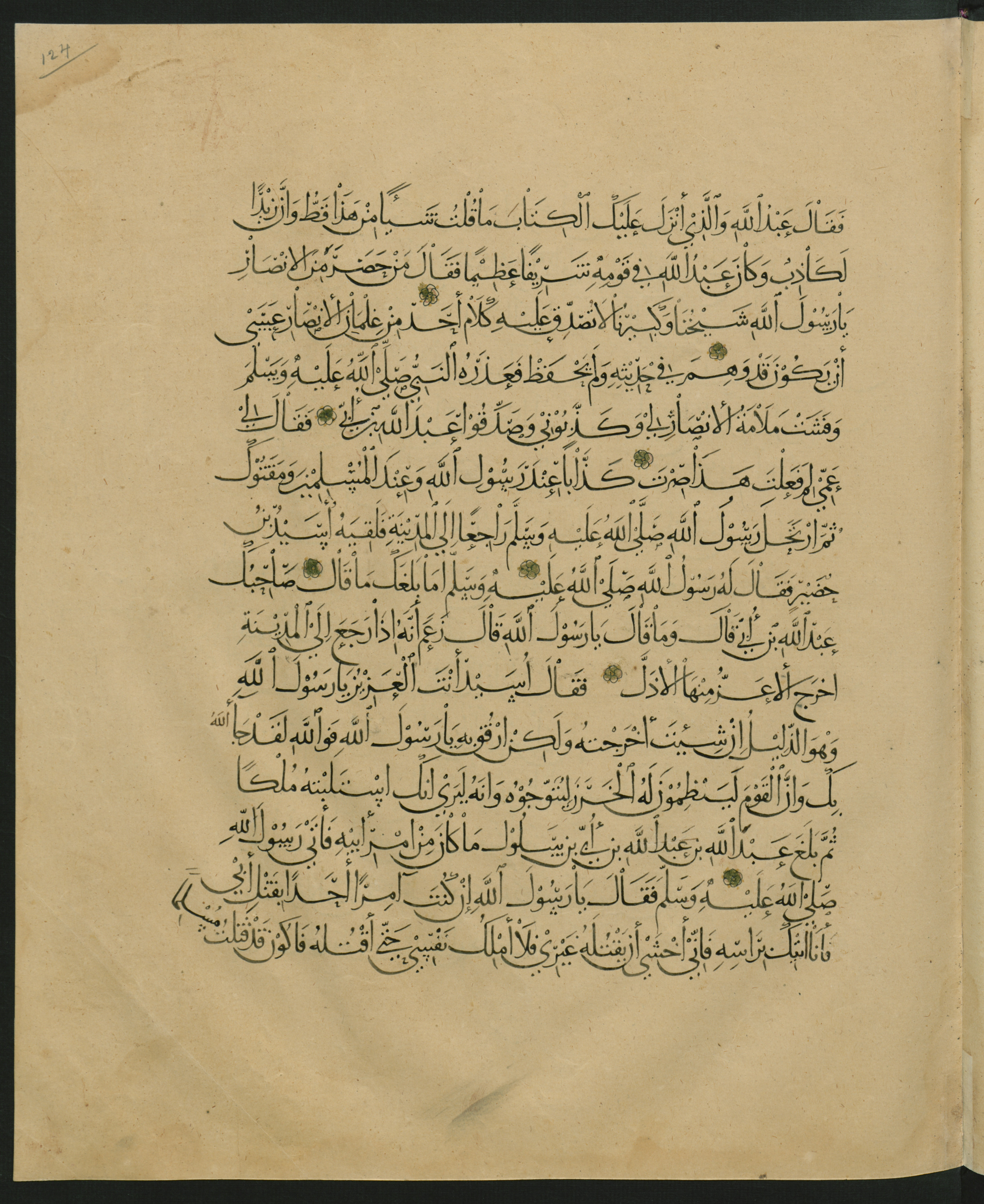
Berlin, Staatsbibliothek zu Berlin, Landberg 822 (Ahlwardt 914) (Scan 17)
This manuscript is a rare case where a Quranic codex is precisely dated by a colophon (completed on May 5, 1204 AD) and the scribe, al-Faḍl b. ʿUmar ar-Rāʾiḍ, is a known Iraqi scholar mentioned in Muslim scholarly literature. It also contains an exegetical compilation detailing circumstances of revelation, abrogated verses, and variant readings.
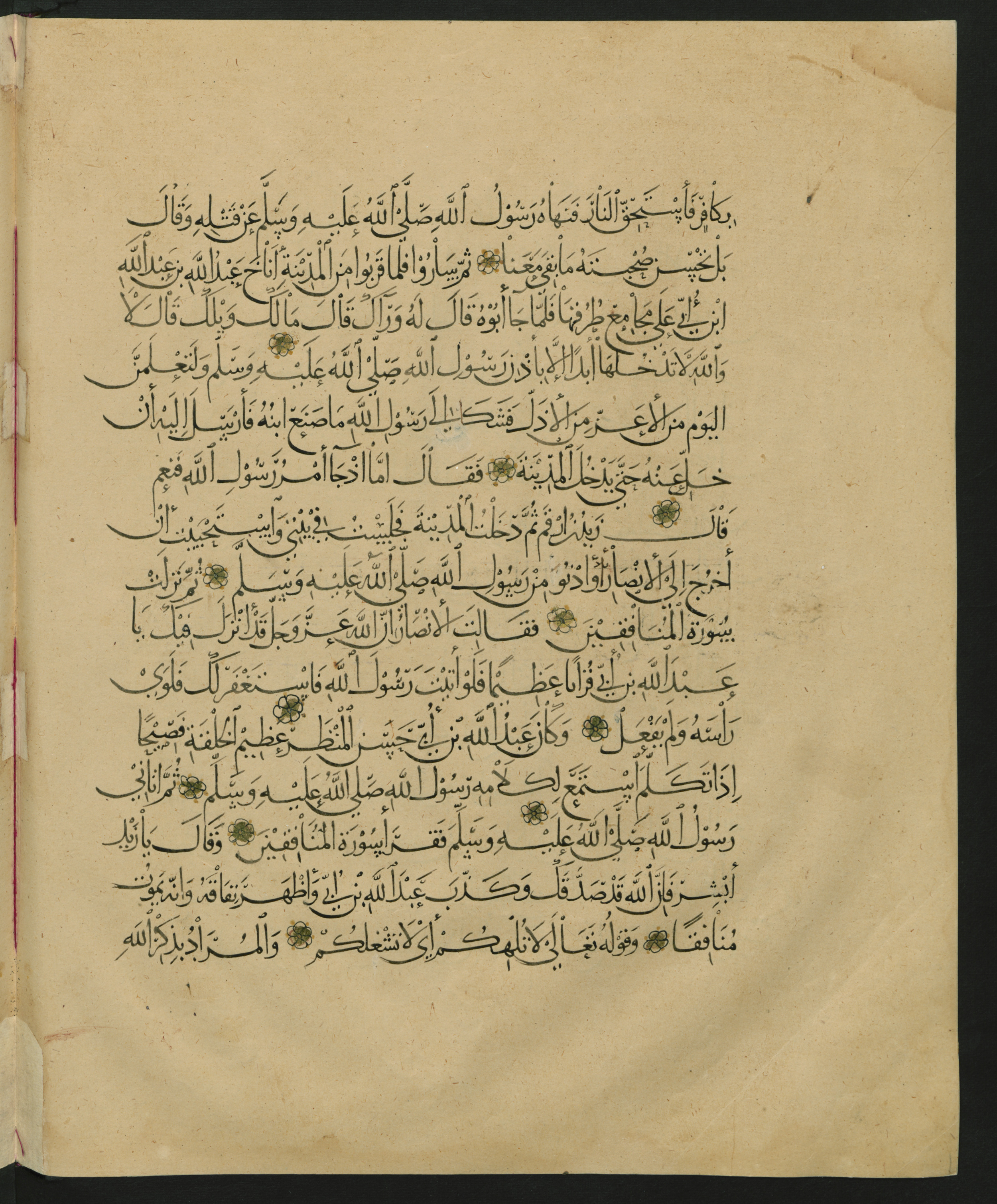
Berlin, Staatsbibliothek zu Berlin, Landberg 822 (Ahlwardt 914) (Scan 18)
This manuscript is a rare case where a Quranic codex is precisely dated by a colophon (completed on May 5, 1204 AD) and the scribe, al-Faḍl b. ʿUmar ar-Rāʾiḍ, is a known Iraqi scholar mentioned in Muslim scholarly literature. It also contains an exegetical compilation detailing circumstances of revelation, abrogated verses, and variant readings.
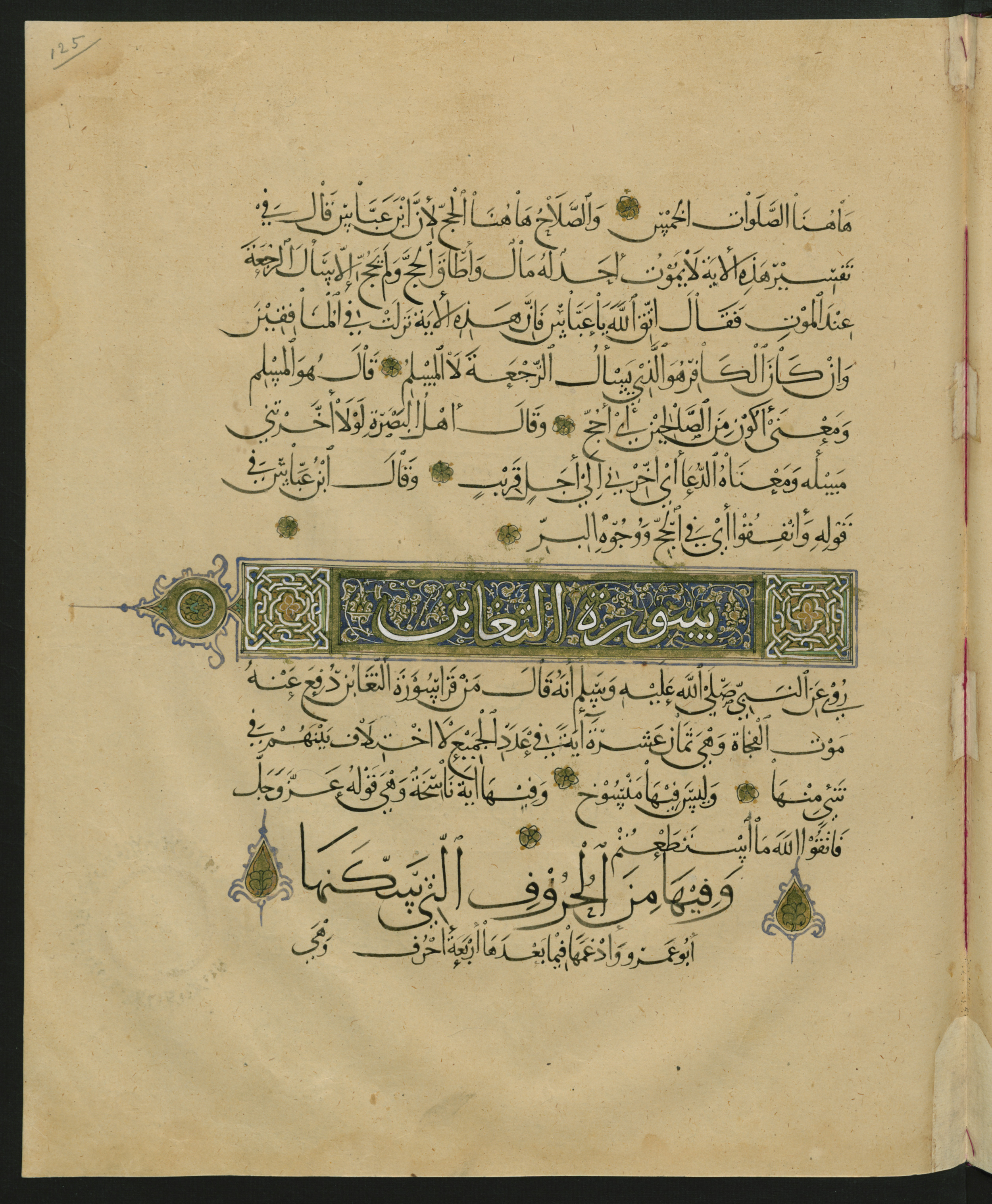
Berlin, Staatsbibliothek zu Berlin, Landberg 822 (Ahlwardt 914) (Scan 19)
This manuscript is a rare case where a Quranic codex is precisely dated by a colophon (completed on May 5, 1204 AD) and the scribe, al-Faḍl b. ʿUmar ar-Rāʾiḍ, is a known Iraqi scholar mentioned in Muslim scholarly literature. It also contains an exegetical compilation detailing circumstances of revelation, abrogated verses, and variant readings.
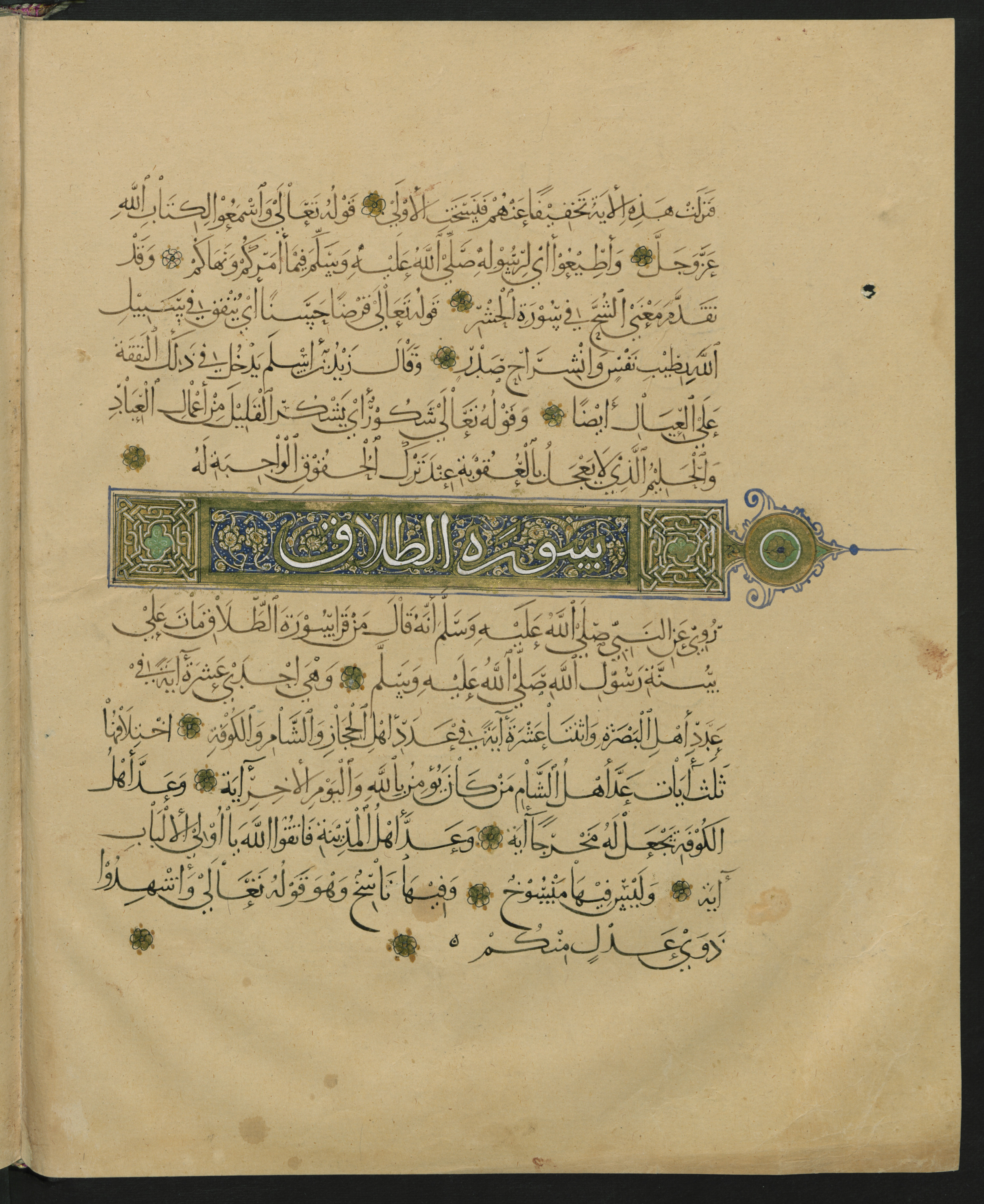
Berlin, Staatsbibliothek zu Berlin, Landberg 822 (Ahlwardt 914) (Scan 20)
This manuscript is a rare case where a Quranic codex is precisely dated by a colophon (completed on May 5, 1204 AD) and the scribe, al-Faḍl b. ʿUmar ar-Rāʾiḍ, is a known Iraqi scholar mentioned in Muslim scholarly literature. It also contains an exegetical compilation detailing circumstances of revelation, abrogated verses, and variant readings.
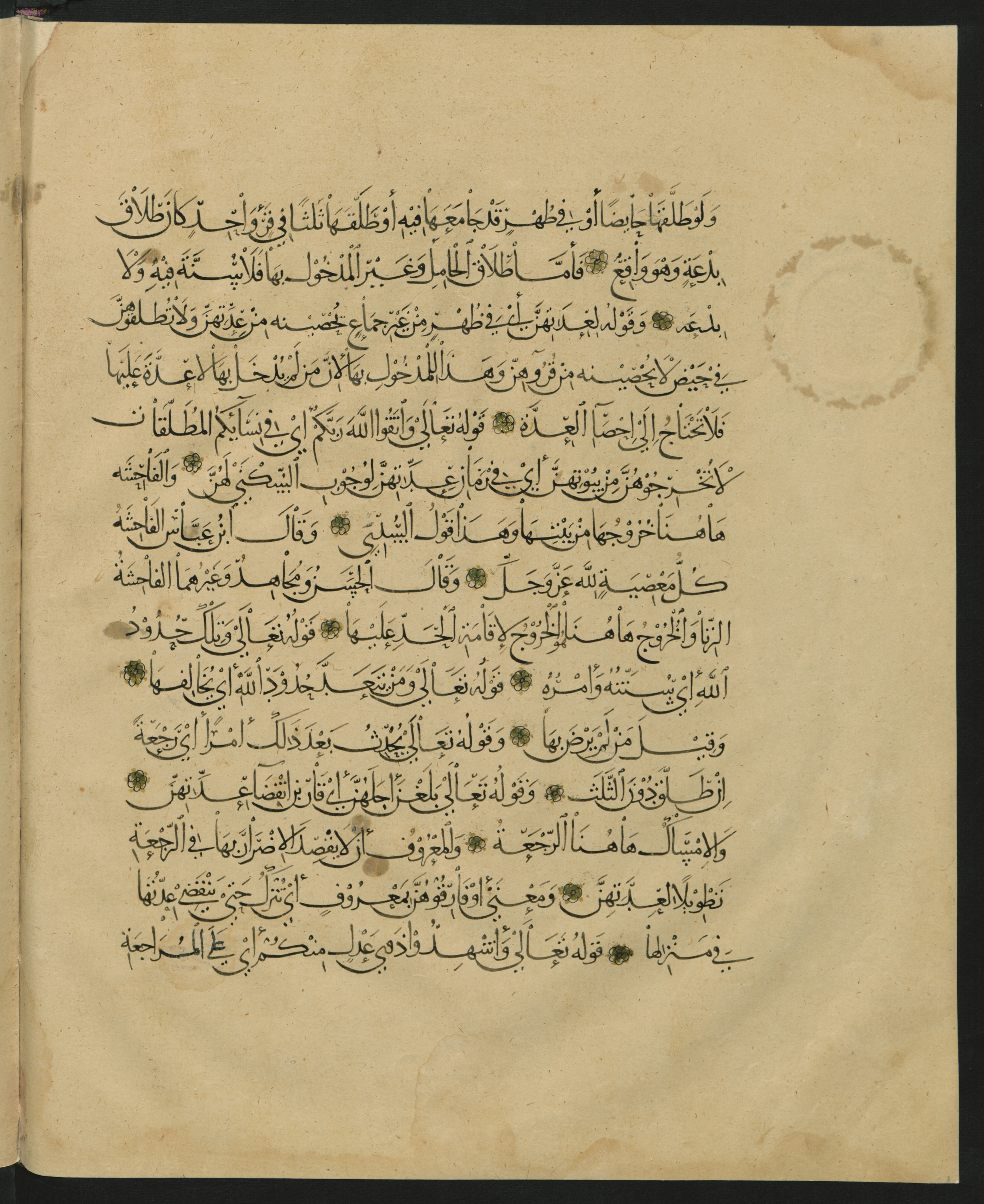
Berlin, Staatsbibliothek zu Berlin, Landberg 822 (Ahlwardt 914) (Scan 21)
This manuscript is a rare case where a Quranic codex is precisely dated by a colophon (completed on May 5, 1204 AD) and the scribe, al-Faḍl b. ʿUmar ar-Rāʾiḍ, is a known Iraqi scholar mentioned in Muslim scholarly literature. It also contains an exegetical compilation detailing circumstances of revelation, abrogated verses, and variant readings.
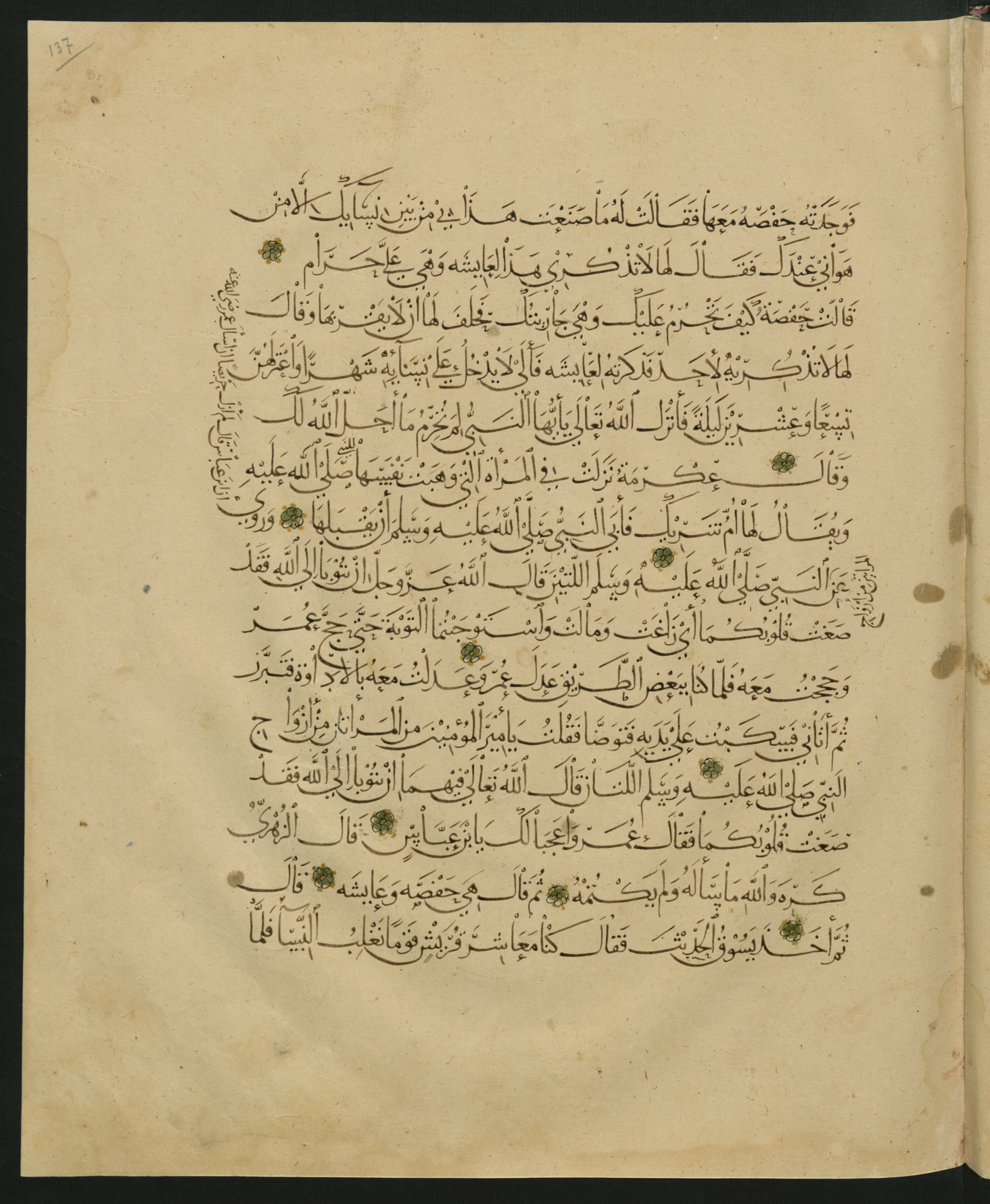
Berlin, Staatsbibliothek zu Berlin, Landberg 822 (Ahlwardt 914) (Scan 22)
This manuscript is a rare case where a Quranic codex is precisely dated by a colophon (completed on May 5, 1204 AD) and the scribe, al-Faḍl b. ʿUmar ar-Rāʾiḍ, is a known Iraqi scholar mentioned in Muslim scholarly literature. It also contains an exegetical compilation detailing circumstances of revelation, abrogated verses, and variant readings.
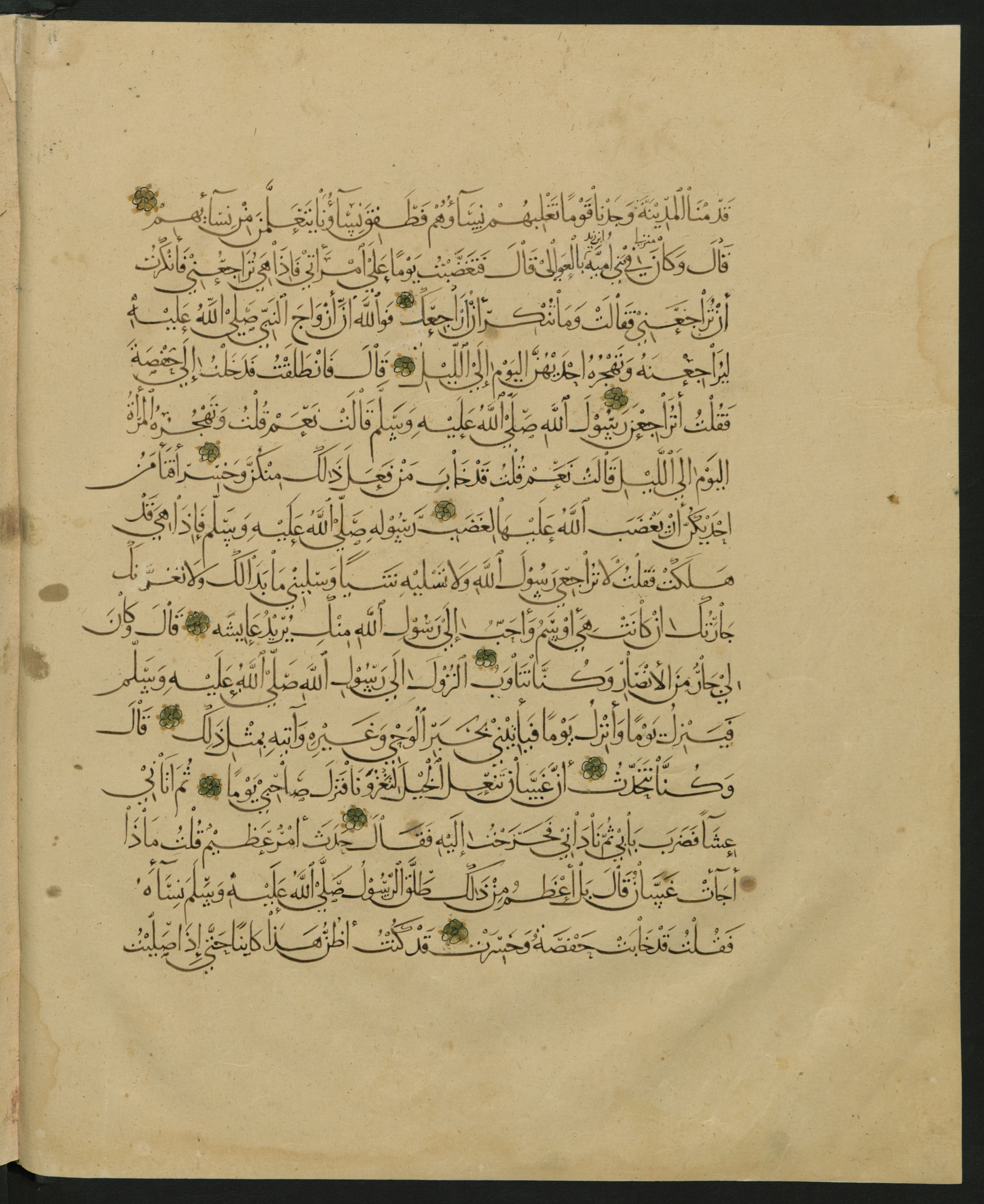
Berlin, Staatsbibliothek zu Berlin, Landberg 822 (Ahlwardt 914) (Scan 23)
This manuscript is a rare case where a Quranic codex is precisely dated by a colophon (completed on May 5, 1204 AD) and the scribe, al-Faḍl b. ʿUmar ar-Rāʾiḍ, is a known Iraqi scholar mentioned in Muslim scholarly literature. It also contains an exegetical compilation detailing circumstances of revelation, abrogated verses, and variant readings.
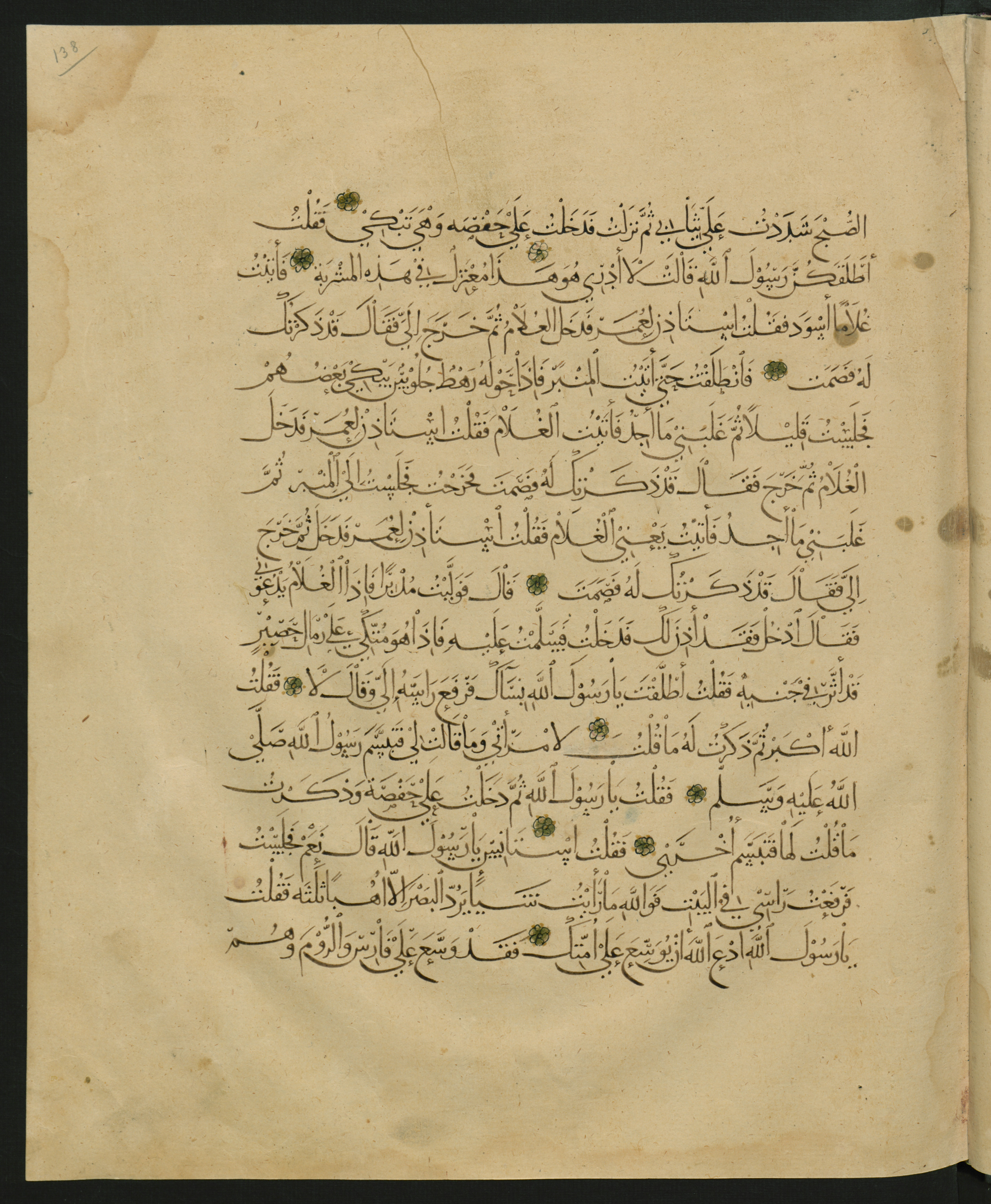
Berlin, Staatsbibliothek zu Berlin, Landberg 822 (Ahlwardt 914) (Scan 24)
This manuscript is a rare case where a Quranic codex is precisely dated by a colophon (completed on May 5, 1204 AD) and the scribe, al-Faḍl b. ʿUmar ar-Rāʾiḍ, is a known Iraqi scholar mentioned in Muslim scholarly literature. It also contains an exegetical compilation detailing circumstances of revelation, abrogated verses, and variant readings.
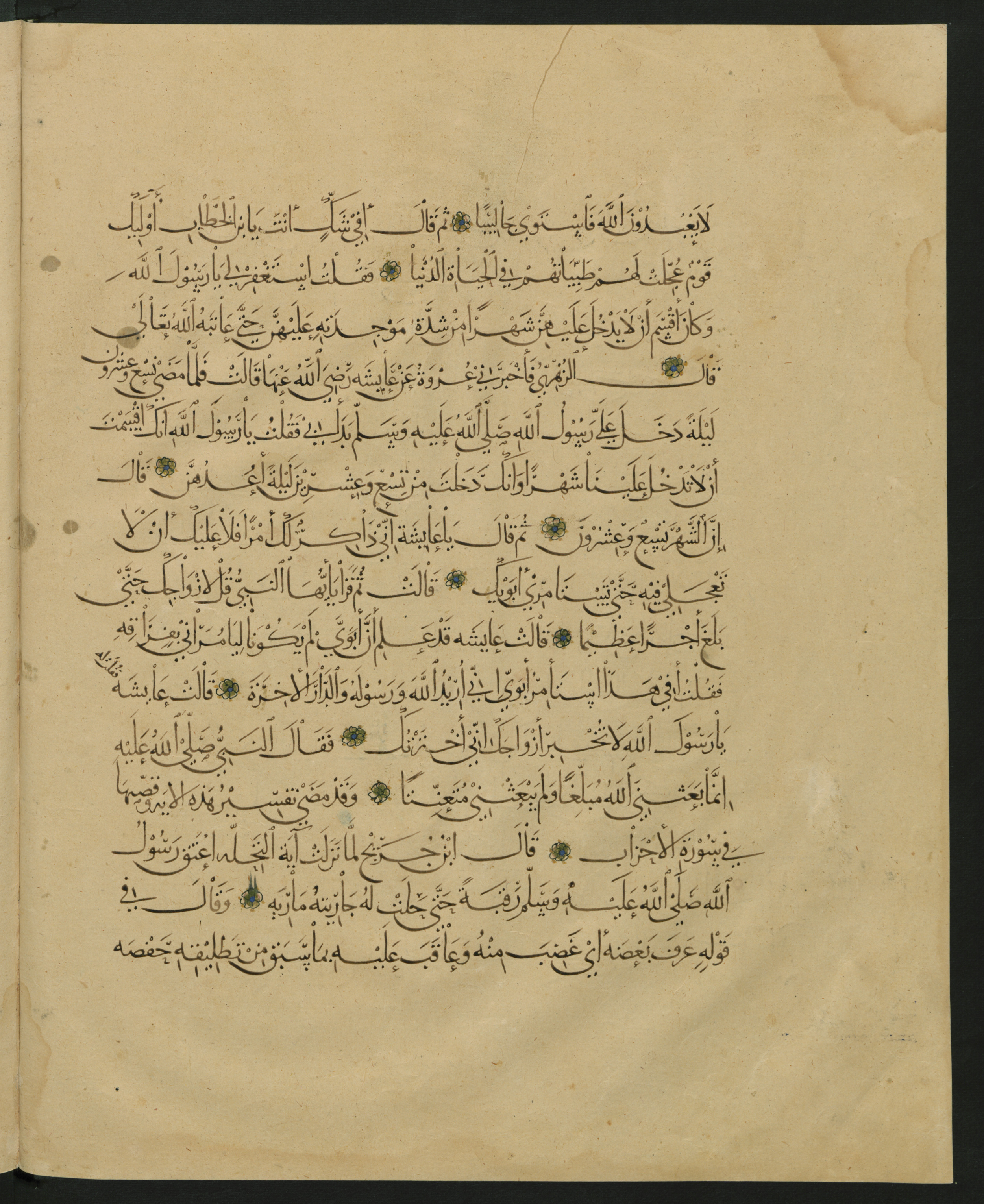
Berlin, Staatsbibliothek zu Berlin, Landberg 822 (Ahlwardt 914) (Scan 25)
This manuscript is a rare case where a Quranic codex is precisely dated by a colophon (completed on May 5, 1204 AD) and the scribe, al-Faḍl b. ʿUmar ar-Rāʾiḍ, is a known Iraqi scholar mentioned in Muslim scholarly literature. It also contains an exegetical compilation detailing circumstances of revelation, abrogated verses, and variant readings.
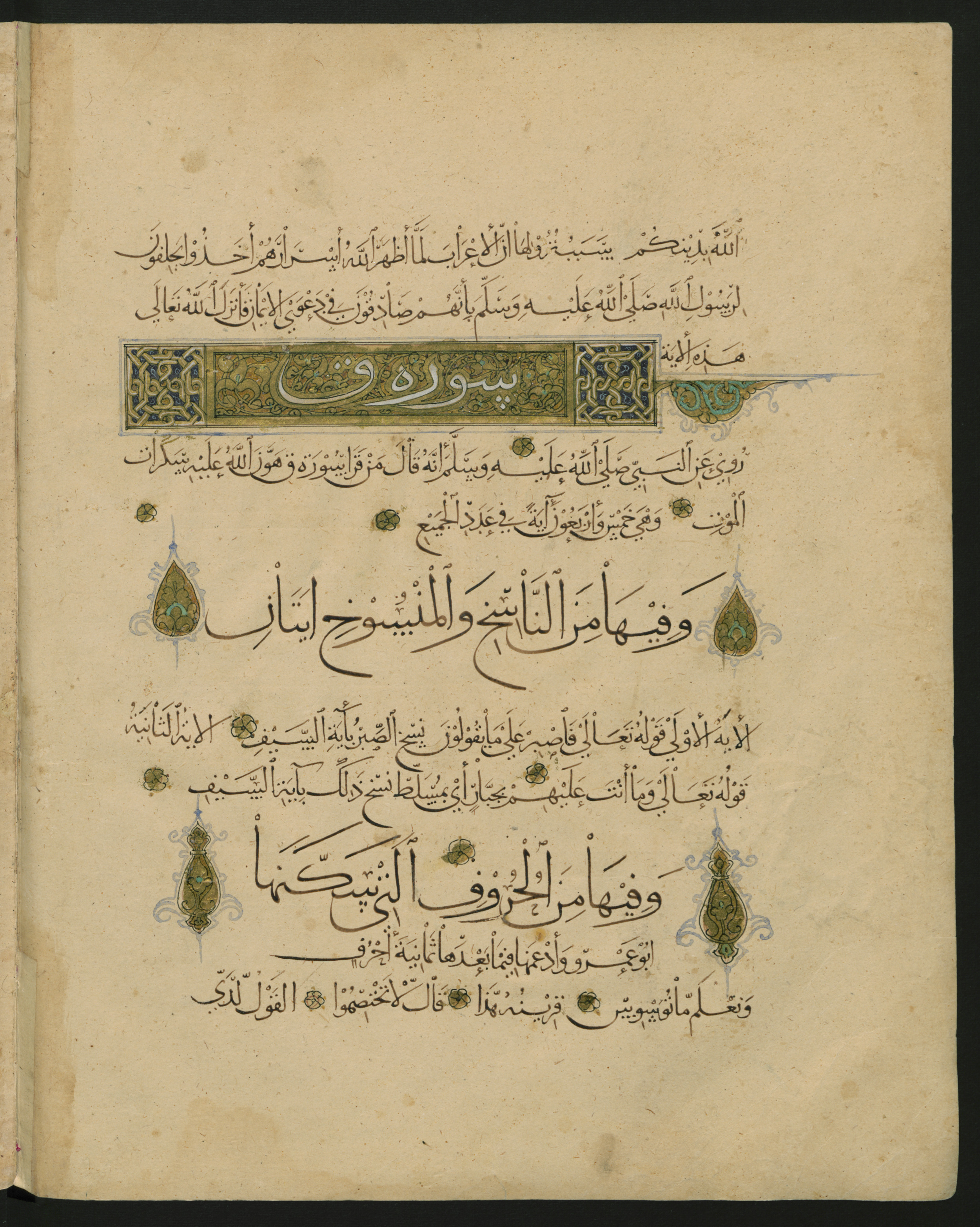
Berlin, Staatsbibliothek zu Berlin, Landberg 822 (Ahlwardt 914) (Scan 26)
This manuscript is a rare case where a Quranic codex is precisely dated by a colophon (completed on May 5, 1204 AD) and the scribe, al-Faḍl b. ʿUmar ar-Rāʾiḍ, is a known Iraqi scholar mentioned in Muslim scholarly literature. It also contains an exegetical compilation detailing circumstances of revelation, abrogated verses, and variant readings.
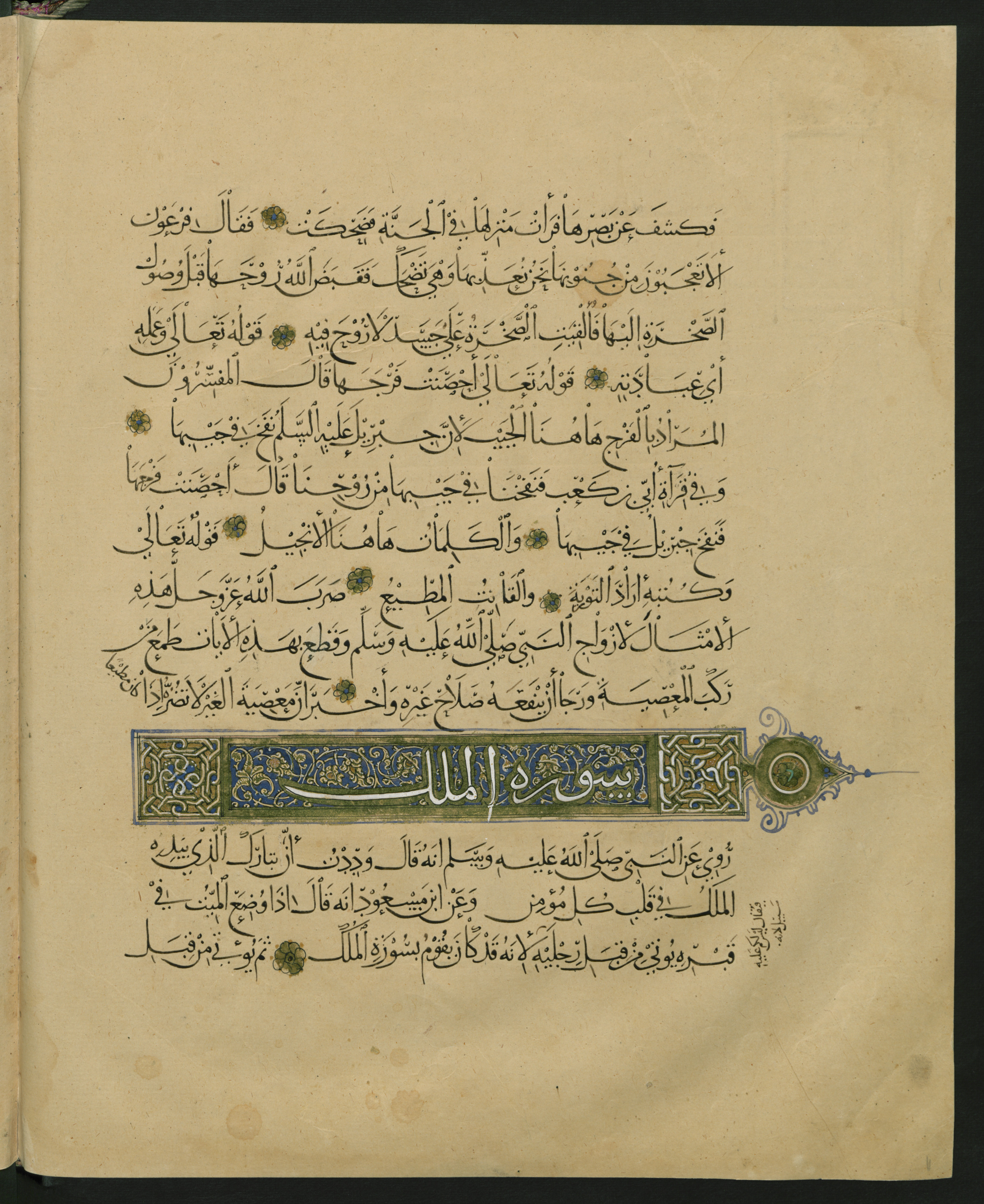
Berlin, Staatsbibliothek zu Berlin, Landberg 822 (Ahlwardt 914) (Scan 27)
This manuscript is a rare case where a Quranic codex is precisely dated by a colophon (completed on May 5, 1204 AD) and the scribe, al-Faḍl b. ʿUmar ar-Rāʾiḍ, is a known Iraqi scholar mentioned in Muslim scholarly literature. It also contains an exegetical compilation detailing circumstances of revelation, abrogated verses, and variant readings.
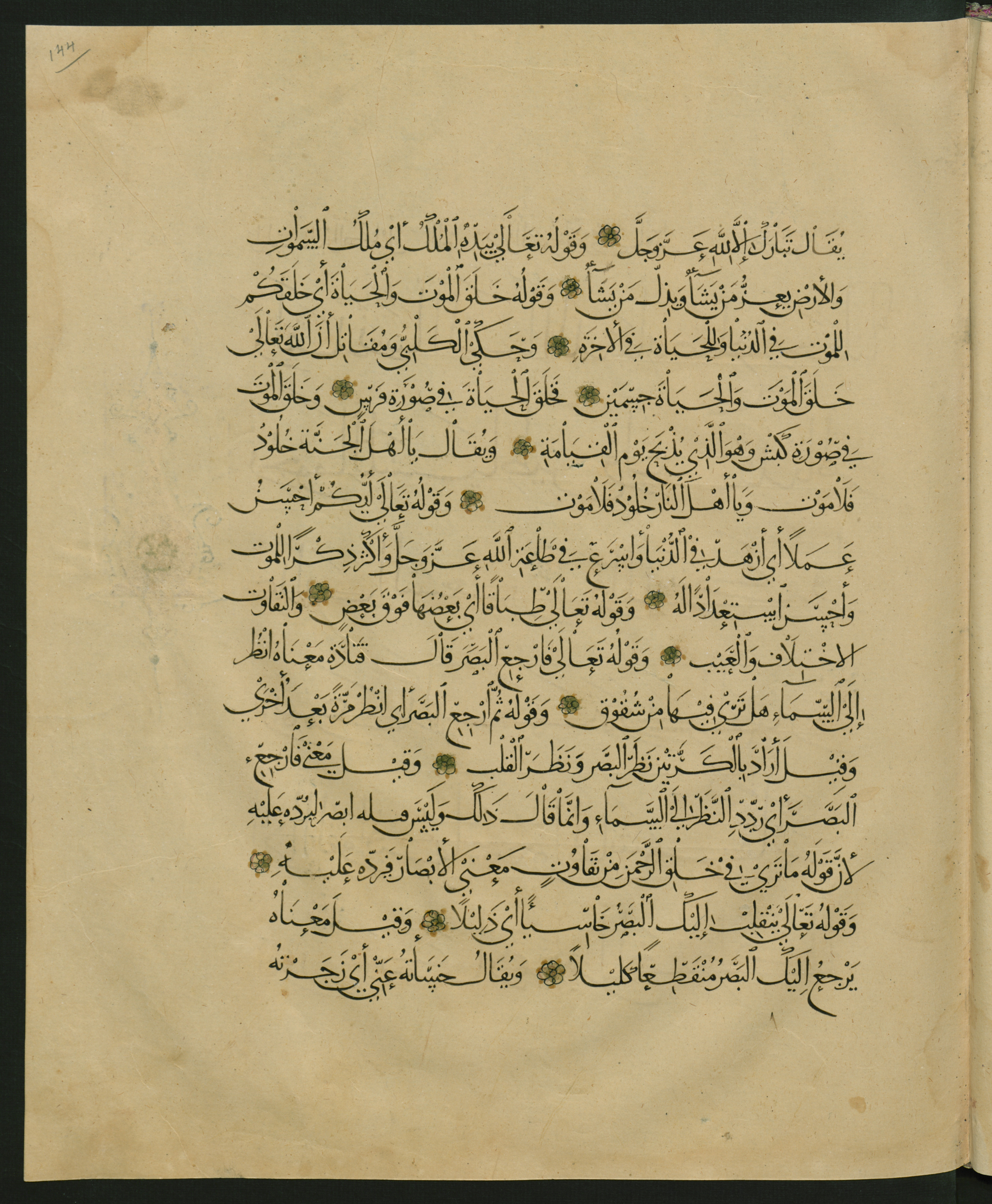
Berlin, Staatsbibliothek zu Berlin, Landberg 822 (Ahlwardt 914) (Scan 28)
This manuscript is a rare case where a Quranic codex is precisely dated by a colophon (completed on May 5, 1204 AD) and the scribe, al-Faḍl b. ʿUmar ar-Rāʾiḍ, is a known Iraqi scholar mentioned in Muslim scholarly literature. It also contains an exegetical compilation detailing circumstances of revelation, abrogated verses, and variant readings.
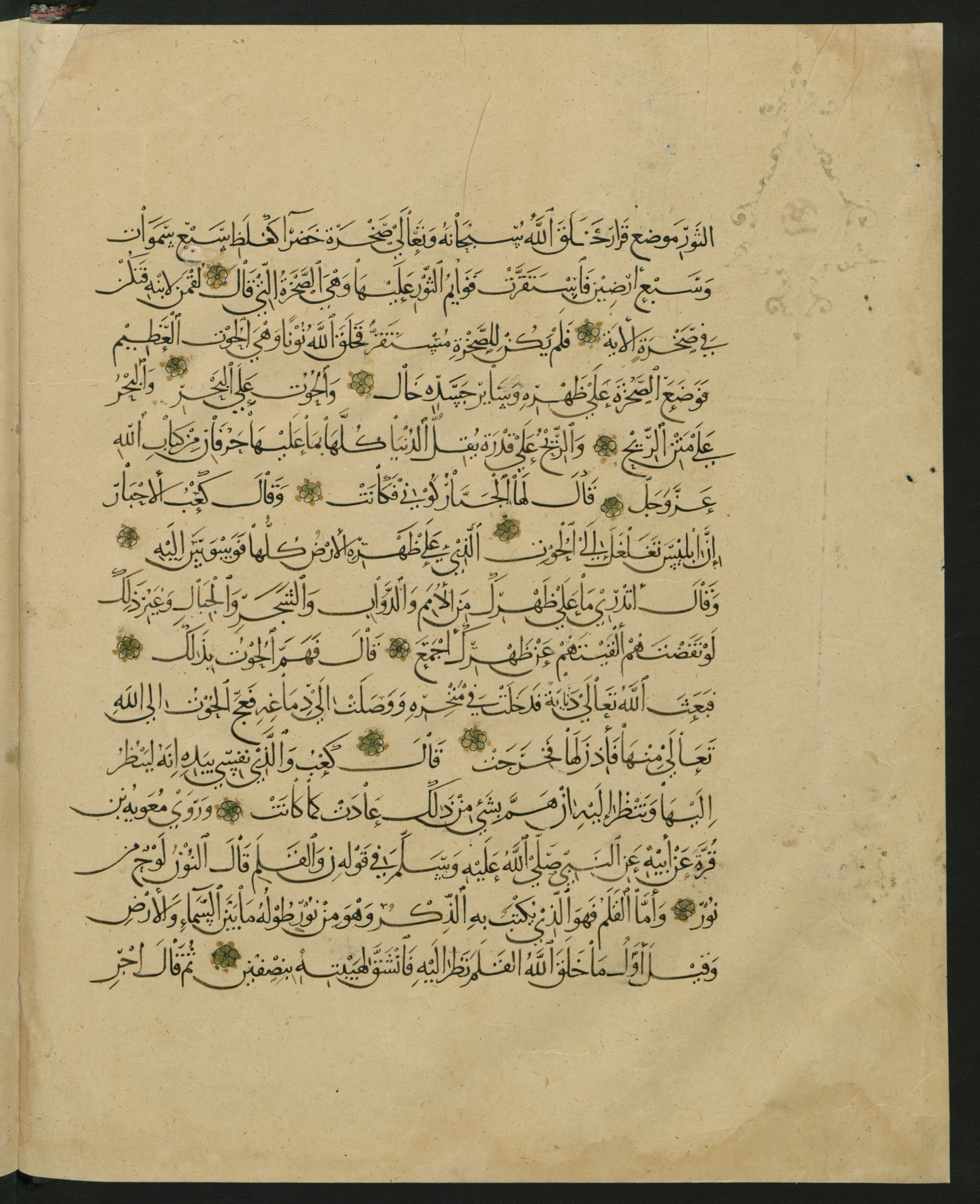
Berlin, Staatsbibliothek zu Berlin, Landberg 822 (Ahlwardt 914) (Scan 29)
This manuscript is a rare case where a Quranic codex is precisely dated by a colophon (completed on May 5, 1204 AD) and the scribe, al-Faḍl b. ʿUmar ar-Rāʾiḍ, is a known Iraqi scholar mentioned in Muslim scholarly literature. It also contains an exegetical compilation detailing circumstances of revelation, abrogated verses, and variant readings.
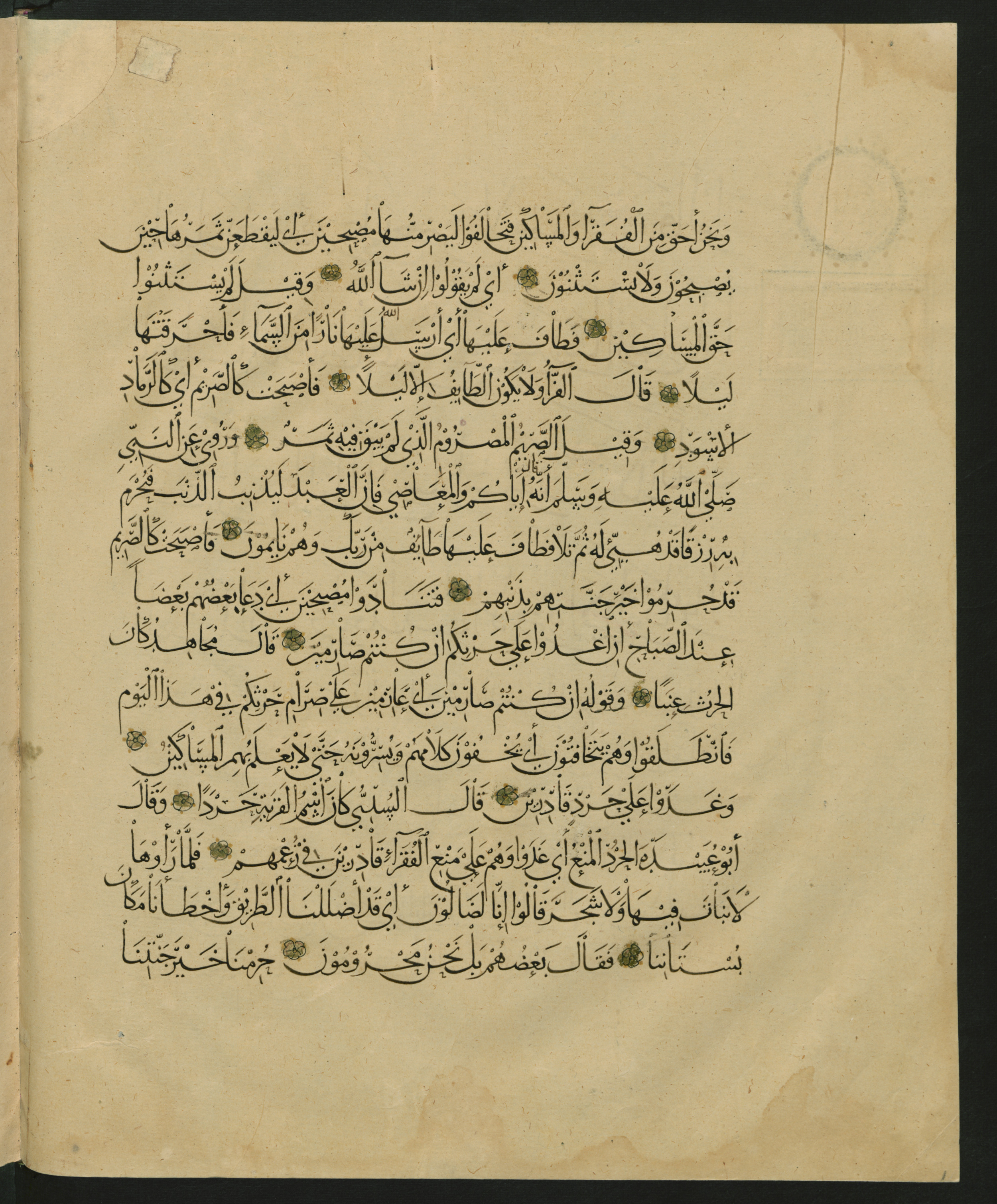
Berlin, Staatsbibliothek zu Berlin, Landberg 822 (Ahlwardt 914) (Scan 30)
This manuscript is a rare case where a Quranic codex is precisely dated by a colophon (completed on May 5, 1204 AD) and the scribe, al-Faḍl b. ʿUmar ar-Rāʾiḍ, is a known Iraqi scholar mentioned in Muslim scholarly literature. It also contains an exegetical compilation detailing circumstances of revelation, abrogated verses, and variant readings.
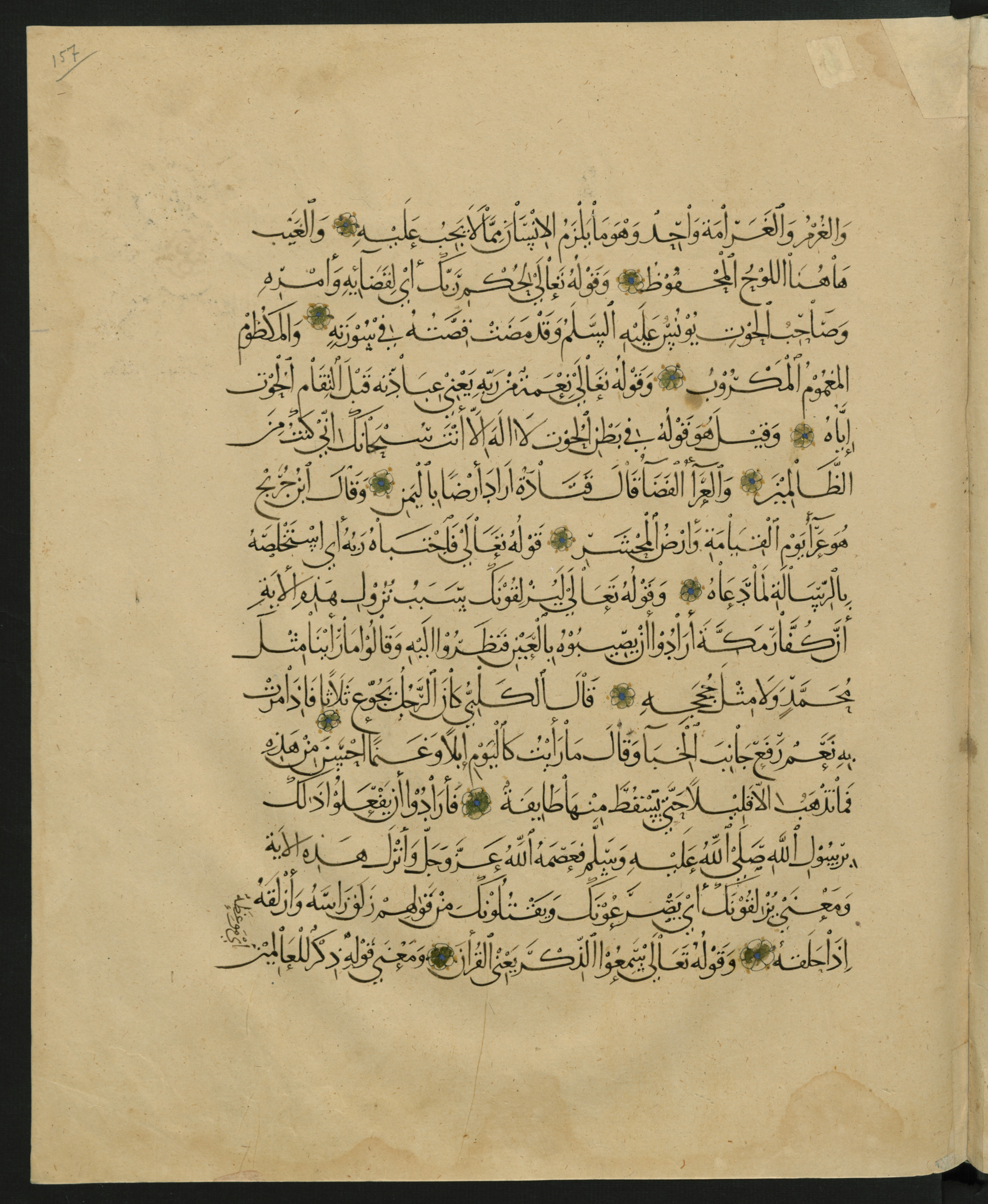
Berlin, Staatsbibliothek zu Berlin, Landberg 822 (Ahlwardt 914) (Scan 31)
This manuscript is a rare case where a Quranic codex is precisely dated by a colophon (completed on May 5, 1204 AD) and the scribe, al-Faḍl b. ʿUmar ar-Rāʾiḍ, is a known Iraqi scholar mentioned in Muslim scholarly literature. It also contains an exegetical compilation detailing circumstances of revelation, abrogated verses, and variant readings.
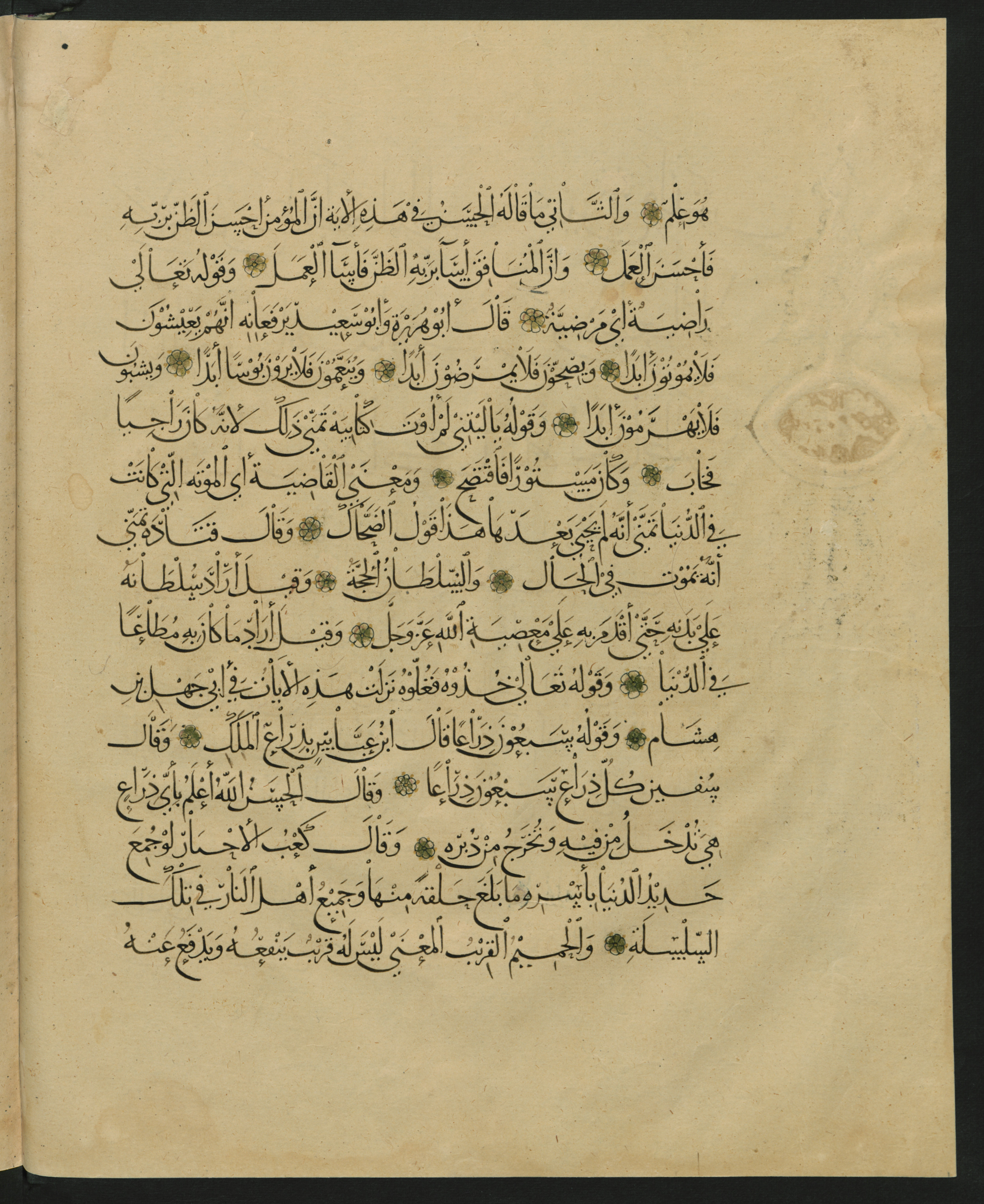
Berlin, Staatsbibliothek zu Berlin, Landberg 822 (Ahlwardt 914) (Scan 32)
This manuscript is a rare case where a Quranic codex is precisely dated by a colophon (completed on May 5, 1204 AD) and the scribe, al-Faḍl b. ʿUmar ar-Rāʾiḍ, is a known Iraqi scholar mentioned in Muslim scholarly literature. It also contains an exegetical compilation detailing circumstances of revelation, abrogated verses, and variant readings.
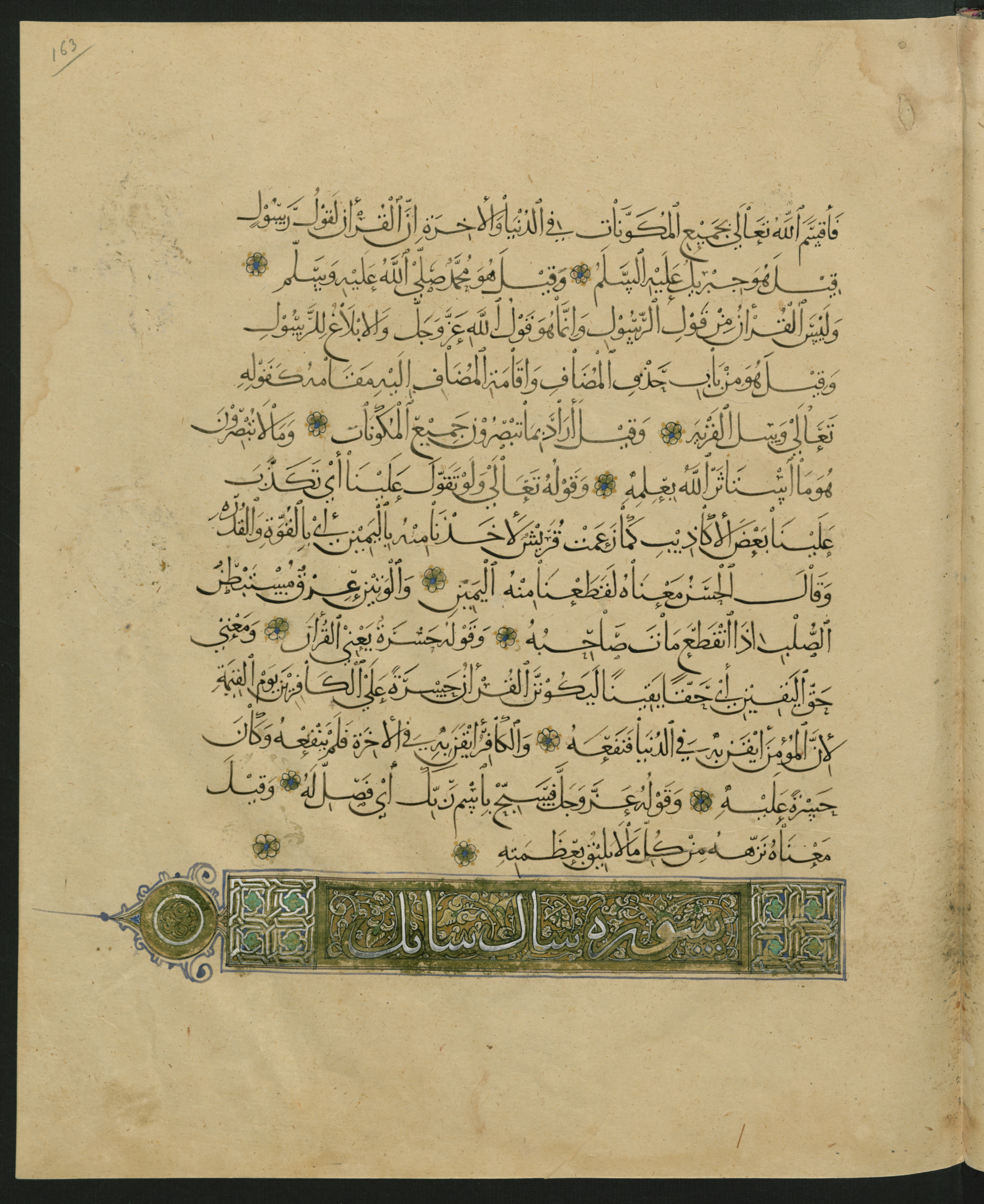
Berlin, Staatsbibliothek zu Berlin, Landberg 822 (Ahlwardt 914) (Scan 33)
This manuscript is a rare case where a Quranic codex is precisely dated by a colophon (completed on May 5, 1204 AD) and the scribe, al-Faḍl b. ʿUmar ar-Rāʾiḍ, is a known Iraqi scholar mentioned in Muslim scholarly literature. It also contains an exegetical compilation detailing circumstances of revelation, abrogated verses, and variant readings.
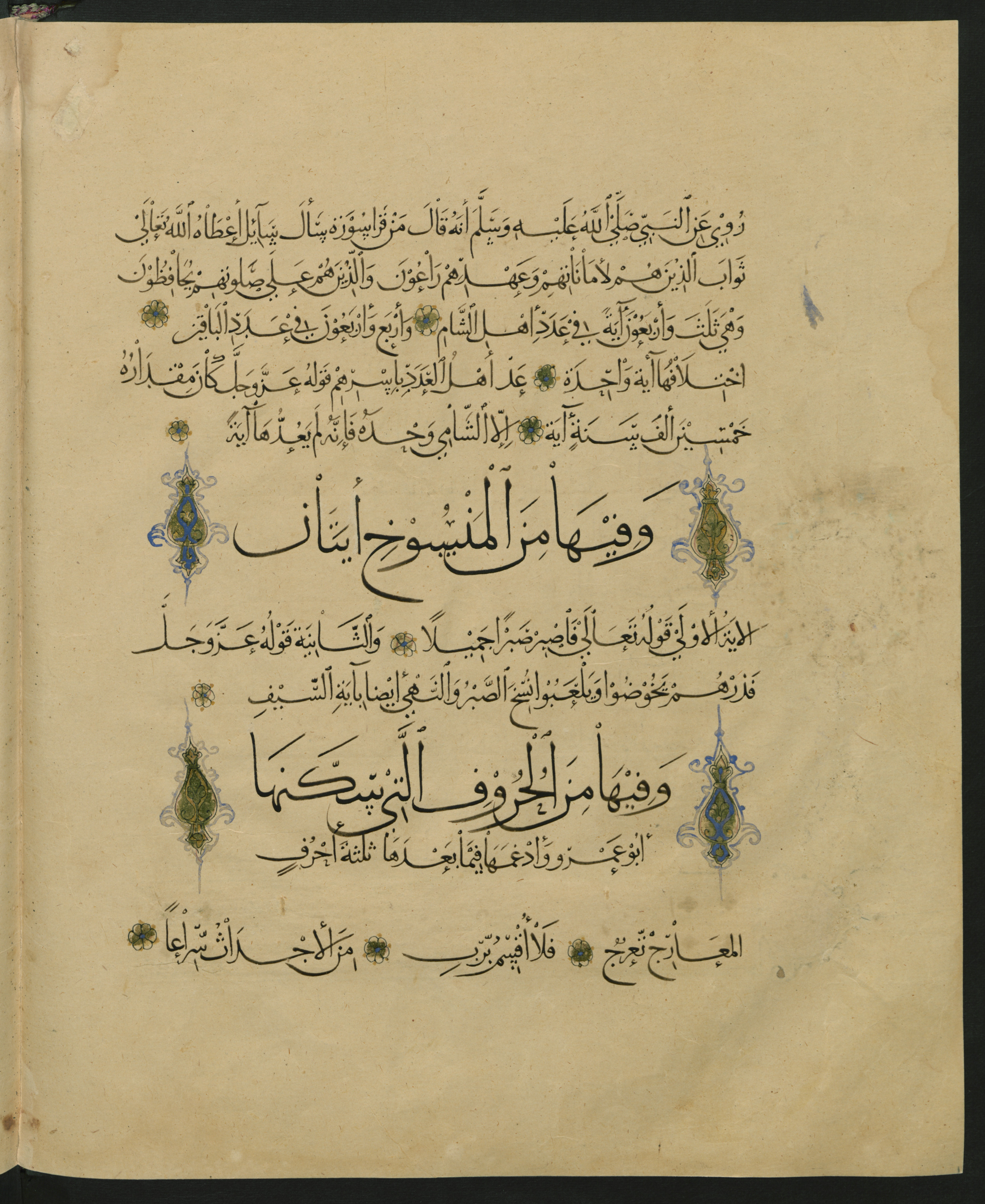
Berlin, Staatsbibliothek zu Berlin, Landberg 822 (Ahlwardt 914) (Scan 34)
This manuscript is a rare case where a Quranic codex is precisely dated by a colophon (completed on May 5, 1204 AD) and the scribe, al-Faḍl b. ʿUmar ar-Rāʾiḍ, is a known Iraqi scholar mentioned in Muslim scholarly literature. It also contains an exegetical compilation detailing circumstances of revelation, abrogated verses, and variant readings.
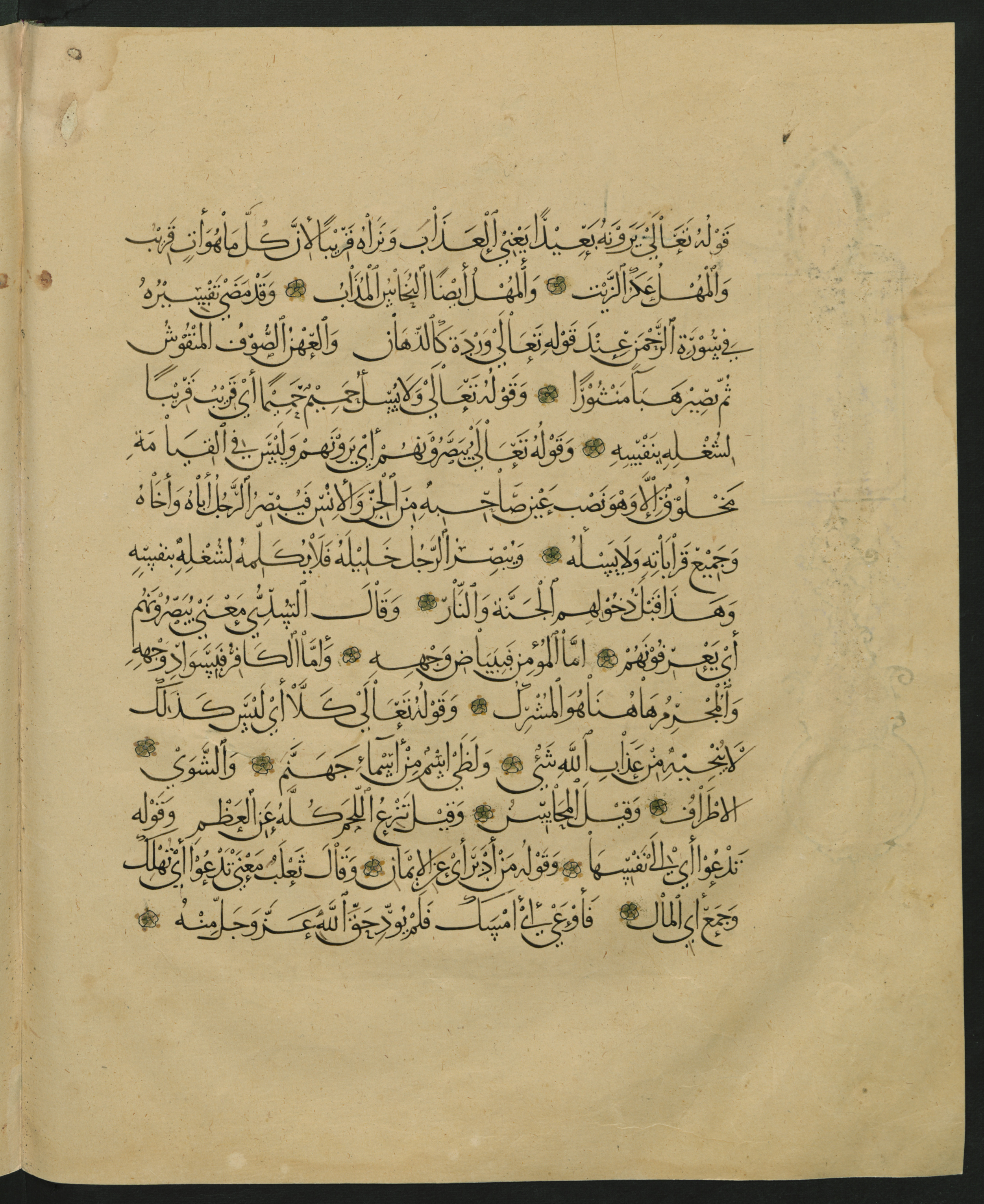
Berlin, Staatsbibliothek zu Berlin, Landberg 822 (Ahlwardt 914) (Scan 35)
This manuscript is a rare case where a Quranic codex is precisely dated by a colophon (completed on May 5, 1204 AD) and the scribe, al-Faḍl b. ʿUmar ar-Rāʾiḍ, is a known Iraqi scholar mentioned in Muslim scholarly literature. It also contains an exegetical compilation detailing circumstances of revelation, abrogated verses, and variant readings.
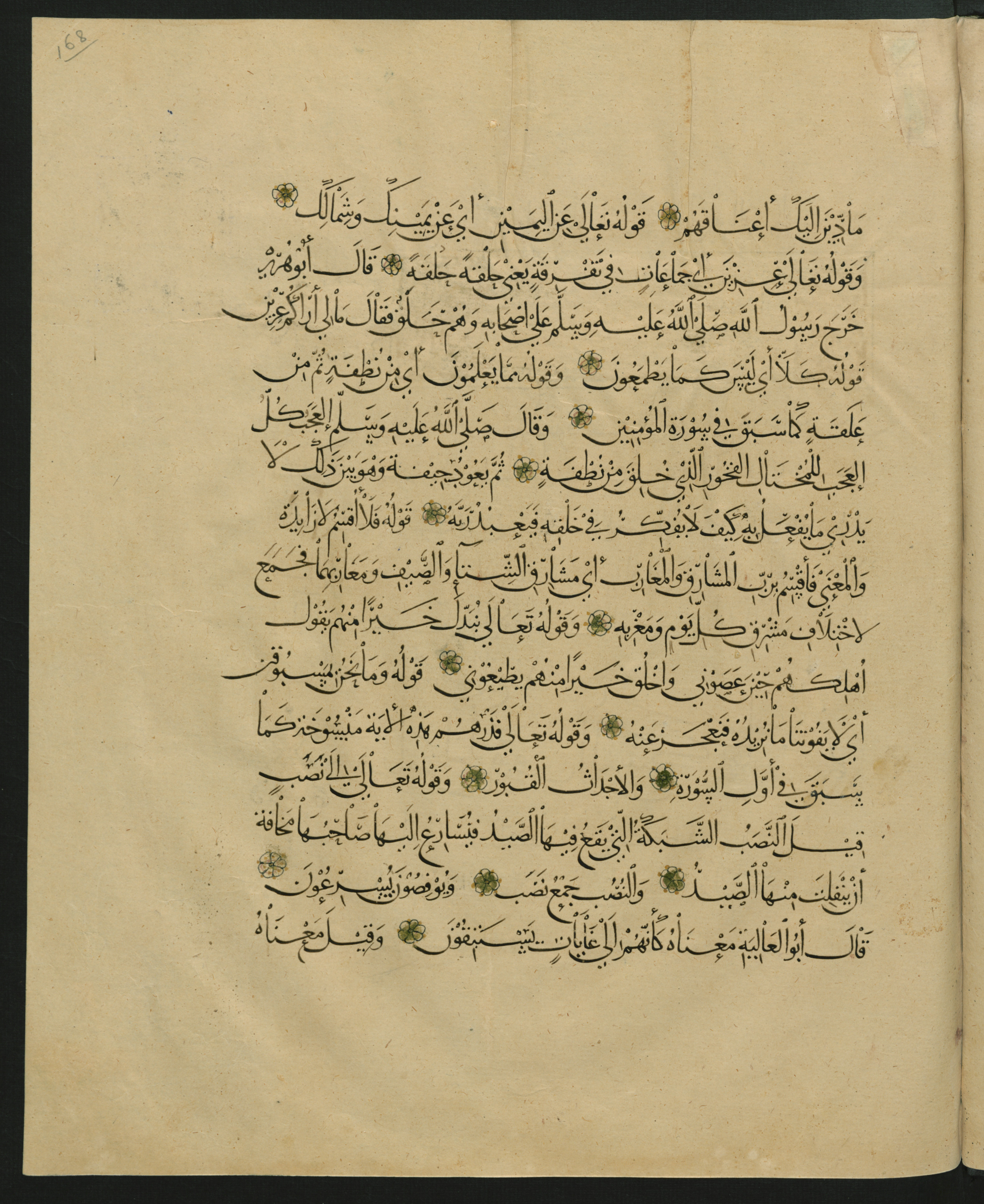
Berlin, Staatsbibliothek zu Berlin, Landberg 822 (Ahlwardt 914) (Scan 36)
This manuscript is a rare case where a Quranic codex is precisely dated by a colophon (completed on May 5, 1204 AD) and the scribe, al-Faḍl b. ʿUmar ar-Rāʾiḍ, is a known Iraqi scholar mentioned in Muslim scholarly literature. It also contains an exegetical compilation detailing circumstances of revelation, abrogated verses, and variant readings.
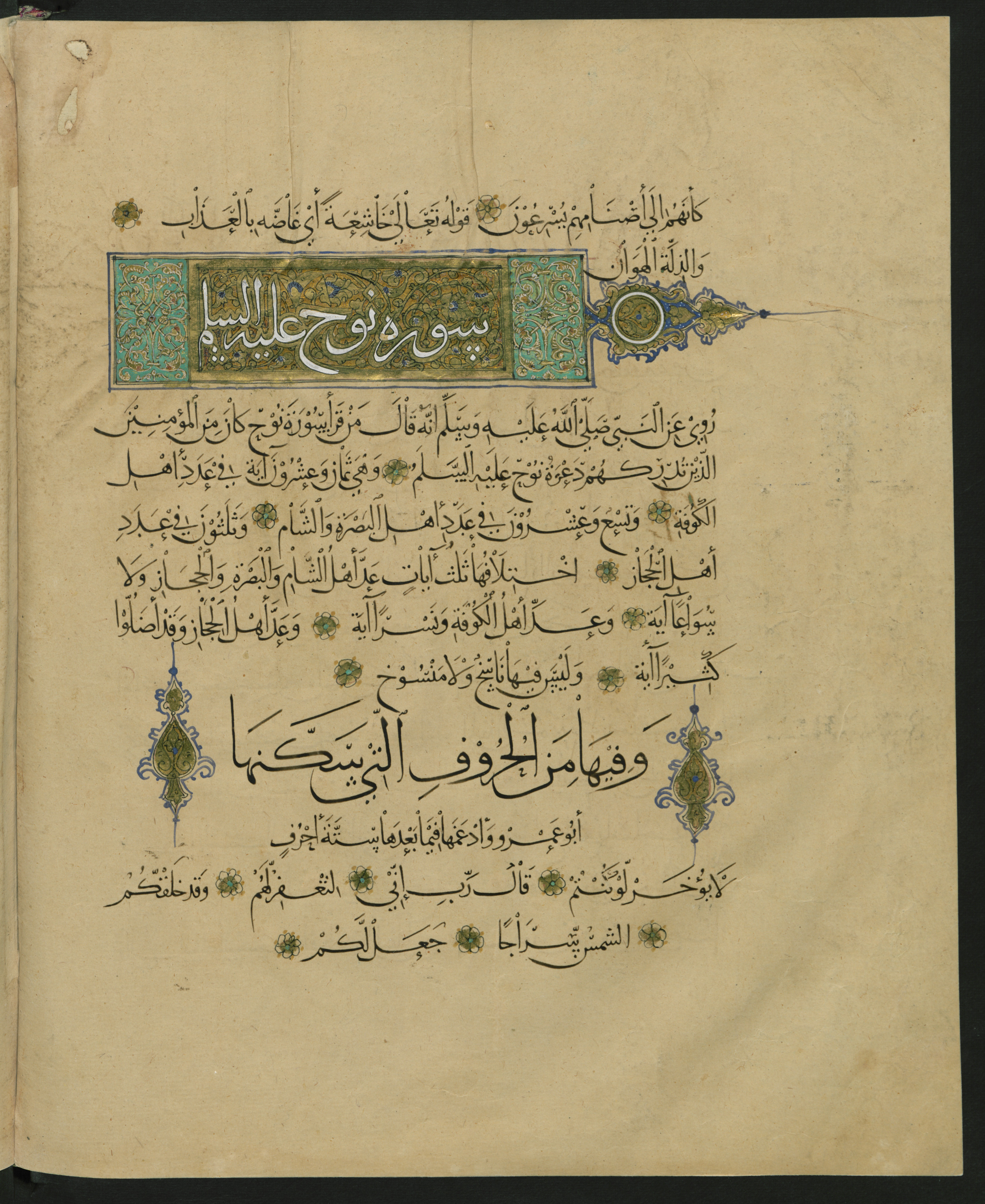
Berlin, Staatsbibliothek zu Berlin, Landberg 822 (Ahlwardt 914) (Scan 37)
This manuscript is a rare case where a Quranic codex is precisely dated by a colophon (completed on May 5, 1204 AD) and the scribe, al-Faḍl b. ʿUmar ar-Rāʾiḍ, is a known Iraqi scholar mentioned in Muslim scholarly literature. It also contains an exegetical compilation detailing circumstances of revelation, abrogated verses, and variant readings.
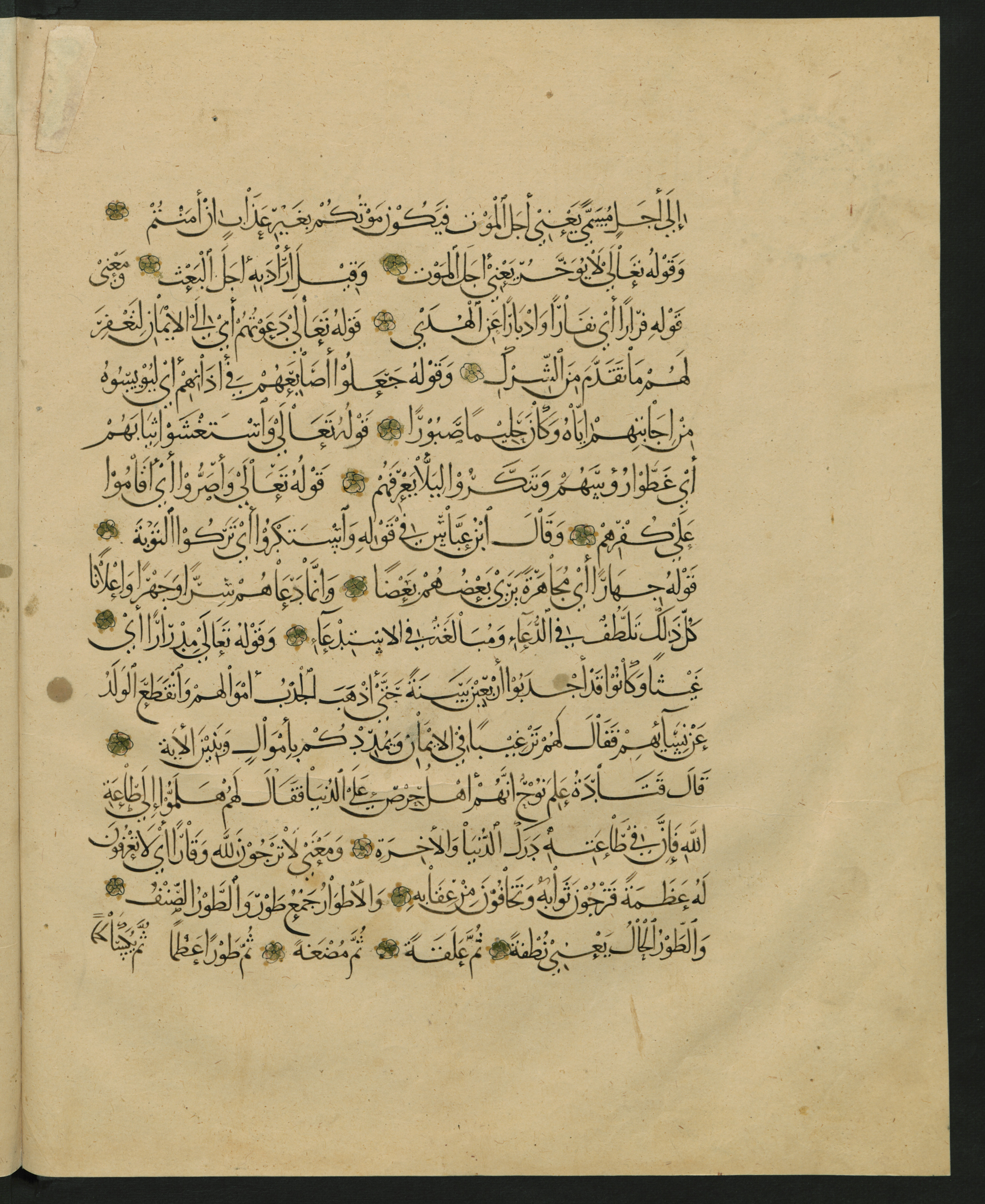
Berlin, Staatsbibliothek zu Berlin, Landberg 822 (Ahlwardt 914) (Scan 38)
This manuscript is a rare case where a Quranic codex is precisely dated by a colophon (completed on May 5, 1204 AD) and the scribe, al-Faḍl b. ʿUmar ar-Rāʾiḍ, is a known Iraqi scholar mentioned in Muslim scholarly literature. It also contains an exegetical compilation detailing circumstances of revelation, abrogated verses, and variant readings.
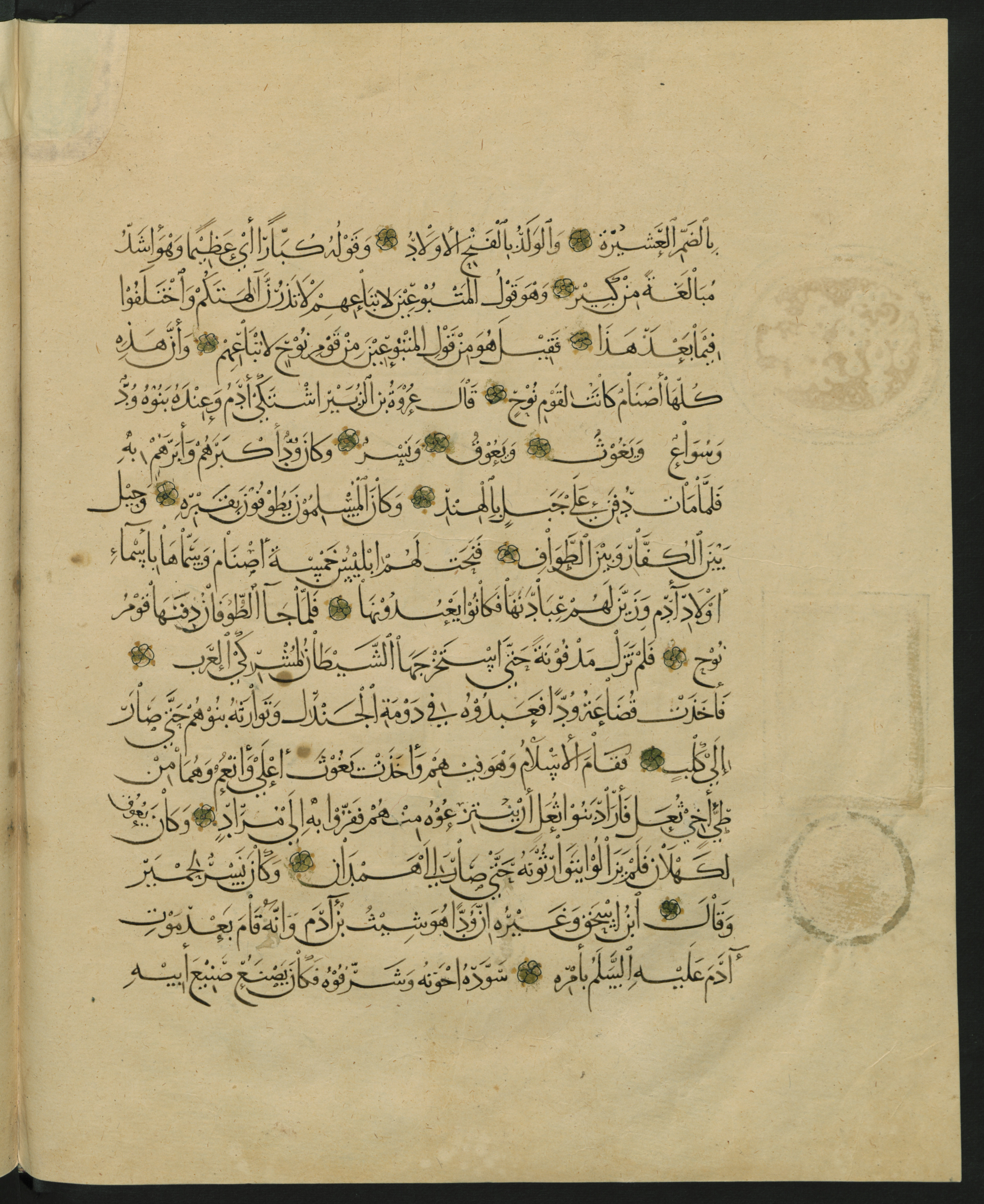
Berlin, Staatsbibliothek zu Berlin, Landberg 822 (Ahlwardt 914) (Scan 39)
This manuscript is a rare case where a Quranic codex is precisely dated by a colophon (completed on May 5, 1204 AD) and the scribe, al-Faḍl b. ʿUmar ar-Rāʾiḍ, is a known Iraqi scholar mentioned in Muslim scholarly literature. It also contains an exegetical compilation detailing circumstances of revelation, abrogated verses, and variant readings.
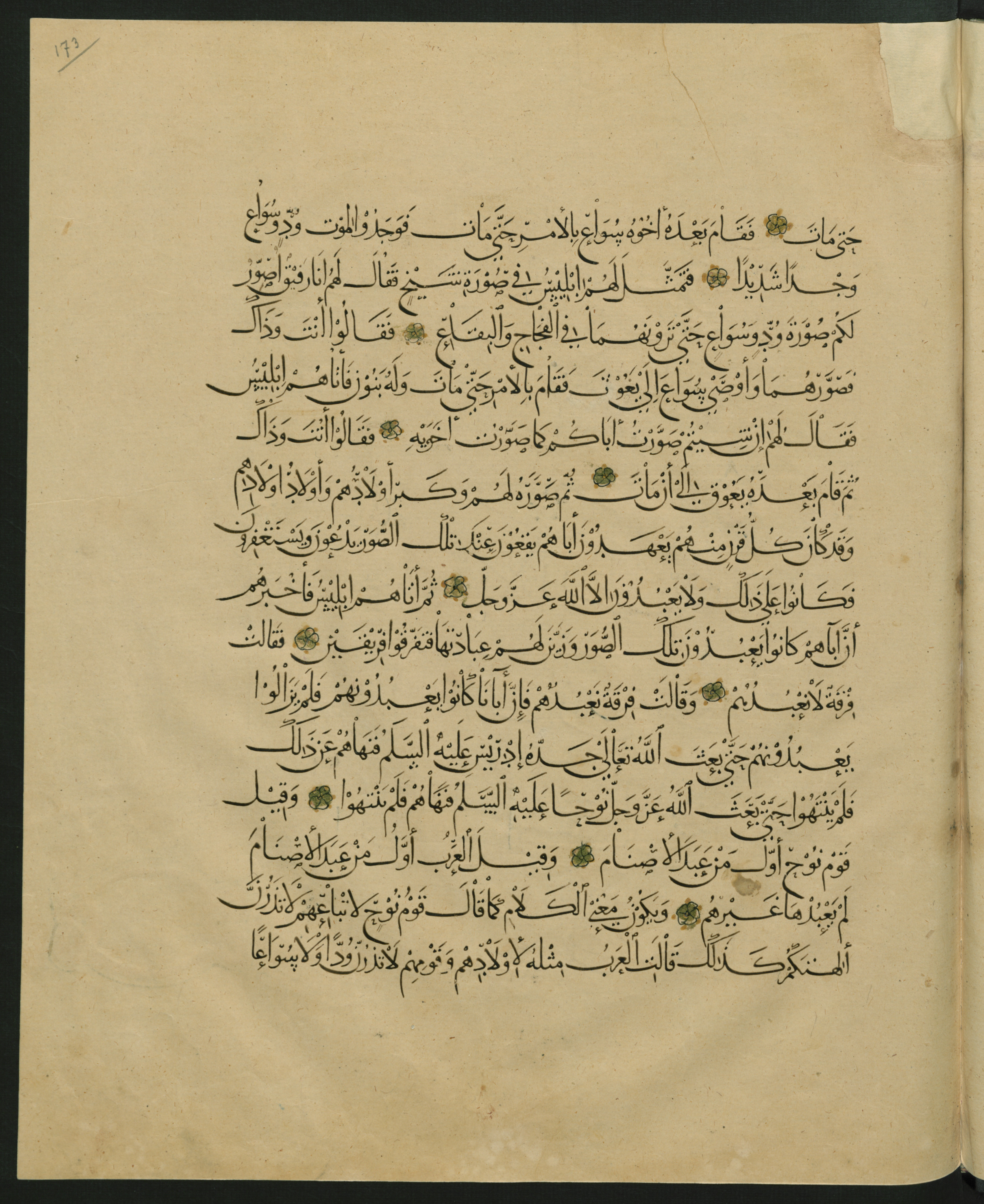
Berlin, Staatsbibliothek zu Berlin, Landberg 822 (Ahlwardt 914) (Scan 40)
This manuscript is a rare case where a Quranic codex is precisely dated by a colophon (completed on May 5, 1204 AD) and the scribe, al-Faḍl b. ʿUmar ar-Rāʾiḍ, is a known Iraqi scholar mentioned in Muslim scholarly literature. It also contains an exegetical compilation detailing circumstances of revelation, abrogated verses, and variant readings.
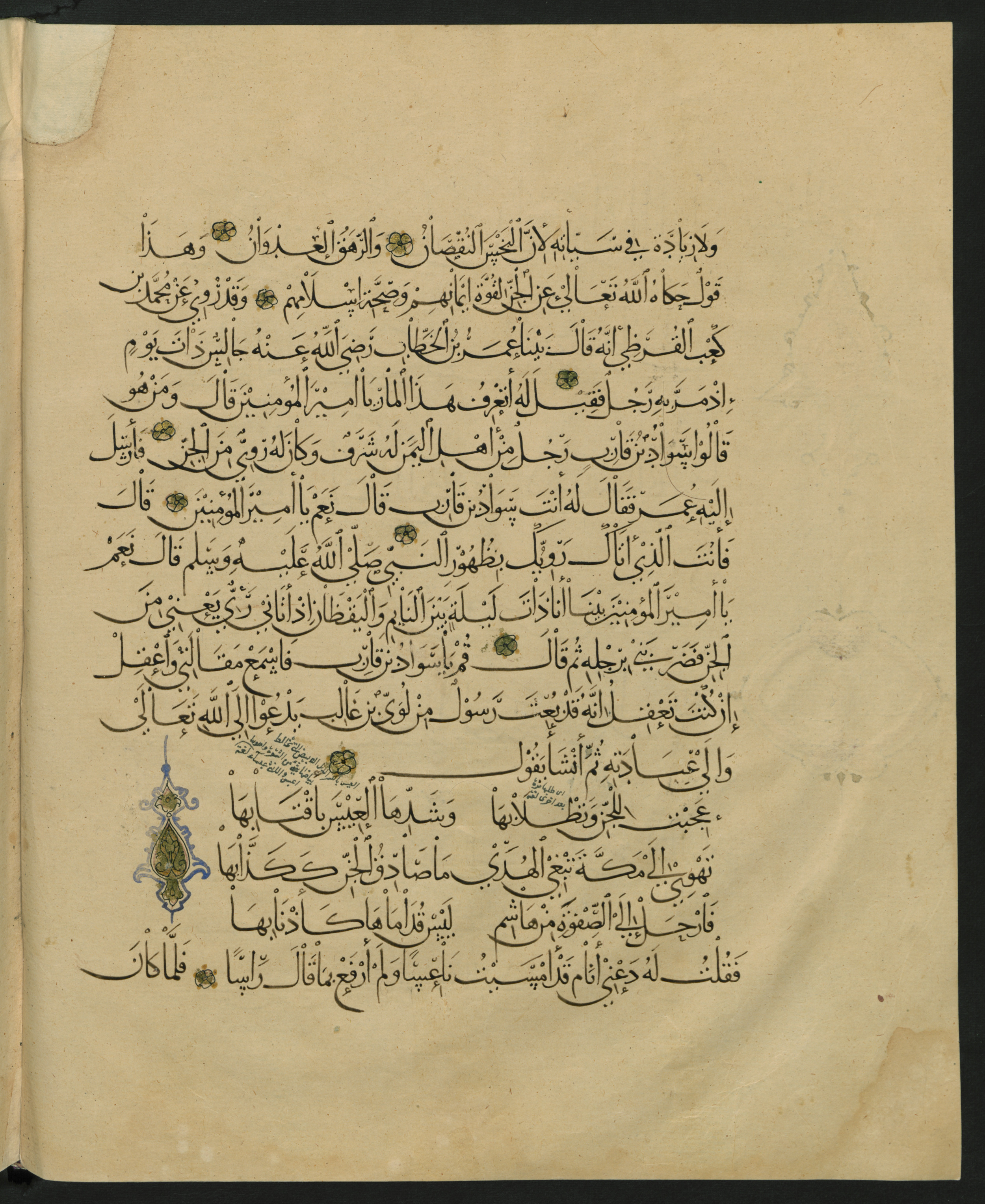
Berlin, Staatsbibliothek zu Berlin, Landberg 822 (Ahlwardt 914) (Scan 41)
This manuscript is a rare case where a Quranic codex is precisely dated by a colophon (completed on May 5, 1204 AD) and the scribe, al-Faḍl b. ʿUmar ar-Rāʾiḍ, is a known Iraqi scholar mentioned in Muslim scholarly literature. It also contains an exegetical compilation detailing circumstances of revelation, abrogated verses, and variant readings.
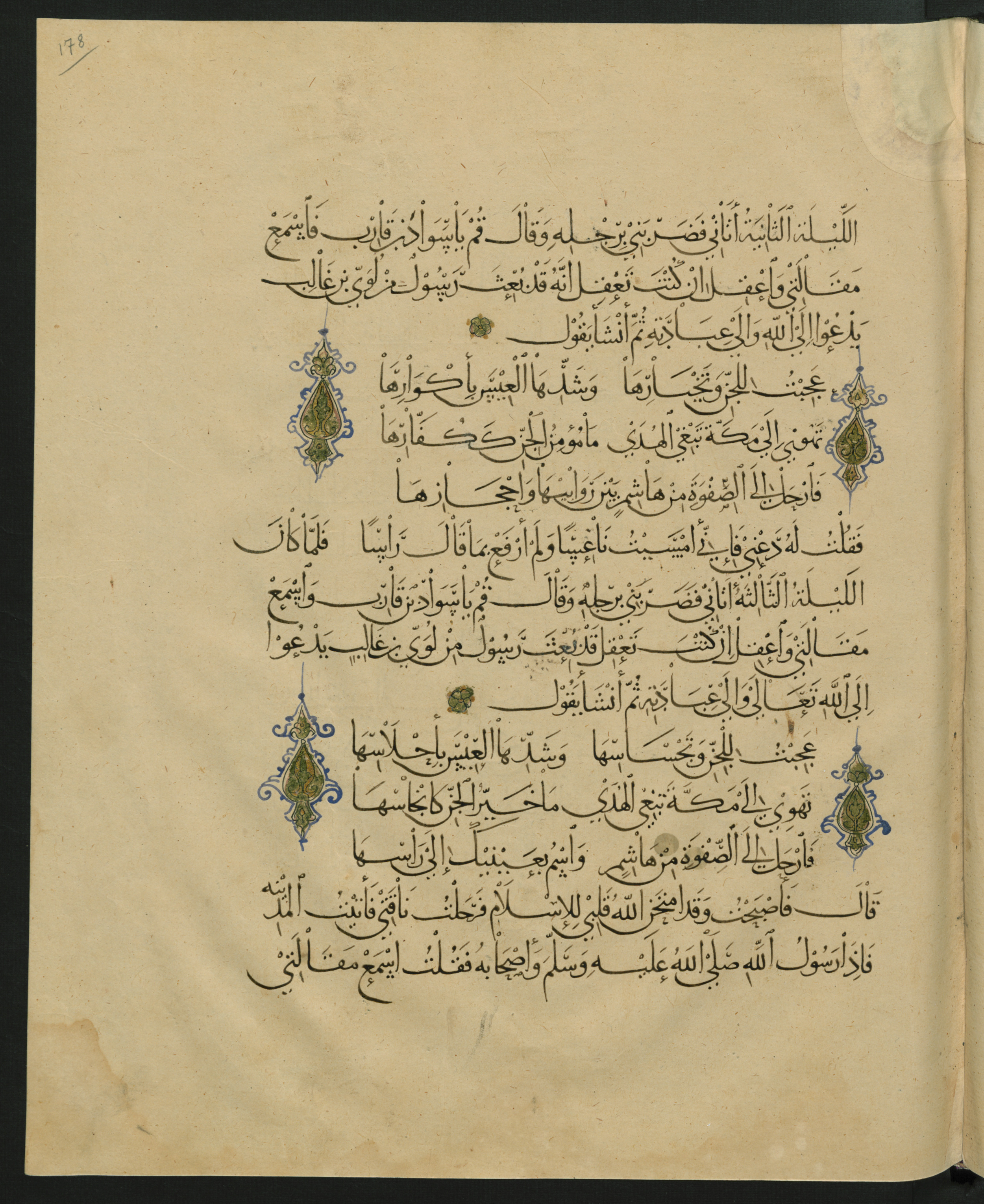
Berlin, Staatsbibliothek zu Berlin, Landberg 822 (Ahlwardt 914) (Scan 42)
This manuscript is a rare case where a Quranic codex is precisely dated by a colophon (completed on May 5, 1204 AD) and the scribe, al-Faḍl b. ʿUmar ar-Rāʾiḍ, is a known Iraqi scholar mentioned in Muslim scholarly literature. It also contains an exegetical compilation detailing circumstances of revelation, abrogated verses, and variant readings.
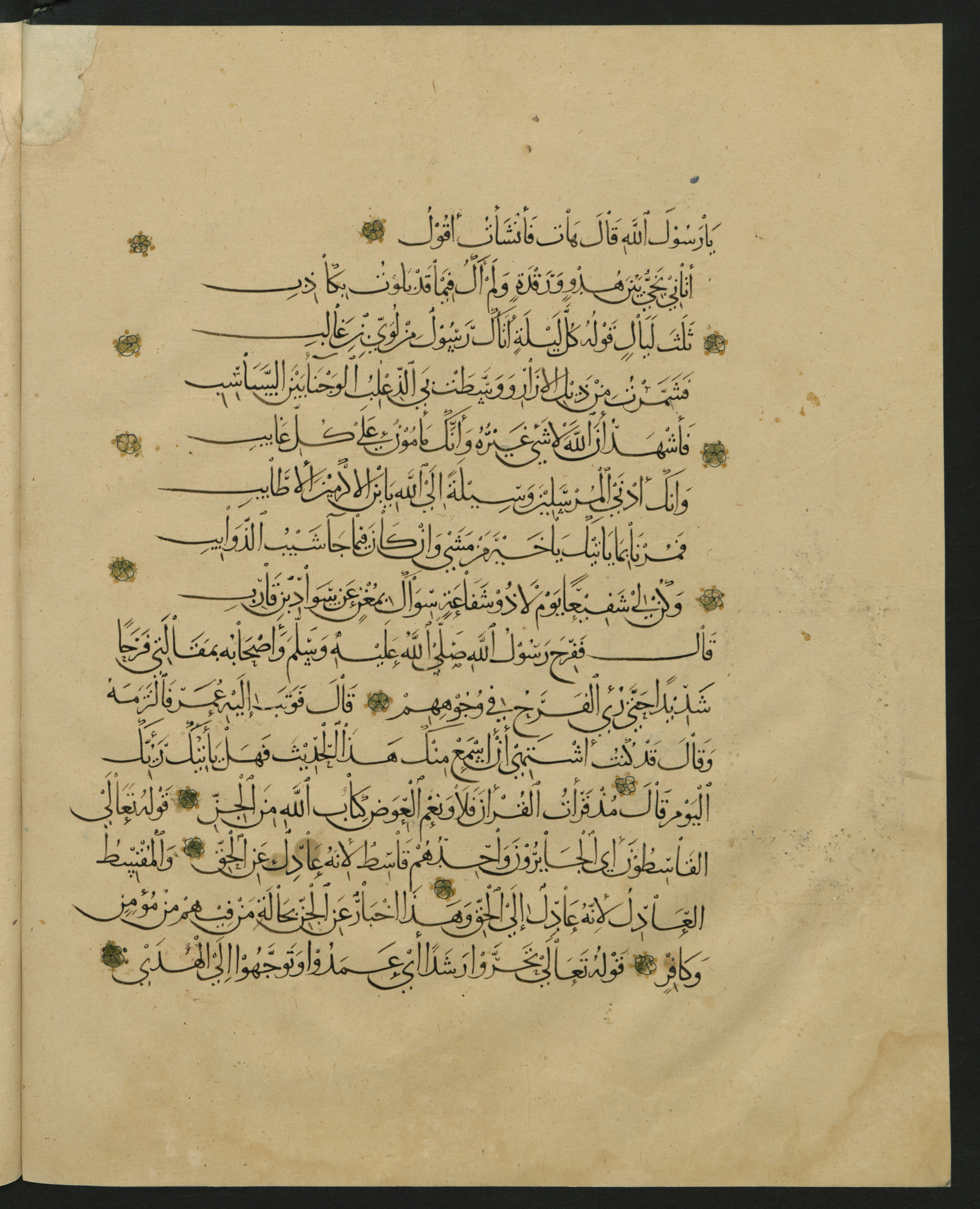
Berlin, Staatsbibliothek zu Berlin, Landberg 822 (Ahlwardt 914) (Scan 43)
This manuscript is a rare case where a Quranic codex is precisely dated by a colophon (completed on May 5, 1204 AD) and the scribe, al-Faḍl b. ʿUmar ar-Rāʾiḍ, is a known Iraqi scholar mentioned in Muslim scholarly literature. It also contains an exegetical compilation detailing circumstances of revelation, abrogated verses, and variant readings.
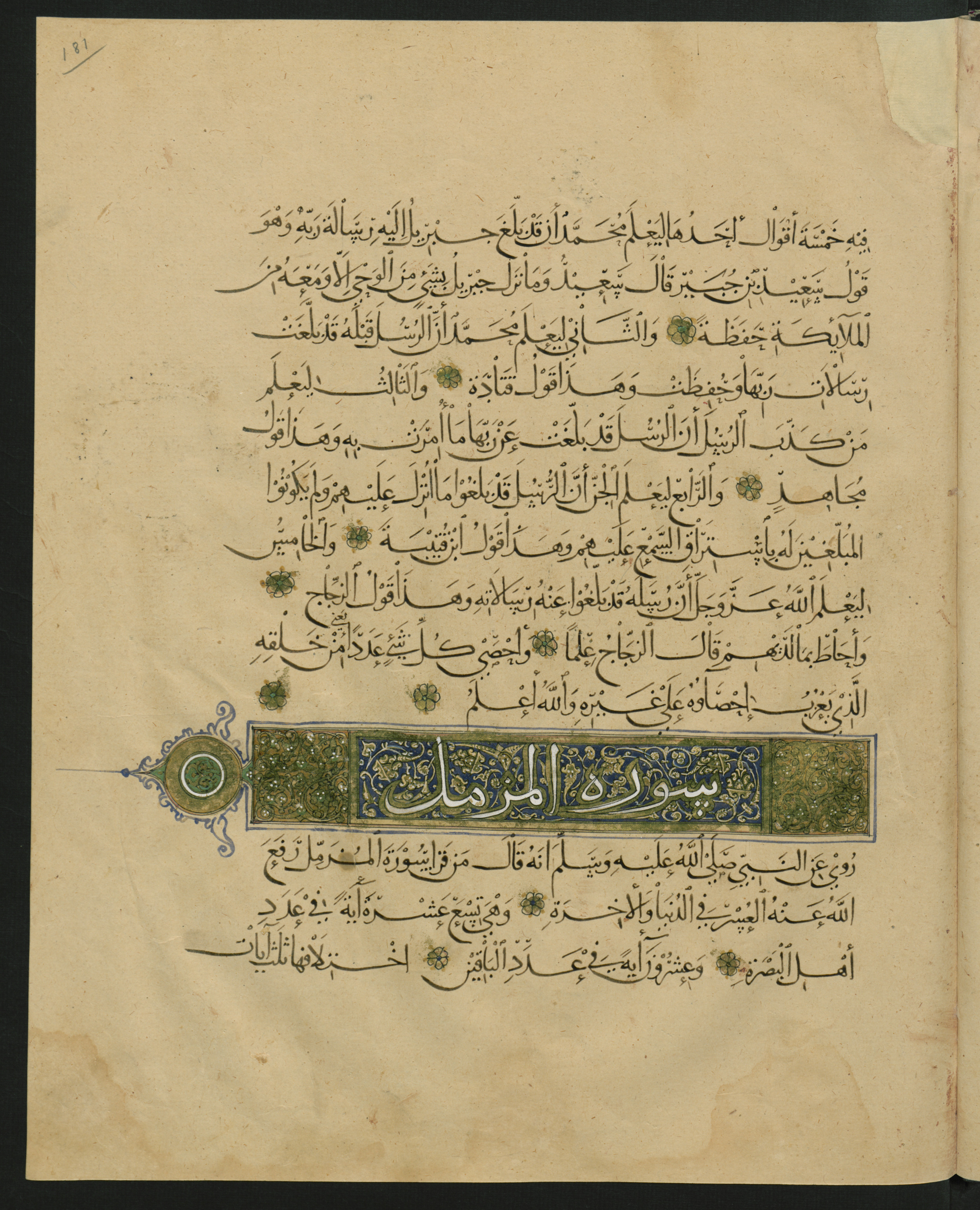
Berlin, Staatsbibliothek zu Berlin, Landberg 822 (Ahlwardt 914) (Scan 44)
This manuscript is a rare case where a Quranic codex is precisely dated by a colophon (completed on May 5, 1204 AD) and the scribe, al-Faḍl b. ʿUmar ar-Rāʾiḍ, is a known Iraqi scholar mentioned in Muslim scholarly literature. It also contains an exegetical compilation detailing circumstances of revelation, abrogated verses, and variant readings.
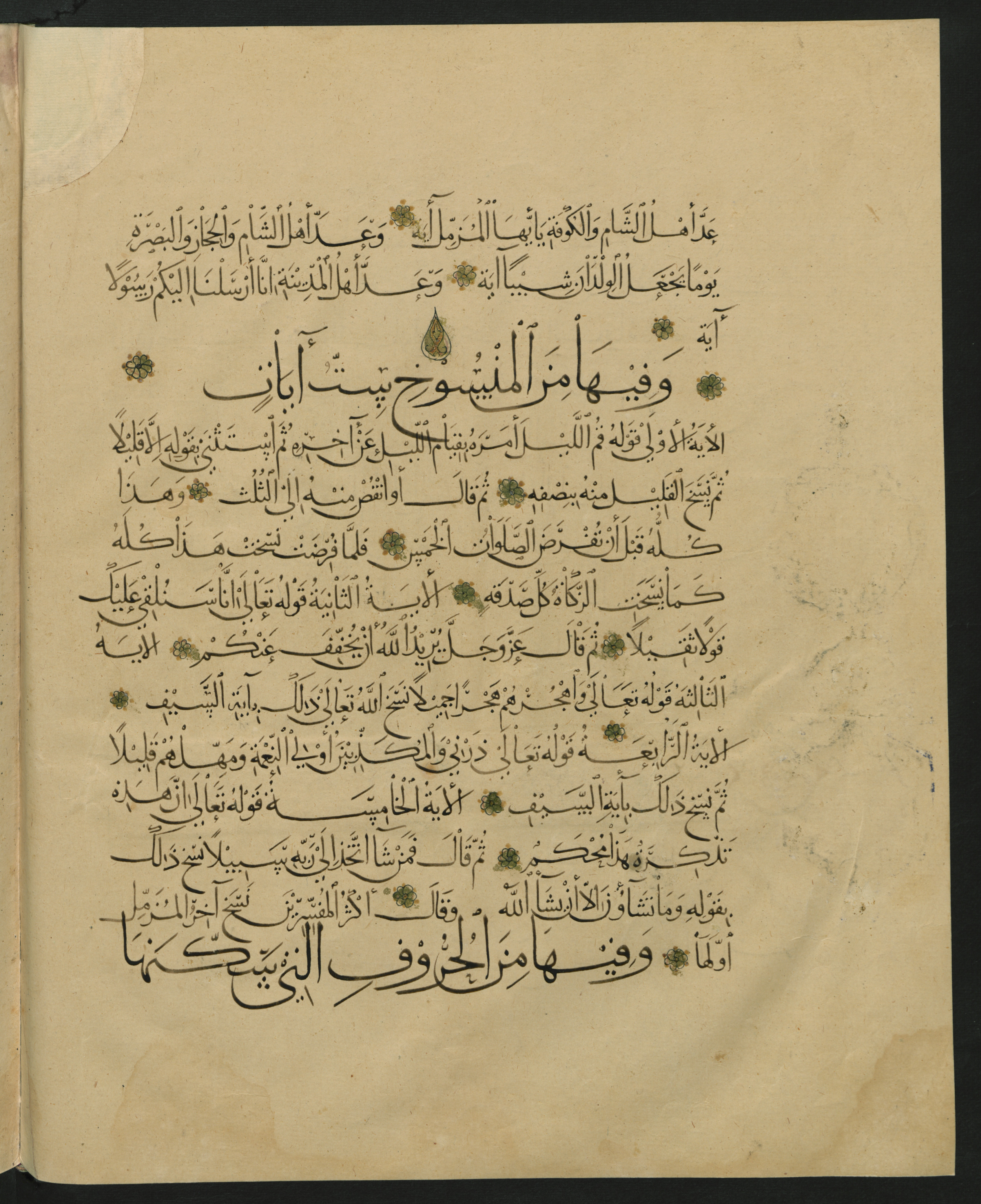
Berlin, Staatsbibliothek zu Berlin, Landberg 822 (Ahlwardt 914) (Scan 45)
This manuscript is a rare case where a Quranic codex is precisely dated by a colophon (completed on May 5, 1204 AD) and the scribe, al-Faḍl b. ʿUmar ar-Rāʾiḍ, is a known Iraqi scholar mentioned in Muslim scholarly literature. It also contains an exegetical compilation detailing circumstances of revelation, abrogated verses, and variant readings.
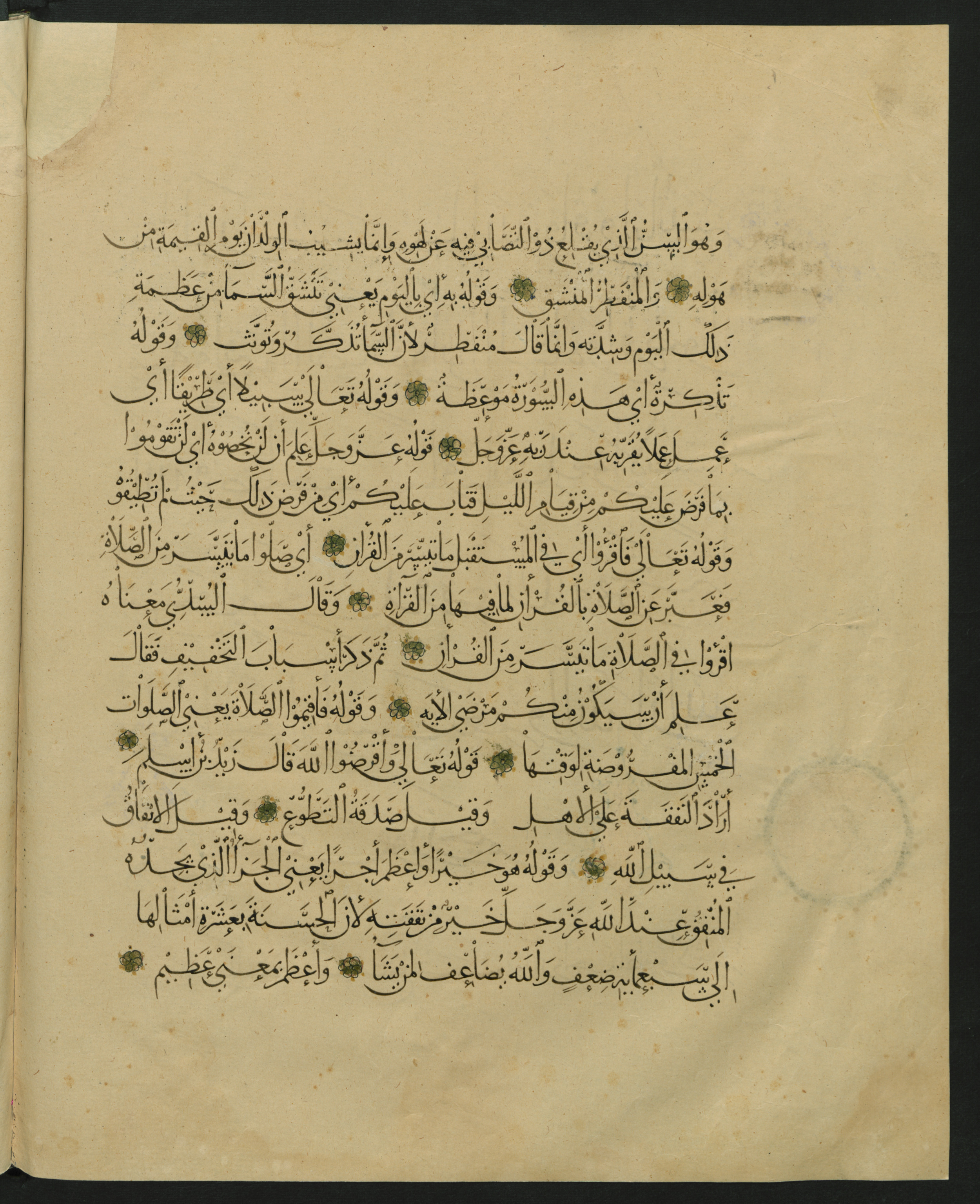
Berlin, Staatsbibliothek zu Berlin, Landberg 822 (Ahlwardt 914) (Scan 46)
This manuscript is a rare case where a Quranic codex is precisely dated by a colophon (completed on May 5, 1204 AD) and the scribe, al-Faḍl b. ʿUmar ar-Rāʾiḍ, is a known Iraqi scholar mentioned in Muslim scholarly literature. It also contains an exegetical compilation detailing circumstances of revelation, abrogated verses, and variant readings.
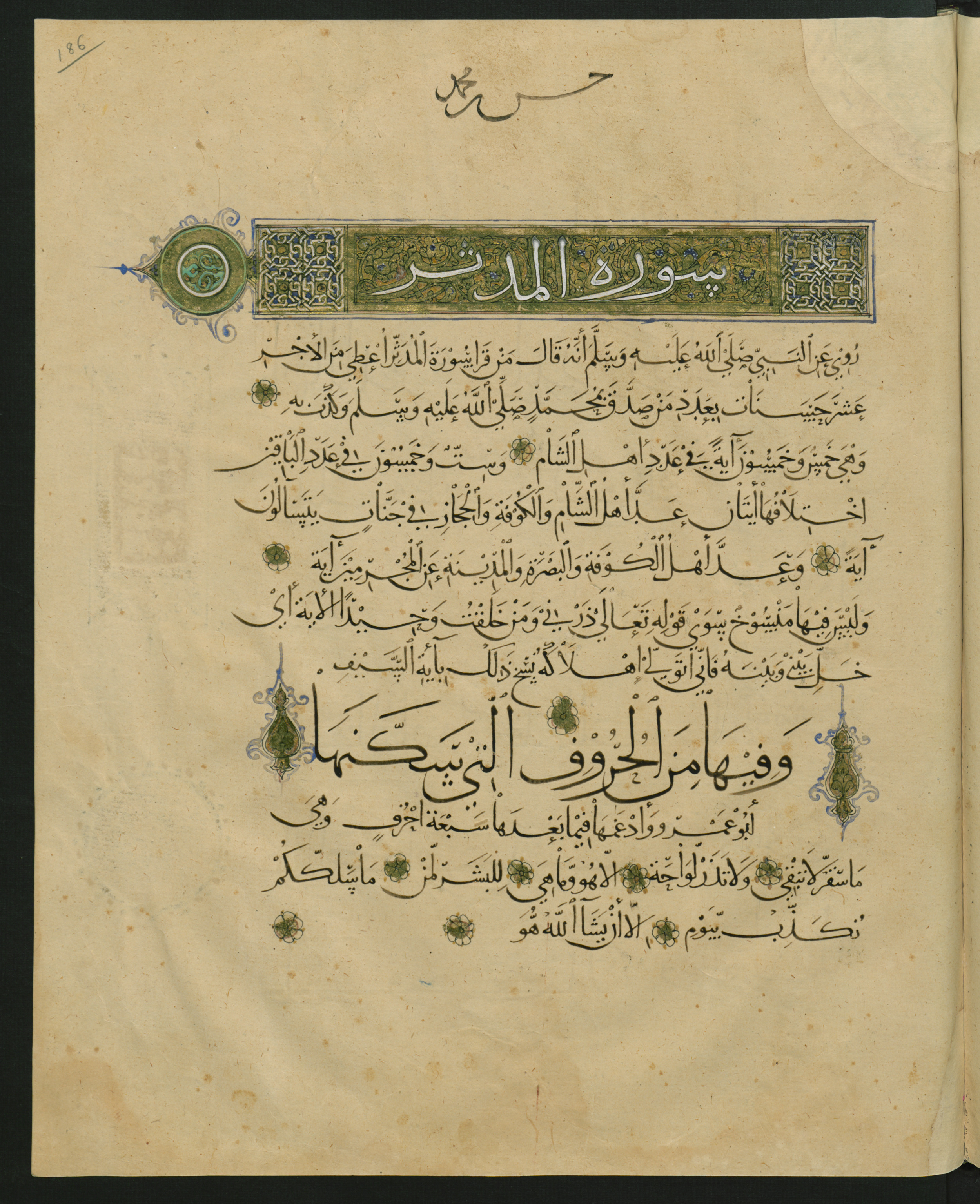
Berlin, Staatsbibliothek zu Berlin, Landberg 822 (Ahlwardt 914) (Scan 47)
This manuscript is a rare case where a Quranic codex is precisely dated by a colophon (completed on May 5, 1204 AD) and the scribe, al-Faḍl b. ʿUmar ar-Rāʾiḍ, is a known Iraqi scholar mentioned in Muslim scholarly literature. It also contains an exegetical compilation detailing circumstances of revelation, abrogated verses, and variant readings.
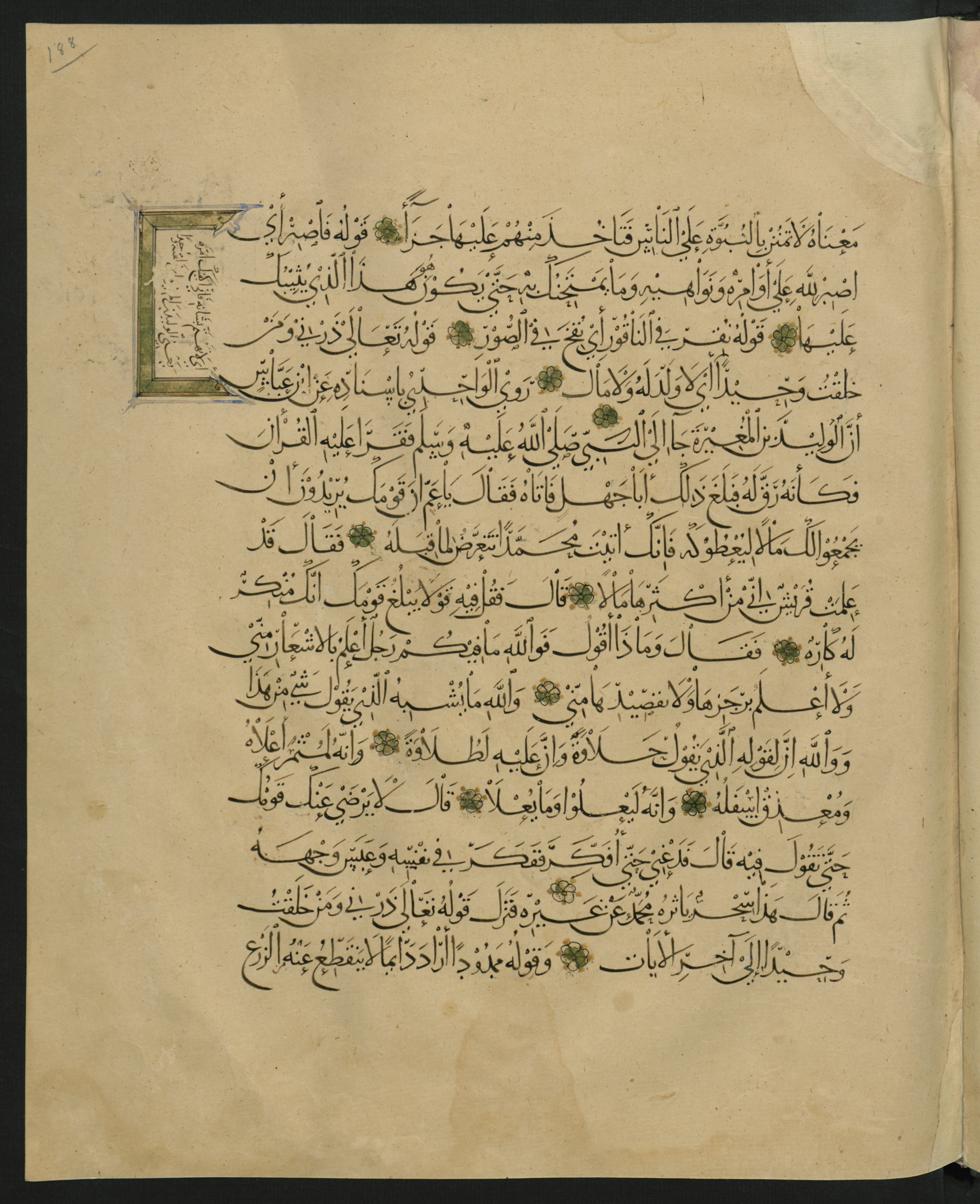
Berlin, Staatsbibliothek zu Berlin, Landberg 822 (Ahlwardt 914) (Scan 48)
This manuscript is a rare case where a Quranic codex is precisely dated by a colophon (completed on May 5, 1204 AD) and the scribe, al-Faḍl b. ʿUmar ar-Rāʾiḍ, is a known Iraqi scholar mentioned in Muslim scholarly literature. It also contains an exegetical compilation detailing circumstances of revelation, abrogated verses, and variant readings.
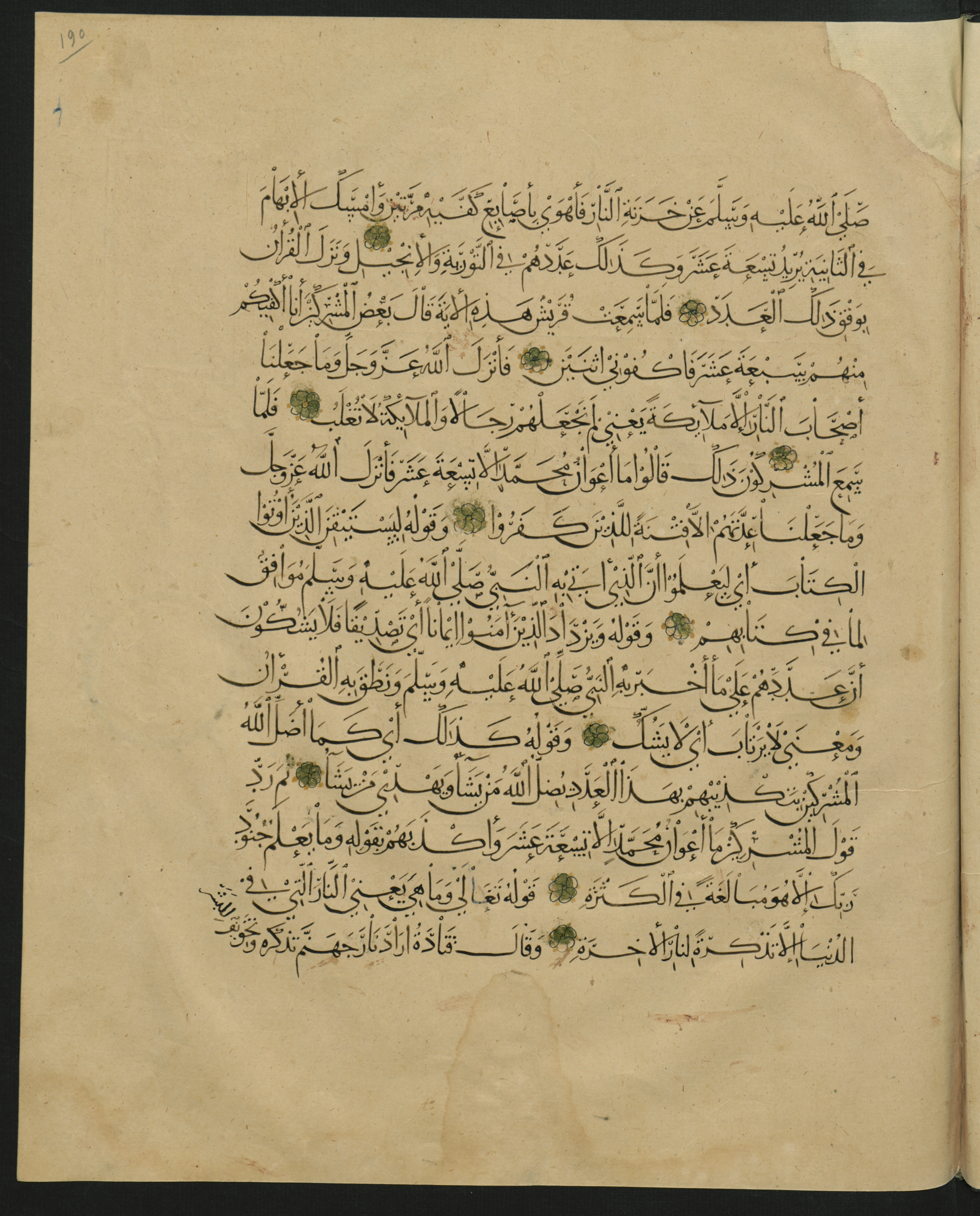
Berlin, Staatsbibliothek zu Berlin, Landberg 822 (Ahlwardt 914) (Scan 49)
This manuscript is a rare case where a Quranic codex is precisely dated by a colophon (completed on May 5, 1204 AD) and the scribe, al-Faḍl b. ʿUmar ar-Rāʾiḍ, is a known Iraqi scholar mentioned in Muslim scholarly literature. It also contains an exegetical compilation detailing circumstances of revelation, abrogated verses, and variant readings.
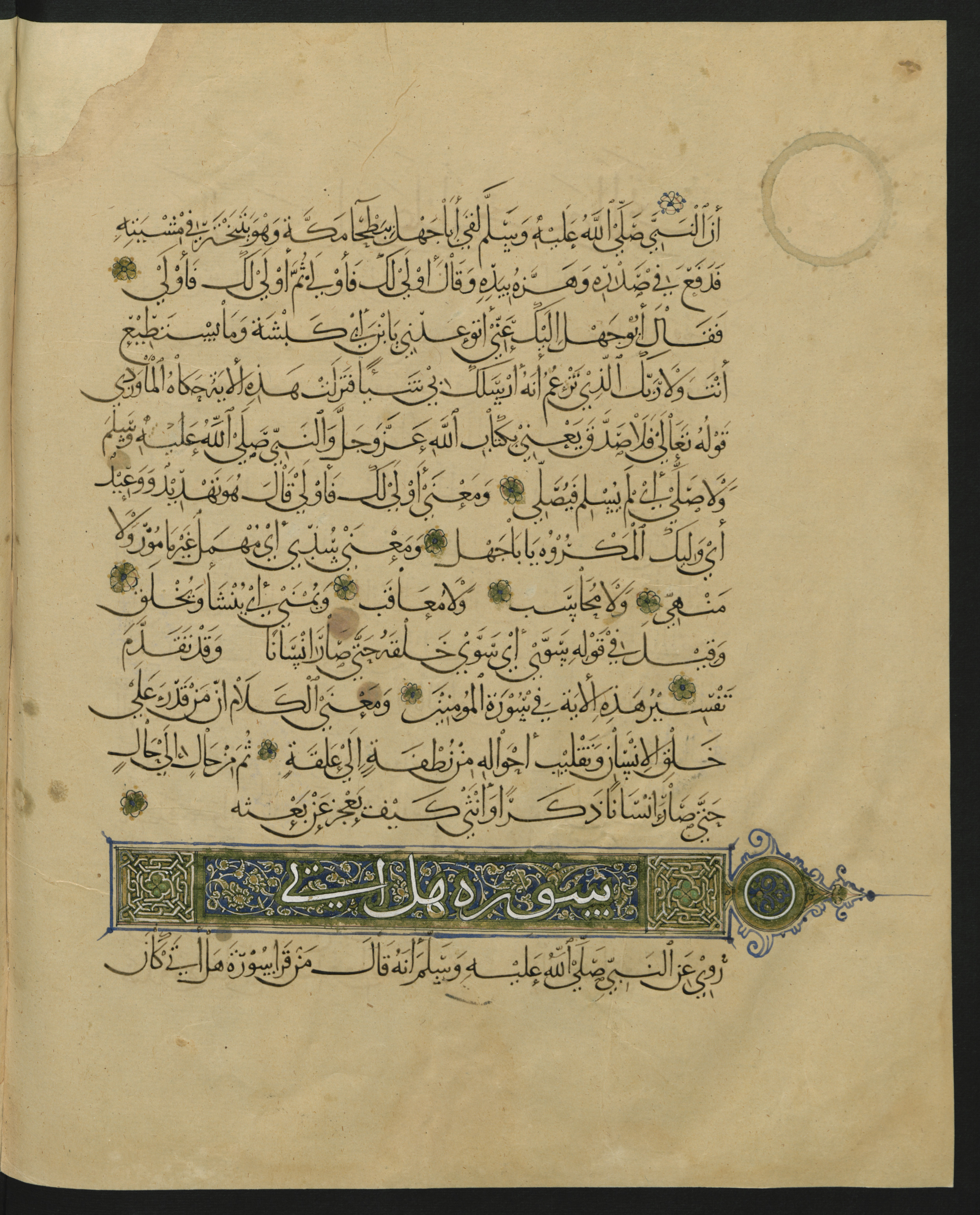
Berlin, Staatsbibliothek zu Berlin, Landberg 822 (Ahlwardt 914) (Scan 50)
This manuscript is a rare case where a Quranic codex is precisely dated by a colophon (completed on May 5, 1204 AD) and the scribe, al-Faḍl b. ʿUmar ar-Rāʾiḍ, is a known Iraqi scholar mentioned in Muslim scholarly literature. It also contains an exegetical compilation detailing circumstances of revelation, abrogated verses, and variant readings.
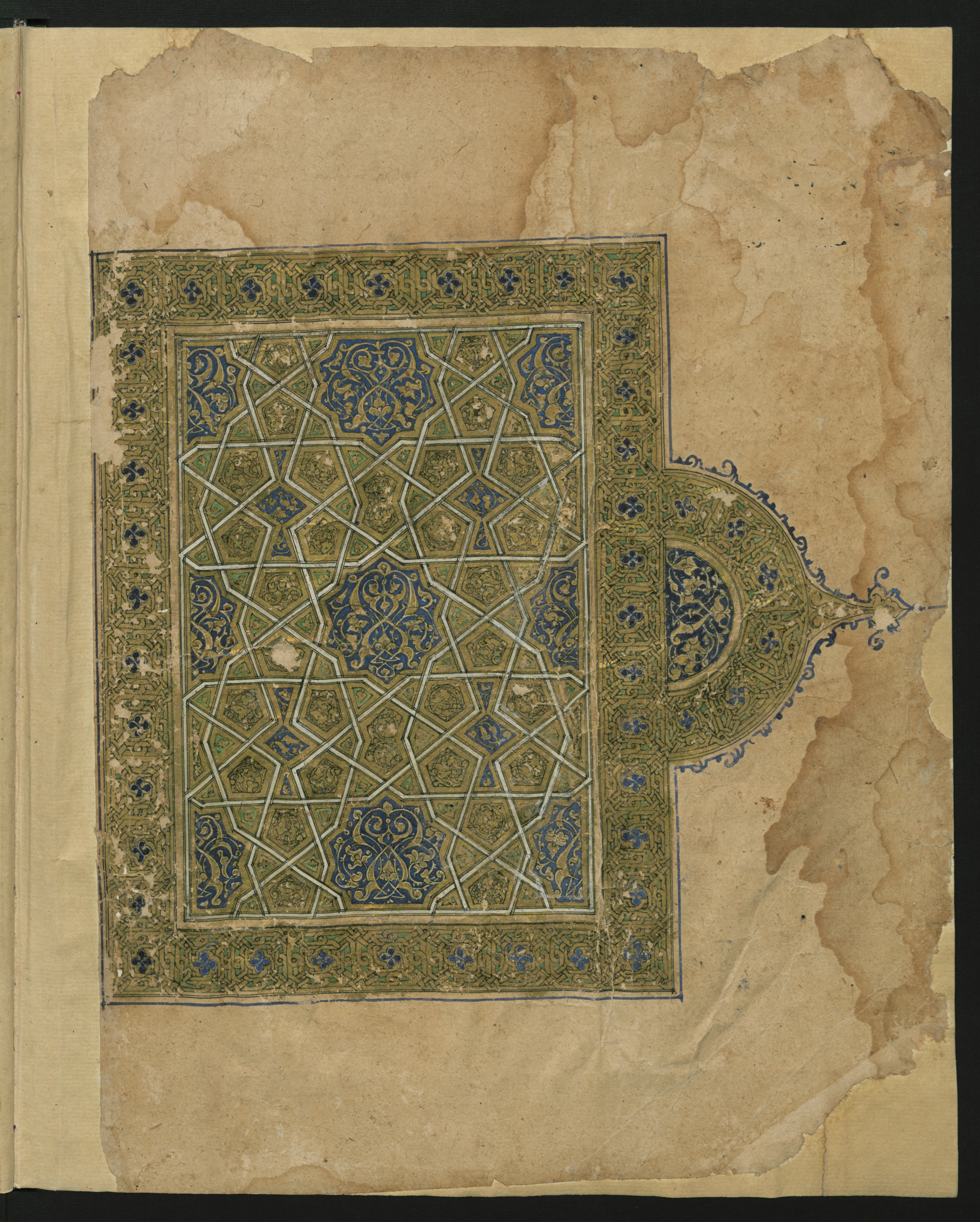
Berlin, Staatsbibliothek zu Berlin, Landberg 822 (Ahlwardt 914) (Scan 51)
This manuscript is a rare case where a Quranic codex is precisely dated by a colophon (completed on May 5, 1204 AD) and the scribe, al-Faḍl b. ʿUmar ar-Rāʾiḍ, is a known Iraqi scholar mentioned in Muslim scholarly literature. It also contains an exegetical compilation detailing circumstances of revelation, abrogated verses, and variant readings.
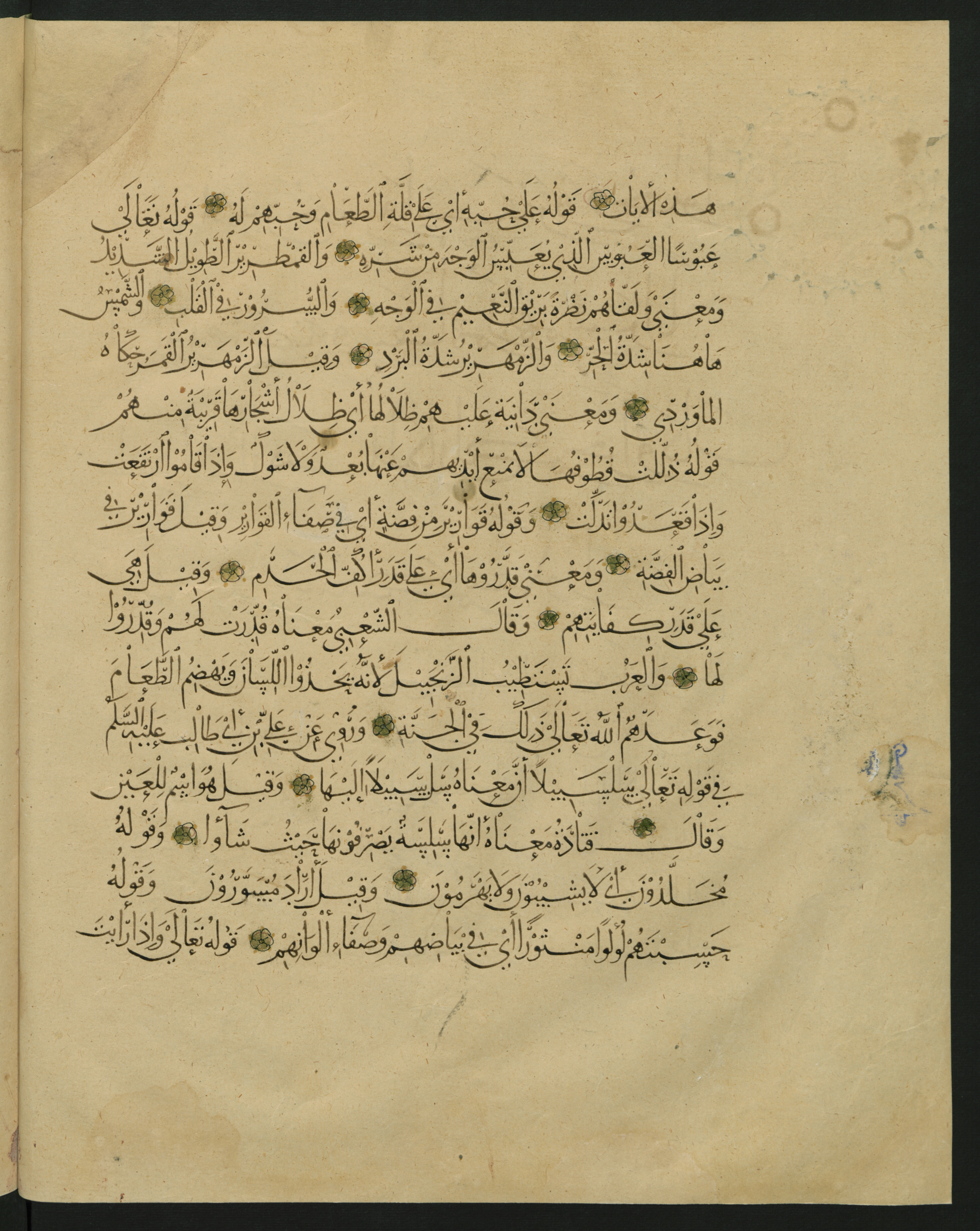
Berlin, Staatsbibliothek zu Berlin, Landberg 822 (Ahlwardt 914) (Scan 52)
This manuscript is a rare case where a Quranic codex is precisely dated by a colophon (completed on May 5, 1204 AD) and the scribe, al-Faḍl b. ʿUmar ar-Rāʾiḍ, is a known Iraqi scholar mentioned in Muslim scholarly literature. It also contains an exegetical compilation detailing circumstances of revelation, abrogated verses, and variant readings.
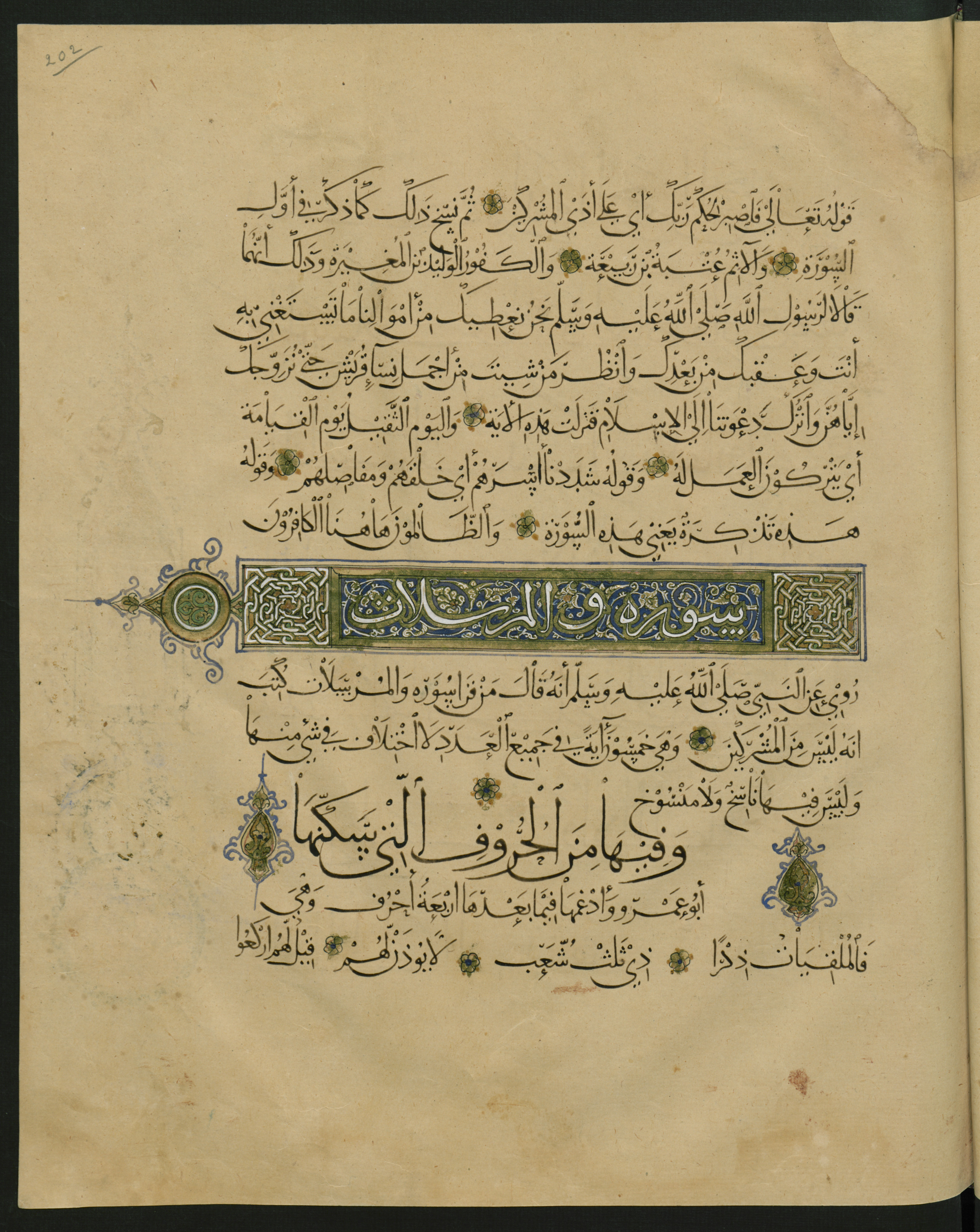
Berlin, Staatsbibliothek zu Berlin, Landberg 822 (Ahlwardt 914) (Scan 53)
This manuscript is a rare case where a Quranic codex is precisely dated by a colophon (completed on May 5, 1204 AD) and the scribe, al-Faḍl b. ʿUmar ar-Rāʾiḍ, is a known Iraqi scholar mentioned in Muslim scholarly literature. It also contains an exegetical compilation detailing circumstances of revelation, abrogated verses, and variant readings.
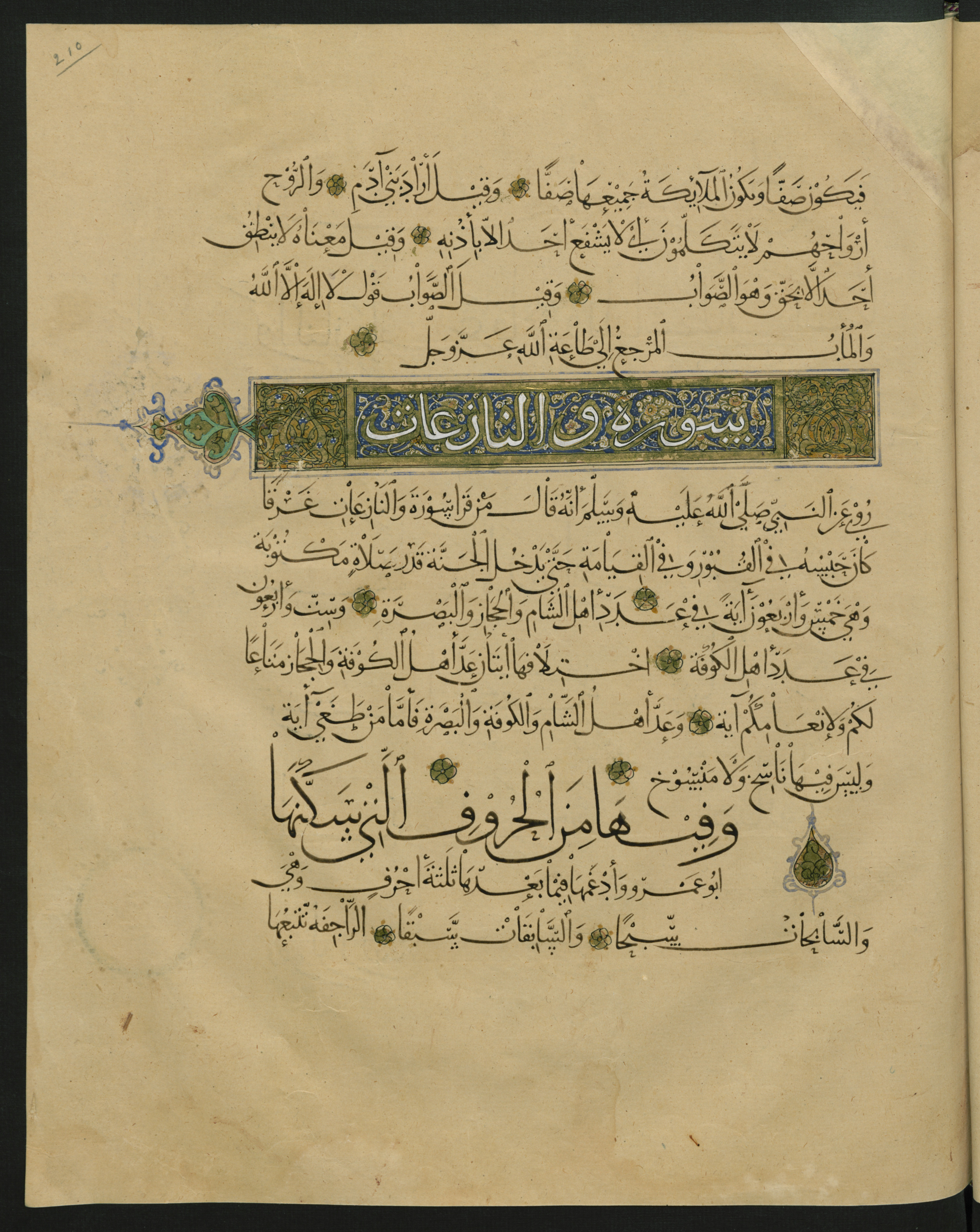
Berlin, Staatsbibliothek zu Berlin, Landberg 822 (Ahlwardt 914) (Scan 54)
This manuscript is a rare case where a Quranic codex is precisely dated by a colophon (completed on May 5, 1204 AD) and the scribe, al-Faḍl b. ʿUmar ar-Rāʾiḍ, is a known Iraqi scholar mentioned in Muslim scholarly literature. It also contains an exegetical compilation detailing circumstances of revelation, abrogated verses, and variant readings.
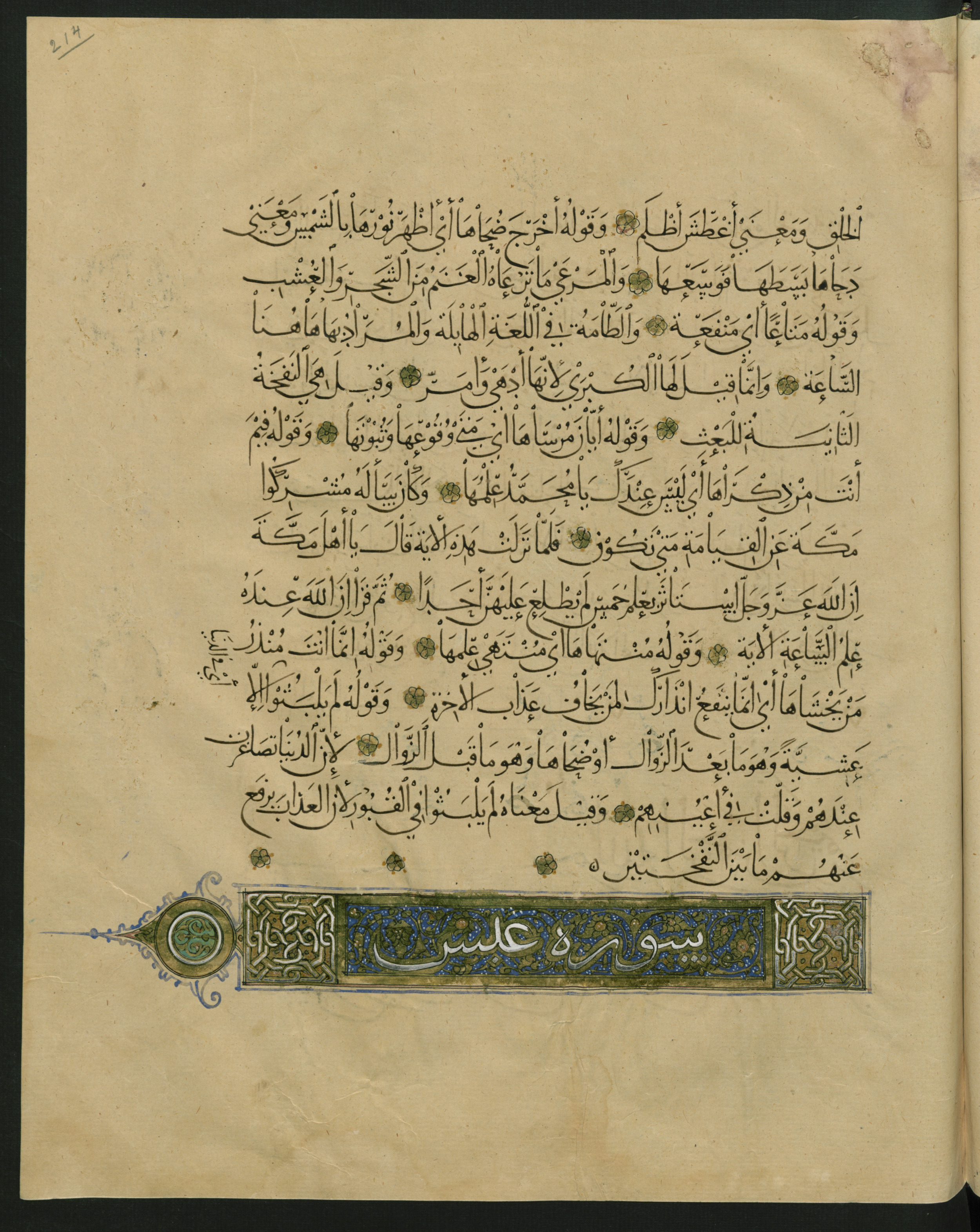
Berlin, Staatsbibliothek zu Berlin, Landberg 822 (Ahlwardt 914) (Scan 55)
This manuscript is a rare case where a Quranic codex is precisely dated by a colophon (completed on May 5, 1204 AD) and the scribe, al-Faḍl b. ʿUmar ar-Rāʾiḍ, is a known Iraqi scholar mentioned in Muslim scholarly literature. It also contains an exegetical compilation detailing circumstances of revelation, abrogated verses, and variant readings.
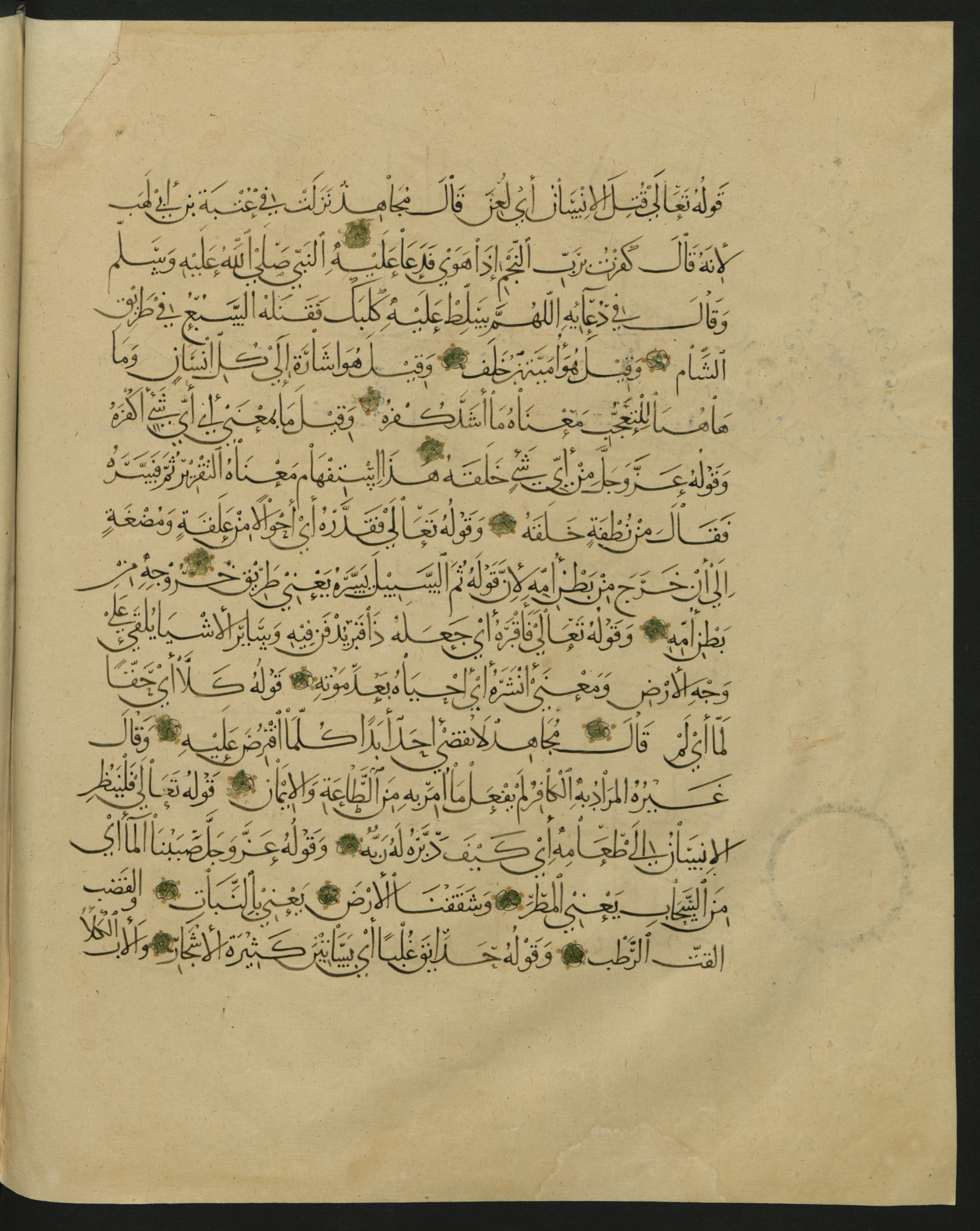
Berlin, Staatsbibliothek zu Berlin, Landberg 822 (Ahlwardt 914) (Scan 56)
This manuscript is a rare case where a Quranic codex is precisely dated by a colophon (completed on May 5, 1204 AD) and the scribe, al-Faḍl b. ʿUmar ar-Rāʾiḍ, is a known Iraqi scholar mentioned in Muslim scholarly literature. It also contains an exegetical compilation detailing circumstances of revelation, abrogated verses, and variant readings.
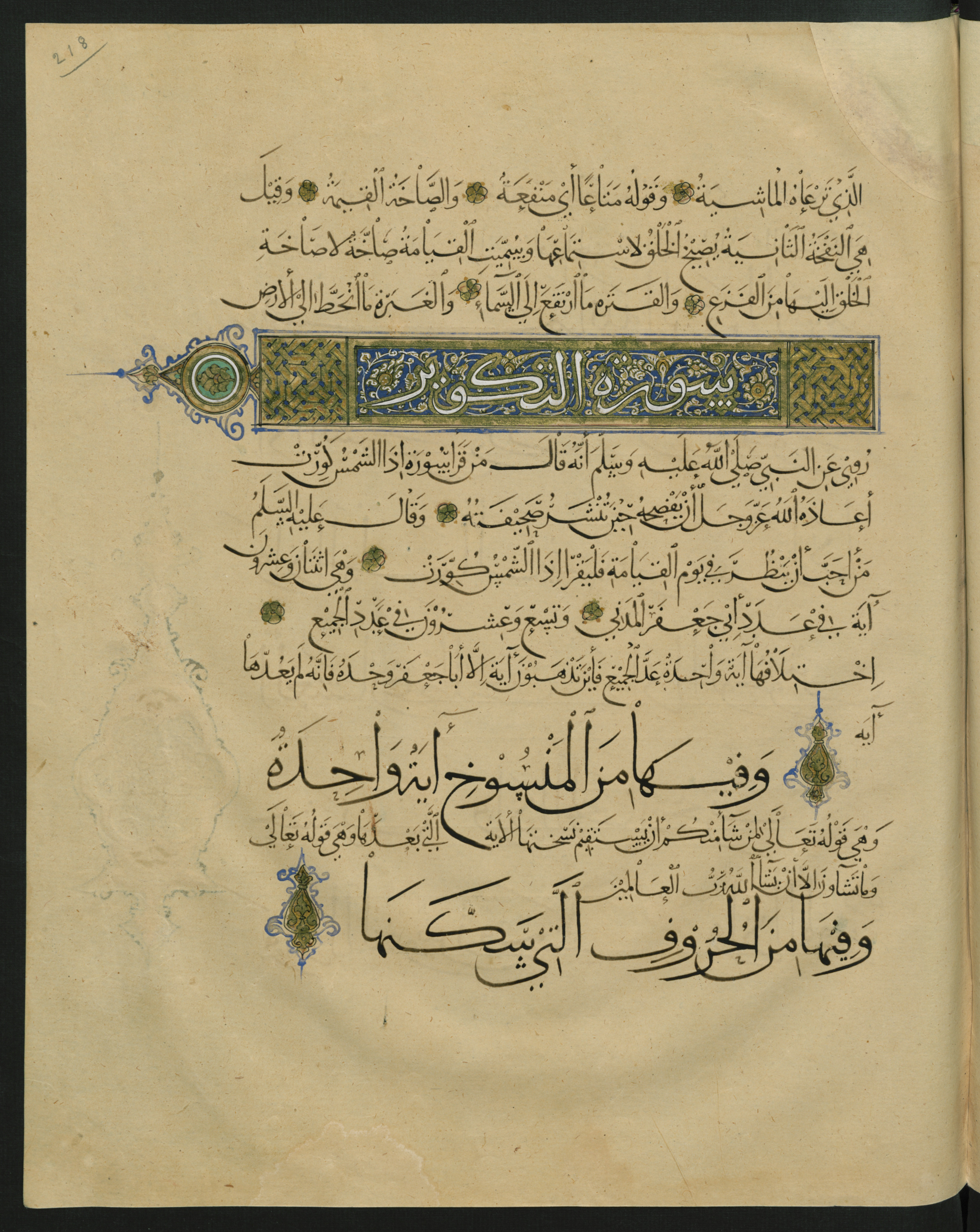
Berlin, Staatsbibliothek zu Berlin, Landberg 822 (Ahlwardt 914) (Scan 57)
This manuscript is a rare case where a Quranic codex is precisely dated by a colophon (completed on May 5, 1204 AD) and the scribe, al-Faḍl b. ʿUmar ar-Rāʾiḍ, is a known Iraqi scholar mentioned in Muslim scholarly literature. It also contains an exegetical compilation detailing circumstances of revelation, abrogated verses, and variant readings.
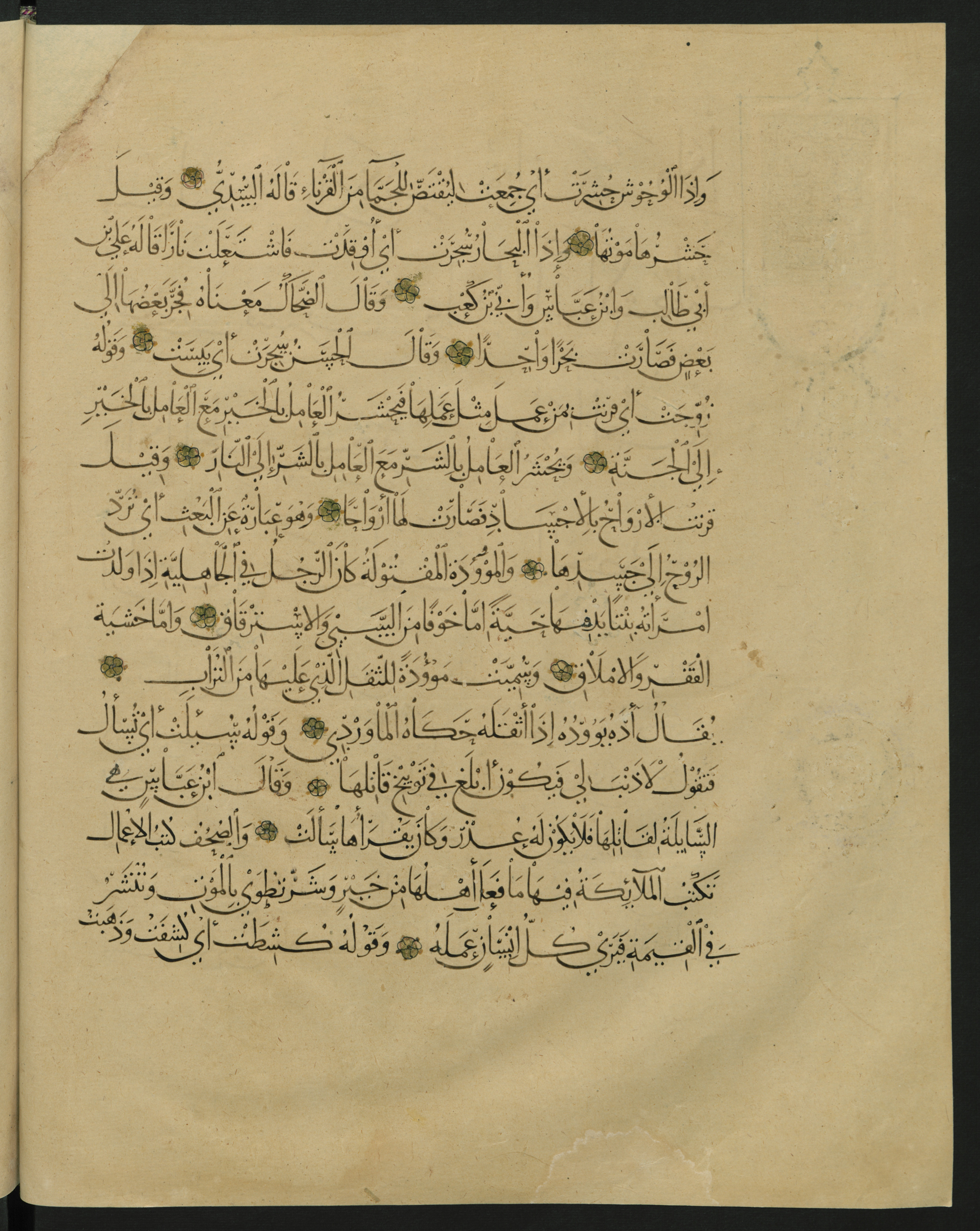
Berlin, Staatsbibliothek zu Berlin, Landberg 822 (Ahlwardt 914) (Scan 58)
This manuscript is a rare case where a Quranic codex is precisely dated by a colophon (completed on May 5, 1204 AD) and the scribe, al-Faḍl b. ʿUmar ar-Rāʾiḍ, is a known Iraqi scholar mentioned in Muslim scholarly literature. It also contains an exegetical compilation detailing circumstances of revelation, abrogated verses, and variant readings.
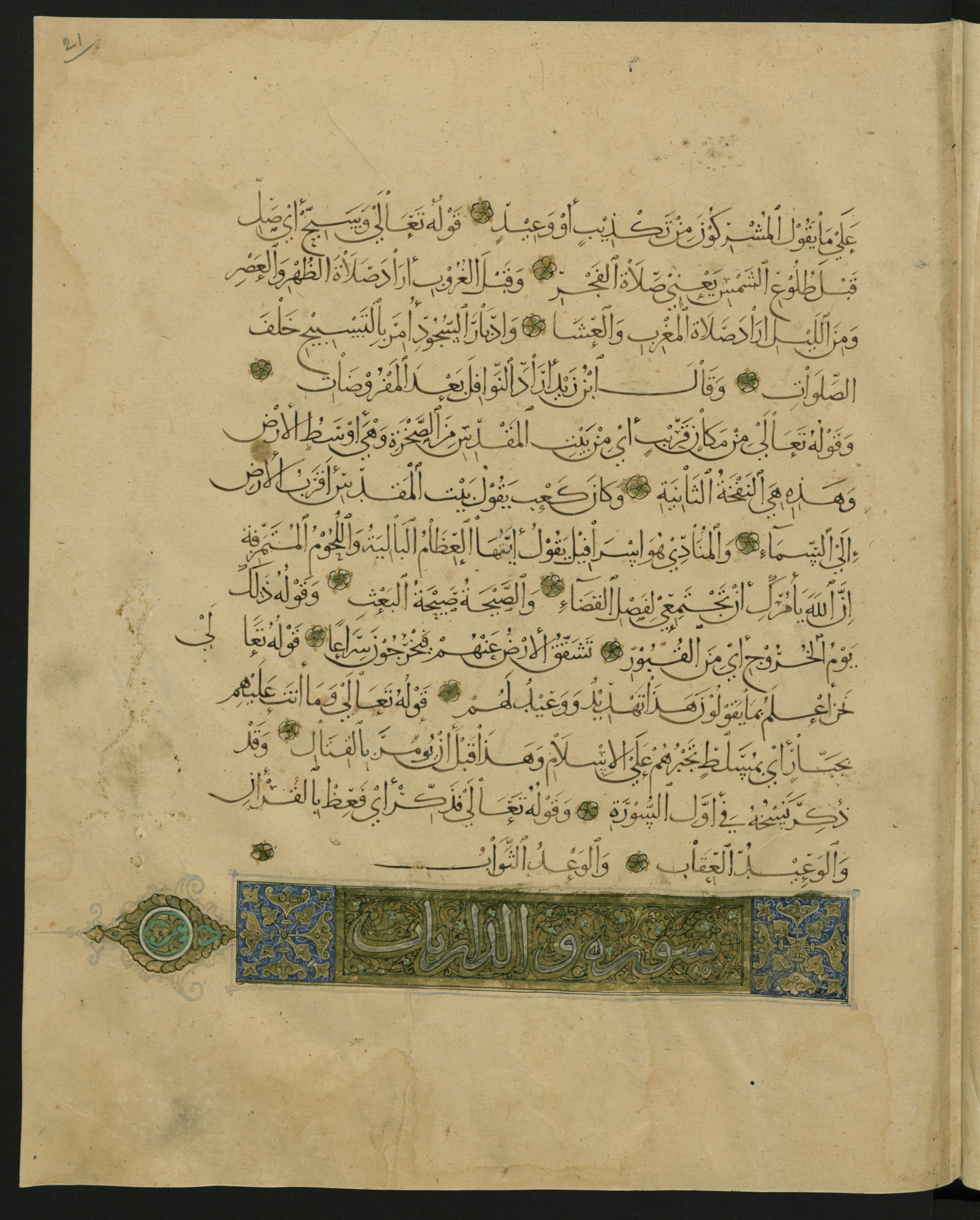
Berlin, Staatsbibliothek zu Berlin, Landberg 822 (Ahlwardt 914) (Scan 59)
This manuscript is a rare case where a Quranic codex is precisely dated by a colophon (completed on May 5, 1204 AD) and the scribe, al-Faḍl b. ʿUmar ar-Rāʾiḍ, is a known Iraqi scholar mentioned in Muslim scholarly literature. It also contains an exegetical compilation detailing circumstances of revelation, abrogated verses, and variant readings.
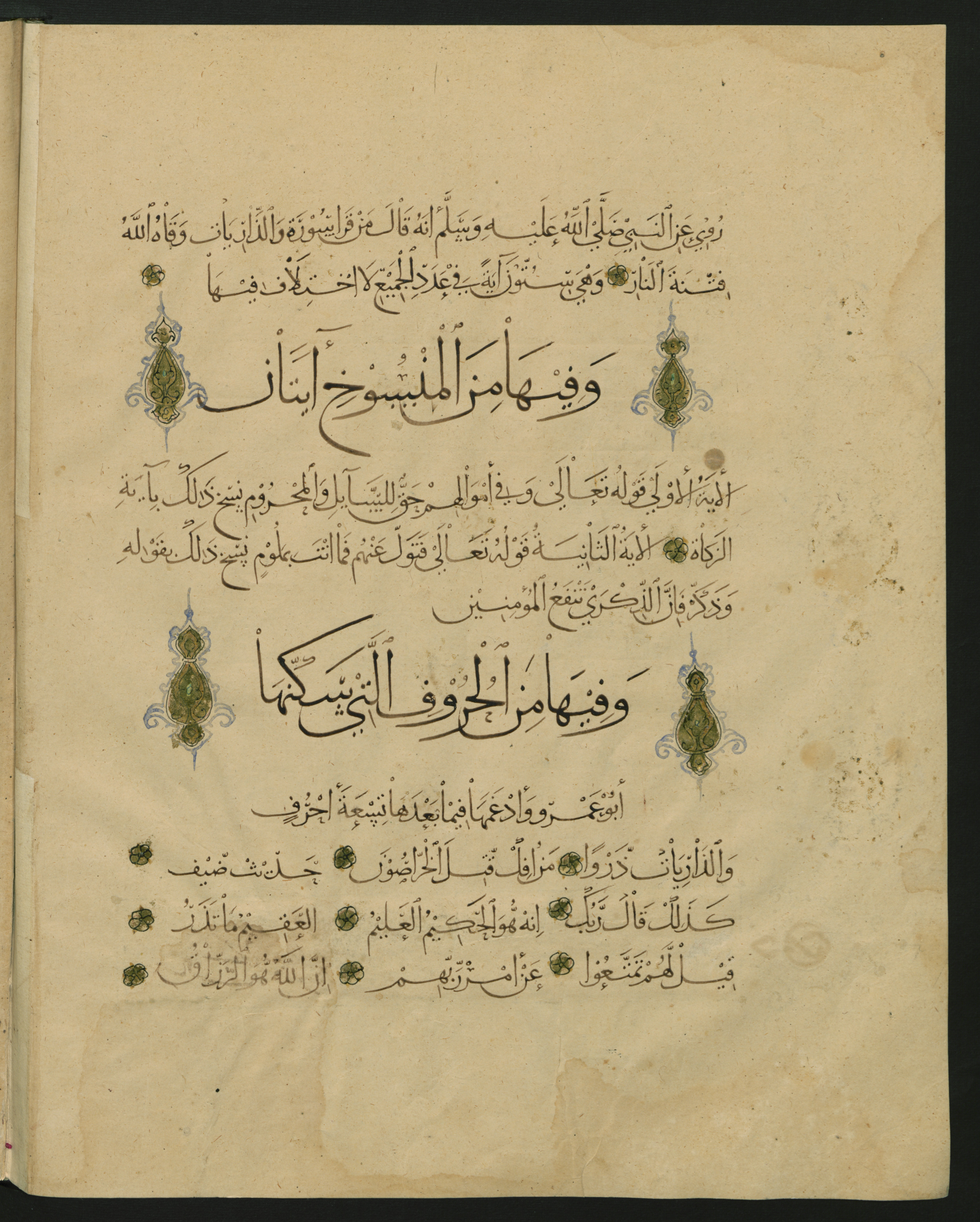
Berlin, Staatsbibliothek zu Berlin, Landberg 822 (Ahlwardt 914) (Scan 60)
This manuscript is a rare case where a Quranic codex is precisely dated by a colophon (completed on May 5, 1204 AD) and the scribe, al-Faḍl b. ʿUmar ar-Rāʾiḍ, is a known Iraqi scholar mentioned in Muslim scholarly literature. It also contains an exegetical compilation detailing circumstances of revelation, abrogated verses, and variant readings.
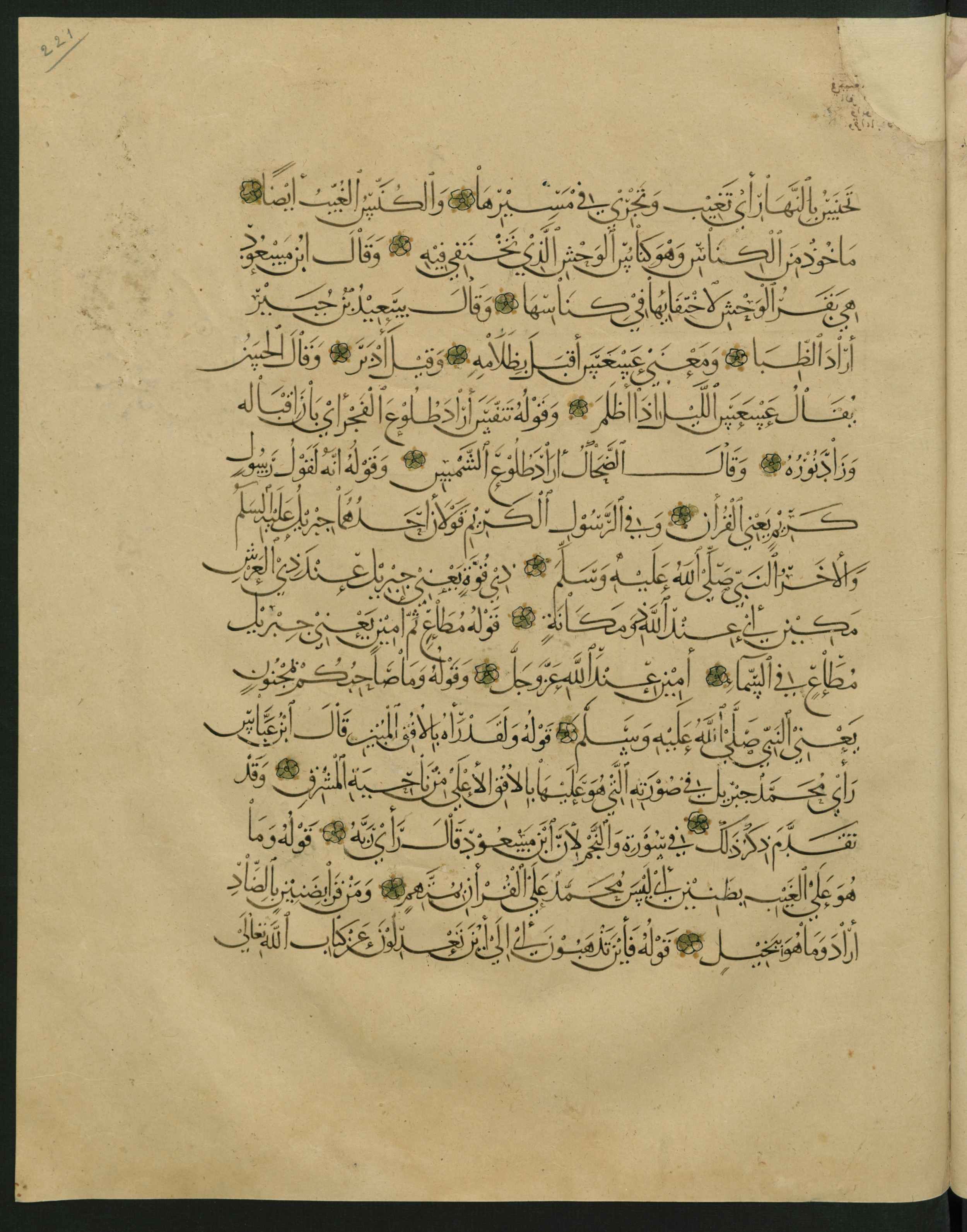
Berlin, Staatsbibliothek zu Berlin, Landberg 822 (Ahlwardt 914) (Scan 61)
This manuscript is a rare case where a Quranic codex is precisely dated by a colophon (completed on May 5, 1204 AD) and the scribe, al-Faḍl b. ʿUmar ar-Rāʾiḍ, is a known Iraqi scholar mentioned in Muslim scholarly literature. It also contains an exegetical compilation detailing circumstances of revelation, abrogated verses, and variant readings.
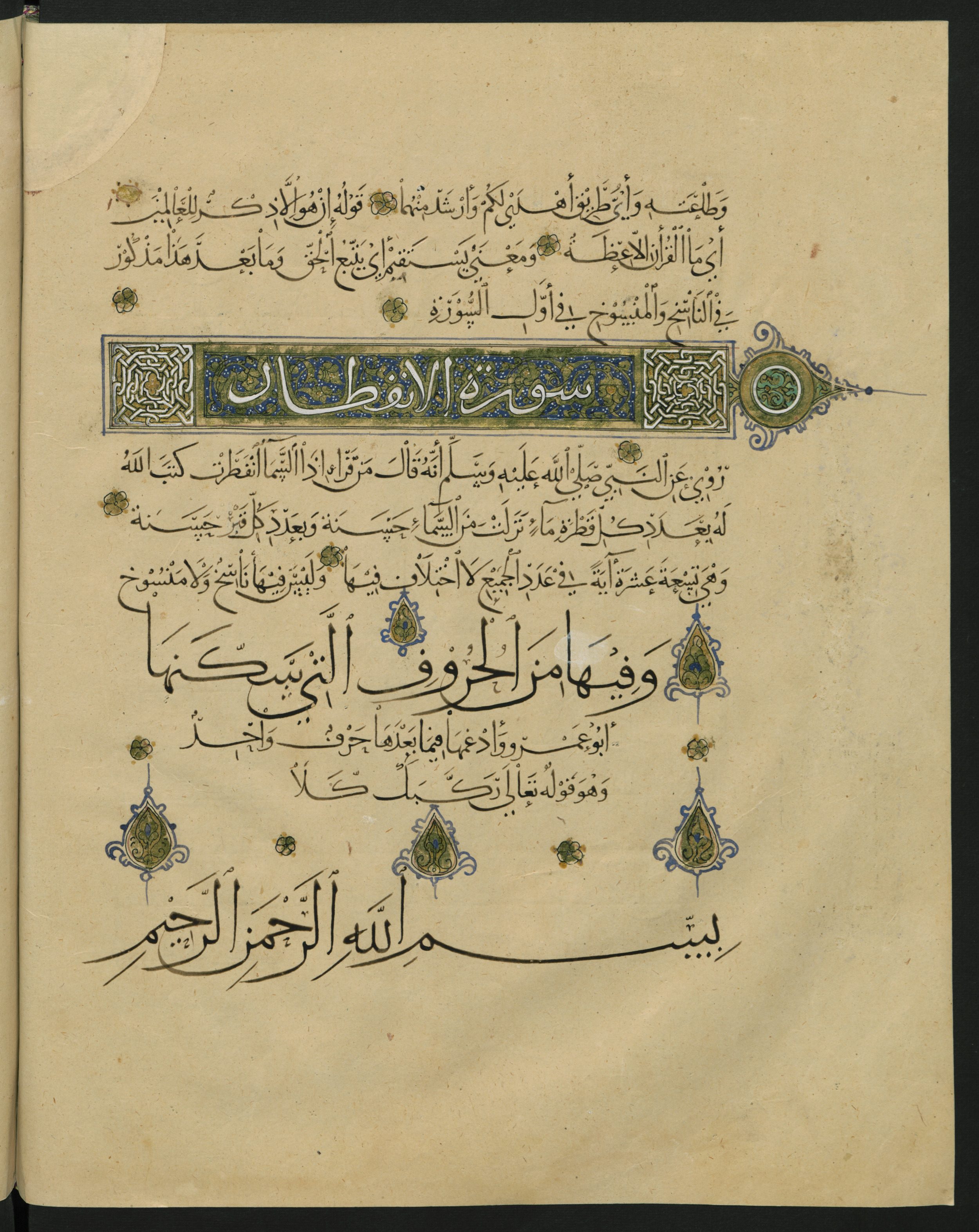
Berlin, Staatsbibliothek zu Berlin, Landberg 822 (Ahlwardt 914) (Scan 62)
This manuscript is a rare case where a Quranic codex is precisely dated by a colophon (completed on May 5, 1204 AD) and the scribe, al-Faḍl b. ʿUmar ar-Rāʾiḍ, is a known Iraqi scholar mentioned in Muslim scholarly literature. It also contains an exegetical compilation detailing circumstances of revelation, abrogated verses, and variant readings.
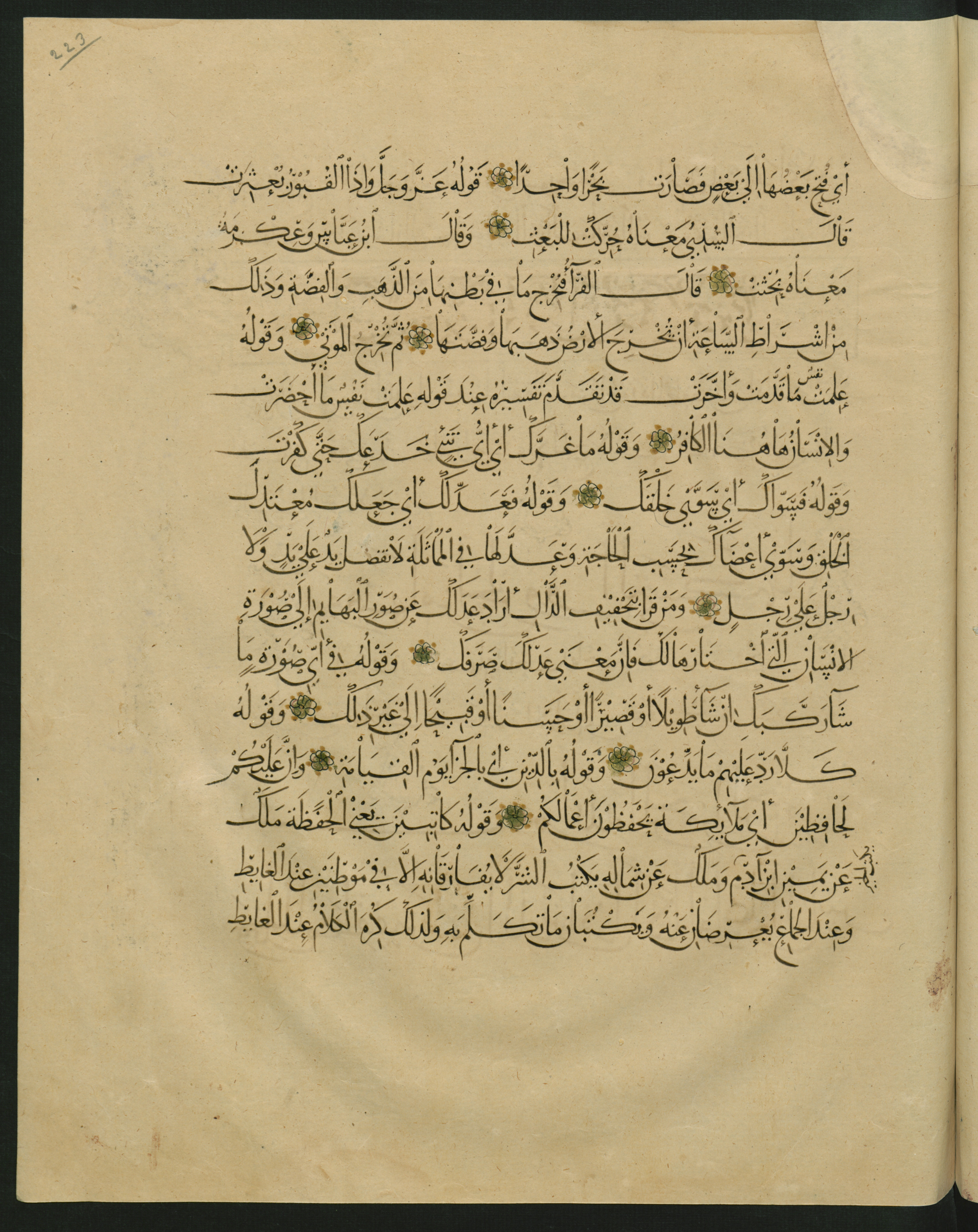
Berlin, Staatsbibliothek zu Berlin, Landberg 822 (Ahlwardt 914) (Scan 63)
This manuscript is a rare case where a Quranic codex is precisely dated by a colophon (completed on May 5, 1204 AD) and the scribe, al-Faḍl b. ʿUmar ar-Rāʾiḍ, is a known Iraqi scholar mentioned in Muslim scholarly literature. It also contains an exegetical compilation detailing circumstances of revelation, abrogated verses, and variant readings.
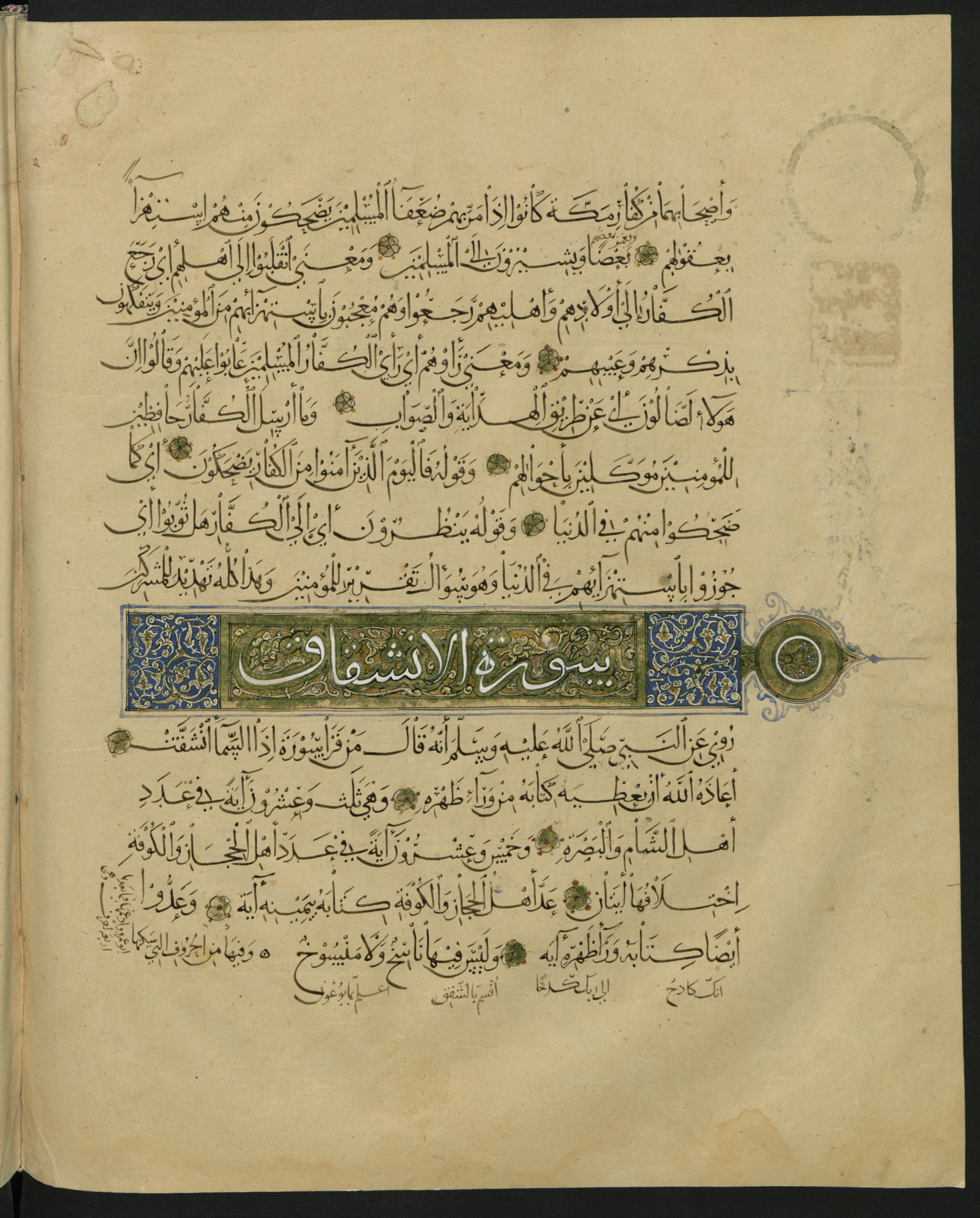
Berlin, Staatsbibliothek zu Berlin, Landberg 822 (Ahlwardt 914) (Scan 64)
This manuscript is a rare case where a Quranic codex is precisely dated by a colophon (completed on May 5, 1204 AD) and the scribe, al-Faḍl b. ʿUmar ar-Rāʾiḍ, is a known Iraqi scholar mentioned in Muslim scholarly literature. It also contains an exegetical compilation detailing circumstances of revelation, abrogated verses, and variant readings.
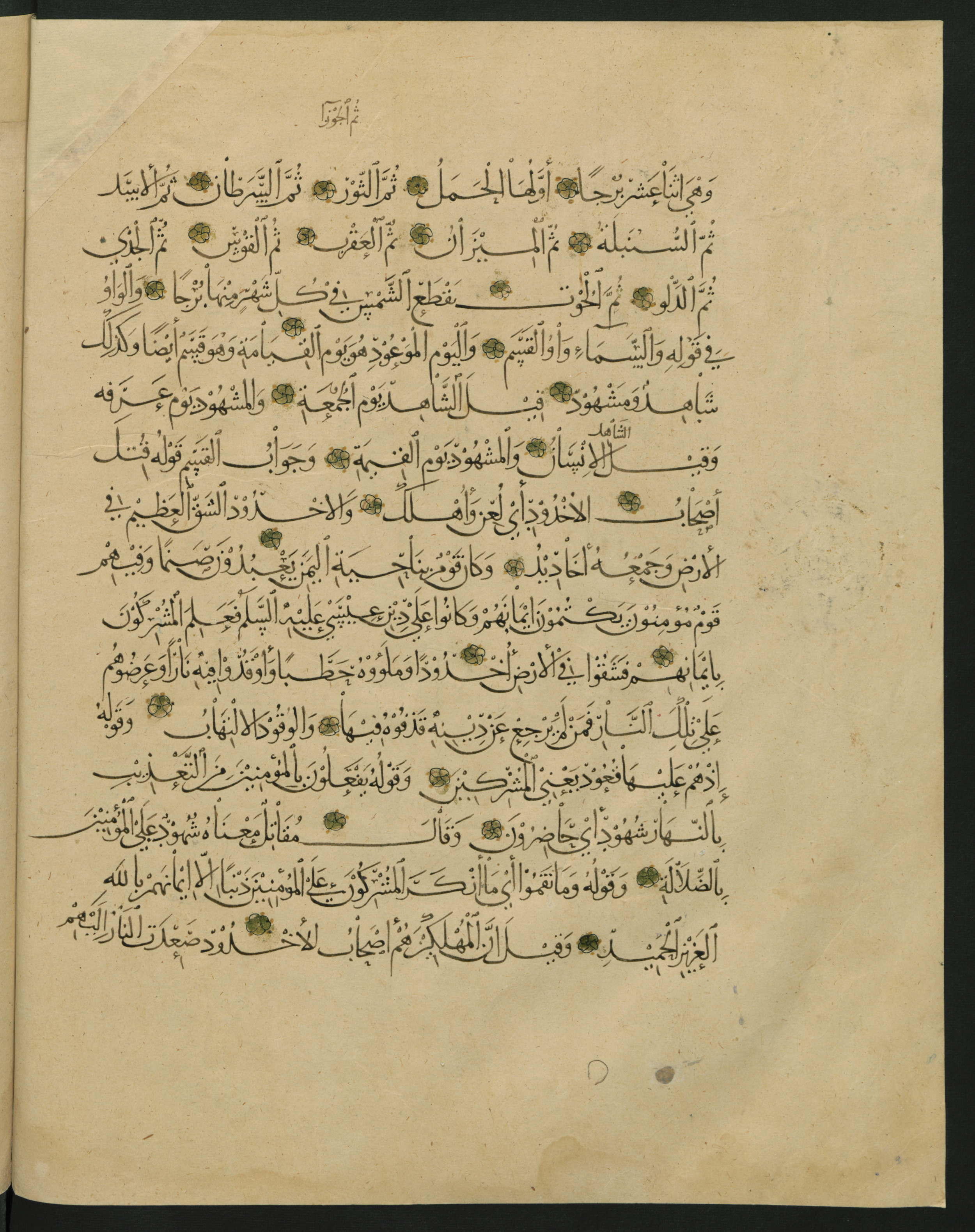
Berlin, Staatsbibliothek zu Berlin, Landberg 822 (Ahlwardt 914) (Scan 65)
This manuscript is a rare case where a Quranic codex is precisely dated by a colophon (completed on May 5, 1204 AD) and the scribe, al-Faḍl b. ʿUmar ar-Rāʾiḍ, is a known Iraqi scholar mentioned in Muslim scholarly literature. It also contains an exegetical compilation detailing circumstances of revelation, abrogated verses, and variant readings.
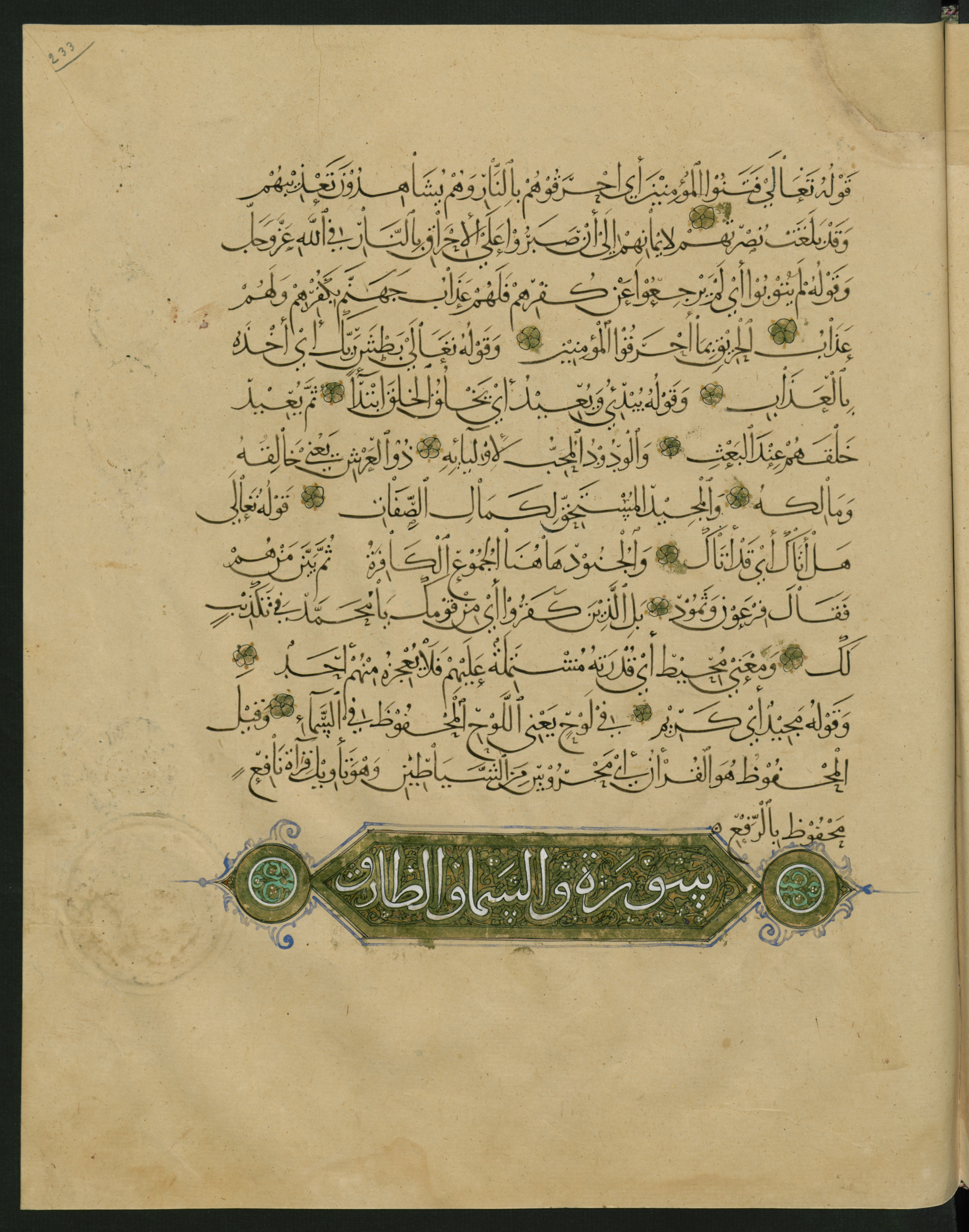
Berlin, Staatsbibliothek zu Berlin, Landberg 822 (Ahlwardt 914) (Scan 66)
This manuscript is a rare case where a Quranic codex is precisely dated by a colophon (completed on May 5, 1204 AD) and the scribe, al-Faḍl b. ʿUmar ar-Rāʾiḍ, is a known Iraqi scholar mentioned in Muslim scholarly literature. It also contains an exegetical compilation detailing circumstances of revelation, abrogated verses, and variant readings.
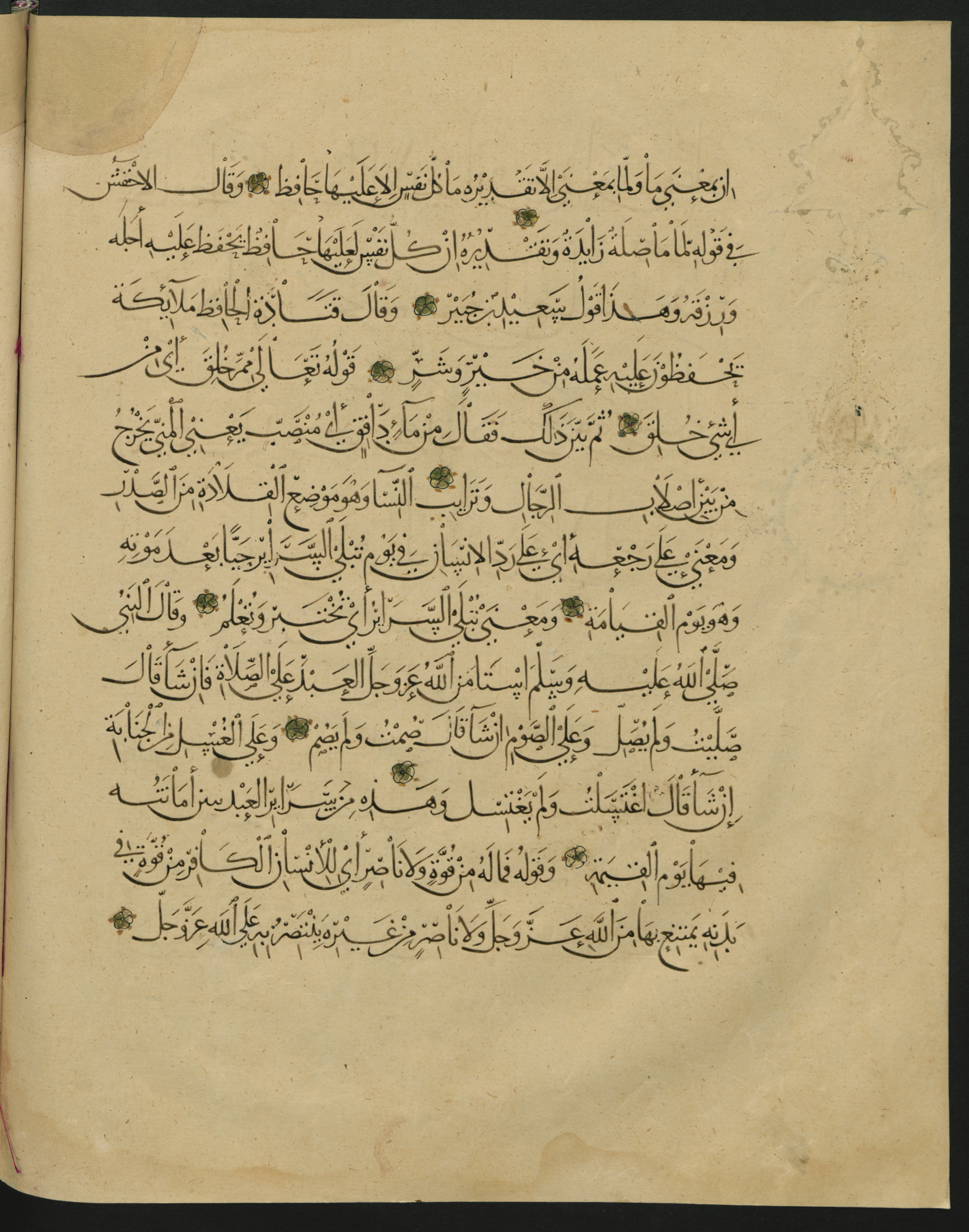
Berlin, Staatsbibliothek zu Berlin, Landberg 822 (Ahlwardt 914) (Scan 67)
This manuscript is a rare case where a Quranic codex is precisely dated by a colophon (completed on May 5, 1204 AD) and the scribe, al-Faḍl b. ʿUmar ar-Rāʾiḍ, is a known Iraqi scholar mentioned in Muslim scholarly literature. It also contains an exegetical compilation detailing circumstances of revelation, abrogated verses, and variant readings.
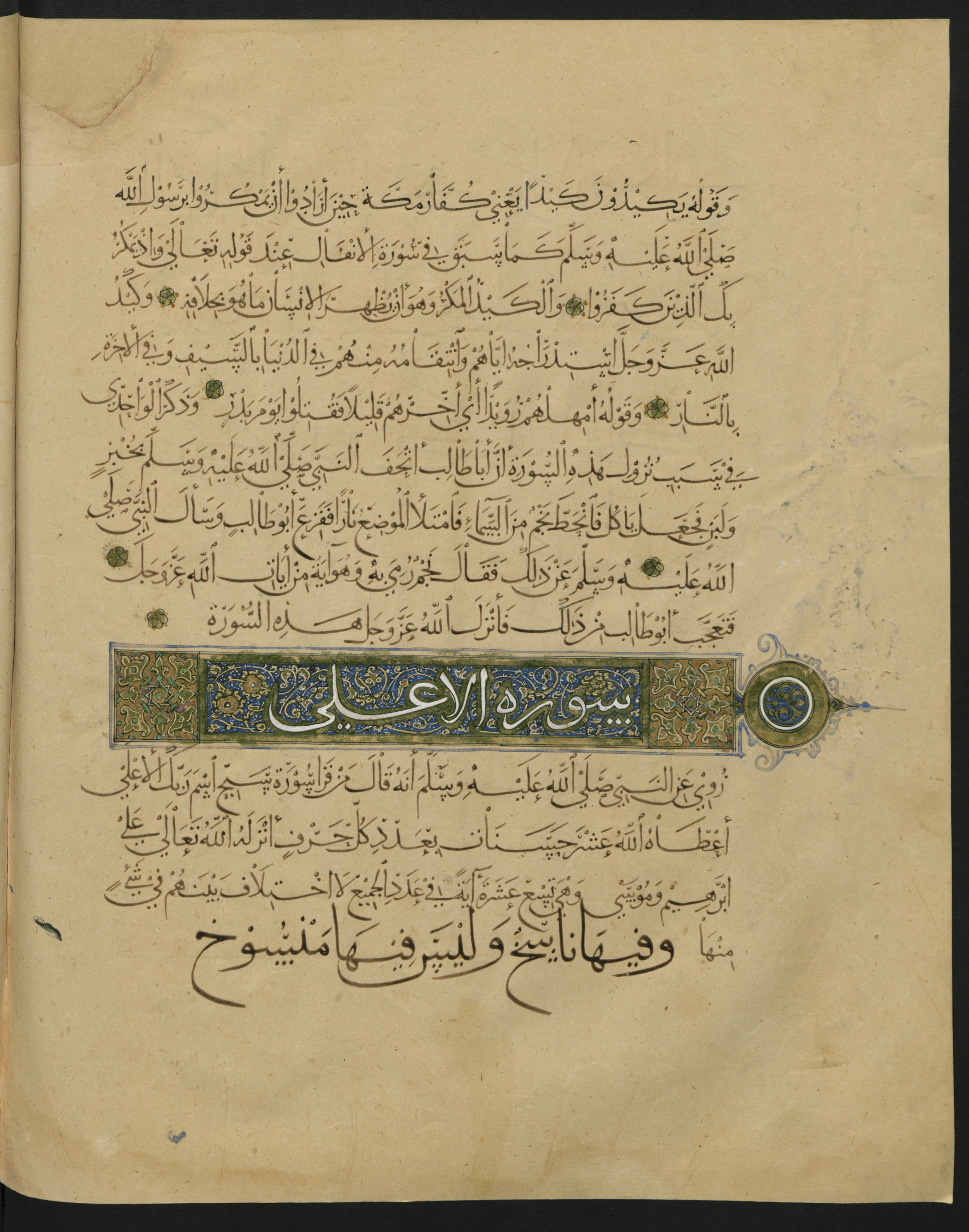
Berlin, Staatsbibliothek zu Berlin, Landberg 822 (Ahlwardt 914) (Scan 68)
This manuscript is a rare case where a Quranic codex is precisely dated by a colophon (completed on May 5, 1204 AD) and the scribe, al-Faḍl b. ʿUmar ar-Rāʾiḍ, is a known Iraqi scholar mentioned in Muslim scholarly literature. It also contains an exegetical compilation detailing circumstances of revelation, abrogated verses, and variant readings.
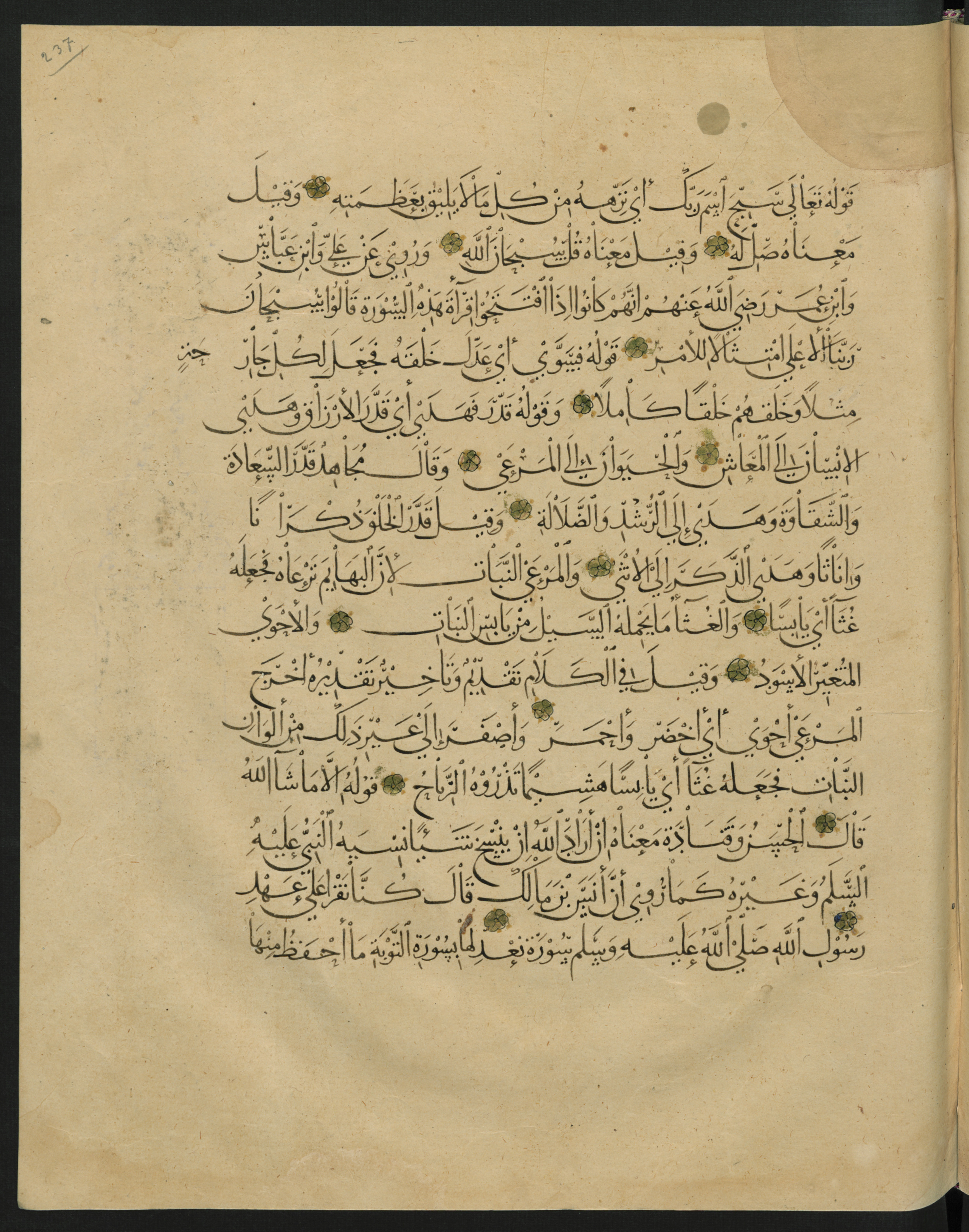
Berlin, Staatsbibliothek zu Berlin, Landberg 822 (Ahlwardt 914) (Scan 69)
This manuscript is a rare case where a Quranic codex is precisely dated by a colophon (completed on May 5, 1204 AD) and the scribe, al-Faḍl b. ʿUmar ar-Rāʾiḍ, is a known Iraqi scholar mentioned in Muslim scholarly literature. It also contains an exegetical compilation detailing circumstances of revelation, abrogated verses, and variant readings.
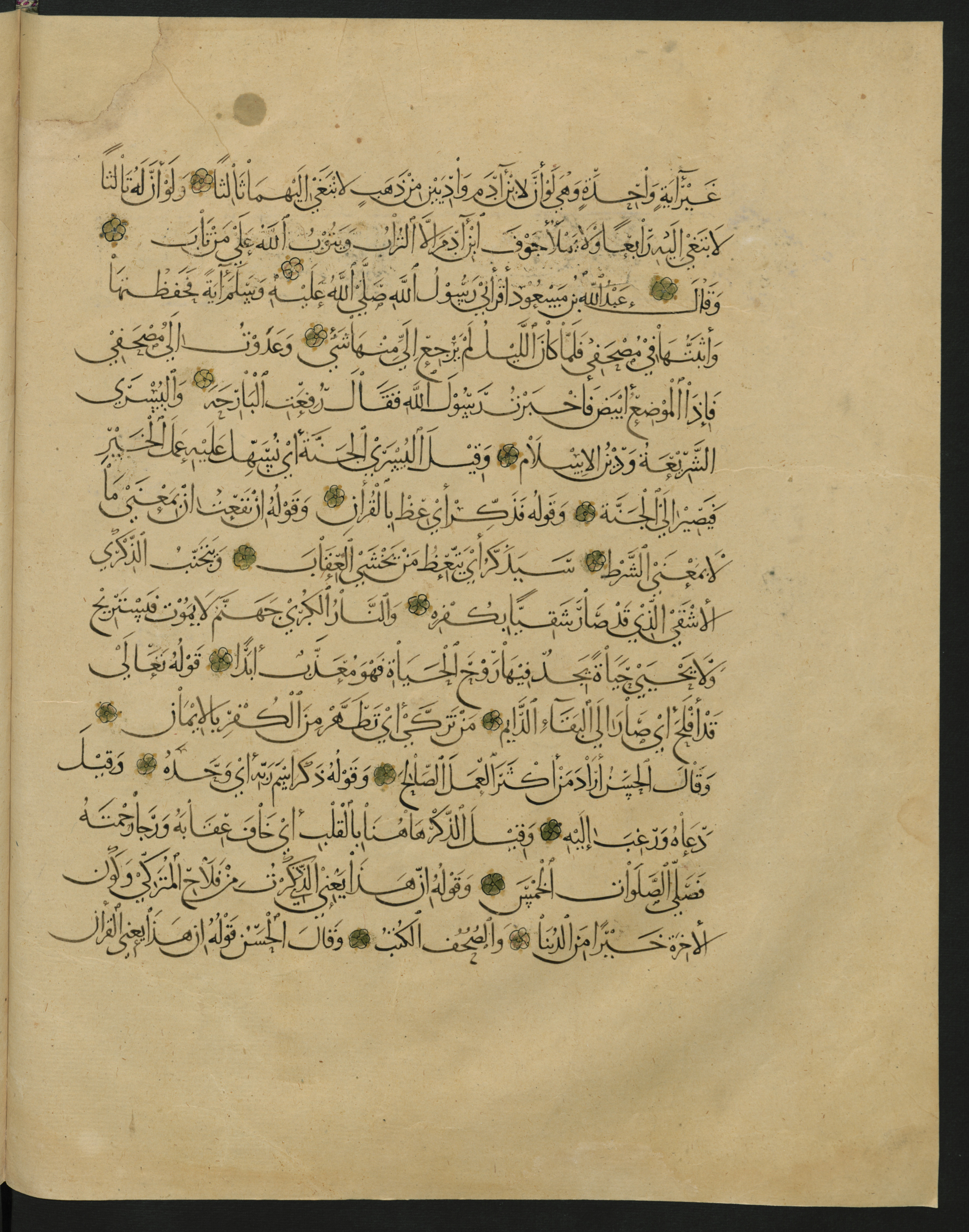
Berlin, Staatsbibliothek zu Berlin, Landberg 822 (Ahlwardt 914) (Scan 70)
This manuscript is a rare case where a Quranic codex is precisely dated by a colophon (completed on May 5, 1204 AD) and the scribe, al-Faḍl b. ʿUmar ar-Rāʾiḍ, is a known Iraqi scholar mentioned in Muslim scholarly literature. It also contains an exegetical compilation detailing circumstances of revelation, abrogated verses, and variant readings.
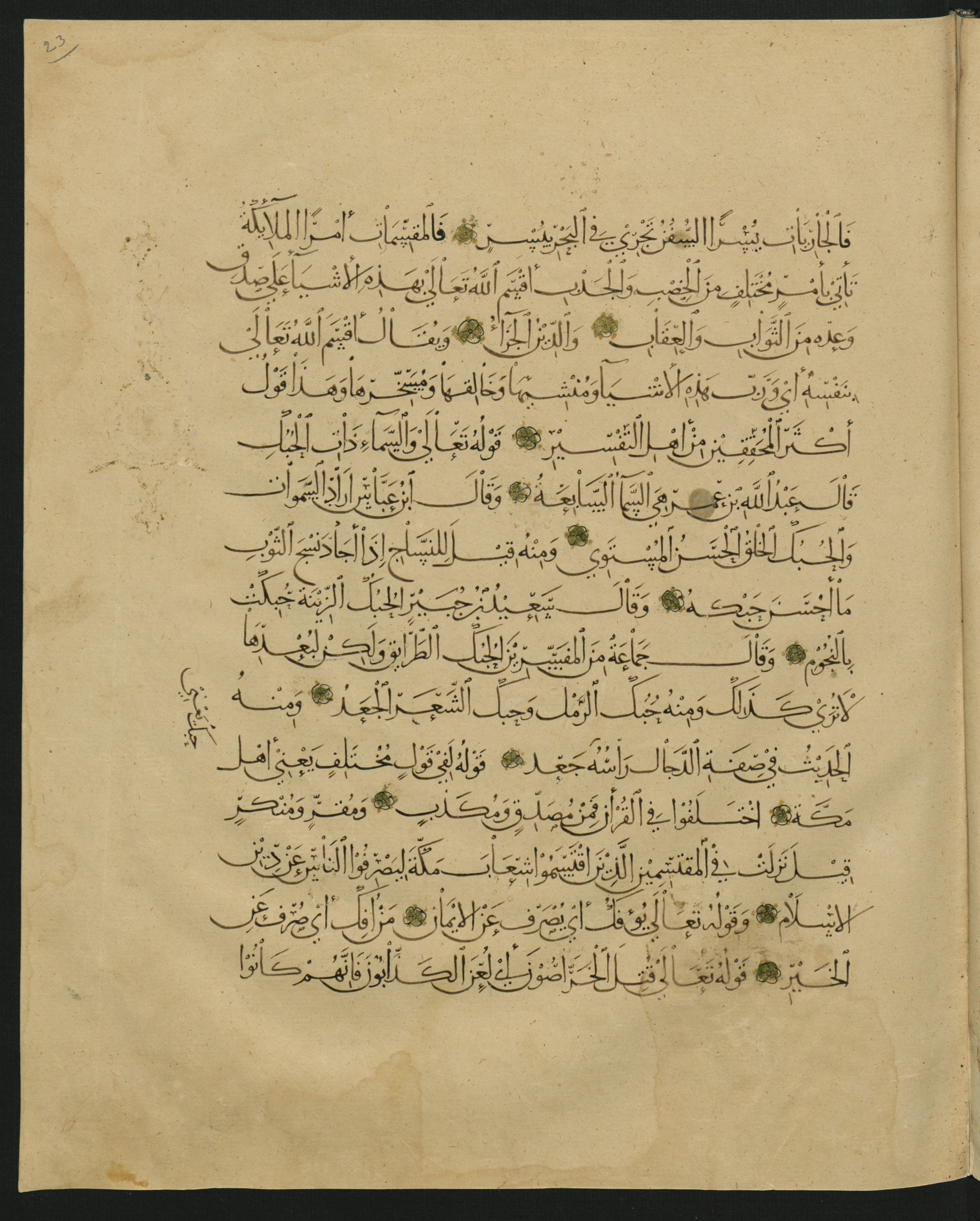
Berlin, Staatsbibliothek zu Berlin, Landberg 822 (Ahlwardt 914) (Scan 71)
This manuscript is a rare case where a Quranic codex is precisely dated by a colophon (completed on May 5, 1204 AD) and the scribe, al-Faḍl b. ʿUmar ar-Rāʾiḍ, is a known Iraqi scholar mentioned in Muslim scholarly literature. It also contains an exegetical compilation detailing circumstances of revelation, abrogated verses, and variant readings.
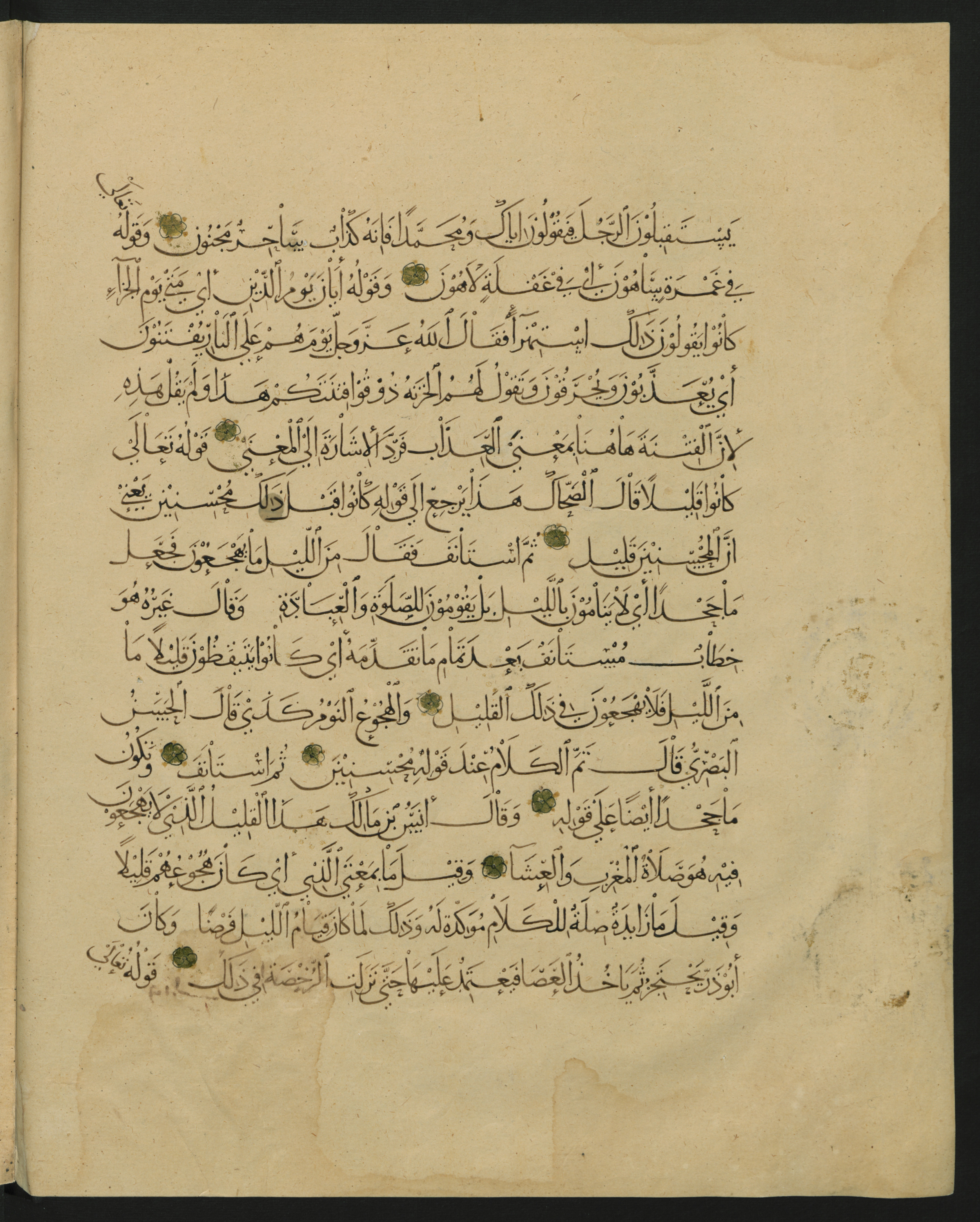
Berlin, Staatsbibliothek zu Berlin, Landberg 822 (Ahlwardt 914) (Scan 72)
This manuscript is a rare case where a Quranic codex is precisely dated by a colophon (completed on May 5, 1204 AD) and the scribe, al-Faḍl b. ʿUmar ar-Rāʾiḍ, is a known Iraqi scholar mentioned in Muslim scholarly literature. It also contains an exegetical compilation detailing circumstances of revelation, abrogated verses, and variant readings.
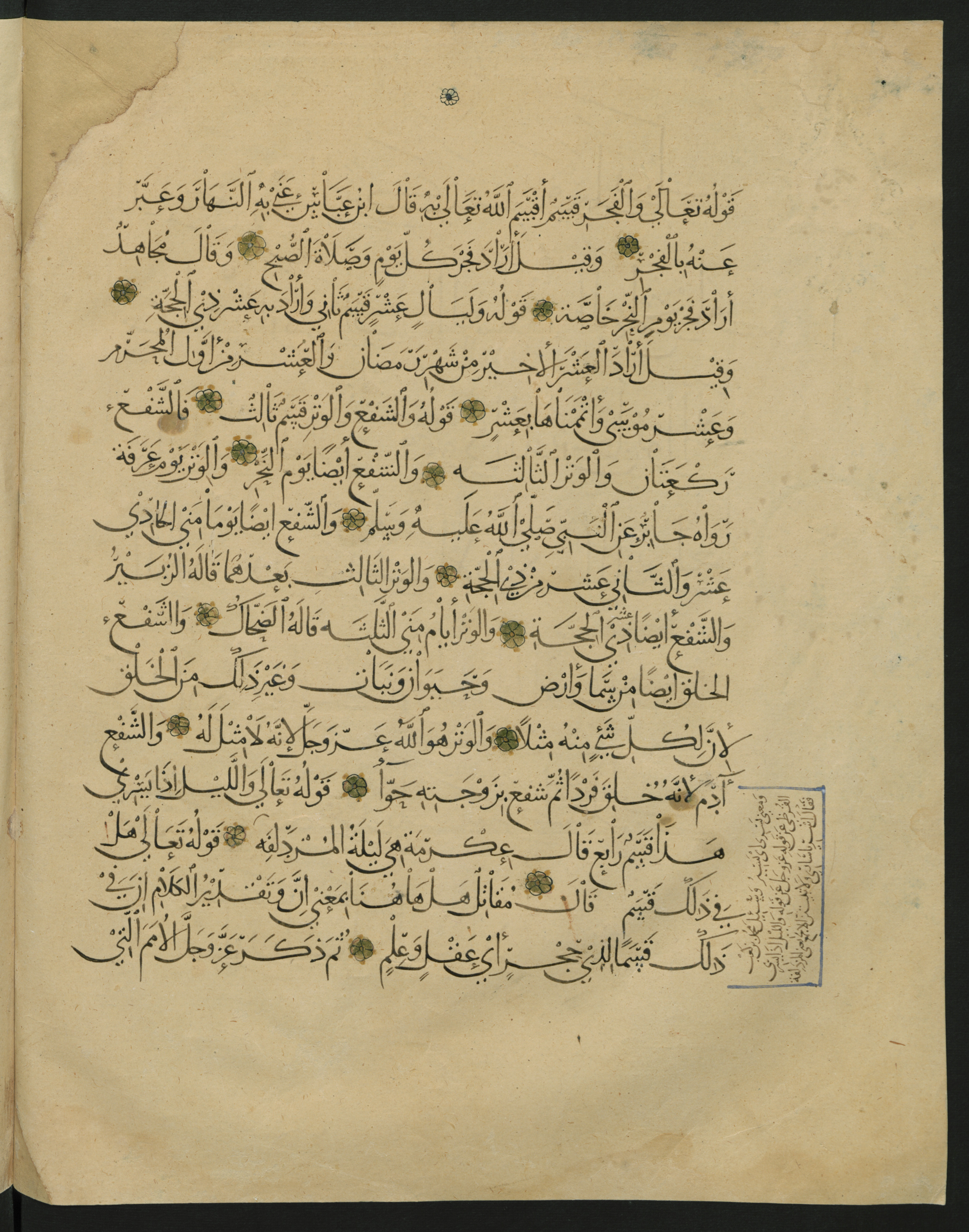
Berlin, Staatsbibliothek zu Berlin, Landberg 822 (Ahlwardt 914) (Scan 73)
This manuscript is a rare case where a Quranic codex is precisely dated by a colophon (completed on May 5, 1204 AD) and the scribe, al-Faḍl b. ʿUmar ar-Rāʾiḍ, is a known Iraqi scholar mentioned in Muslim scholarly literature. It also contains an exegetical compilation detailing circumstances of revelation, abrogated verses, and variant readings.
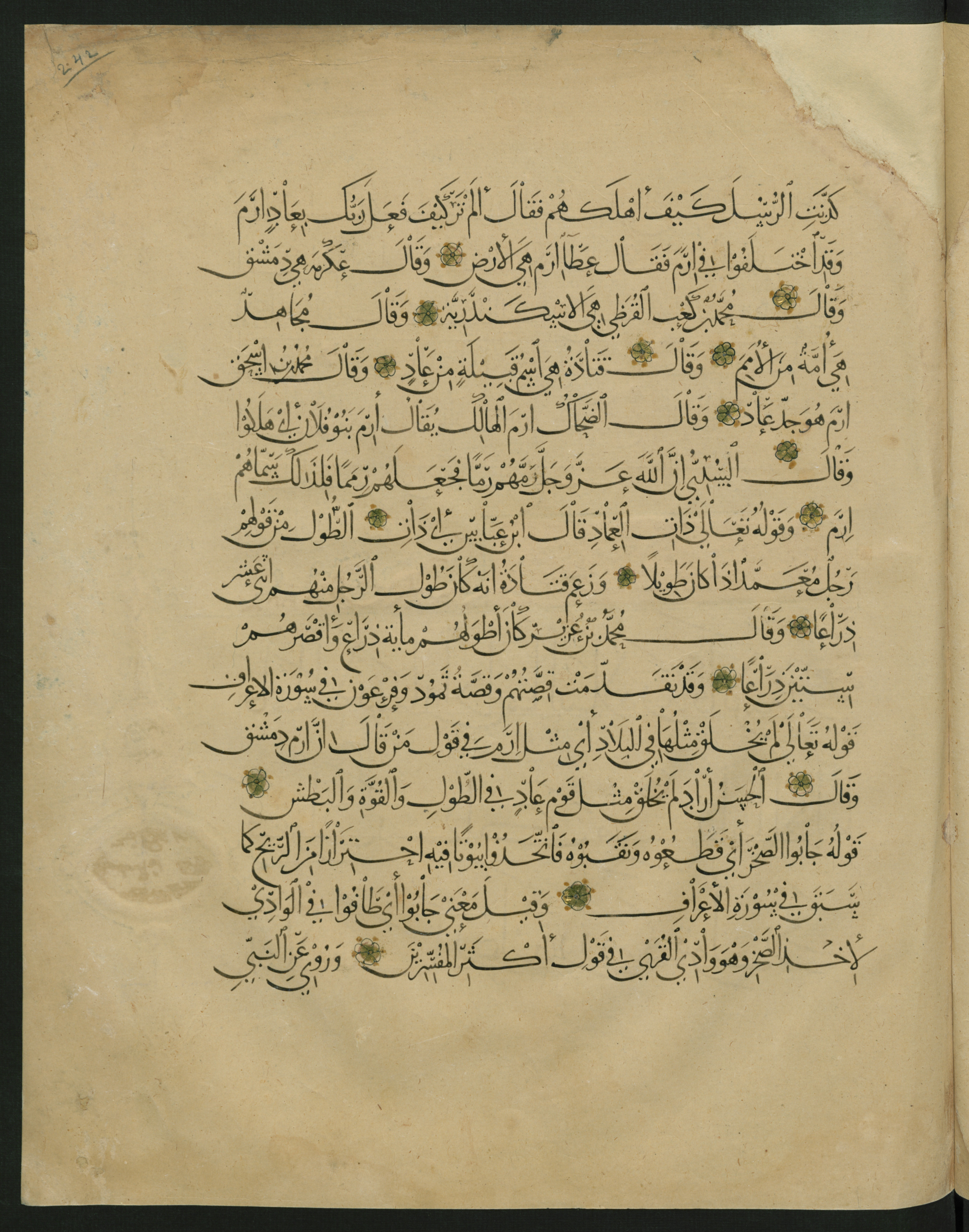
Berlin, Staatsbibliothek zu Berlin, Landberg 822 (Ahlwardt 914) (Scan 74)
This manuscript is a rare case where a Quranic codex is precisely dated by a colophon (completed on May 5, 1204 AD) and the scribe, al-Faḍl b. ʿUmar ar-Rāʾiḍ, is a known Iraqi scholar mentioned in Muslim scholarly literature. It also contains an exegetical compilation detailing circumstances of revelation, abrogated verses, and variant readings.
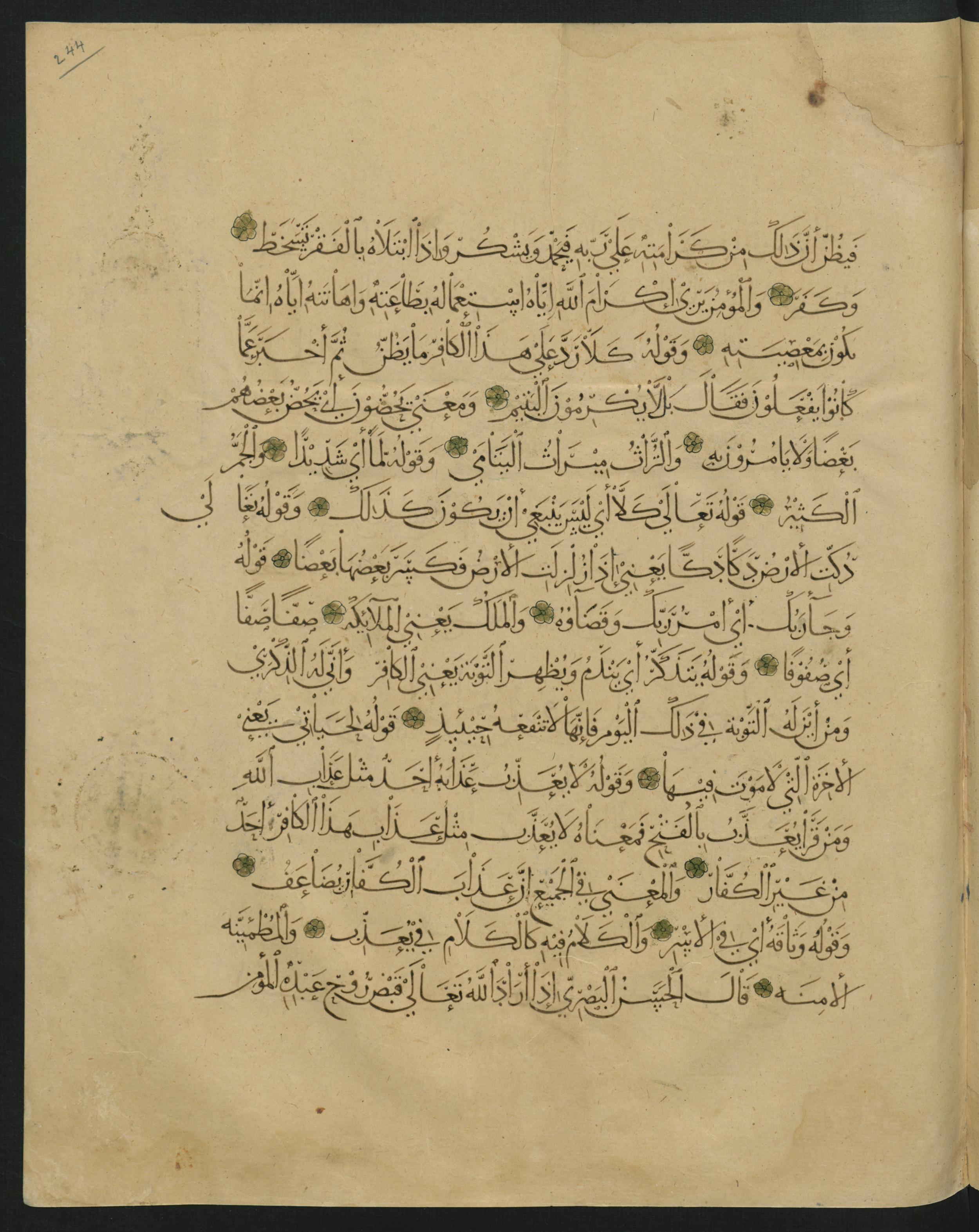
Berlin, Staatsbibliothek zu Berlin, Landberg 822 (Ahlwardt 914) (Scan 75)
This manuscript is a rare case where a Quranic codex is precisely dated by a colophon (completed on May 5, 1204 AD) and the scribe, al-Faḍl b. ʿUmar ar-Rāʾiḍ, is a known Iraqi scholar mentioned in Muslim scholarly literature. It also contains an exegetical compilation detailing circumstances of revelation, abrogated verses, and variant readings.
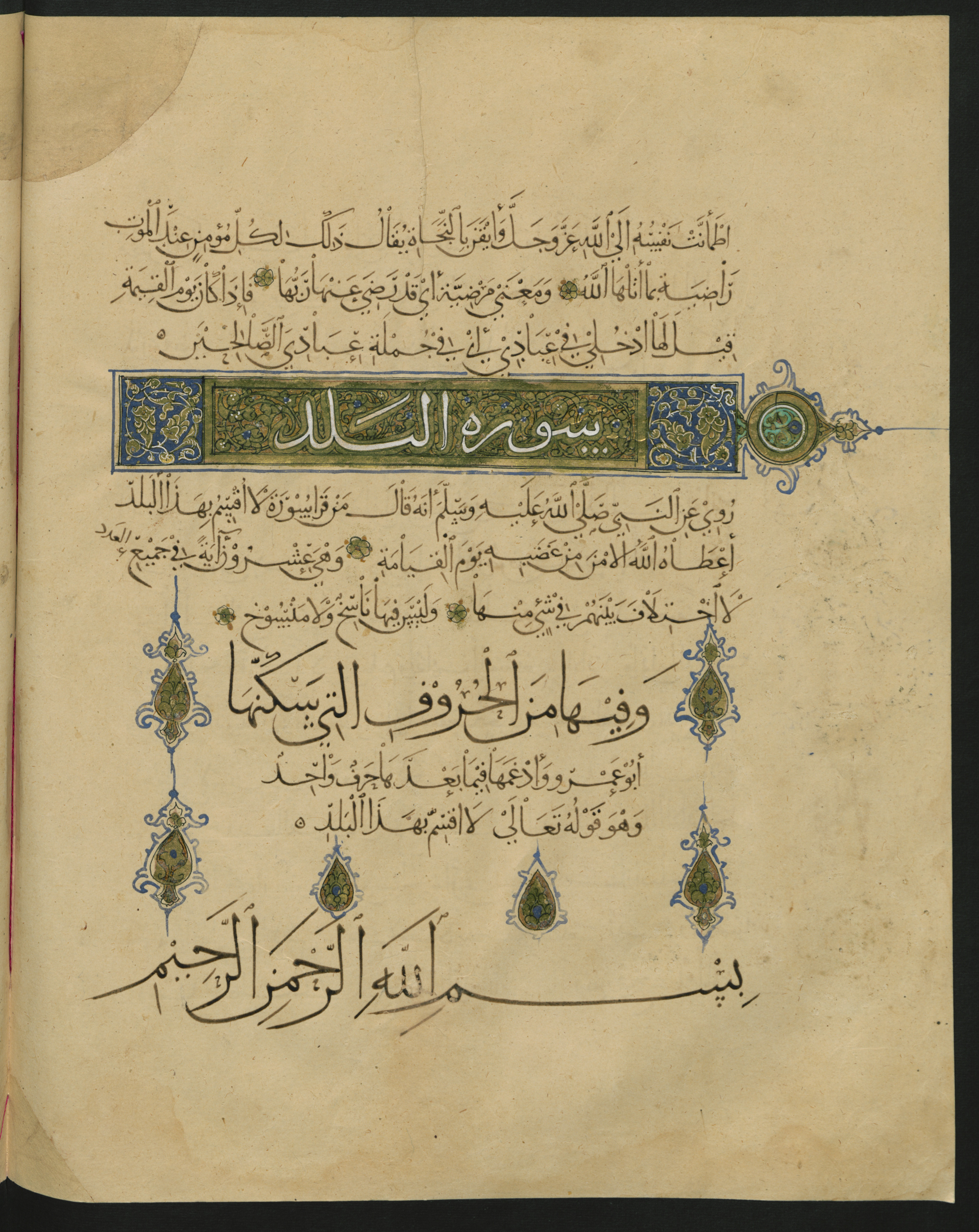
Berlin, Staatsbibliothek zu Berlin, Landberg 822 (Ahlwardt 914) (Scan 76)
This manuscript is a rare case where a Quranic codex is precisely dated by a colophon (completed on May 5, 1204 AD) and the scribe, al-Faḍl b. ʿUmar ar-Rāʾiḍ, is a known Iraqi scholar mentioned in Muslim scholarly literature. It also contains an exegetical compilation detailing circumstances of revelation, abrogated verses, and variant readings.
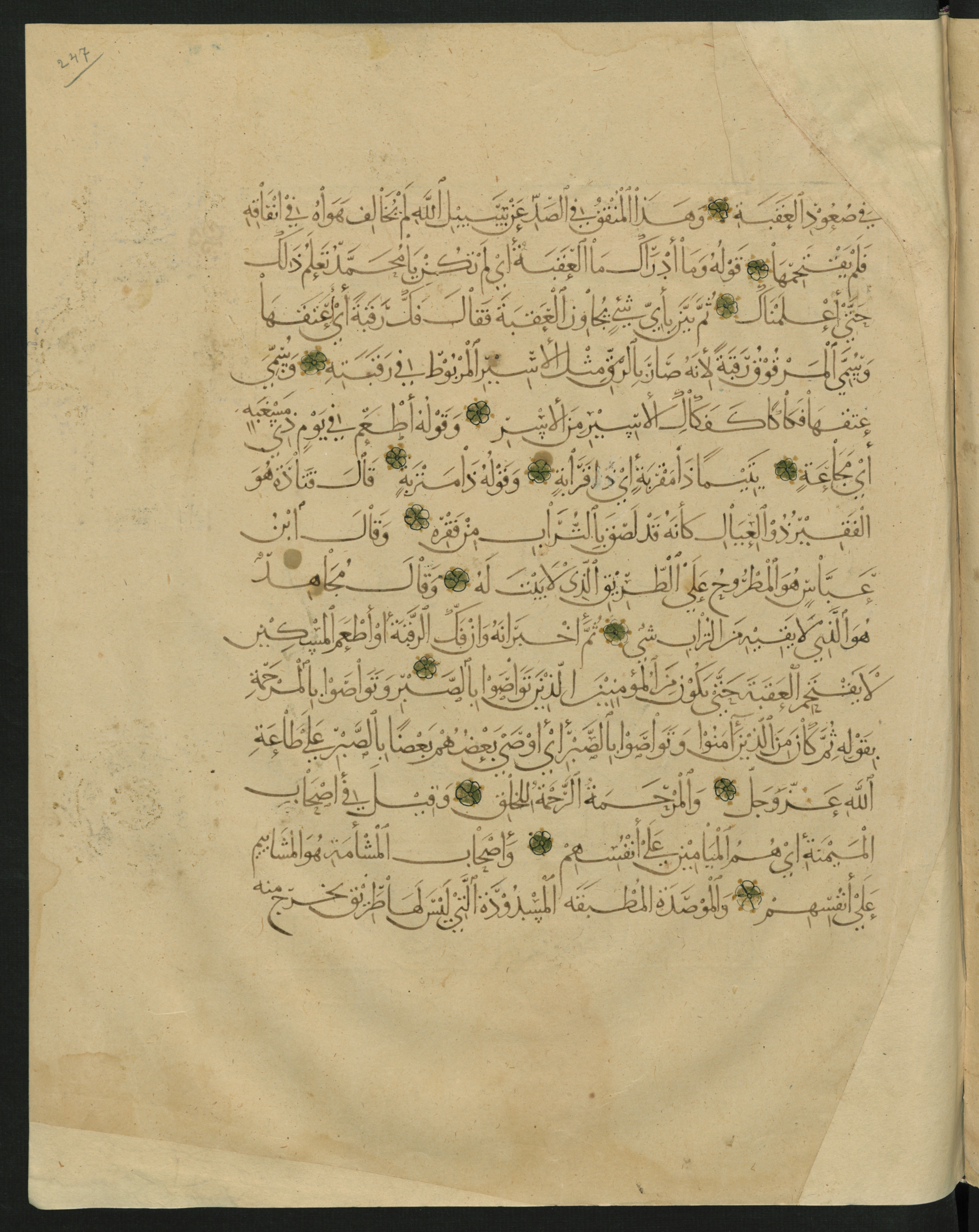
Berlin, Staatsbibliothek zu Berlin, Landberg 822 (Ahlwardt 914) (Scan 77)
This manuscript is a rare case where a Quranic codex is precisely dated by a colophon (completed on May 5, 1204 AD) and the scribe, al-Faḍl b. ʿUmar ar-Rāʾiḍ, is a known Iraqi scholar mentioned in Muslim scholarly literature. It also contains an exegetical compilation detailing circumstances of revelation, abrogated verses, and variant readings.
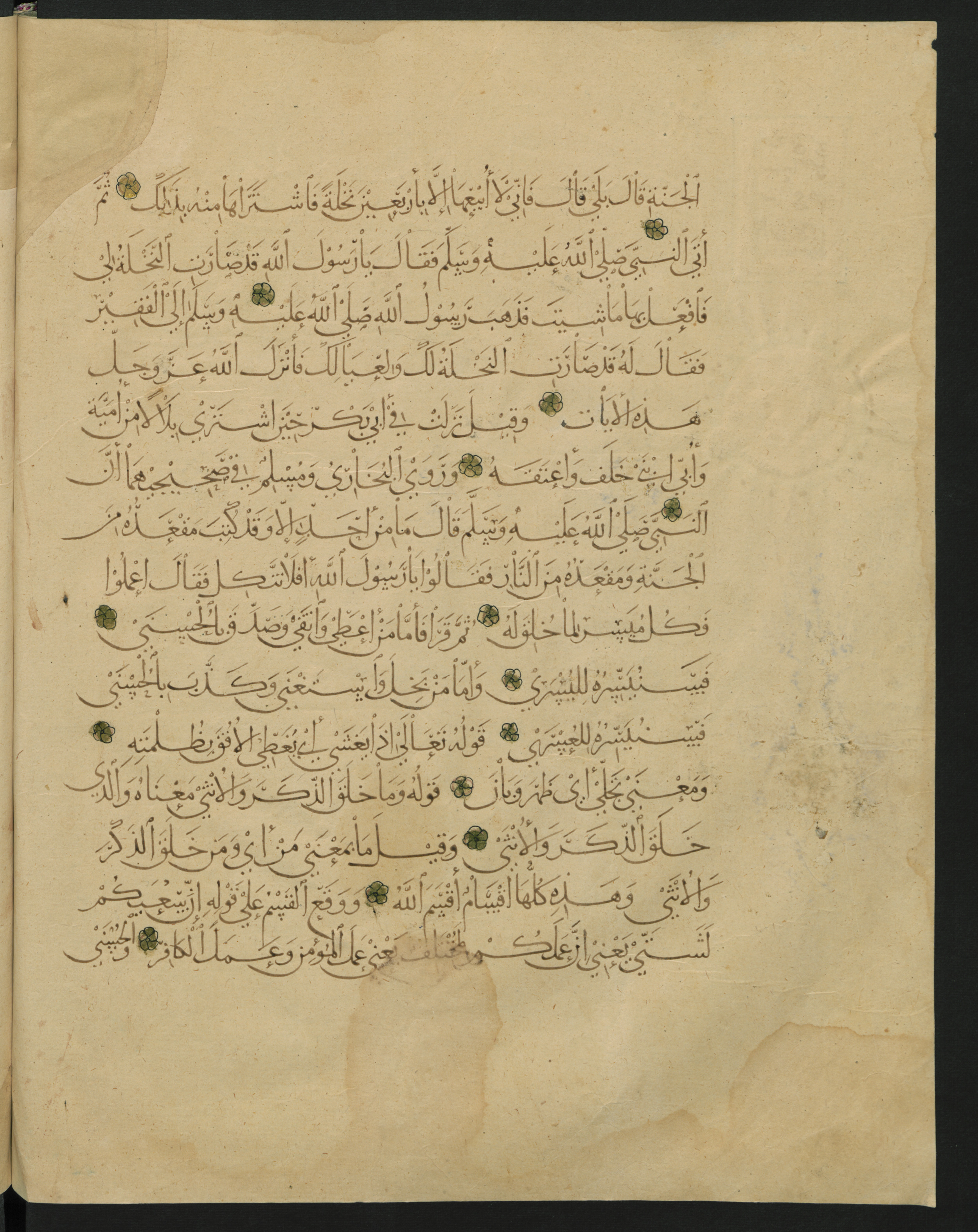
Berlin, Staatsbibliothek zu Berlin, Landberg 822 (Ahlwardt 914) (Scan 78)
This manuscript is a rare case where a Quranic codex is precisely dated by a colophon (completed on May 5, 1204 AD) and the scribe, al-Faḍl b. ʿUmar ar-Rāʾiḍ, is a known Iraqi scholar mentioned in Muslim scholarly literature. It also contains an exegetical compilation detailing circumstances of revelation, abrogated verses, and variant readings.
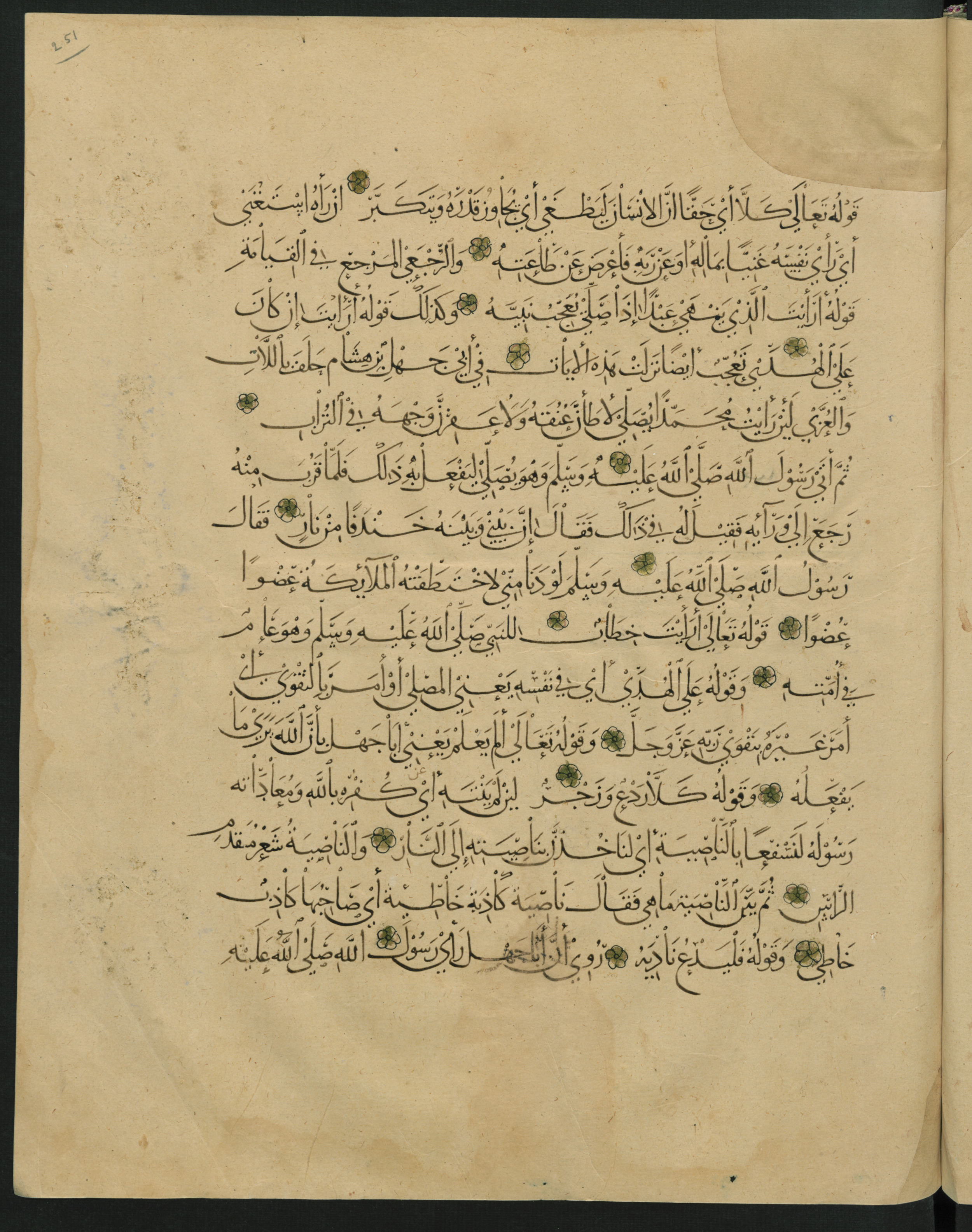
Berlin, Staatsbibliothek zu Berlin, Landberg 822 (Ahlwardt 914) (Scan 79)
This manuscript is a rare case where a Quranic codex is precisely dated by a colophon (completed on May 5, 1204 AD) and the scribe, al-Faḍl b. ʿUmar ar-Rāʾiḍ, is a known Iraqi scholar mentioned in Muslim scholarly literature. It also contains an exegetical compilation detailing circumstances of revelation, abrogated verses, and variant readings.
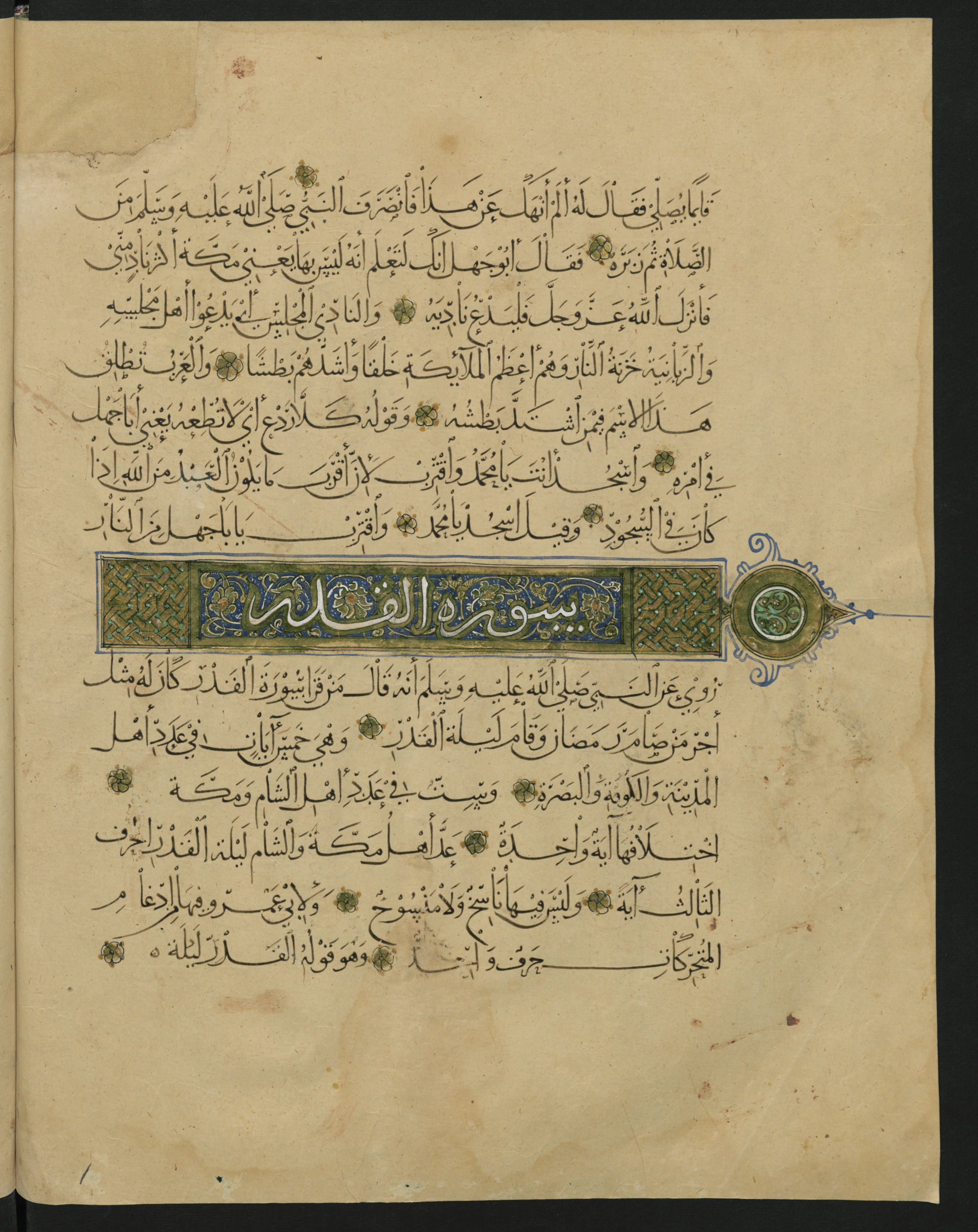
Berlin, Staatsbibliothek zu Berlin, Landberg 822 (Ahlwardt 914) (Scan 80)
This manuscript is a rare case where a Quranic codex is precisely dated by a colophon (completed on May 5, 1204 AD) and the scribe, al-Faḍl b. ʿUmar ar-Rāʾiḍ, is a known Iraqi scholar mentioned in Muslim scholarly literature. It also contains an exegetical compilation detailing circumstances of revelation, abrogated verses, and variant readings.
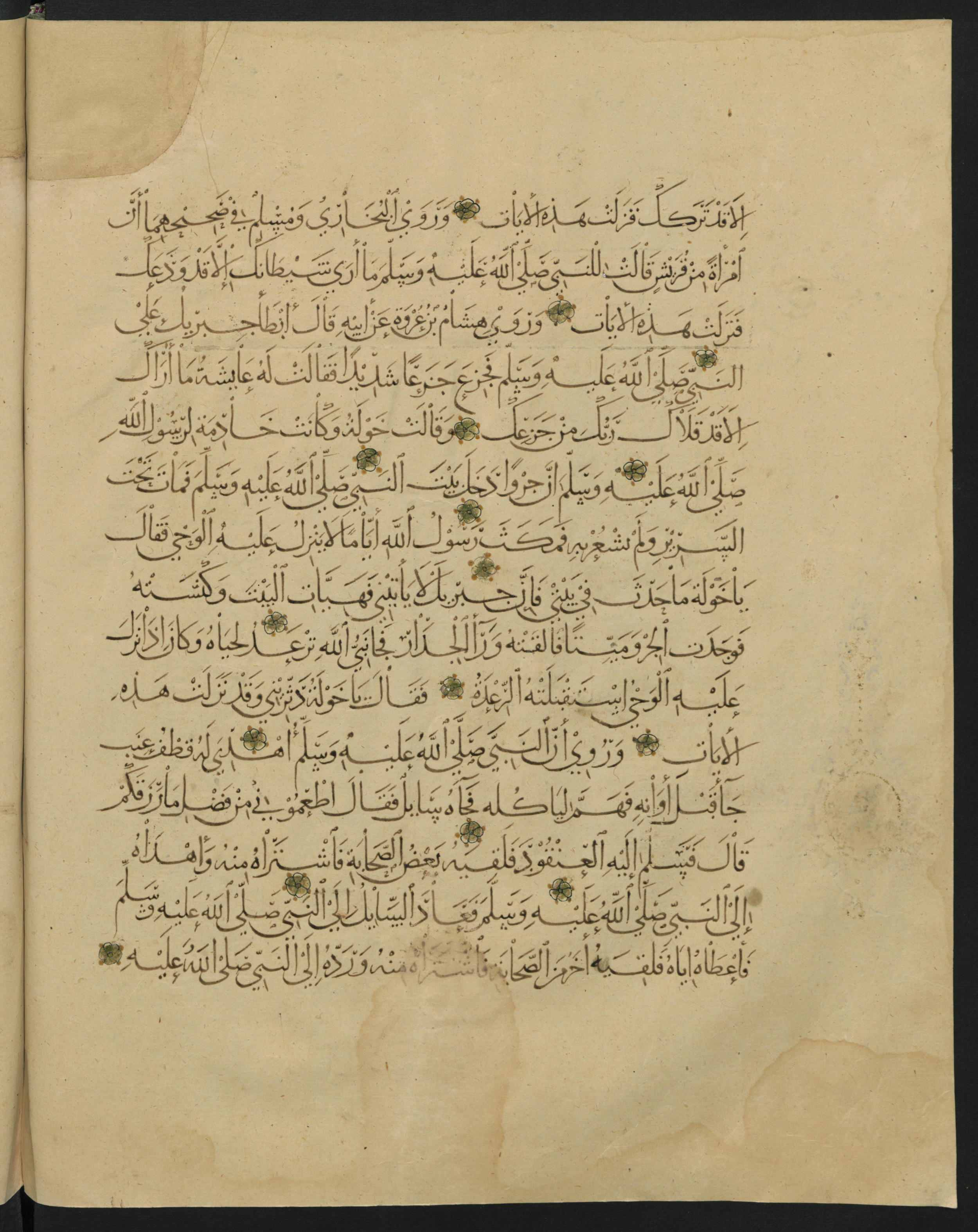
Berlin, Staatsbibliothek zu Berlin, Landberg 822 (Ahlwardt 914) (Scan 81)
This manuscript is a rare case where a Quranic codex is precisely dated by a colophon (completed on May 5, 1204 AD) and the scribe, al-Faḍl b. ʿUmar ar-Rāʾiḍ, is a known Iraqi scholar mentioned in Muslim scholarly literature. It also contains an exegetical compilation detailing circumstances of revelation, abrogated verses, and variant readings.
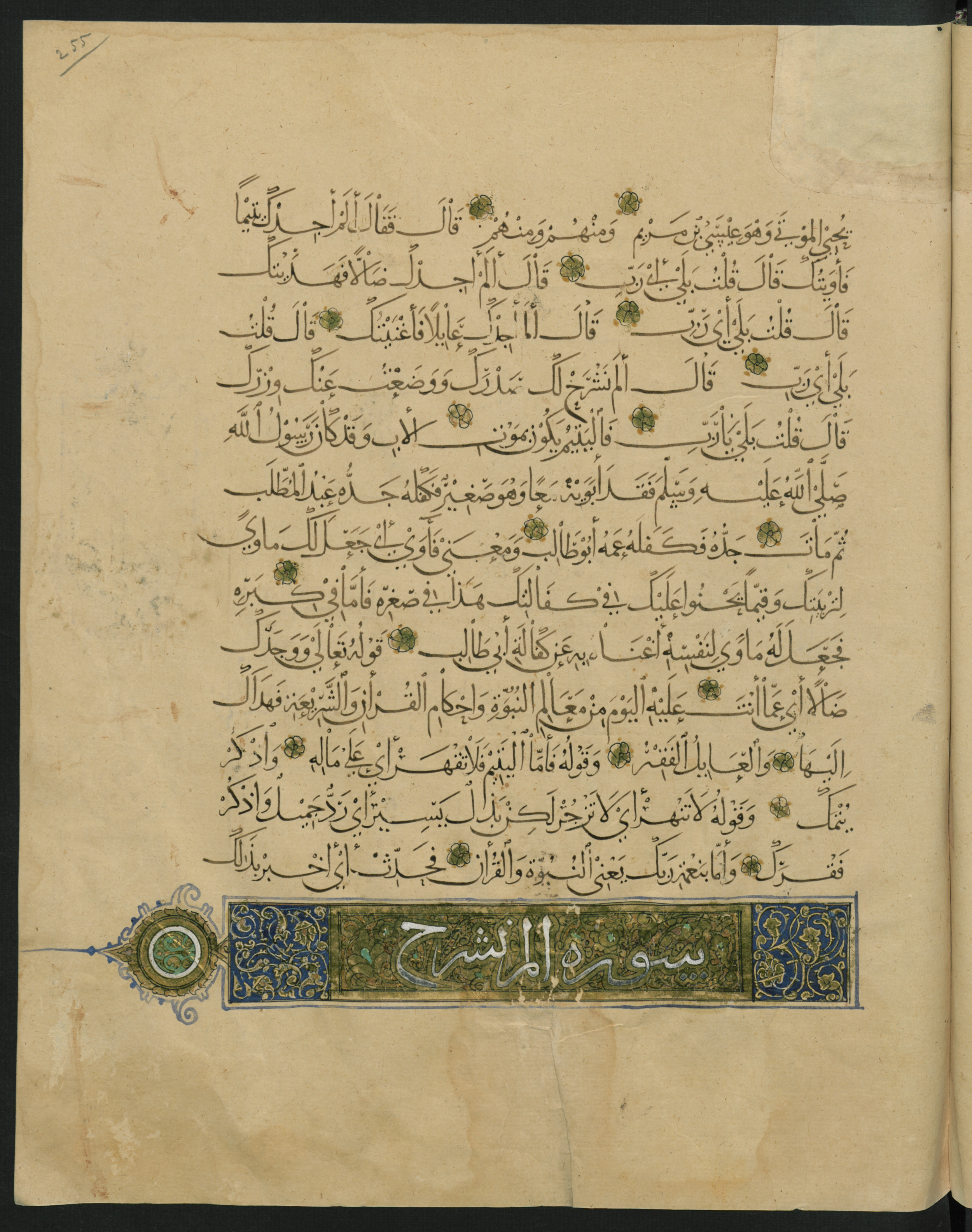
Berlin, Staatsbibliothek zu Berlin, Landberg 822 (Ahlwardt 914) (Scan 82)
This manuscript is a rare case where a Quranic codex is precisely dated by a colophon (completed on May 5, 1204 AD) and the scribe, al-Faḍl b. ʿUmar ar-Rāʾiḍ, is a known Iraqi scholar mentioned in Muslim scholarly literature. It also contains an exegetical compilation detailing circumstances of revelation, abrogated verses, and variant readings.
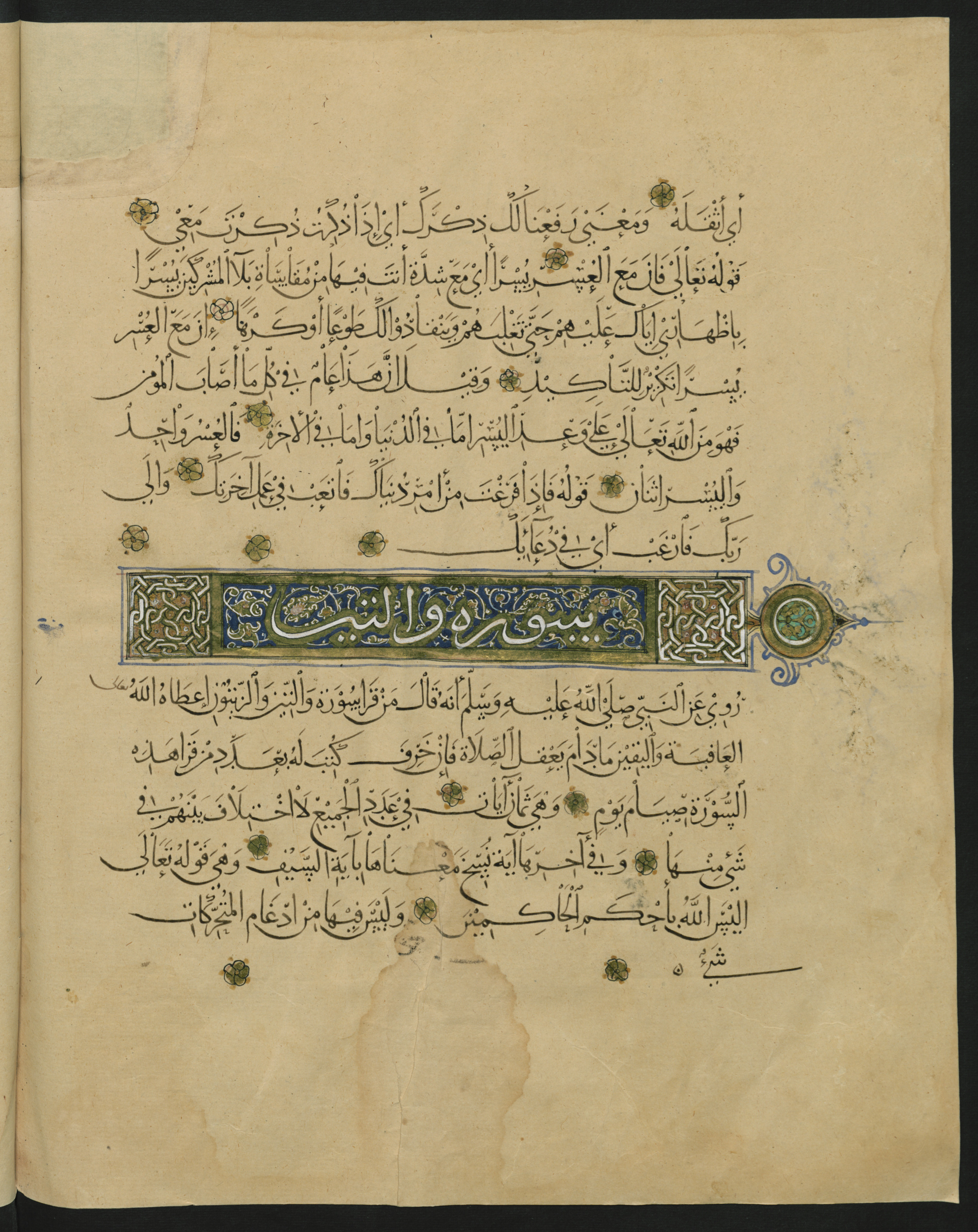
Berlin, Staatsbibliothek zu Berlin, Landberg 822 (Ahlwardt 914) (Scan 83)
This manuscript is a rare case where a Quranic codex is precisely dated by a colophon (completed on May 5, 1204 AD) and the scribe, al-Faḍl b. ʿUmar ar-Rāʾiḍ, is a known Iraqi scholar mentioned in Muslim scholarly literature. It also contains an exegetical compilation detailing circumstances of revelation, abrogated verses, and variant readings.
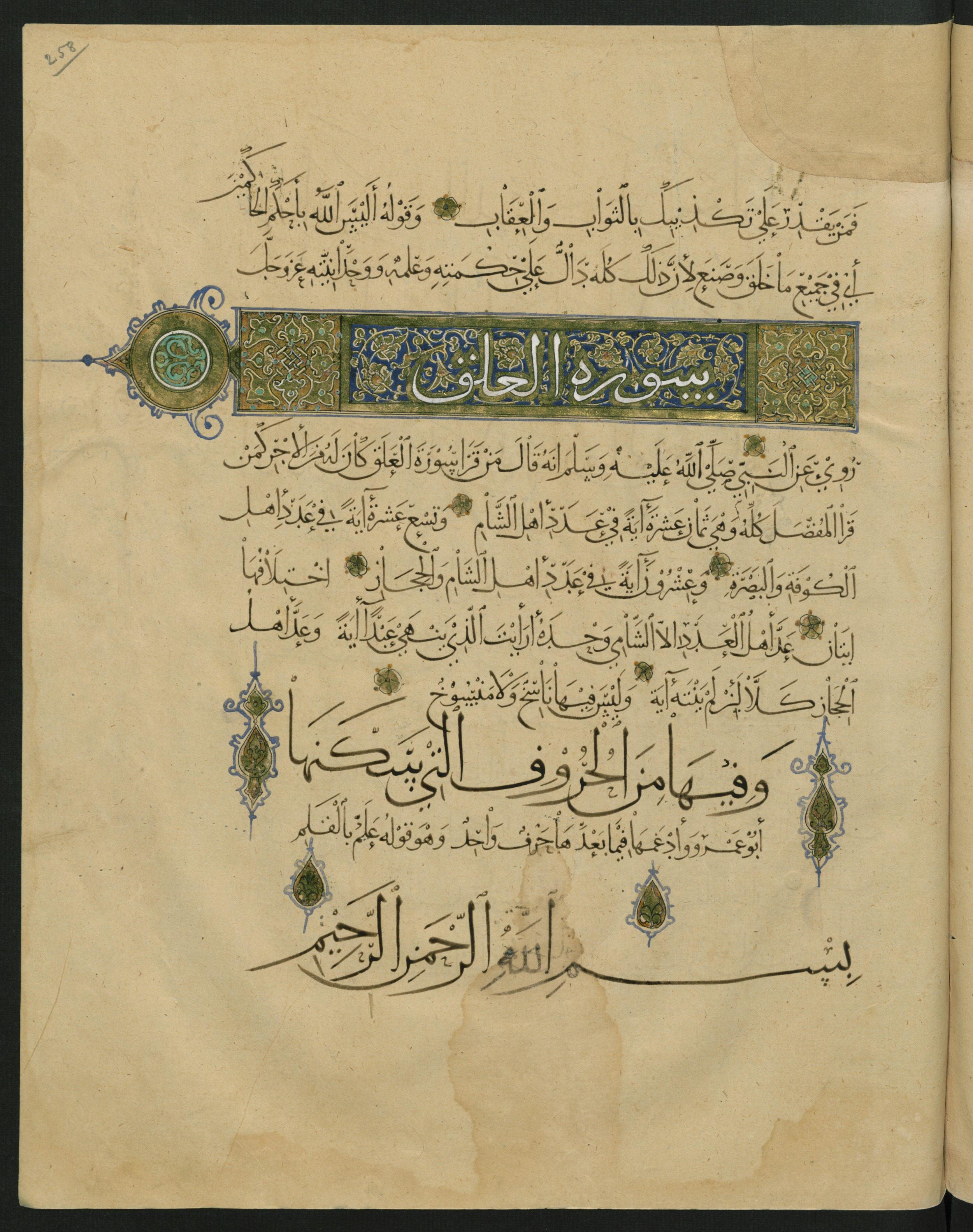
Berlin, Staatsbibliothek zu Berlin, Landberg 822 (Ahlwardt 914) (Scan 84)
This manuscript is a rare case where a Quranic codex is precisely dated by a colophon (completed on May 5, 1204 AD) and the scribe, al-Faḍl b. ʿUmar ar-Rāʾiḍ, is a known Iraqi scholar mentioned in Muslim scholarly literature. It also contains an exegetical compilation detailing circumstances of revelation, abrogated verses, and variant readings.
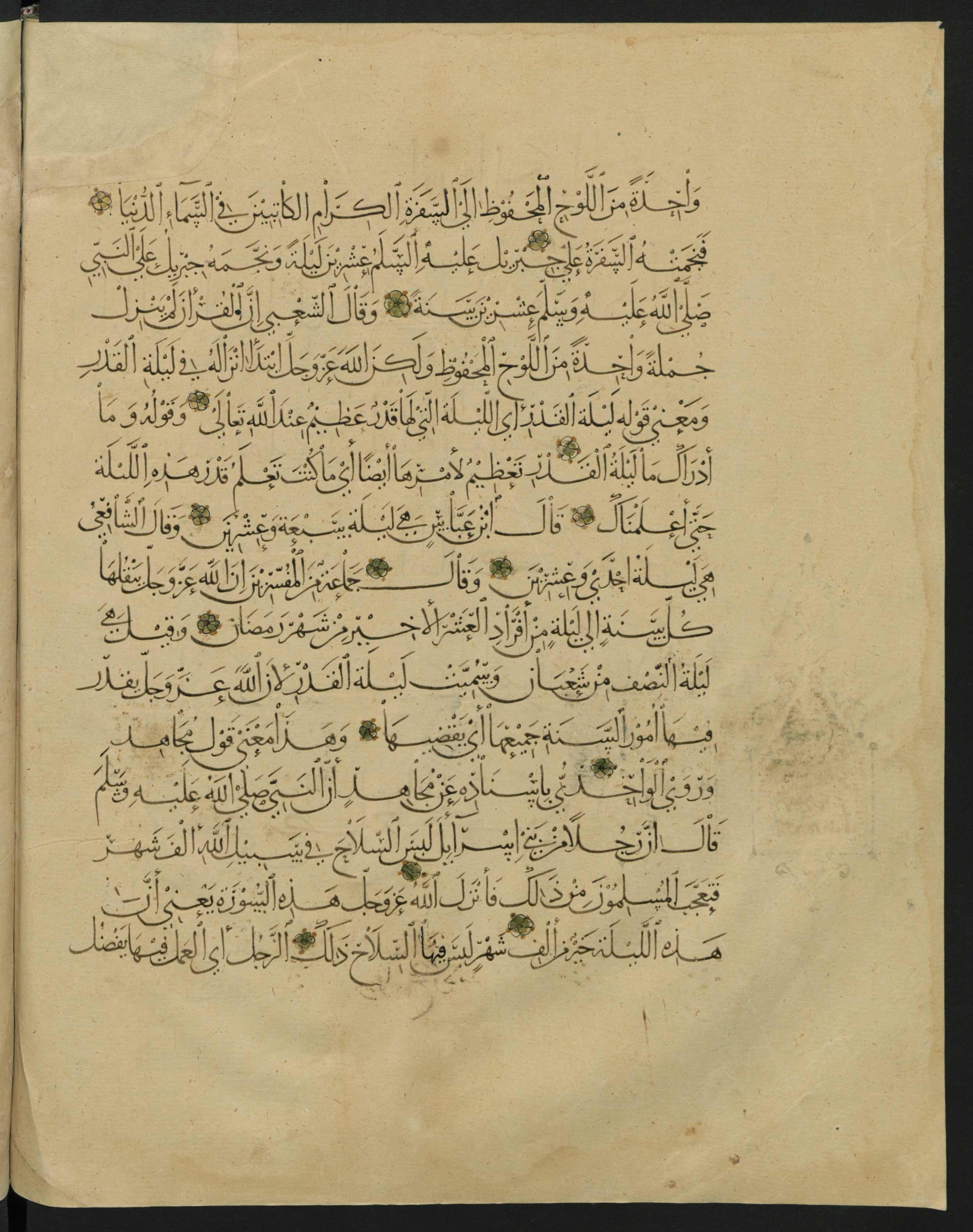
Berlin, Staatsbibliothek zu Berlin, Landberg 822 (Ahlwardt 914) (Scan 85)
This manuscript is a rare case where a Quranic codex is precisely dated by a colophon (completed on May 5, 1204 AD) and the scribe, al-Faḍl b. ʿUmar ar-Rāʾiḍ, is a known Iraqi scholar mentioned in Muslim scholarly literature. It also contains an exegetical compilation detailing circumstances of revelation, abrogated verses, and variant readings.
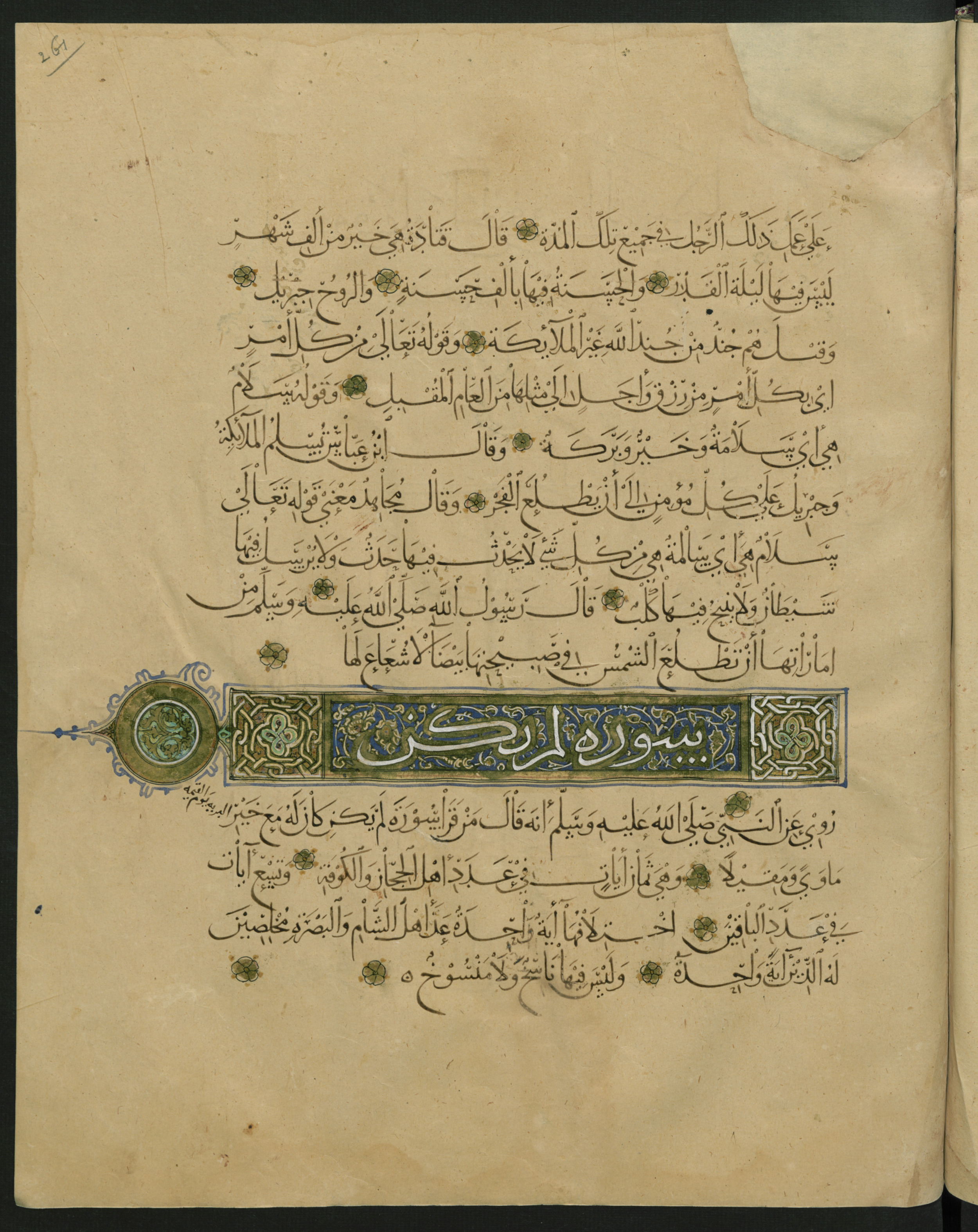
Berlin, Staatsbibliothek zu Berlin, Landberg 822 (Ahlwardt 914) (Scan 86)
This manuscript is a rare case where a Quranic codex is precisely dated by a colophon (completed on May 5, 1204 AD) and the scribe, al-Faḍl b. ʿUmar ar-Rāʾiḍ, is a known Iraqi scholar mentioned in Muslim scholarly literature. It also contains an exegetical compilation detailing circumstances of revelation, abrogated verses, and variant readings.
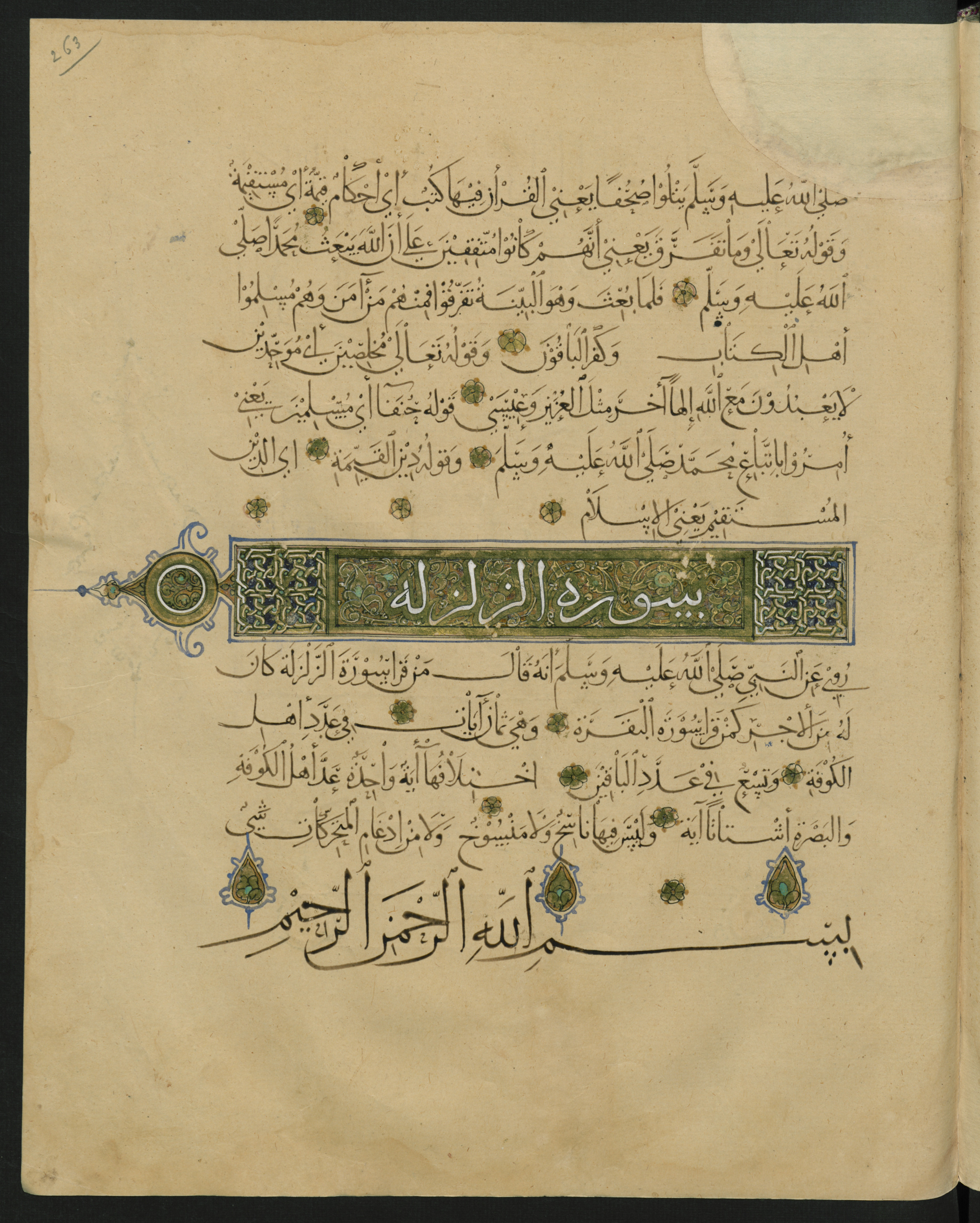
Berlin, Staatsbibliothek zu Berlin, Landberg 822 (Ahlwardt 914) (Scan 87)
This manuscript is a rare case where a Quranic codex is precisely dated by a colophon (completed on May 5, 1204 AD) and the scribe, al-Faḍl b. ʿUmar ar-Rāʾiḍ, is a known Iraqi scholar mentioned in Muslim scholarly literature. It also contains an exegetical compilation detailing circumstances of revelation, abrogated verses, and variant readings.
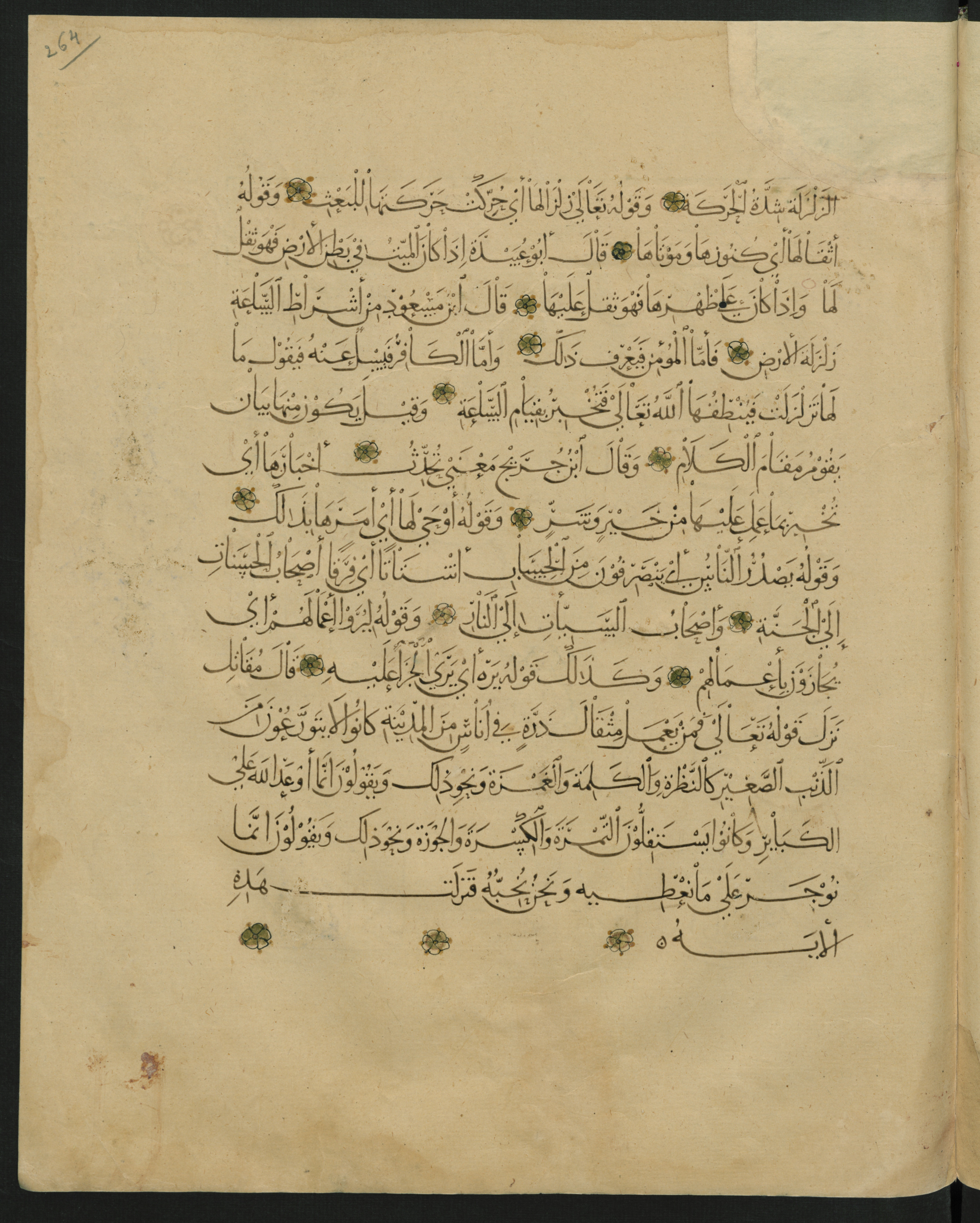
Berlin, Staatsbibliothek zu Berlin, Landberg 822 (Ahlwardt 914) (Scan 88)
This manuscript is a rare case where a Quranic codex is precisely dated by a colophon (completed on May 5, 1204 AD) and the scribe, al-Faḍl b. ʿUmar ar-Rāʾiḍ, is a known Iraqi scholar mentioned in Muslim scholarly literature. It also contains an exegetical compilation detailing circumstances of revelation, abrogated verses, and variant readings.
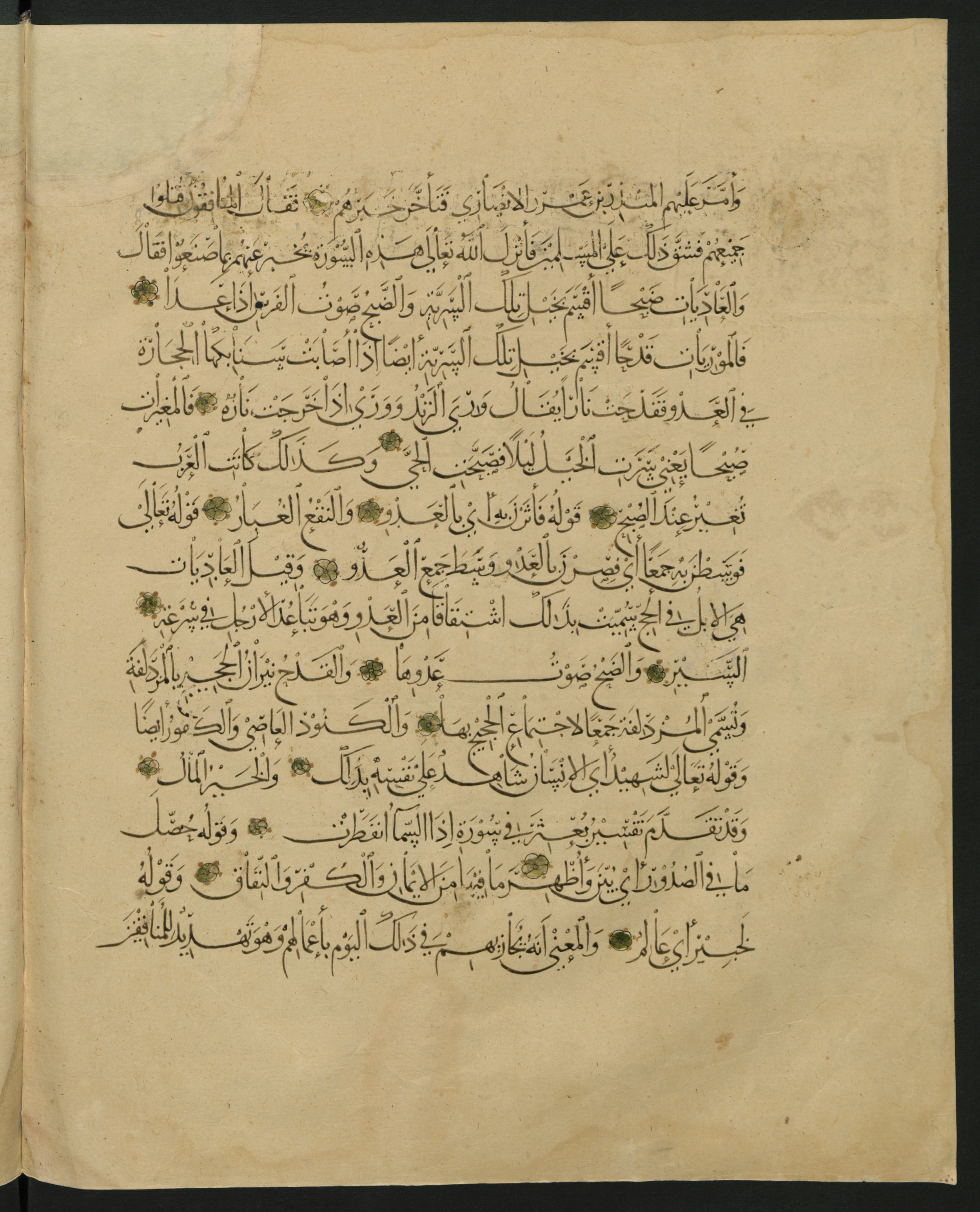
Berlin, Staatsbibliothek zu Berlin, Landberg 822 (Ahlwardt 914) (Scan 89)
This manuscript is a rare case where a Quranic codex is precisely dated by a colophon (completed on May 5, 1204 AD) and the scribe, al-Faḍl b. ʿUmar ar-Rāʾiḍ, is a known Iraqi scholar mentioned in Muslim scholarly literature. It also contains an exegetical compilation detailing circumstances of revelation, abrogated verses, and variant readings.
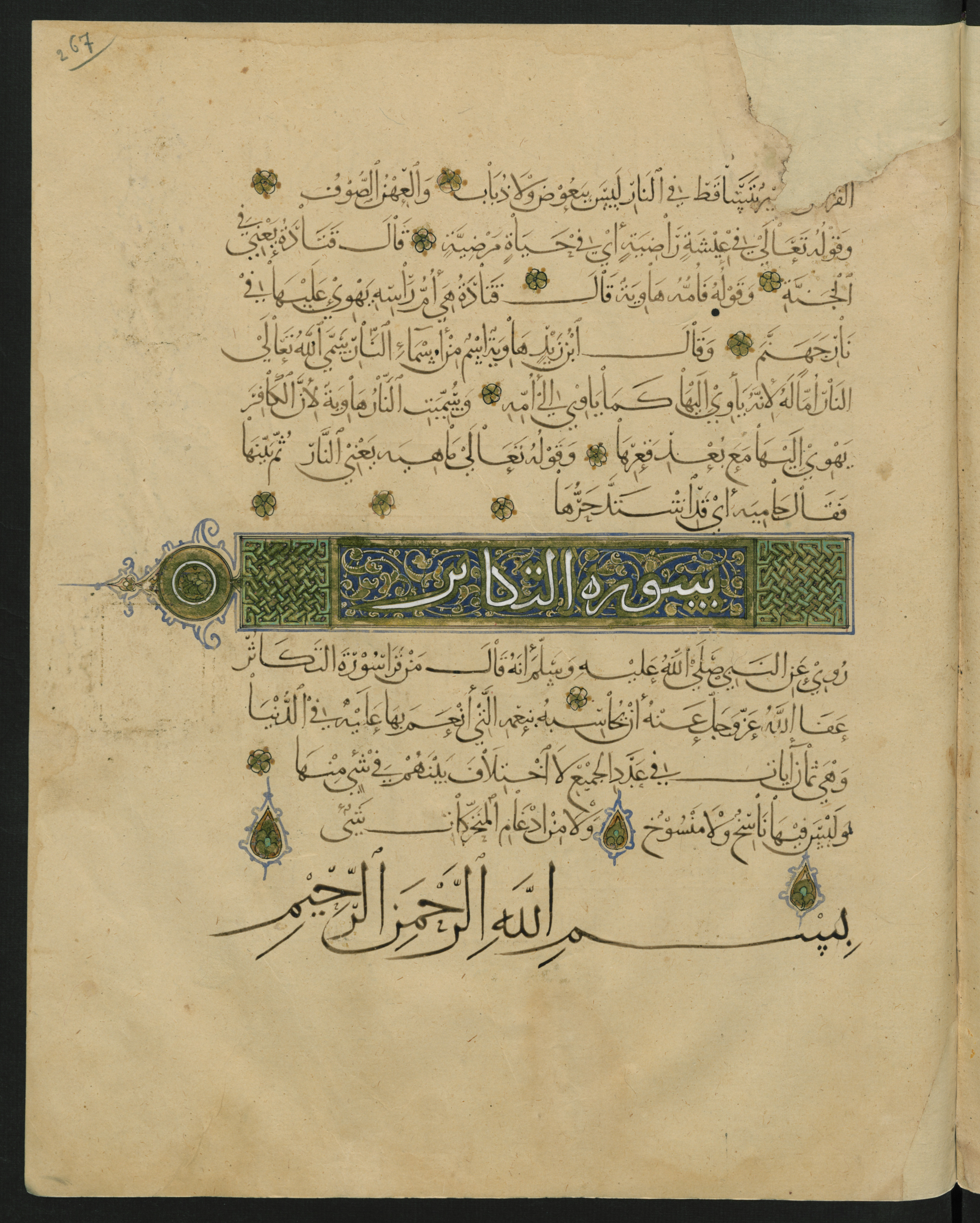
Berlin, Staatsbibliothek zu Berlin, Landberg 822 (Ahlwardt 914) (Scan 90)
This manuscript is a rare case where a Quranic codex is precisely dated by a colophon (completed on May 5, 1204 AD) and the scribe, al-Faḍl b. ʿUmar ar-Rāʾiḍ, is a known Iraqi scholar mentioned in Muslim scholarly literature. It also contains an exegetical compilation detailing circumstances of revelation, abrogated verses, and variant readings.
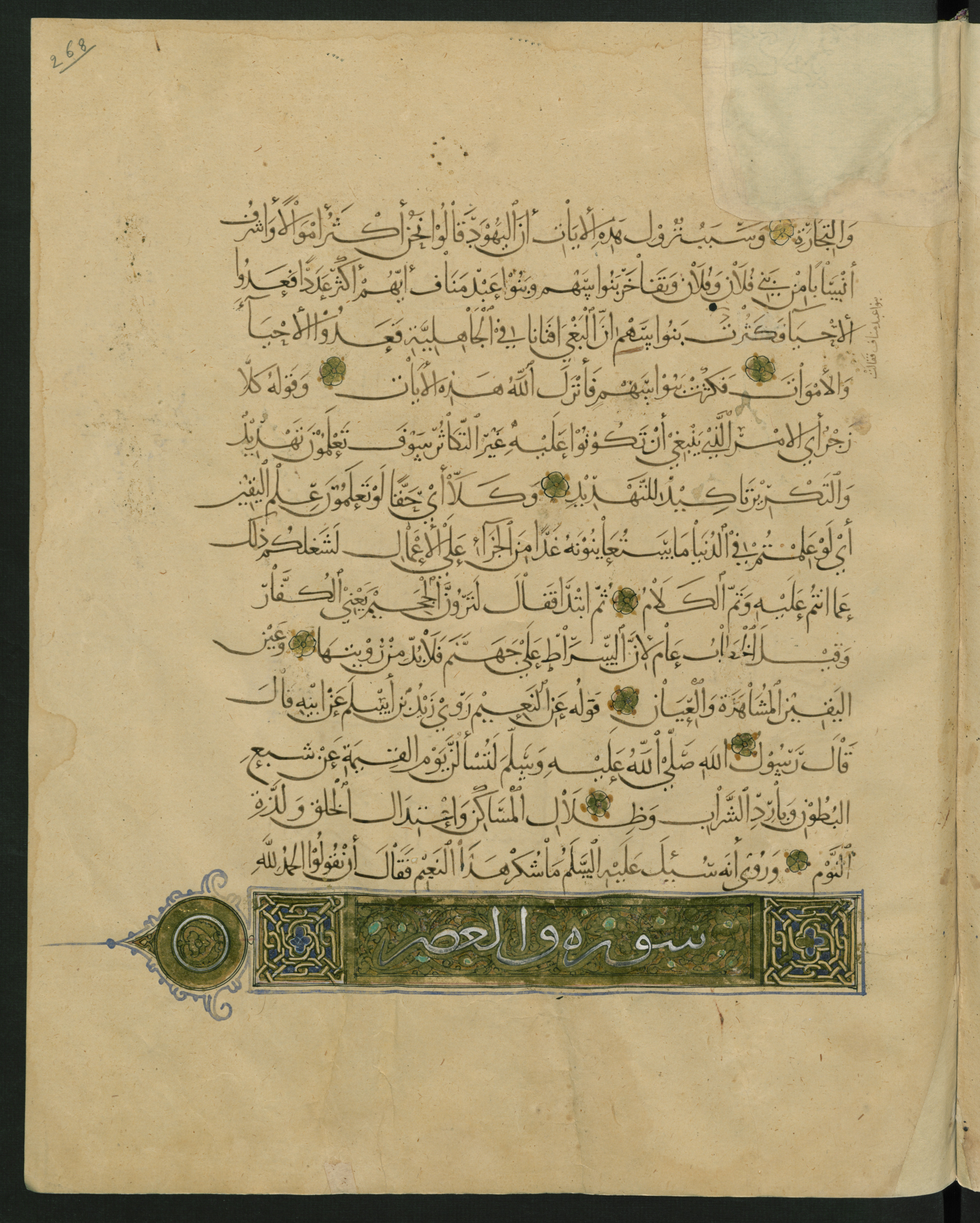
Berlin, Staatsbibliothek zu Berlin, Landberg 822 (Ahlwardt 914) (Scan 91)
This manuscript is a rare case where a Quranic codex is precisely dated by a colophon (completed on May 5, 1204 AD) and the scribe, al-Faḍl b. ʿUmar ar-Rāʾiḍ, is a known Iraqi scholar mentioned in Muslim scholarly literature. It also contains an exegetical compilation detailing circumstances of revelation, abrogated verses, and variant readings.
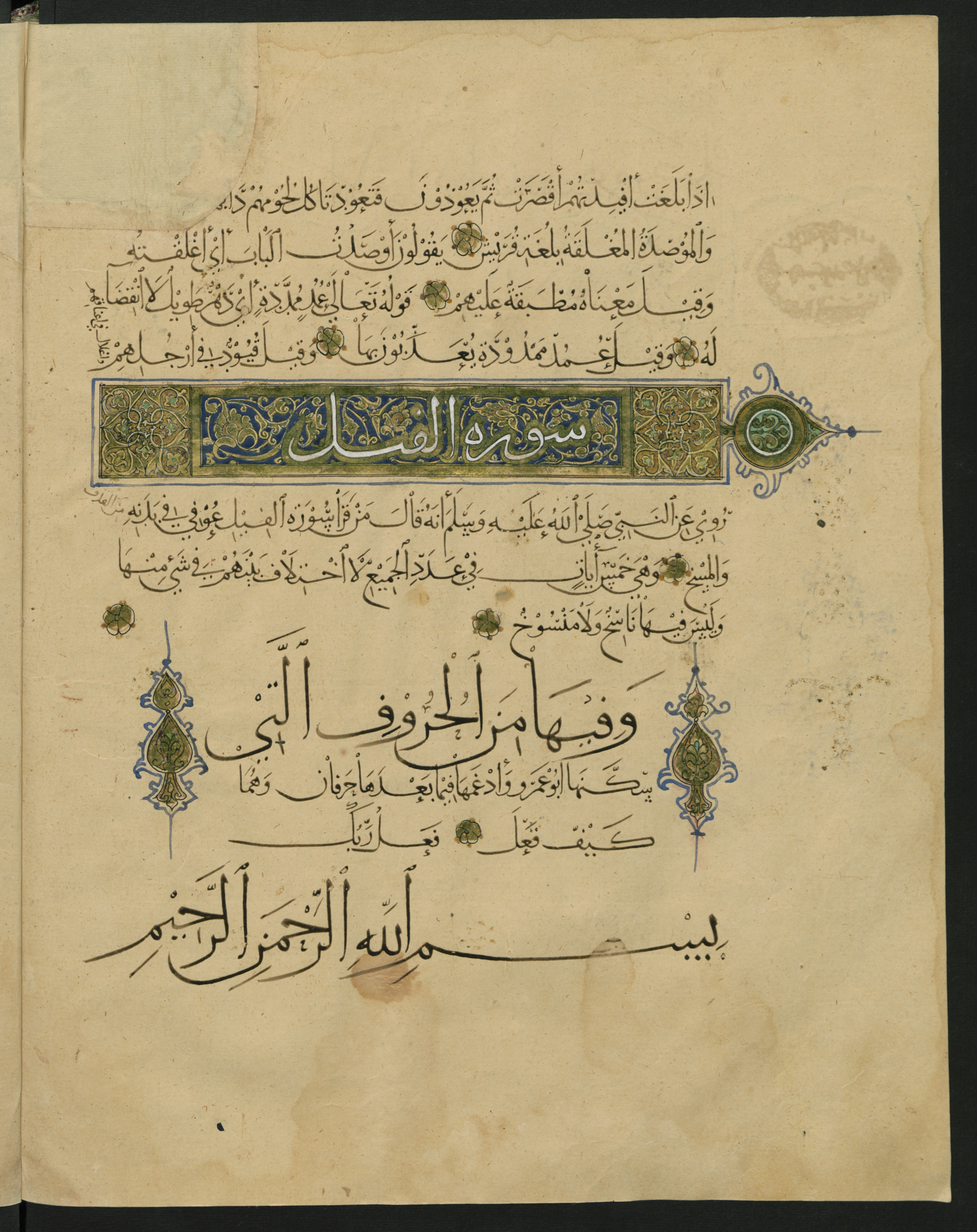
Berlin, Staatsbibliothek zu Berlin, Landberg 822 (Ahlwardt 914) (Scan 92)
This manuscript is a rare case where a Quranic codex is precisely dated by a colophon (completed on May 5, 1204 AD) and the scribe, al-Faḍl b. ʿUmar ar-Rāʾiḍ, is a known Iraqi scholar mentioned in Muslim scholarly literature. It also contains an exegetical compilation detailing circumstances of revelation, abrogated verses, and variant readings.
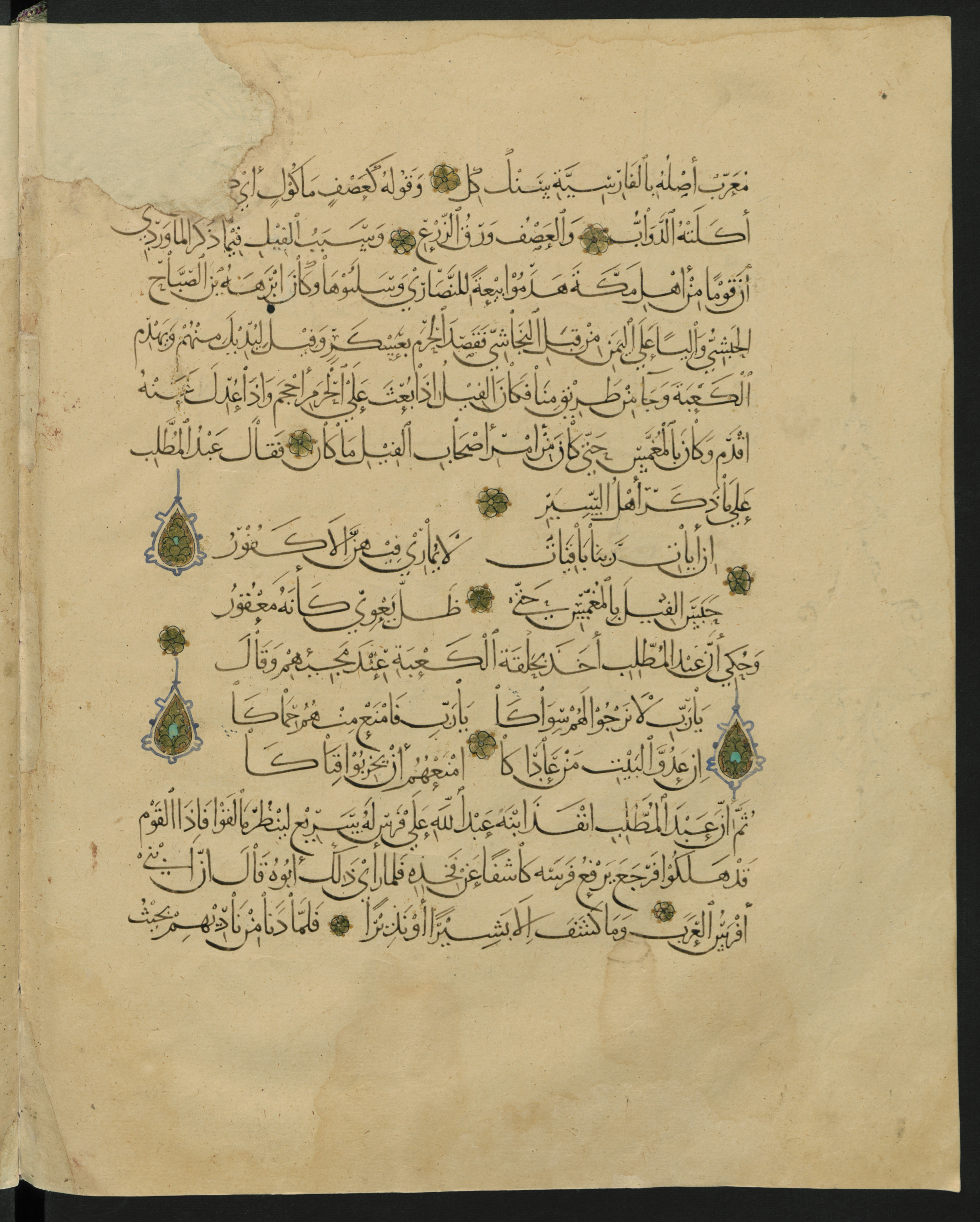
Berlin, Staatsbibliothek zu Berlin, Landberg 822 (Ahlwardt 914) (Scan 93)
This manuscript is a rare case where a Quranic codex is precisely dated by a colophon (completed on May 5, 1204 AD) and the scribe, al-Faḍl b. ʿUmar ar-Rāʾiḍ, is a known Iraqi scholar mentioned in Muslim scholarly literature. It also contains an exegetical compilation detailing circumstances of revelation, abrogated verses, and variant readings.
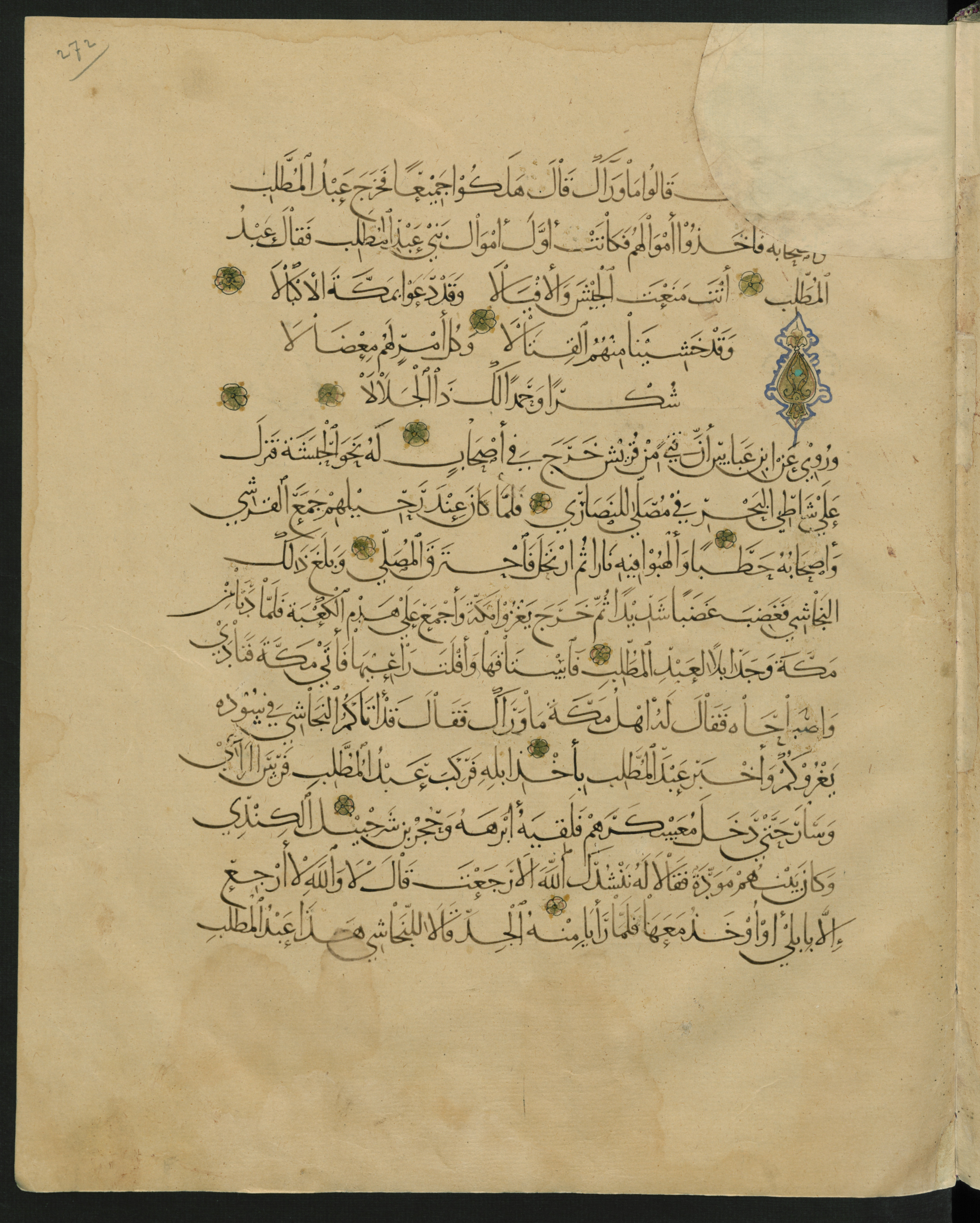
Berlin, Staatsbibliothek zu Berlin, Landberg 822 (Ahlwardt 914) (Scan 94)
This manuscript is a rare case where a Quranic codex is precisely dated by a colophon (completed on May 5, 1204 AD) and the scribe, al-Faḍl b. ʿUmar ar-Rāʾiḍ, is a known Iraqi scholar mentioned in Muslim scholarly literature. It also contains an exegetical compilation detailing circumstances of revelation, abrogated verses, and variant readings.
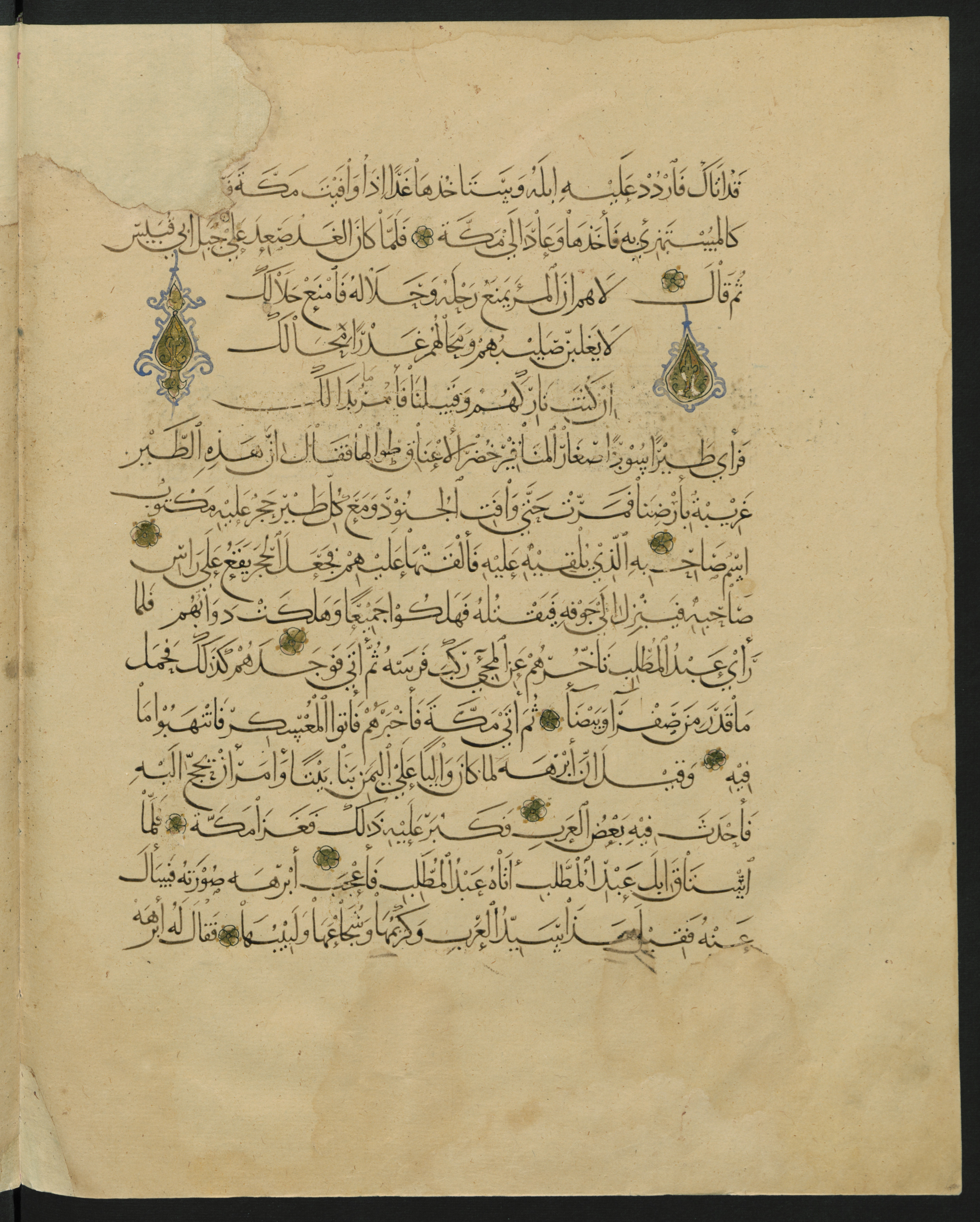
Berlin, Staatsbibliothek zu Berlin, Landberg 822 (Ahlwardt 914) (Scan 95)
This manuscript is a rare case where a Quranic codex is precisely dated by a colophon (completed on May 5, 1204 AD) and the scribe, al-Faḍl b. ʿUmar ar-Rāʾiḍ, is a known Iraqi scholar mentioned in Muslim scholarly literature. It also contains an exegetical compilation detailing circumstances of revelation, abrogated verses, and variant readings.
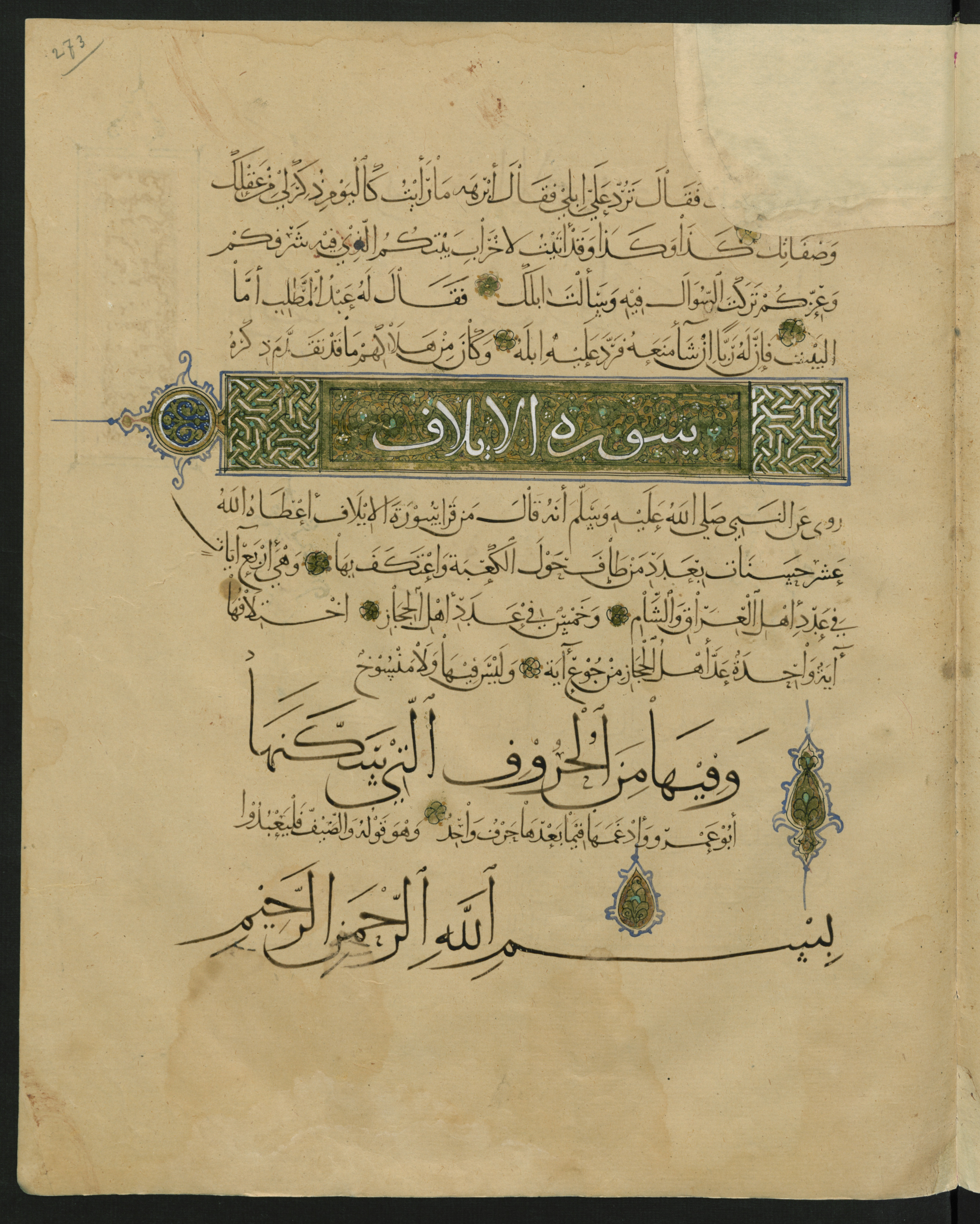
Berlin, Staatsbibliothek zu Berlin, Landberg 822 (Ahlwardt 914) (Scan 96)
This manuscript is a rare case where a Quranic codex is precisely dated by a colophon (completed on May 5, 1204 AD) and the scribe, al-Faḍl b. ʿUmar ar-Rāʾiḍ, is a known Iraqi scholar mentioned in Muslim scholarly literature. It also contains an exegetical compilation detailing circumstances of revelation, abrogated verses, and variant readings.
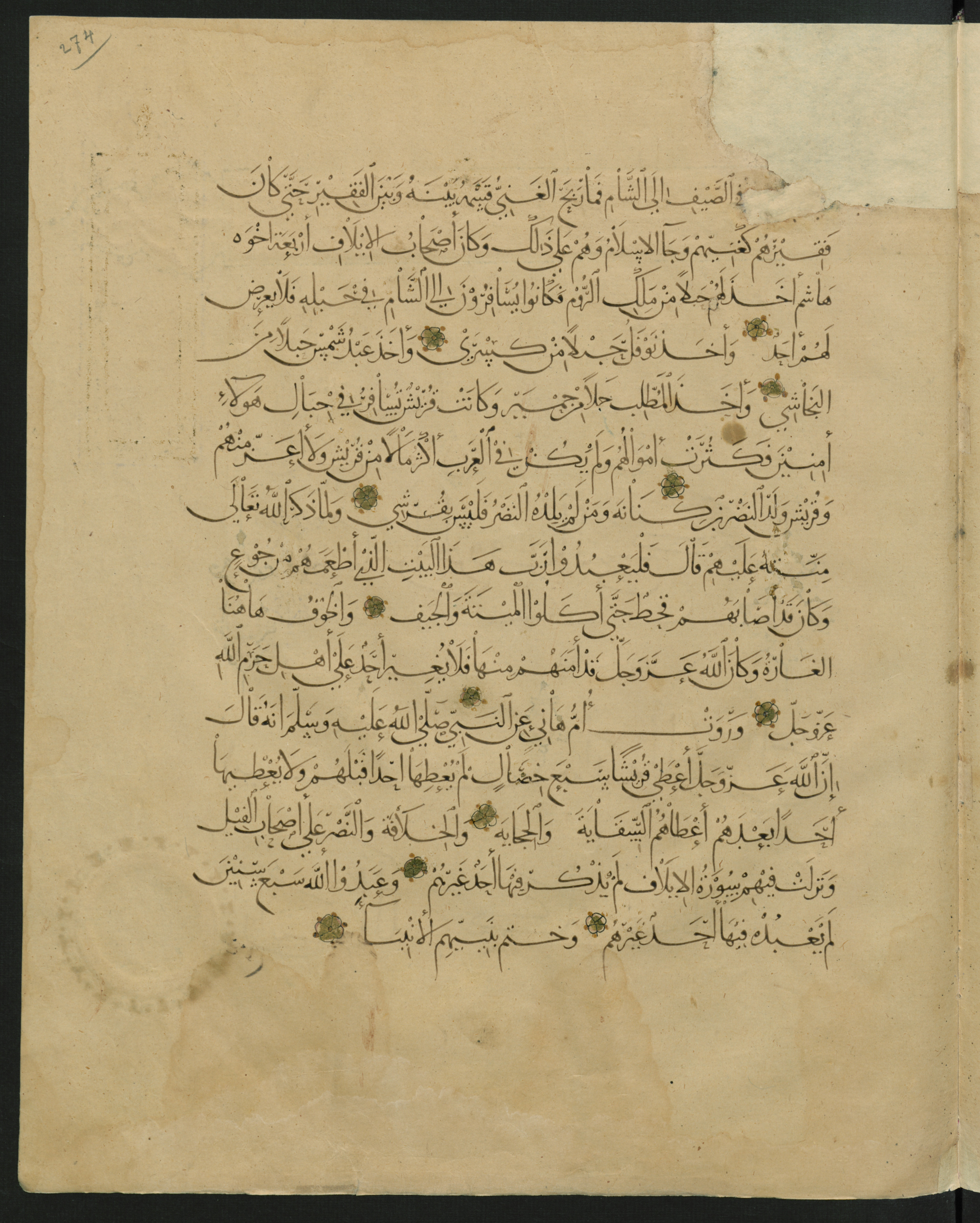
Berlin, Staatsbibliothek zu Berlin, Landberg 822 (Ahlwardt 914) (Scan 97)
This manuscript is a rare case where a Quranic codex is precisely dated by a colophon (completed on May 5, 1204 AD) and the scribe, al-Faḍl b. ʿUmar ar-Rāʾiḍ, is a known Iraqi scholar mentioned in Muslim scholarly literature. It also contains an exegetical compilation detailing circumstances of revelation, abrogated verses, and variant readings.
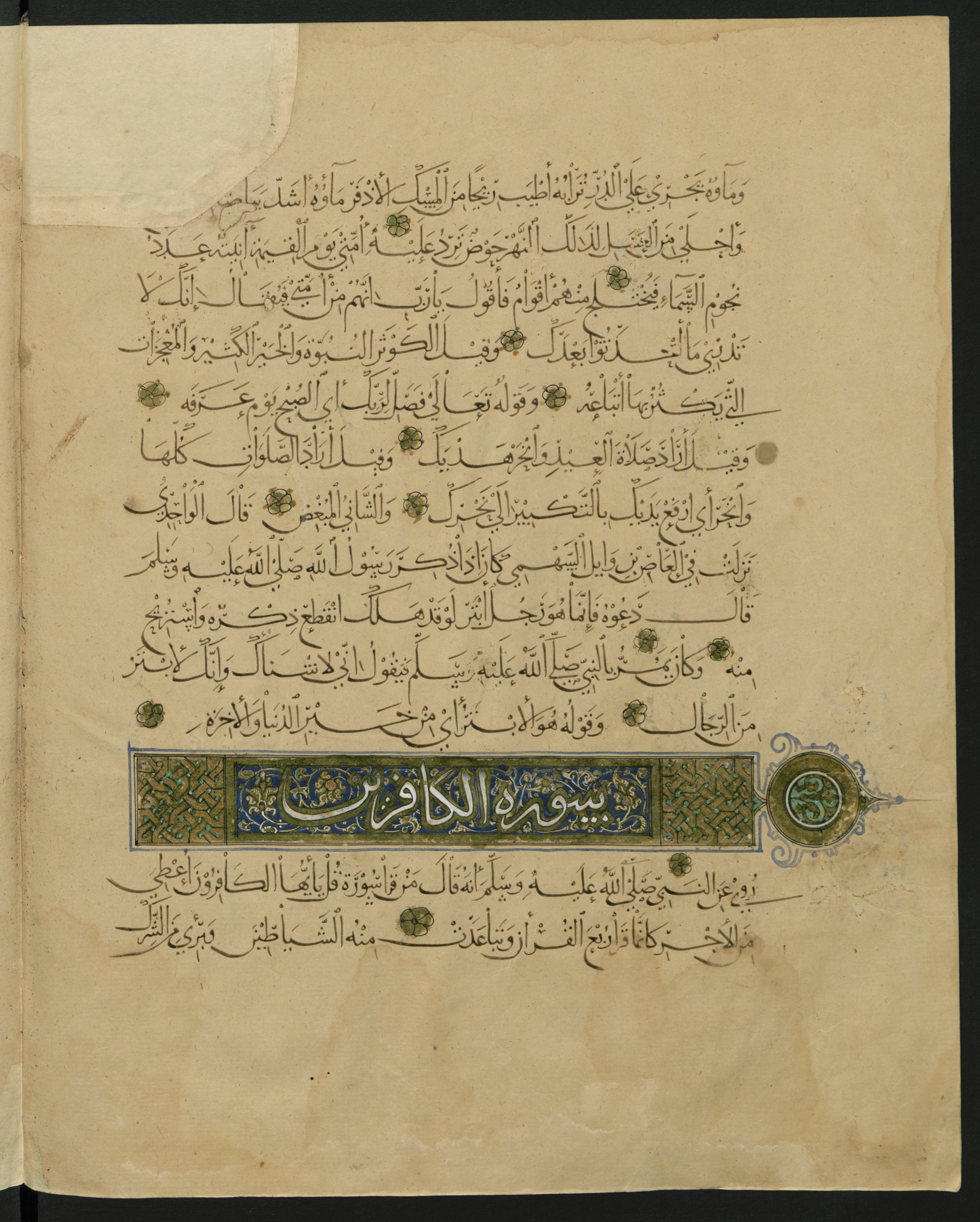
Berlin, Staatsbibliothek zu Berlin, Landberg 822 (Ahlwardt 914) (Scan 98)
This manuscript is a rare case where a Quranic codex is precisely dated by a colophon (completed on May 5, 1204 AD) and the scribe, al-Faḍl b. ʿUmar ar-Rāʾiḍ, is a known Iraqi scholar mentioned in Muslim scholarly literature. It also contains an exegetical compilation detailing circumstances of revelation, abrogated verses, and variant readings.
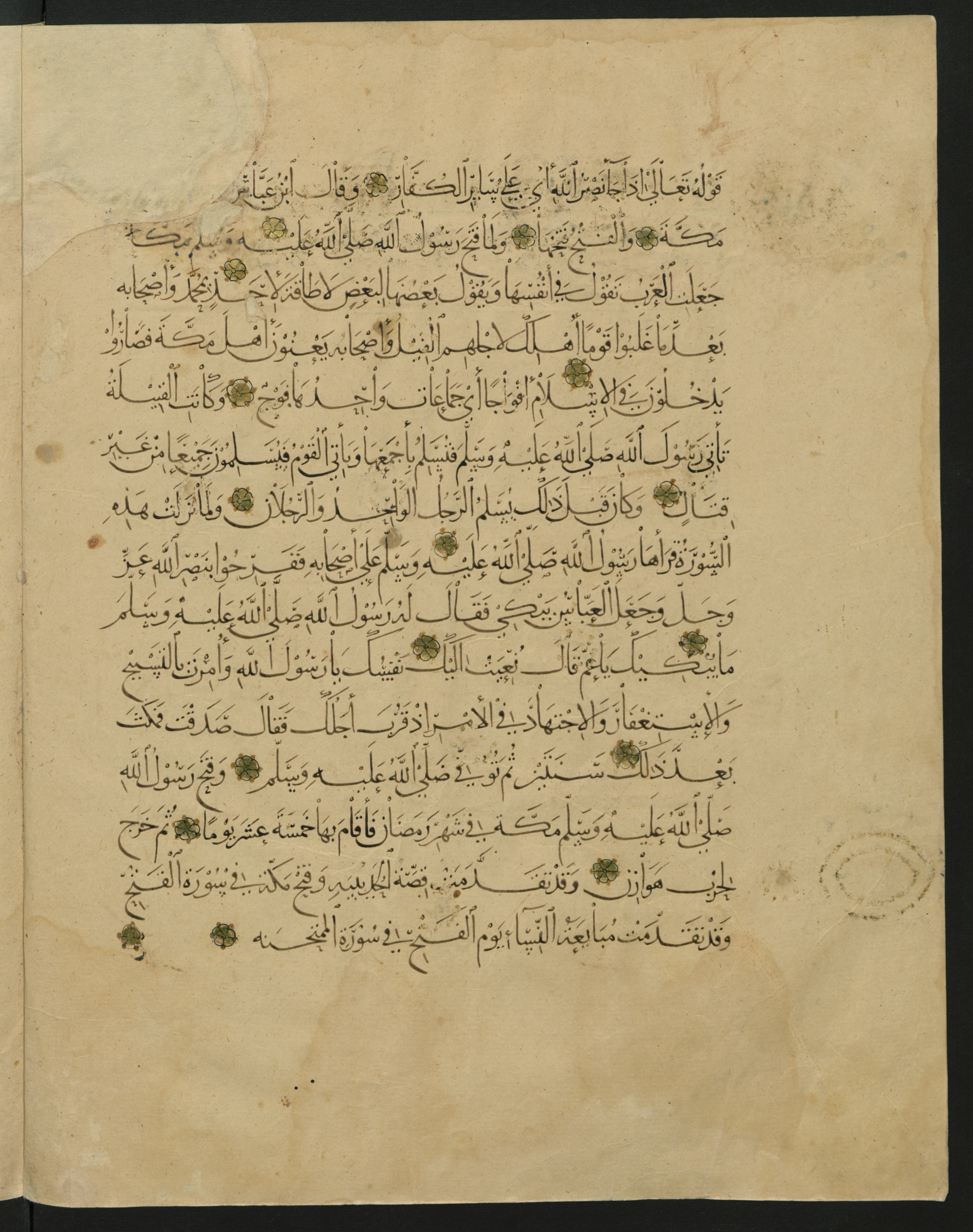
Berlin, Staatsbibliothek zu Berlin, Landberg 822 (Ahlwardt 914) (Scan 99)
This manuscript is a rare case where a Quranic codex is precisely dated by a colophon (completed on May 5, 1204 AD) and the scribe, al-Faḍl b. ʿUmar ar-Rāʾiḍ, is a known Iraqi scholar mentioned in Muslim scholarly literature. It also contains an exegetical compilation detailing circumstances of revelation, abrogated verses, and variant readings.
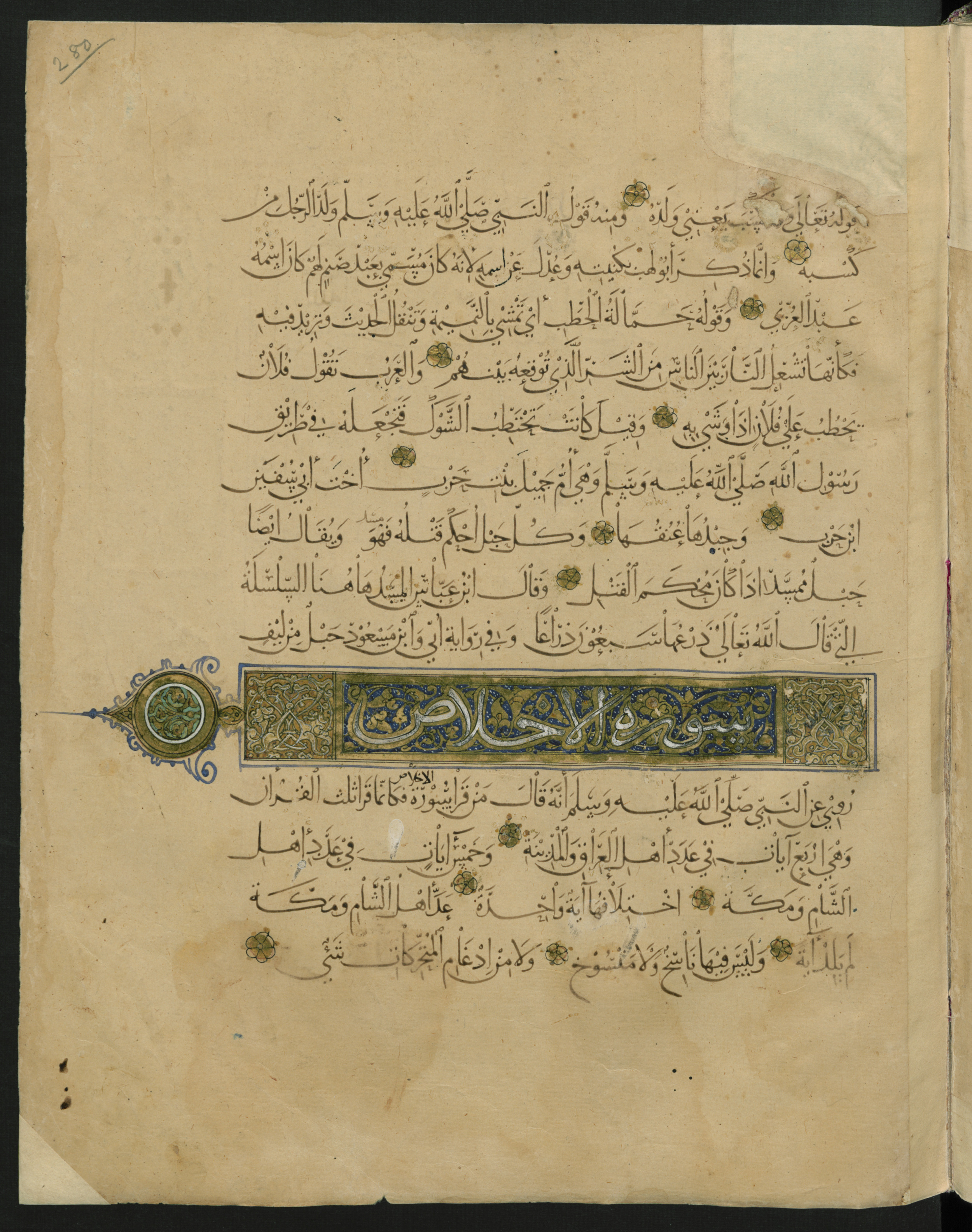
Berlin, Staatsbibliothek zu Berlin, Landberg 822 (Ahlwardt 914) (Scan 100)
This manuscript is a rare case where a Quranic codex is precisely dated by a colophon (completed on May 5, 1204 AD) and the scribe, al-Faḍl b. ʿUmar ar-Rāʾiḍ, is a known Iraqi scholar mentioned in Muslim scholarly literature. It also contains an exegetical compilation detailing circumstances of revelation, abrogated verses, and variant readings.
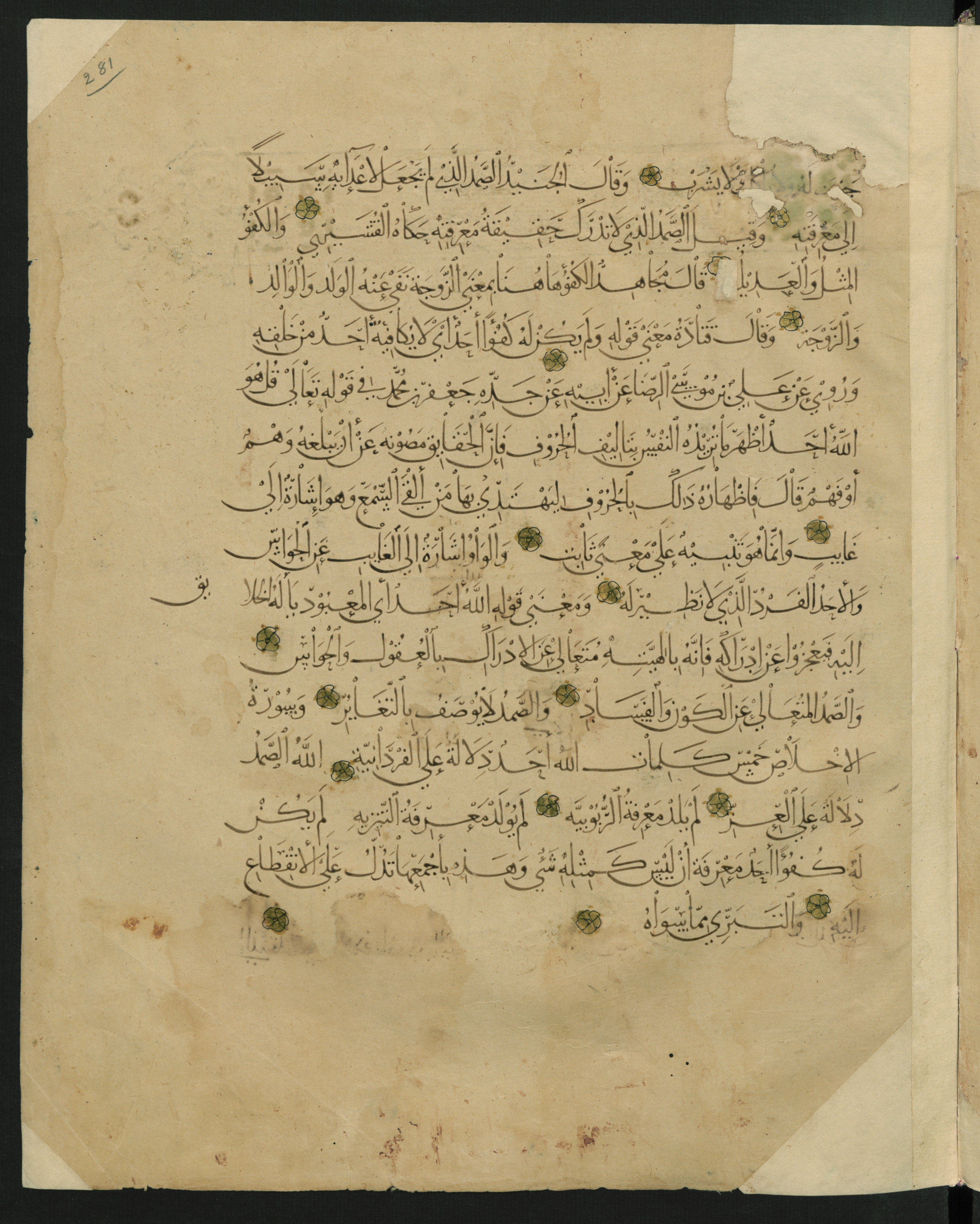
Berlin, Staatsbibliothek zu Berlin, Landberg 822 (Ahlwardt 914) (Scan 101)
This manuscript is a rare case where a Quranic codex is precisely dated by a colophon (completed on May 5, 1204 AD) and the scribe, al-Faḍl b. ʿUmar ar-Rāʾiḍ, is a known Iraqi scholar mentioned in Muslim scholarly literature. It also contains an exegetical compilation detailing circumstances of revelation, abrogated verses, and variant readings.
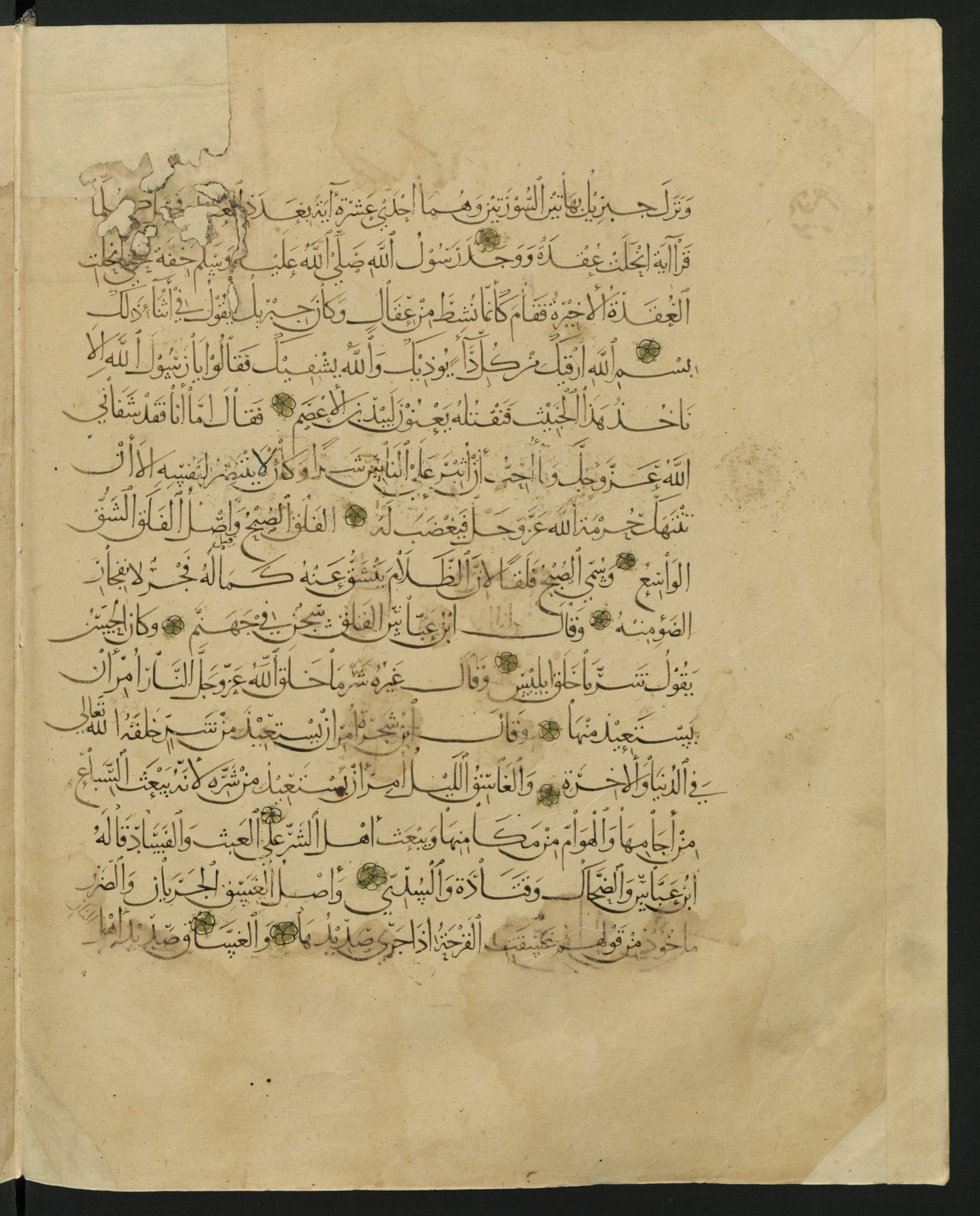
Berlin, Staatsbibliothek zu Berlin, Landberg 822 (Ahlwardt 914) (Scan 102)
This manuscript is a rare case where a Quranic codex is precisely dated by a colophon (completed on May 5, 1204 AD) and the scribe, al-Faḍl b. ʿUmar ar-Rāʾiḍ, is a known Iraqi scholar mentioned in Muslim scholarly literature. It also contains an exegetical compilation detailing circumstances of revelation, abrogated verses, and variant readings.
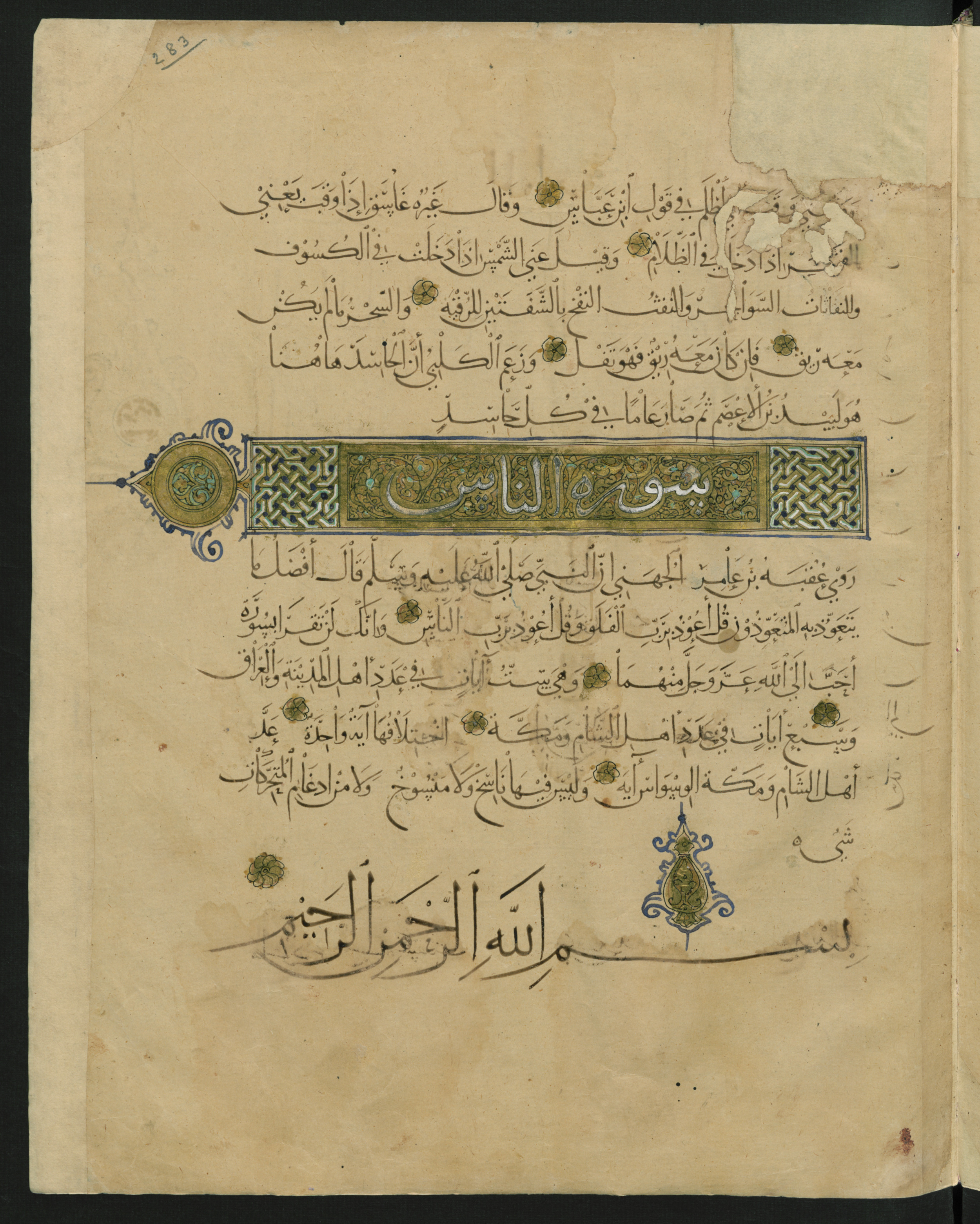
Berlin, Staatsbibliothek zu Berlin, Landberg 822 (Ahlwardt 914) (Scan 103)
This manuscript is a rare case where a Quranic codex is precisely dated by a colophon (completed on May 5, 1204 AD) and the scribe, al-Faḍl b. ʿUmar ar-Rāʾiḍ, is a known Iraqi scholar mentioned in Muslim scholarly literature. It also contains an exegetical compilation detailing circumstances of revelation, abrogated verses, and variant readings.
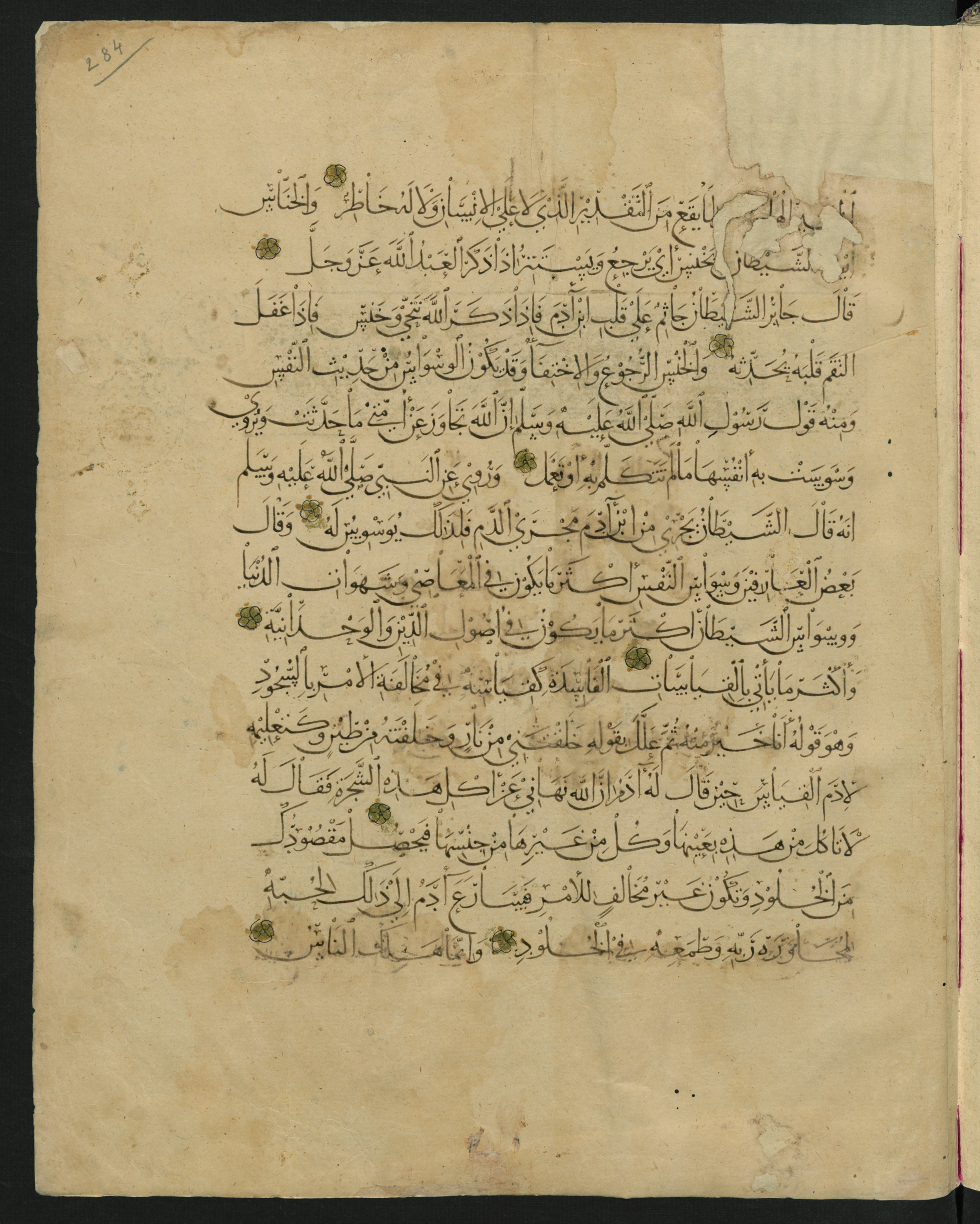
Berlin, Staatsbibliothek zu Berlin, Landberg 822 (Ahlwardt 914) (Scan 104)
This manuscript is a rare case where a Quranic codex is precisely dated by a colophon (completed on May 5, 1204 AD) and the scribe, al-Faḍl b. ʿUmar ar-Rāʾiḍ, is a known Iraqi scholar mentioned in Muslim scholarly literature. It also contains an exegetical compilation detailing circumstances of revelation, abrogated verses, and variant readings.
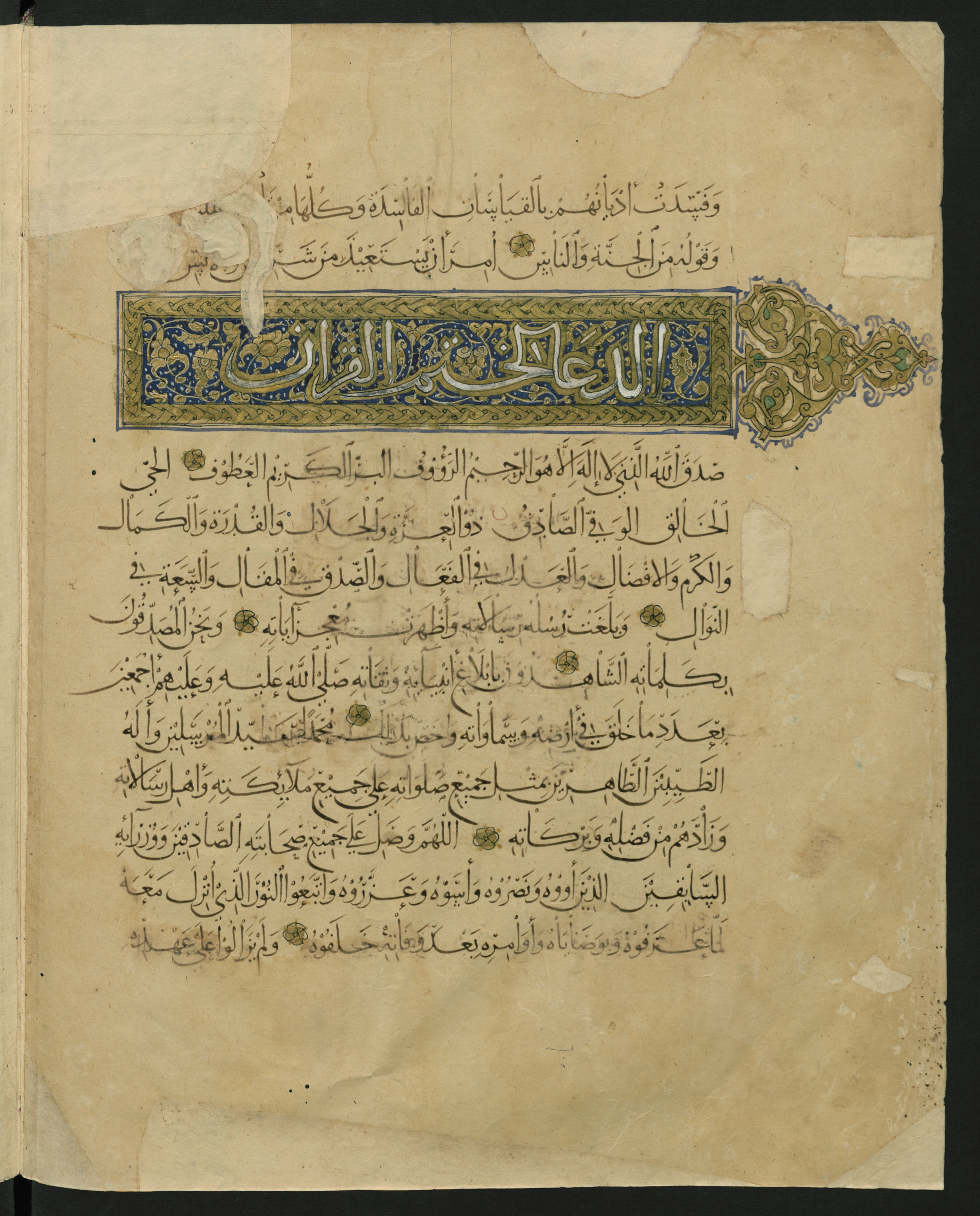
Berlin, Staatsbibliothek zu Berlin, Landberg 822 (Ahlwardt 914) (Scan 105)
This manuscript is a rare case where a Quranic codex is precisely dated by a colophon (completed on May 5, 1204 AD) and the scribe, al-Faḍl b. ʿUmar ar-Rāʾiḍ, is a known Iraqi scholar mentioned in Muslim scholarly literature. It also contains an exegetical compilation detailing circumstances of revelation, abrogated verses, and variant readings.
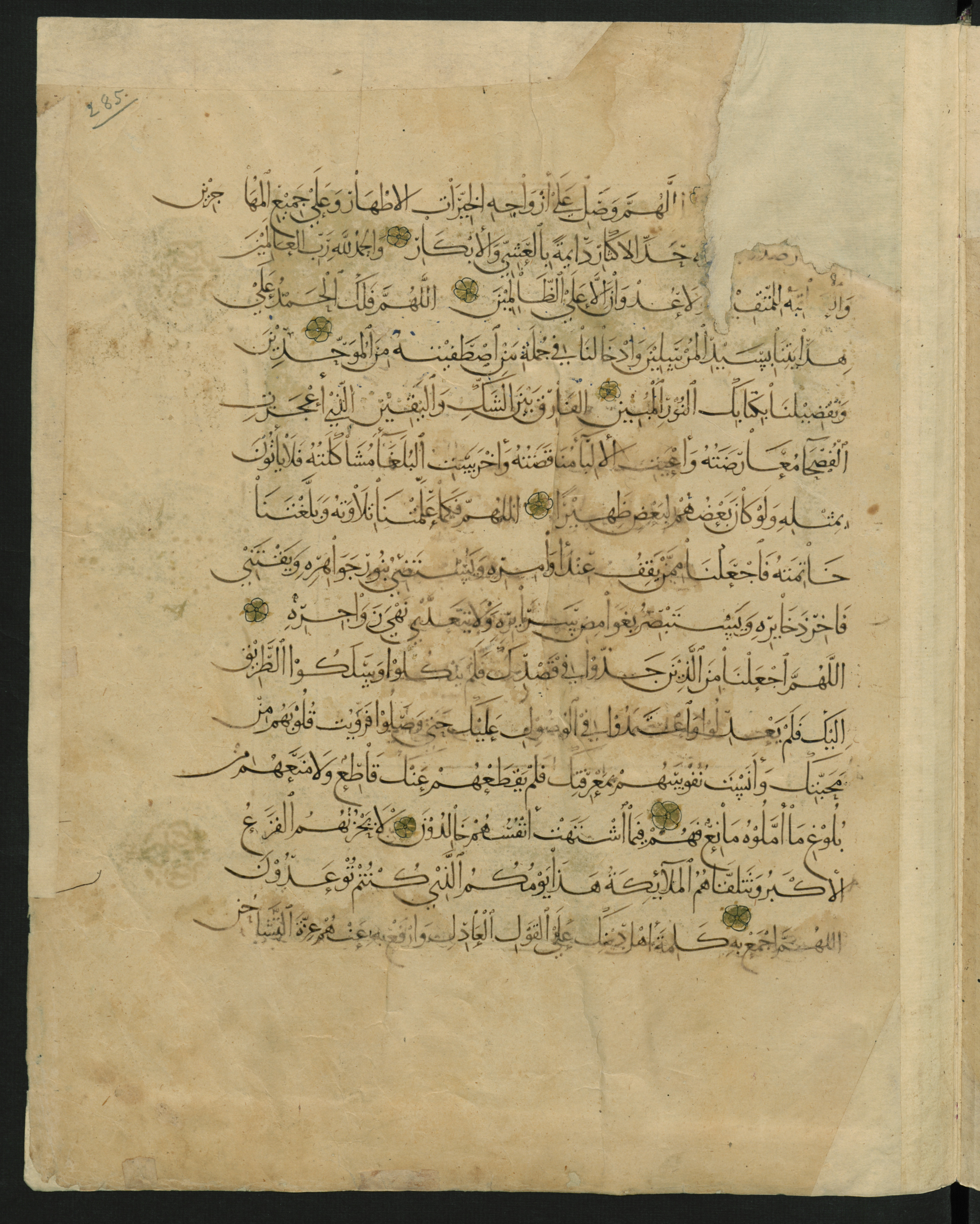
Berlin, Staatsbibliothek zu Berlin, Landberg 822 (Ahlwardt 914) (Scan 106)
This manuscript is a rare case where a Quranic codex is precisely dated by a colophon (completed on May 5, 1204 AD) and the scribe, al-Faḍl b. ʿUmar ar-Rāʾiḍ, is a known Iraqi scholar mentioned in Muslim scholarly literature. It also contains an exegetical compilation detailing circumstances of revelation, abrogated verses, and variant readings.
Berlin, Staatsbibliothek zu Berlin, Landberg 822 (Ahlwardt 914) (Scan 107)
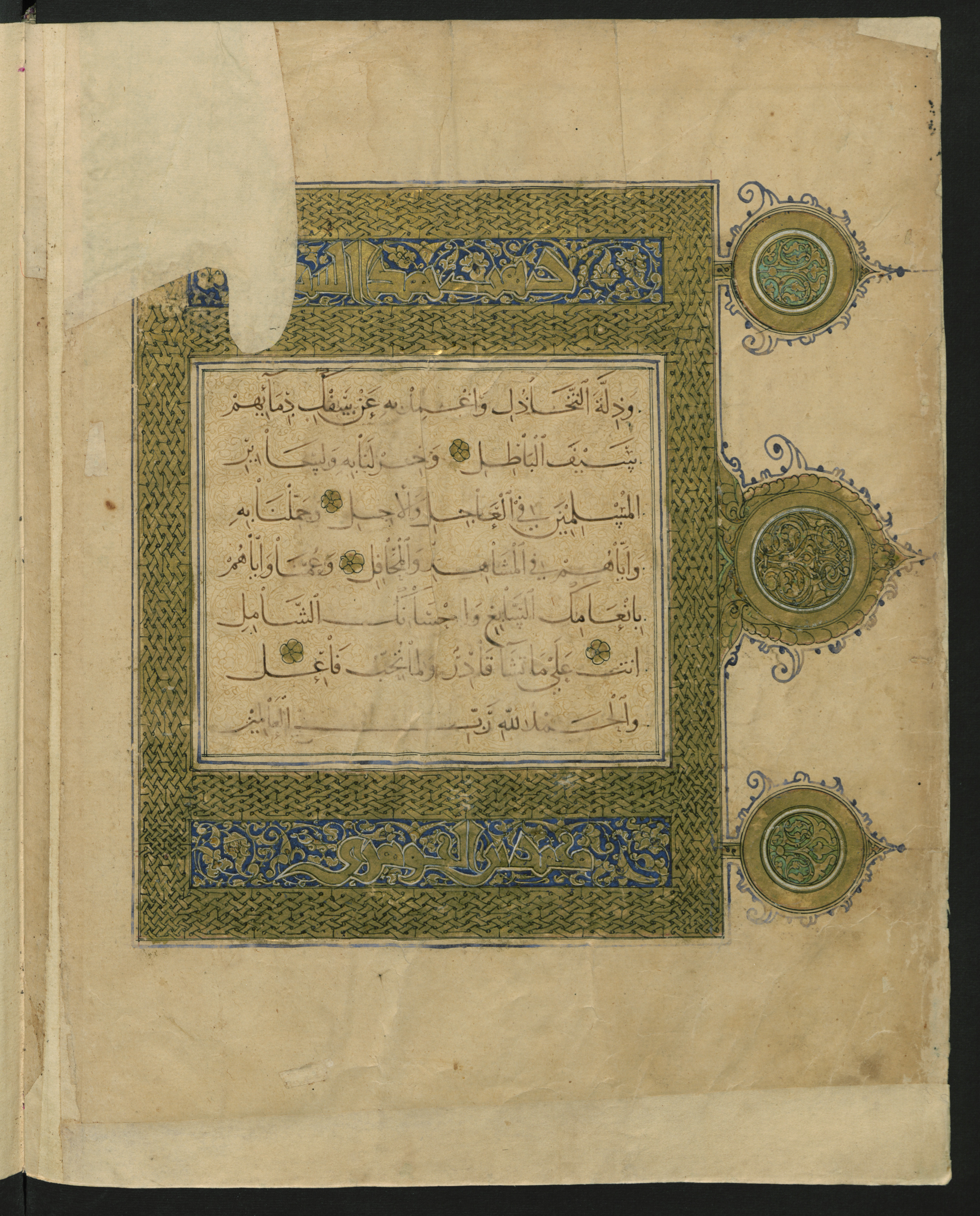
This manuscript is a rare case where a Quranic codex is precisely dated by a colophon (completed on May 5, 1204 AD) and the scribe, al-Faḍl b. ʿUmar ar-Rāʾiḍ, is a known Iraqi scholar mentioned in Muslim scholarly literature. It also contains an exegetical compilation detailing circumstances of revelation, abrogated verses, and variant readings.
Berlin, Staatsbibliothek zu Berlin, Landberg 822 (Ahlwardt 914) (Scan 108)
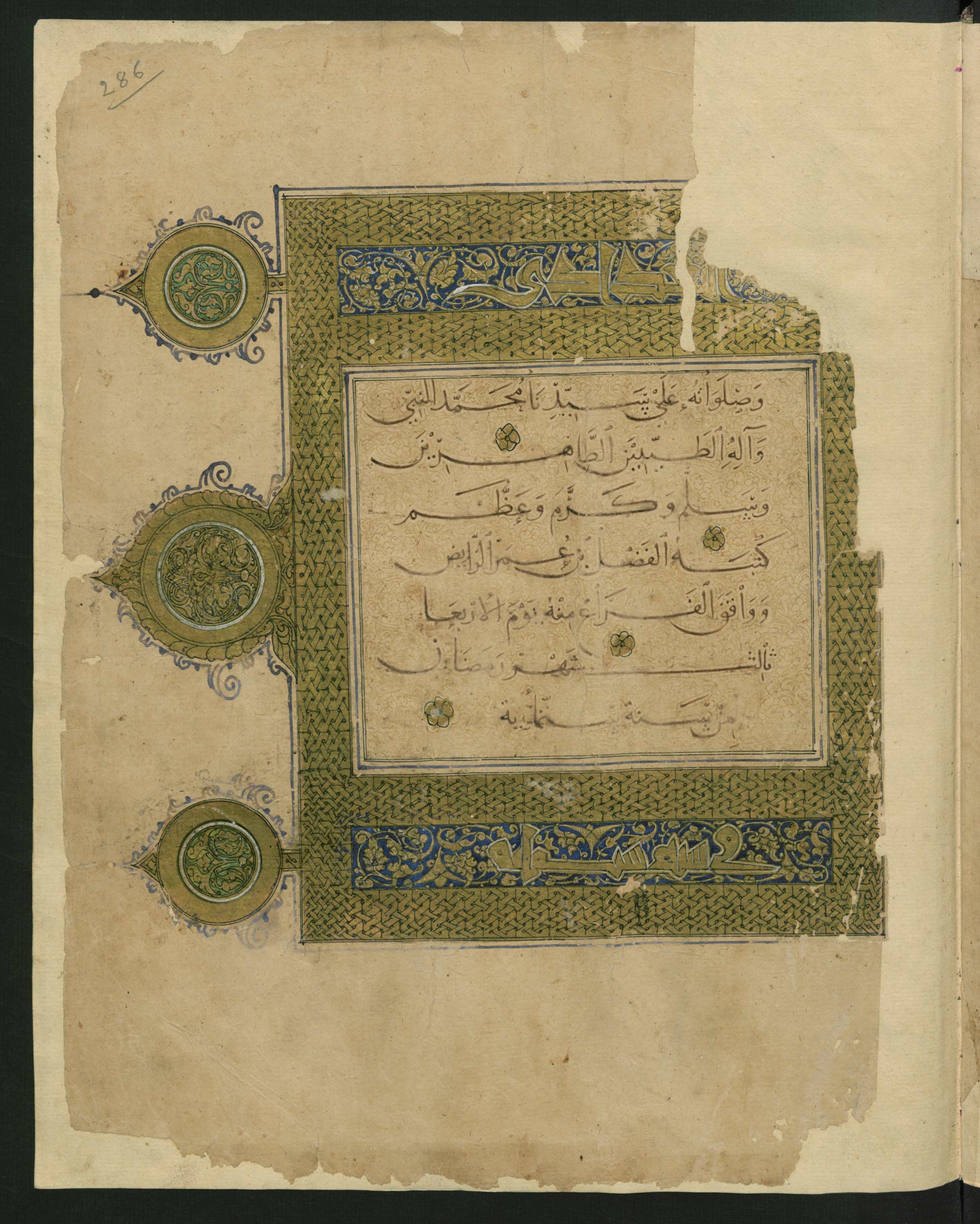
This manuscript is a rare case where a Quranic codex is precisely dated by a colophon (completed on May 5, 1204 AD) and the scribe, al-Faḍl b. ʿUmar ar-Rāʾiḍ, is a known Iraqi scholar mentioned in Muslim scholarly literature. It also contains an exegetical compilation detailing circumstances of revelation, abrogated verses, and variant readings.
Berlin, Staatsbibliothek zu Berlin, Landberg 822 (Ahlwardt 914) (Scan 109)
This manuscript is a rare case where a Quranic codex is precisely dated by a colophon (completed on May 5, 1204 AD) and the scribe, al-Faḍl b. ʿUmar ar-Rāʾiḍ, is a known Iraqi scholar mentioned in Muslim scholarly literature. It also contains an exegetical compilation detailing circumstances of revelation, abrogated verses, and variant readings.
Berlin, Staatsbibliothek zu Berlin, Landberg 822 (Ahlwardt 914) (Scan 110)
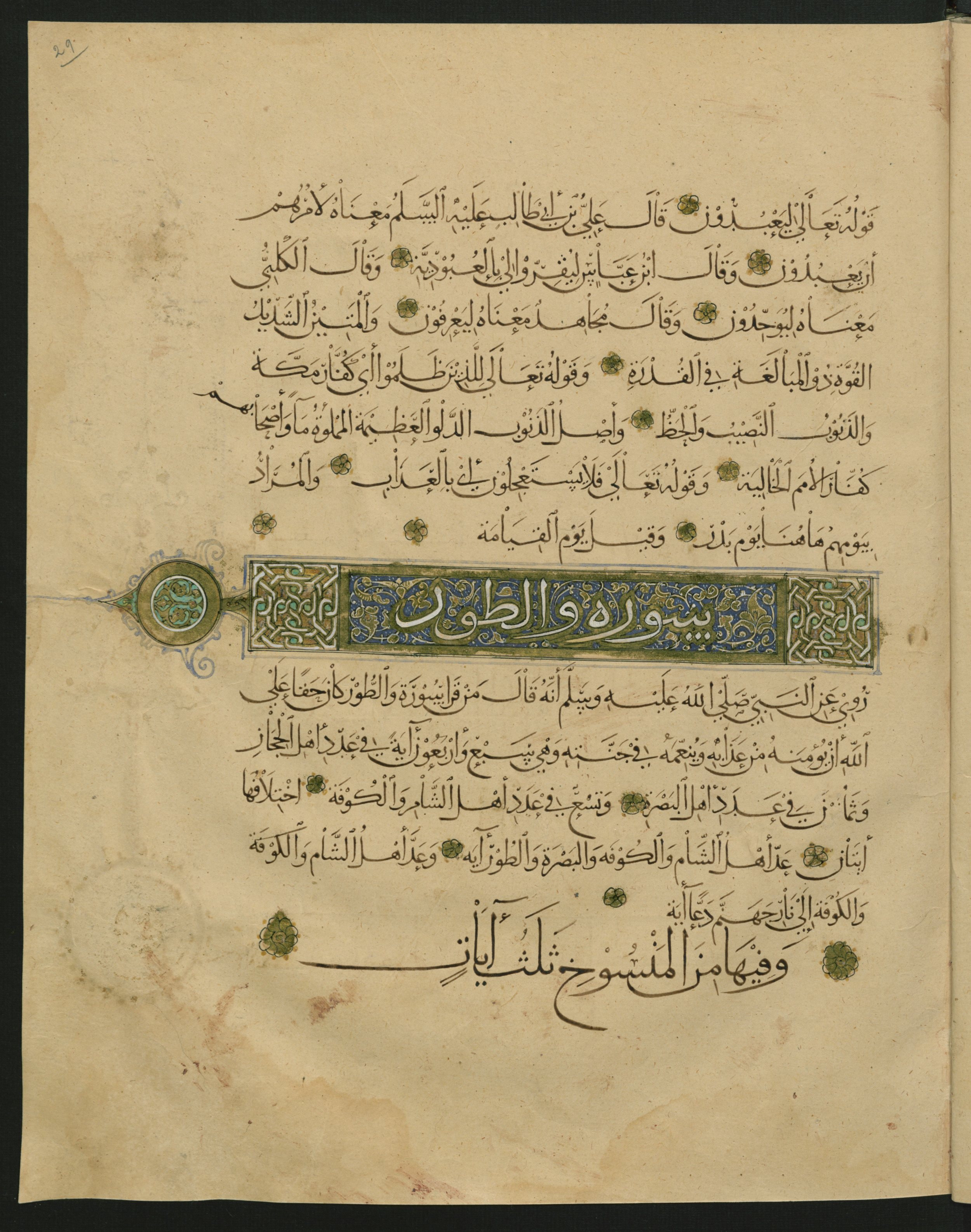
This manuscript is a rare case where a Quranic codex is precisely dated by a colophon (completed on May 5, 1204 AD) and the scribe, al-Faḍl b. ʿUmar ar-Rāʾiḍ, is a known Iraqi scholar mentioned in Muslim scholarly literature. It also contains an exegetical compilation detailing circumstances of revelation, abrogated verses, and variant readings.
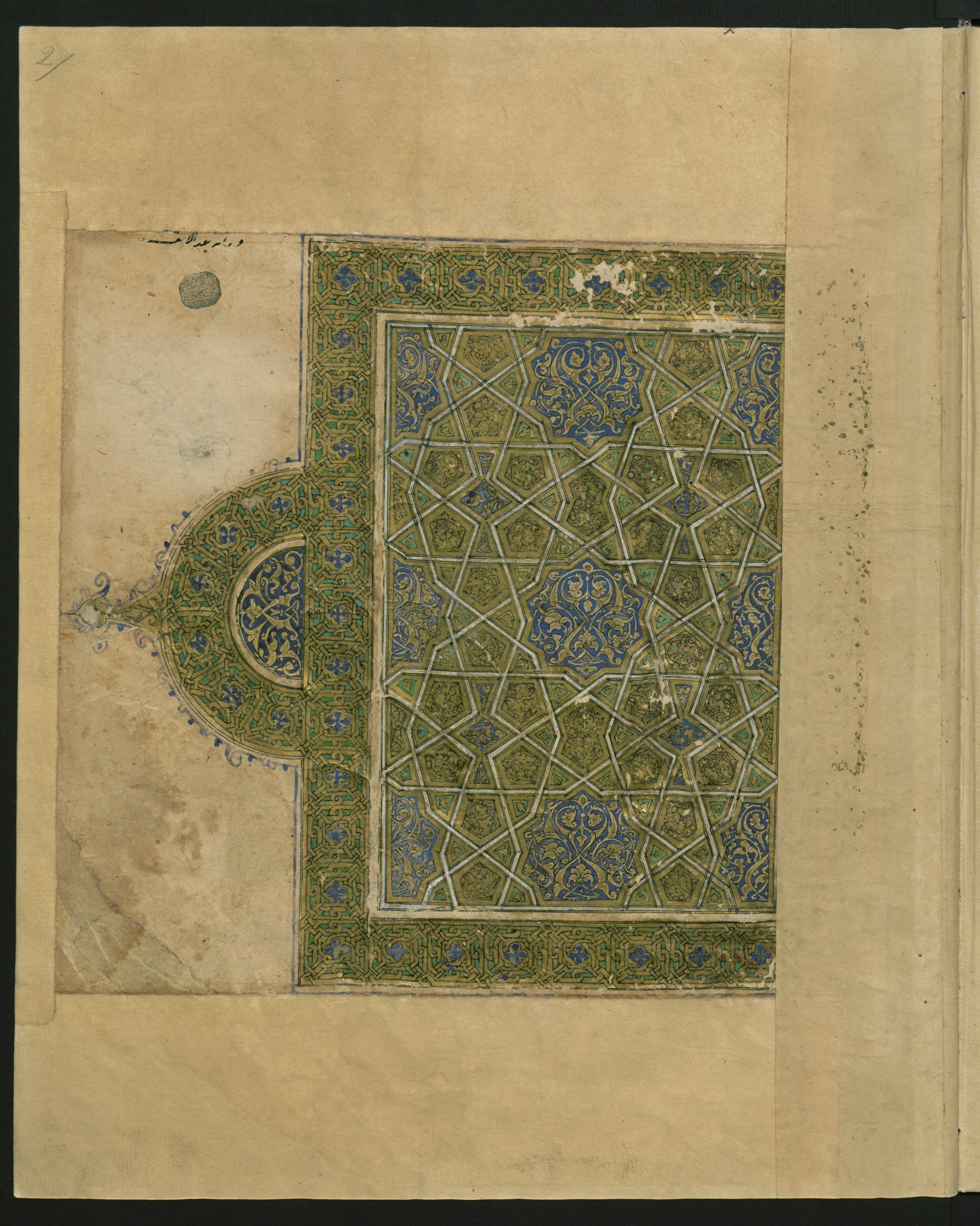
Berlin, Staatsbibliothek zu Berlin, Landberg 822 (Ahlwardt 914) (Scan 111)
This manuscript is a rare case where a Quranic codex is precisely dated by a colophon (completed on May 5, 1204 AD) and the scribe, al-Faḍl b. ʿUmar ar-Rāʾiḍ, is a known Iraqi scholar mentioned in Muslim scholarly literature. It also contains an exegetical compilation detailing circumstances of revelation, abrogated verses, and variant readings.

Berlin, Staatsbibliothek zu Berlin, Landberg 822 (Ahlwardt 914) (Scan 112)
This manuscript is a rare case where a Quranic codex is precisely dated by a colophon (completed on May 5, 1204 AD) and the scribe, al-Faḍl b. ʿUmar ar-Rāʾiḍ, is a known Iraqi scholar mentioned in Muslim scholarly literature. It also contains an exegetical compilation detailing circumstances of revelation, abrogated verses, and variant readings.
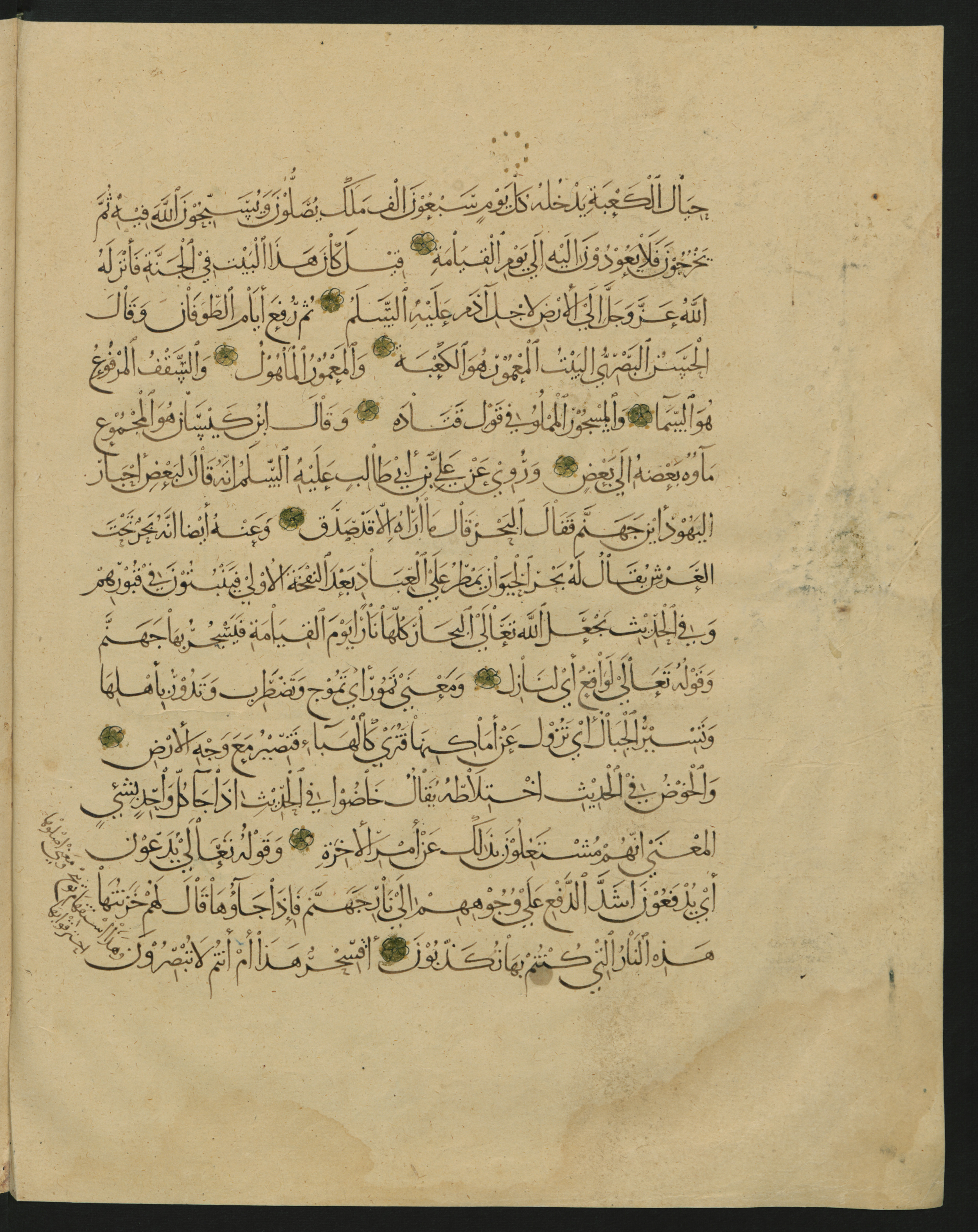
Berlin, Staatsbibliothek zu Berlin, Landberg 822 (Ahlwardt 914) (Scan 113)
This manuscript is a rare case where a Quranic codex is precisely dated by a colophon (completed on May 5, 1204 AD) and the scribe, al-Faḍl b. ʿUmar ar-Rāʾiḍ, is a known Iraqi scholar mentioned in Muslim scholarly literature. It also contains an exegetical compilation detailing circumstances of revelation, abrogated verses, and variant readings.
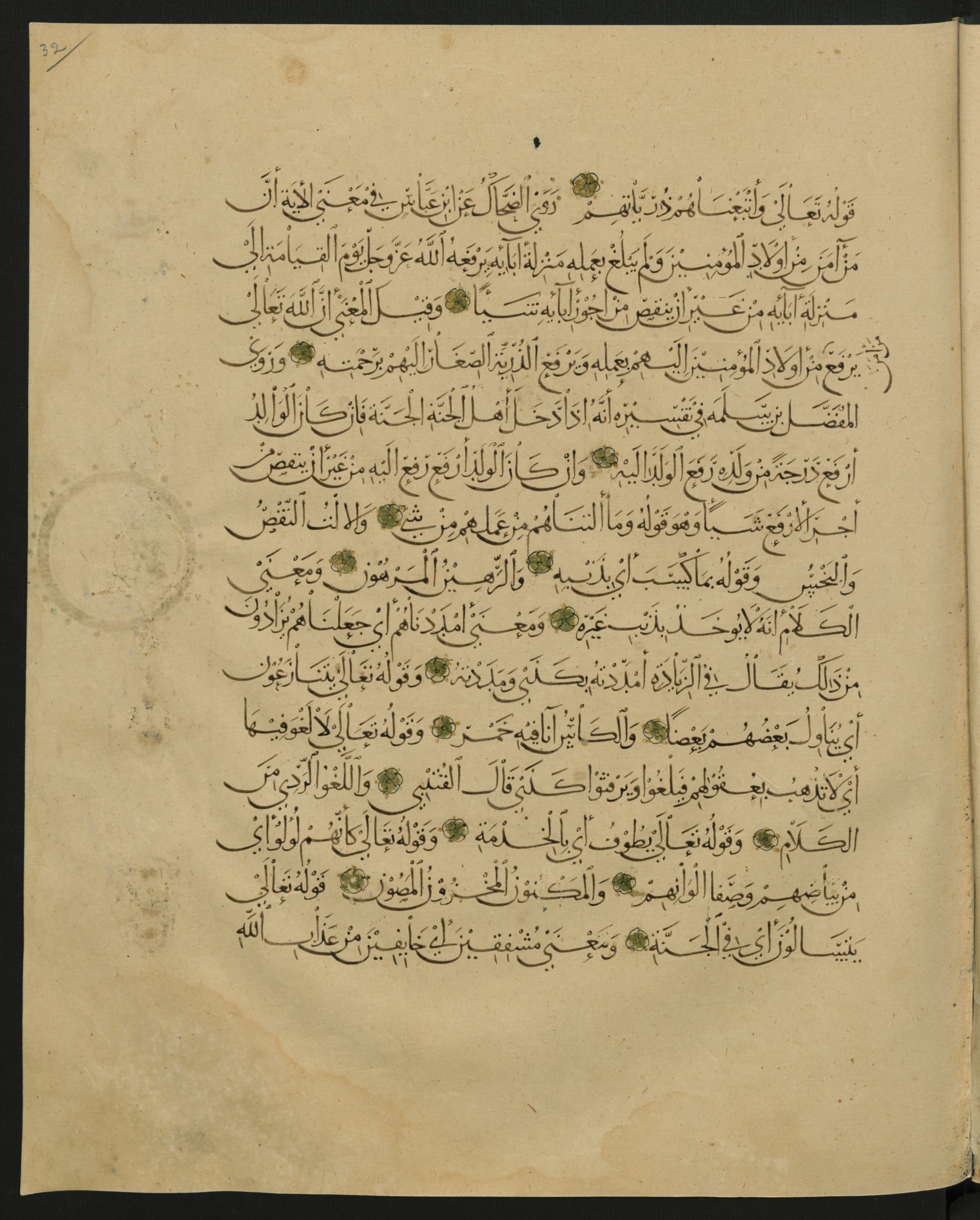
Berlin, Staatsbibliothek zu Berlin, Landberg 822 (Ahlwardt 914) (Scan 114)
This manuscript is a rare case where a Quranic codex is precisely dated by a colophon (completed on May 5, 1204 AD) and the scribe, al-Faḍl b. ʿUmar ar-Rāʾiḍ, is a known Iraqi scholar mentioned in Muslim scholarly literature. It also contains an exegetical compilation detailing circumstances of revelation, abrogated verses, and variant readings.
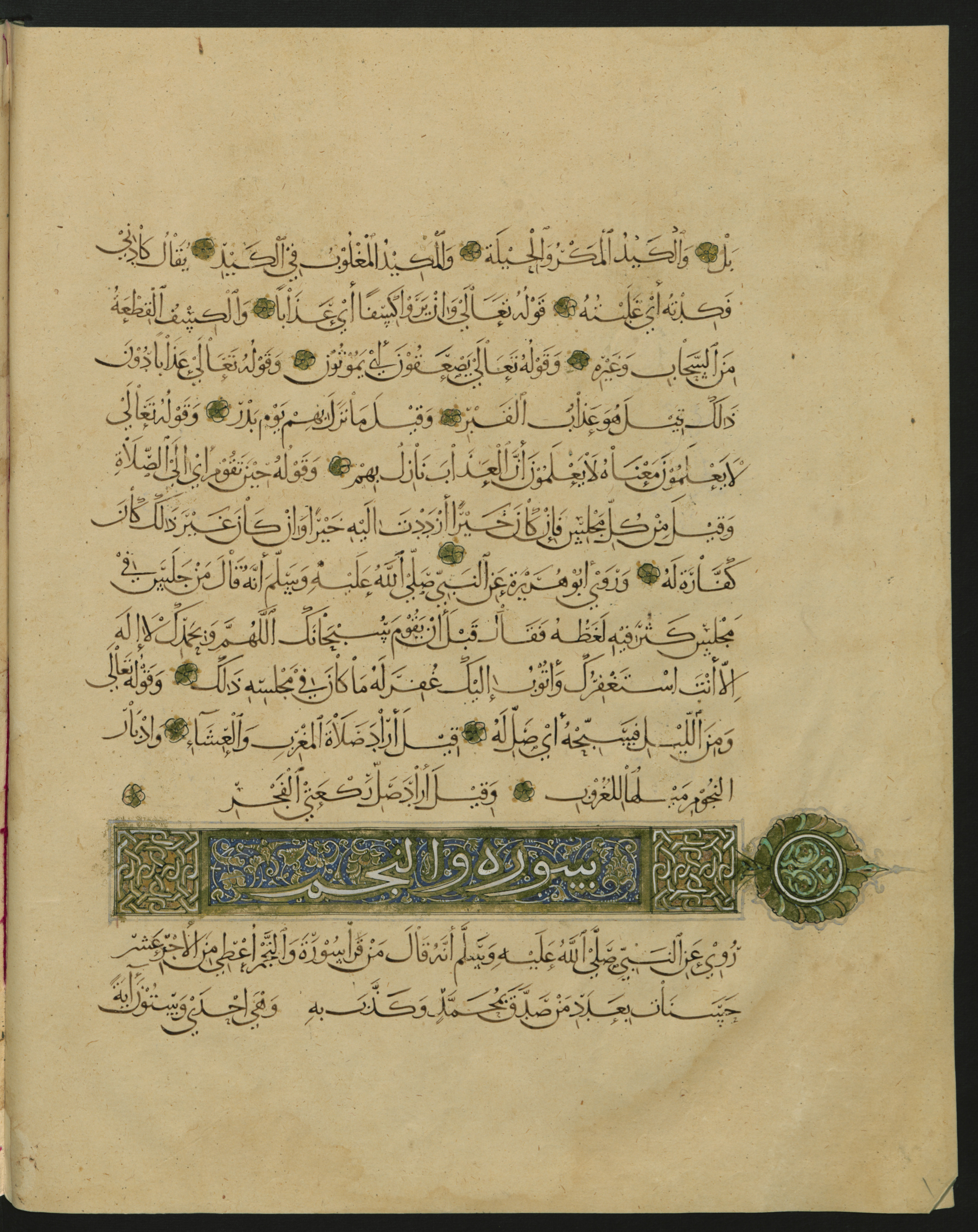
Berlin, Staatsbibliothek zu Berlin, Landberg 822 (Ahlwardt 914) (Scan 115)
This manuscript is a rare case where a Quranic codex is precisely dated by a colophon (completed on May 5, 1204 AD) and the scribe, al-Faḍl b. ʿUmar ar-Rāʾiḍ, is a known Iraqi scholar mentioned in Muslim scholarly literature. It also contains an exegetical compilation detailing circumstances of revelation, abrogated verses, and variant readings.
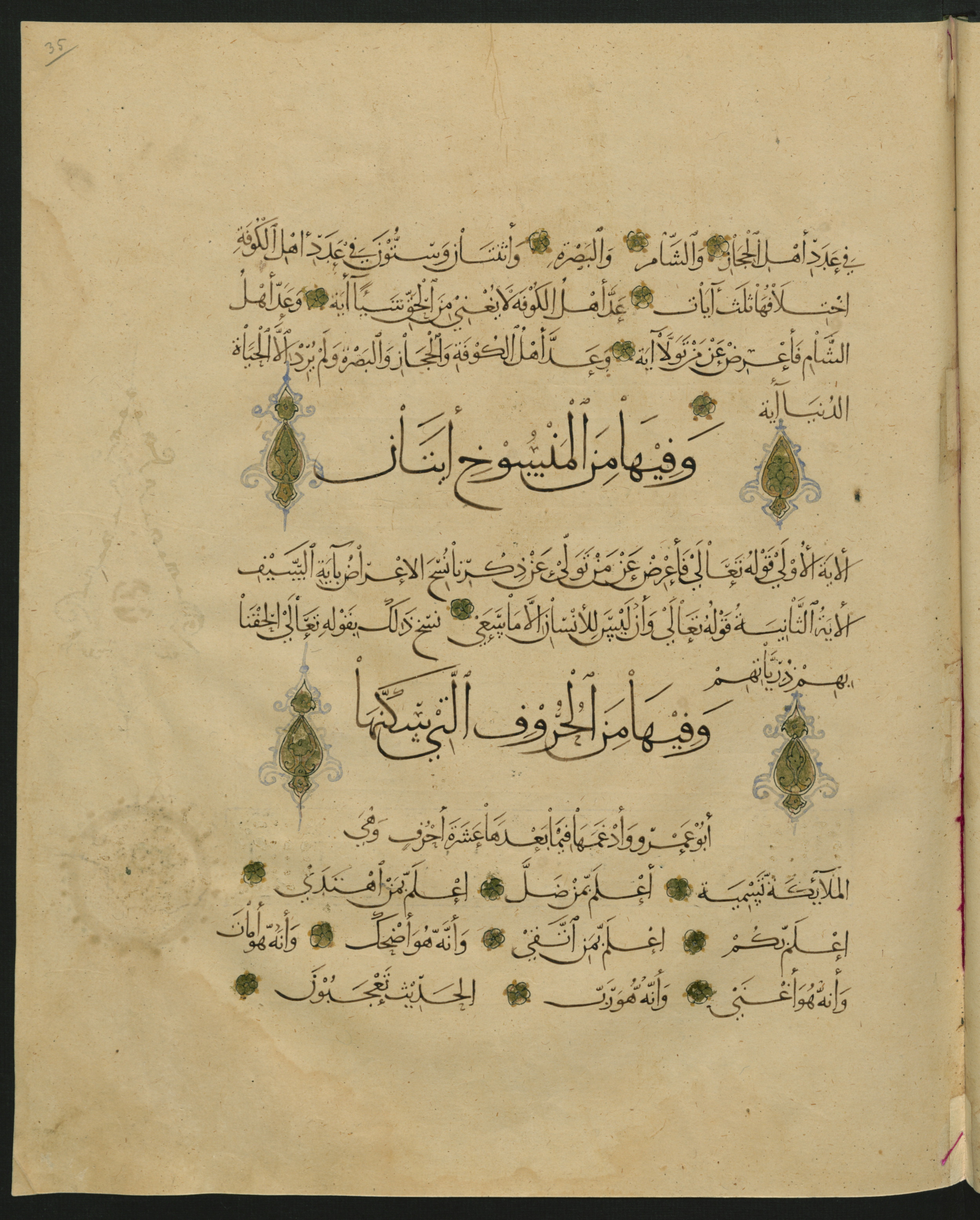
Berlin, Staatsbibliothek zu Berlin, Landberg 822 (Ahlwardt 914) (Scan 116)
This manuscript is a rare case where a Quranic codex is precisely dated by a colophon (completed on May 5, 1204 AD) and the scribe, al-Faḍl b. ʿUmar ar-Rāʾiḍ, is a known Iraqi scholar mentioned in Muslim scholarly literature. It also contains an exegetical compilation detailing circumstances of revelation, abrogated verses, and variant readings.
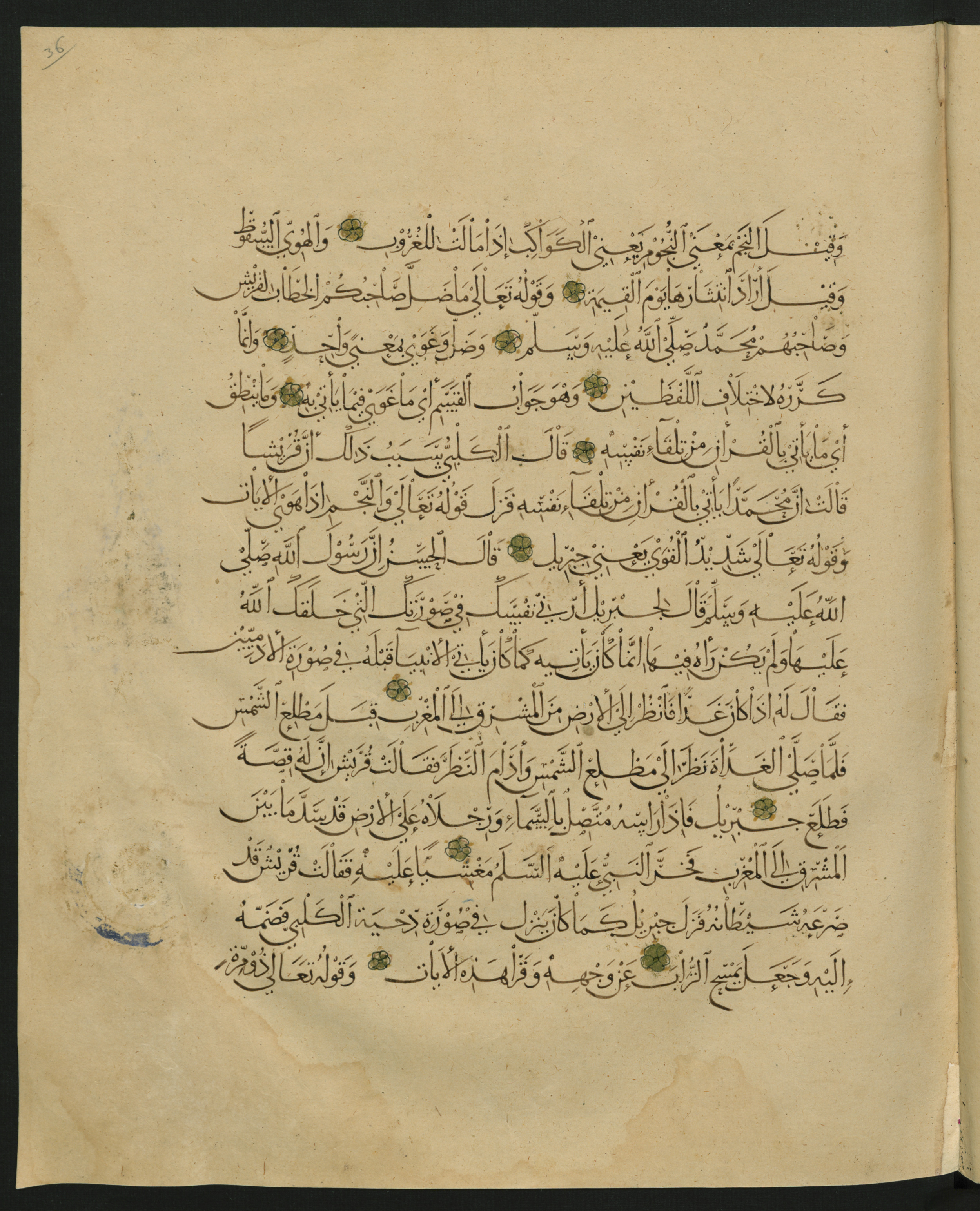
Berlin, Staatsbibliothek zu Berlin, Landberg 822 (Ahlwardt 914) (Scan 117)
This manuscript is a rare case where a Quranic codex is precisely dated by a colophon (completed on May 5, 1204 AD) and the scribe, al-Faḍl b. ʿUmar ar-Rāʾiḍ, is a known Iraqi scholar mentioned in Muslim scholarly literature. It also contains an exegetical compilation detailing circumstances of revelation, abrogated verses, and variant readings.
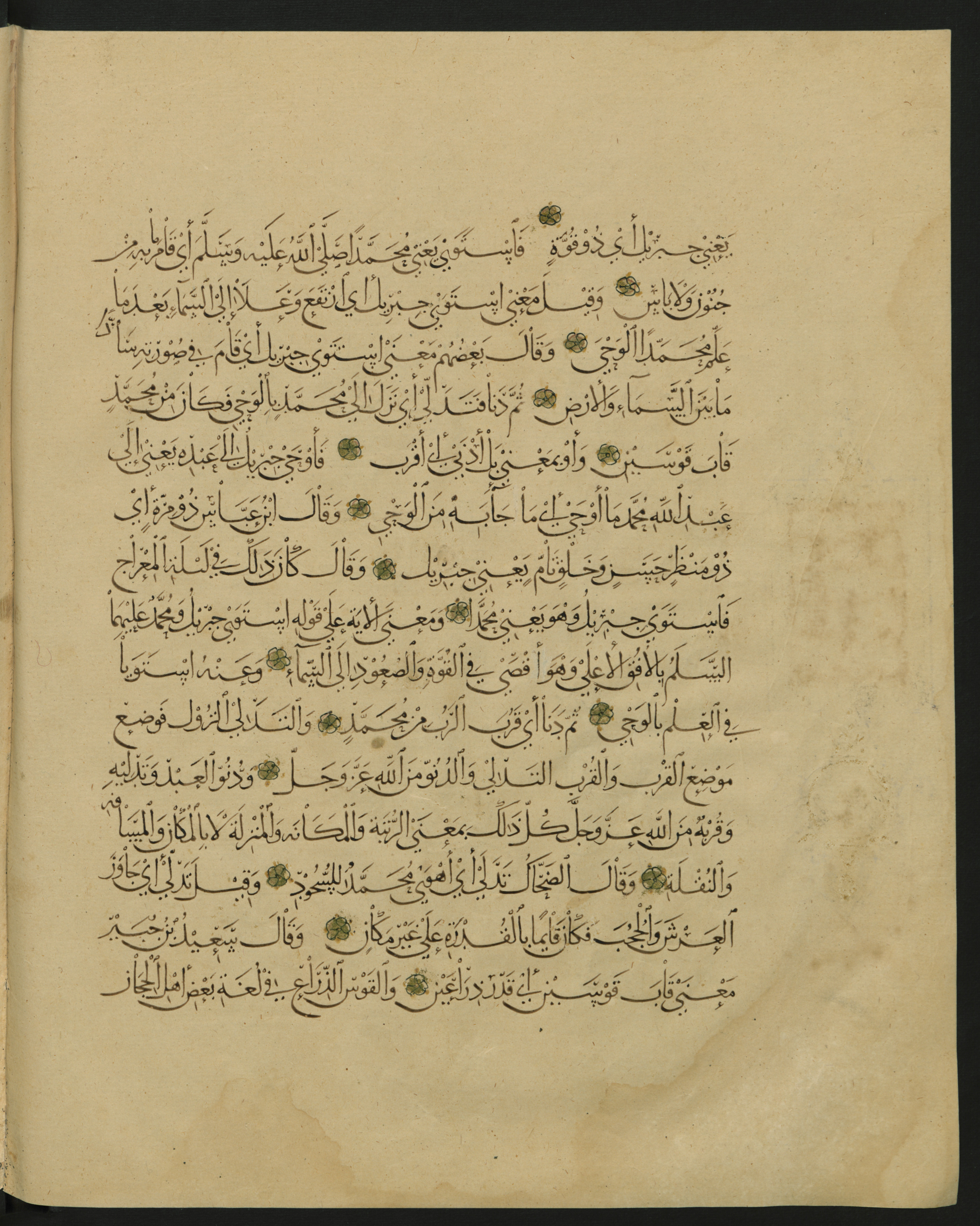
Berlin, Staatsbibliothek zu Berlin, Landberg 822 (Ahlwardt 914) (Scan 118)
This manuscript is a rare case where a Quranic codex is precisely dated by a colophon (completed on May 5, 1204 AD) and the scribe, al-Faḍl b. ʿUmar ar-Rāʾiḍ, is a known Iraqi scholar mentioned in Muslim scholarly literature. It also contains an exegetical compilation detailing circumstances of revelation, abrogated verses, and variant readings.
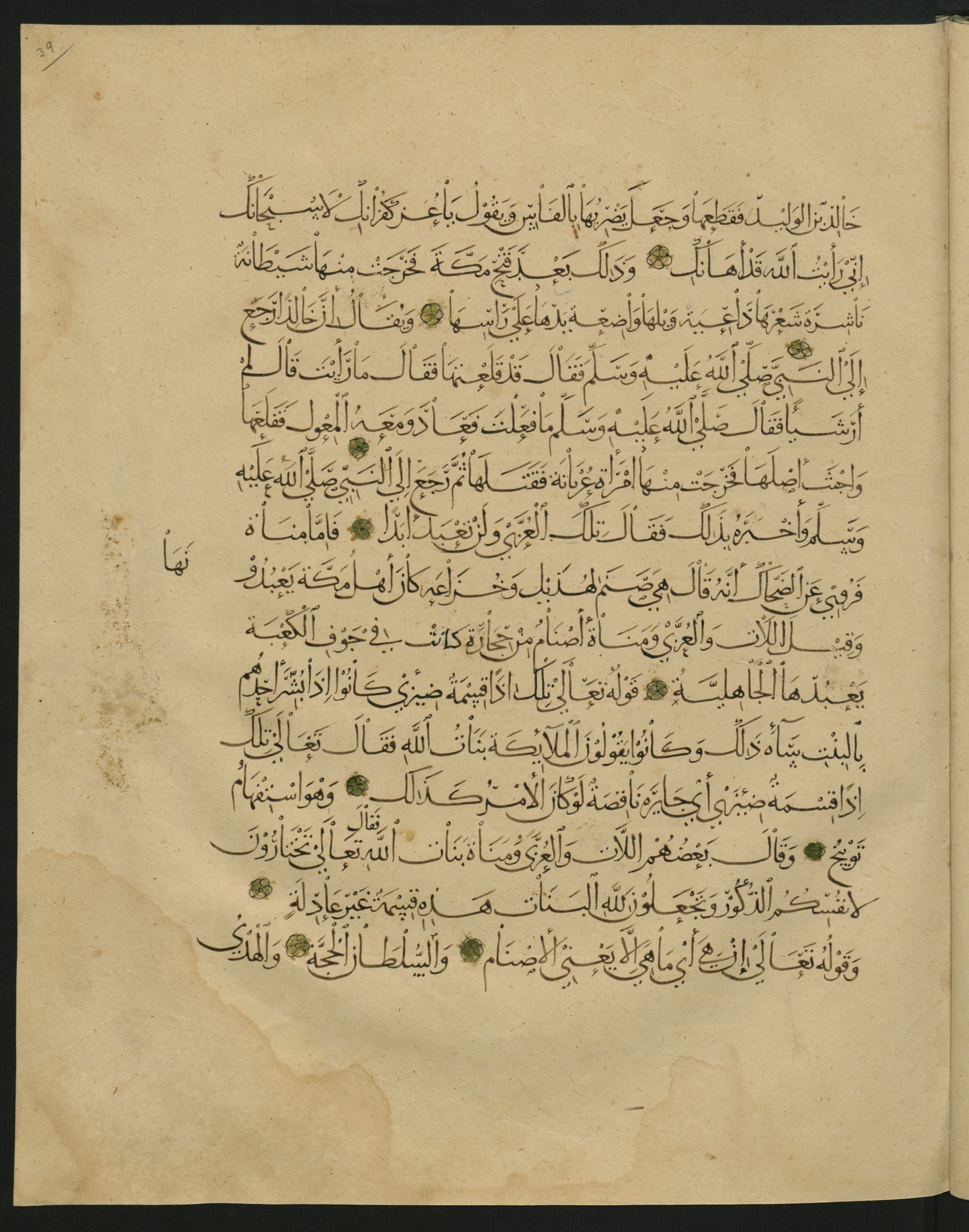
Berlin, Staatsbibliothek zu Berlin, Landberg 822 (Ahlwardt 914) (Scan 119)
This manuscript is a rare case where a Quranic codex is precisely dated by a colophon (completed on May 5, 1204 AD) and the scribe, al-Faḍl b. ʿUmar ar-Rāʾiḍ, is a known Iraqi scholar mentioned in Muslim scholarly literature. It also contains an exegetical compilation detailing circumstances of revelation, abrogated verses, and variant readings.
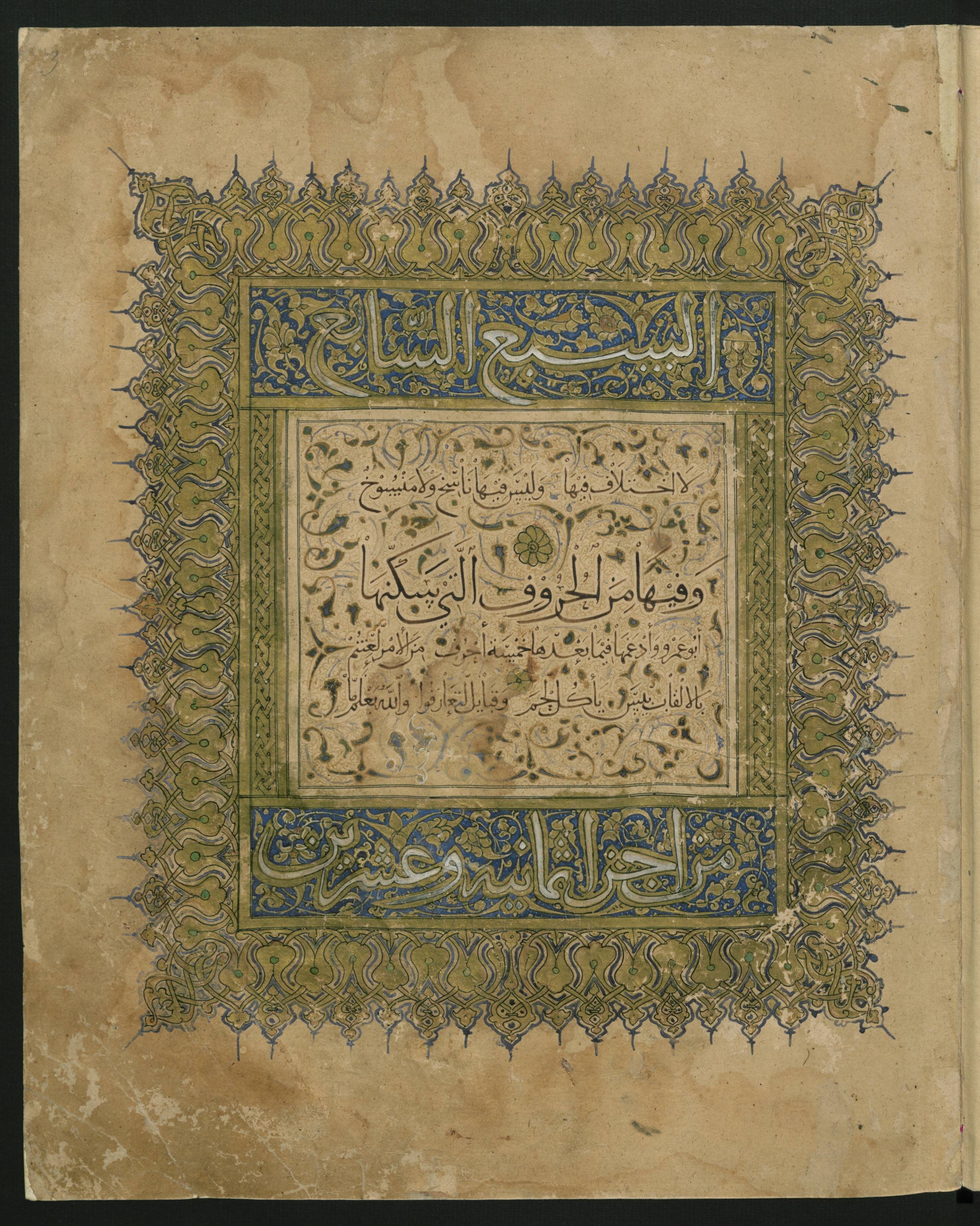
Berlin, Staatsbibliothek zu Berlin, Landberg 822 (Ahlwardt 914) (Scan 120)
This manuscript is a rare case where a Quranic codex is precisely dated by a colophon (completed on May 5, 1204 AD) and the scribe, al-Faḍl b. ʿUmar ar-Rāʾiḍ, is a known Iraqi scholar mentioned in Muslim scholarly literature. It also contains an exegetical compilation detailing circumstances of revelation, abrogated verses, and variant readings.
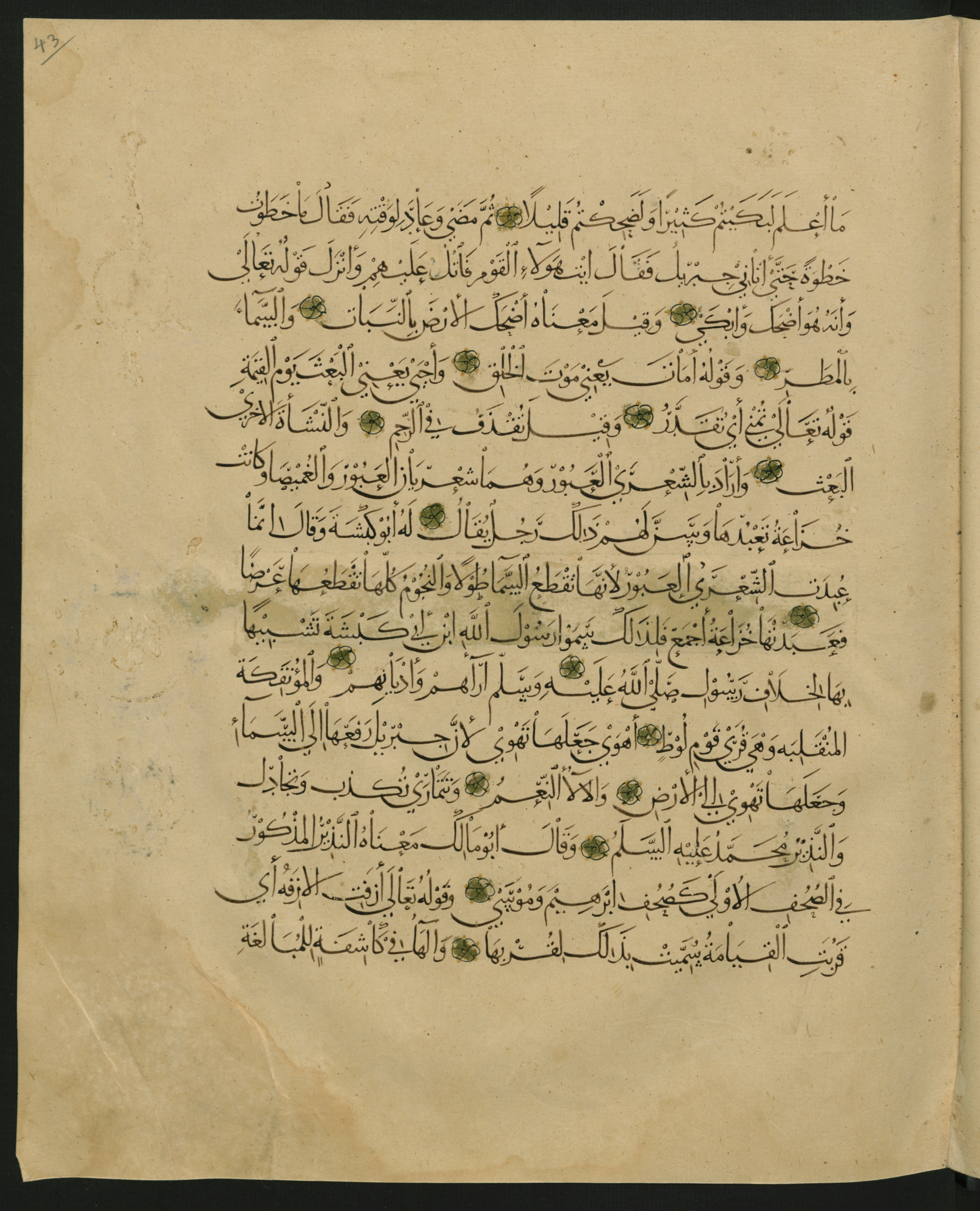
Berlin, Staatsbibliothek zu Berlin, Landberg 822 (Ahlwardt 914) (Scan 121)
This manuscript is a rare case where a Quranic codex is precisely dated by a colophon (completed on May 5, 1204 AD) and the scribe, al-Faḍl b. ʿUmar ar-Rāʾiḍ, is a known Iraqi scholar mentioned in Muslim scholarly literature. It also contains an exegetical compilation detailing circumstances of revelation, abrogated verses, and variant readings.
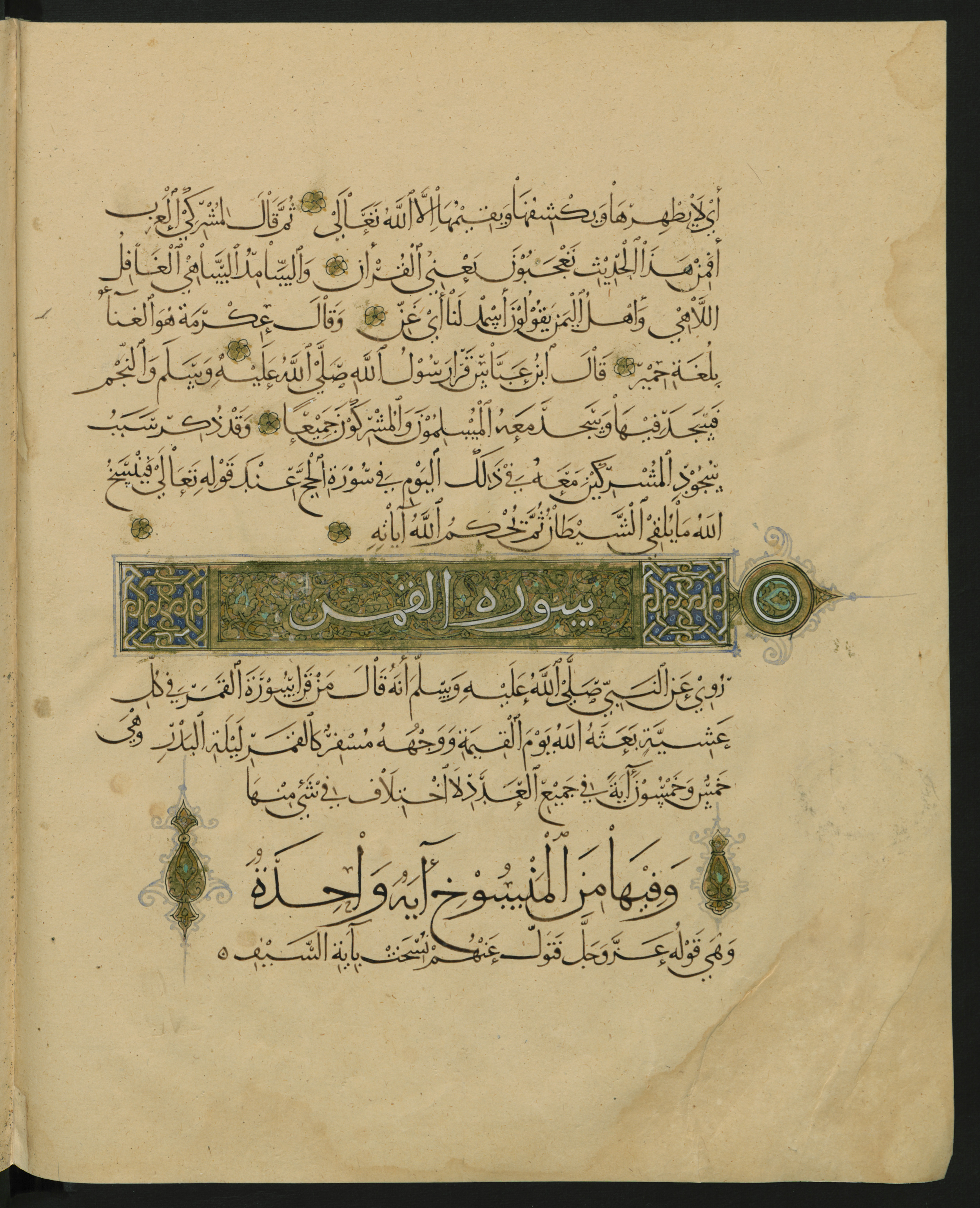
Berlin, Staatsbibliothek zu Berlin, Landberg 822 (Ahlwardt 914) (Scan 122)
This manuscript is a rare case where a Quranic codex is precisely dated by a colophon (completed on May 5, 1204 AD) and the scribe, al-Faḍl b. ʿUmar ar-Rāʾiḍ, is a known Iraqi scholar mentioned in Muslim scholarly literature. It also contains an exegetical compilation detailing circumstances of revelation, abrogated verses, and variant readings.
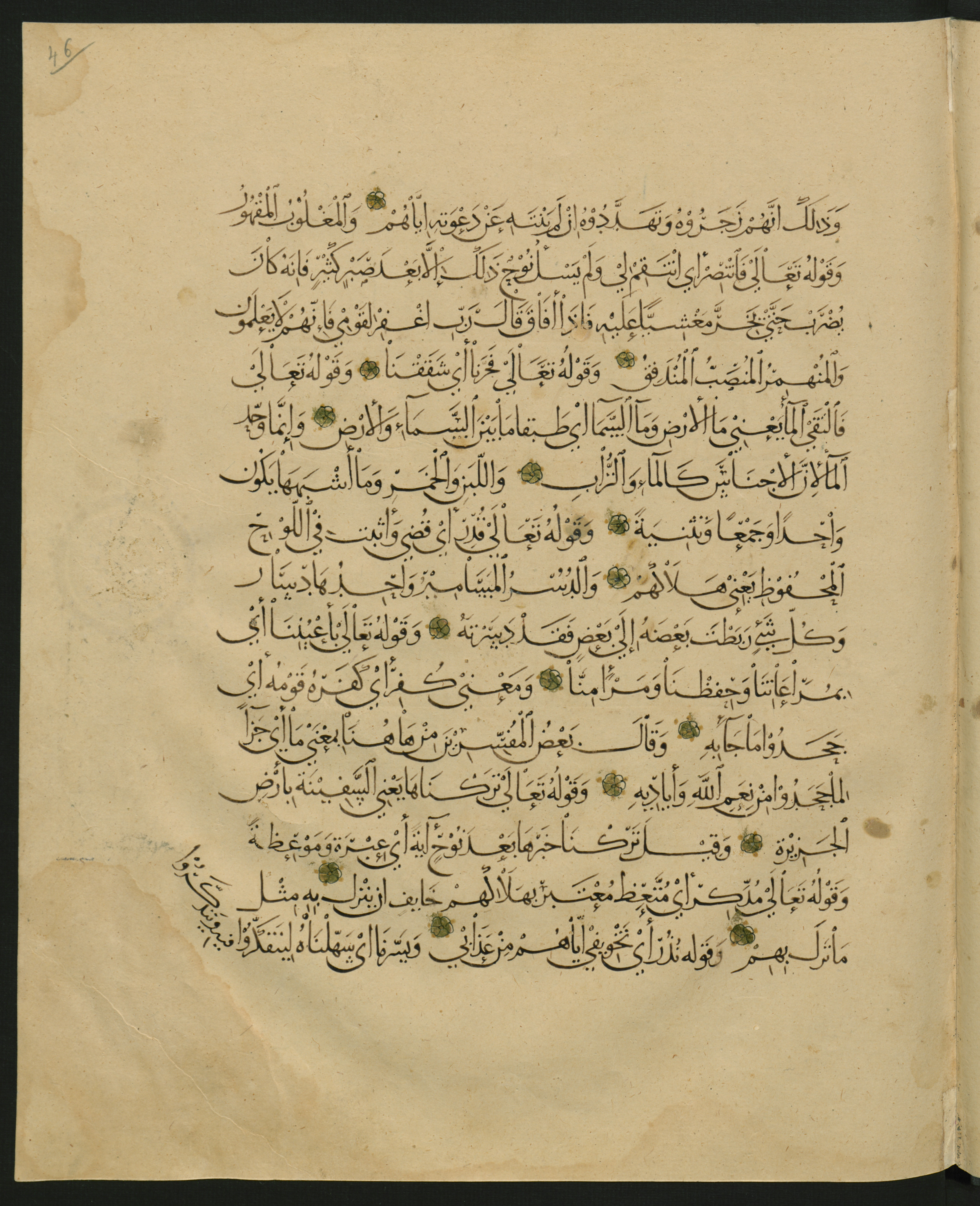
Berlin, Staatsbibliothek zu Berlin, Landberg 822 (Ahlwardt 914) (Scan 123)
This manuscript is a rare case where a Quranic codex is precisely dated by a colophon (completed on May 5, 1204 AD) and the scribe, al-Faḍl b. ʿUmar ar-Rāʾiḍ, is a known Iraqi scholar mentioned in Muslim scholarly literature. It also contains an exegetical compilation detailing circumstances of revelation, abrogated verses, and variant readings.
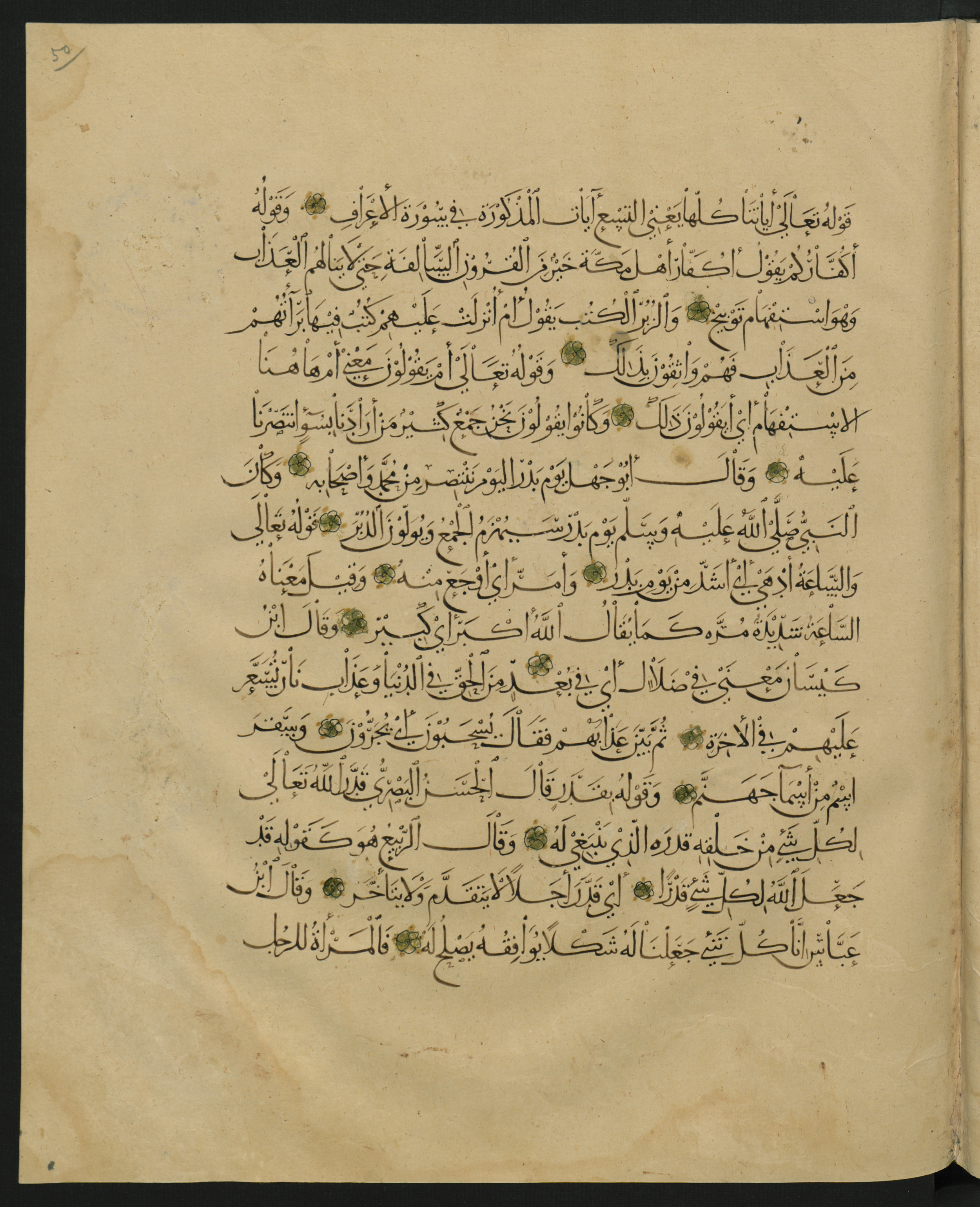
Berlin, Staatsbibliothek zu Berlin, Landberg 822 (Ahlwardt 914) (Scan 124)
This manuscript is a rare case where a Quranic codex is precisely dated by a colophon (completed on May 5, 1204 AD) and the scribe, al-Faḍl b. ʿUmar ar-Rāʾiḍ, is a known Iraqi scholar mentioned in Muslim scholarly literature. It also contains an exegetical compilation detailing circumstances of revelation, abrogated verses, and variant readings.
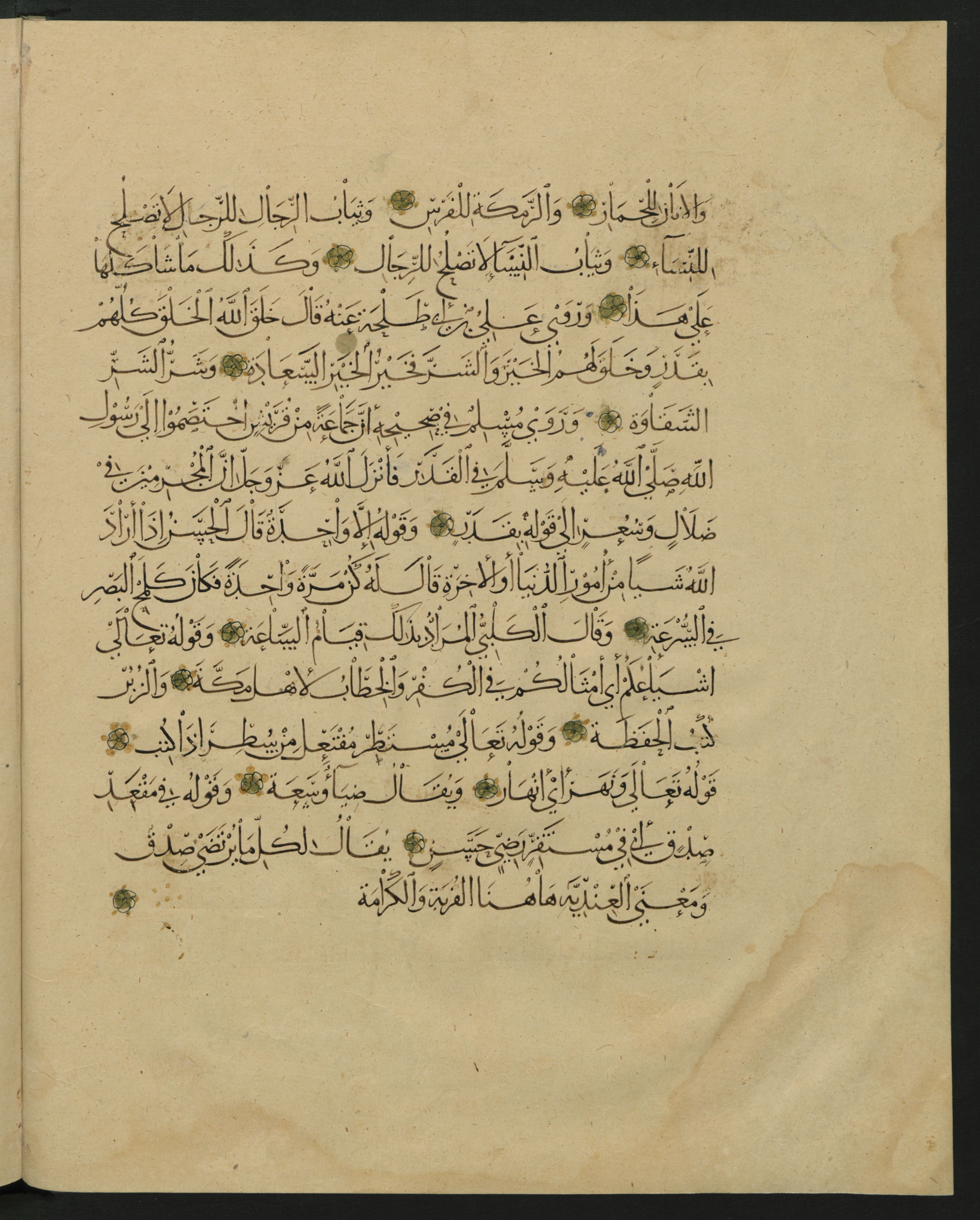
Berlin, Staatsbibliothek zu Berlin, Landberg 822 (Ahlwardt 914) (Scan 125)
This manuscript is a rare case where a Quranic codex is precisely dated by a colophon (completed on May 5, 1204 AD) and the scribe, al-Faḍl b. ʿUmar ar-Rāʾiḍ, is a known Iraqi scholar mentioned in Muslim scholarly literature. It also contains an exegetical compilation detailing circumstances of revelation, abrogated verses, and variant readings.
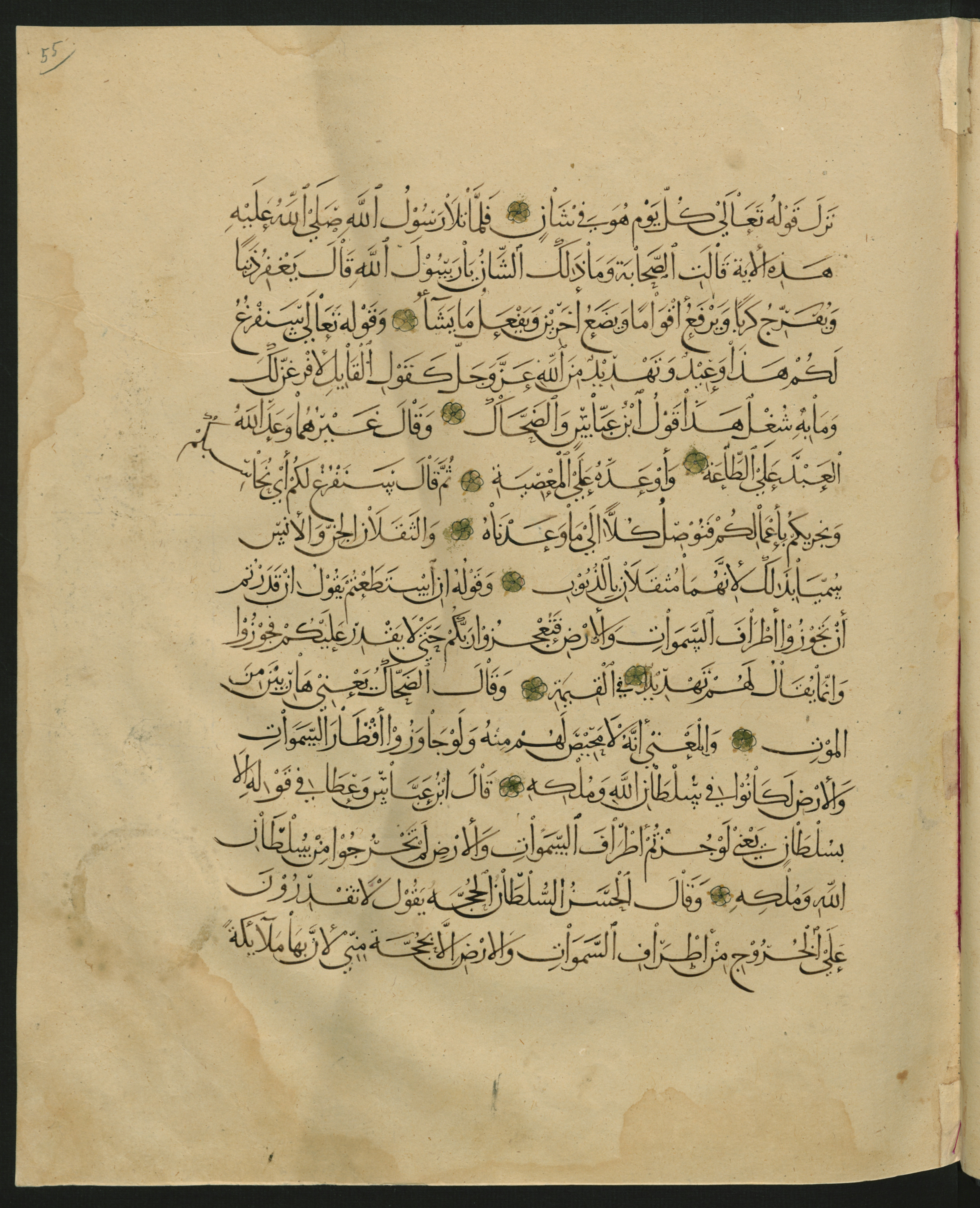
Berlin, Staatsbibliothek zu Berlin, Landberg 822 (Ahlwardt 914) (Scan 126)
This manuscript is a rare case where a Quranic codex is precisely dated by a colophon (completed on May 5, 1204 AD) and the scribe, al-Faḍl b. ʿUmar ar-Rāʾiḍ, is a known Iraqi scholar mentioned in Muslim scholarly literature. It also contains an exegetical compilation detailing circumstances of revelation, abrogated verses, and variant readings.
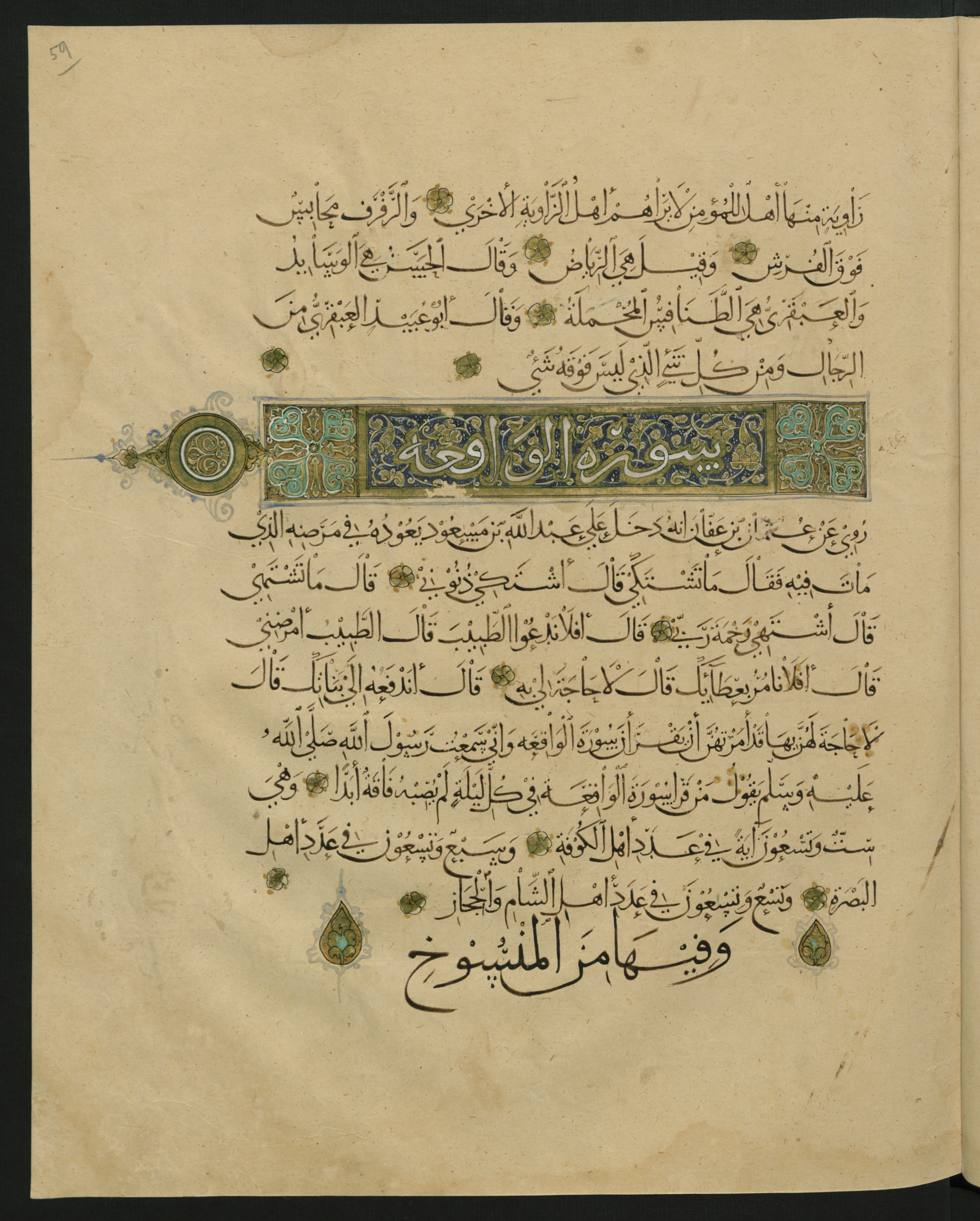
Berlin, Staatsbibliothek zu Berlin, Landberg 822 (Ahlwardt 914) (Scan 127)
This manuscript is a rare case where a Quranic codex is precisely dated by a colophon (completed on May 5, 1204 AD) and the scribe, al-Faḍl b. ʿUmar ar-Rāʾiḍ, is a known Iraqi scholar mentioned in Muslim scholarly literature. It also contains an exegetical compilation detailing circumstances of revelation, abrogated verses, and variant readings.
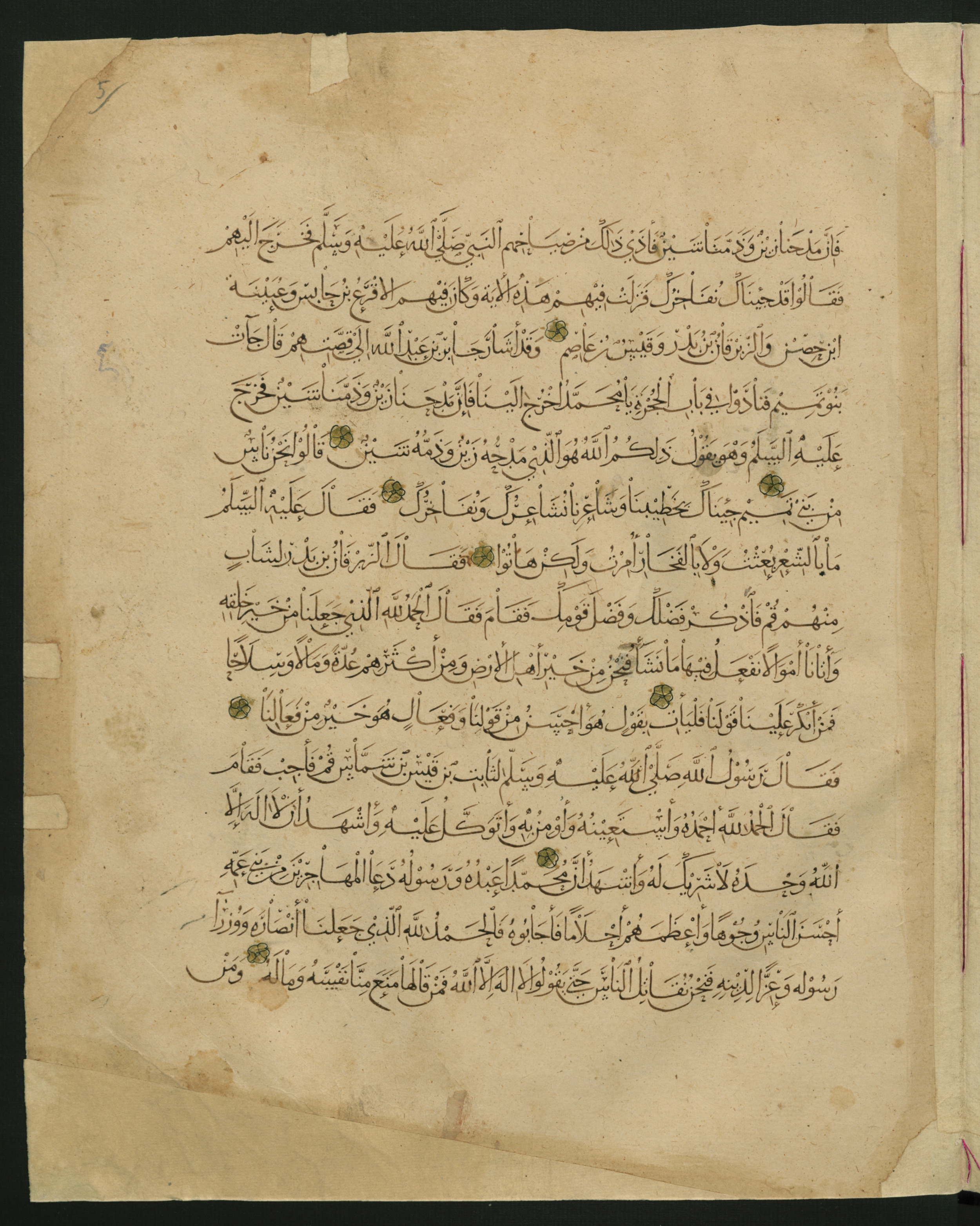
Berlin, Staatsbibliothek zu Berlin, Landberg 822 (Ahlwardt 914) (Scan 128)
This manuscript is a rare case where a Quranic codex is precisely dated by a colophon (completed on May 5, 1204 AD) and the scribe, al-Faḍl b. ʿUmar ar-Rāʾiḍ, is a known Iraqi scholar mentioned in Muslim scholarly literature. It also contains an exegetical compilation detailing circumstances of revelation, abrogated verses, and variant readings.
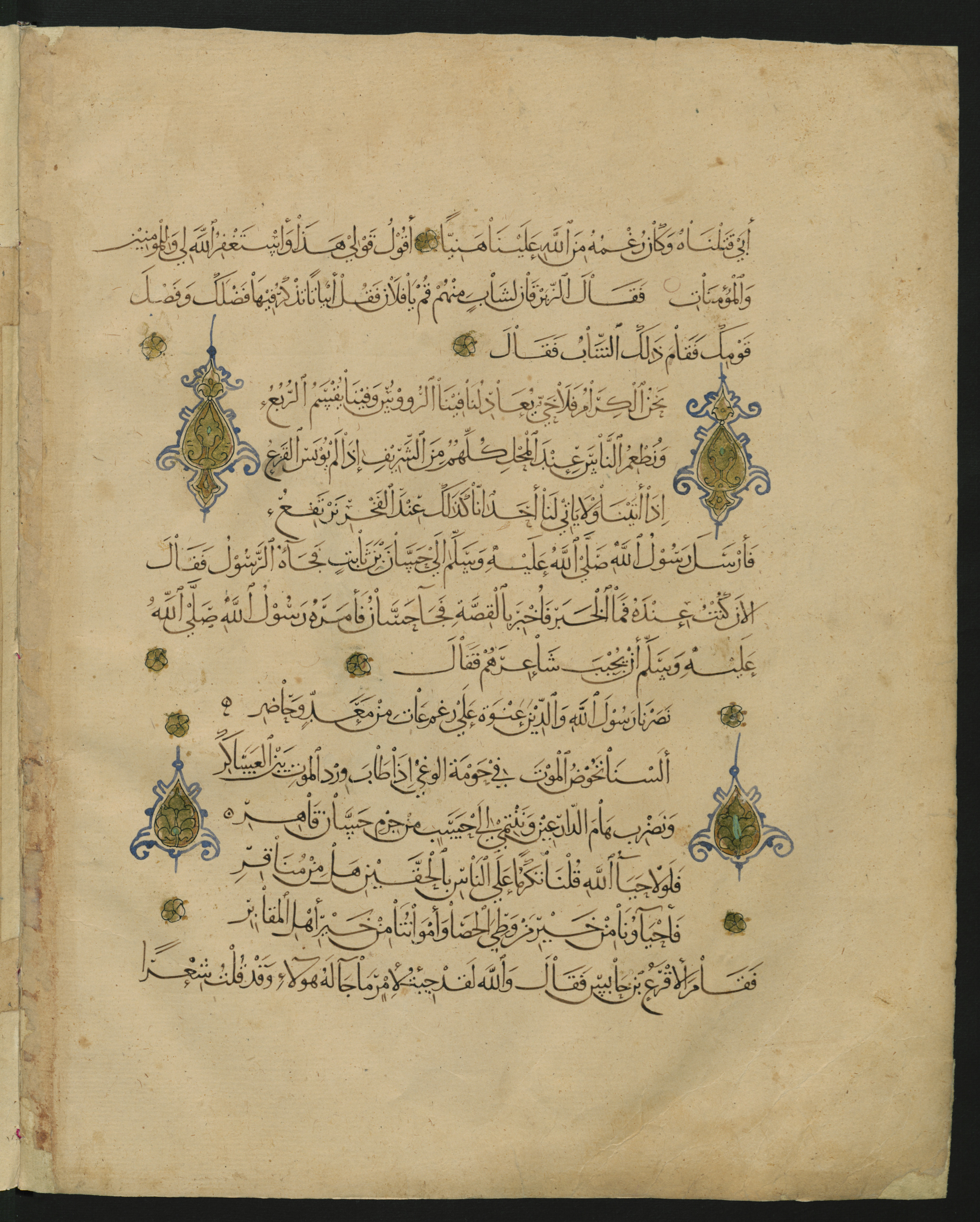
Berlin, Staatsbibliothek zu Berlin, Landberg 822 (Ahlwardt 914) (Scan 129)
This manuscript is a rare case where a Quranic codex is precisely dated by a colophon (completed on May 5, 1204 AD) and the scribe, al-Faḍl b. ʿUmar ar-Rāʾiḍ, is a known Iraqi scholar mentioned in Muslim scholarly literature. It also contains an exegetical compilation detailing circumstances of revelation, abrogated verses, and variant readings.
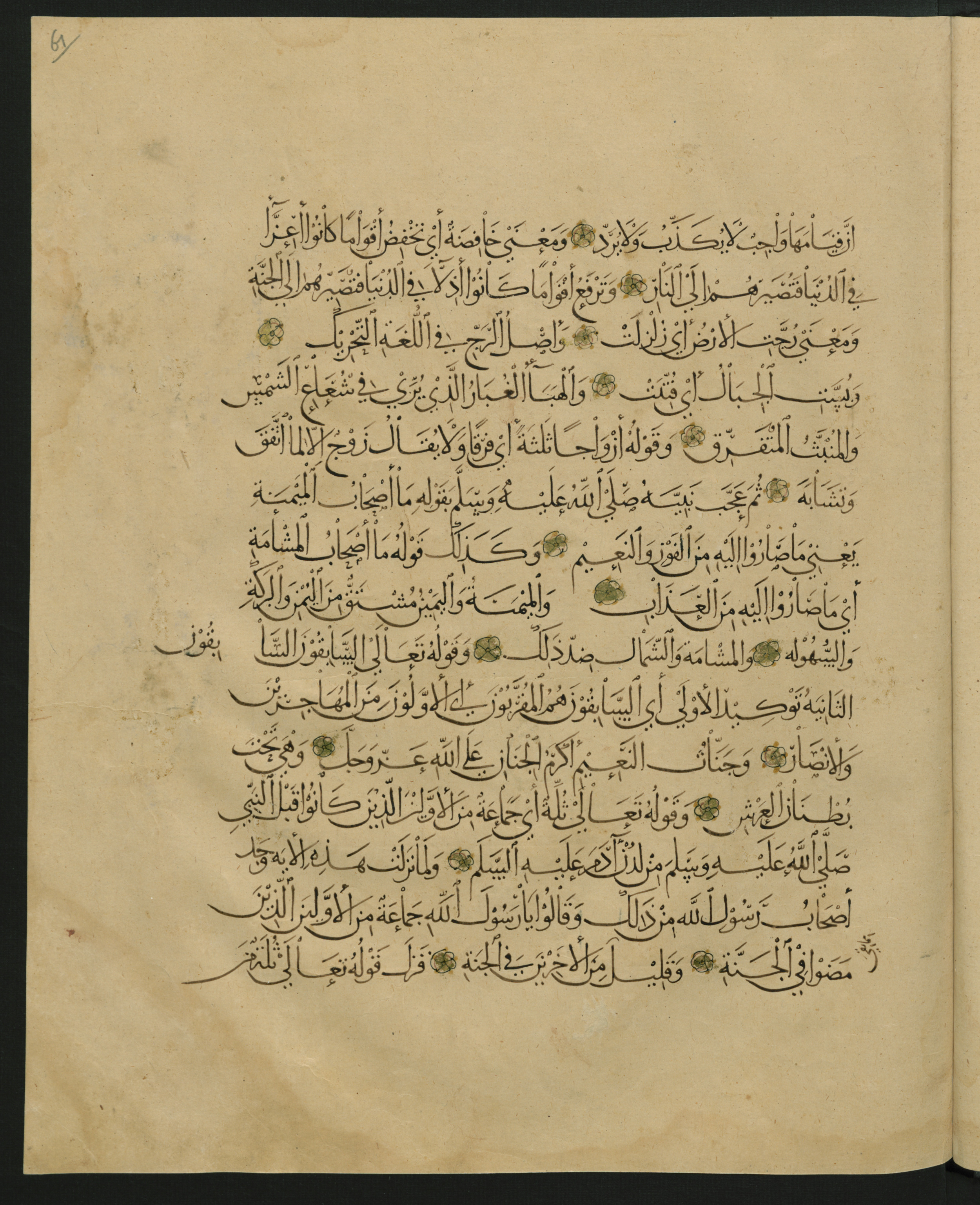
Berlin, Staatsbibliothek zu Berlin, Landberg 822 (Ahlwardt 914) (Scan 130)
This manuscript is a rare case where a Quranic codex is precisely dated by a colophon (completed on May 5, 1204 AD) and the scribe, al-Faḍl b. ʿUmar ar-Rāʾiḍ, is a known Iraqi scholar mentioned in Muslim scholarly literature. It also contains an exegetical compilation detailing circumstances of revelation, abrogated verses, and variant readings.
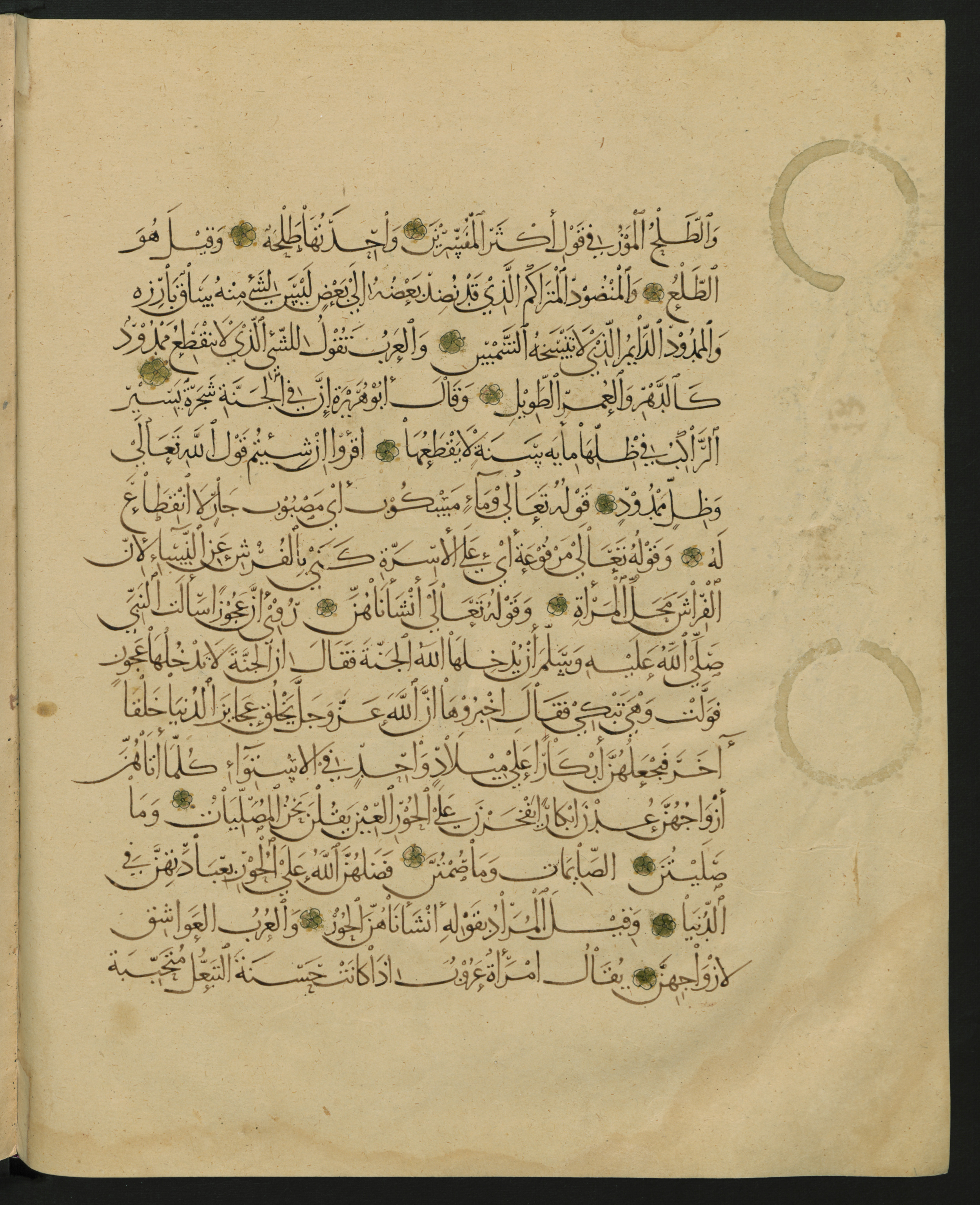
Berlin, Staatsbibliothek zu Berlin, Landberg 822 (Ahlwardt 914) (Scan 131)
This manuscript is a rare case where a Quranic codex is precisely dated by a colophon (completed on May 5, 1204 AD) and the scribe, al-Faḍl b. ʿUmar ar-Rāʾiḍ, is a known Iraqi scholar mentioned in Muslim scholarly literature. It also contains an exegetical compilation detailing circumstances of revelation, abrogated verses, and variant readings.
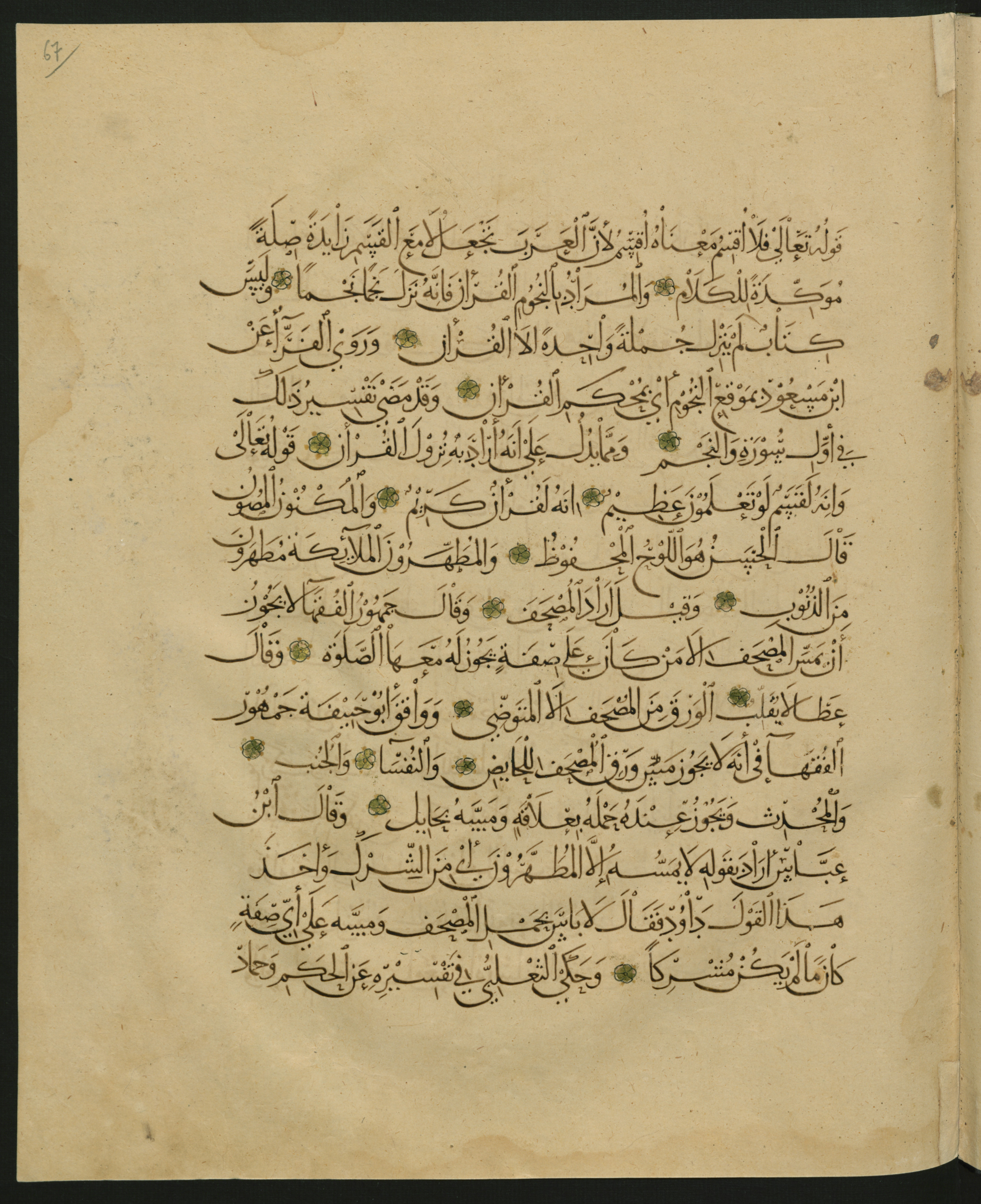
Berlin, Staatsbibliothek zu Berlin, Landberg 822 (Ahlwardt 914) (Scan 132)
This manuscript is a rare case where a Quranic codex is precisely dated by a colophon (completed on May 5, 1204 AD) and the scribe, al-Faḍl b. ʿUmar ar-Rāʾiḍ, is a known Iraqi scholar mentioned in Muslim scholarly literature. It also contains an exegetical compilation detailing circumstances of revelation, abrogated verses, and variant readings.
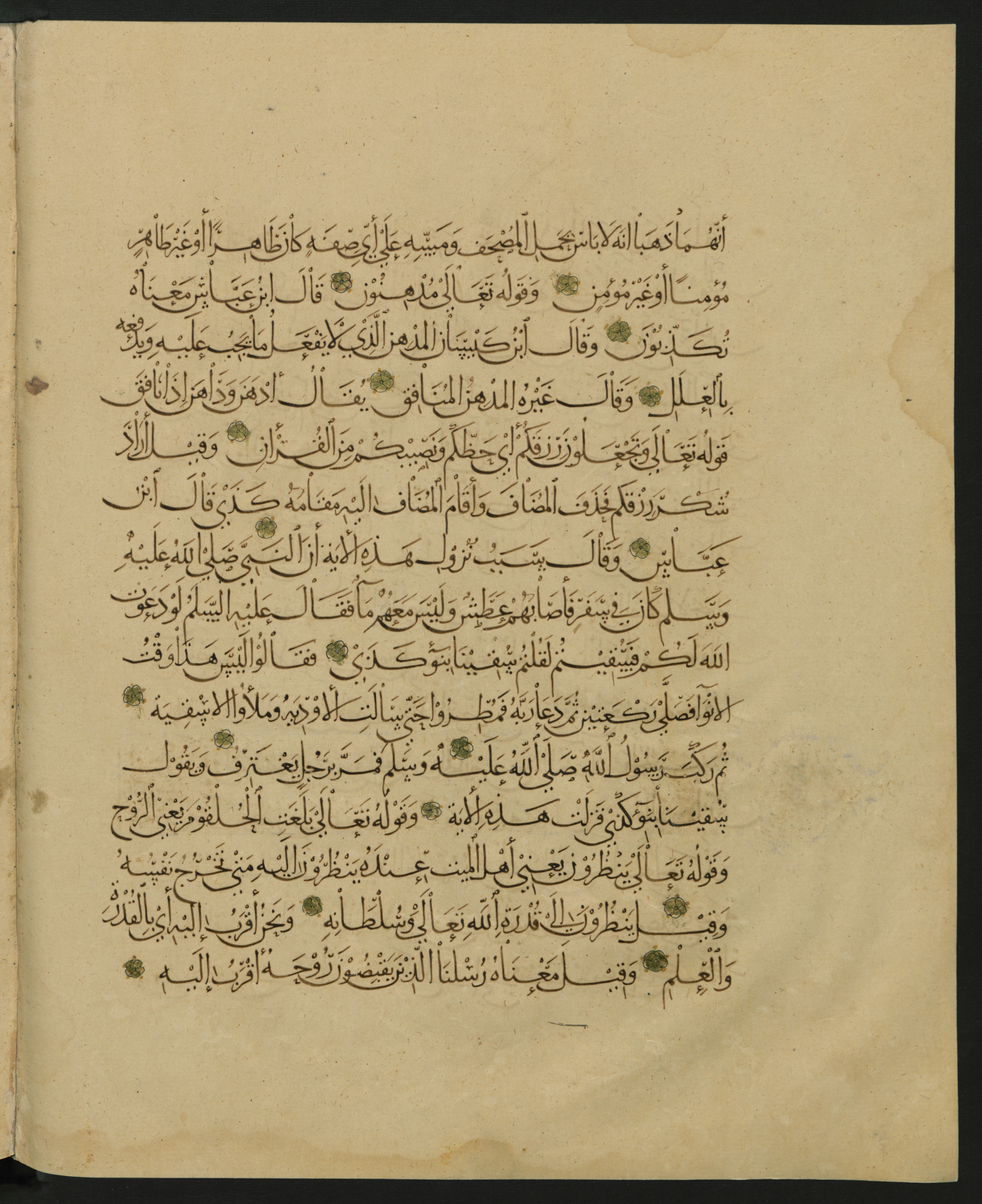
Berlin, Staatsbibliothek zu Berlin, Landberg 822 (Ahlwardt 914) (Scan 133)
This manuscript is a rare case where a Quranic codex is precisely dated by a colophon (completed on May 5, 1204 AD) and the scribe, al-Faḍl b. ʿUmar ar-Rāʾiḍ, is a known Iraqi scholar mentioned in Muslim scholarly literature. It also contains an exegetical compilation detailing circumstances of revelation, abrogated verses, and variant readings.
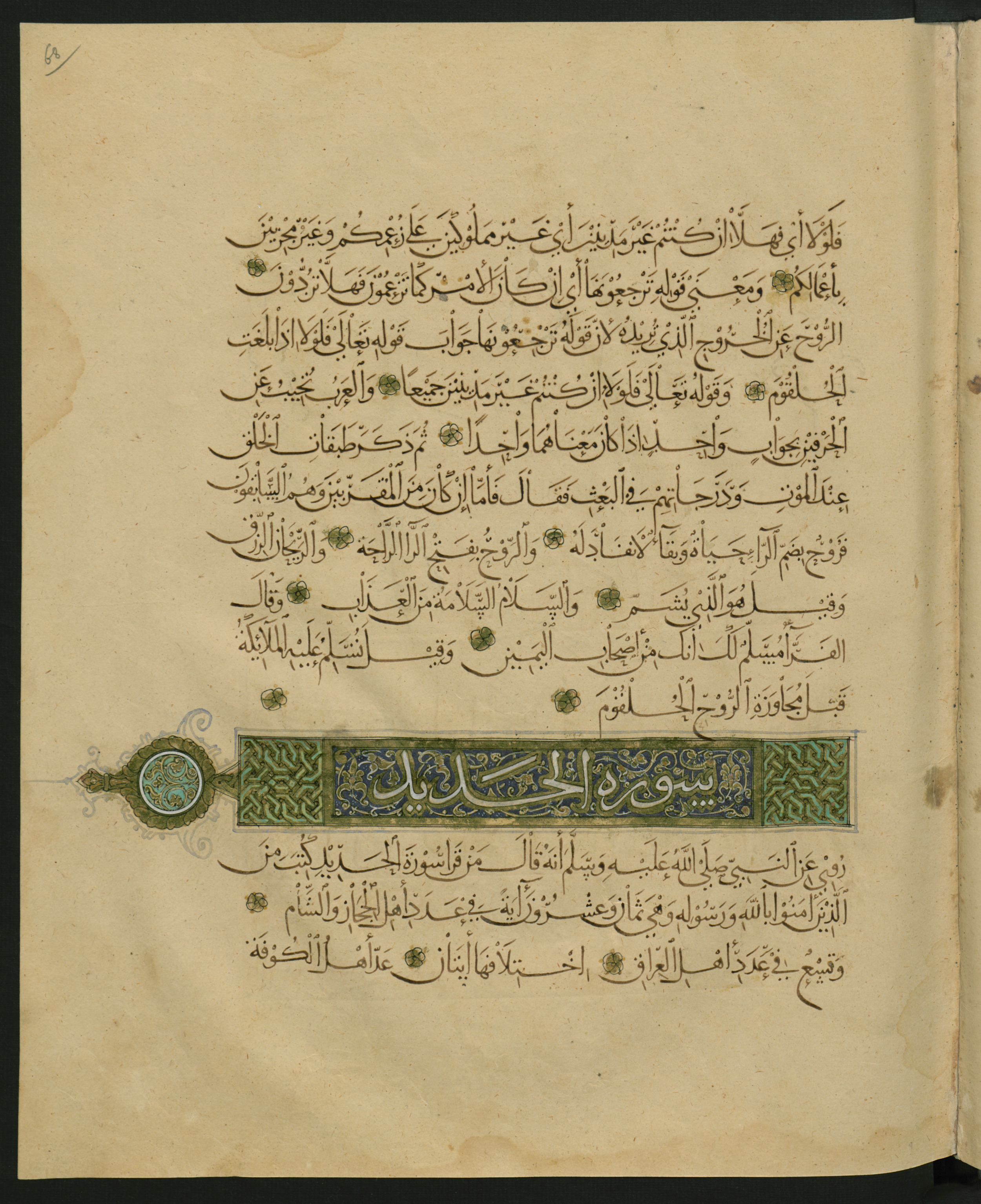
Berlin, Staatsbibliothek zu Berlin, Landberg 822 (Ahlwardt 914) (Scan 134)
This manuscript is a rare case where a Quranic codex is precisely dated by a colophon (completed on May 5, 1204 AD) and the scribe, al-Faḍl b. ʿUmar ar-Rāʾiḍ, is a known Iraqi scholar mentioned in Muslim scholarly literature. It also contains an exegetical compilation detailing circumstances of revelation, abrogated verses, and variant readings.
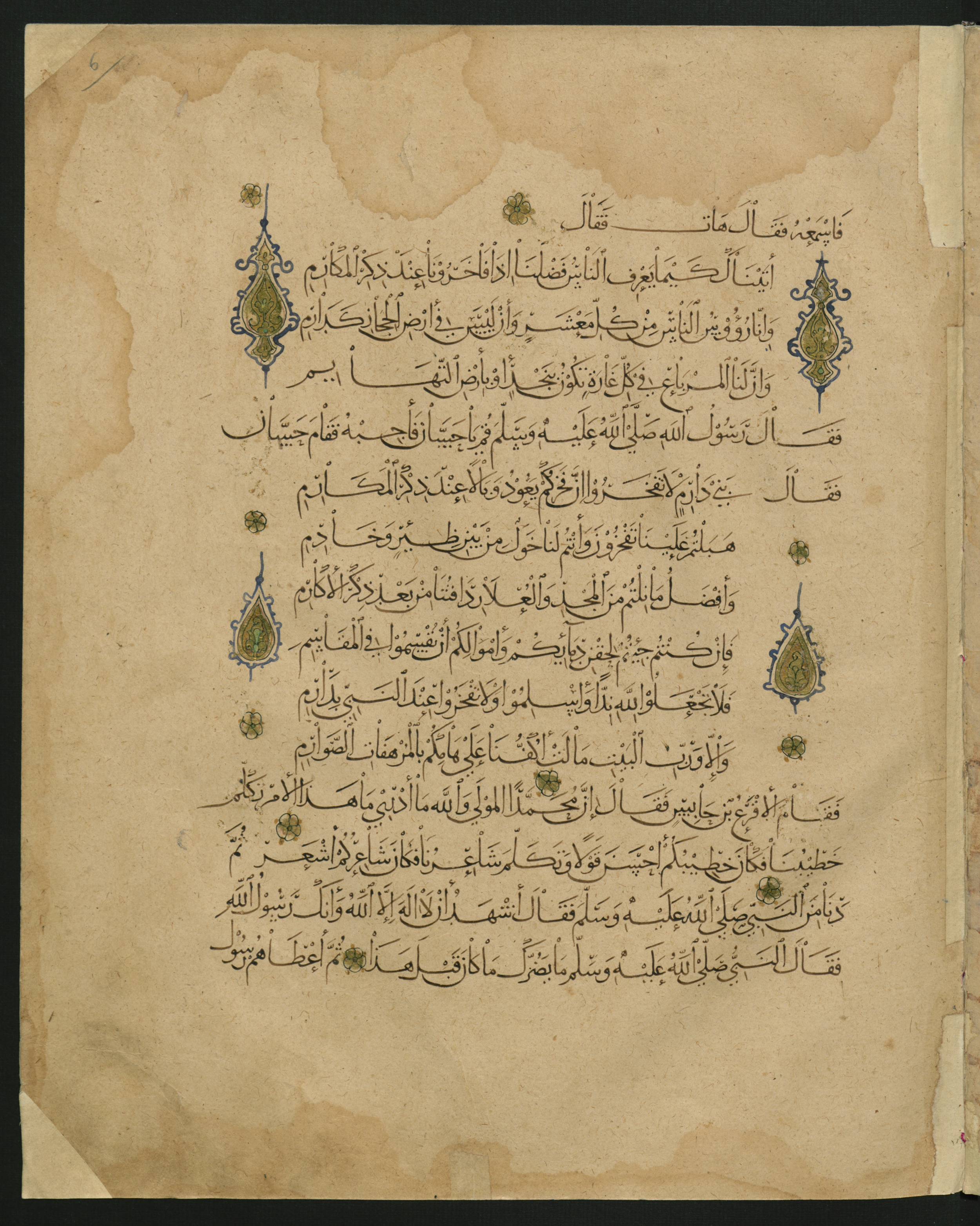
Berlin, Staatsbibliothek zu Berlin, Landberg 822 (Ahlwardt 914) (Scan 135)
This manuscript is a rare case where a Quranic codex is precisely dated by a colophon (completed on May 5, 1204 AD) and the scribe, al-Faḍl b. ʿUmar ar-Rāʾiḍ, is a known Iraqi scholar mentioned in Muslim scholarly literature. It also contains an exegetical compilation detailing circumstances of revelation, abrogated verses, and variant readings.
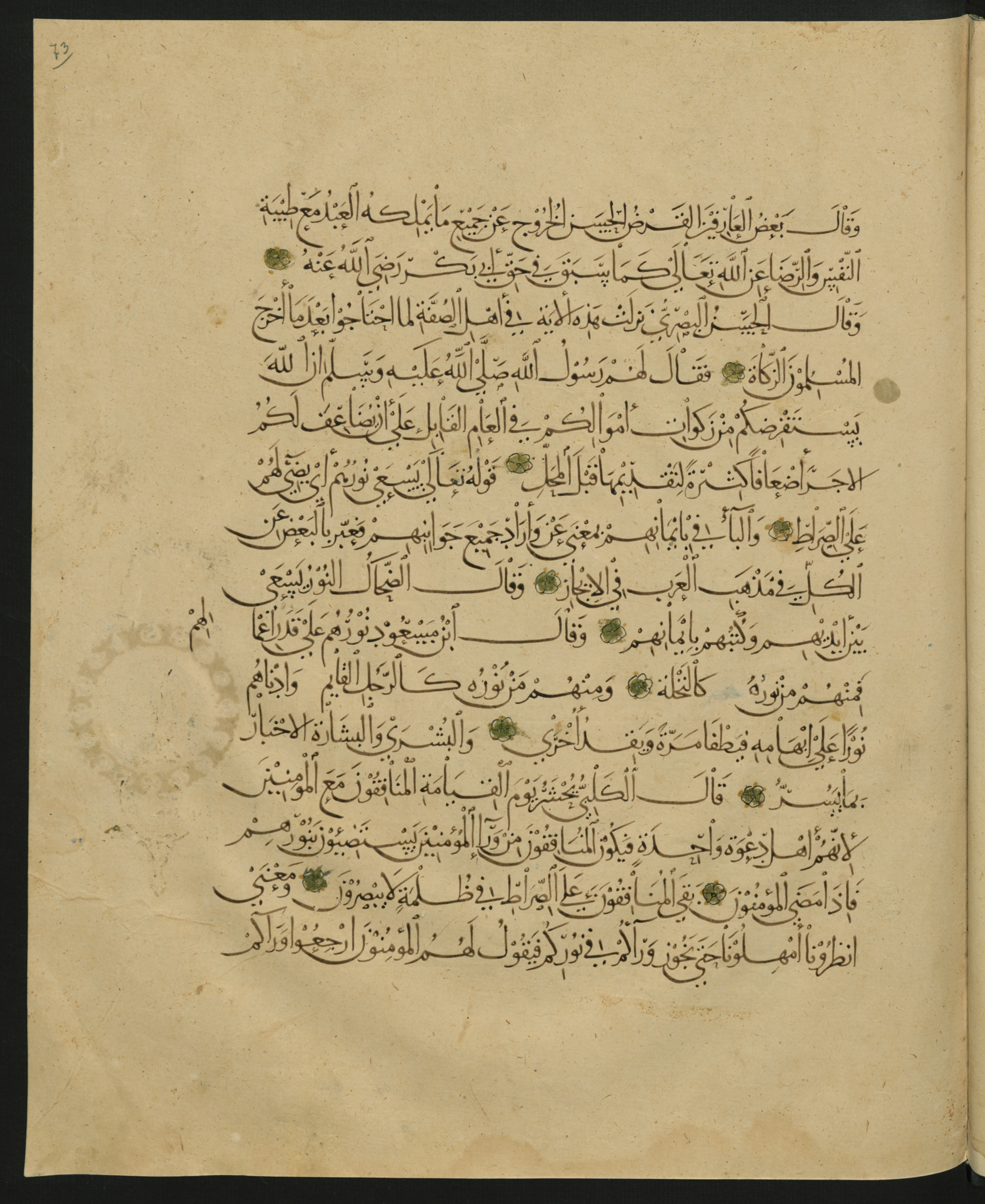
Berlin, Staatsbibliothek zu Berlin, Landberg 822 (Ahlwardt 914) (Scan 136)
This manuscript is a rare case where a Quranic codex is precisely dated by a colophon (completed on May 5, 1204 AD) and the scribe, al-Faḍl b. ʿUmar ar-Rāʾiḍ, is a known Iraqi scholar mentioned in Muslim scholarly literature. It also contains an exegetical compilation detailing circumstances of revelation, abrogated verses, and variant readings.
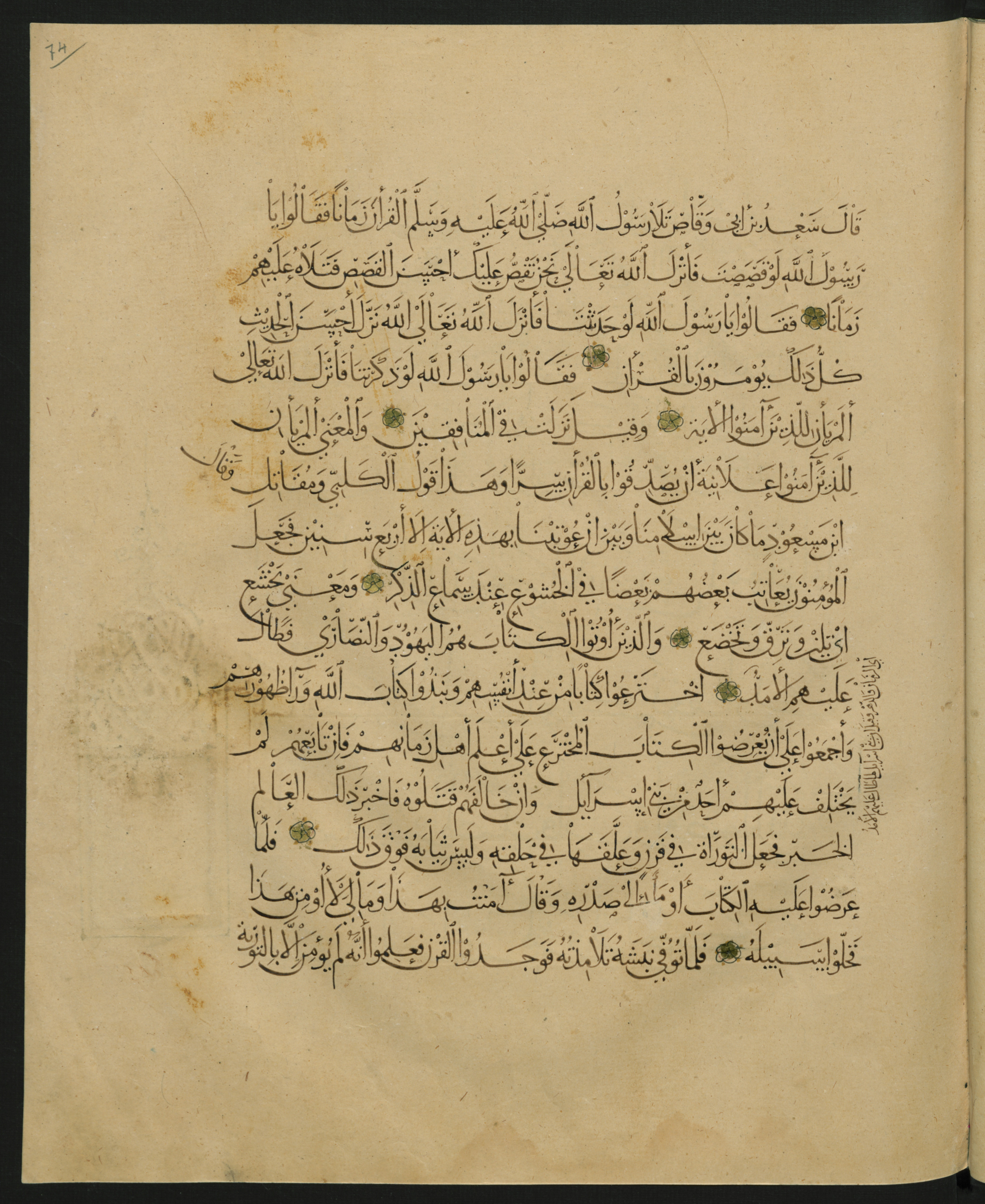
Berlin, Staatsbibliothek zu Berlin, Landberg 822 (Ahlwardt 914) (Scan 137)
This manuscript is a rare case where a Quranic codex is precisely dated by a colophon (completed on May 5, 1204 AD) and the scribe, al-Faḍl b. ʿUmar ar-Rāʾiḍ, is a known Iraqi scholar mentioned in Muslim scholarly literature. It also contains an exegetical compilation detailing circumstances of revelation, abrogated verses, and variant readings.
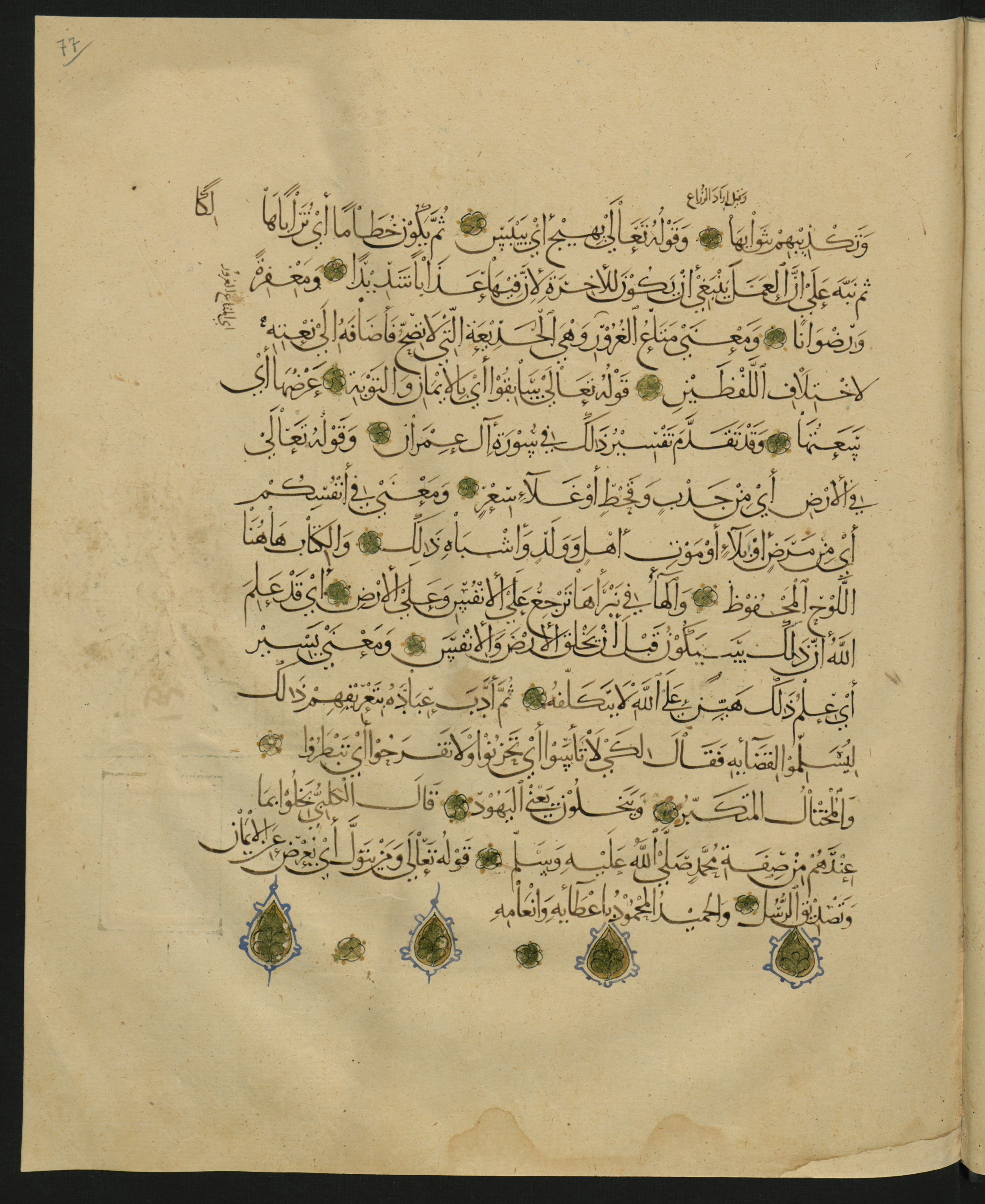
Berlin, Staatsbibliothek zu Berlin, Landberg 822 (Ahlwardt 914) (Scan 138)
This manuscript is a rare case where a Quranic codex is precisely dated by a colophon (completed on May 5, 1204 AD) and the scribe, al-Faḍl b. ʿUmar ar-Rāʾiḍ, is a known Iraqi scholar mentioned in Muslim scholarly literature. It also contains an exegetical compilation detailing circumstances of revelation, abrogated verses, and variant readings.
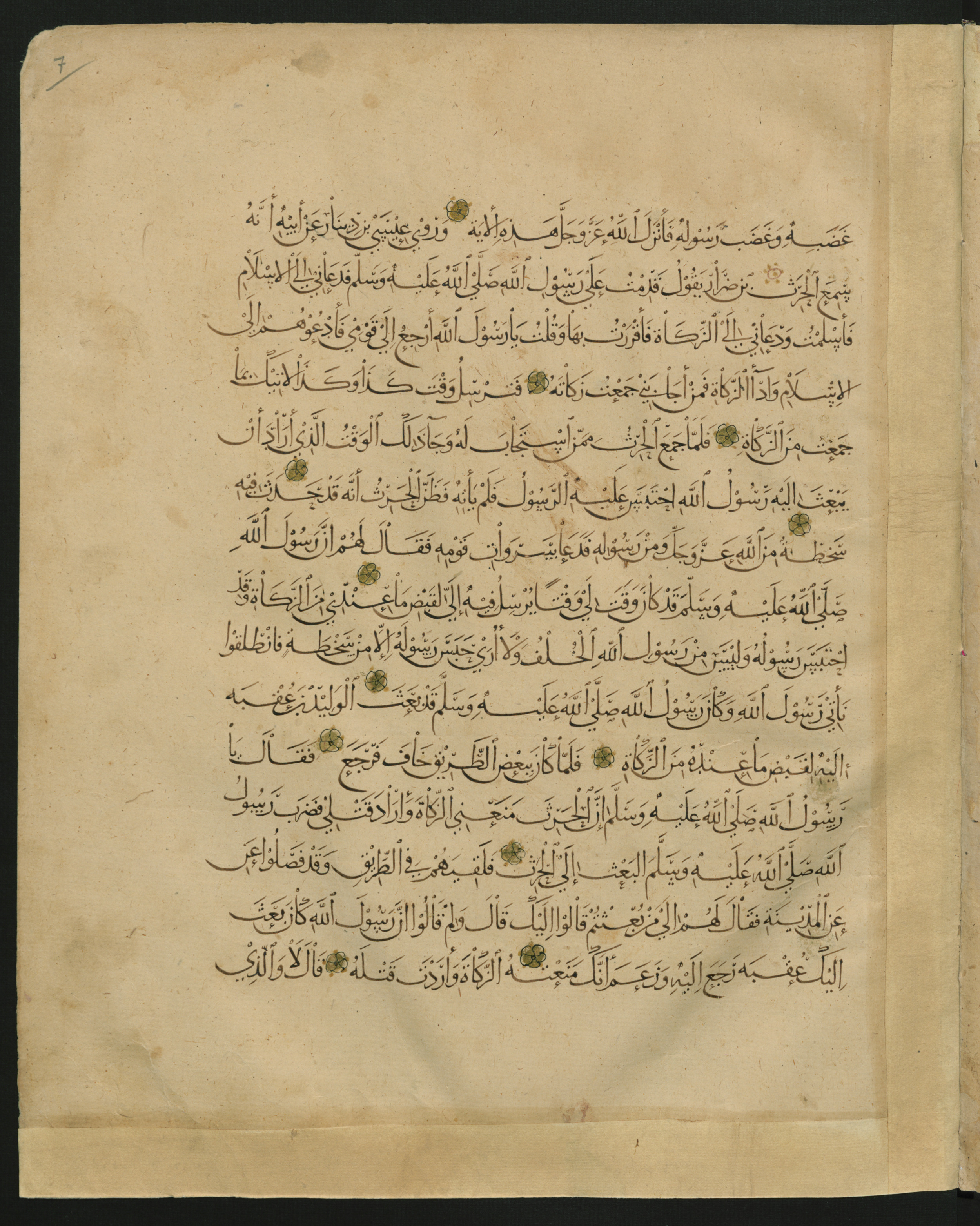
Berlin, Staatsbibliothek zu Berlin, Landberg 822 (Ahlwardt 914) (Scan 139)
This manuscript is a rare case where a Quranic codex is precisely dated by a colophon (completed on May 5, 1204 AD) and the scribe, al-Faḍl b. ʿUmar ar-Rāʾiḍ, is a known Iraqi scholar mentioned in Muslim scholarly literature. It also contains an exegetical compilation detailing circumstances of revelation, abrogated verses, and variant readings.
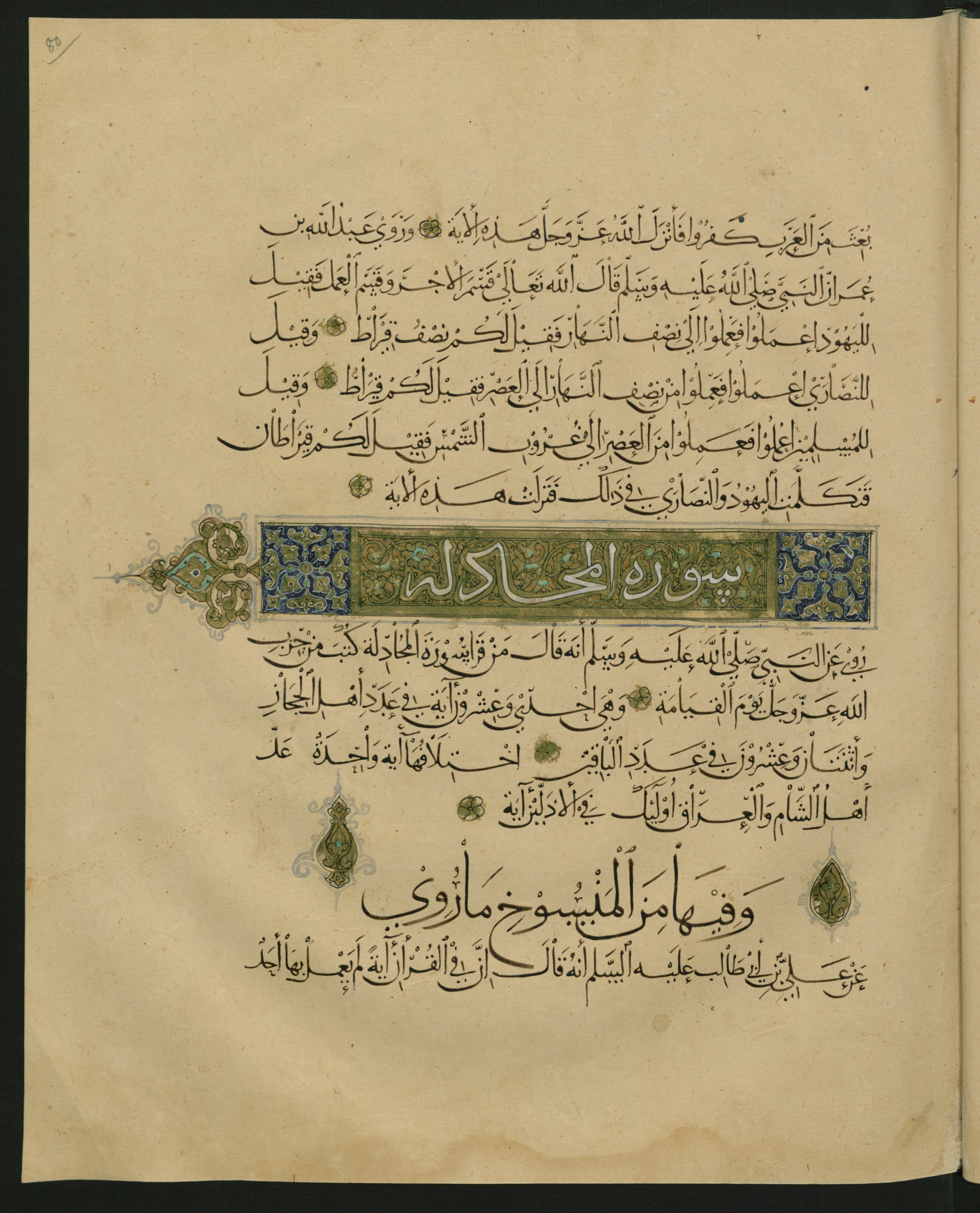
Berlin, Staatsbibliothek zu Berlin, Landberg 822 (Ahlwardt 914) (Scan 140)
This manuscript is a rare case where a Quranic codex is precisely dated by a colophon (completed on May 5, 1204 AD) and the scribe, al-Faḍl b. ʿUmar ar-Rāʾiḍ, is a known Iraqi scholar mentioned in Muslim scholarly literature. It also contains an exegetical compilation detailing circumstances of revelation, abrogated verses, and variant readings.
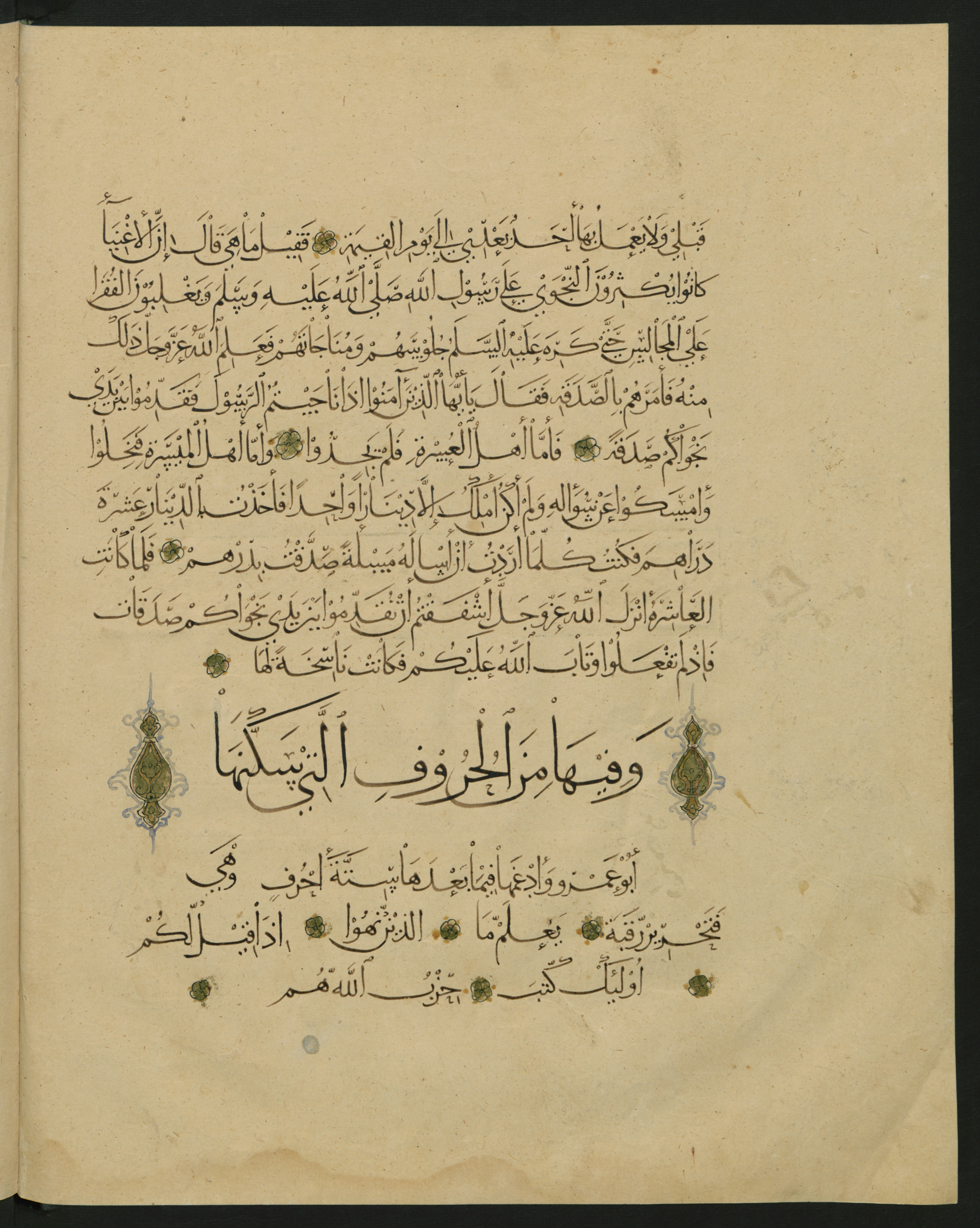
Berlin, Staatsbibliothek zu Berlin, Landberg 822 (Ahlwardt 914) (Scan 141)
This manuscript is a rare case where a Quranic codex is precisely dated by a colophon (completed on May 5, 1204 AD) and the scribe, al-Faḍl b. ʿUmar ar-Rāʾiḍ, is a known Iraqi scholar mentioned in Muslim scholarly literature. It also contains an exegetical compilation detailing circumstances of revelation, abrogated verses, and variant readings.
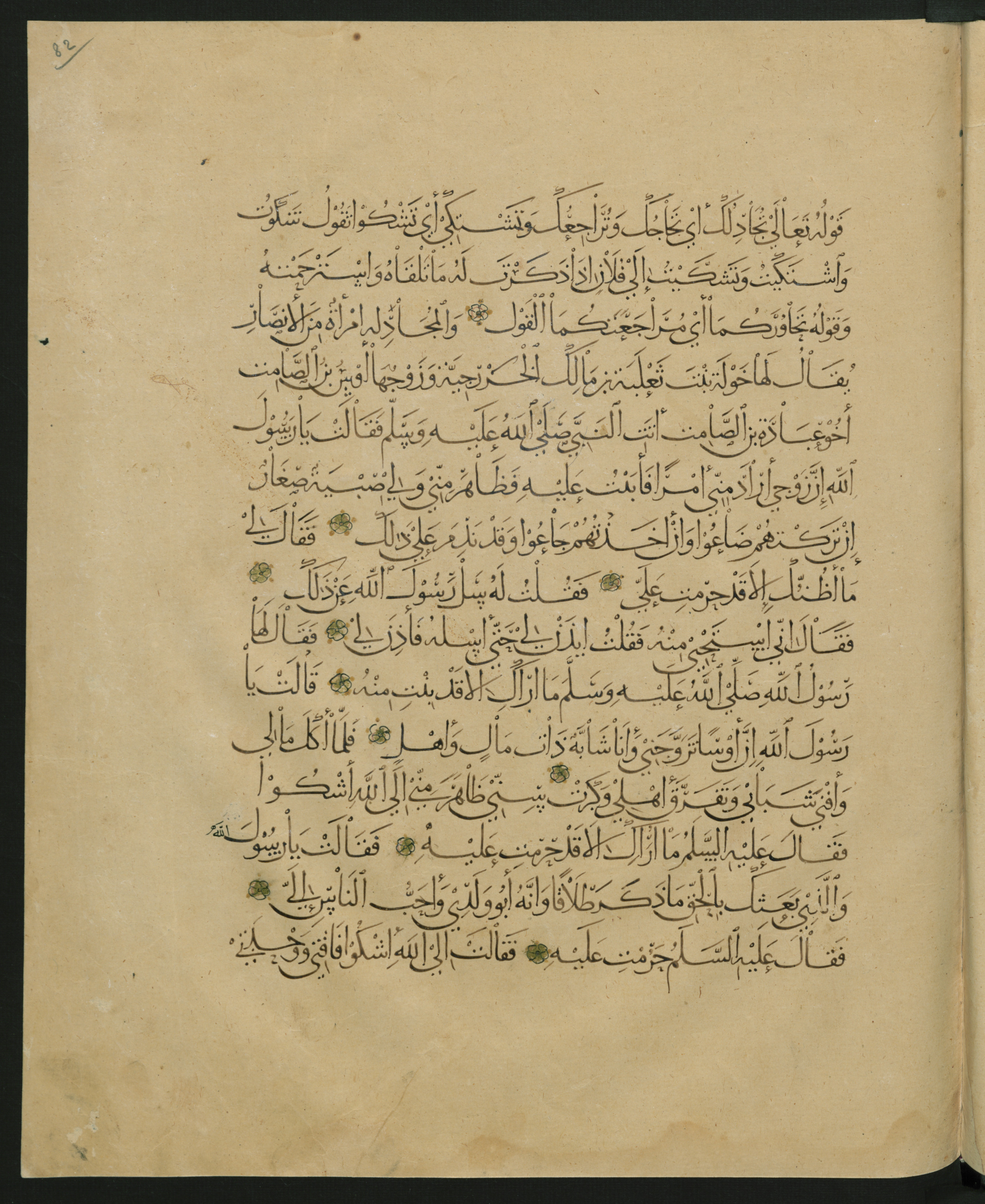
Berlin, Staatsbibliothek zu Berlin, Landberg 822 (Ahlwardt 914) (Scan 142)
This manuscript is a rare case where a Quranic codex is precisely dated by a colophon (completed on May 5, 1204 AD) and the scribe, al-Faḍl b. ʿUmar ar-Rāʾiḍ, is a known Iraqi scholar mentioned in Muslim scholarly literature. It also contains an exegetical compilation detailing circumstances of revelation, abrogated verses, and variant readings.
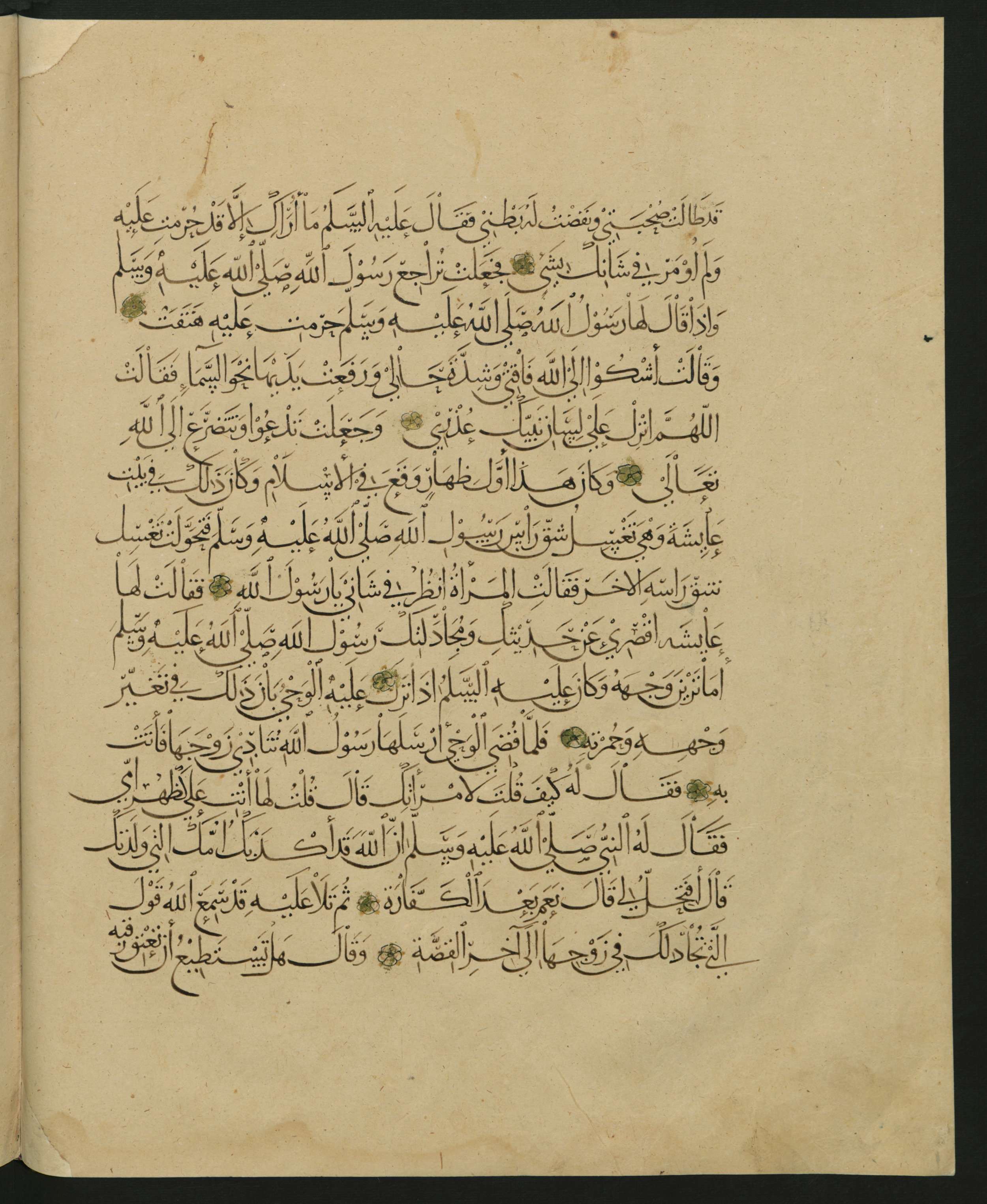
Berlin, Staatsbibliothek zu Berlin, Landberg 822 (Ahlwardt 914) (Scan 143)
This manuscript is a rare case where a Quranic codex is precisely dated by a colophon (completed on May 5, 1204 AD) and the scribe, al-Faḍl b. ʿUmar ar-Rāʾiḍ, is a known Iraqi scholar mentioned in Muslim scholarly literature. It also contains an exegetical compilation detailing circumstances of revelation, abrogated verses, and variant readings.
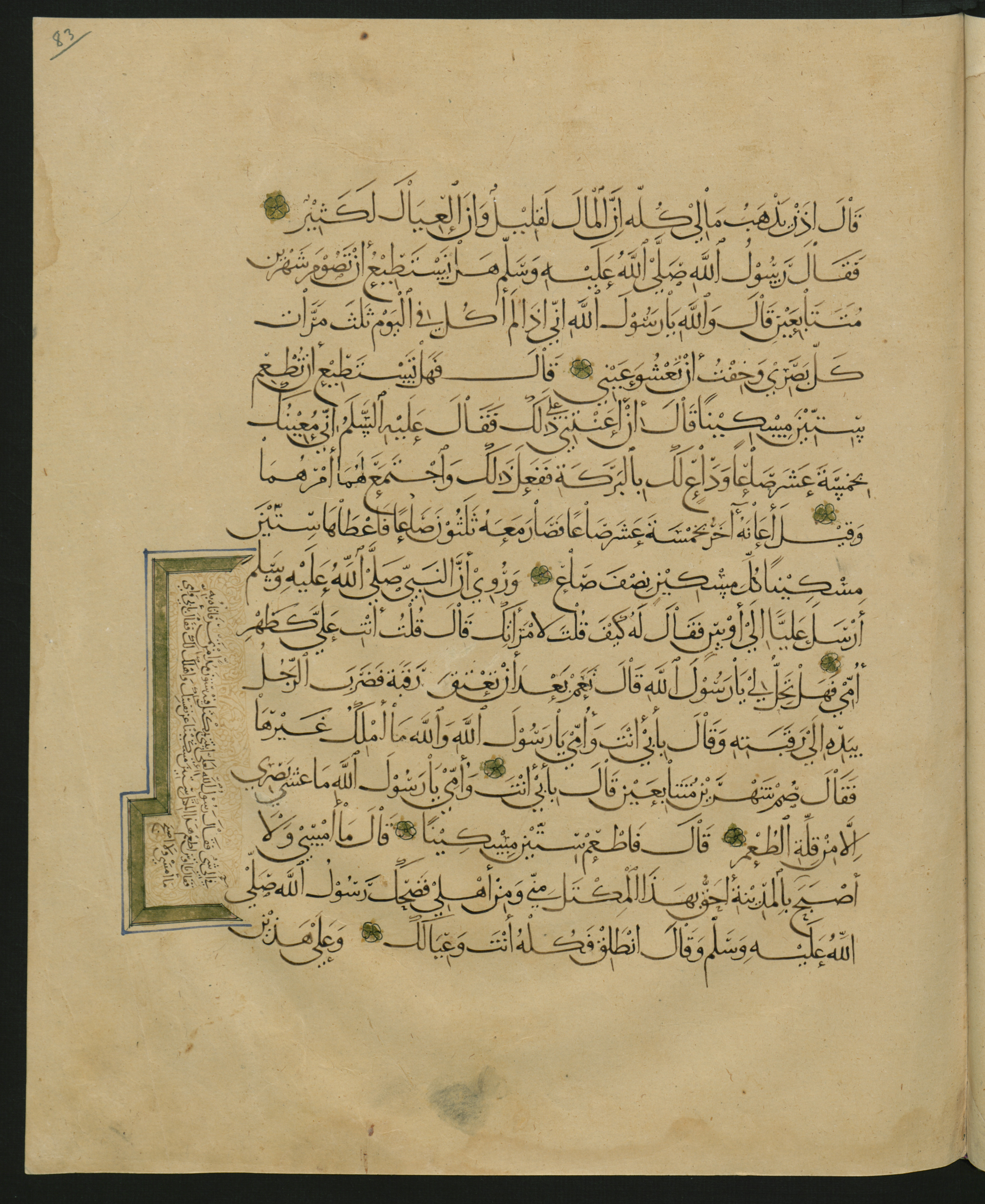
Berlin, Staatsbibliothek zu Berlin, Landberg 822 (Ahlwardt 914) (Scan 144)
This manuscript is a rare case where a Quranic codex is precisely dated by a colophon (completed on May 5, 1204 AD) and the scribe, al-Faḍl b. ʿUmar ar-Rāʾiḍ, is a known Iraqi scholar mentioned in Muslim scholarly literature. It also contains an exegetical compilation detailing circumstances of revelation, abrogated verses, and variant readings.
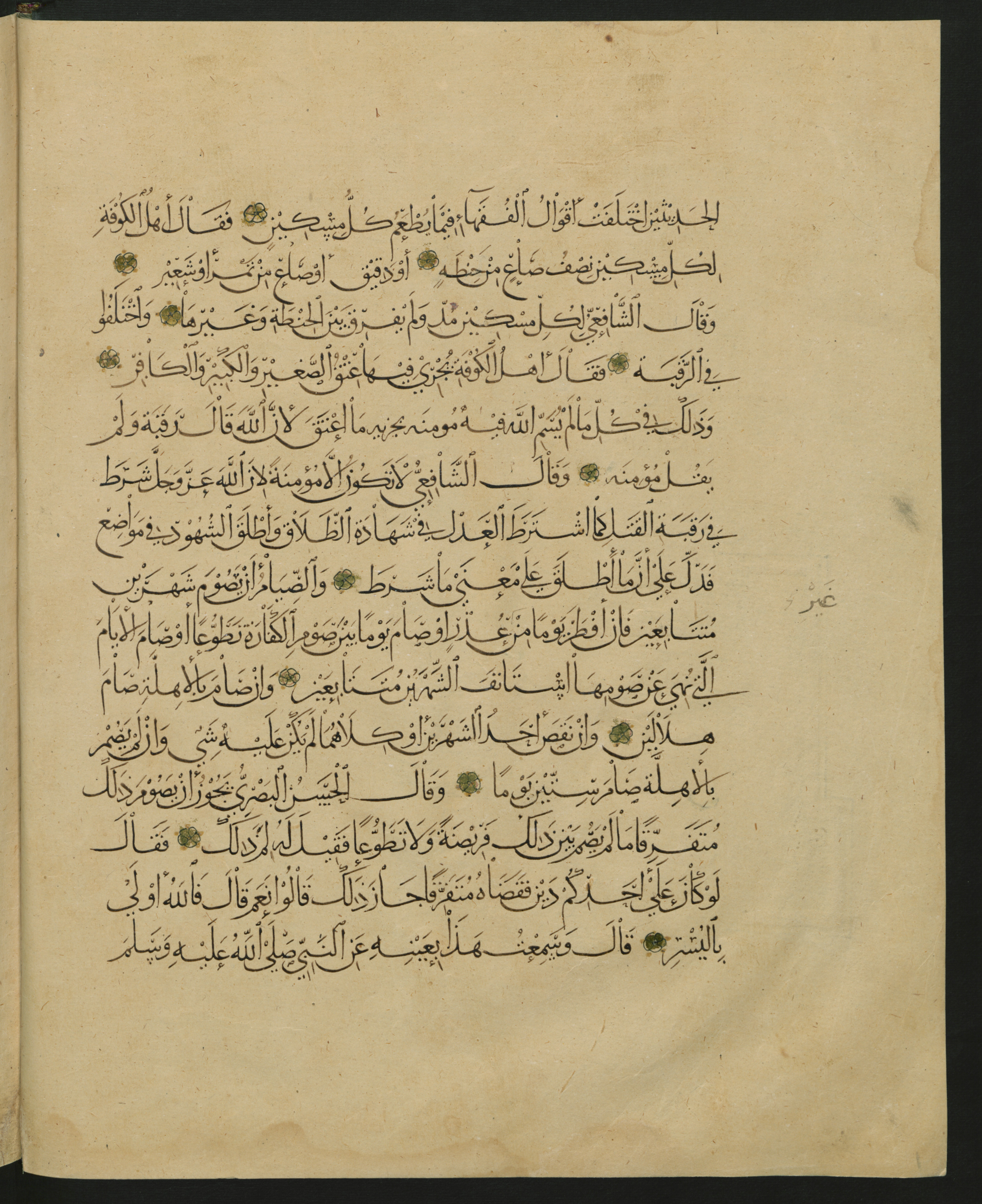
Berlin, Staatsbibliothek zu Berlin, Landberg 822 (Ahlwardt 914) (Scan 145)
This manuscript is a rare case where a Quranic codex is precisely dated by a colophon (completed on May 5, 1204 AD) and the scribe, al-Faḍl b. ʿUmar ar-Rāʾiḍ, is a known Iraqi scholar mentioned in Muslim scholarly literature. It also contains an exegetical compilation detailing circumstances of revelation, abrogated verses, and variant readings.
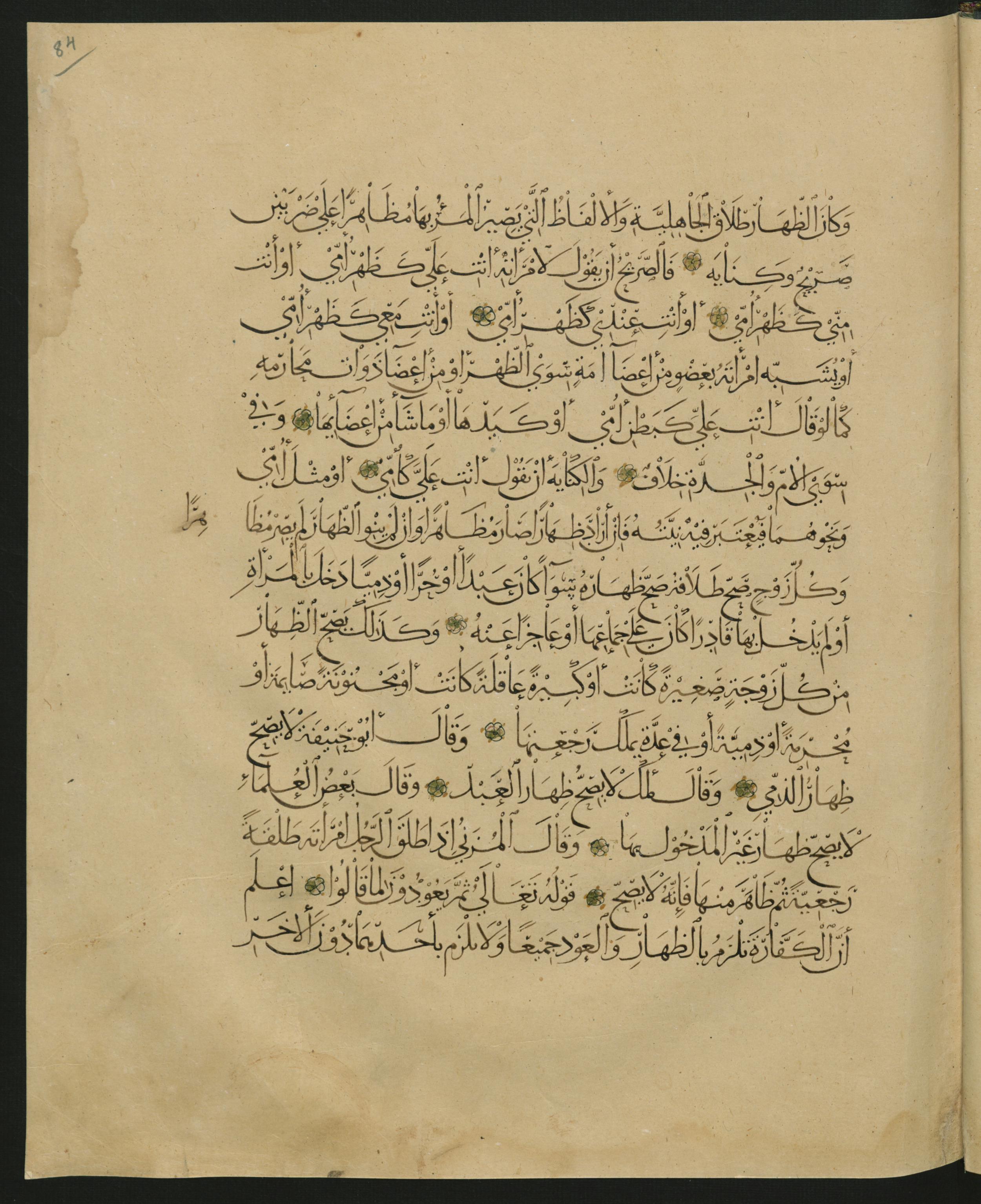
Berlin, Staatsbibliothek zu Berlin, Landberg 822 (Ahlwardt 914) (Scan 146)
This manuscript is a rare case where a Quranic codex is precisely dated by a colophon (completed on May 5, 1204 AD) and the scribe, al-Faḍl b. ʿUmar ar-Rāʾiḍ, is a known Iraqi scholar mentioned in Muslim scholarly literature. It also contains an exegetical compilation detailing circumstances of revelation, abrogated verses, and variant readings.
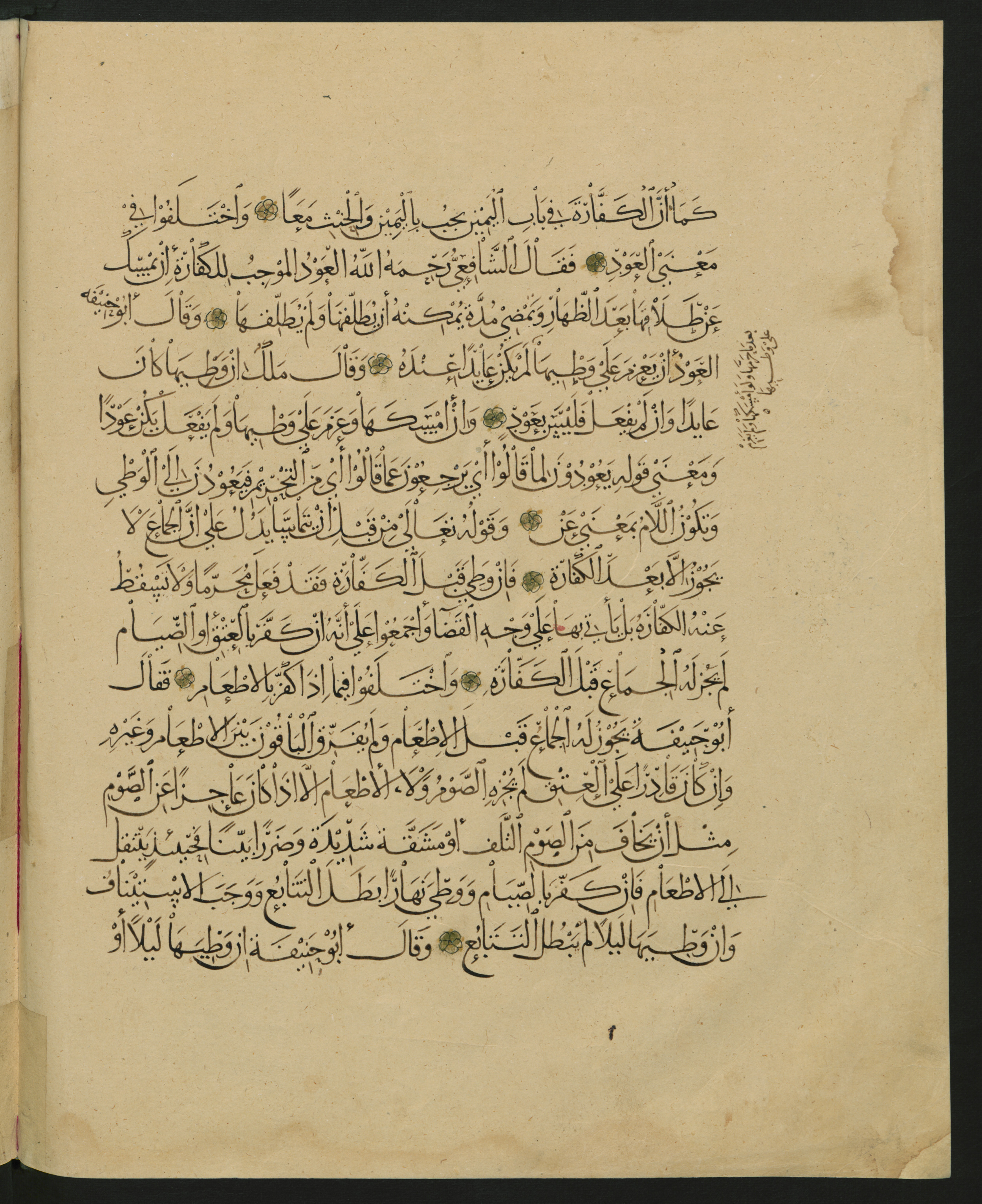
Berlin, Staatsbibliothek zu Berlin, Landberg 822 (Ahlwardt 914) (Scan 147)
This manuscript is a rare case where a Quranic codex is precisely dated by a colophon (completed on May 5, 1204 AD) and the scribe, al-Faḍl b. ʿUmar ar-Rāʾiḍ, is a known Iraqi scholar mentioned in Muslim scholarly literature. It also contains an exegetical compilation detailing circumstances of revelation, abrogated verses, and variant readings.
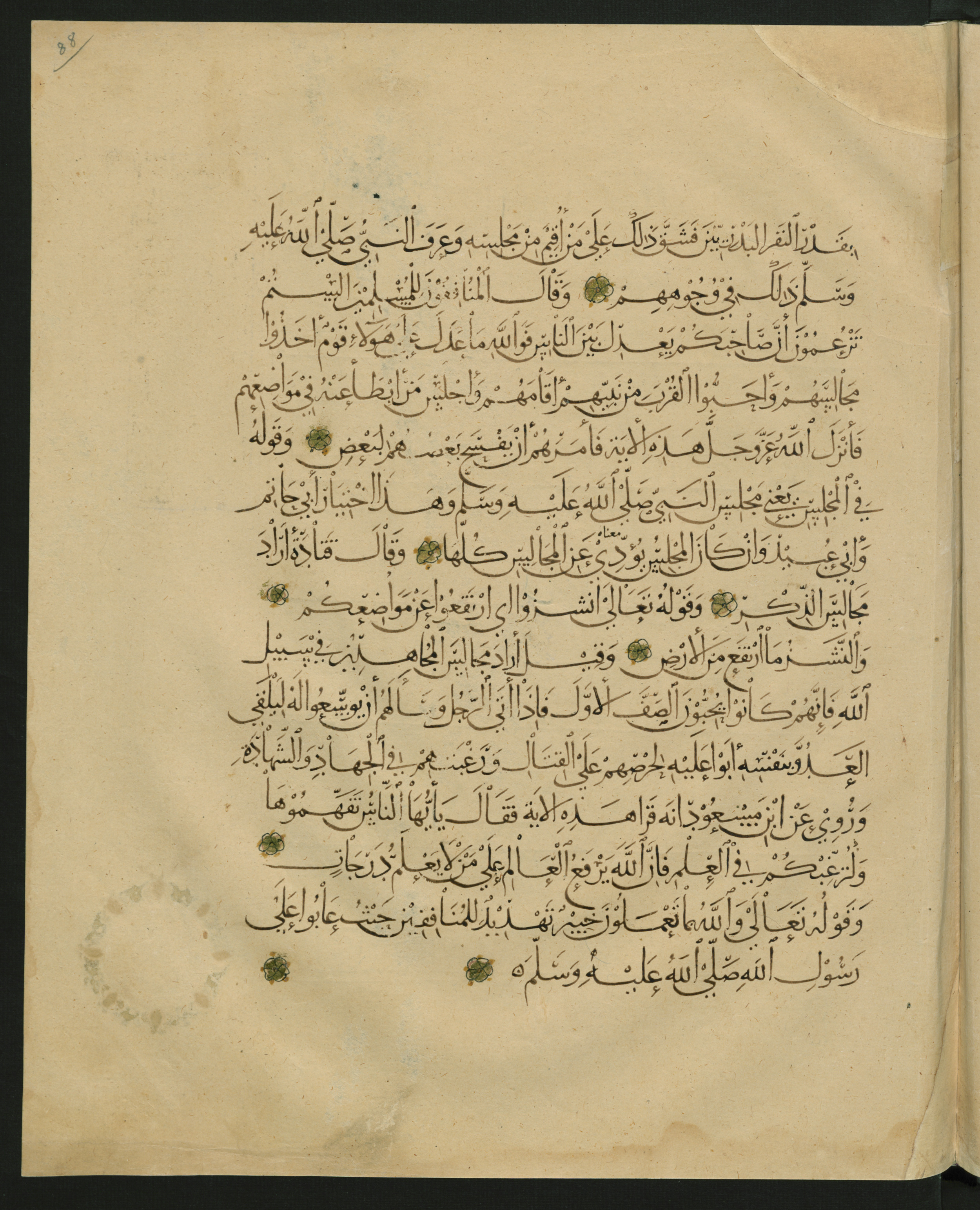
Berlin, Staatsbibliothek zu Berlin, Landberg 822 (Ahlwardt 914) (Scan 148)
This manuscript is a rare case where a Quranic codex is precisely dated by a colophon (completed on May 5, 1204 AD) and the scribe, al-Faḍl b. ʿUmar ar-Rāʾiḍ, is a known Iraqi scholar mentioned in Muslim scholarly literature. It also contains an exegetical compilation detailing circumstances of revelation, abrogated verses, and variant readings.
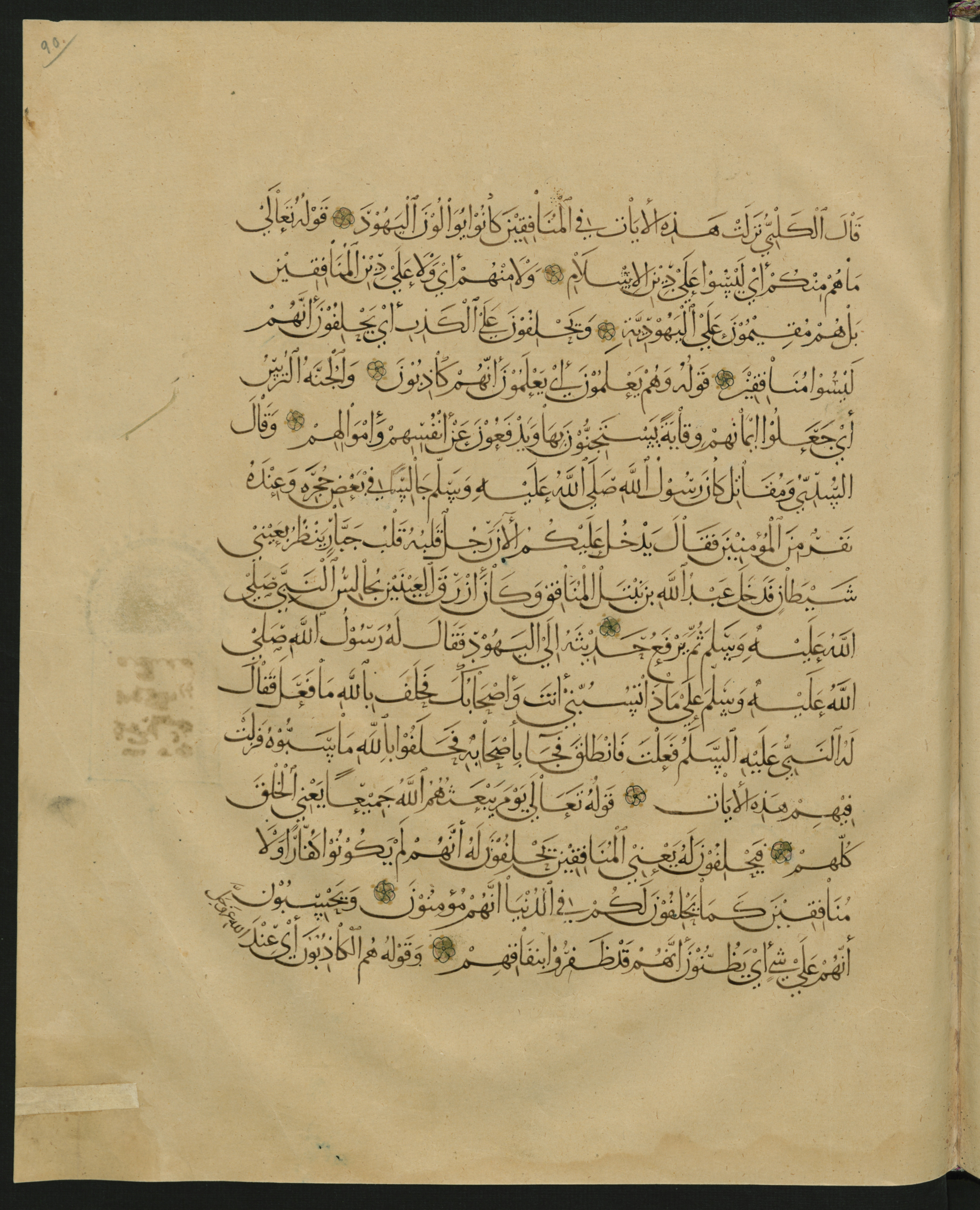
Berlin, Staatsbibliothek zu Berlin, Landberg 822 (Ahlwardt 914) (Scan 149)
This manuscript is a rare case where a Quranic codex is precisely dated by a colophon (completed on May 5, 1204 AD) and the scribe, al-Faḍl b. ʿUmar ar-Rāʾiḍ, is a known Iraqi scholar mentioned in Muslim scholarly literature. It also contains an exegetical compilation detailing circumstances of revelation, abrogated verses, and variant readings.
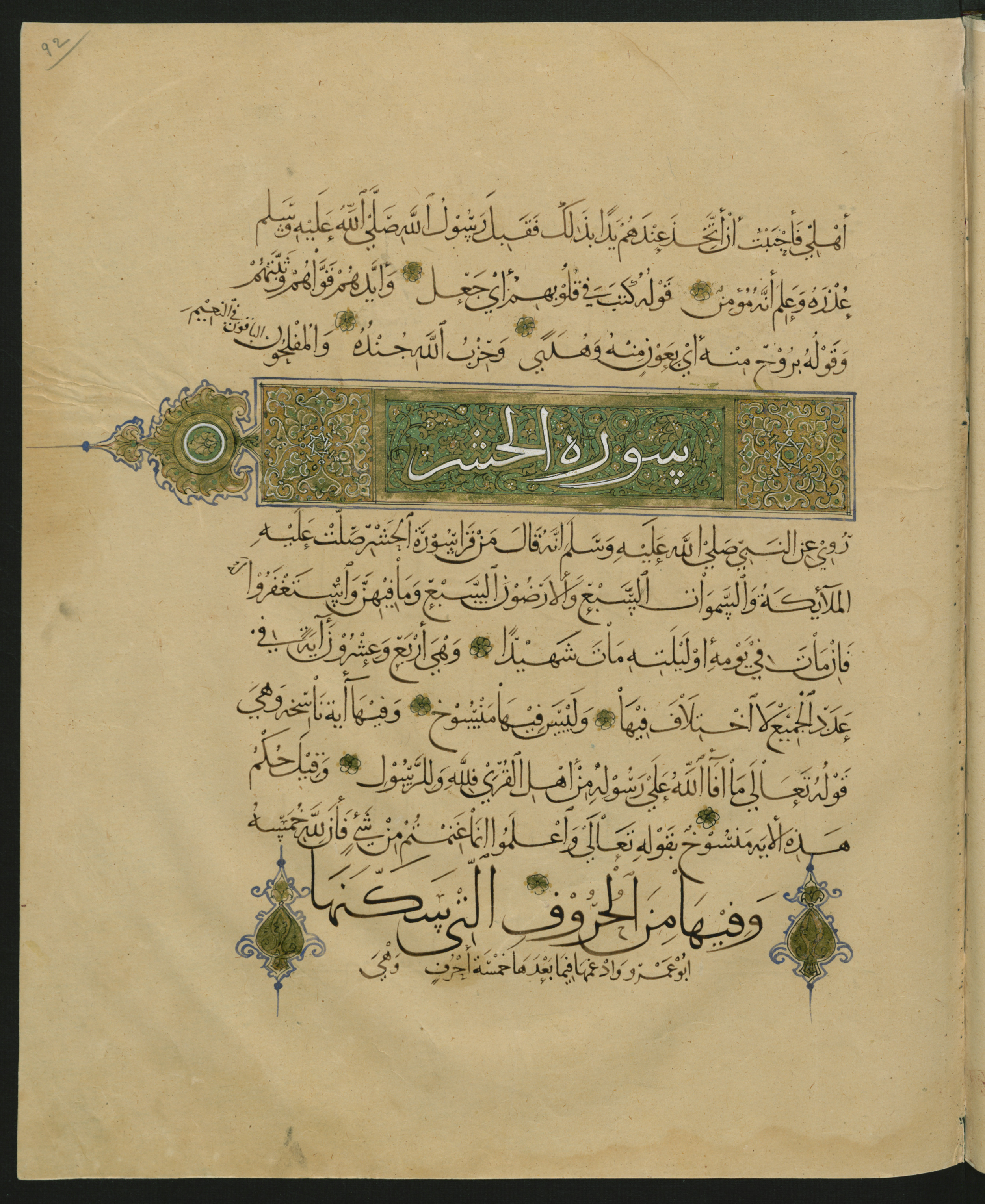
Berlin, Staatsbibliothek zu Berlin, Landberg 822 (Ahlwardt 914) (Scan 150)
This manuscript is a rare case where a Quranic codex is precisely dated by a colophon (completed on May 5, 1204 AD) and the scribe, al-Faḍl b. ʿUmar ar-Rāʾiḍ, is a known Iraqi scholar mentioned in Muslim scholarly literature. It also contains an exegetical compilation detailing circumstances of revelation, abrogated verses, and variant readings.
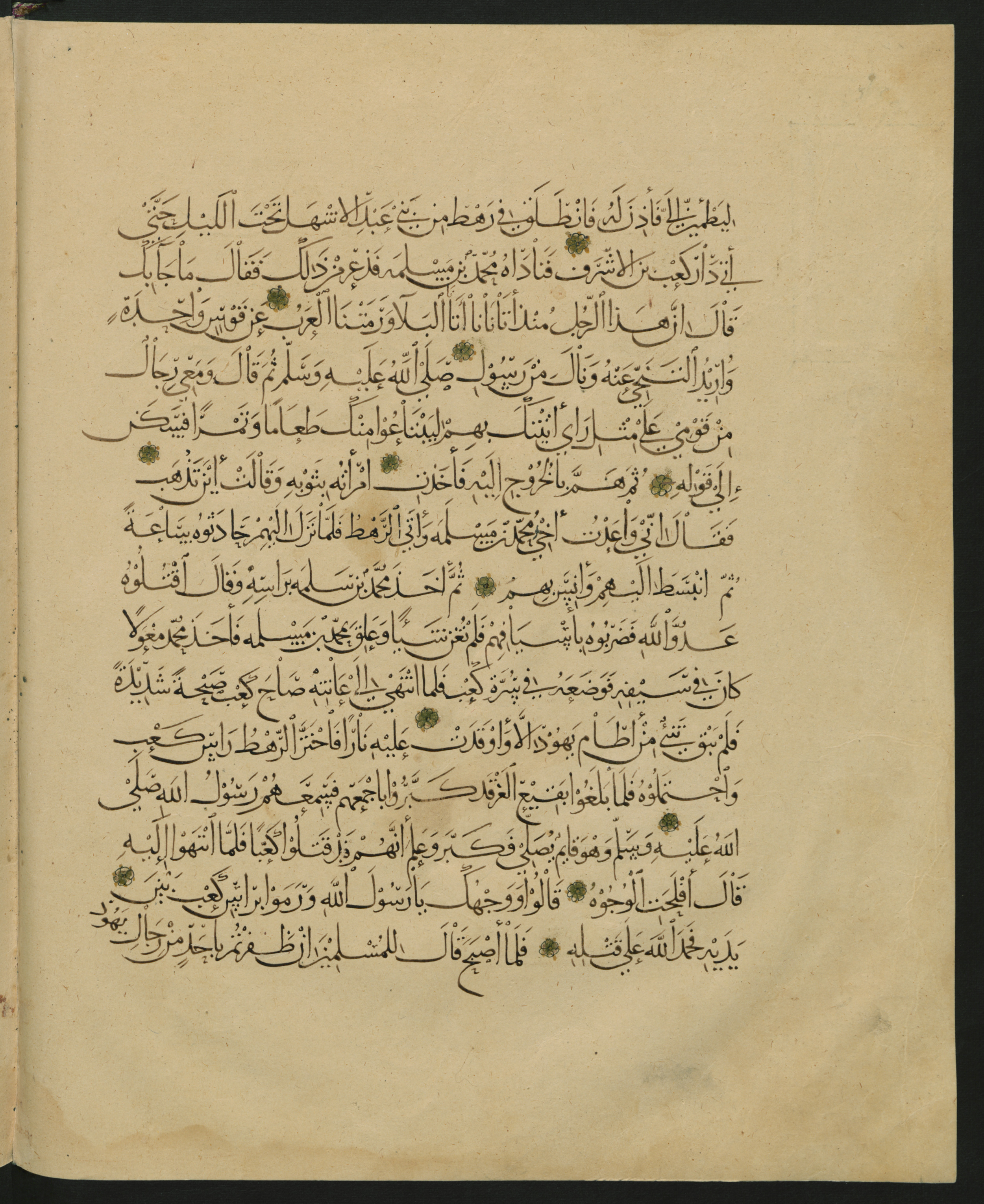
Berlin, Staatsbibliothek zu Berlin, Landberg 822 (Ahlwardt 914) (Scan 151)
This manuscript is a rare case where a Quranic codex is precisely dated by a colophon (completed on May 5, 1204 AD) and the scribe, al-Faḍl b. ʿUmar ar-Rāʾiḍ, is a known Iraqi scholar mentioned in Muslim scholarly literature. It also contains an exegetical compilation detailing circumstances of revelation, abrogated verses, and variant readings.
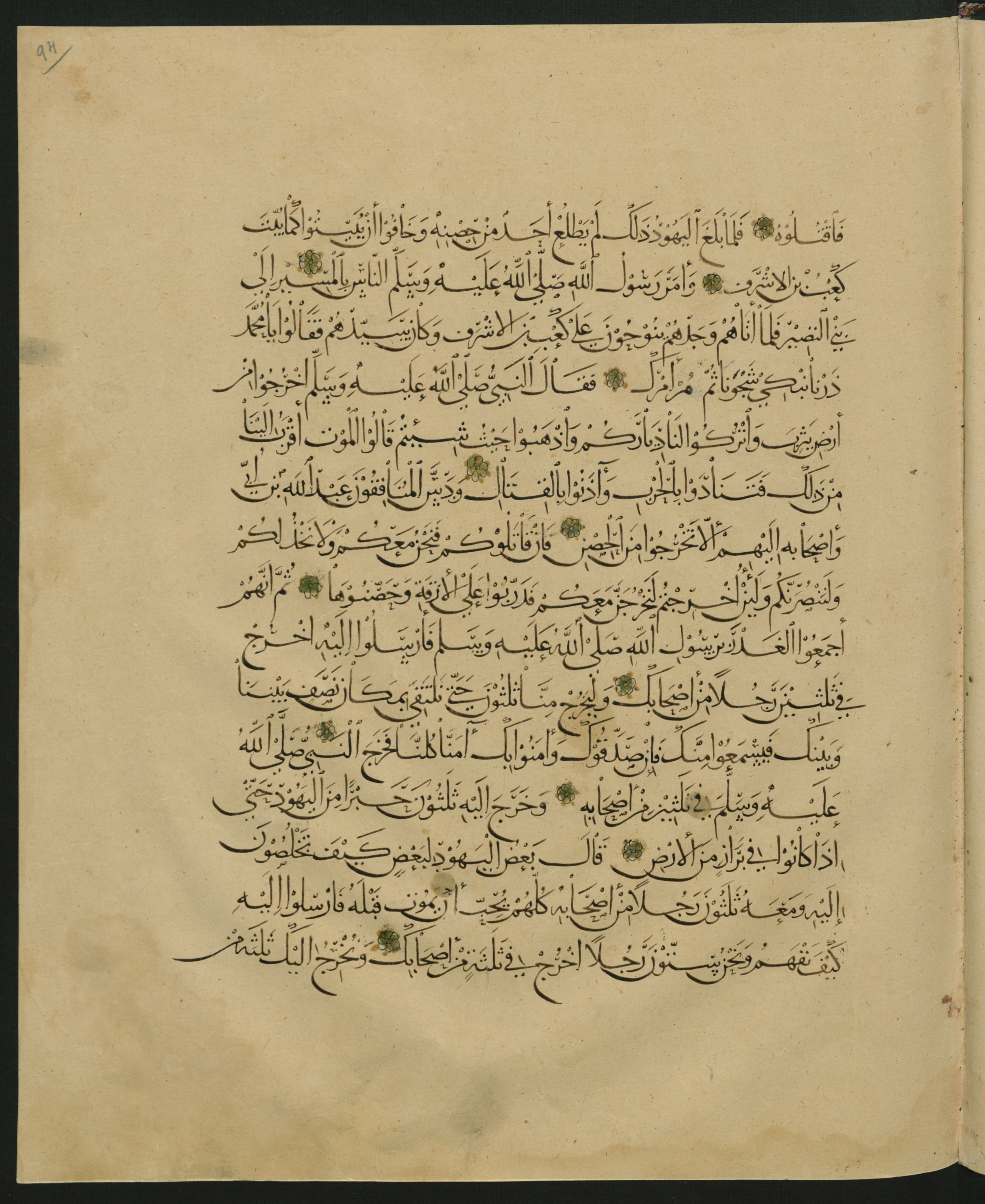
Berlin, Staatsbibliothek zu Berlin, Landberg 822 (Ahlwardt 914) (Scan 152)
This manuscript is a rare case where a Quranic codex is precisely dated by a colophon (completed on May 5, 1204 AD) and the scribe, al-Faḍl b. ʿUmar ar-Rāʾiḍ, is a known Iraqi scholar mentioned in Muslim scholarly literature. It also contains an exegetical compilation detailing circumstances of revelation, abrogated verses, and variant readings.
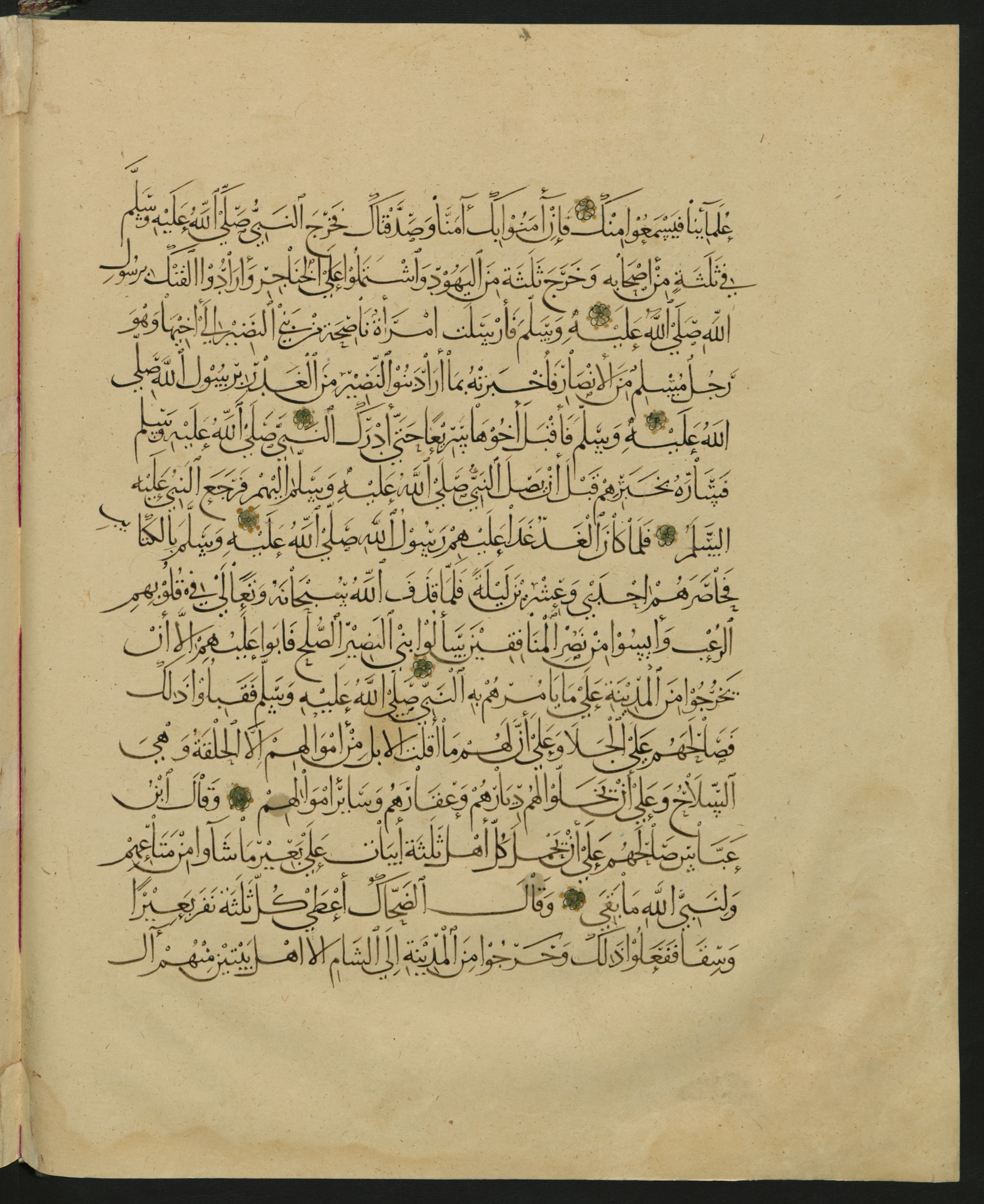
Berlin, Staatsbibliothek zu Berlin, Landberg 822 (Ahlwardt 914) (Scan 153)
This manuscript is a rare case where a Quranic codex is precisely dated by a colophon (completed on May 5, 1204 AD) and the scribe, al-Faḍl b. ʿUmar ar-Rāʾiḍ, is a known Iraqi scholar mentioned in Muslim scholarly literature. It also contains an exegetical compilation detailing circumstances of revelation, abrogated verses, and variant readings.
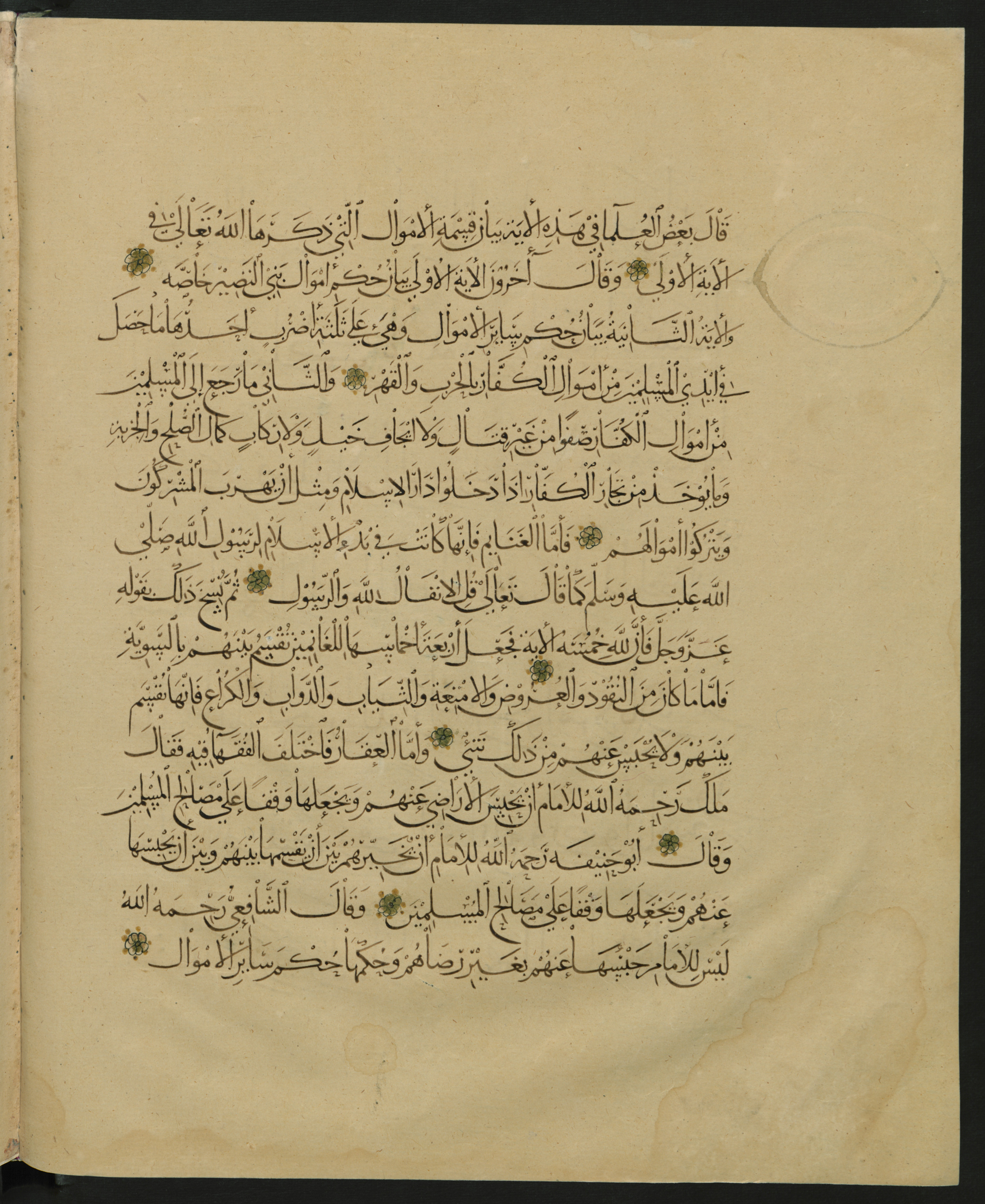
Berlin, Staatsbibliothek zu Berlin, Landberg 822 (Ahlwardt 914) (Scan 154)
This manuscript is a rare case where a Quranic codex is precisely dated by a colophon (completed on May 5, 1204 AD) and the scribe, al-Faḍl b. ʿUmar ar-Rāʾiḍ, is a known Iraqi scholar mentioned in Muslim scholarly literature. It also contains an exegetical compilation detailing circumstances of revelation, abrogated verses, and variant readings.
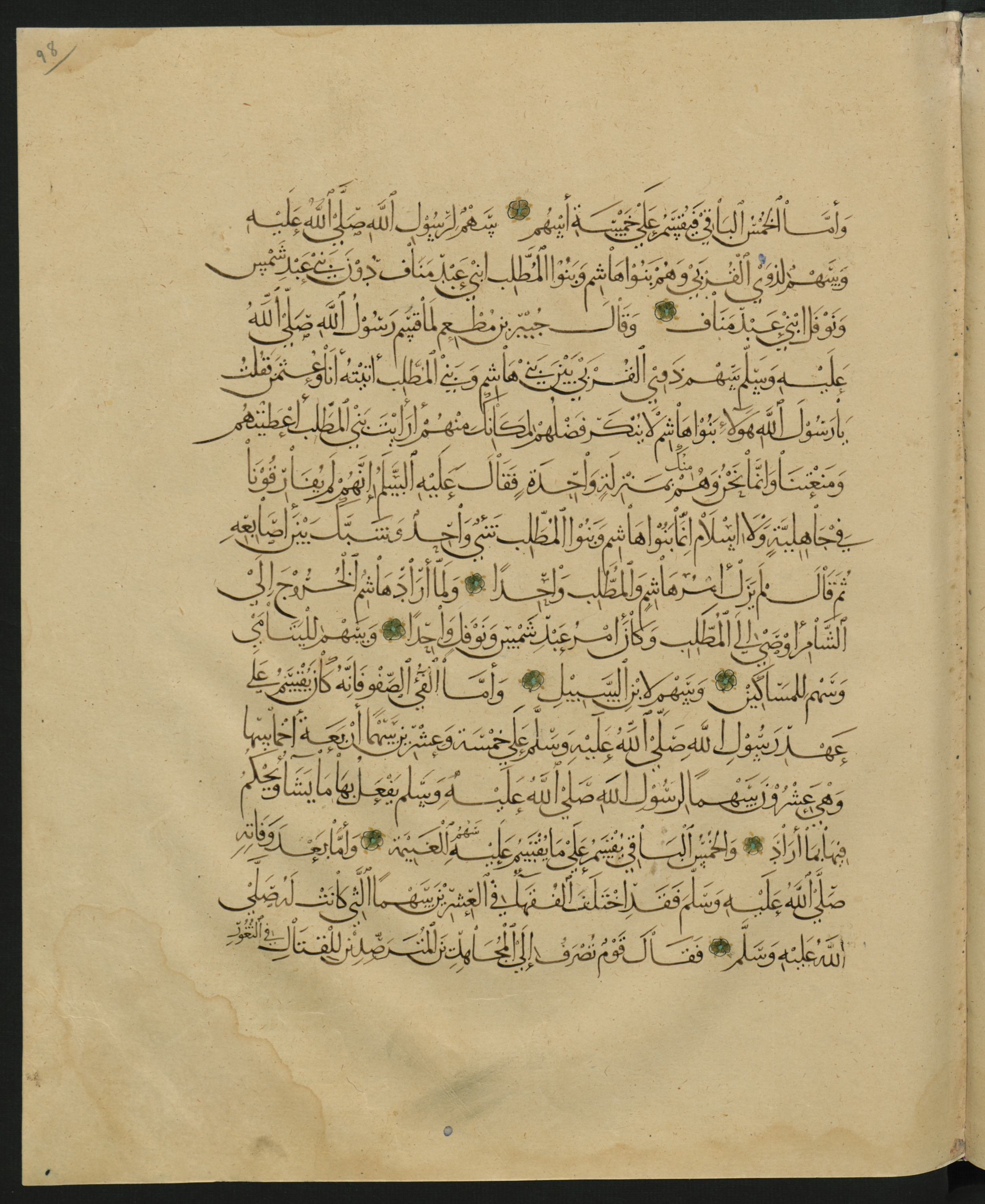
Berlin, Staatsbibliothek zu Berlin, Landberg 822 (Ahlwardt 914) (Scan 155)
This manuscript is a rare case where a Quranic codex is precisely dated by a colophon (completed on May 5, 1204 AD) and the scribe, al-Faḍl b. ʿUmar ar-Rāʾiḍ, is a known Iraqi scholar mentioned in Muslim scholarly literature. It also contains an exegetical compilation detailing circumstances of revelation, abrogated verses, and variant readings.
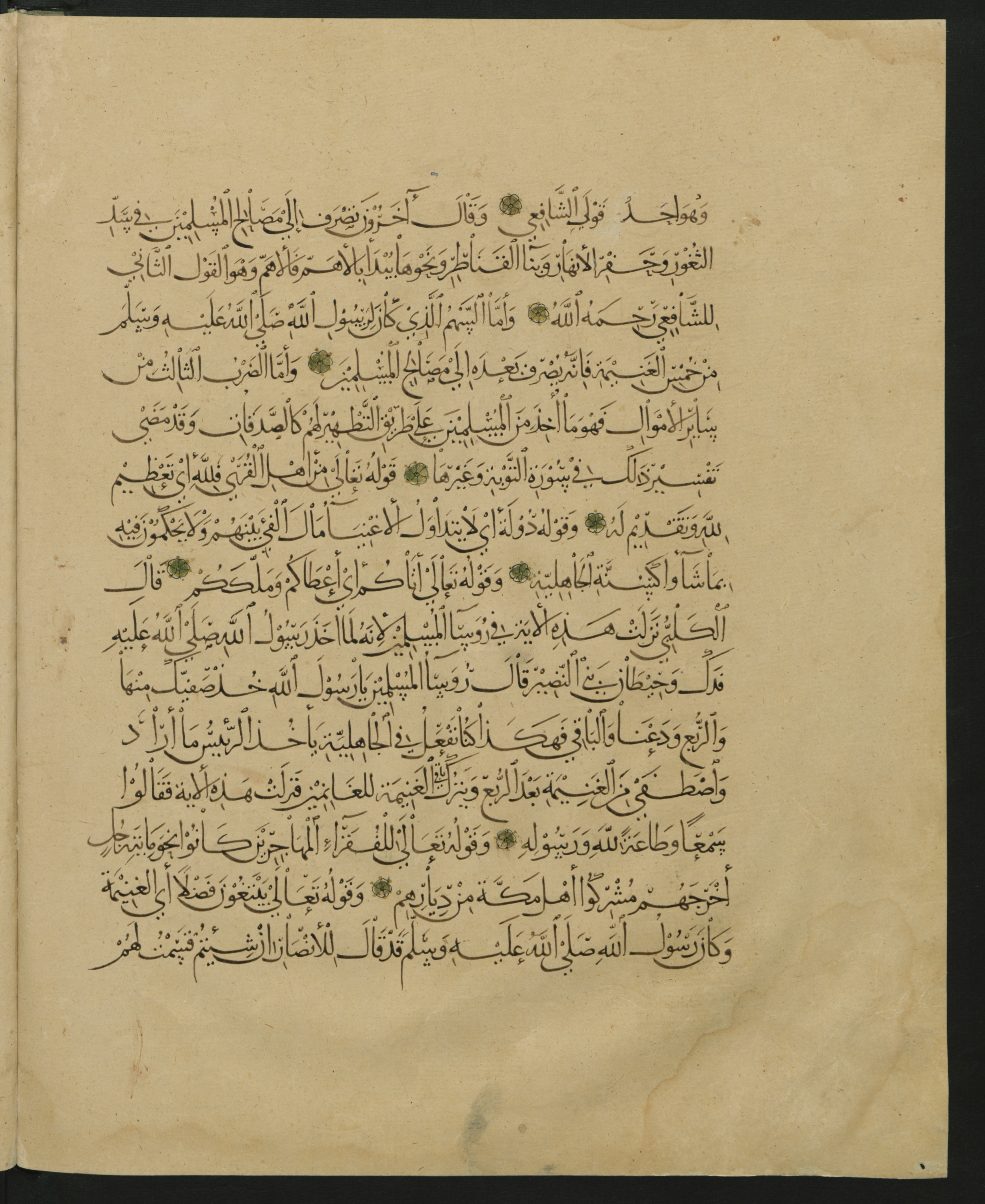
Berlin, Staatsbibliothek zu Berlin, Landberg 822 (Ahlwardt 914) (Scan 156)
This manuscript is a rare case where a Quranic codex is precisely dated by a colophon (completed on May 5, 1204 AD) and the scribe, al-Faḍl b. ʿUmar ar-Rāʾiḍ, is a known Iraqi scholar mentioned in Muslim scholarly literature. It also contains an exegetical compilation detailing circumstances of revelation, abrogated verses, and variant readings.
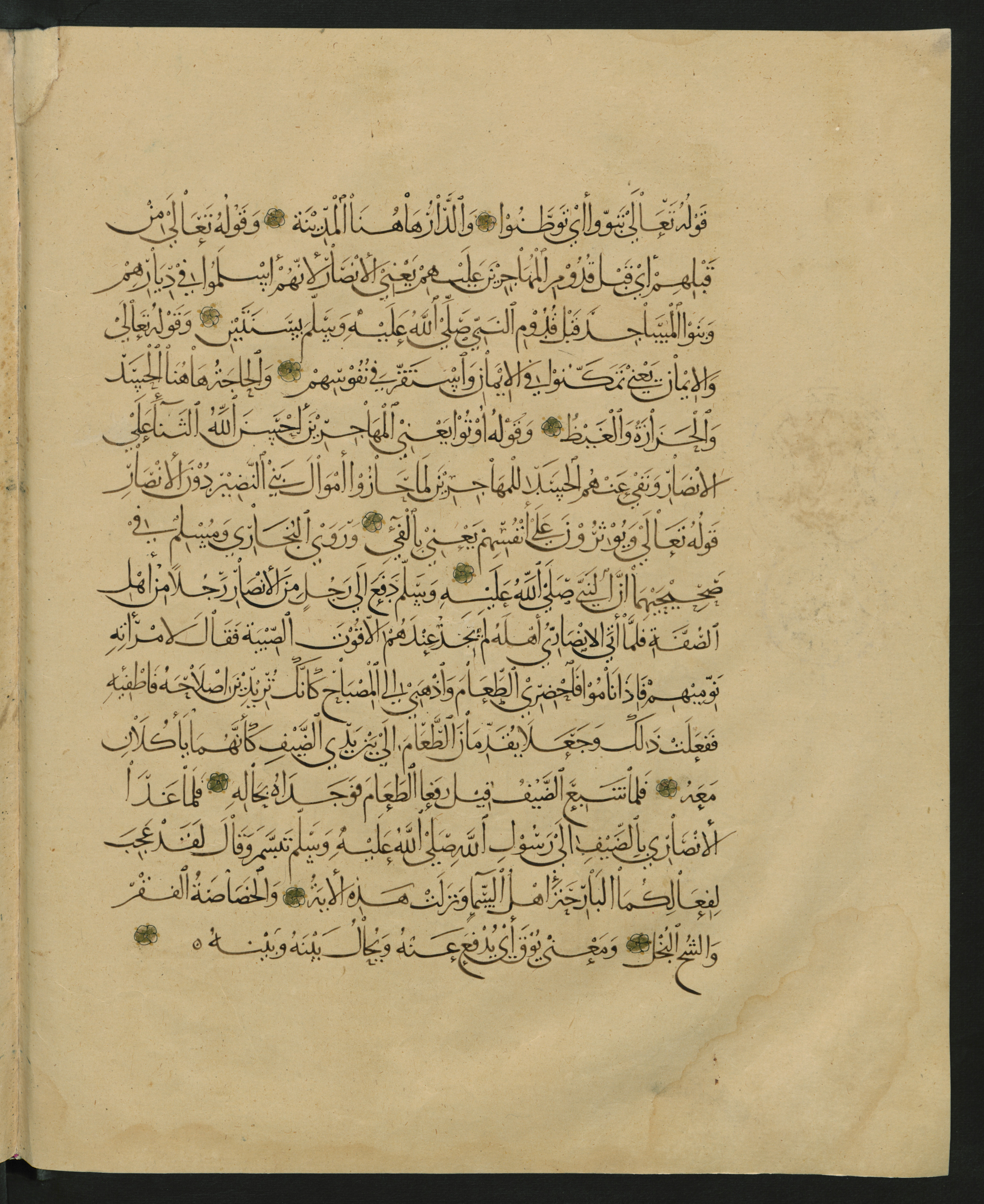
Berlin, Staatsbibliothek zu Berlin, Landberg 822 (Ahlwardt 914) (Scan 157)
This manuscript is a rare case where a Quranic codex is precisely dated by a colophon (completed on May 5, 1204 AD) and the scribe, al-Faḍl b. ʿUmar ar-Rāʾiḍ, is a known Iraqi scholar mentioned in Muslim scholarly literature. It also contains an exegetical compilation detailing circumstances of revelation, abrogated verses, and variant readings.
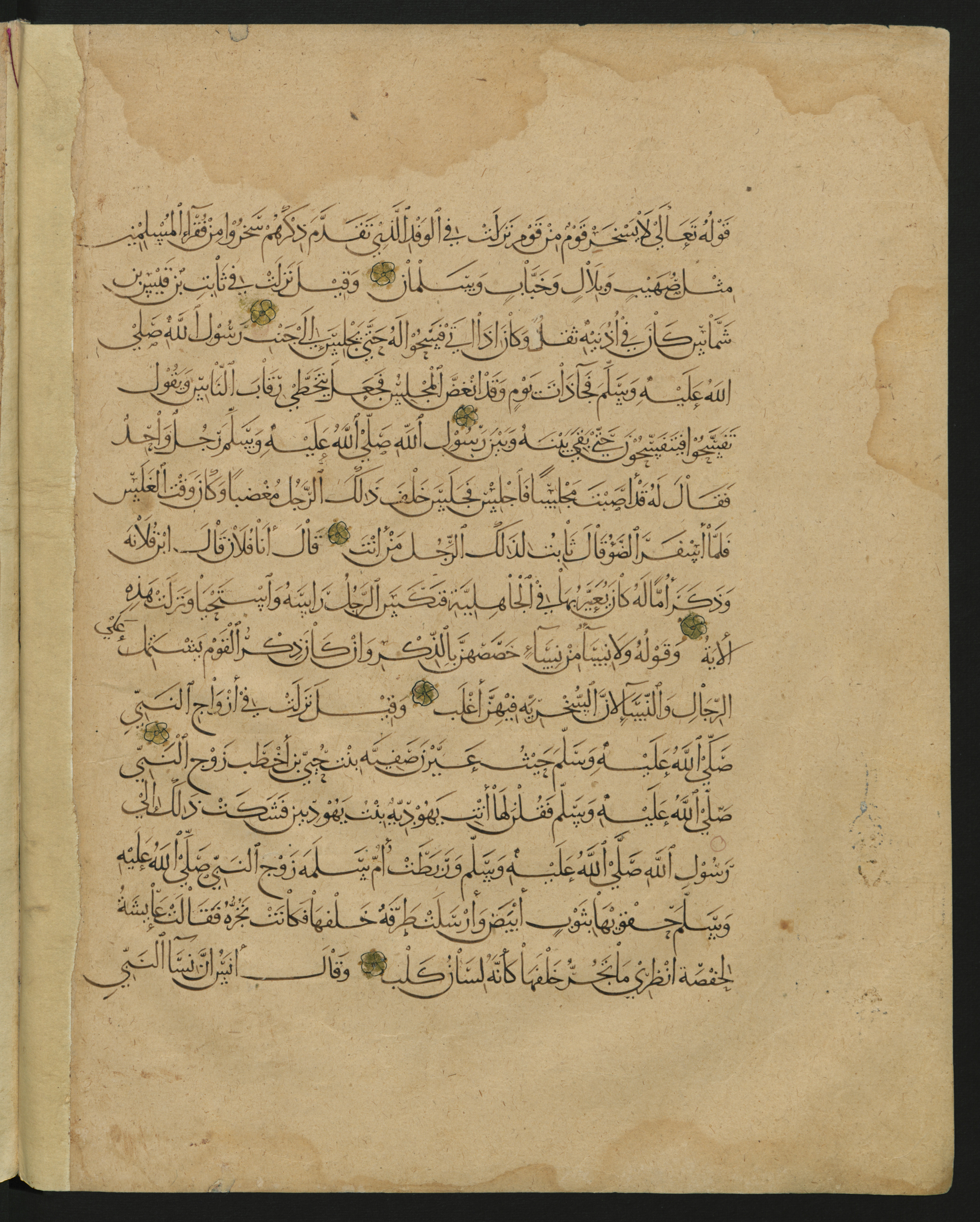
Berlin, Staatsbibliothek zu Berlin, Landberg 822 (Ahlwardt 914) (Scan 158)
This manuscript is a rare case where a Quranic codex is precisely dated by a colophon (completed on May 5, 1204 AD) and the scribe, al-Faḍl b. ʿUmar ar-Rāʾiḍ, is a known Iraqi scholar mentioned in Muslim scholarly literature. It also contains an exegetical compilation detailing circumstances of revelation, abrogated verses, and variant readings.