
Surah 10:88
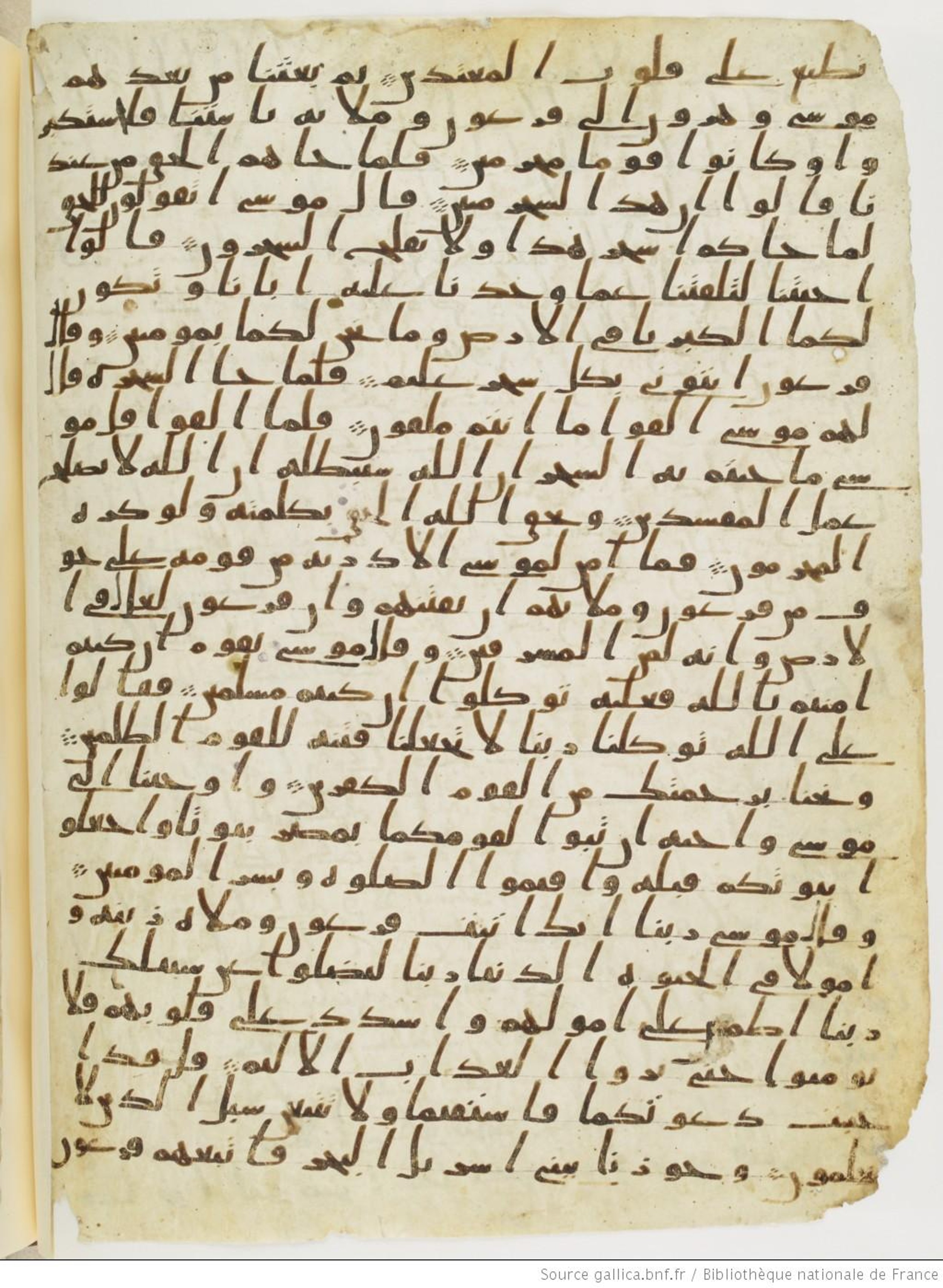
Paris, Bibliothèque nationale de France, Arabe 328 (c)
This manuscript is believed to originate from the same codex as the famous Birmingham Quran manuscript (Mingana 1572a), which was radiocarbon dated to between 568 and 645 AD. This makes it part of one of the oldest surviving Quranic manuscripts in the world and an early descendant of the Uthmanic codex.
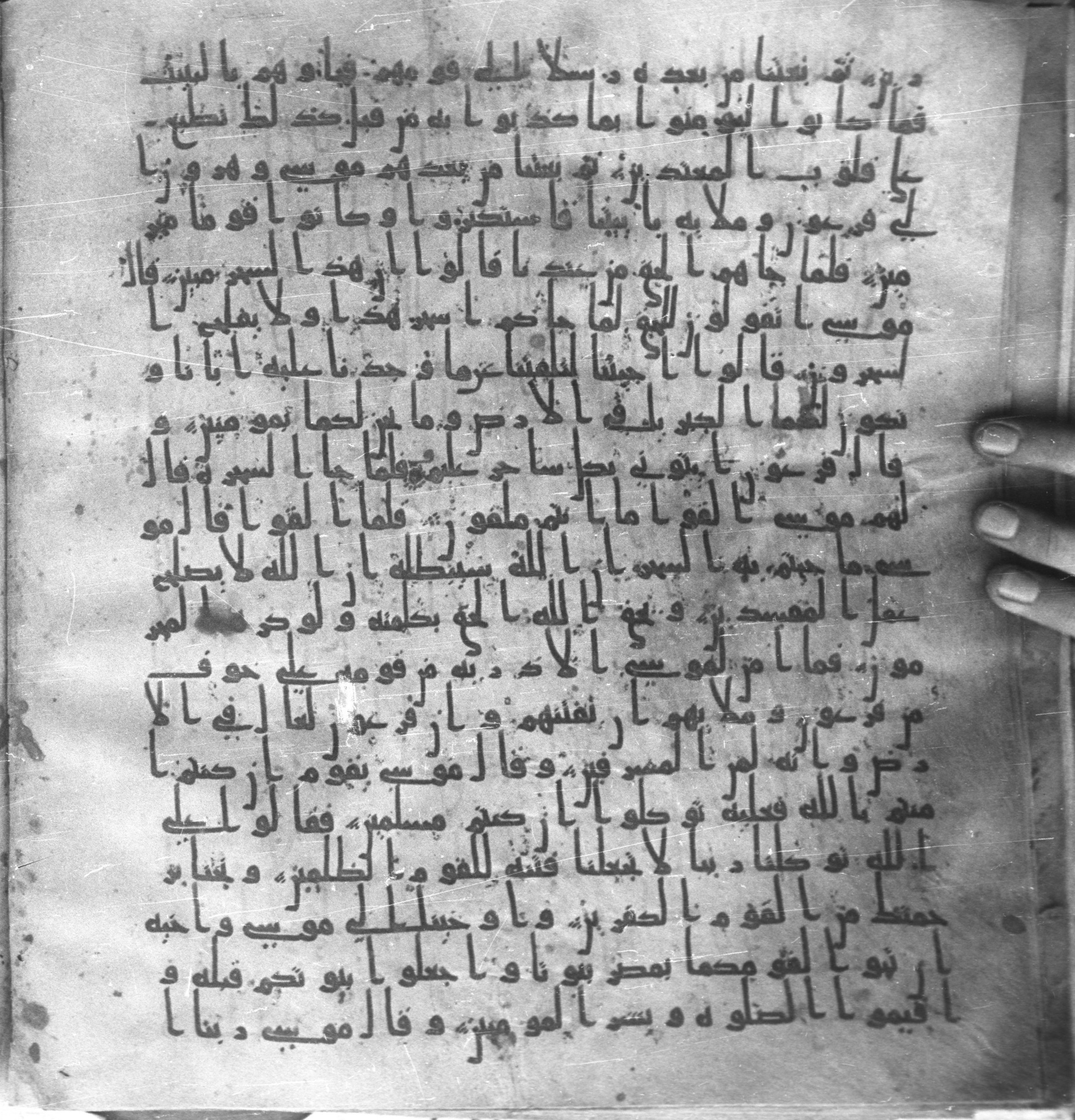
Staatsbibliothek zu Berlin, Ms. or. fol. 4313 (Scan 1)
This codex is one of the earliest surviving Quranic manuscripts, with combined radiocarbon dating of its parchment placing its production between 605 and 651 AD. The seven folios in Berlin were once part of a larger codex that is now split, with 33 additional folios currently held in the Egyptian National Library. The Berlin leaves were acquired in 1939 from the estate of Bernhard Moritz, the former director of the Khedivial Library.
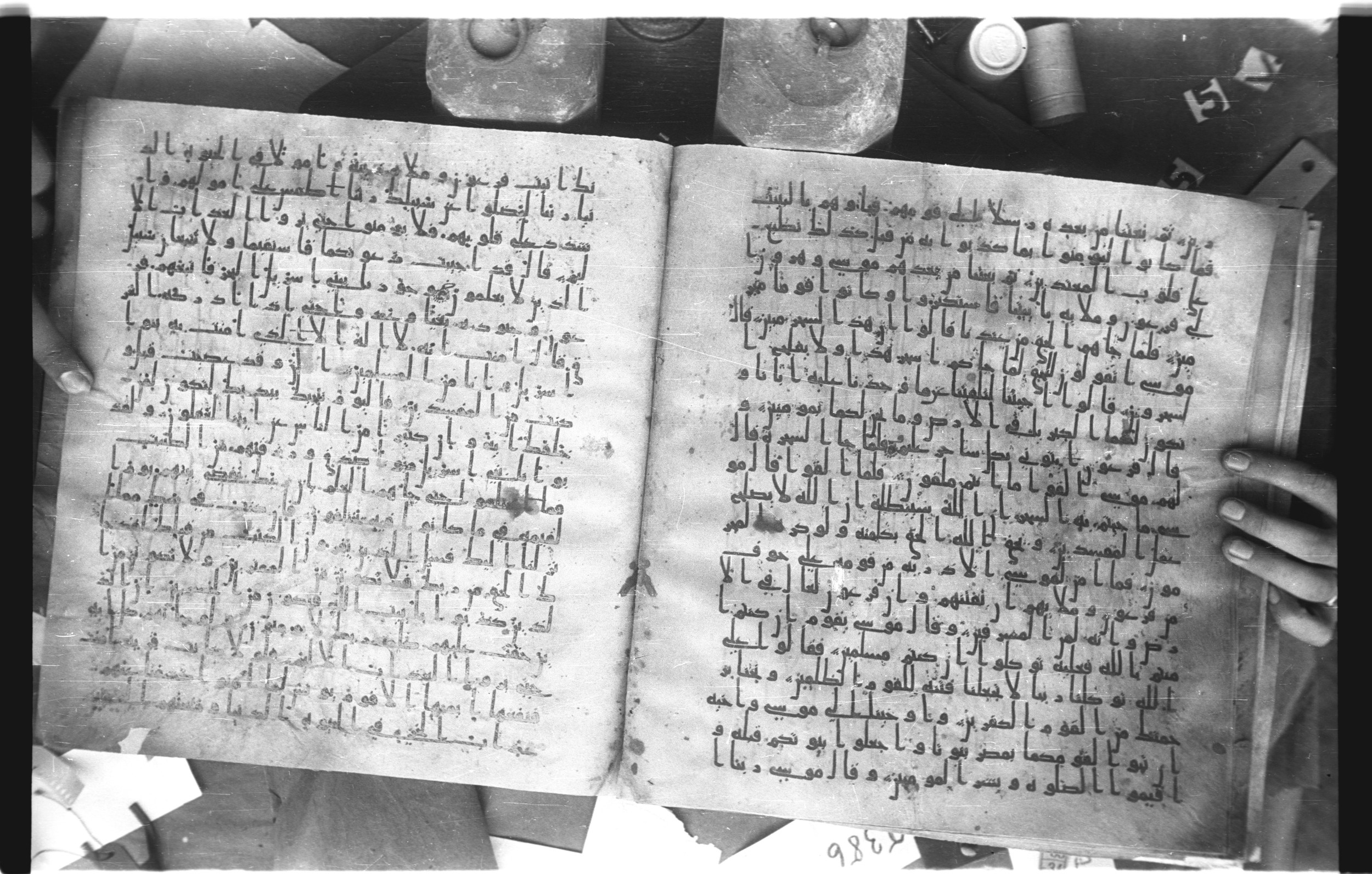
Staatsbibliothek zu Berlin, Ms. or. fol. 4313 (Scan 2)
This codex is one of the earliest surviving Quranic manuscripts, with combined radiocarbon dating of its parchment placing its production between 605 and 651 AD. The seven folios in Berlin were once part of a larger codex that is now split, with 33 additional folios currently held in the Egyptian National Library. The Berlin leaves were acquired in 1939 from the estate of Bernhard Moritz, the former director of the Khedivial Library.
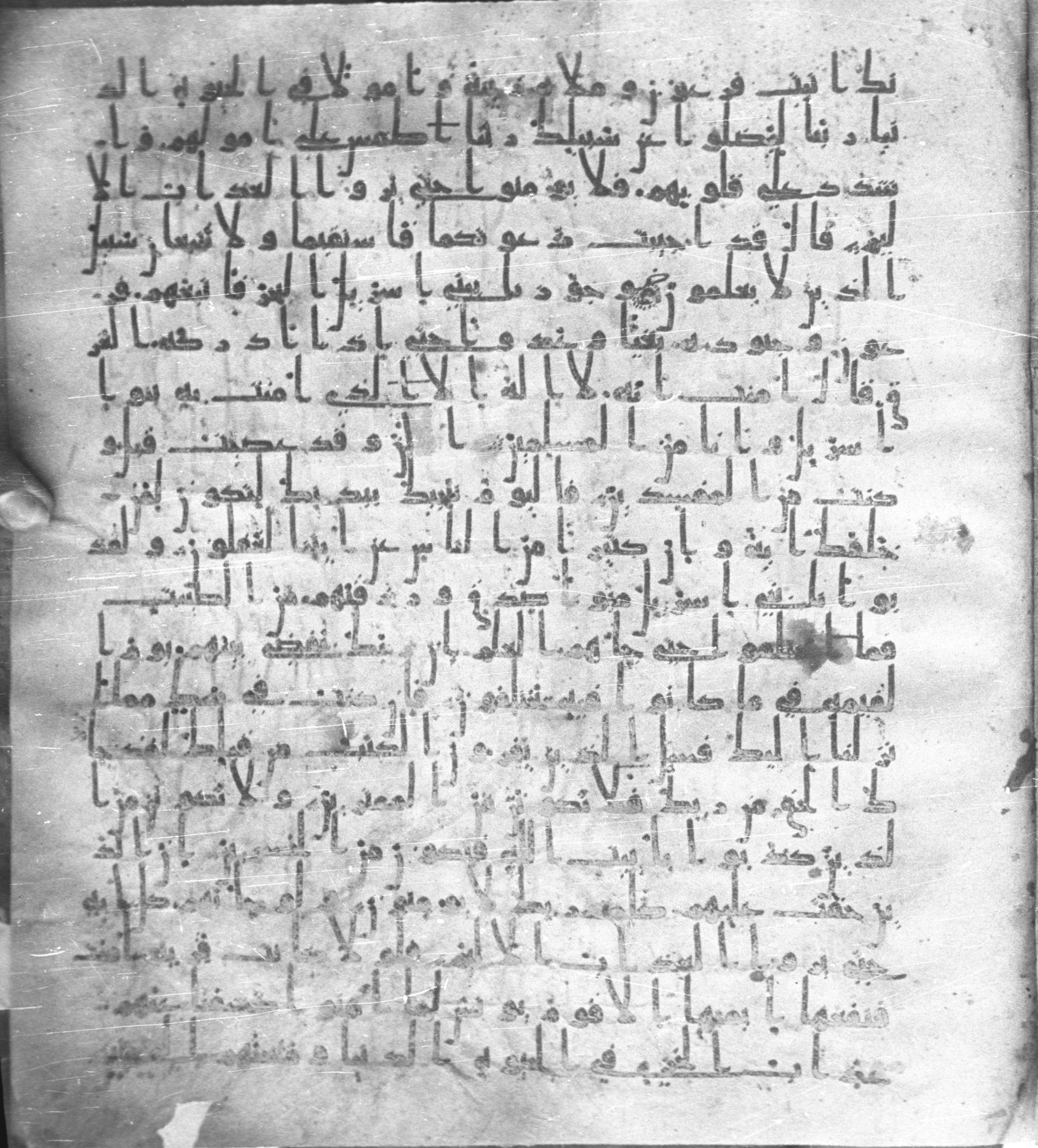
Staatsbibliothek zu Berlin, Ms. or. fol. 4313 (Scan 3)
This codex is one of the earliest surviving Quranic manuscripts, with combined radiocarbon dating of its parchment placing its production between 605 and 651 AD. The seven folios in Berlin were once part of a larger codex that is now split, with 33 additional folios currently held in the Egyptian National Library. The Berlin leaves were acquired in 1939 from the estate of Bernhard Moritz, the former director of the Khedivial Library.
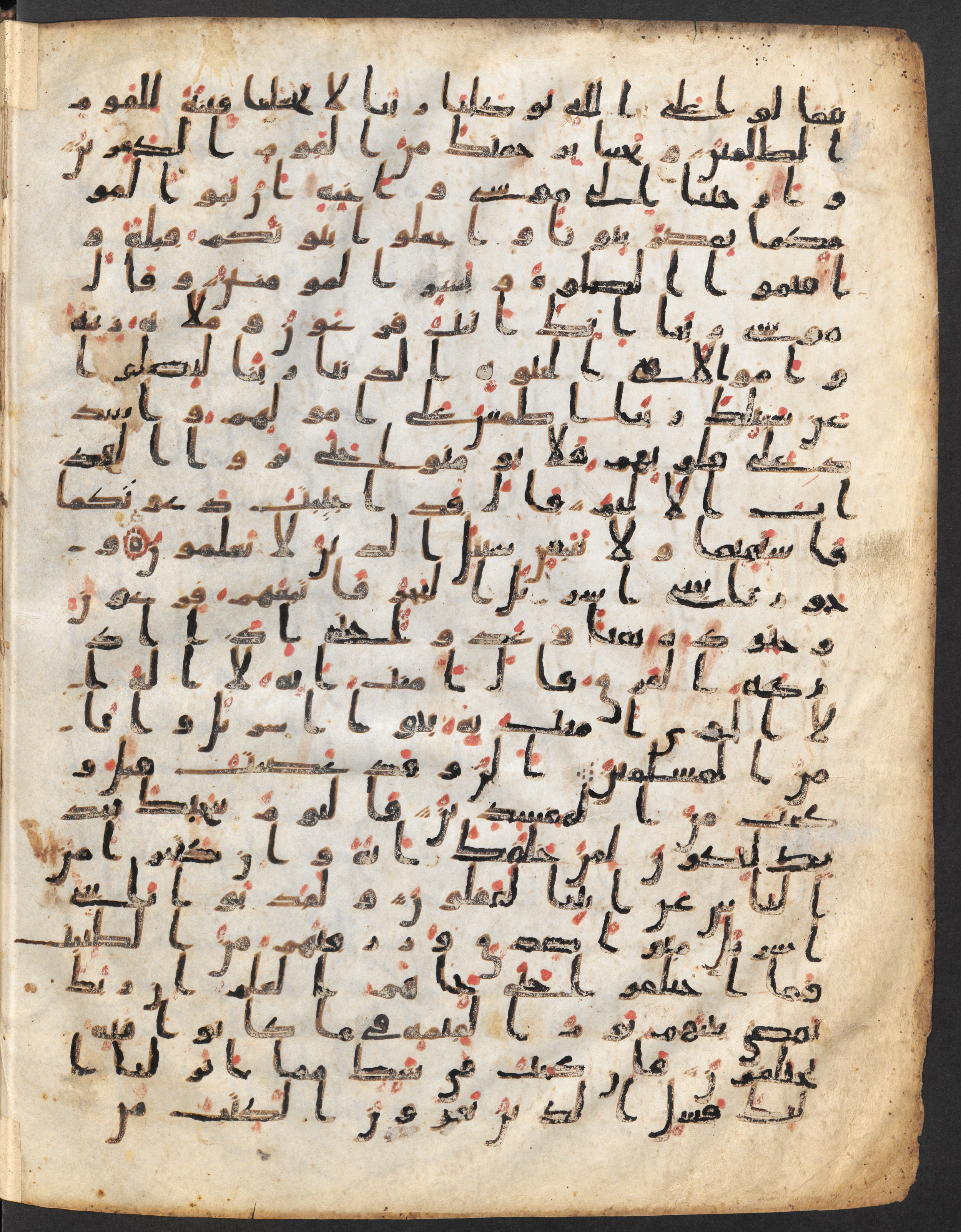
Staatsbibliothek zu Berlin, Ms. or. fol. 4313 (Scan 4)
This codex is one of the earliest surviving Quranic manuscripts, with combined radiocarbon dating of its parchment placing its production between 605 and 651 AD. The seven folios in Berlin were once part of a larger codex that is now split, with 33 additional folios currently held in the Egyptian National Library. The Berlin leaves were acquired in 1939 from the estate of Bernhard Moritz, the former director of the Khedivial Library.
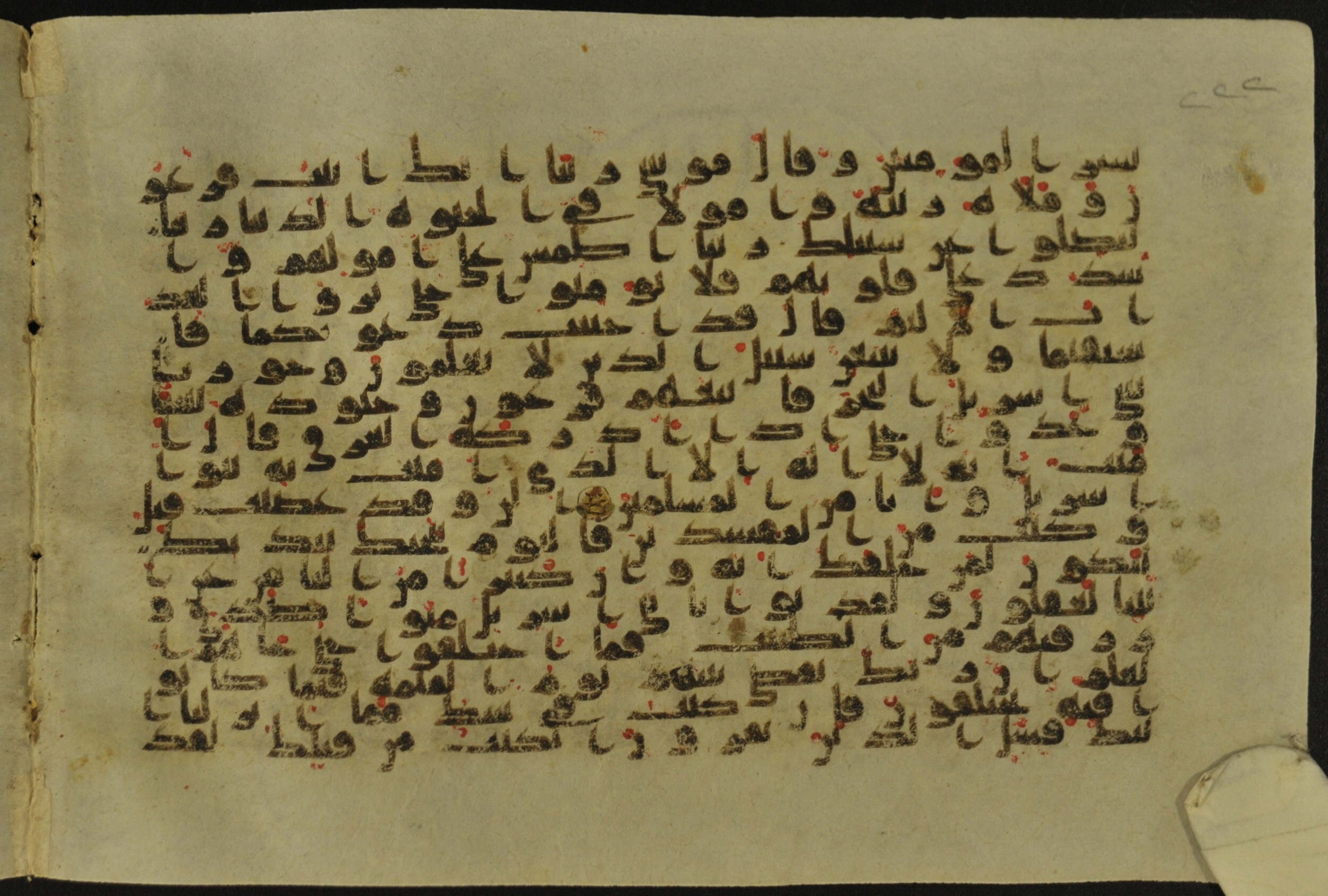
Muṣḥaf of Najaf Ashraf (Codex 1 of Imām ʿAlī Library)
This codex contains a colophon attributing it to ʿAlī ibn Abī Ṭālib and dating it to 40 AH (660 AD), though scholars believe this colophon was added later. It also features a waqf (endowment) deed written on the first page in 1775 AD.
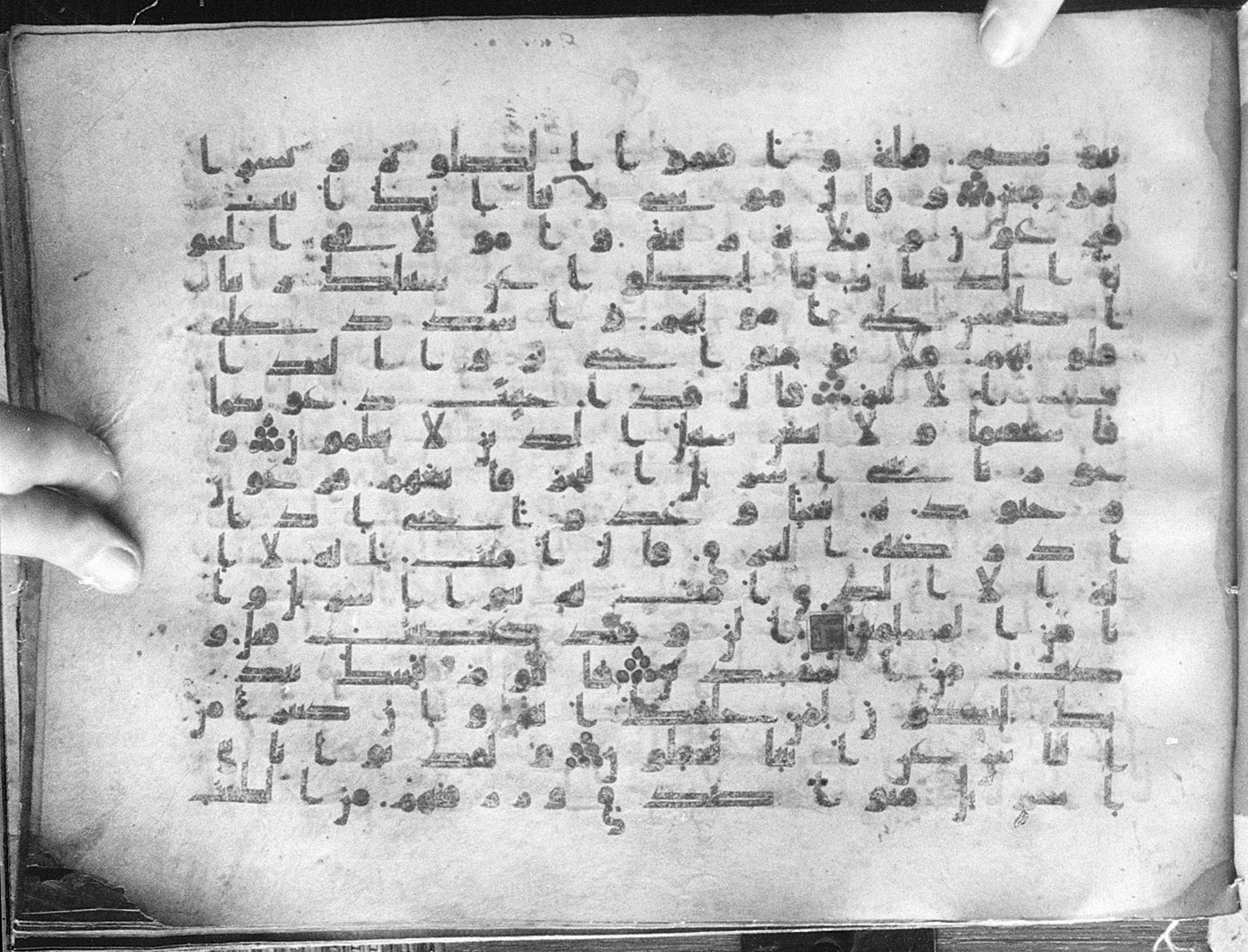
Meknes, Private library of Sherif ʿAbdarraḥmān b. Zīdān, no call number
This nearly complete early Kufic Quran was photographed by Otto Pretzl during a research trip to Morocco in 1934. While the main body belonged to the private library of Sherif ʿAbdarraḥmān b. Zīdān, fragments of this codex have since been dispersed to the Royal Library in Rabat, the Tareq Rajab Museum in Kuwait, and sold through auction houses like Christie's.
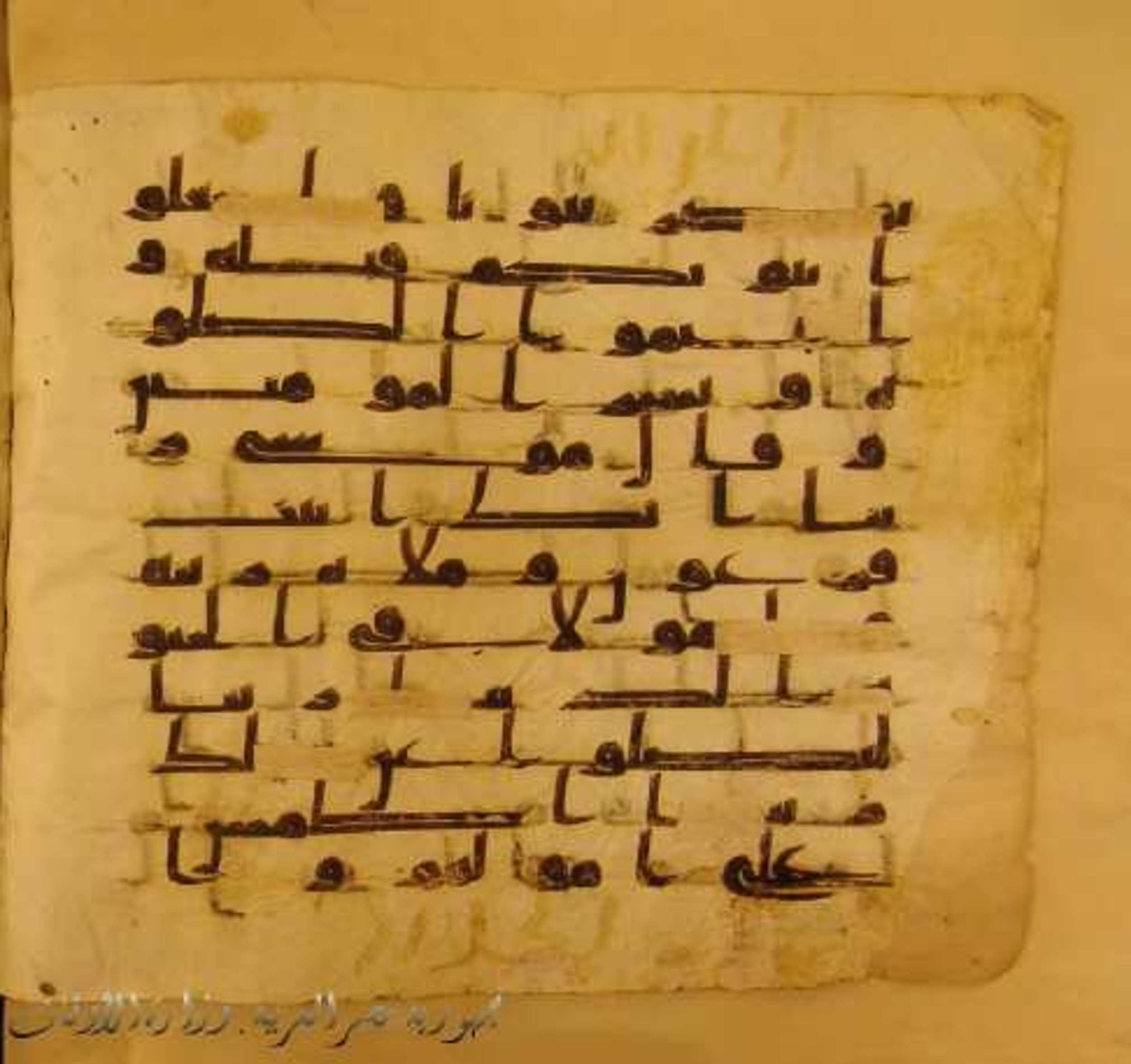
Paris, Bibliothèque nationale de France, Arabe 324 (c) (Scan 1)
Carbon dating of fragments from Arabe 324 (c) places its origin between 660-780 AD. The manuscript is part of a composite codex, where Arabe 324 (c) and Gotha Ms. orient. A 462 are original leaves, while other sections such as Arabe 324 (a) and (d) were added centuries later to replace damaged or missing pages.
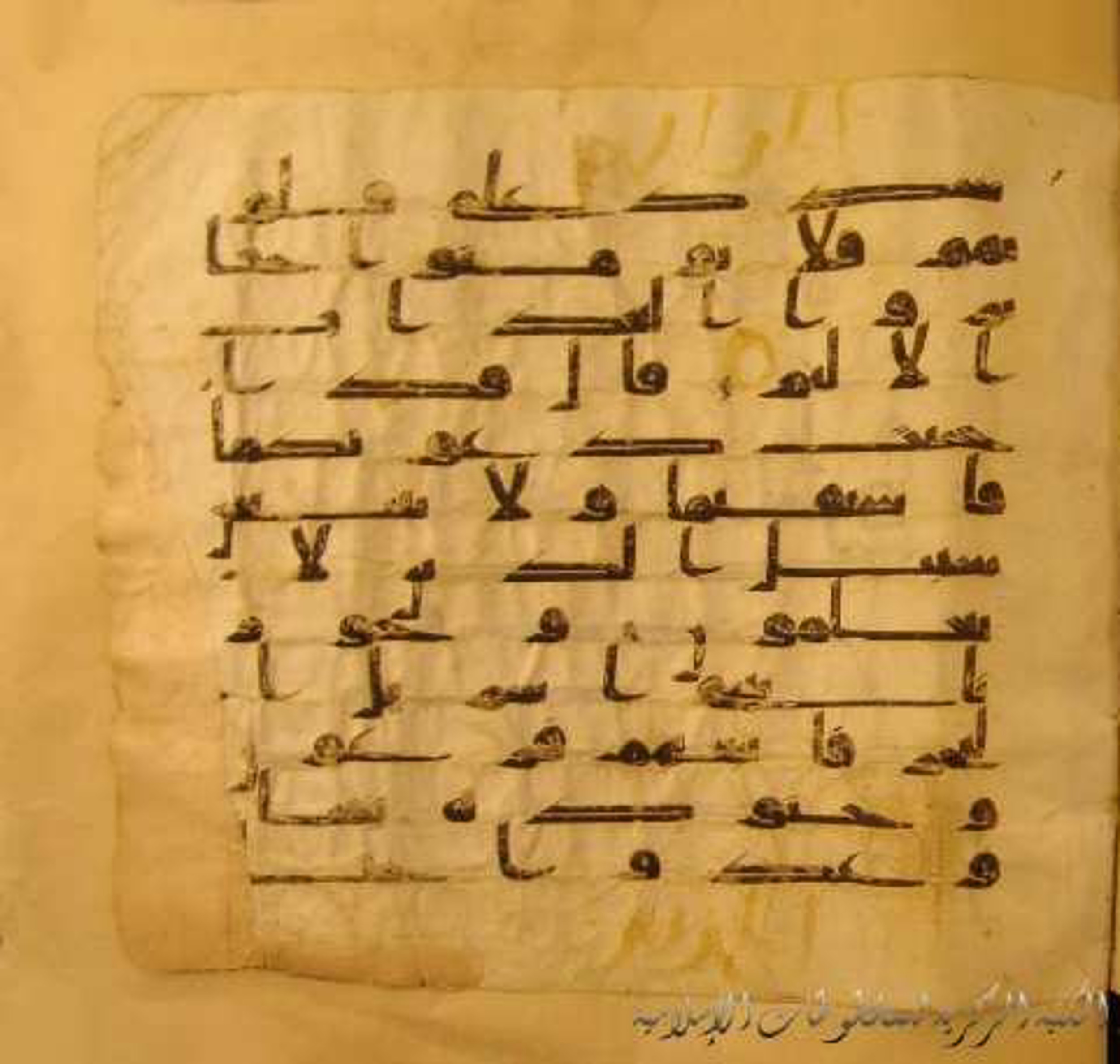
Paris, Bibliothèque nationale de France, Arabe 324 (c) (Scan 2)
Carbon dating of fragments from Arabe 324 (c) places its origin between 660-780 AD. The manuscript is part of a composite codex, where Arabe 324 (c) and Gotha Ms. orient. A 462 are original leaves, while other sections such as Arabe 324 (a) and (d) were added centuries later to replace damaged or missing pages.
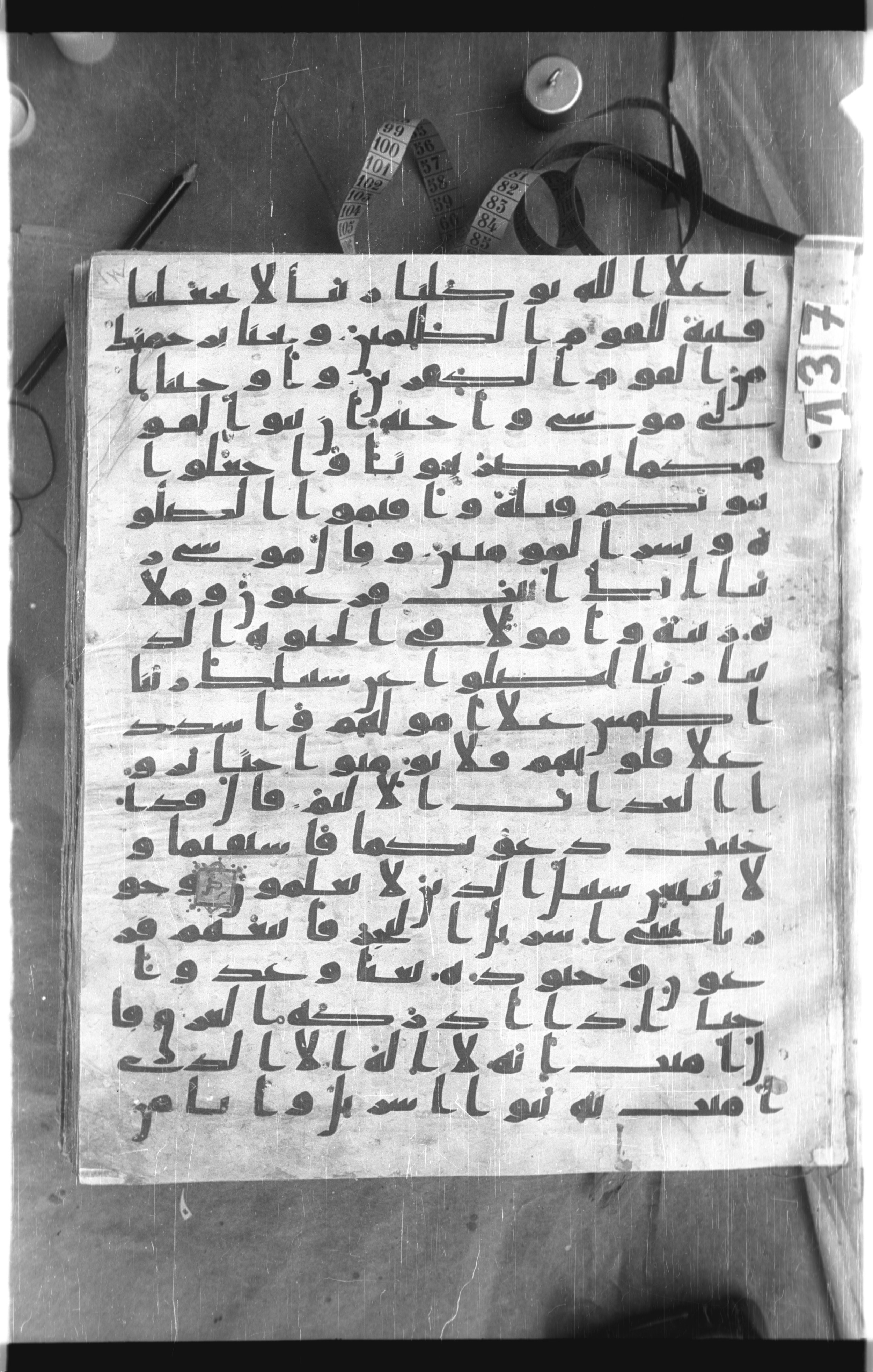
Istanbul, Topkapı Palace Museum, Saray 50385
This codex is known primarily through photographs in the Gotthelf Bergsträßer archive, taken in the early 1930s. Although the original manuscript is no longer identifiable in the current museum catalogue, these rare photographs survived World War II and provide a crucial record of this early text.
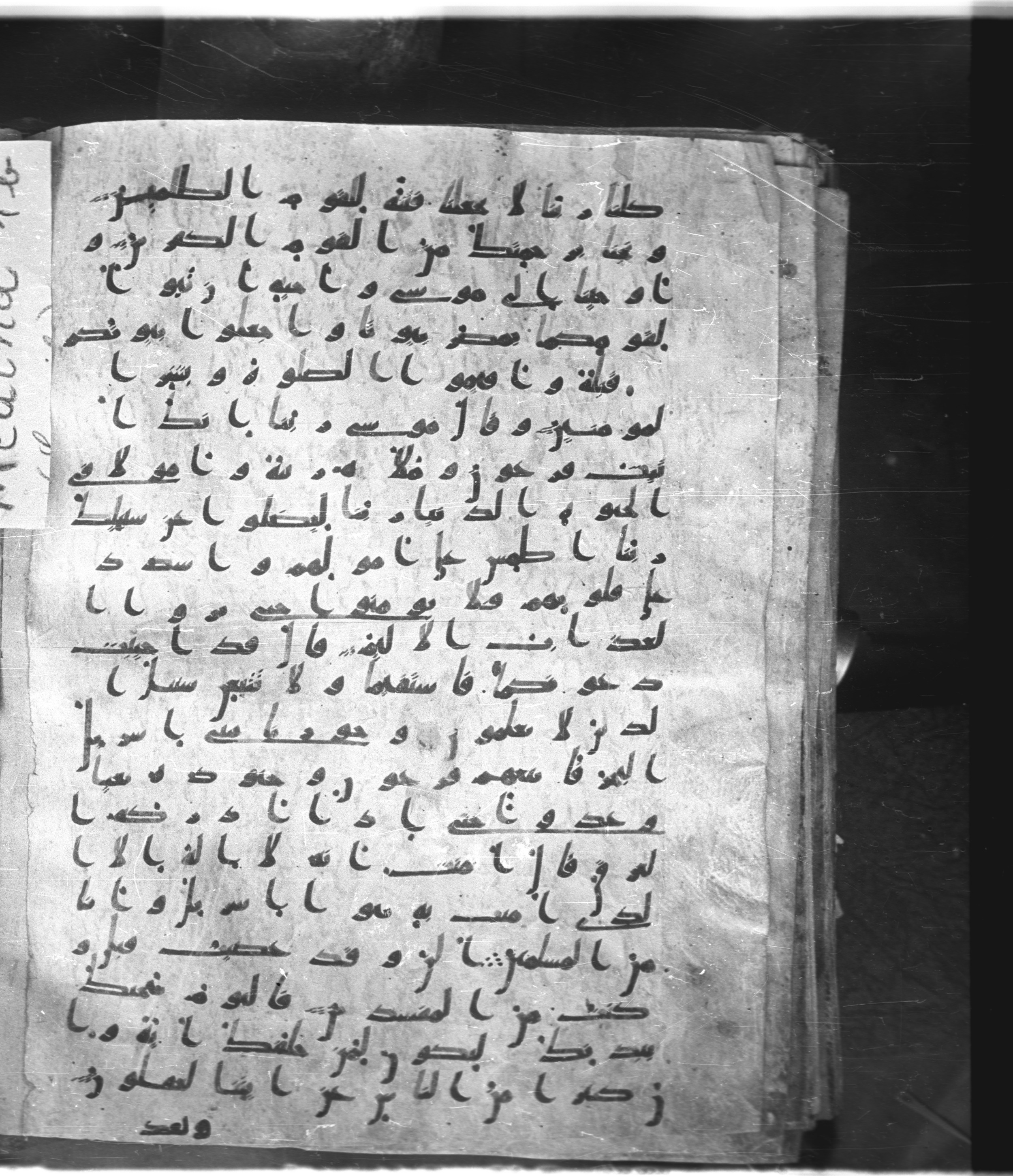
Saray Medina 1a (Karatay 3)
This almost complete codex is notable for being written by at least six different scribes in Kufic script. Originally documented in Gotthelf Bergsträßer's archives as 'Medina 1a', its folios were later repaired with paper edges, and a few missing pages were completed in Naskh script.
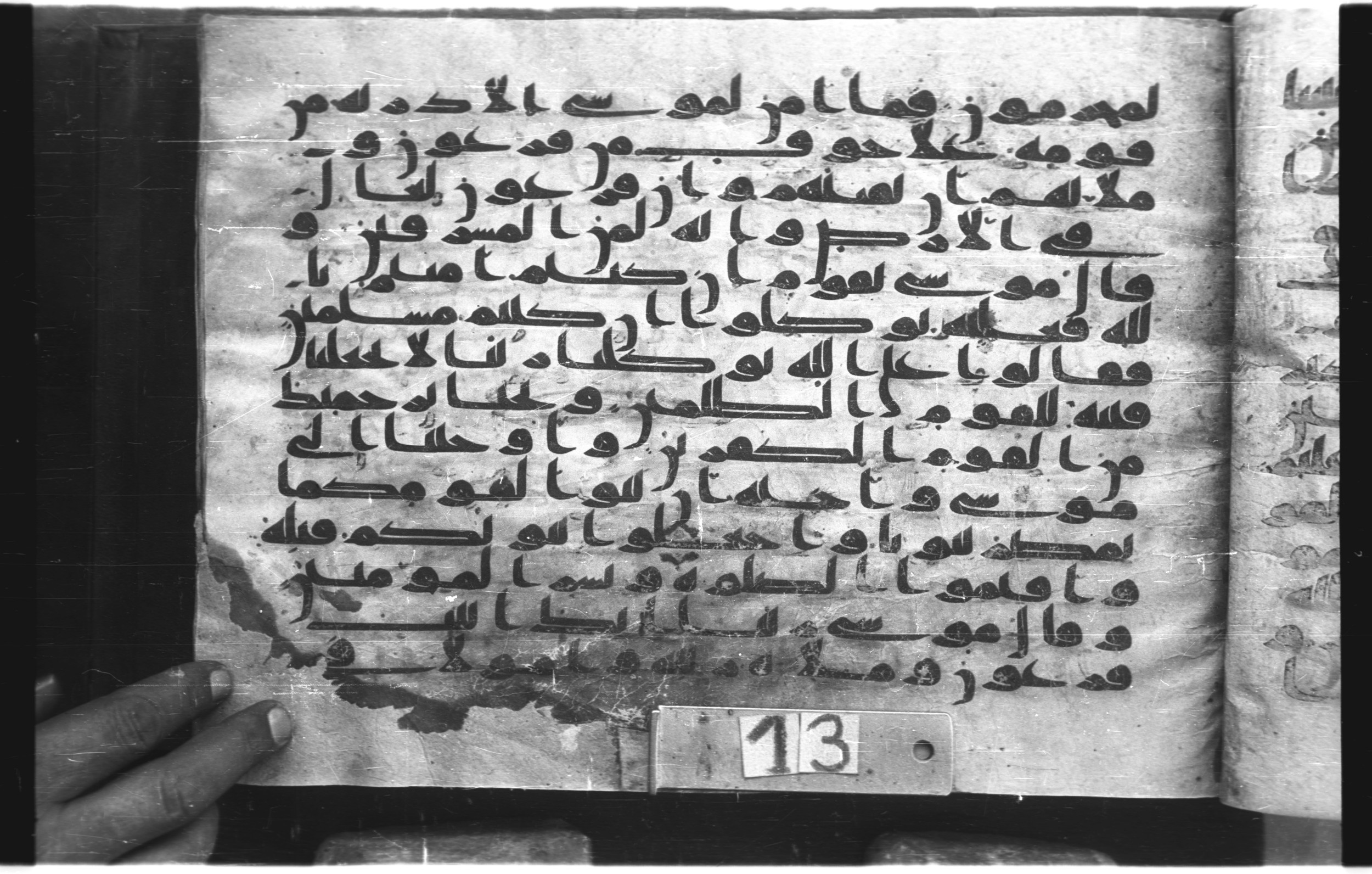
Topkapı Palace Museum, "Saray Medina 1b" (M. 3) (Scan 1)
This manuscript was documented by Gotthelf Bergsträßer as 'Saray Medina 1b', and its photographs became part of his famous archive in Munich. Notably, it still retains a dark olive-coloured leather binding with a traditional flap (miklep) and mandorla (şemse), as well as multi-colored geometric sura headings.
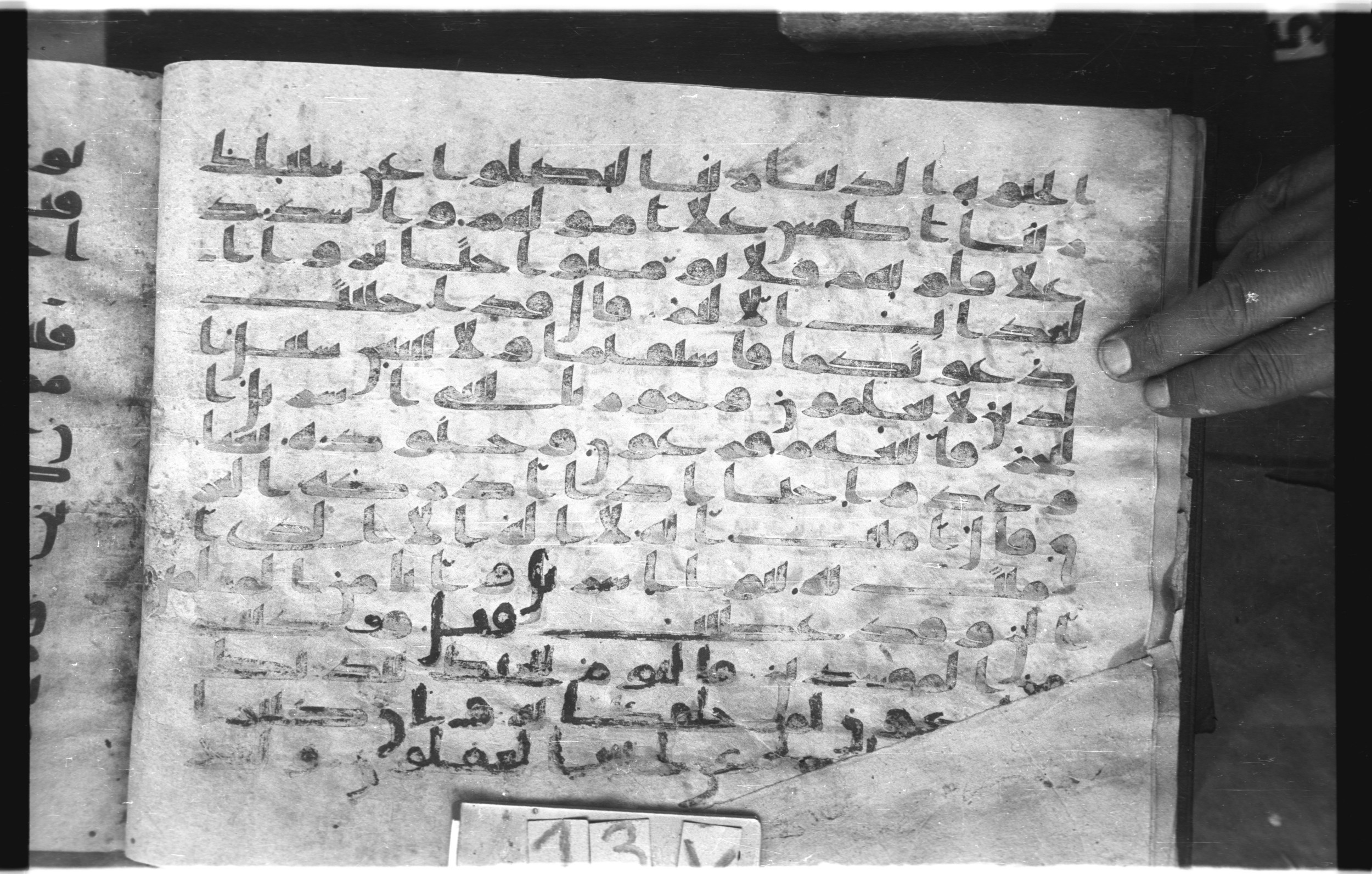
Topkapı Palace Museum, "Saray Medina 1b" (M. 3) (Scan 2)
This manuscript was documented by Gotthelf Bergsträßer as 'Saray Medina 1b', and its photographs became part of his famous archive in Munich. Notably, it still retains a dark olive-coloured leather binding with a traditional flap (miklep) and mandorla (şemse), as well as multi-colored geometric sura headings.
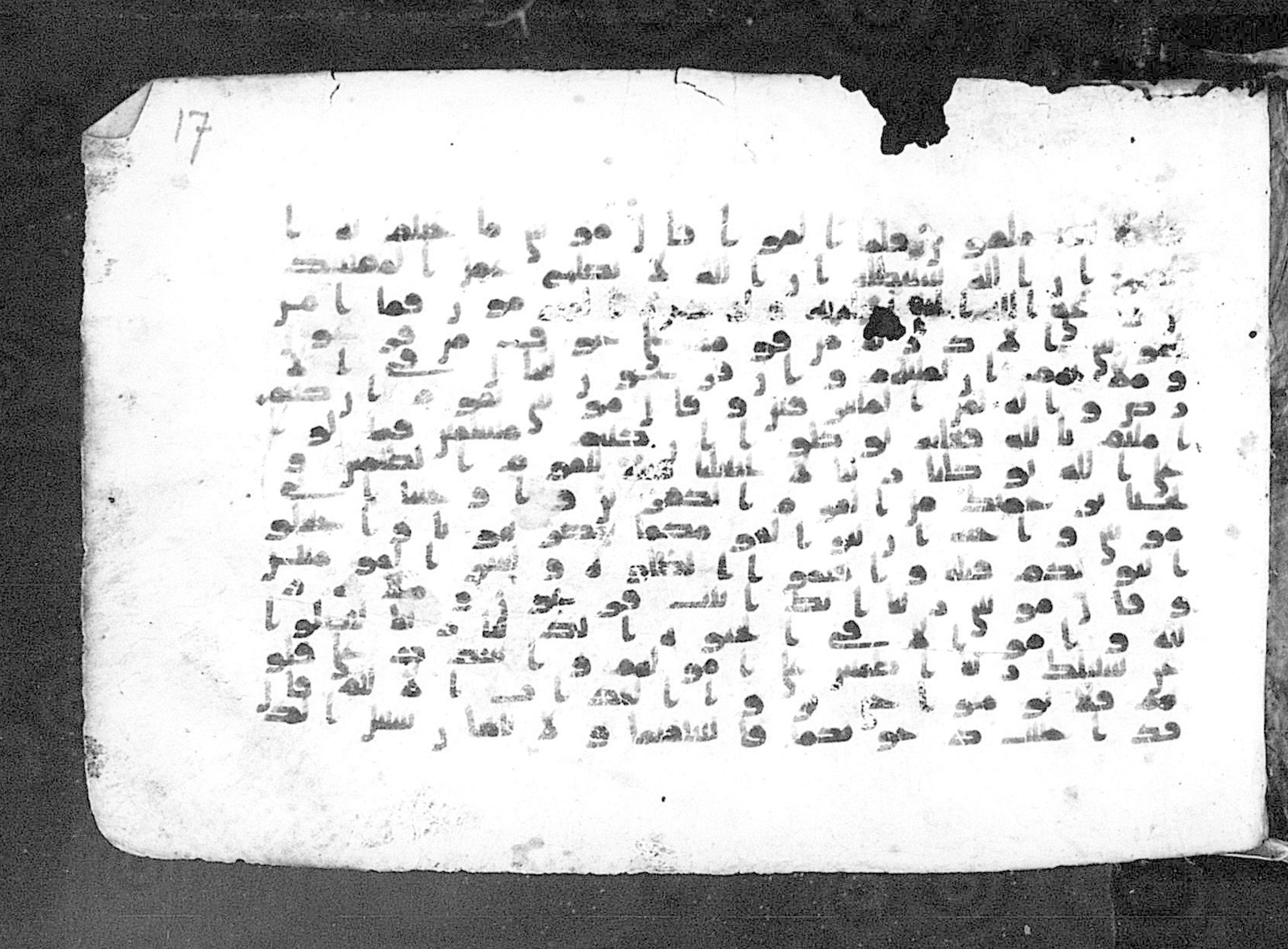
Moritz 1905, Tables 39-40 (Scan 1)
This codex fragment was documented in Bernhard Moritz's 1905 'Arabic Palaeography' album and was reportedly discovered in the ancient Egyptian city of Bahnasa (Oxyrynchos). Scholars suggest it may originally belong to the same large codex as other early Quranic fragments currently held in the Vatican, Paris, and the Khalili Collections.
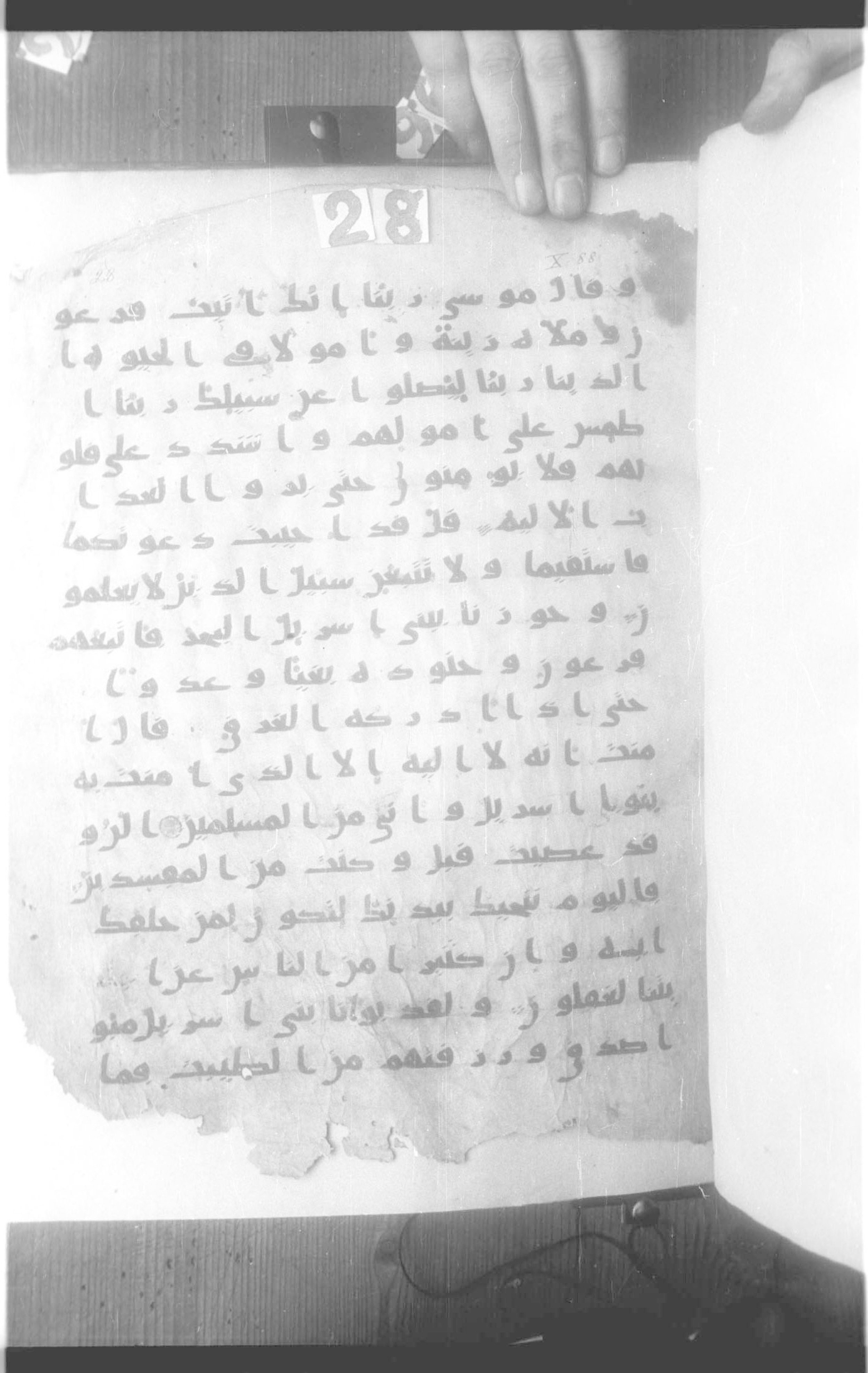
Moritz 1905, Tables 39-40 (Scan 2)
This codex fragment was documented in Bernhard Moritz's 1905 'Arabic Palaeography' album and was reportedly discovered in the ancient Egyptian city of Bahnasa (Oxyrynchos). Scholars suggest it may originally belong to the same large codex as other early Quranic fragments currently held in the Vatican, Paris, and the Khalili Collections.
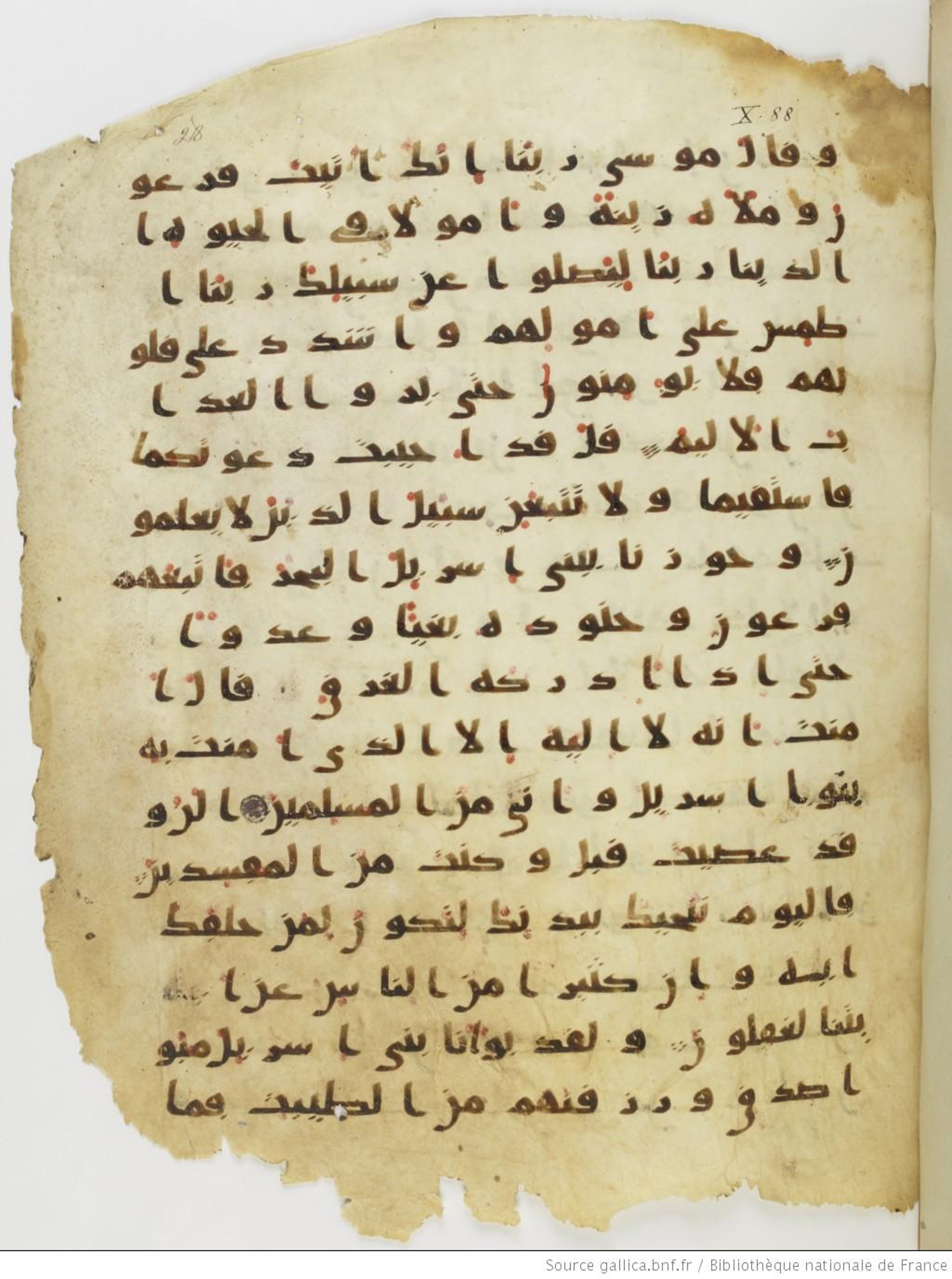
Moritz 1905, Tables 39-40 (Scan 3)
This codex fragment was documented in Bernhard Moritz's 1905 'Arabic Palaeography' album and was reportedly discovered in the ancient Egyptian city of Bahnasa (Oxyrynchos). Scholars suggest it may originally belong to the same large codex as other early Quranic fragments currently held in the Vatican, Paris, and the Khalili Collections.
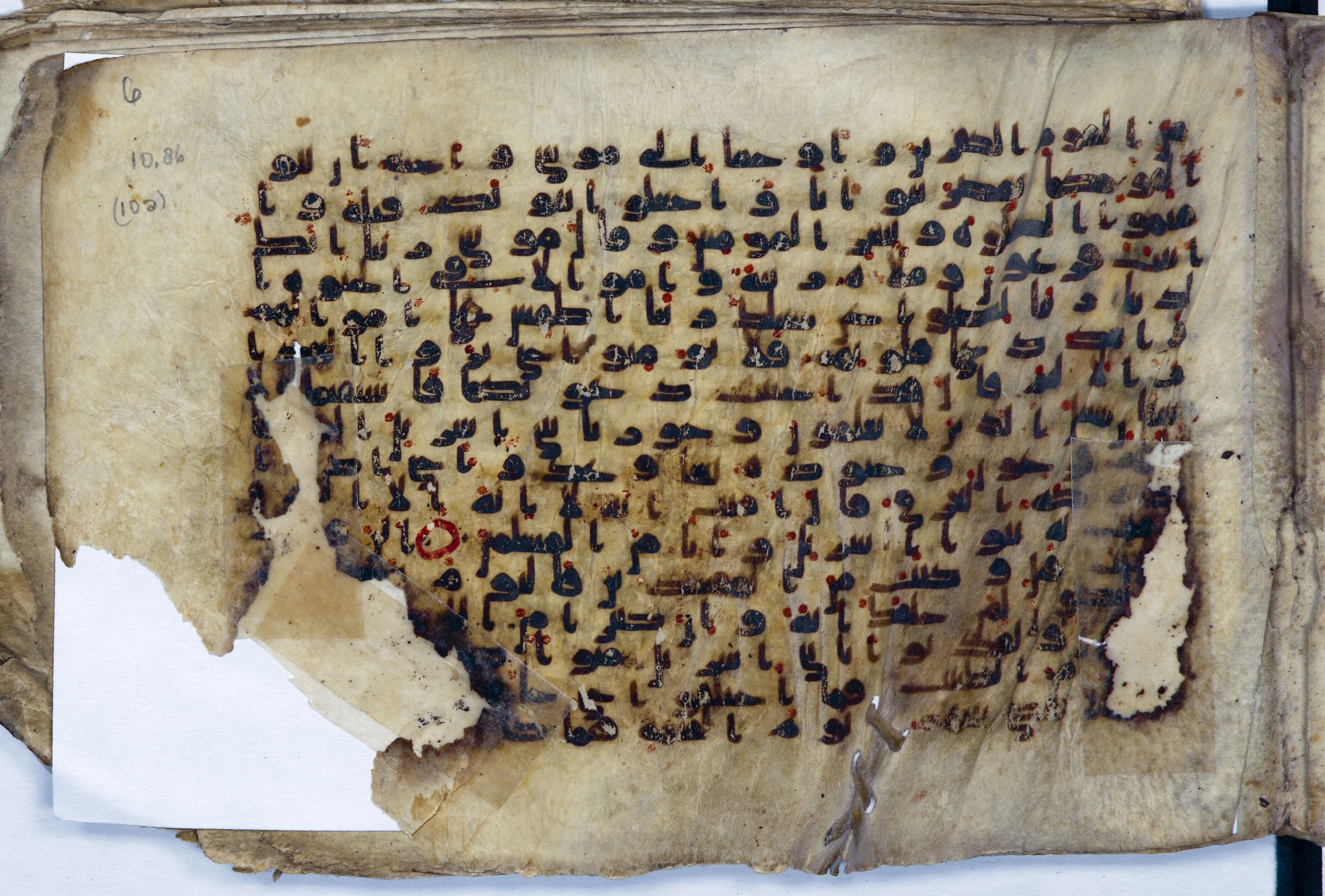
Leiden, Universiteitsbibliotheek Leiden, Or. 6814 (Scan 1)
Carbon dating of this manuscript's parchment by the Coranica project places its origin between the late 7th and mid-8th century AD, making it an important early witness to the Qur'anic text. It was purchased by Leiden University in 1938 from the antiquarian Erik von Scherling.
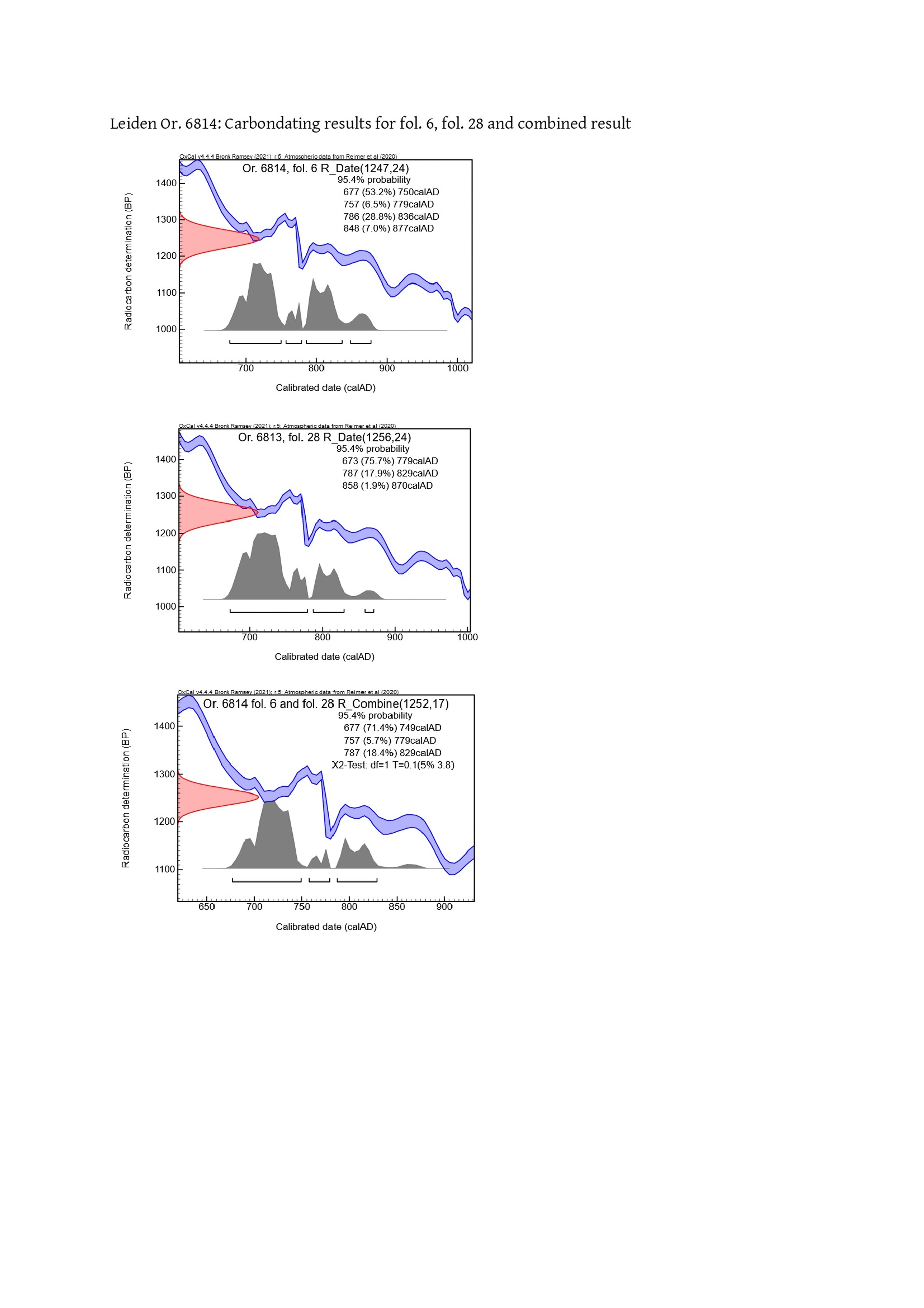
Leiden, Universiteitsbibliotheek Leiden, Or. 6814 (Scan 2)
Carbon dating of this manuscript's parchment by the Coranica project places its origin between the late 7th and mid-8th century AD, making it an important early witness to the Qur'anic text. It was purchased by Leiden University in 1938 from the antiquarian Erik von Scherling.
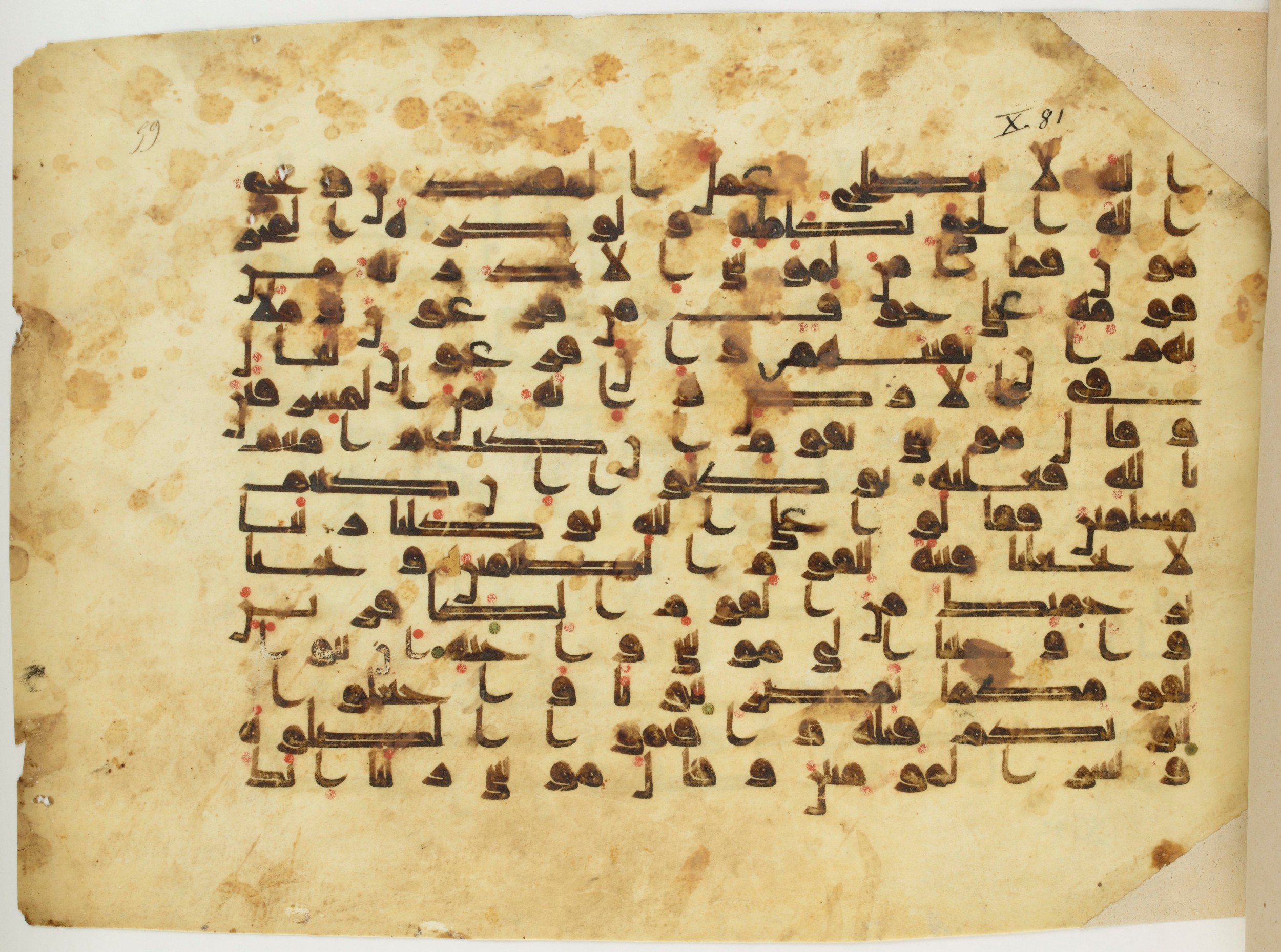
Paris, Bibliothèque nationale de France, Arabe 337 (d) (Scan 1)
This codex is written on parchment in the D.I style of early Kufic script. A unique feature of this manuscript is that the initial 'ayn (ع) letters have been systematically traced over by a later hand, and golden hāʾ symbols are used to indicate groups of five verses.
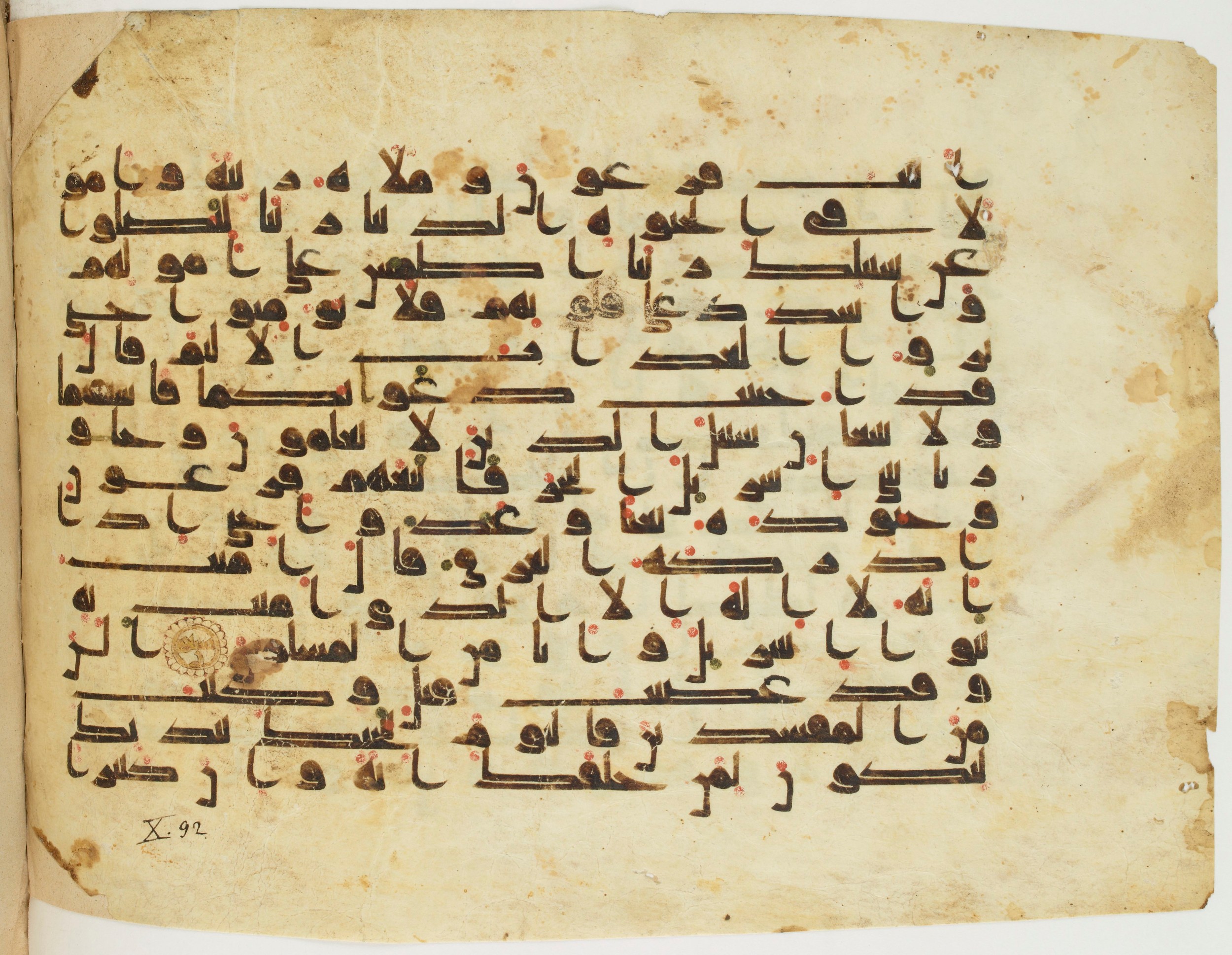
Paris, Bibliothèque nationale de France, Arabe 337 (d) (Scan 2)
This codex is written on parchment in the D.I style of early Kufic script. A unique feature of this manuscript is that the initial 'ayn (ع) letters have been systematically traced over by a later hand, and golden hāʾ symbols are used to indicate groups of five verses.
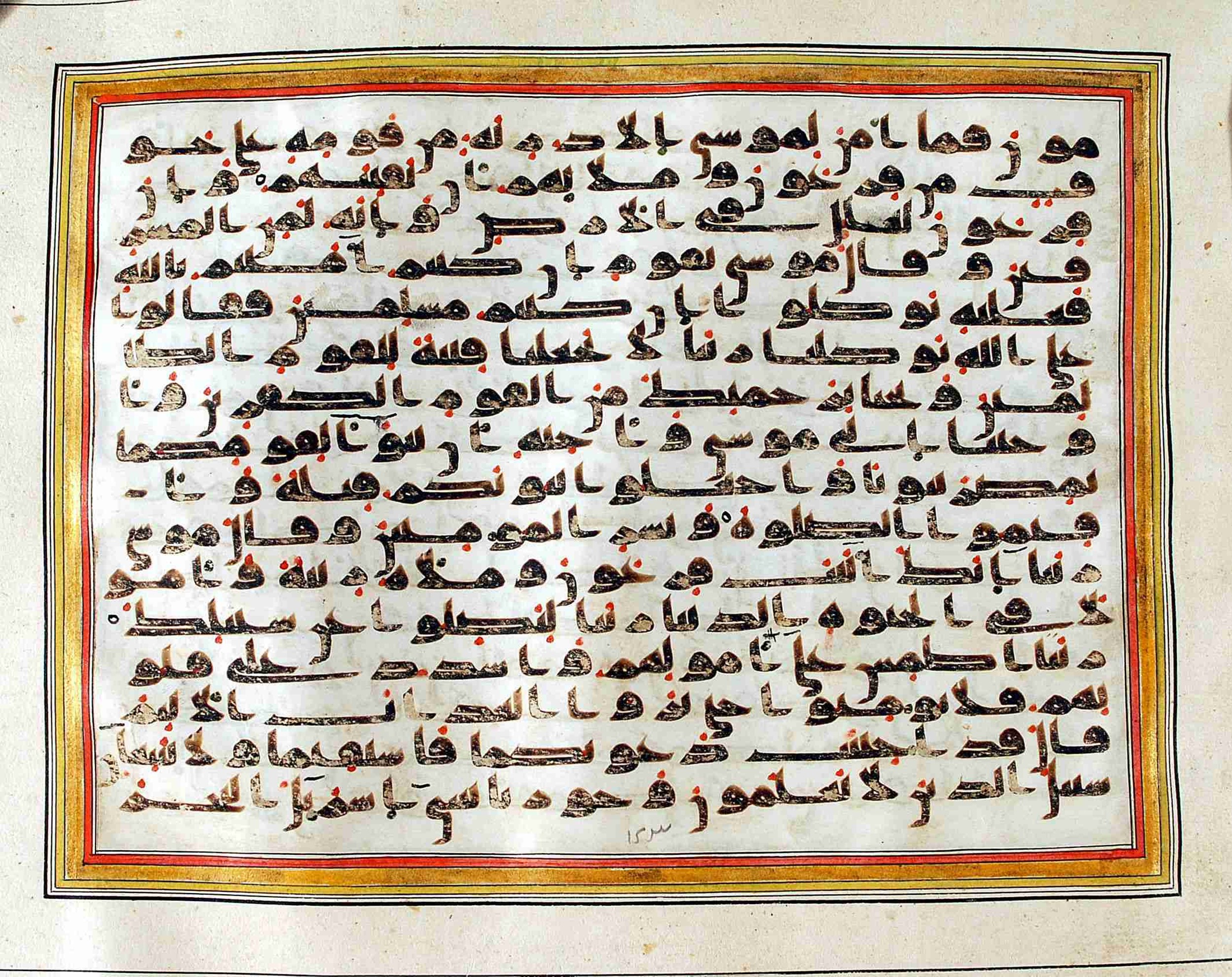
Rampur Raza Library No. 1
This manuscript is a highly prized copy traditionally ascribed to the penmanship of Ali ibn Abi Talib, the fourth Caliph. It features modern gold and colored borders on the paper margins.
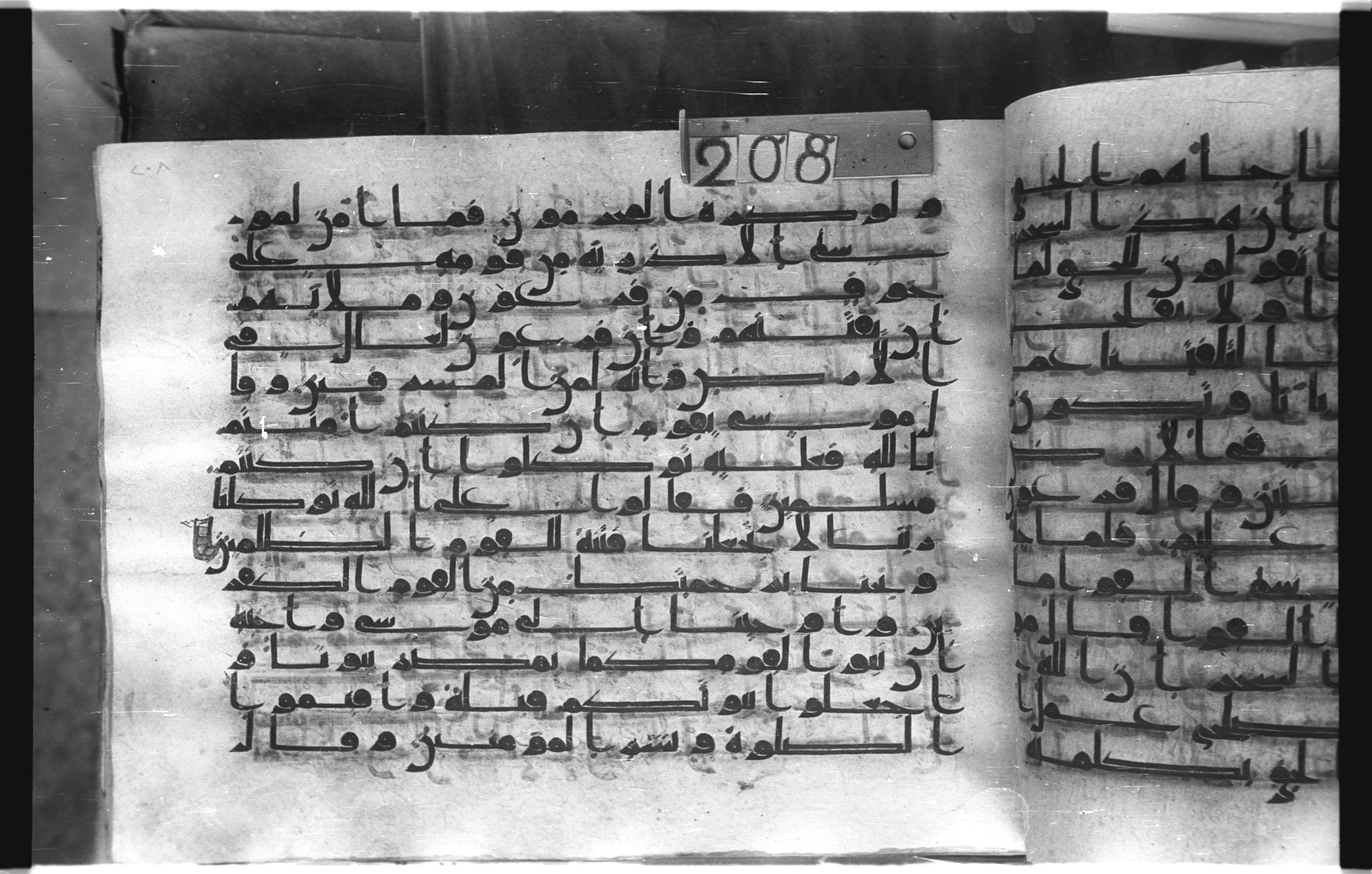
Istanbul, Topkapı Palace Museum, "Saray 50386" (Karatay 42) (Scan 1)
This near-complete Kufic Quran is bound in brown leather over wood with arabesque interlacing and iron rings. It bears the foundation seal of Sultan Osman III, and its first three leaves as well as sura headings are illuminated.
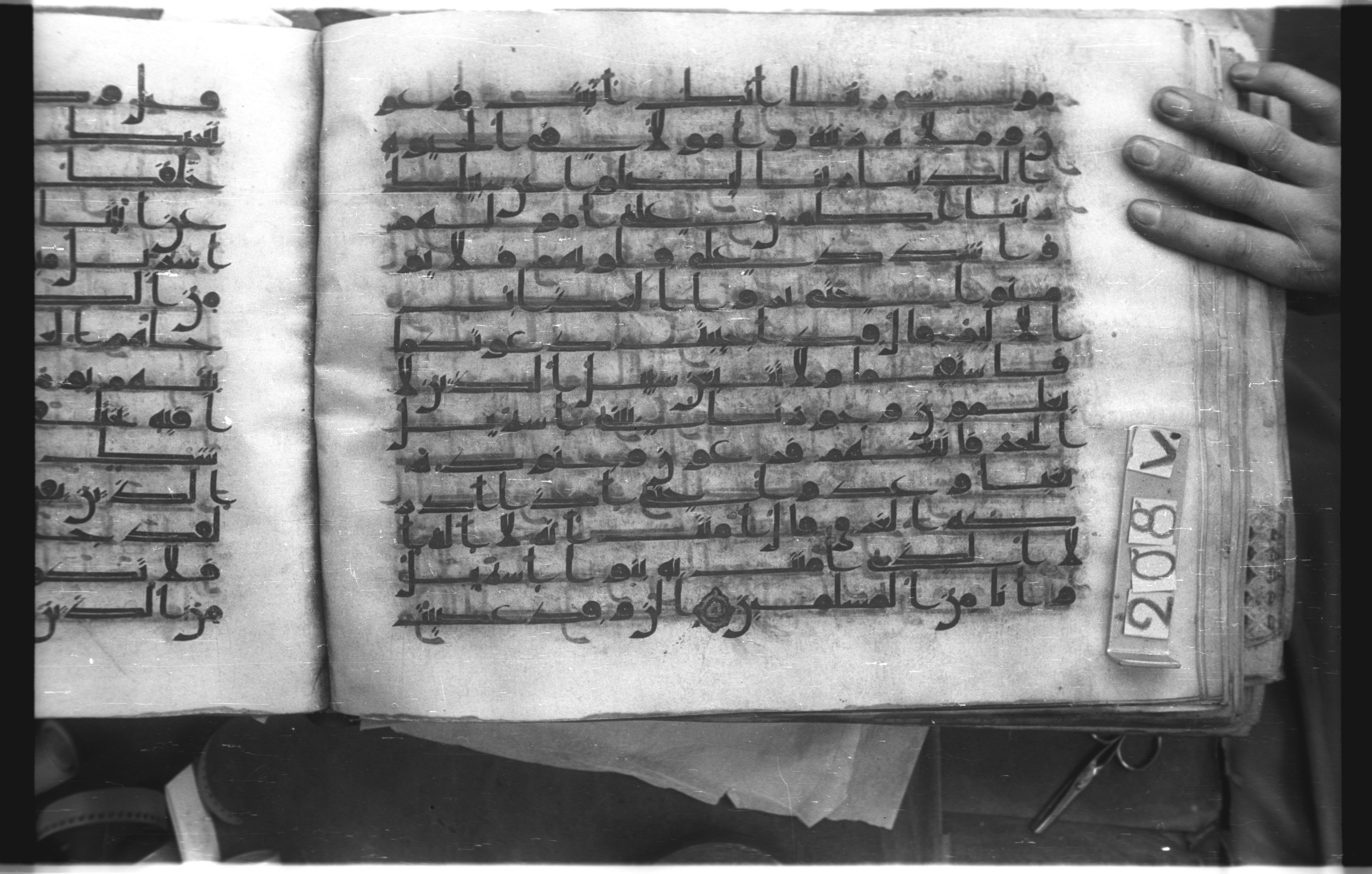
Istanbul, Topkapı Palace Museum, "Saray 50386" (Karatay 42) (Scan 2)
This near-complete Kufic Quran is bound in brown leather over wood with arabesque interlacing and iron rings. It bears the foundation seal of Sultan Osman III, and its first three leaves as well as sura headings are illuminated.
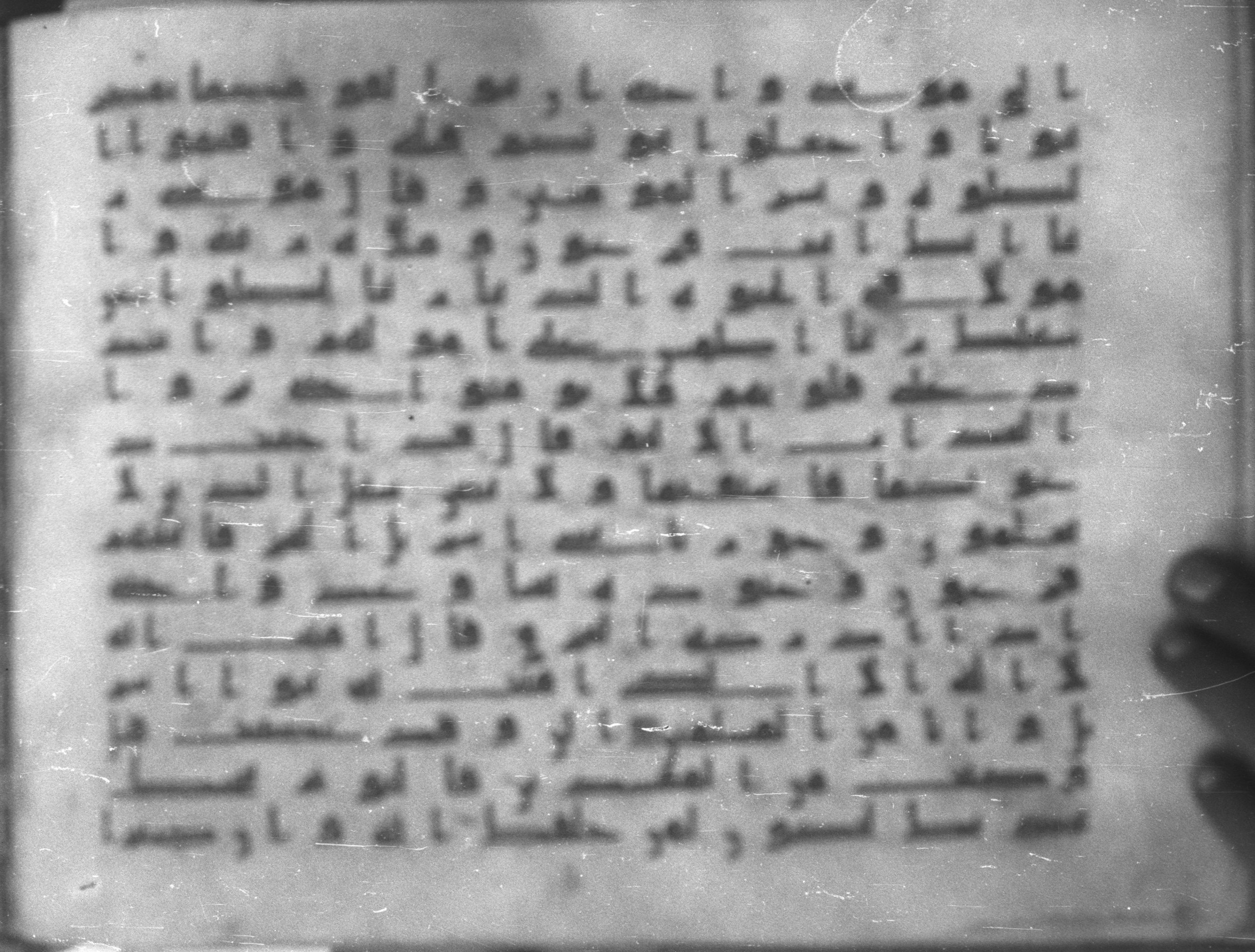
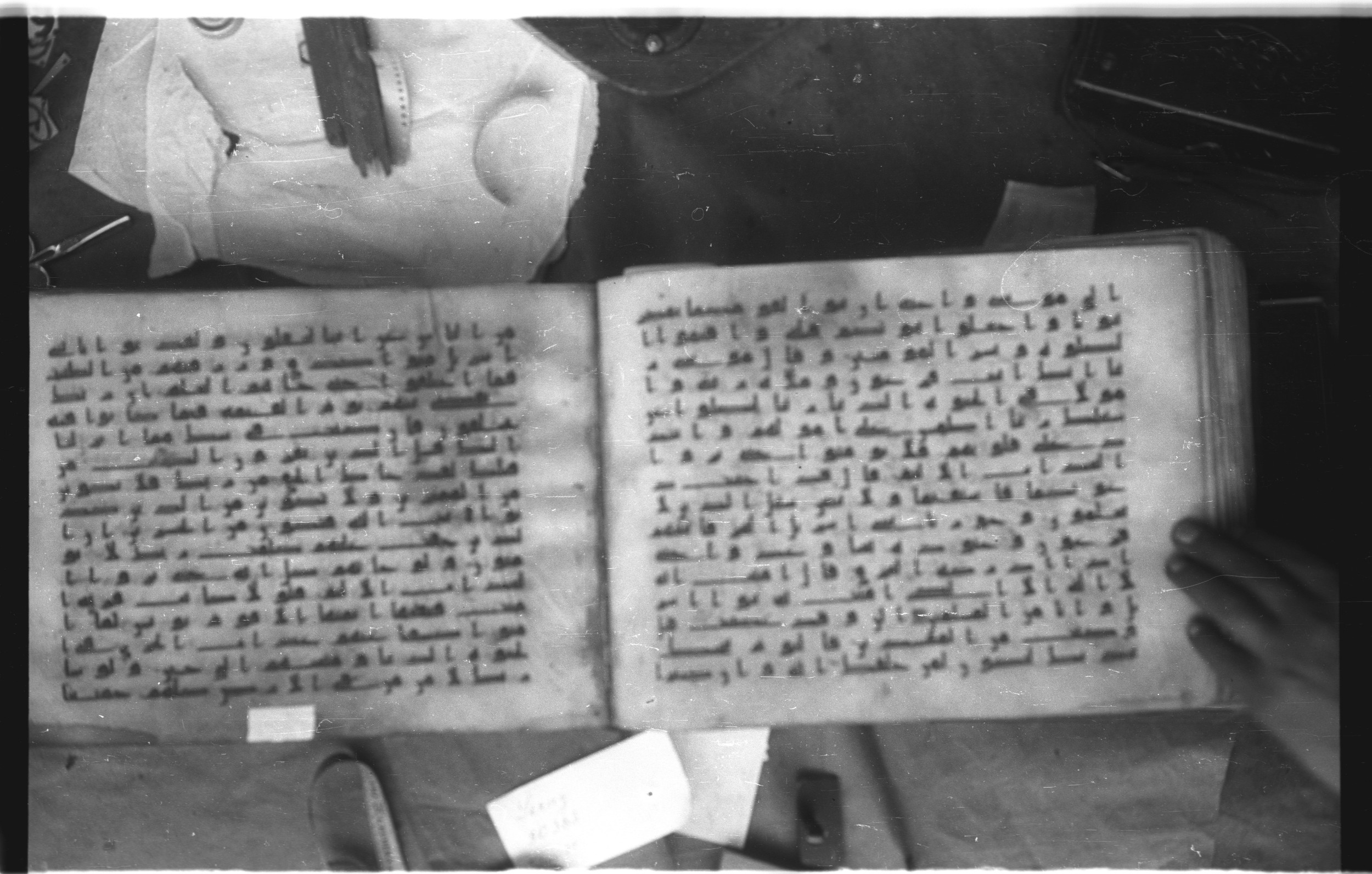
Topkapı Palace Museum, Saray 50395 (Scan 1)
This nearly complete codex is an exceptional document, as complete codices in Kūfī D script style are extremely rare. The manuscript features illuminated pages for the first three and last six folios, as well as at surah beginnings.
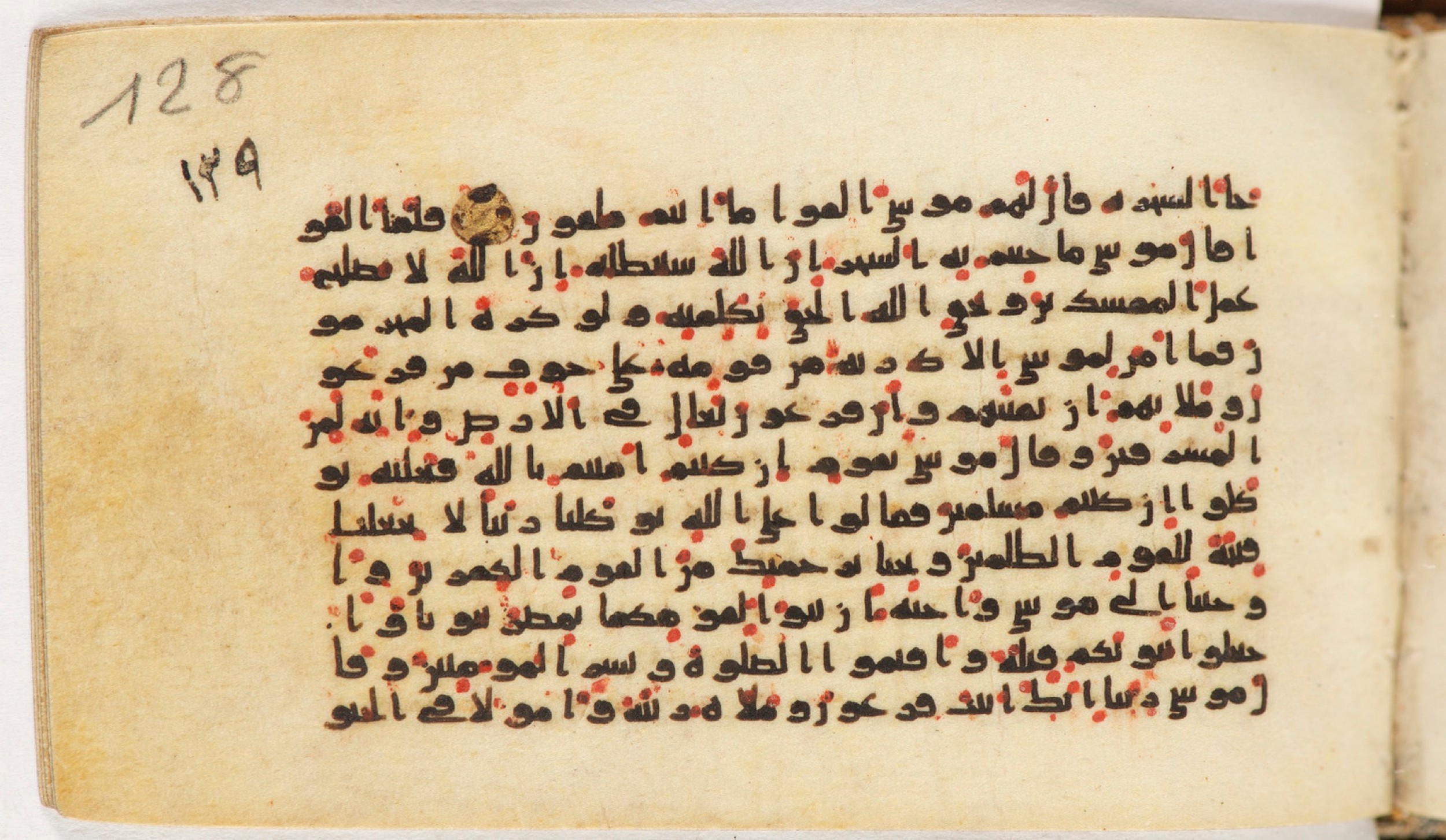
Topkapı Palace Museum, Saray 50395 (Scan 2)
This nearly complete codex is an exceptional document, as complete codices in Kūfī D script style are extremely rare. The manuscript features illuminated pages for the first three and last six folios, as well as at surah beginnings.
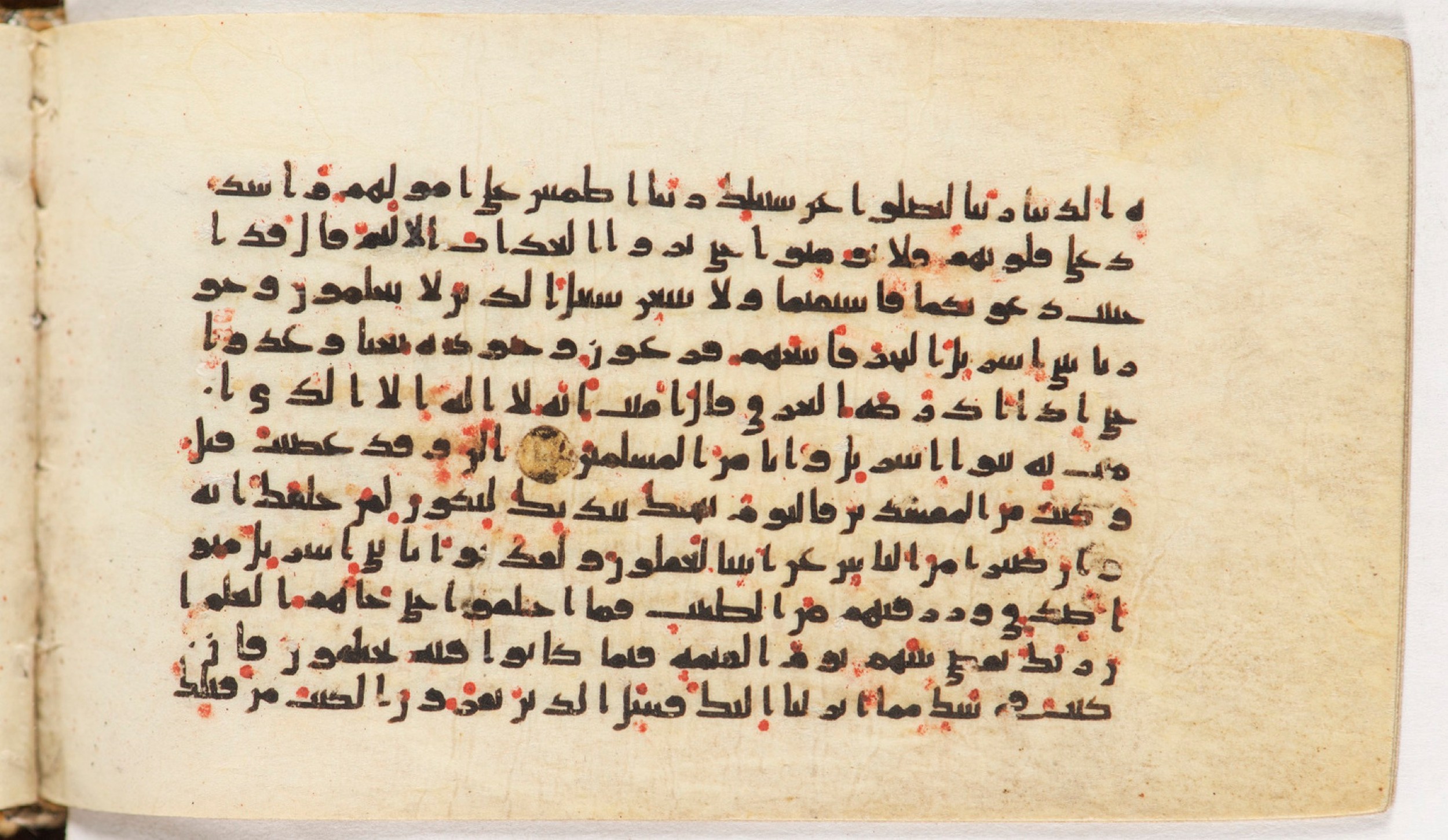
Arabe 399 (Scan 1)
This manuscript features a forged colophon claiming it was copied in 798 AD by order of Caliph Harun al-Rashid. An old legend also suggested it was a diplomatic gift sent to Charlemagne, though scholars have proven both the attribution and the legend to be false.
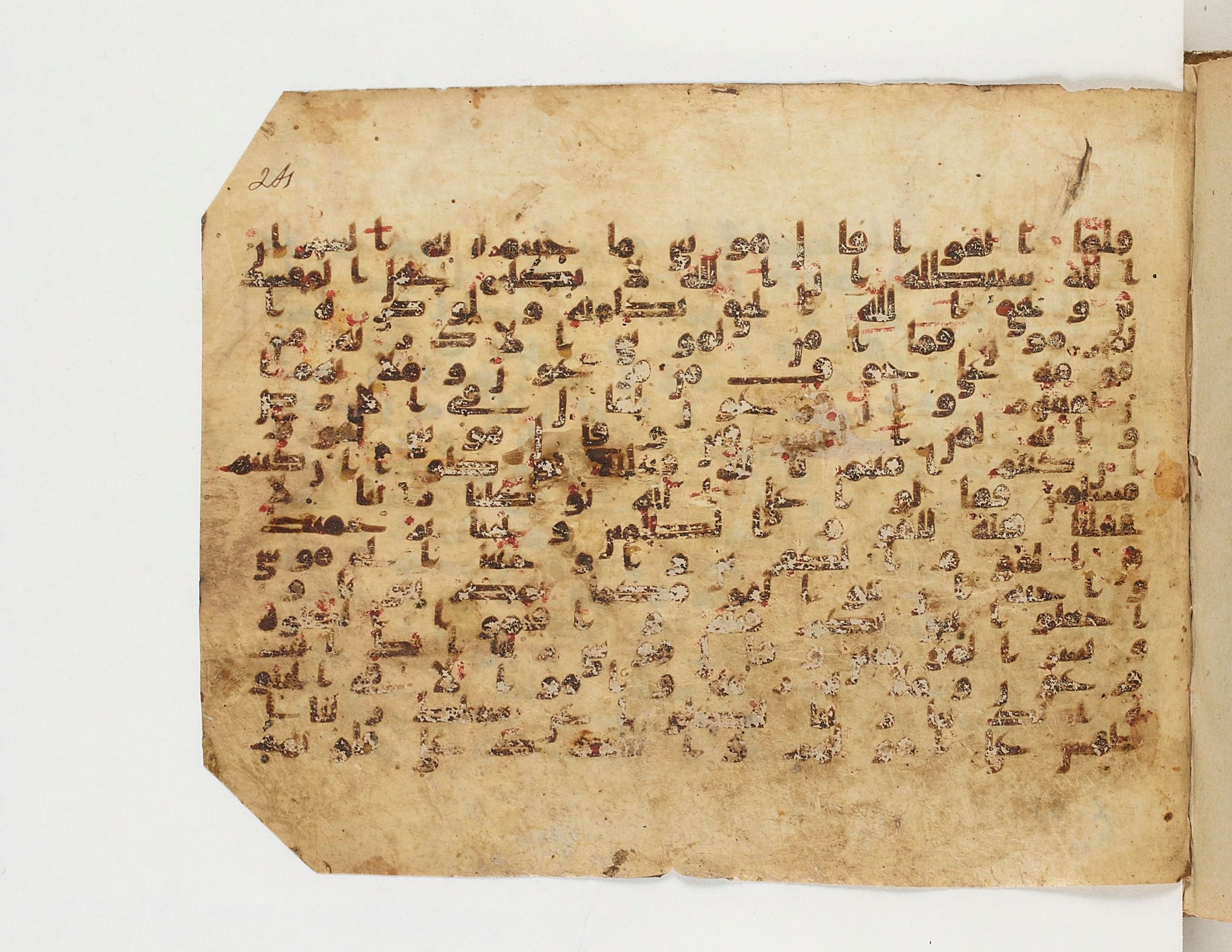
Arabe 399 (Scan 2)
This manuscript features a forged colophon claiming it was copied in 798 AD by order of Caliph Harun al-Rashid. An old legend also suggested it was a diplomatic gift sent to Charlemagne, though scholars have proven both the attribution and the legend to be false.
Paris, Bibliothèque nationale de France, Arabe 329 (d) (Scan 1)
Arabe 329 (d) is a parchment manuscript featuring an early Abbasid Kufic B.II script. Its partial application of diacritical dots and colored vocalization marks offers a glimpse into the transitional phase of Arabic orthography.
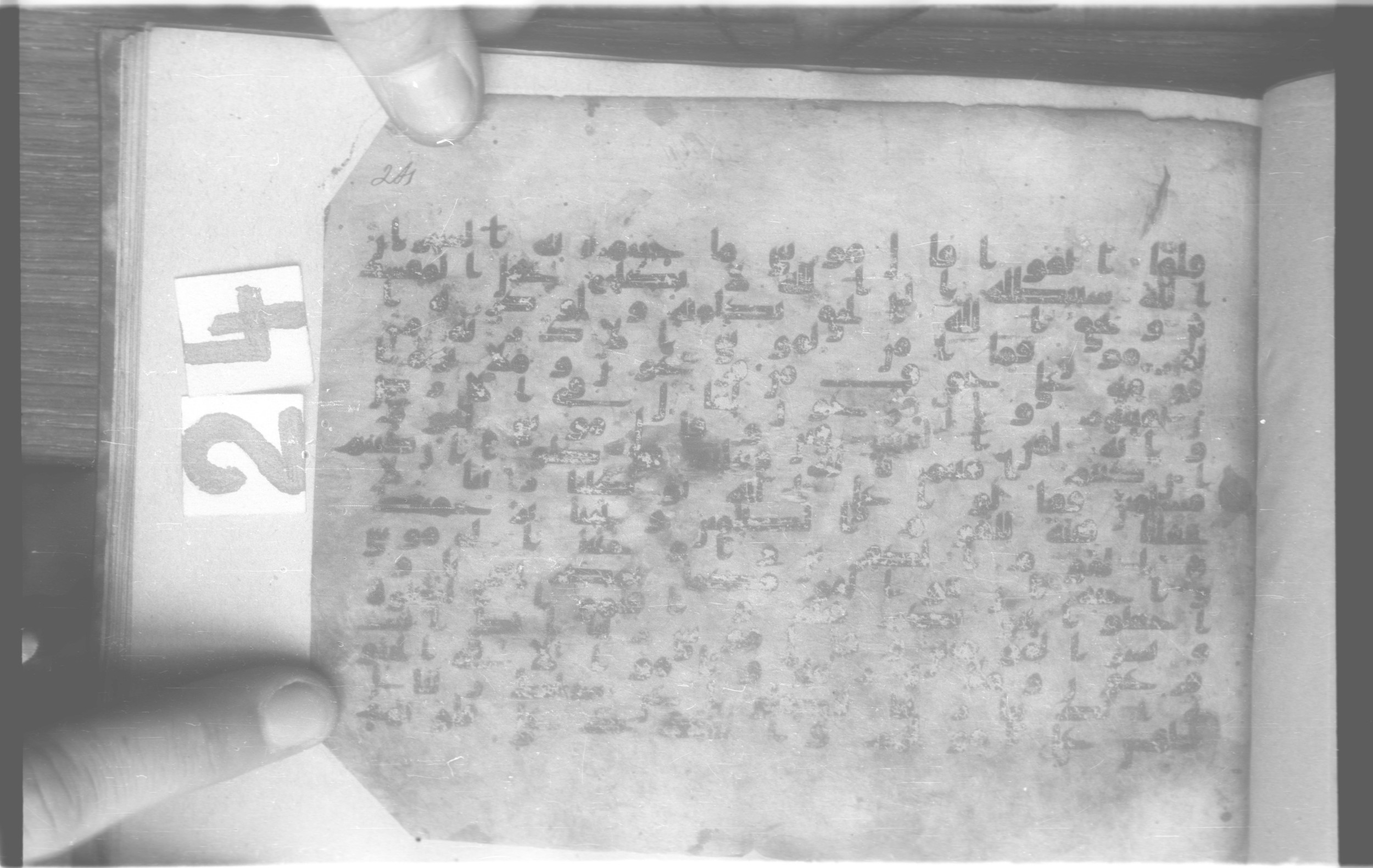
Paris, Bibliothèque nationale de France, Arabe 329 (d) (Scan 2)
Arabe 329 (d) is a parchment manuscript featuring an early Abbasid Kufic B.II script. Its partial application of diacritical dots and colored vocalization marks offers a glimpse into the transitional phase of Arabic orthography.
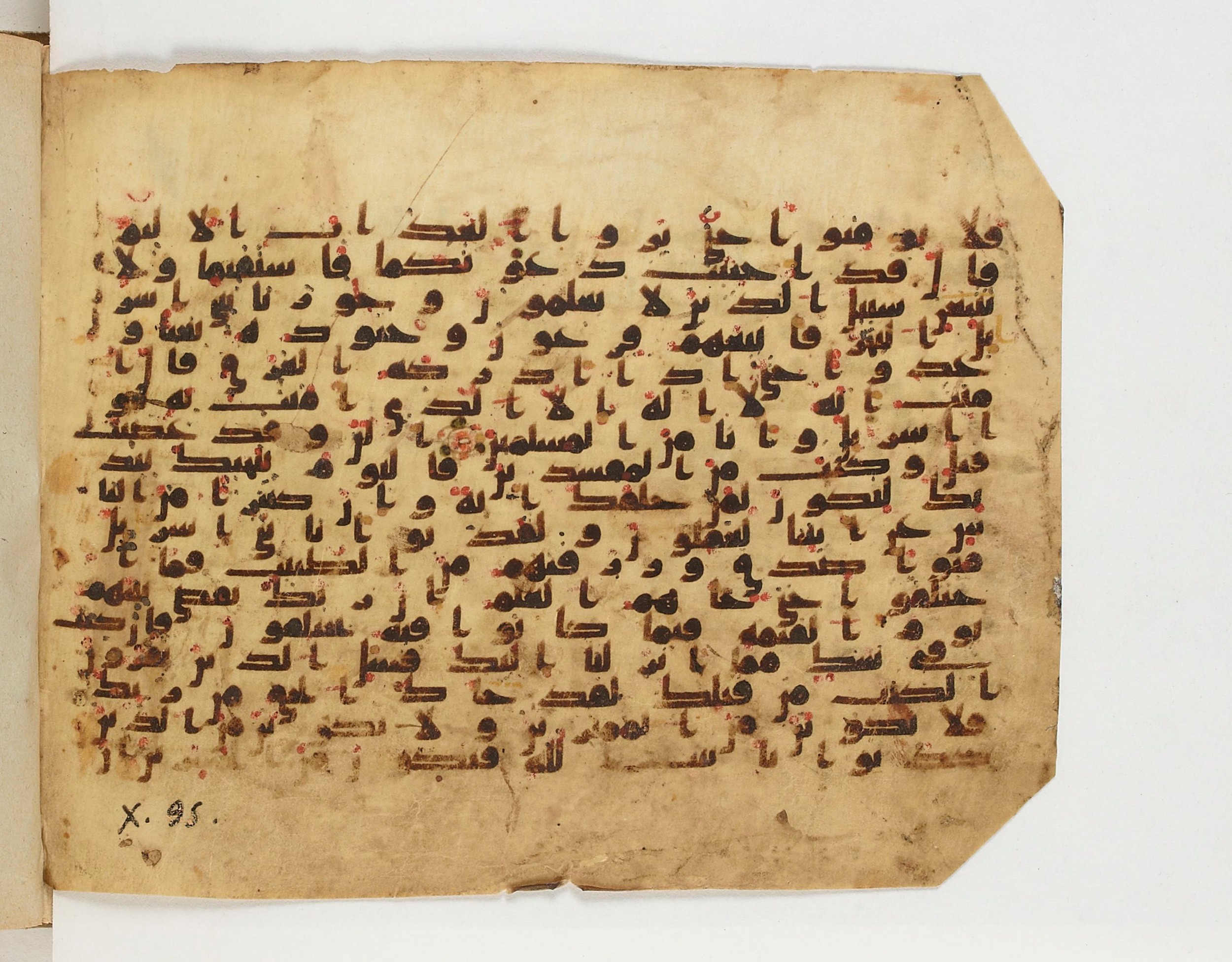
Paris, Bibliothèque nationale de France, Arabe 329 (d) (Scan 3)
Arabe 329 (d) is a parchment manuscript featuring an early Abbasid Kufic B.II script. Its partial application of diacritical dots and colored vocalization marks offers a glimpse into the transitional phase of Arabic orthography.
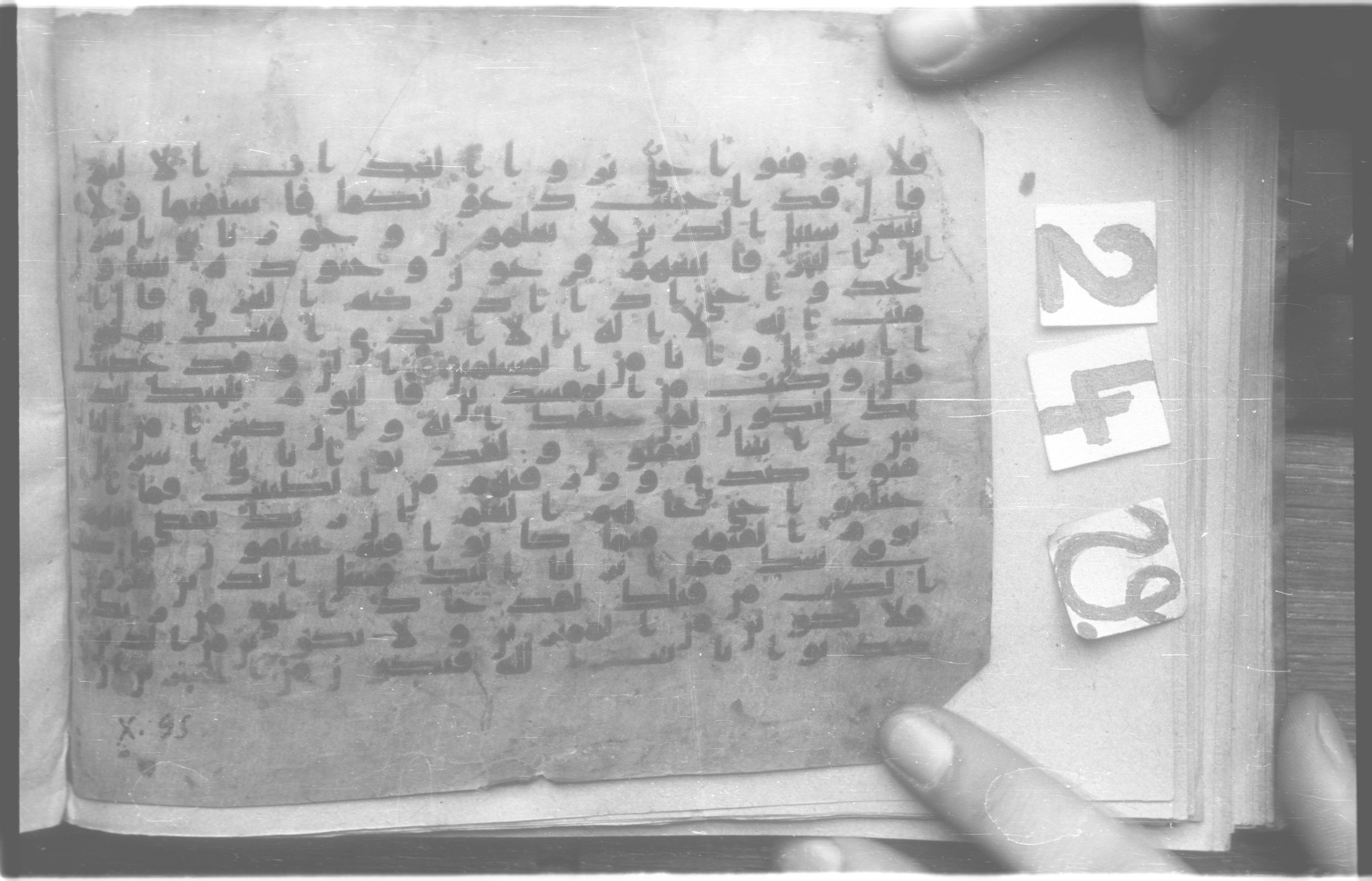
Paris, Bibliothèque nationale de France, Arabe 329 (d) (Scan 4)
Arabe 329 (d) is a parchment manuscript featuring an early Abbasid Kufic B.II script. Its partial application of diacritical dots and colored vocalization marks offers a glimpse into the transitional phase of Arabic orthography.
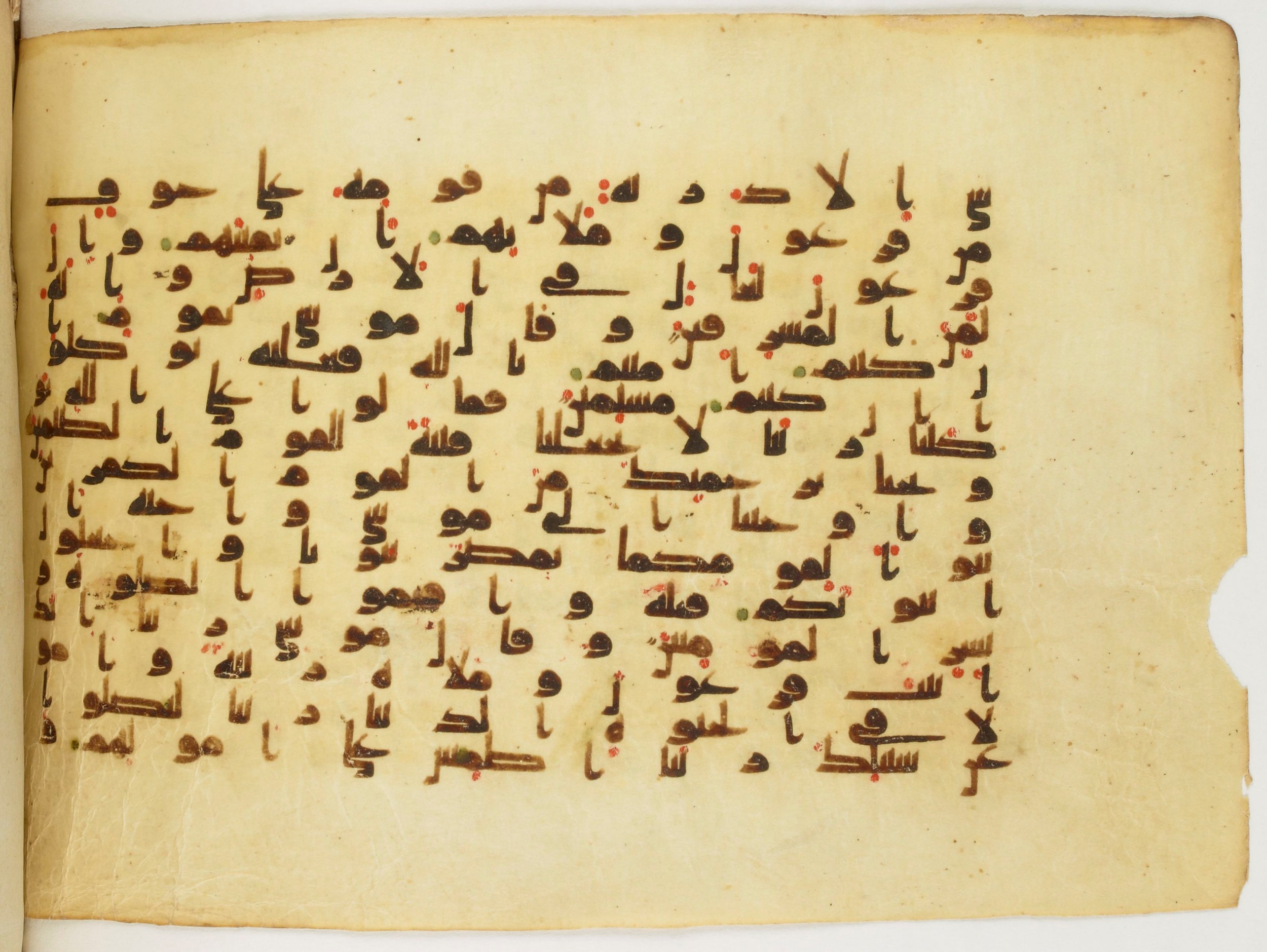
Paris, Bibliothèque nationale de France, Arabe 340 (d) (Scan 1)
This early Quranic fragment is notable for its Kufic B.II script and its use of partially applied red dots for vocalization, reflecting the gradual standardization of Arabic orthography.
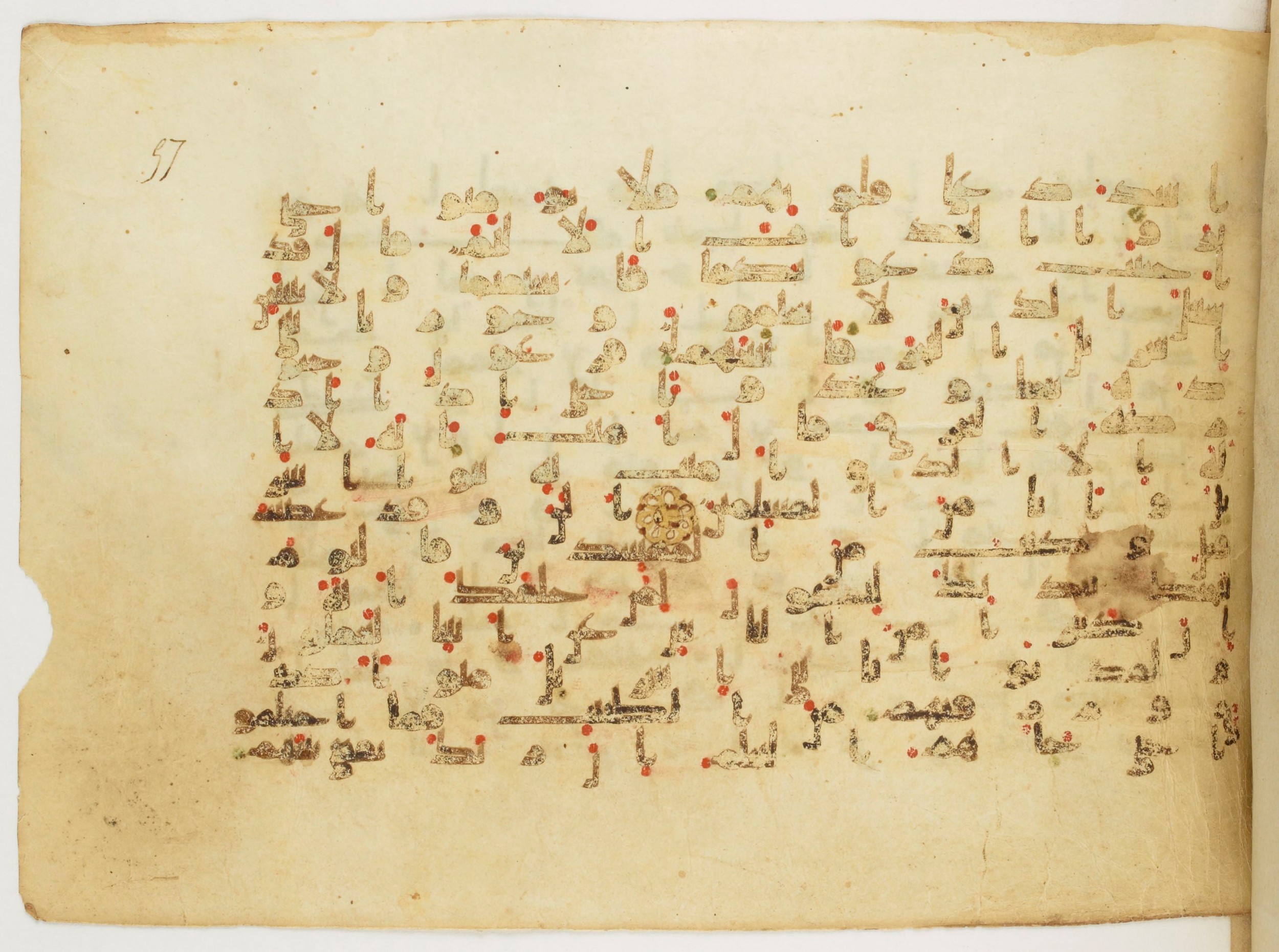
Paris, Bibliothèque nationale de France, Arabe 340 (d) (Scan 2)
This early Quranic fragment is notable for its Kufic B.II script and its use of partially applied red dots for vocalization, reflecting the gradual standardization of Arabic orthography.
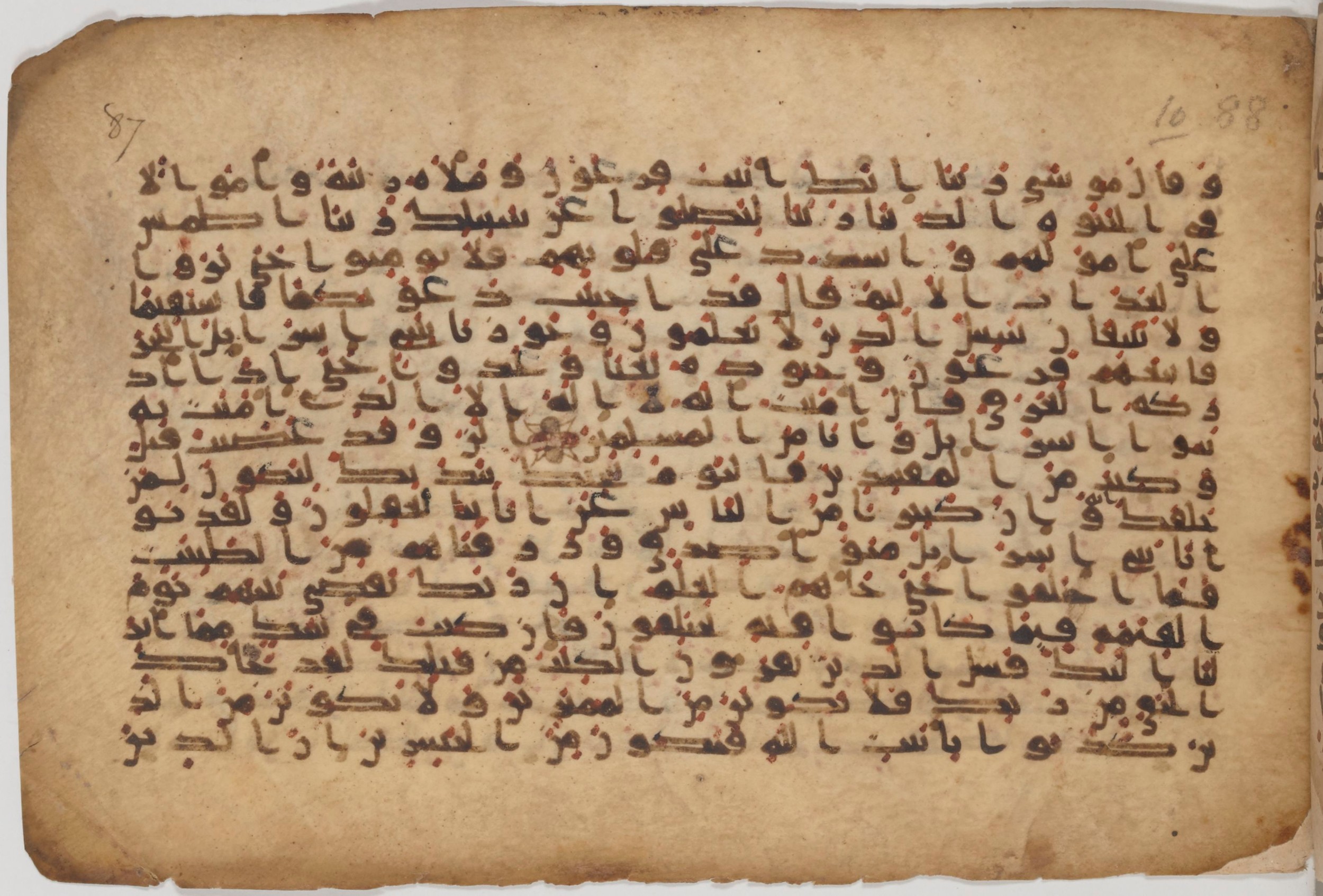
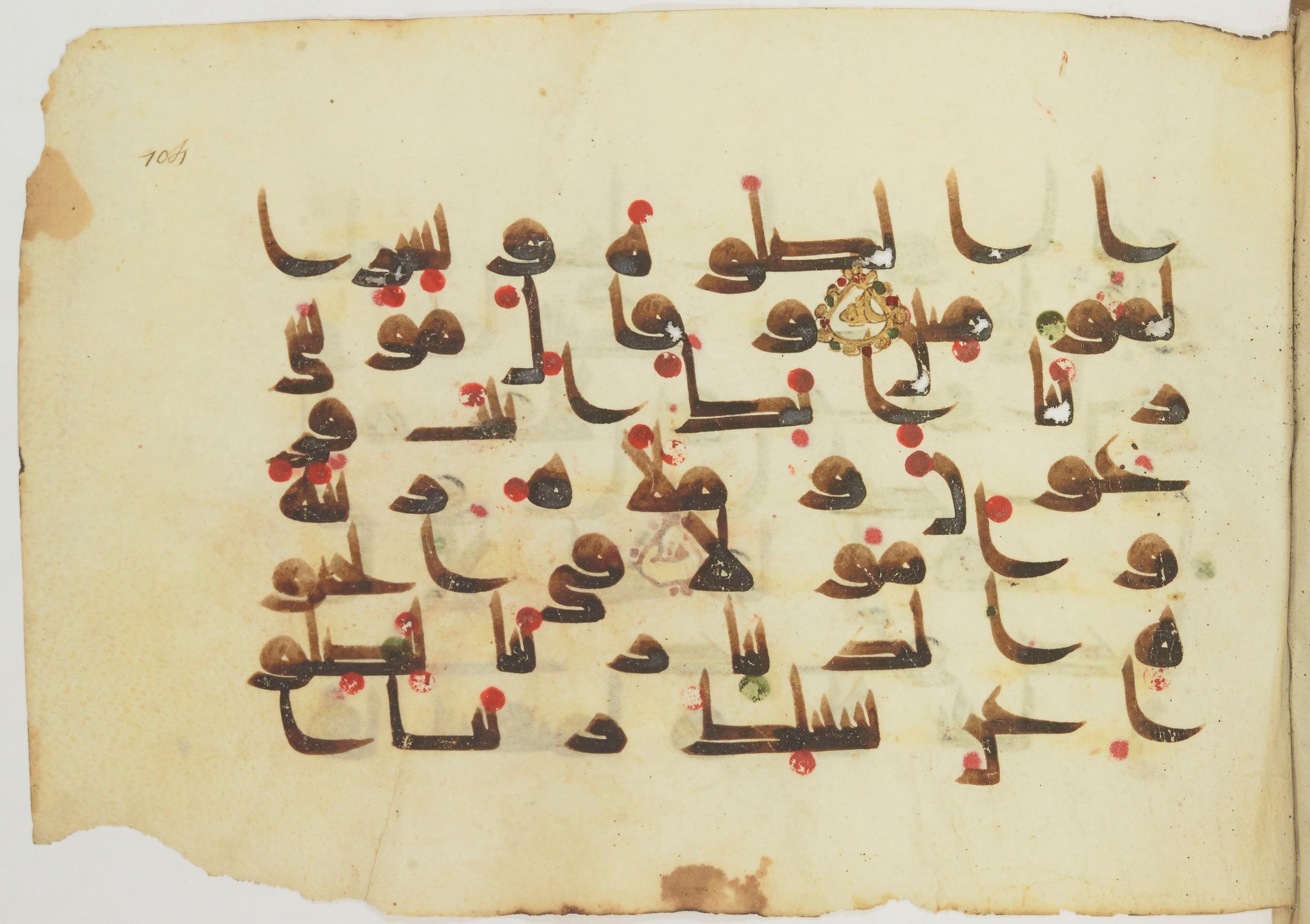
Paris, Bibliothèque nationale de France, Arabe 343
The manuscript uses decorative medallions and bands to mark every ten verses, rather than separating individual verses. A marginal note in cursive script reveals it was once owned by Aḥmad Abū al-ʿAbbās al-Huwaydī, with later readers adding pious notes in the margins.
Paris, Bibliothèque nationale de France, Arabe 362 (b) (Scan 1)
This manuscript is notable for its teardrop-shaped verse markers containing the word 'aya' in gold on a white background, as well as distinct medallions marking groups of five and ten verses. The text largely lacks typical diacritical marks, instead employing red dots for vocalization and green dots for the hamza.
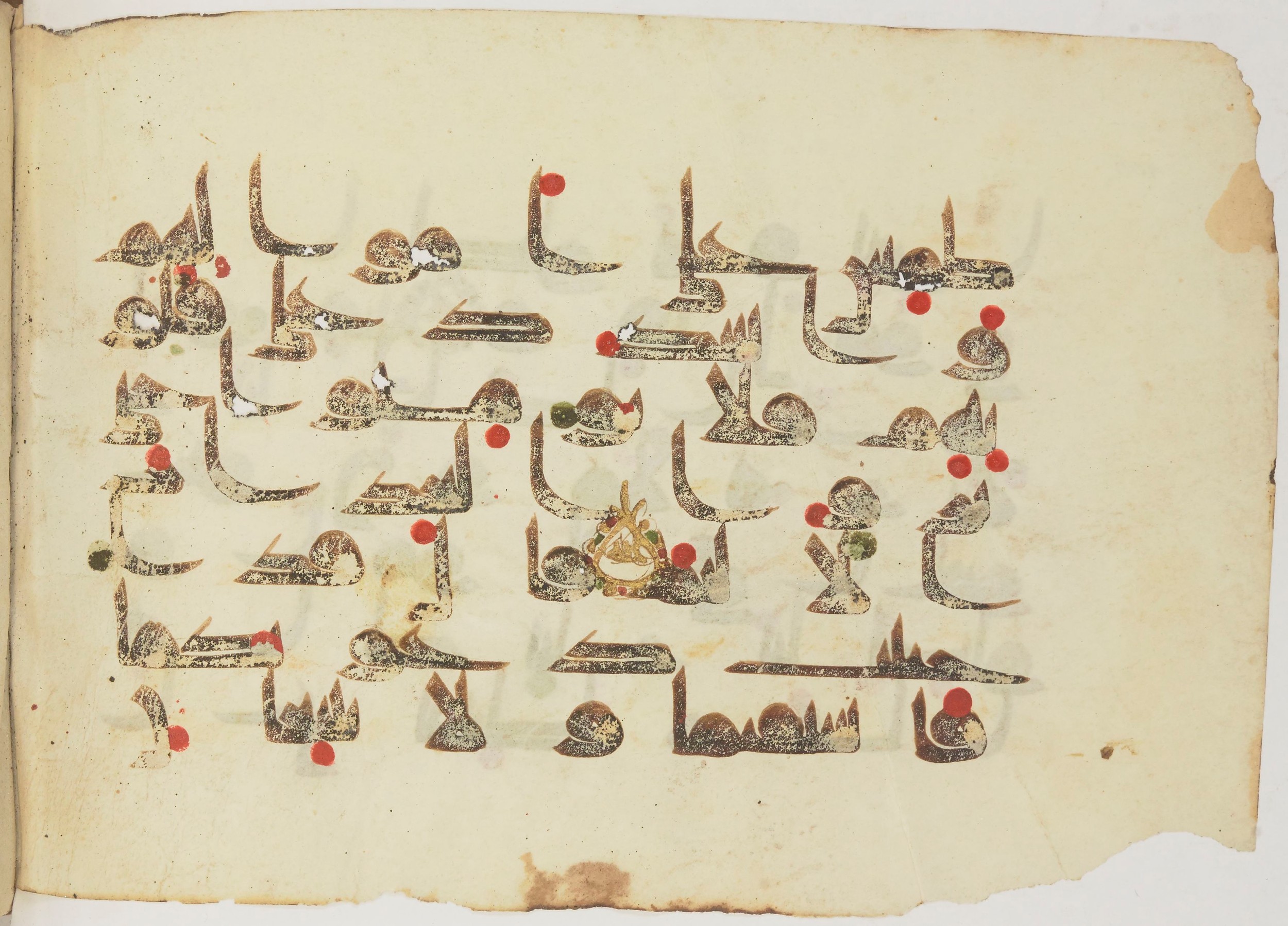
Paris, Bibliothèque nationale de France, Arabe 362 (b) (Scan 2)
This manuscript is notable for its teardrop-shaped verse markers containing the word 'aya' in gold on a white background, as well as distinct medallions marking groups of five and ten verses. The text largely lacks typical diacritical marks, instead employing red dots for vocalization and green dots for the hamza.
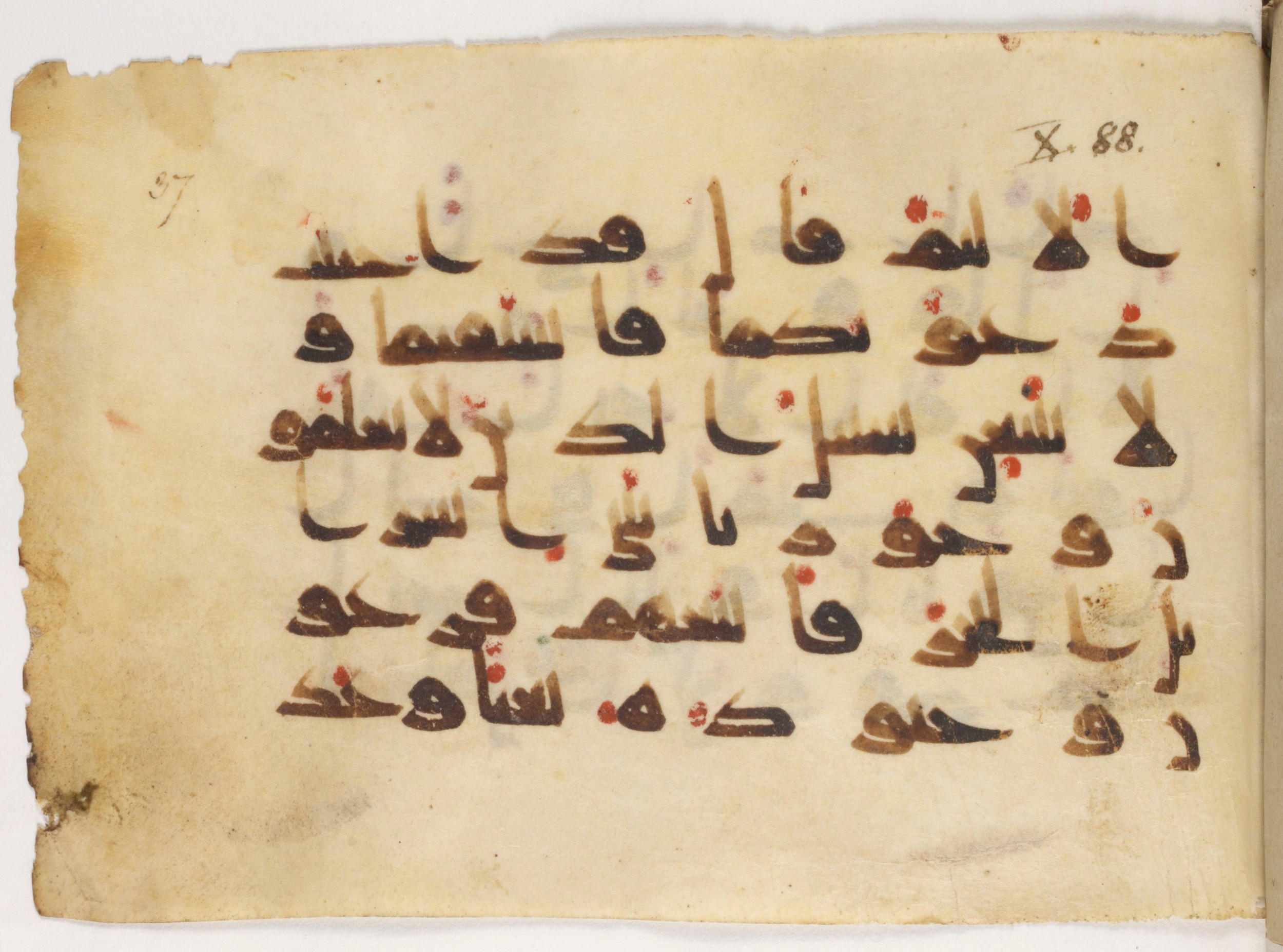
Paris, Bibliothèque nationale de France, Arabe 381 (a)
The manuscript features titles and verse counts for its surahs written in gold ink. While individual verses are not separated, groups of five are marked with a gilded Kufic 'hāʾ', and groups of ten with specific circular devices. Vocalization is indicated using red dots.
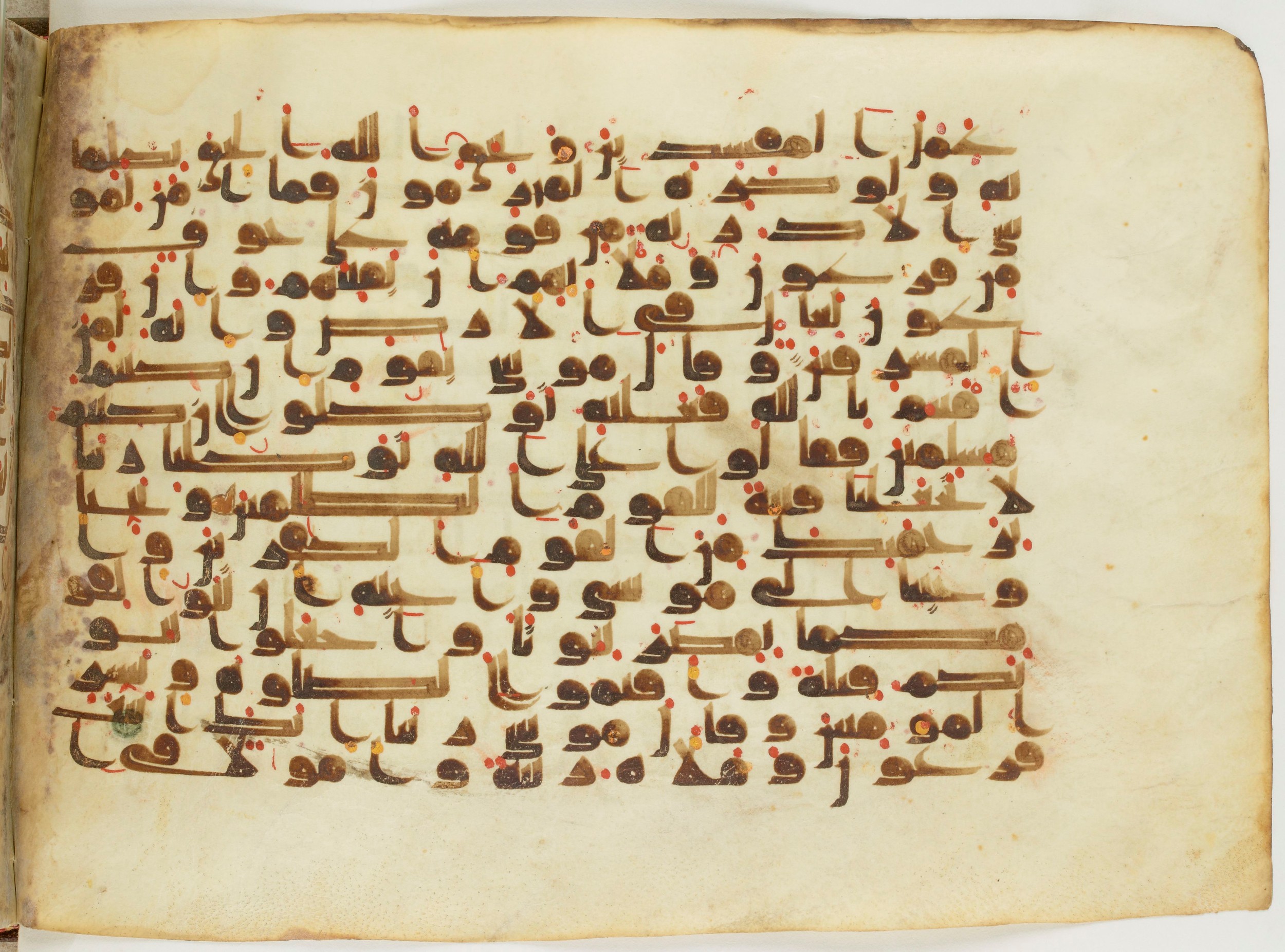
Paris, Bibliothèque nationale de France, Arabe 6982 (Scan 1)
This anonymous, undated Kufic manuscript stands out for its decorative features, including yellow Kufic 'hā' letters marking groups of five verses and vine-scroll vignettes for surah headings. It features a recent Maghrebi binding with geometric gold motifs and previously belonged to the collection of General Lyautey.
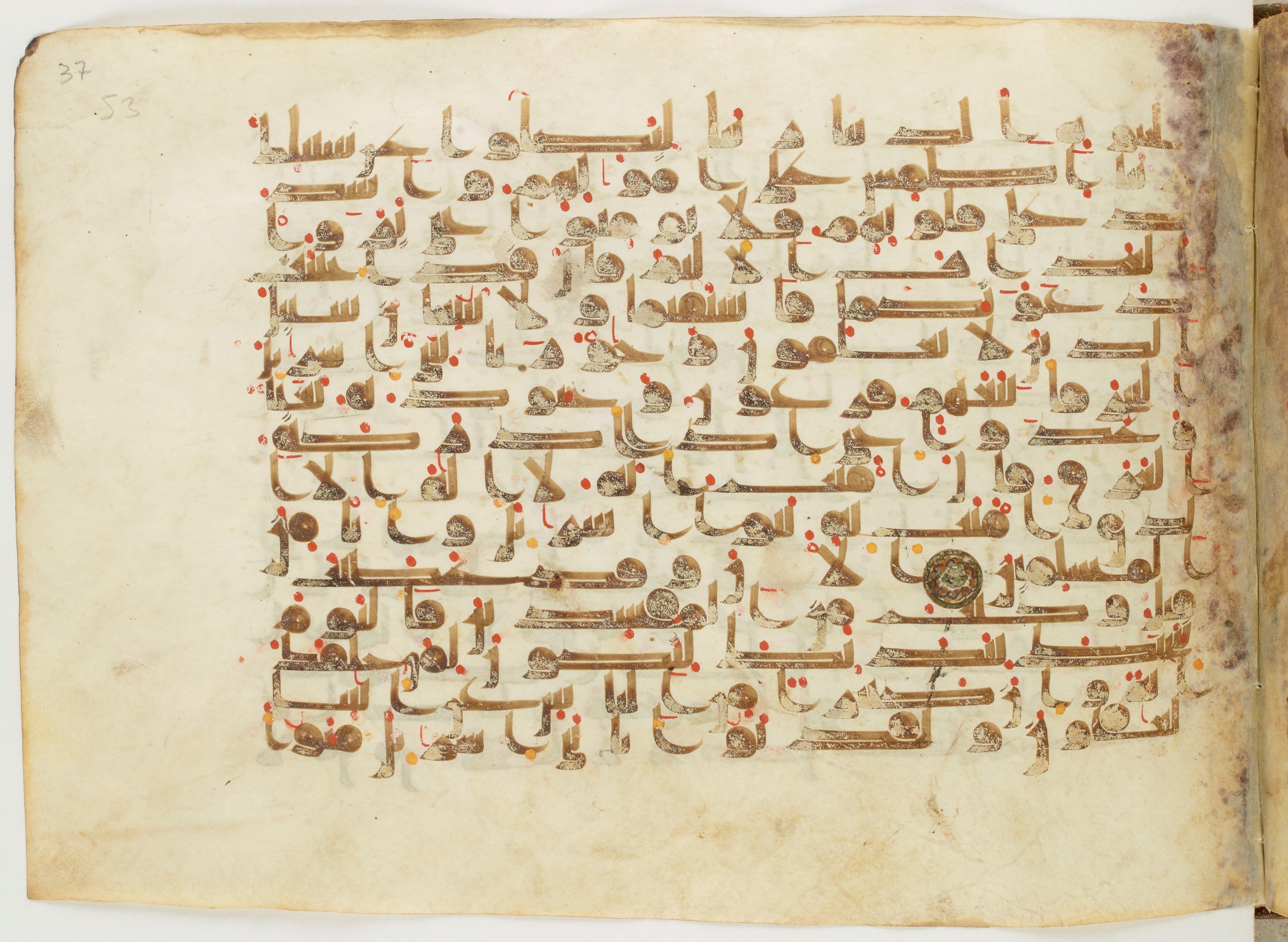
Paris, Bibliothèque nationale de France, Arabe 6982 (Scan 2)
This anonymous, undated Kufic manuscript stands out for its decorative features, including yellow Kufic 'hā' letters marking groups of five verses and vine-scroll vignettes for surah headings. It features a recent Maghrebi binding with geometric gold motifs and previously belonged to the collection of General Lyautey.
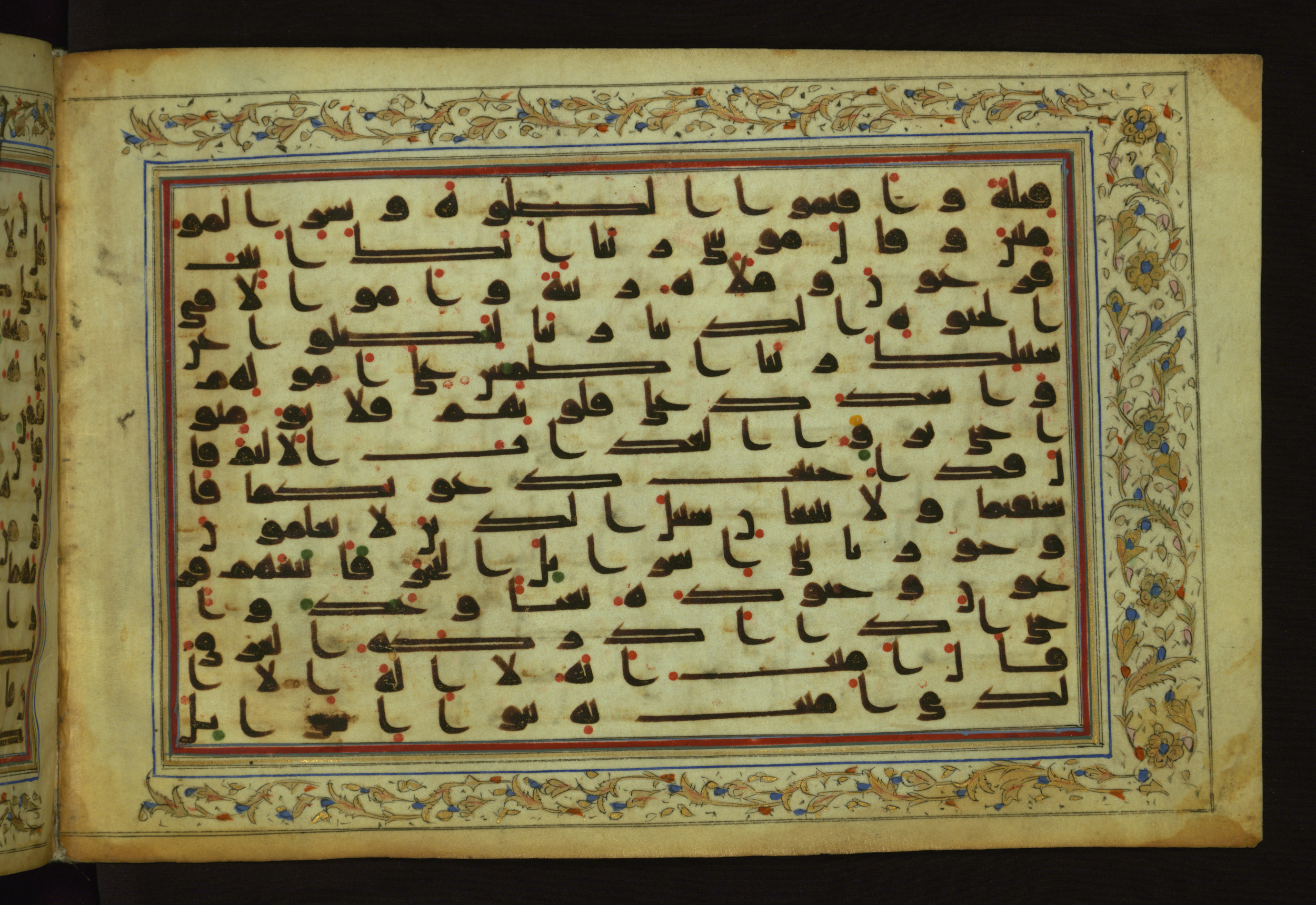
Baltimore, Maryland, The Walters Art Museum, W.553
Held at The Walters Art Museum, this manuscript consists of 23 folios on parchment measuring 240 x 160mm with 14 lines per page. It features an early Kufic script typical of the 9th century Islamic world.
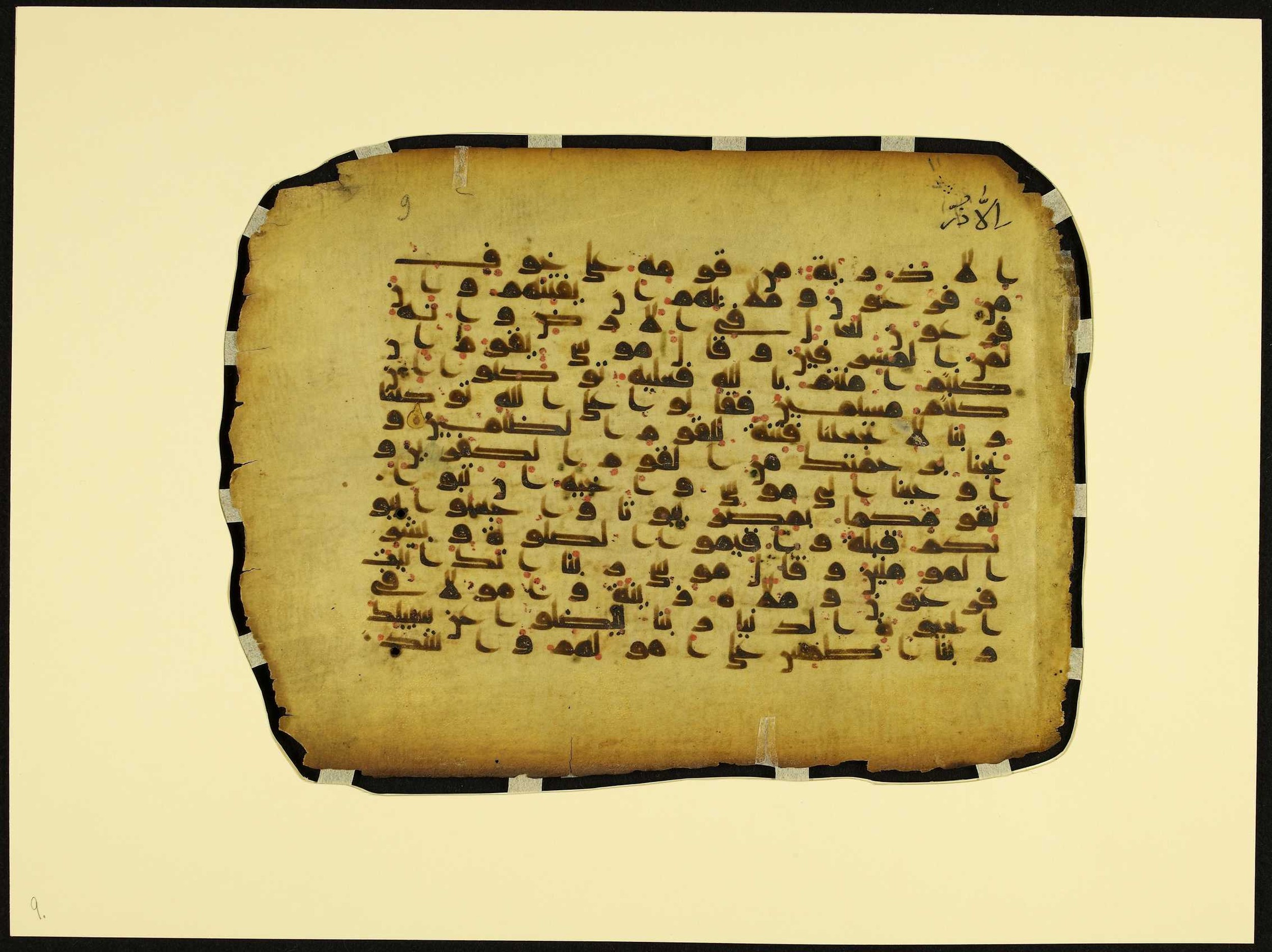
MS Brunensis-Birminghamiensis (BrB) (Scan 1)
This codex is reconstructed from 74 scattered leaves across multiple collections, including the Mingana Collection in Birmingham and the Minassian Collection at Brown University. Described by Alba Fedeli, it provides insight into the dispersal of early Qur'anic manuscripts in modern antiquarian markets.
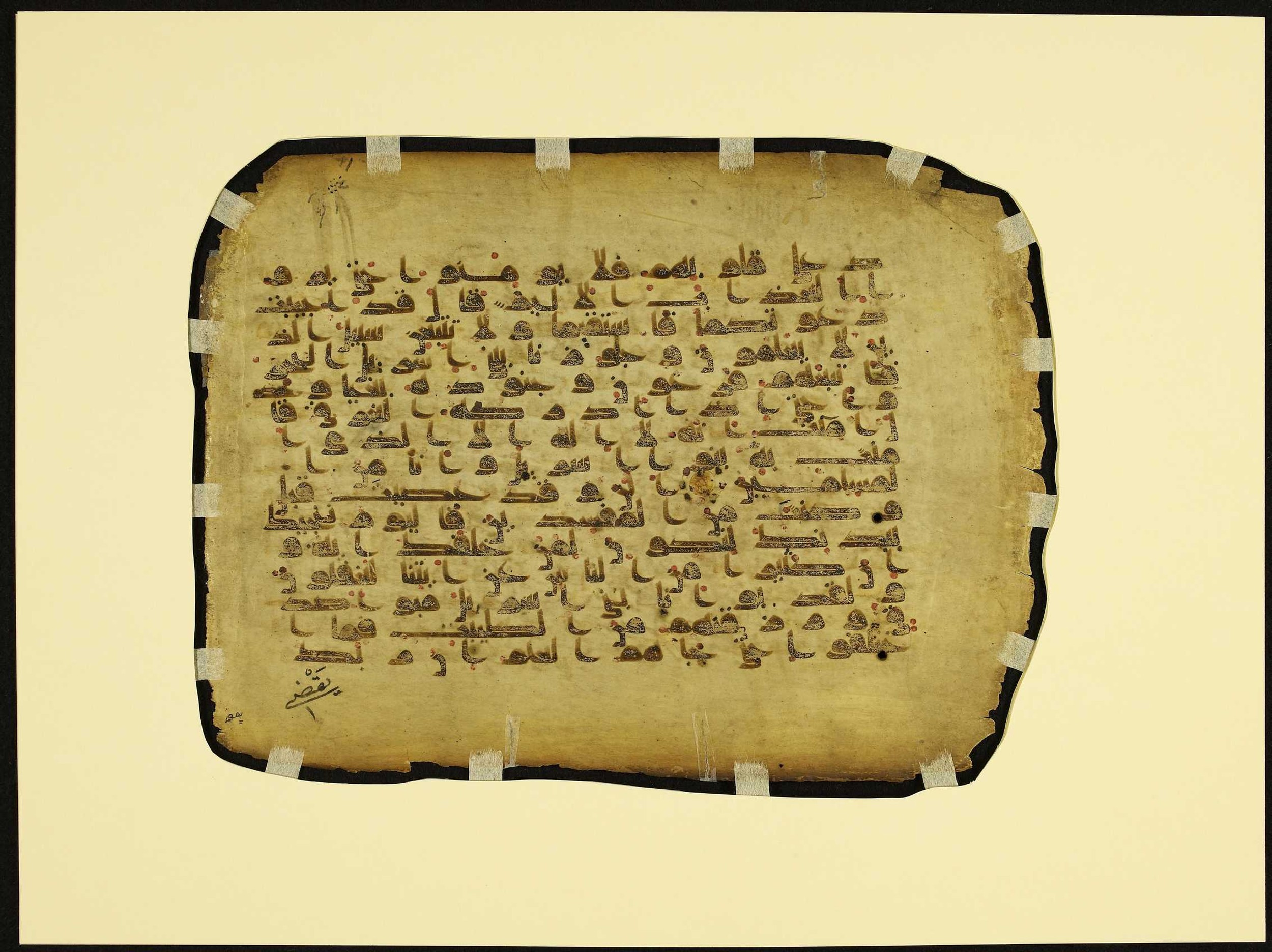
MS Brunensis-Birminghamiensis (BrB) (Scan 2)
This codex is reconstructed from 74 scattered leaves across multiple collections, including the Mingana Collection in Birmingham and the Minassian Collection at Brown University. Described by Alba Fedeli, it provides insight into the dispersal of early Qur'anic manuscripts in modern antiquarian markets.
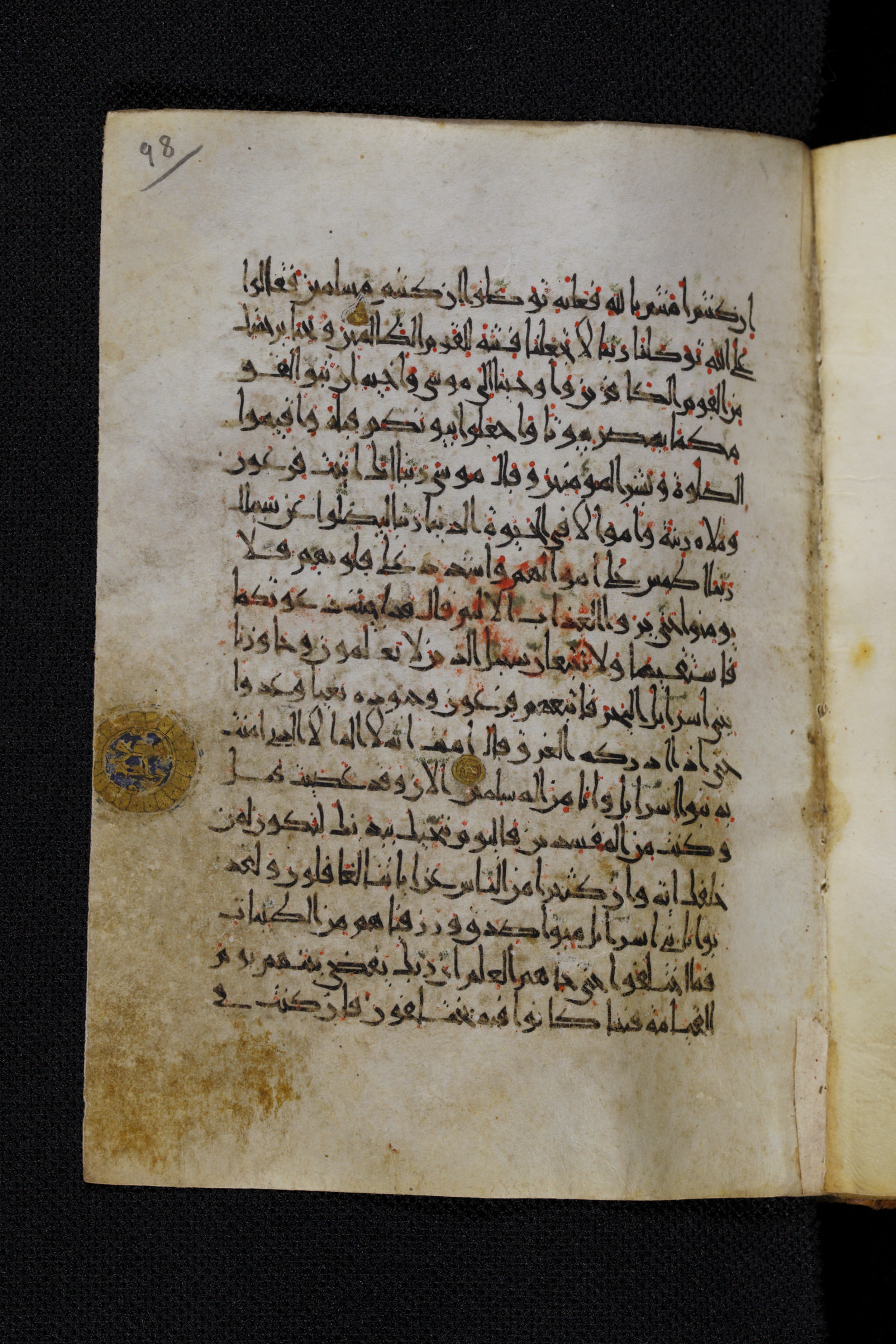
Diez A oct 172
This codex is largely complete, containing the entire Quran, though the first folio and a few other leaves were supplied by a later hand. Written on parchment, the manuscript represents an important transitional stage in the evolution of the Arabic script toward the Maghrebi style. While generally well-preserved, some of the early and late folios exhibit water damage and have been repaired.
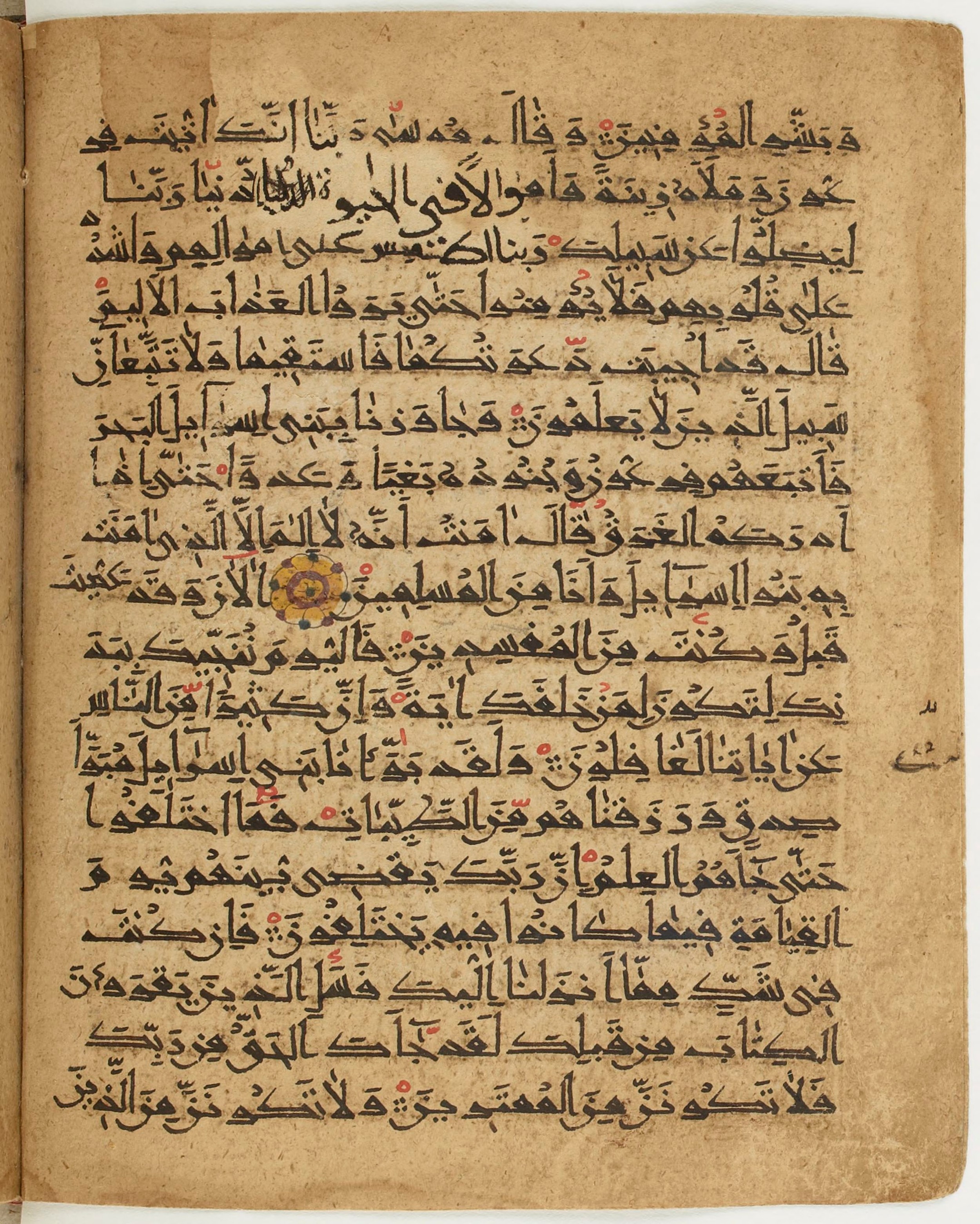
BNF Arabe 6430
This 10th-century Quranic manuscript is notable for being written on Oriental paper rather than parchment. It features complete diacritics and vocalization, with distinctive colorful verse markers including yellow Kufic 'hāʾ' letters to signal groups of five verses.
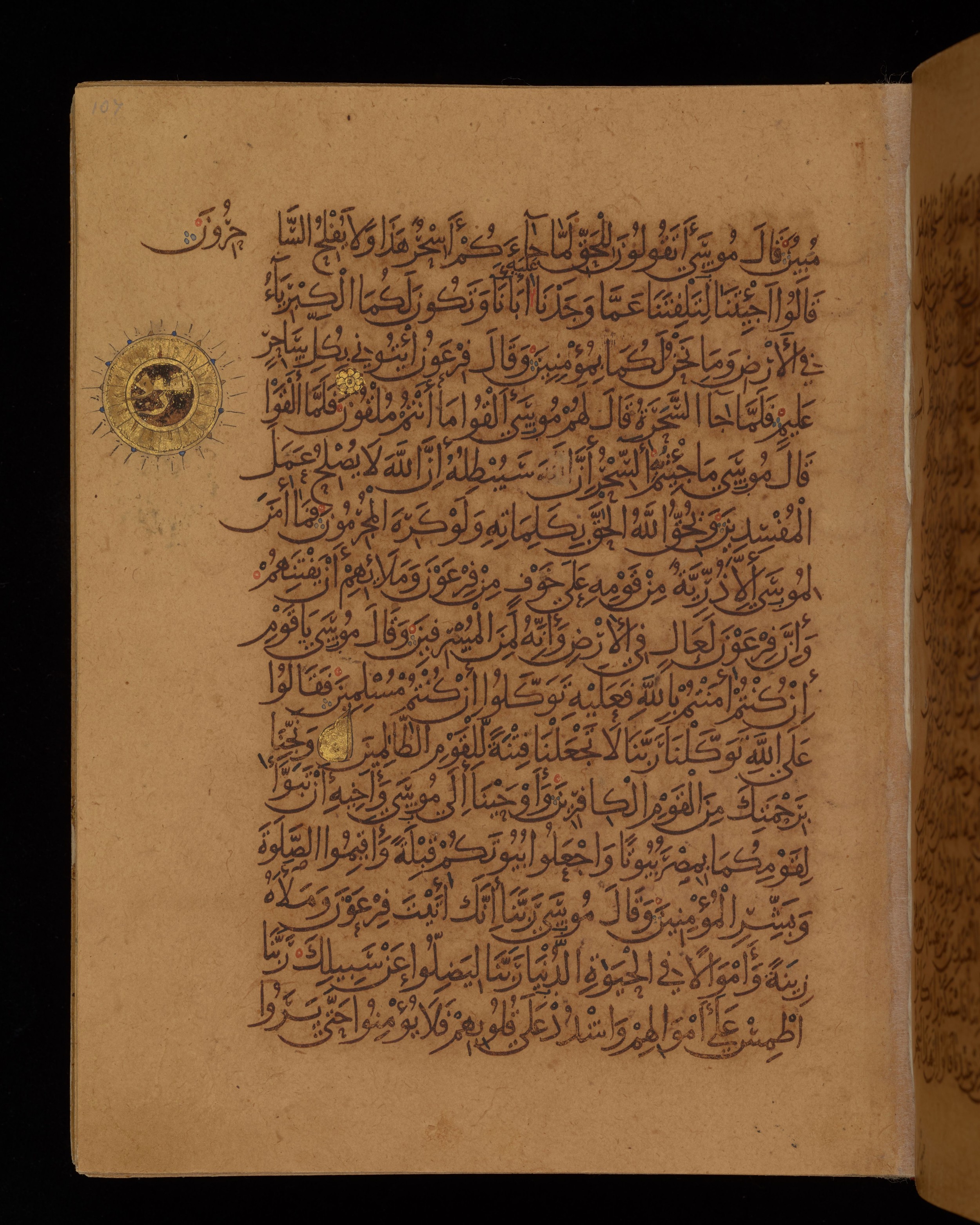
Dublin, Chester Beatty Library, Is 1431 (Scan 1)
This complete Quran was produced in Baghdad by the renowned calligrapher ʿAlī b. Hilāl, also known as Ibn al-Bawwāb, around 1000-1001 AD. He is a significant figure in Islamic art, closely associated with the adoption of the round Naskh script to transcribe the Quran.
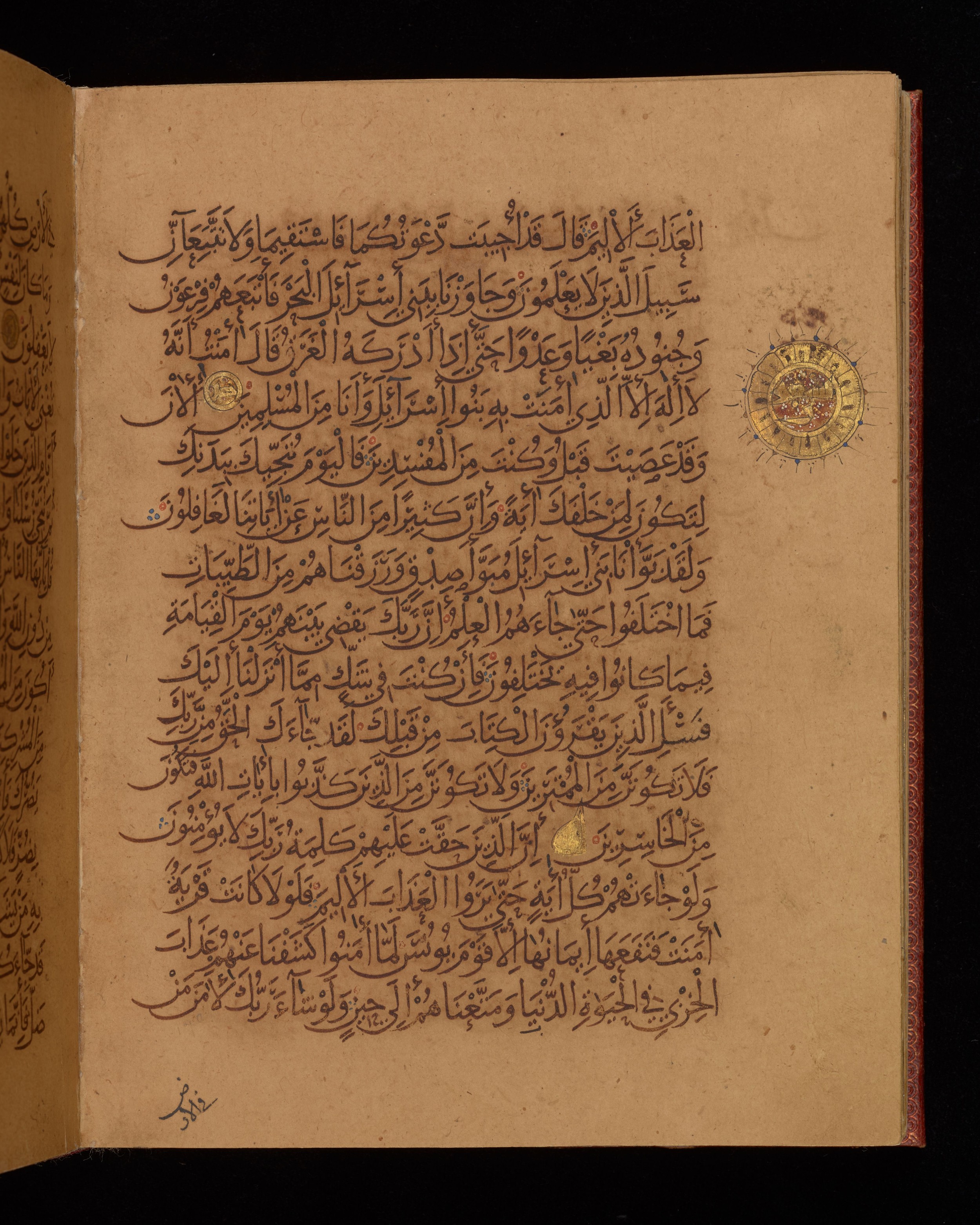
Dublin, Chester Beatty Library, Is 1431 (Scan 2)
This complete Quran was produced in Baghdad by the renowned calligrapher ʿAlī b. Hilāl, also known as Ibn al-Bawwāb, around 1000-1001 AD. He is a significant figure in Islamic art, closely associated with the adoption of the round Naskh script to transcribe the Quran.
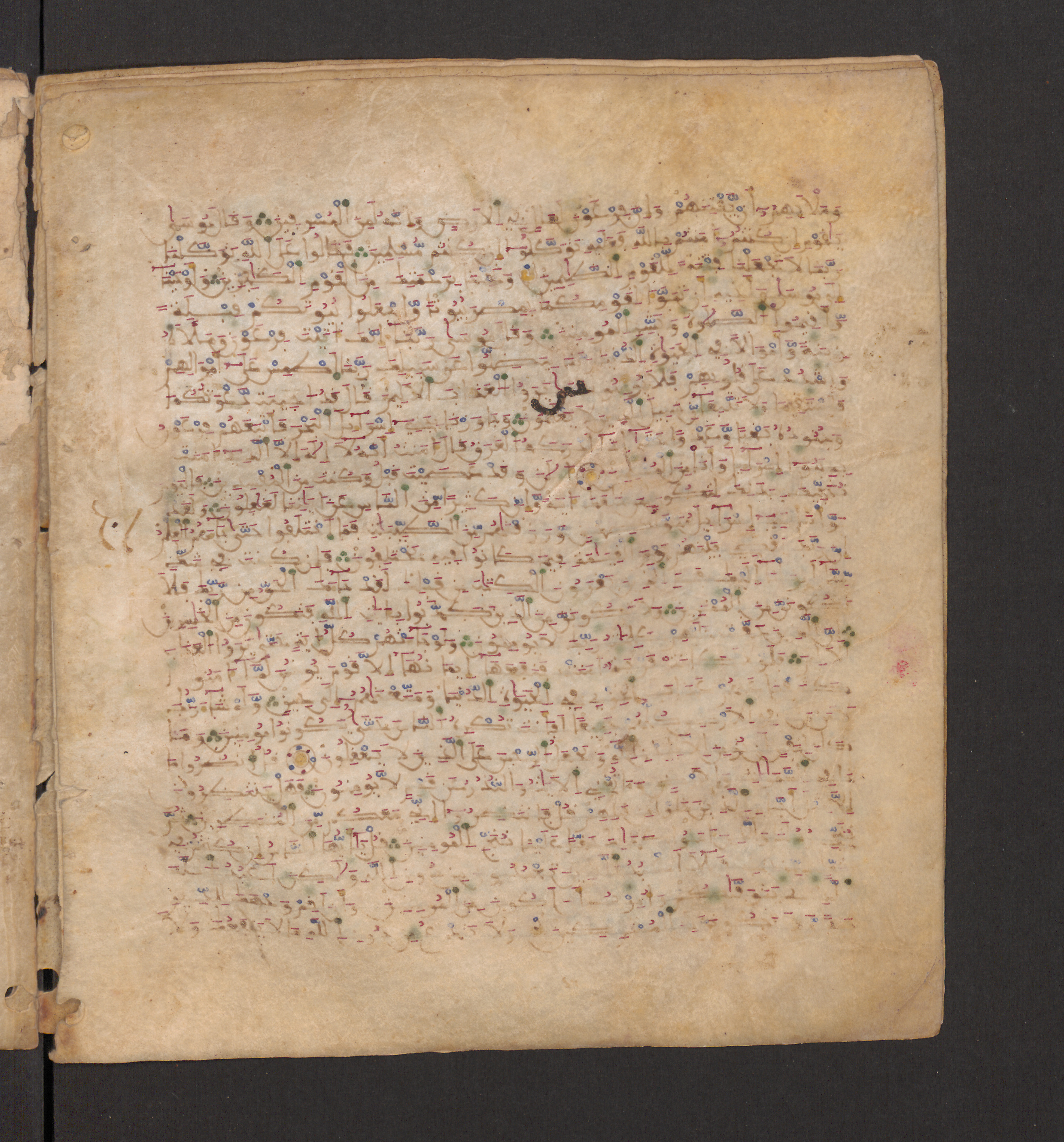
Doha, Qatar National Library, HC.MS.00715
This codex is closely related to two other Andalusian manuscripts held in Istanbul, which were written in Cordoba (1143-1144 AD) and Valencia (1182-1183 AD), suggesting a similar provenance. It features distinctive Maġribī micrography for the main text and angular chrysography for the Surah headings.
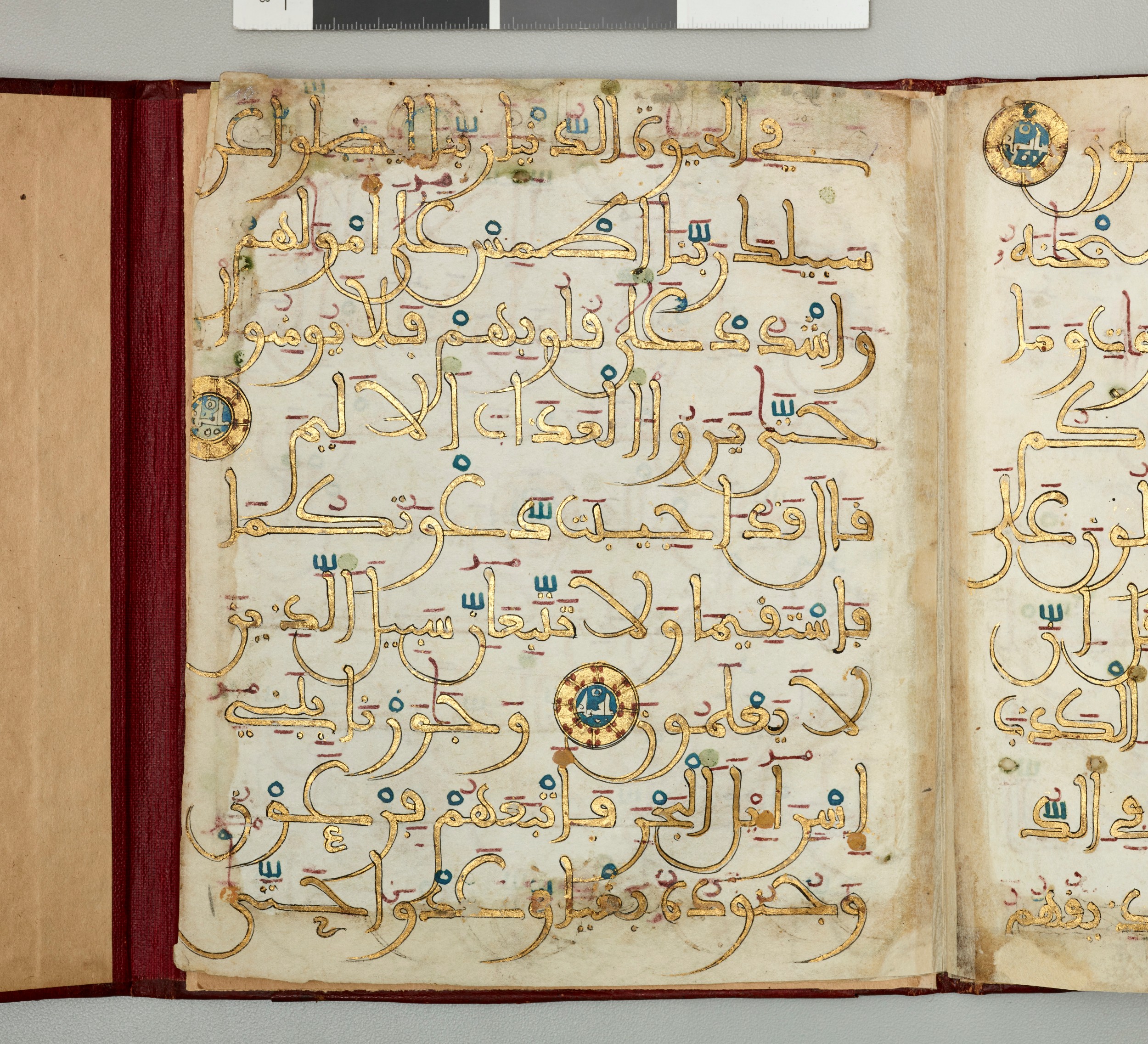
Dallas Museum of Art Manuscript K.1.2014.1170
This late 13th-century manuscript is written on parchment and consists of 11 folios with exactly 9 lines of text per page. It is part of the Keir Collection of Islamic Art currently on loan to the Dallas Museum of Art.