
Surah 106:0
Downloading from cloud...
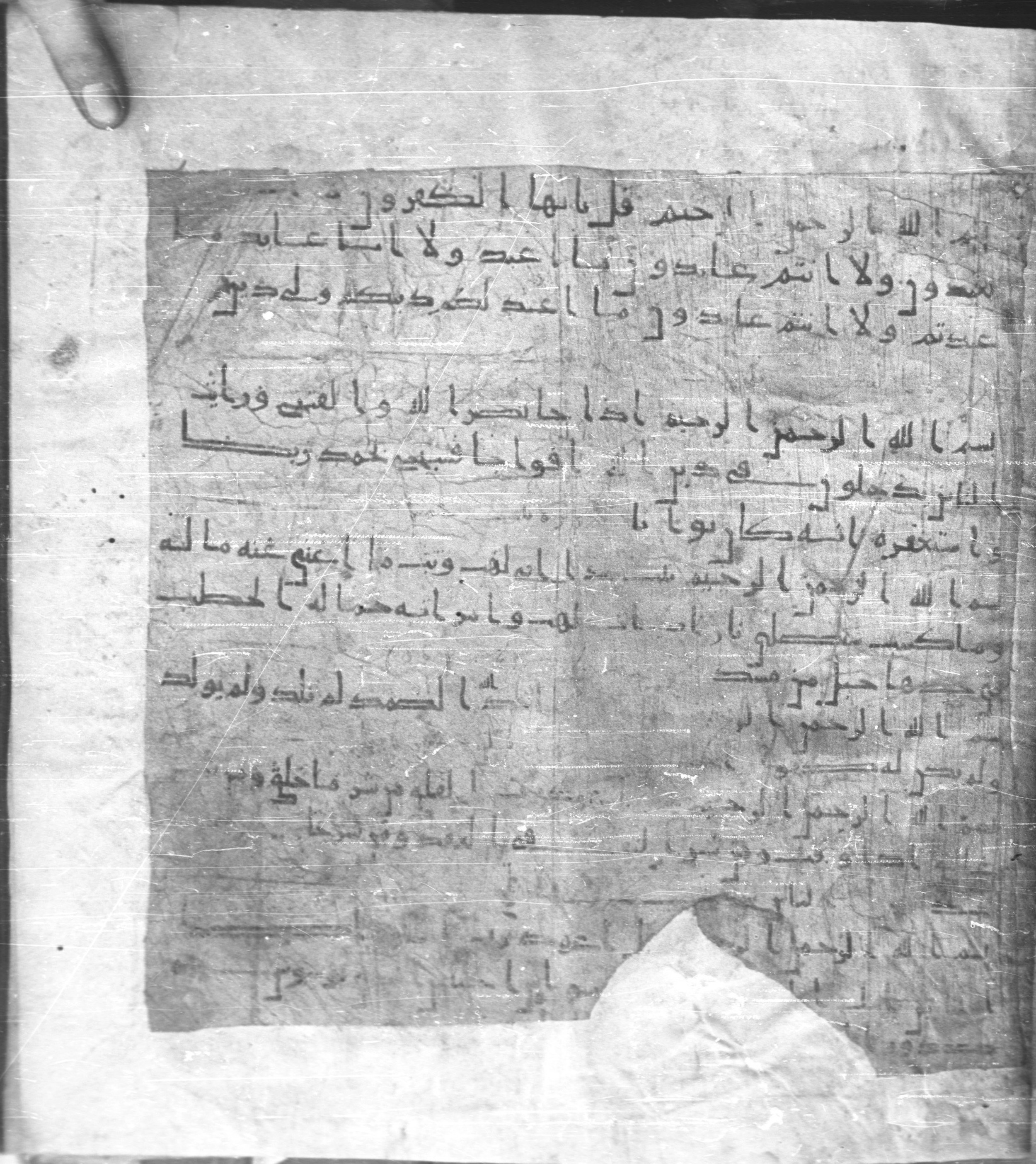
Staatsbibliothek zu Berlin, Ms. or. fol. 4313
1 of 2codex_00015
Variants & TyposThe manuscript exhibits several textual variations (rasm variants) from the standard Hafs reading. For example, in verse 5:78, the name 'David' (Dāwūd) is spelled with an unexpected 'waw' and 'alif' (دواد instead of داود). In verse 5:73, a variant is found in the spelling of a verb, using a 'ta' (ت) instead of the standard 'ya' (ي) in the prefix (لتمسن instead of ليمسن). Additionally, in verse 5:70, the phrase 'kullamā' is written as two separate words ('kull' and 'mā') instead of a single connected word. As is characteristic of early Ḥiǧāzī manuscripts, diacritical marks are used sparingly.
DateAD 680 (Mid to Late 7th Century AD)
Script StyleḤiǧāzī (close to type II)
Current LocationStaatsbibliothek zu Berlin, Berlin
Found LocationFustat (Old Cairo), Egypt
Quranic RangeQ 4:137-155, Q 4:172-5:87
Context & Details
This codex is one of the earliest surviving Quranic manuscripts, with combined radiocarbon dating of its parchment placing its production between 605 and 651 AD. The seven folios in Berlin were once part of a larger codex that is now split, with 33 additional folios currently held in the Egyptian National Library. The Berlin leaves were acquired in 1939 from the estate of Bernhard Moritz, the former director of the Khedivial Library.
Downloading from cloud...
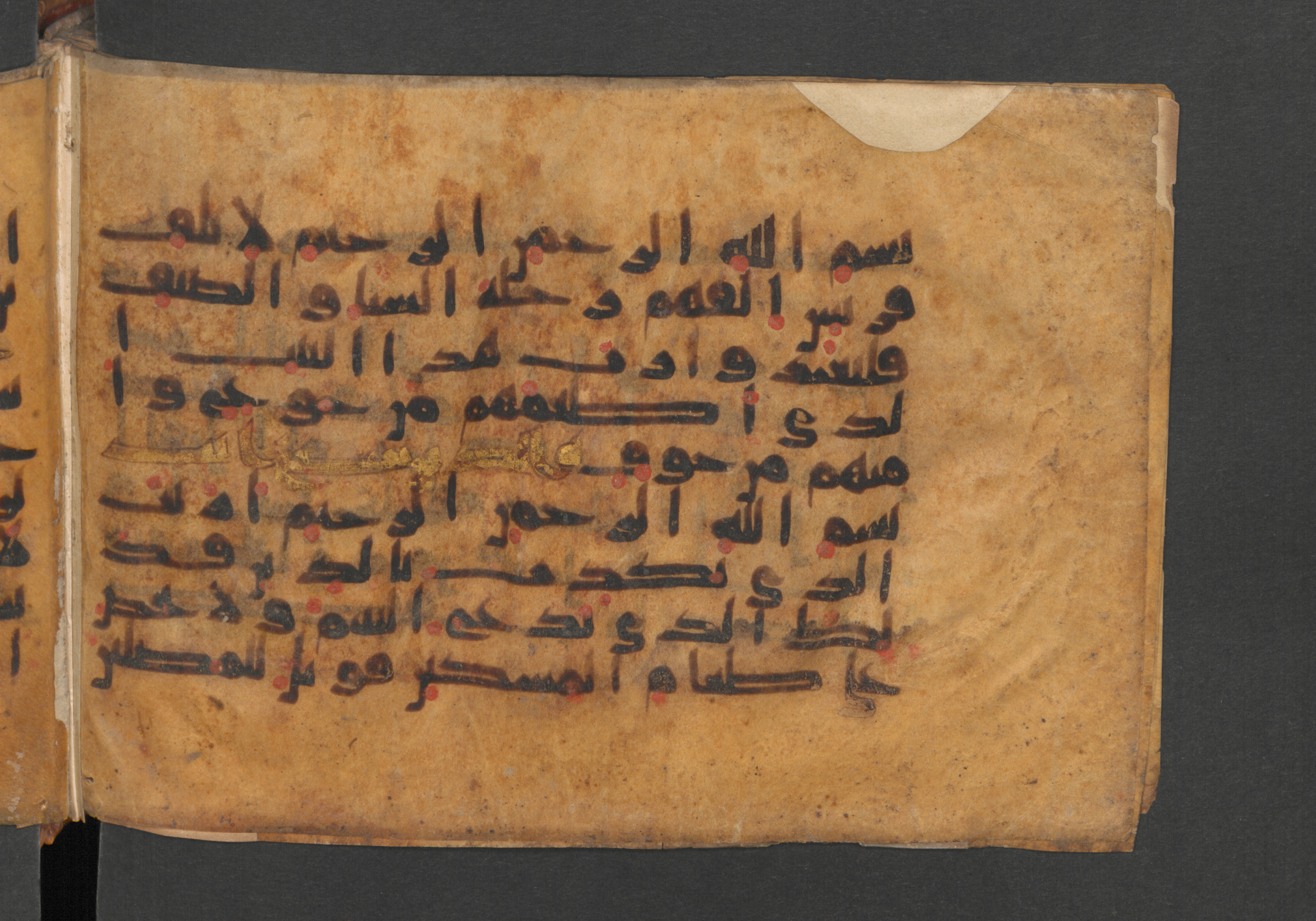
Berlin, Staatsbibliothek zu Berlin, Wetzstein II 1925 (Ahlwardt 364)
2 of 2codex_00480
DateAD 899 (8th to 9th Century AD)
Script Stylekūfī E.I
Current LocationStaatsbibliothek zu Berlin, Berlin
Found LocationDamascus, Syria
Quranic RangeQ 67:0-102:0, Q 104:8-114:6
Context & Details
The manuscript has suffered from historical water and oil damage, causing its parchment leaves to become quite wrinkled. It features elegant gold script used exclusively for the surah titles and verse counts.