
Surah 16:0
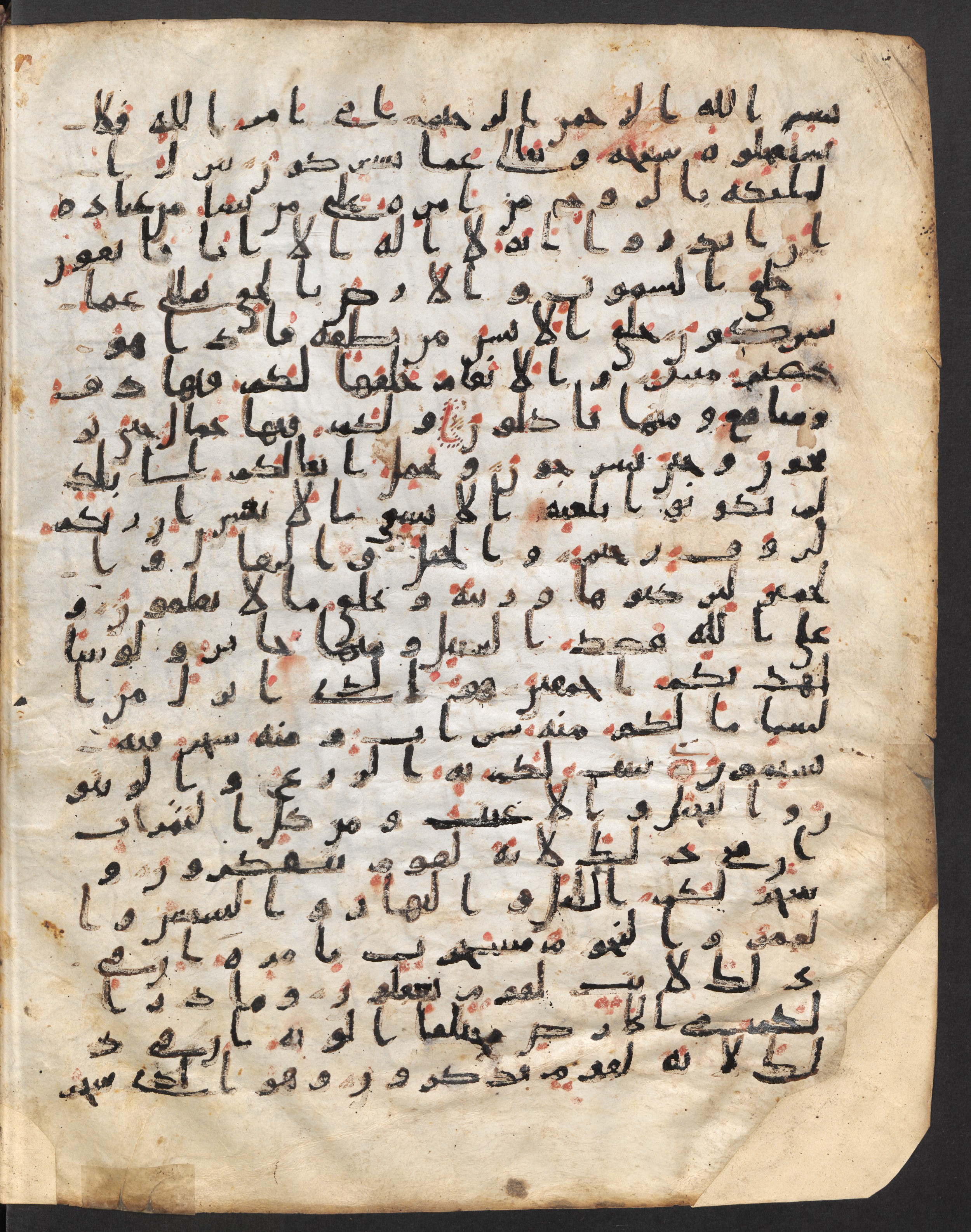
Staatsbibliothek zu Berlin, Ms. or. fol. 4313
This codex is one of the earliest surviving Quranic manuscripts, with combined radiocarbon dating of its parchment placing its production between 605 and 651 AD. The seven folios in Berlin were once part of a larger codex that is now split, with 33 additional folios currently held in the Egyptian National Library. The Berlin leaves were acquired in 1939 from the estate of Bernhard Moritz, the former director of the Khedivial Library.
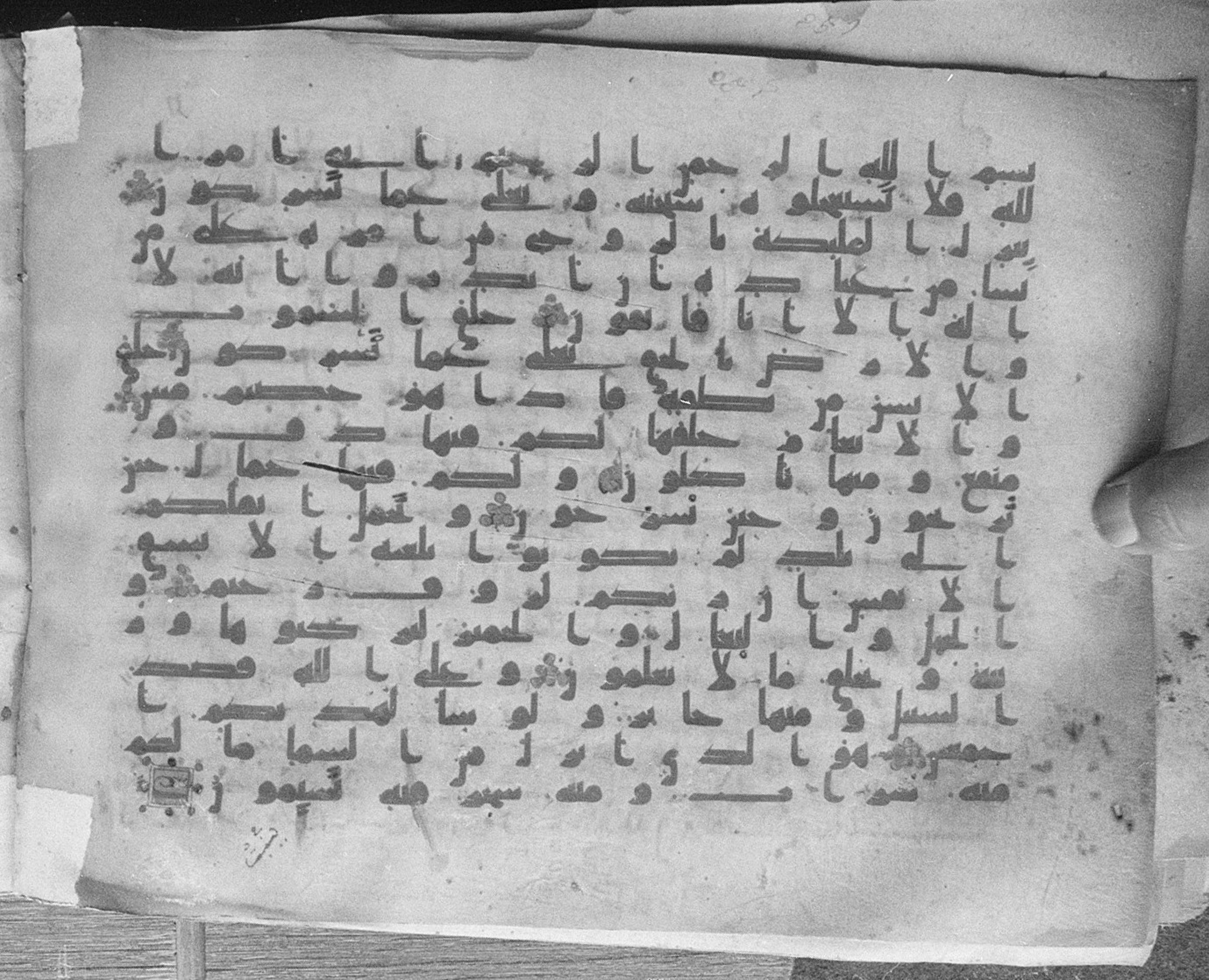
Meknes, Private library of Sherif ʿAbdarraḥmān b. Zīdān, no call number (Scan 1)
This nearly complete early Kufic Quran was photographed by Otto Pretzl during a research trip to Morocco in 1934. While the main body belonged to the private library of Sherif ʿAbdarraḥmān b. Zīdān, fragments of this codex have since been dispersed to the Royal Library in Rabat, the Tareq Rajab Museum in Kuwait, and sold through auction houses like Christie's.
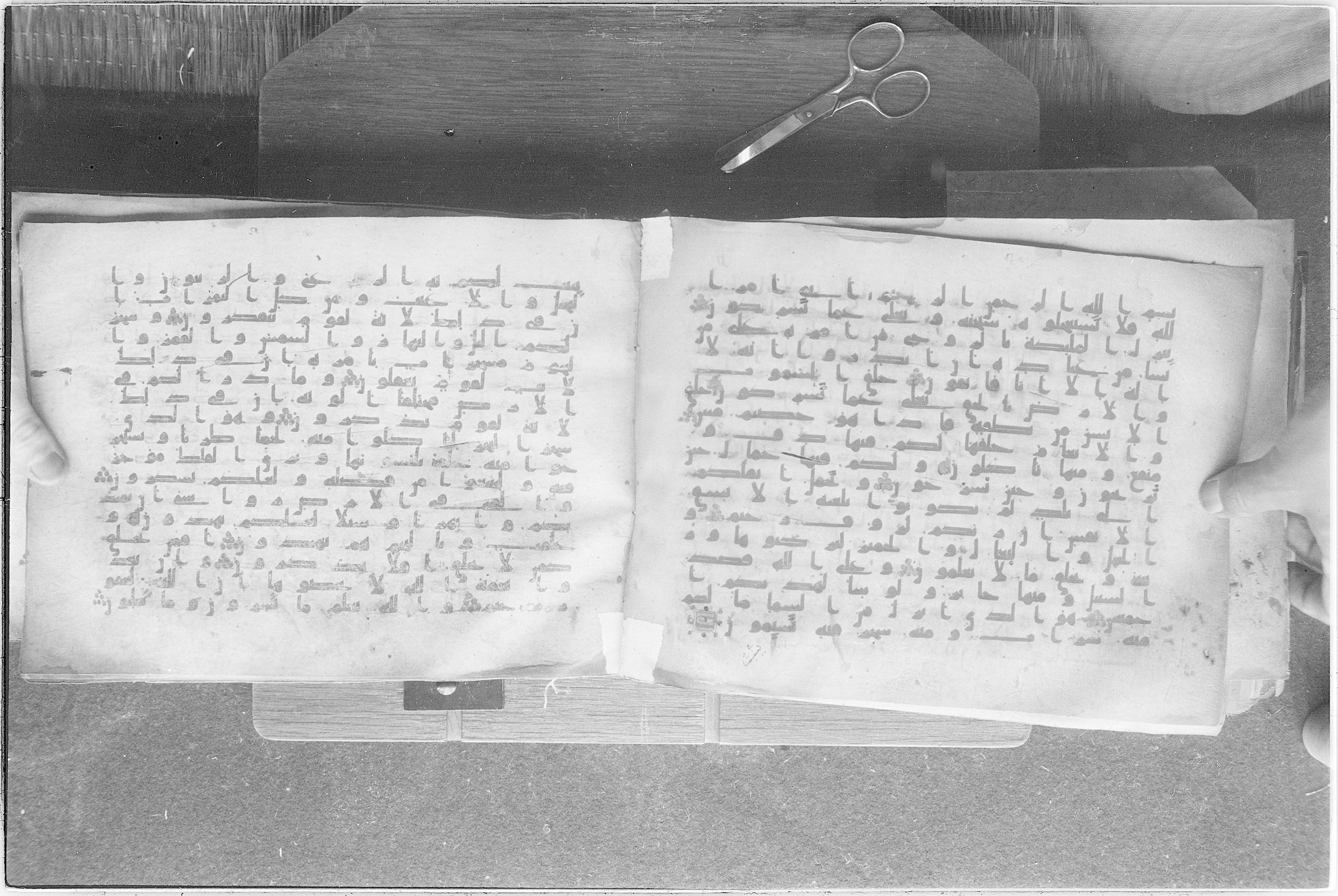
Meknes, Private library of Sherif ʿAbdarraḥmān b. Zīdān, no call number (Scan 2)
This nearly complete early Kufic Quran was photographed by Otto Pretzl during a research trip to Morocco in 1934. While the main body belonged to the private library of Sherif ʿAbdarraḥmān b. Zīdān, fragments of this codex have since been dispersed to the Royal Library in Rabat, the Tareq Rajab Museum in Kuwait, and sold through auction houses like Christie's.
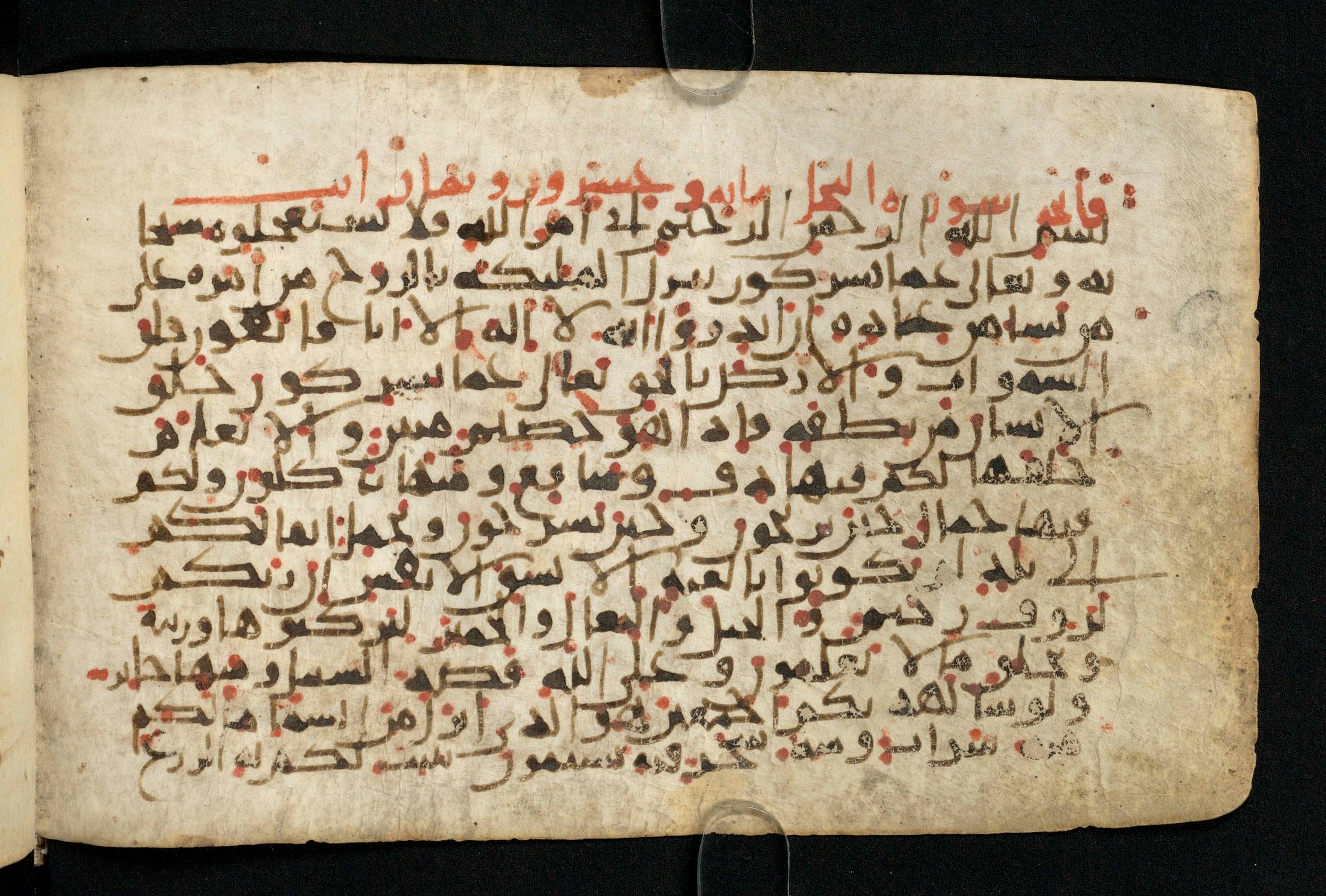
Paris, Bibliothèque nationale de France, Arabe 324 (c) (Scan 1)
Carbon dating of fragments from Arabe 324 (c) places its origin between 660-780 AD. The manuscript is part of a composite codex, where Arabe 324 (c) and Gotha Ms. orient. A 462 are original leaves, while other sections such as Arabe 324 (a) and (d) were added centuries later to replace damaged or missing pages.
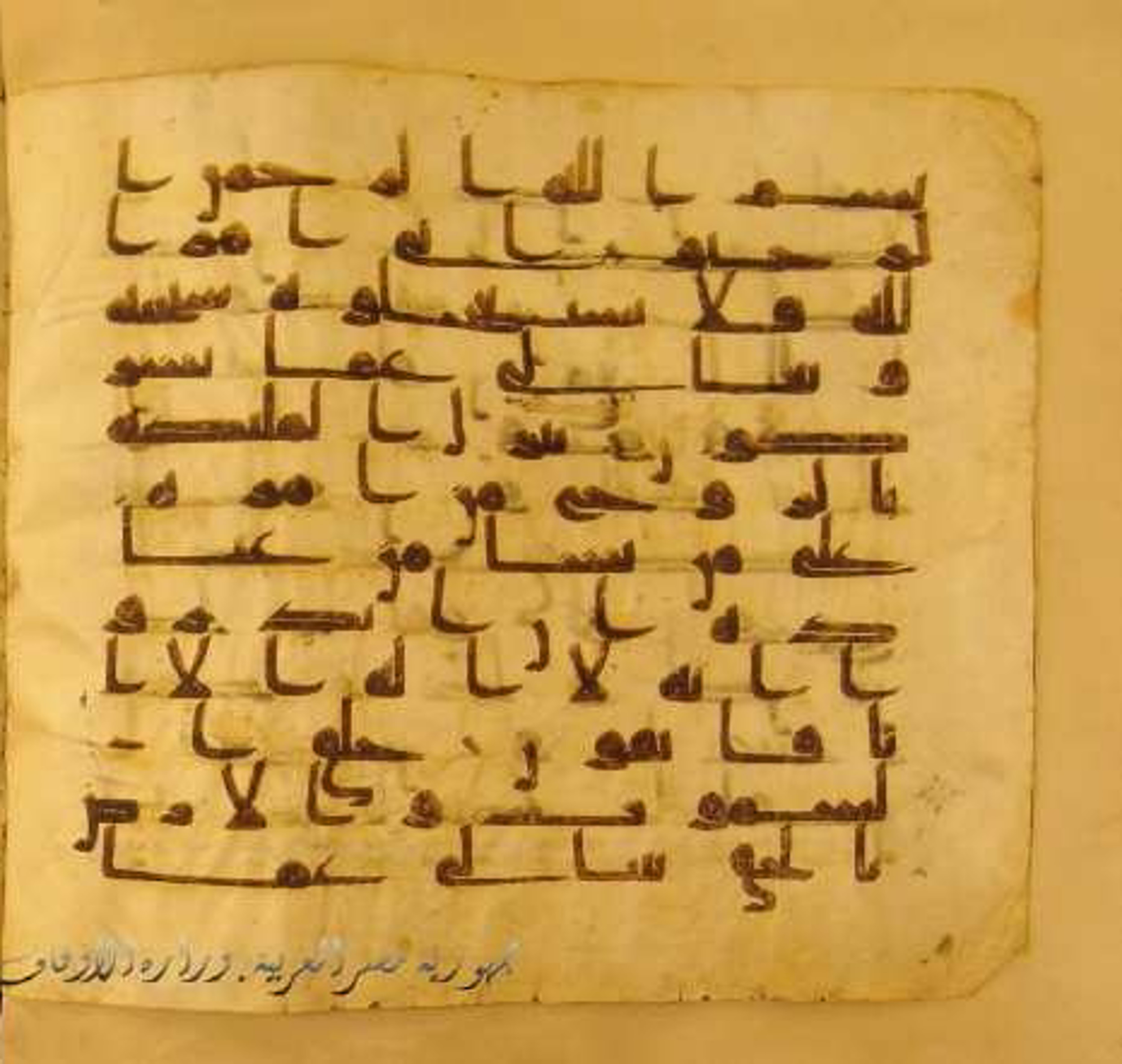
Paris, Bibliothèque nationale de France, Arabe 324 (c) (Scan 2)
Carbon dating of fragments from Arabe 324 (c) places its origin between 660-780 AD. The manuscript is part of a composite codex, where Arabe 324 (c) and Gotha Ms. orient. A 462 are original leaves, while other sections such as Arabe 324 (a) and (d) were added centuries later to replace damaged or missing pages.
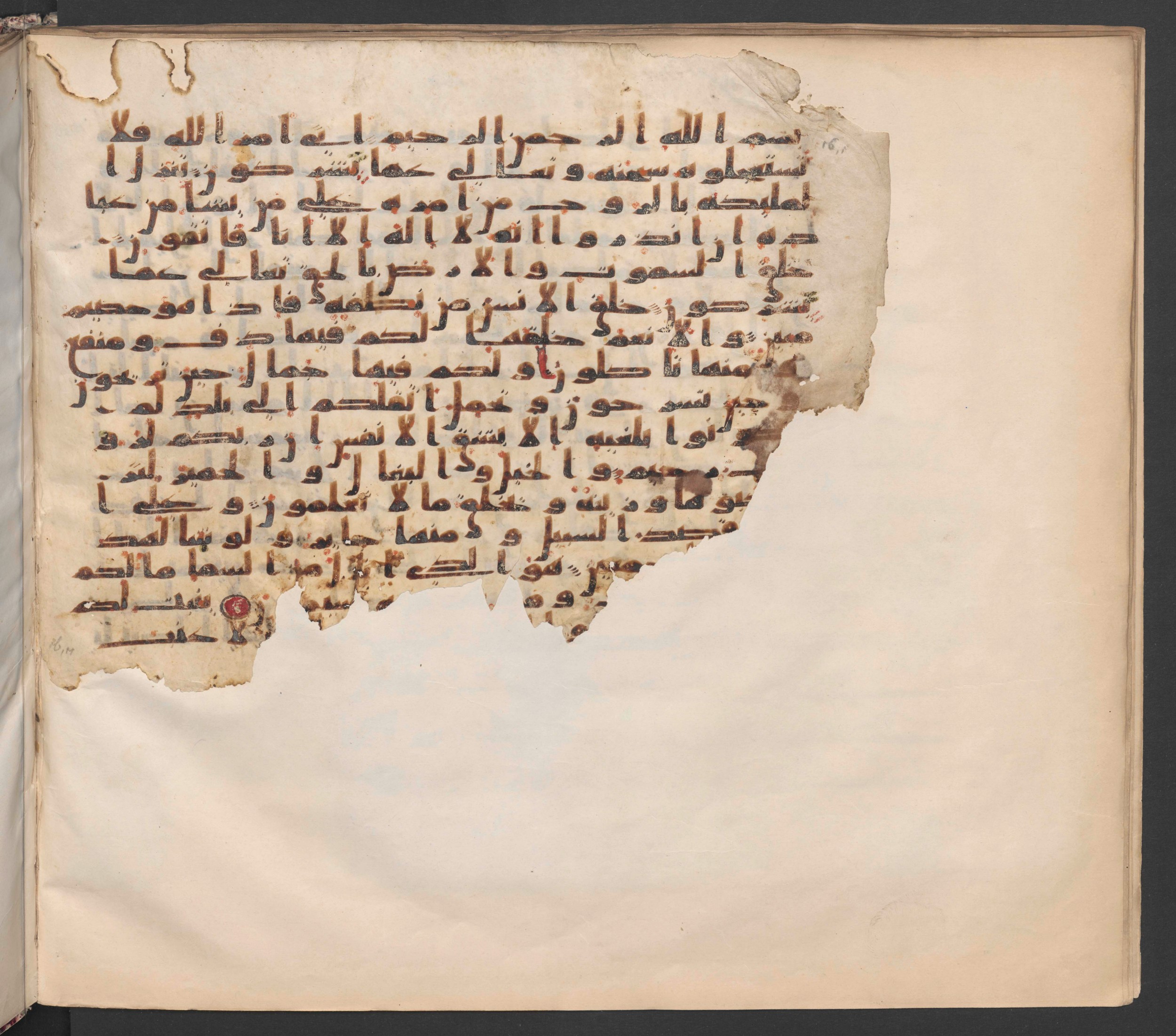
Berlin, Staatsbibliothek zu Berlin, Ms. or. fol. 379 (Ahlwardt 334)
The manuscript is written on thick, yellow parchment. According to Wilhelm Ahlwardt's 1887 catalogue, the lower half of the manuscript is heavily damaged, especially towards the side margins. The script is described as large, thick, pleasing, and uniform, with ink that has turned somewhat brownish over time.
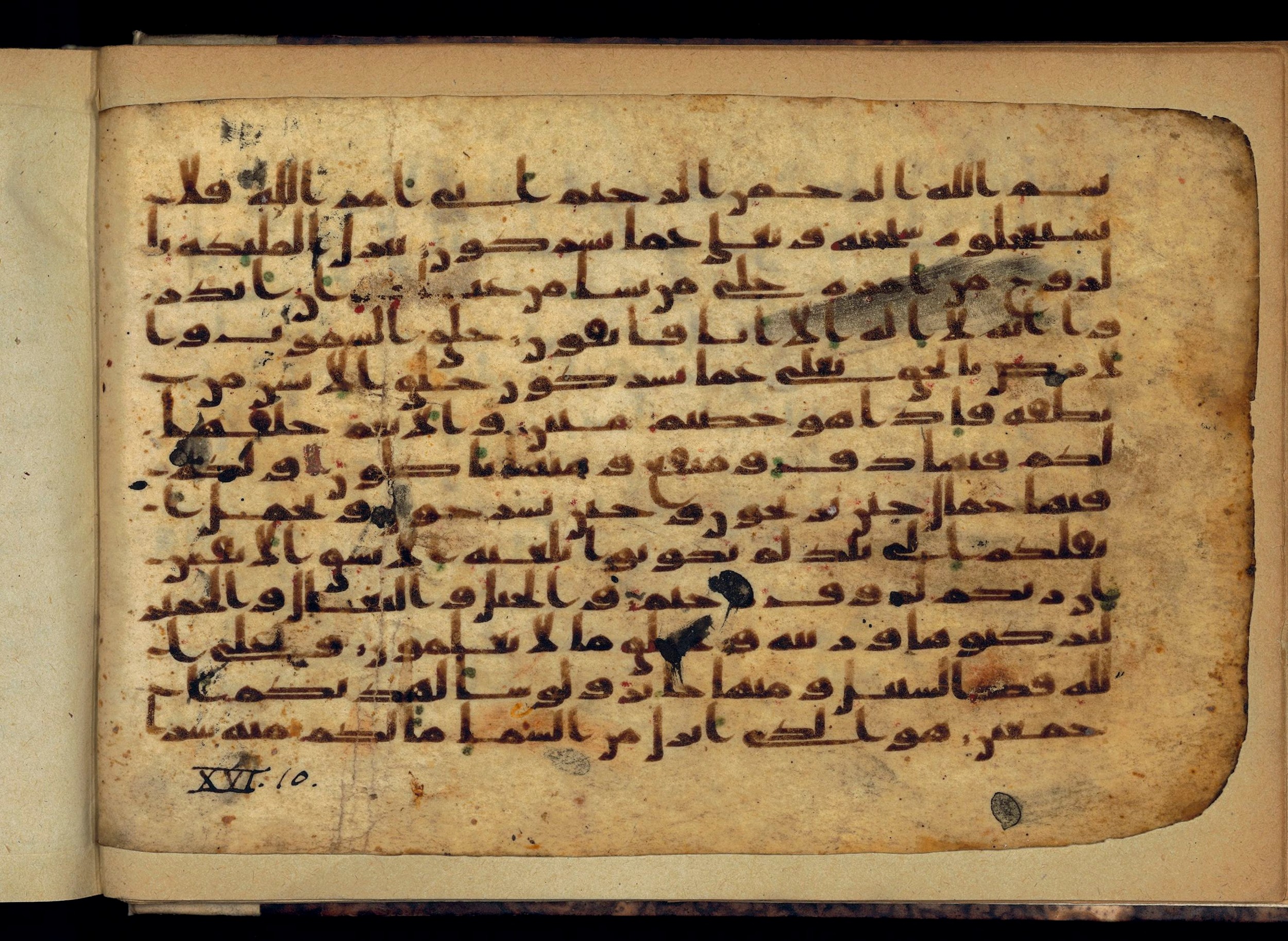
Paris, Bibliothèque nationale de France, Arabe 370 (a)
A notable feature of this manuscript is its use of violet ink. It employs violet-colored alifs to mark groups of five verses and circles of the same color for groups of ten, and also features surah headings written in violet ink that include a unique introductory formula alongside the verse count.
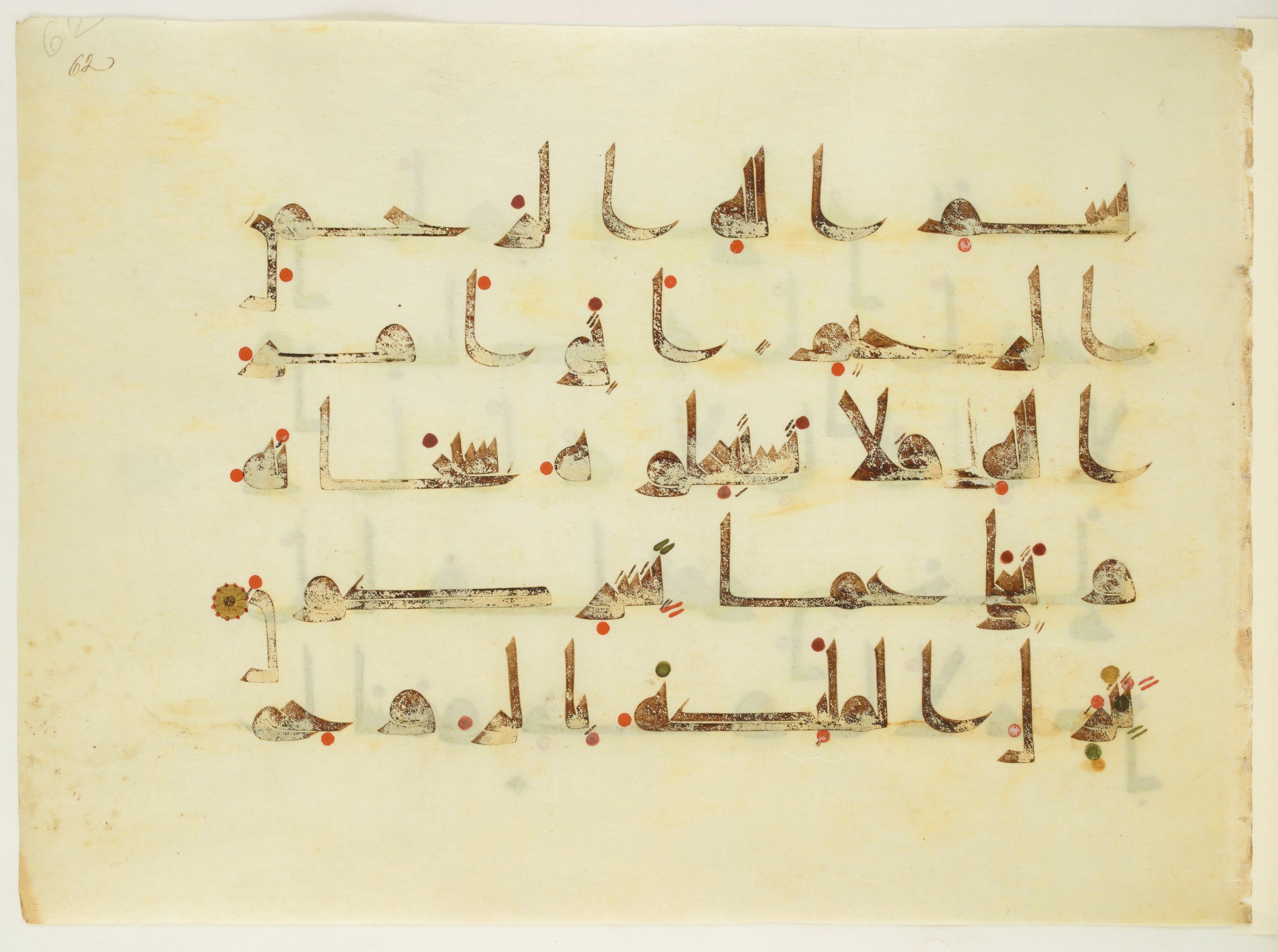
Paris, Bibliothèque nationale de France, Arabe 350 (a)
This codex is highly decorated for its time. It features rosettes to separate individual verses, golden letter 'hāʾ' to indicate groups of five verses, and intricately illuminated medallions that write out the names of ten-verse groupings in full. Sura titles are also indicated in gold letters within decorated bands.
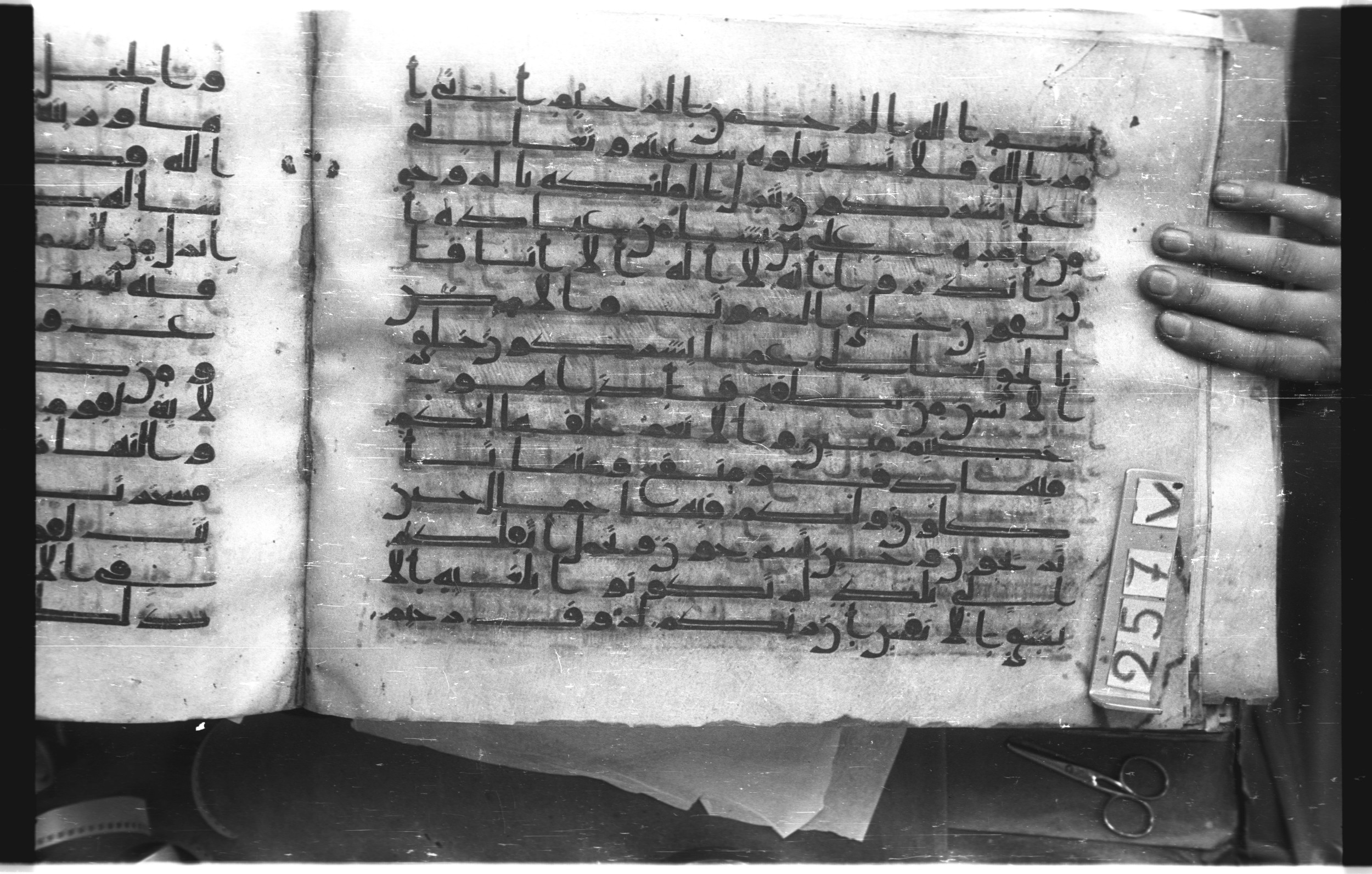
Istanbul, Topkapı Palace Museum, "Saray 50386" (Karatay 42)
This near-complete Kufic Quran is bound in brown leather over wood with arabesque interlacing and iron rings. It bears the foundation seal of Sultan Osman III, and its first three leaves as well as sura headings are illuminated.
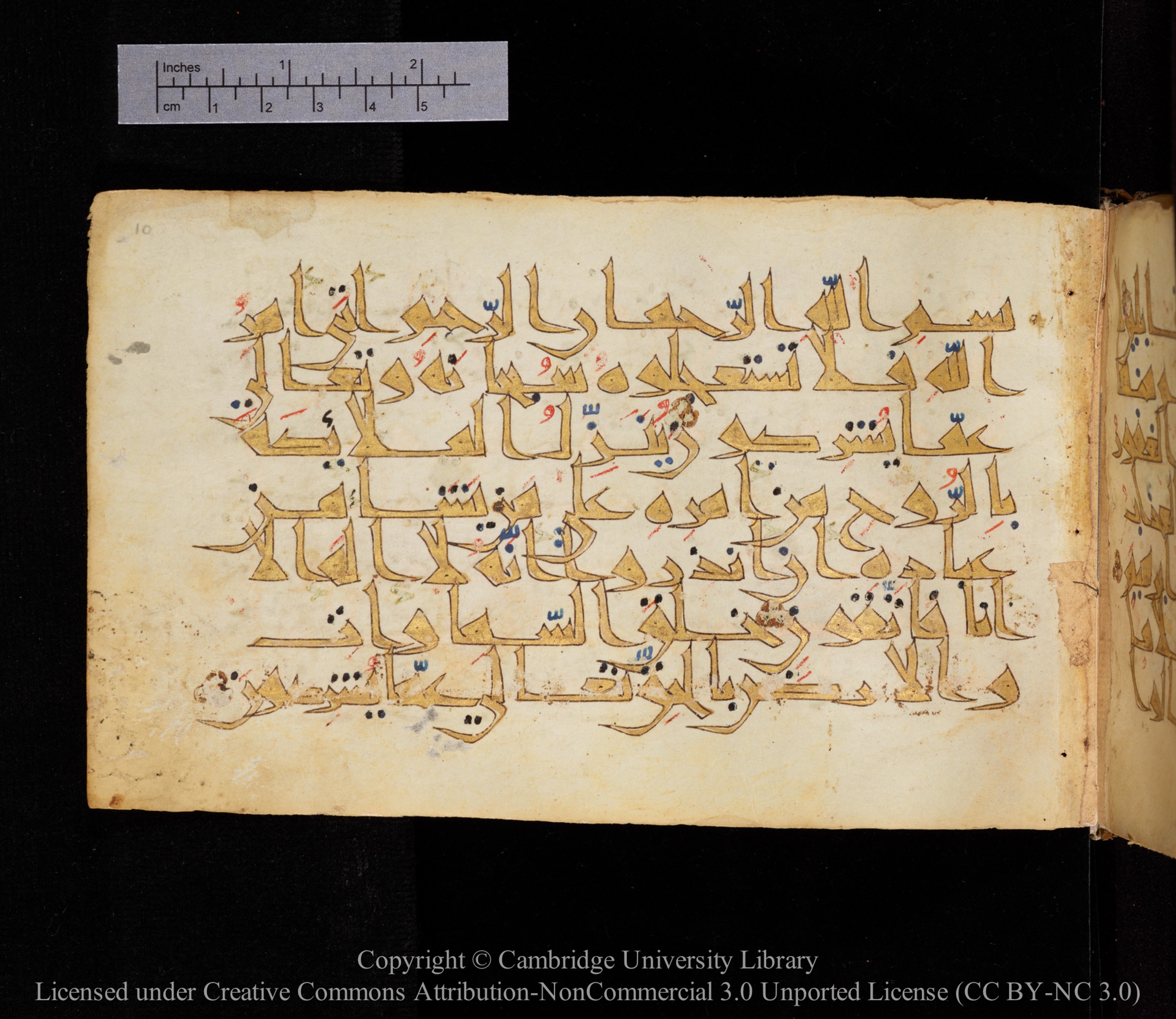
Cambridge MS Or.476
This fragment of an Abbasid-era Quran is notable for its 'New Style I' script, representing a stylized evolutionary phase in early Arabic calligraphy. The manuscript preserves an elegant and compact layout of 7 lines per page on parchment.