
Surah 18:0
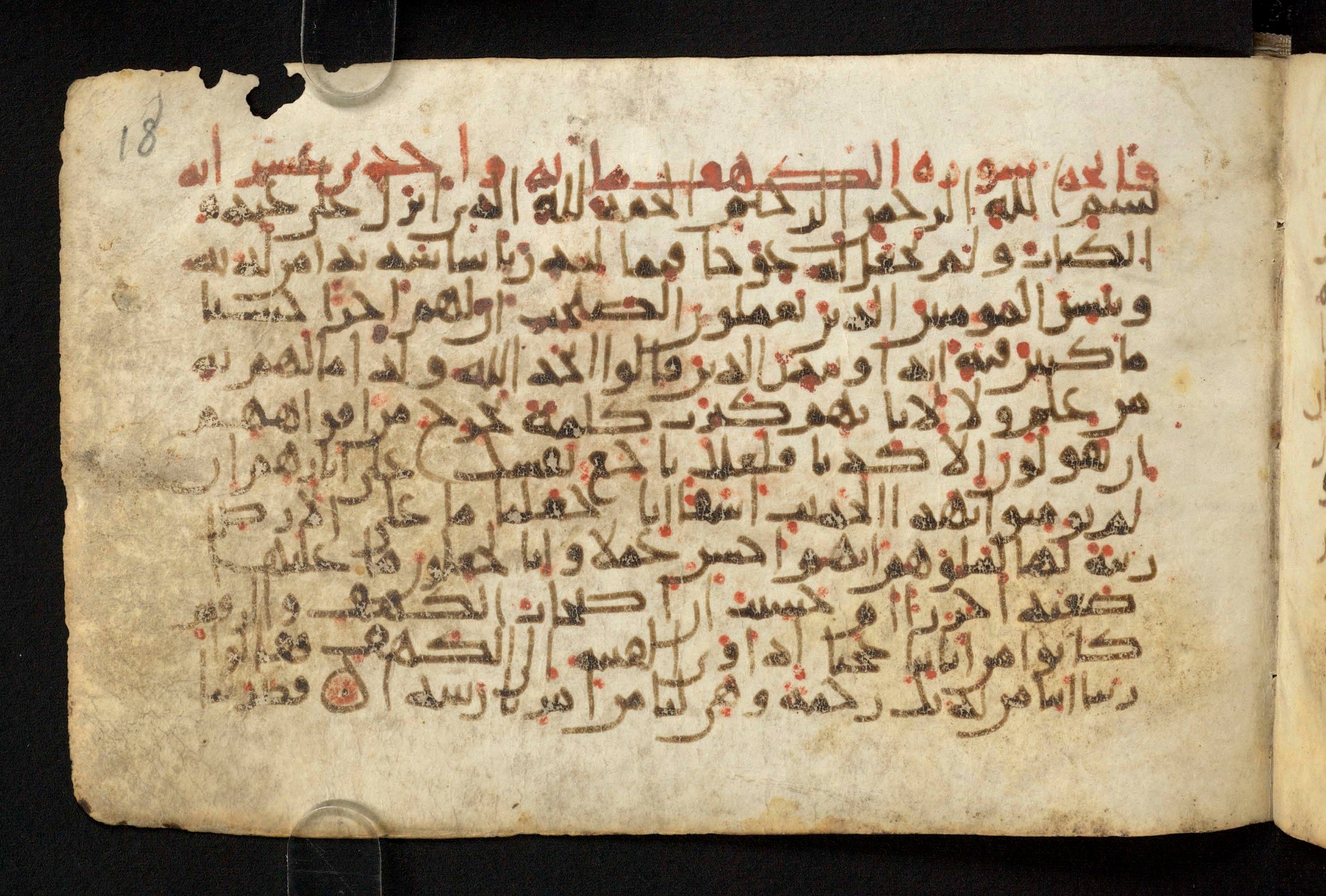
Paris, Bibliothèque nationale de France, Arabe 324 (c)
Carbon dating of fragments from Arabe 324 (c) places its origin between 660-780 AD. The manuscript is part of a composite codex, where Arabe 324 (c) and Gotha Ms. orient. A 462 are original leaves, while other sections such as Arabe 324 (a) and (d) were added centuries later to replace damaged or missing pages.
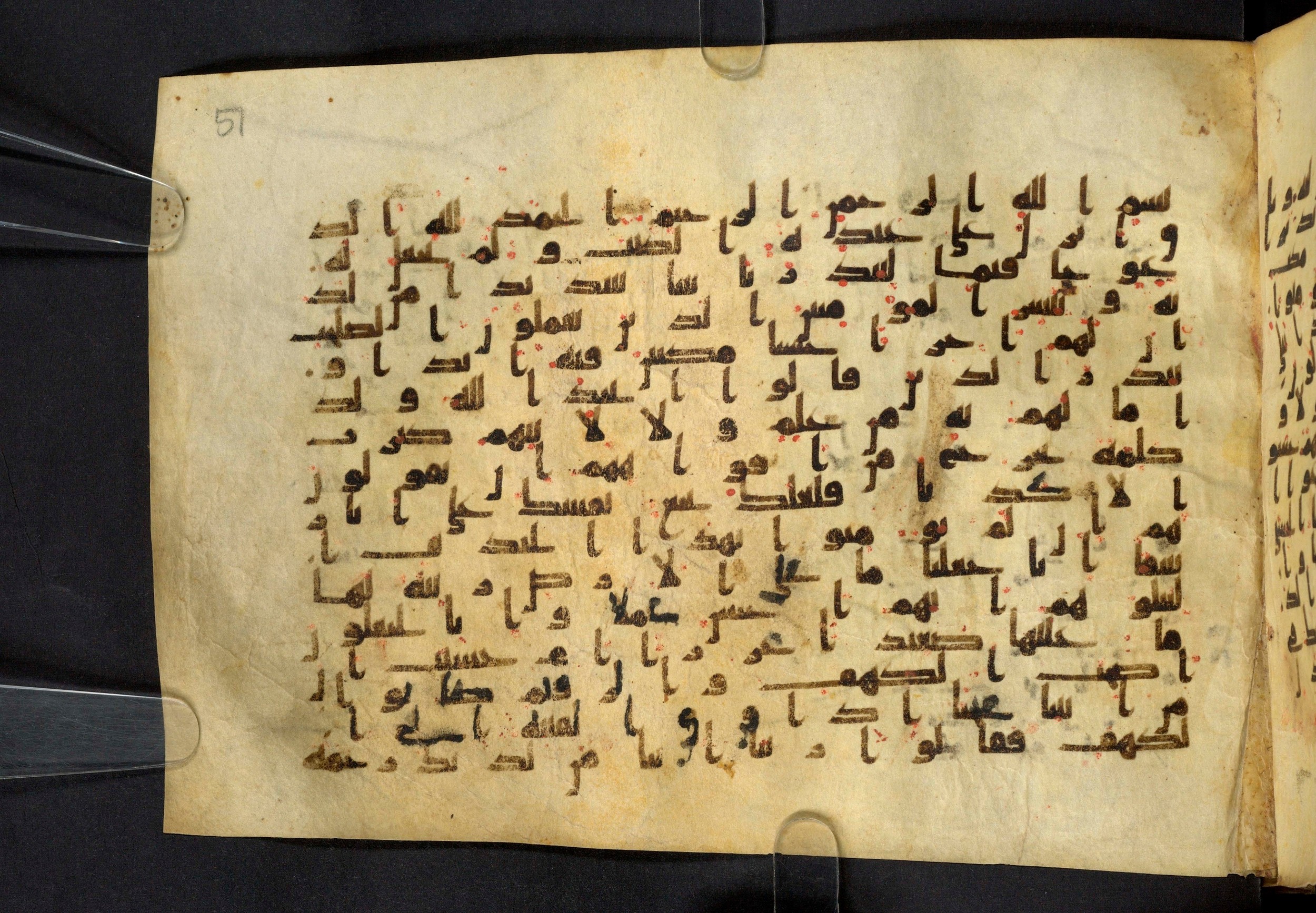
Moritz 1905, Tables 39-40
This codex fragment was documented in Bernhard Moritz's 1905 'Arabic Palaeography' album and was reportedly discovered in the ancient Egyptian city of Bahnasa (Oxyrynchos). Scholars suggest it may originally belong to the same large codex as other early Quranic fragments currently held in the Vatican, Paris, and the Khalili Collections.
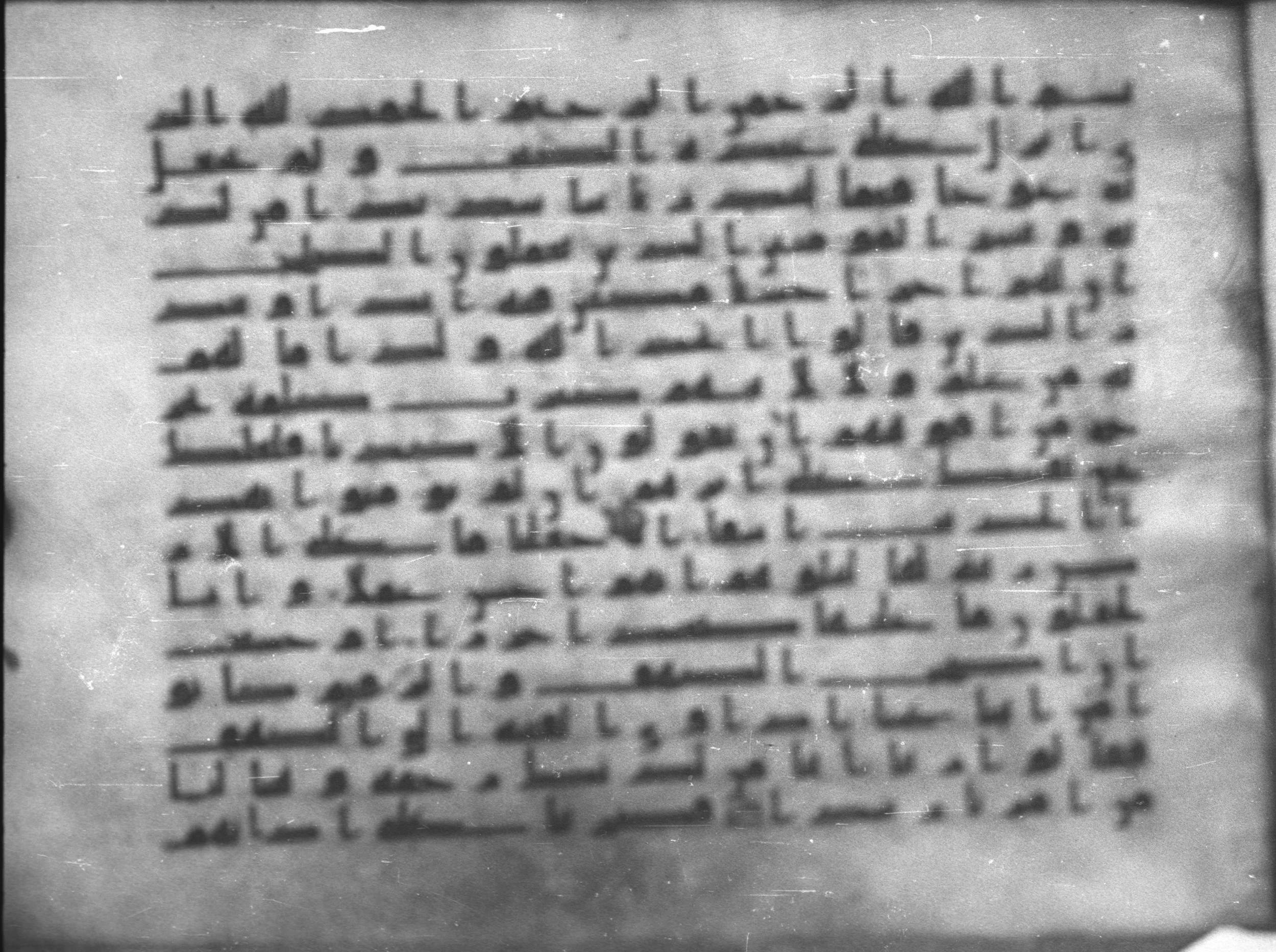
Topkapı Palace Museum, Saray 50395 (Scan 1)
This nearly complete codex is an exceptional document, as complete codices in Kūfī D script style are extremely rare. The manuscript features illuminated pages for the first three and last six folios, as well as at surah beginnings.
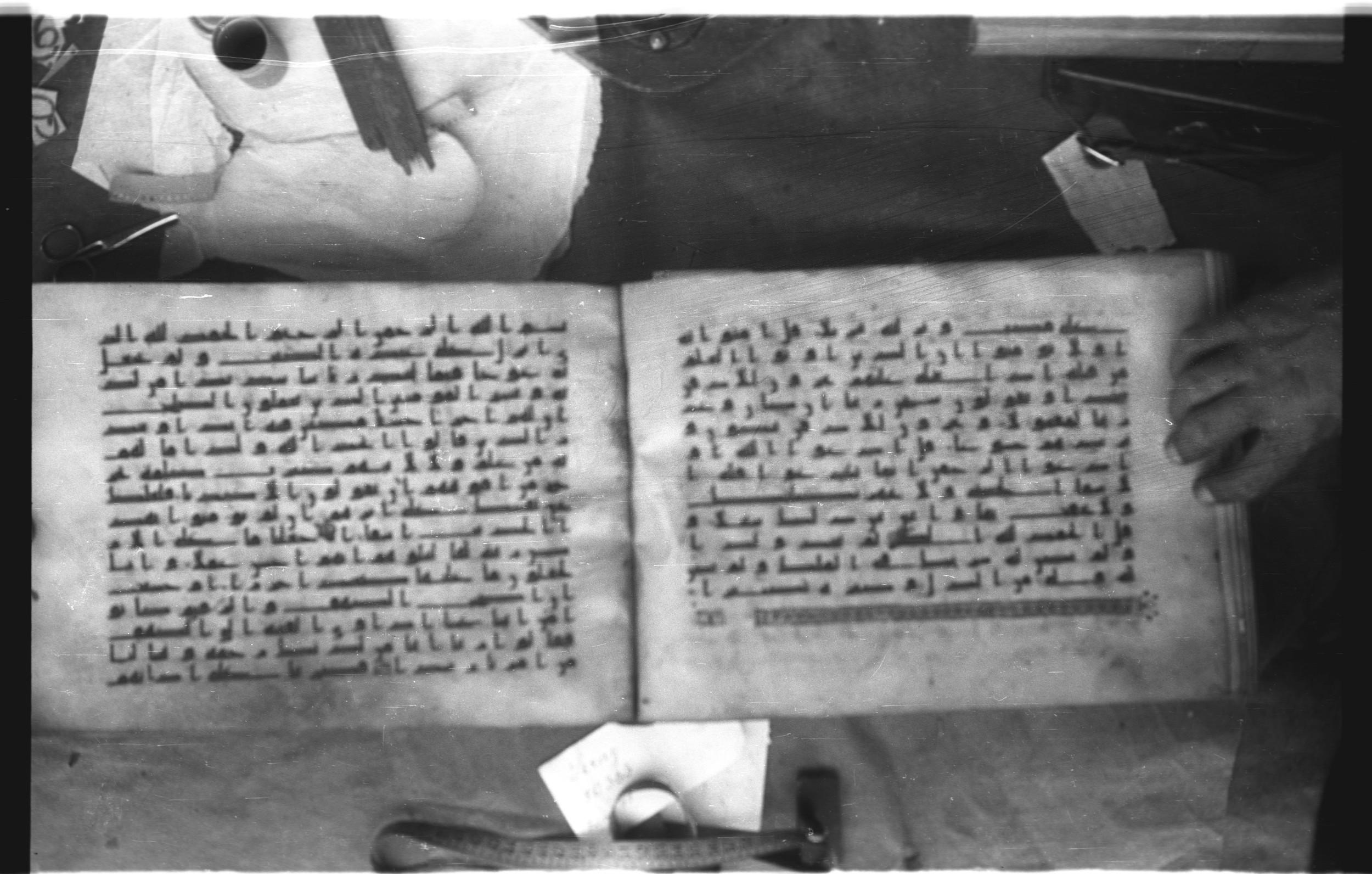
Topkapı Palace Museum, Saray 50395 (Scan 2)
This nearly complete codex is an exceptional document, as complete codices in Kūfī D script style are extremely rare. The manuscript features illuminated pages for the first three and last six folios, as well as at surah beginnings.
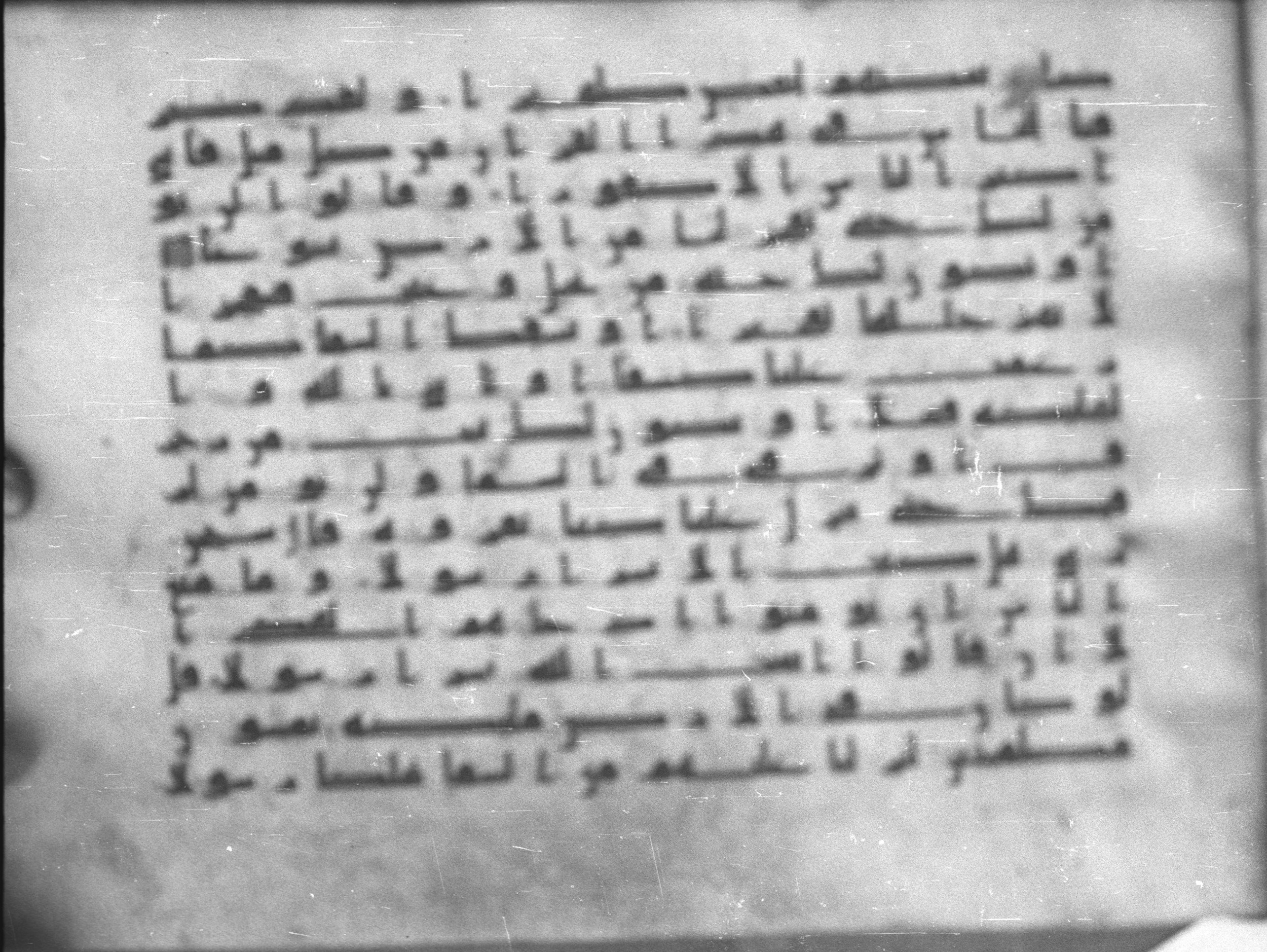
Topkapı Palace Museum, Saray 50395 (Scan 3)
This nearly complete codex is an exceptional document, as complete codices in Kūfī D script style are extremely rare. The manuscript features illuminated pages for the first three and last six folios, as well as at surah beginnings.
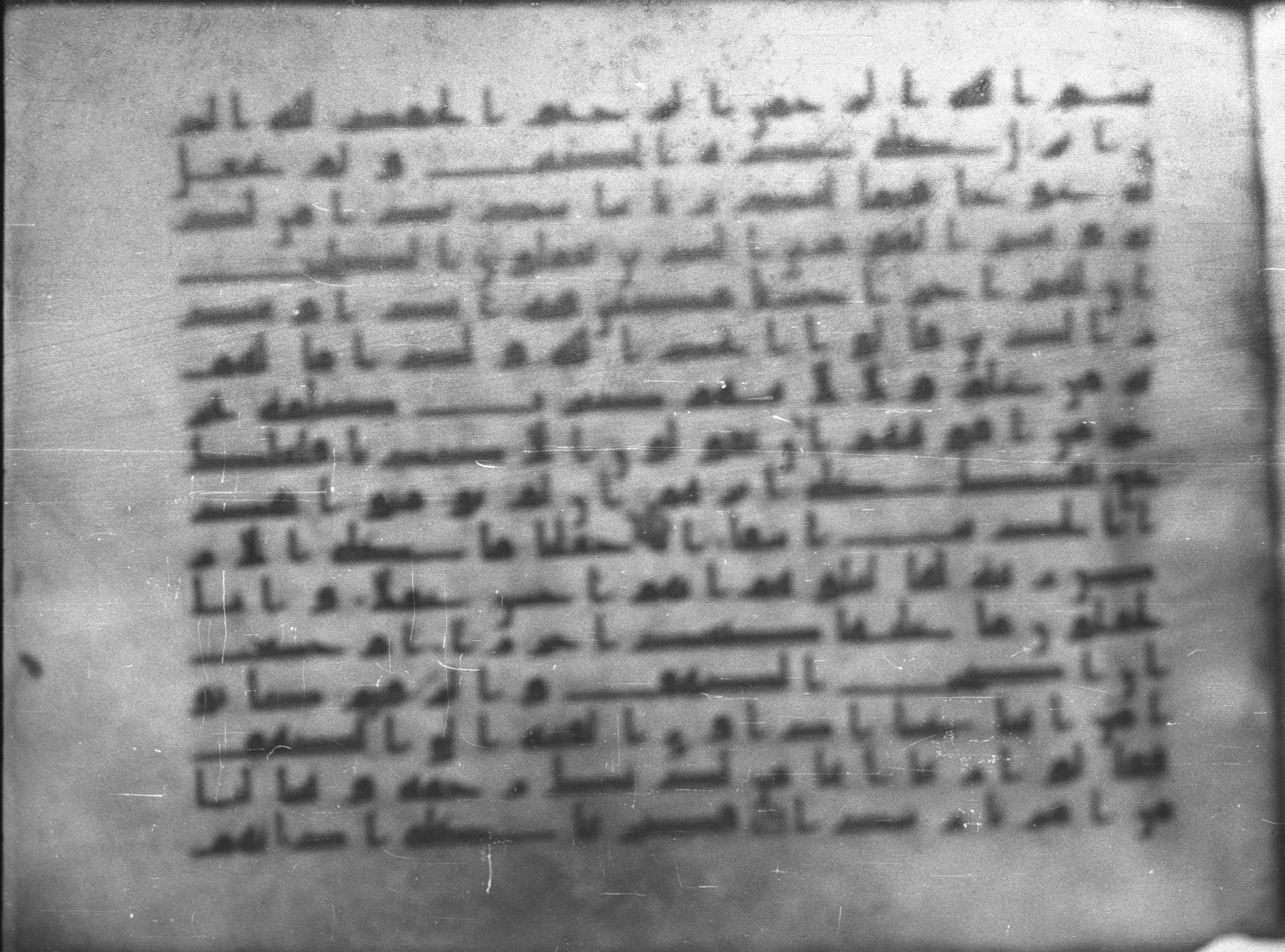
Topkapı Palace Museum, Saray 50395 (Scan 4)
This nearly complete codex is an exceptional document, as complete codices in Kūfī D script style are extremely rare. The manuscript features illuminated pages for the first three and last six folios, as well as at surah beginnings.
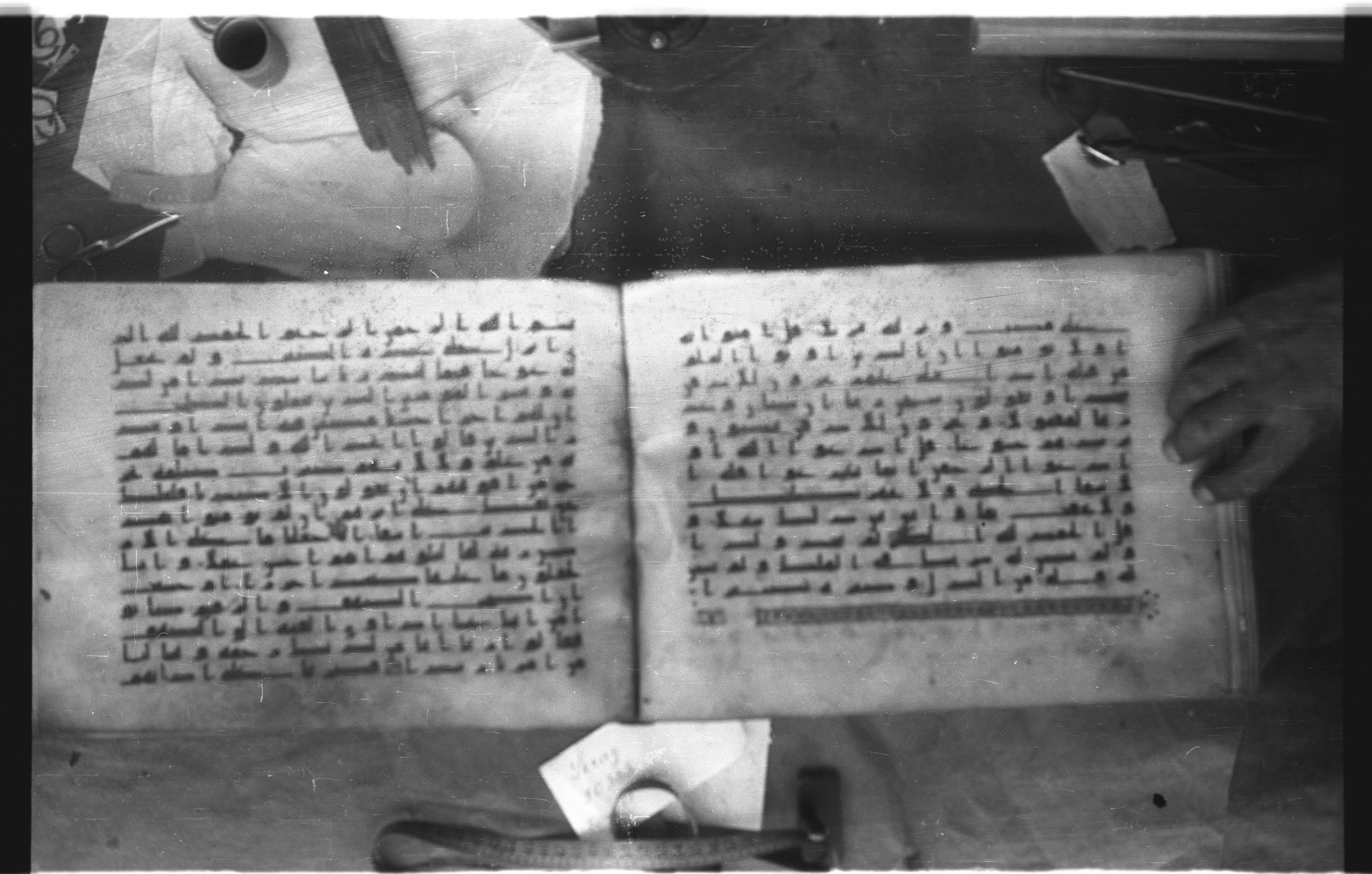
Topkapı Palace Museum, Saray 50395 (Scan 5)
This nearly complete codex is an exceptional document, as complete codices in Kūfī D script style are extremely rare. The manuscript features illuminated pages for the first three and last six folios, as well as at surah beginnings.
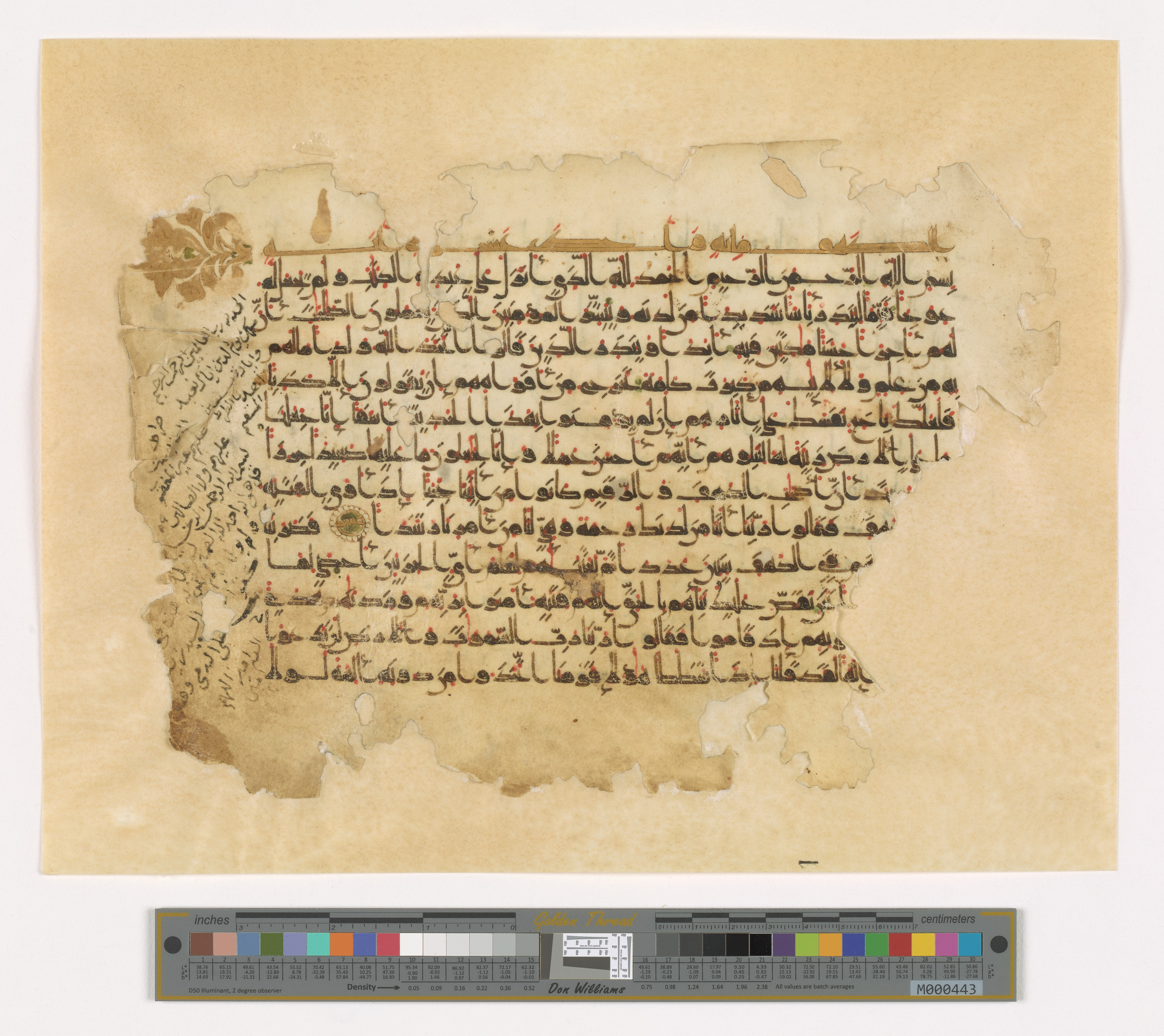
Doha, Qatar National Library, HC.MS.03101
This 10th-century Kufic manuscript features elaborate verse divisions, with fifth verses marked by a small gold letter hāʾ and tenth verses highlighted by illuminated roundels in gold, green, and brown containing the exact verse count.
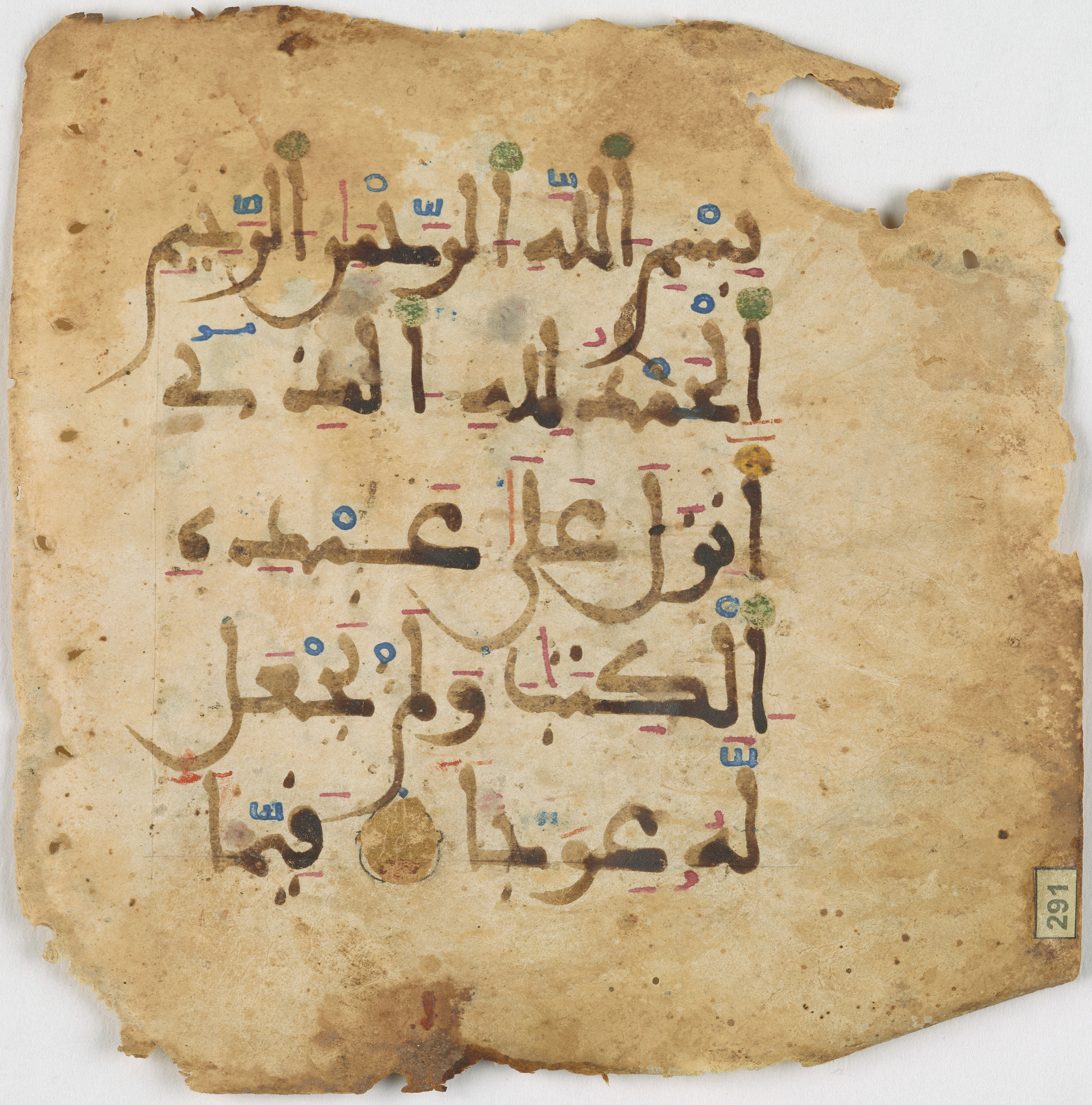
Qatar National Library, HC.MS.03094
This manuscript is characterized by a colorful vocalization system where yellow dots mark the hamza, green dots signal the waṣl, and symbols of sukūn and tašdīd are traced in blue. The Maghribī script is a descendant of the Kufic script, and a manuscript of similar calligraphic style was notably copied by the Marinid sultan Abū al-Ḥasan in 1345 AD.