
Surah 22:0
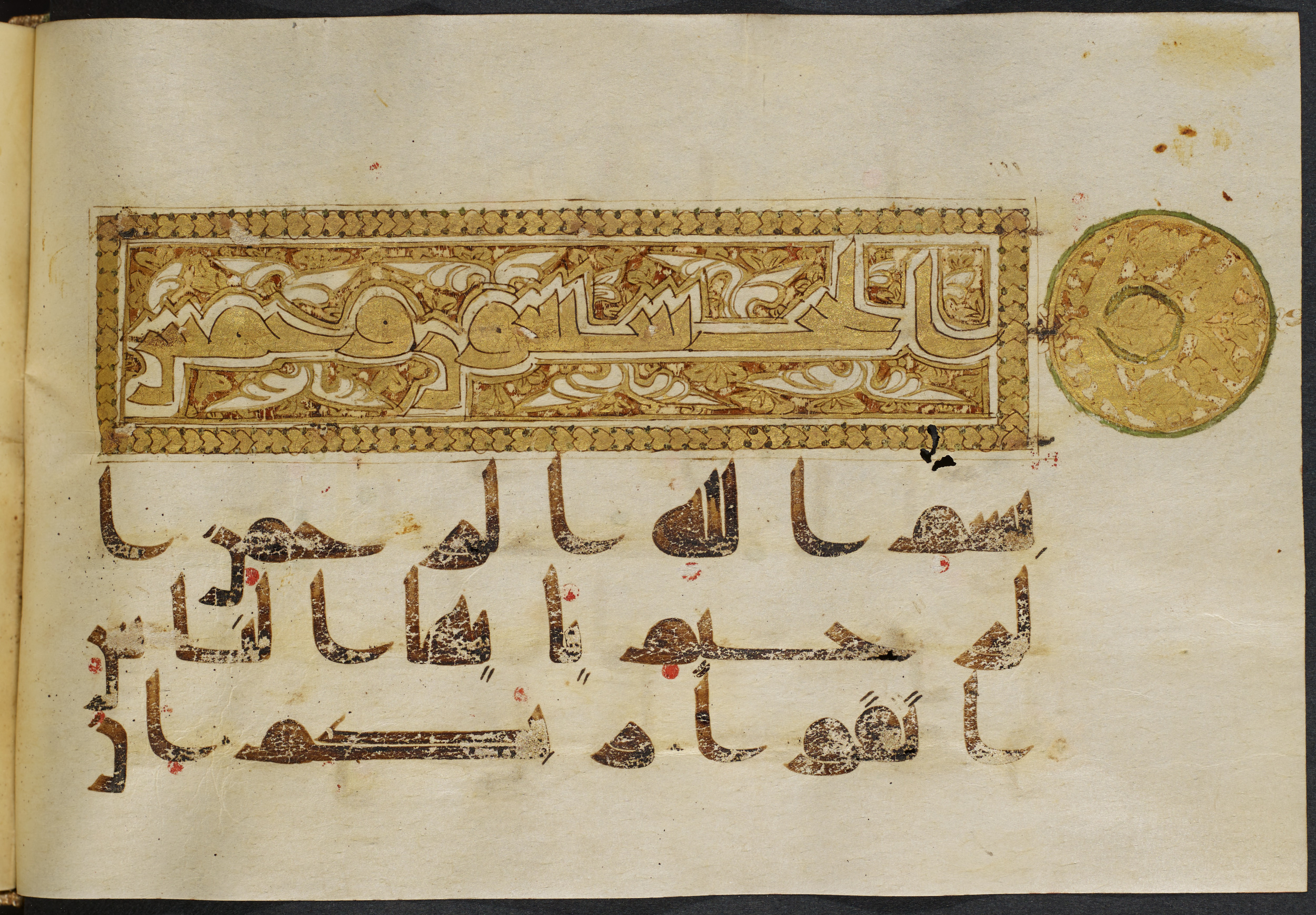
Copenhagen, Det Kongelige Bibliotek, Cod. Arab. 36
This manuscript was part of the first palaeographical study of Arabic script in the West, written by Jakob Georg Christian Adler in 1780. Acquired by Friedrich Buchwald in the 17th century, the fragment features a carpet-like tooled design binding with gilded frames and Danish state emblems on the spine.
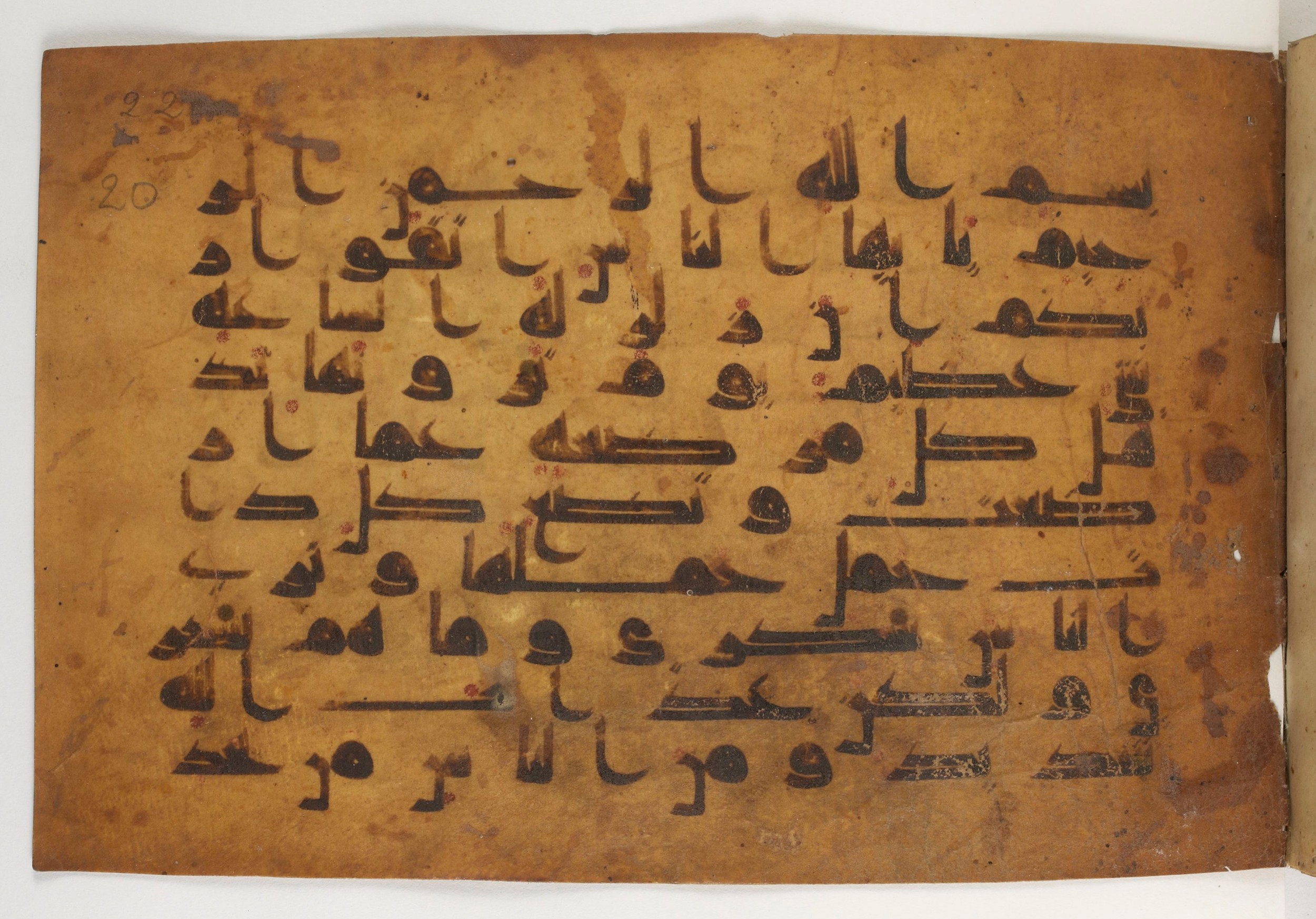
Paris, Bibliothèque nationale de France, Arabe 5179 (a)
This manuscript features elaborate golden illuminations, including a golden Kufic 'hāʾ' to mark every five verses and ornate medallions for every ten verses. The surah headers are beautifully decorated with golden titles, verse counts, and foliate vignettes.
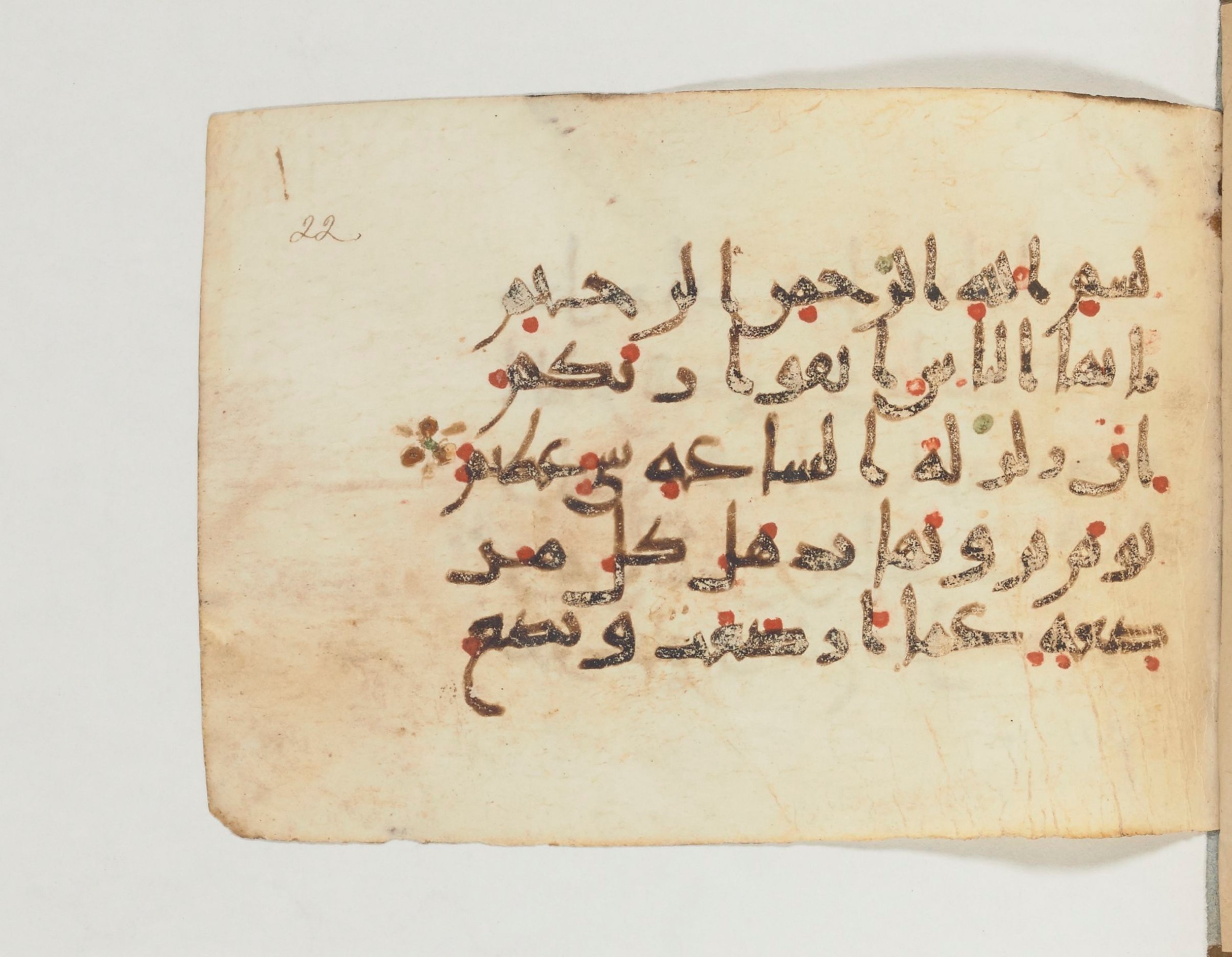
Paris, Bibliothèque nationale de France, Arabe 374 (b)
This manuscript is notable for its ornate verse markers, using golden triangles to separate individual verses and golden Kufic 'hāʾ' letters to mark groups of five verses. Additionally, every tenth verse is indicated by a medallion containing the spelled-out decade, and Surah 22 is introduced with its title written in gold ink alongside a decorative lanceolate vignette.
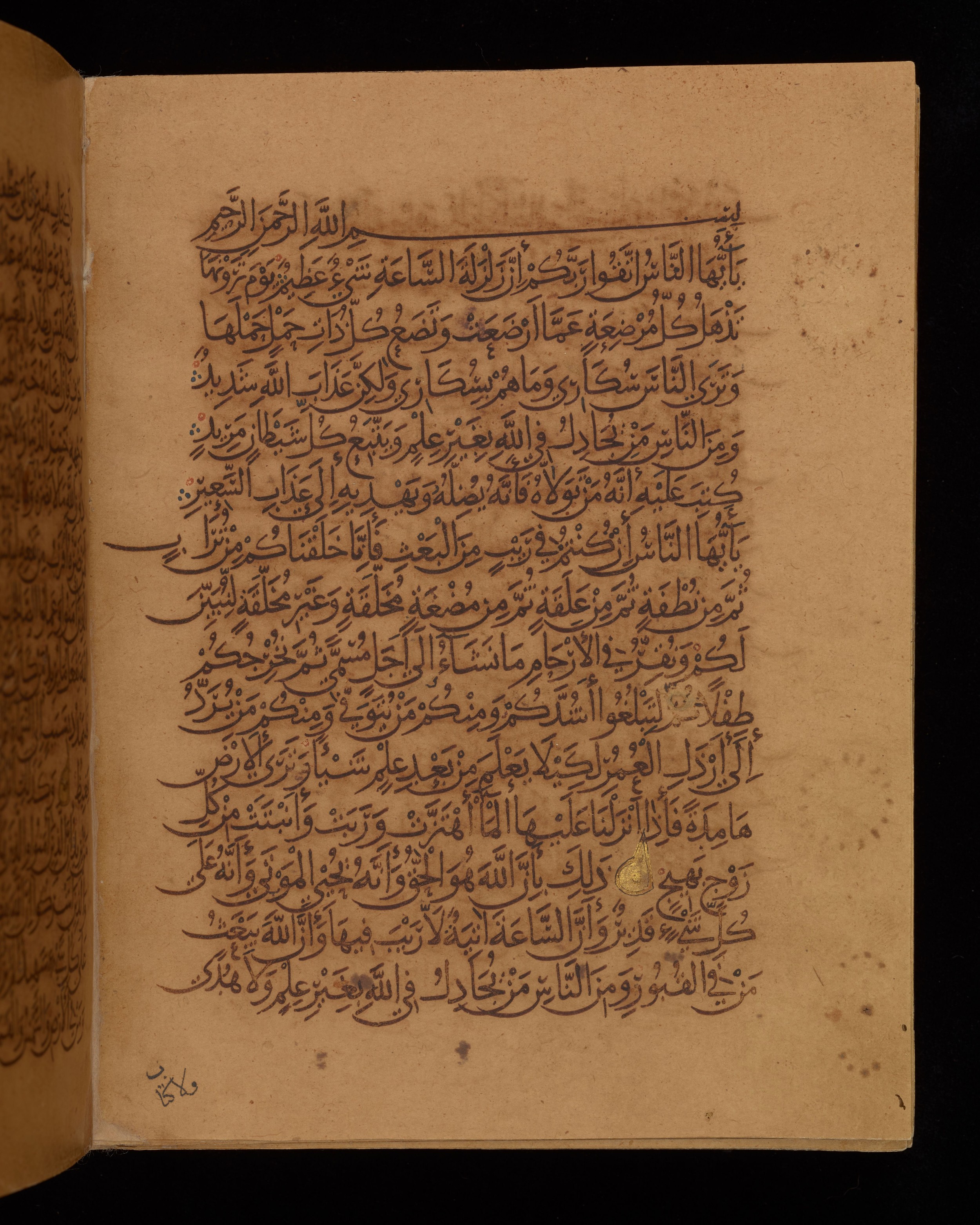
Dublin, Chester Beatty Library, Is 1431
This complete Quran was produced in Baghdad by the renowned calligrapher ʿAlī b. Hilāl, also known as Ibn al-Bawwāb, around 1000-1001 AD. He is a significant figure in Islamic art, closely associated with the adoption of the round Naskh script to transcribe the Quran.