
Surah 30:0
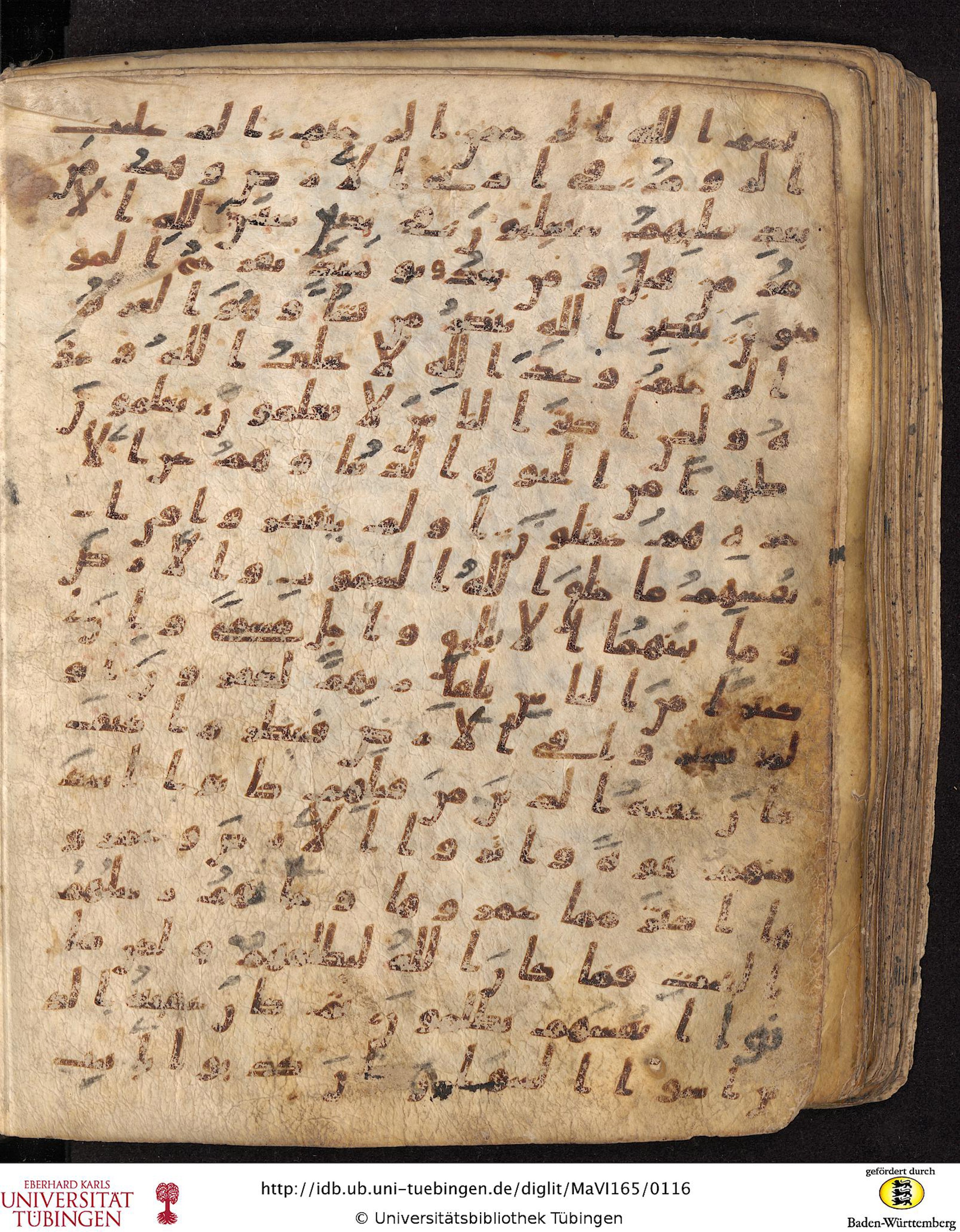
Staatsbibliothek zu Berlin, Ms. or. fol. 4313
This codex is one of the earliest surviving Quranic manuscripts, with combined radiocarbon dating of its parchment placing its production between 605 and 651 AD. The seven folios in Berlin were once part of a larger codex that is now split, with 33 additional folios currently held in the Egyptian National Library. The Berlin leaves were acquired in 1939 from the estate of Bernhard Moritz, the former director of the Khedivial Library.
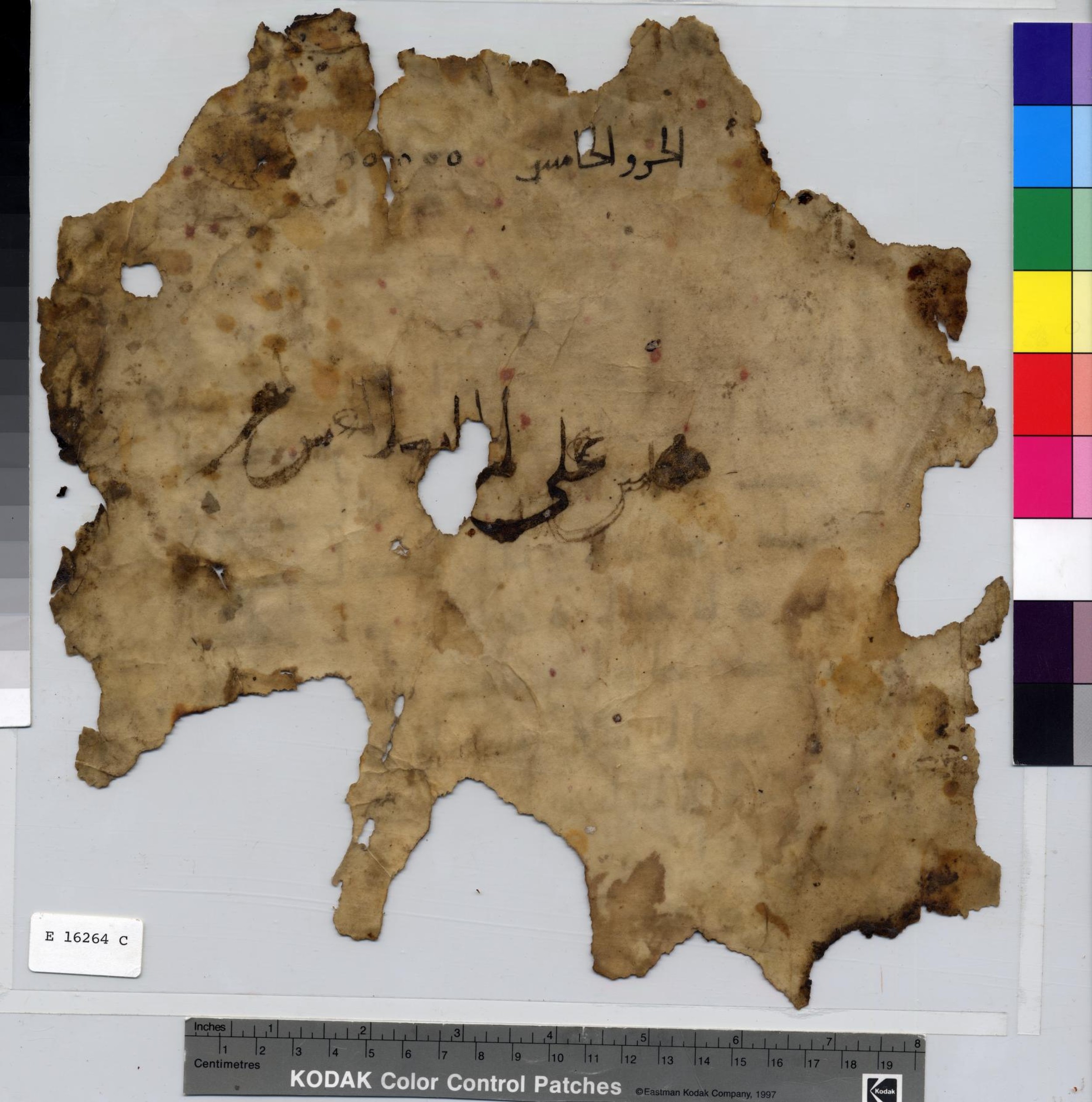
Philadelphia, Pennsylvania, Pennsylvania University Museum, E 16264 C (Scan 1)
This manuscript includes a waqf statement denoting that it was donated to the Muʿizzī Cathedral Mosque, likely referring to the famous al-Azhar Mosque in Cairo. Additionally, a later hand inscribed 'Volume Five', suggesting a rare liturgical partition of the Quran into six sections.
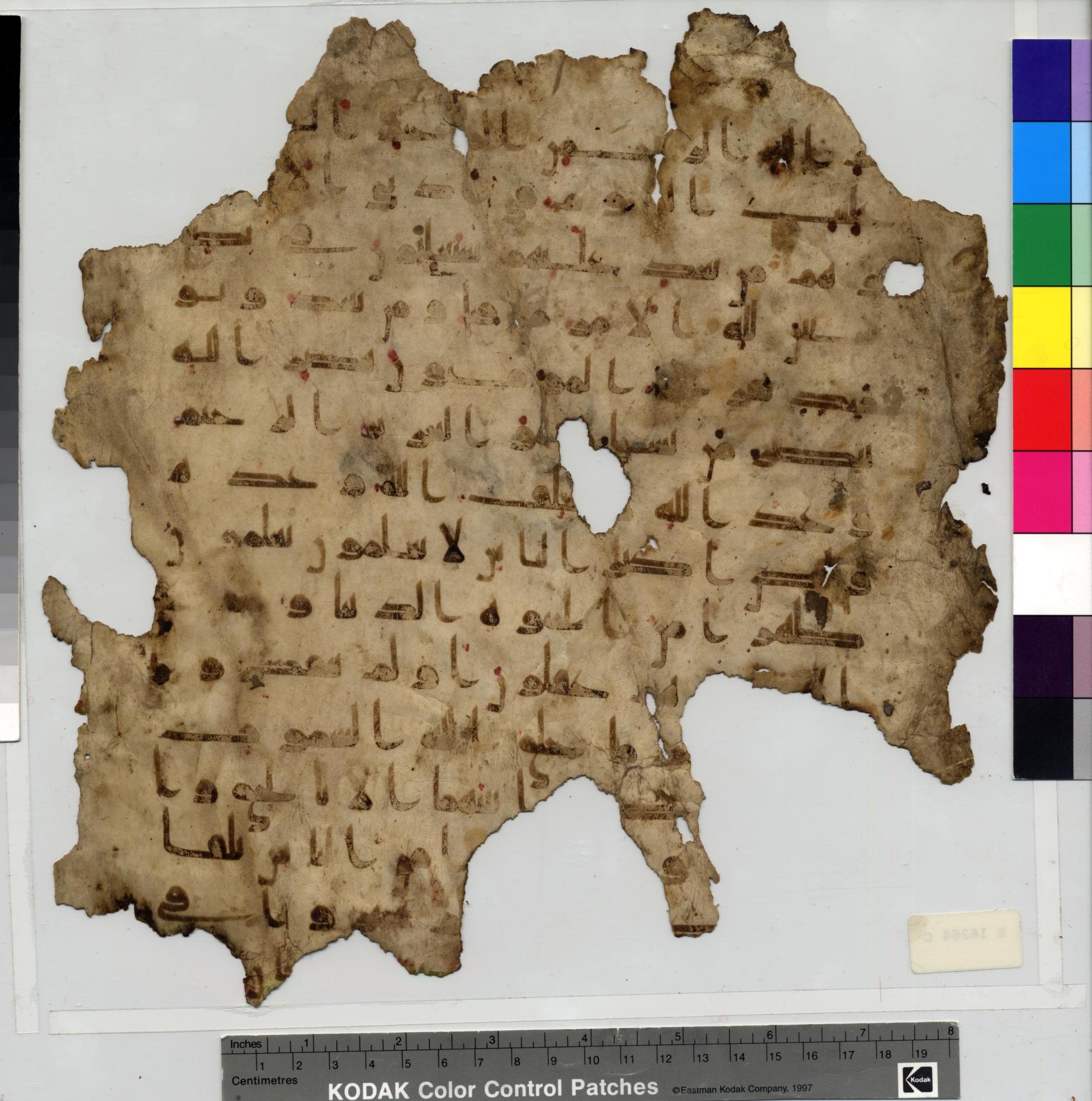
Philadelphia, Pennsylvania, Pennsylvania University Museum, E 16264 C (Scan 2)
This manuscript includes a waqf statement denoting that it was donated to the Muʿizzī Cathedral Mosque, likely referring to the famous al-Azhar Mosque in Cairo. Additionally, a later hand inscribed 'Volume Five', suggesting a rare liturgical partition of the Quran into six sections.
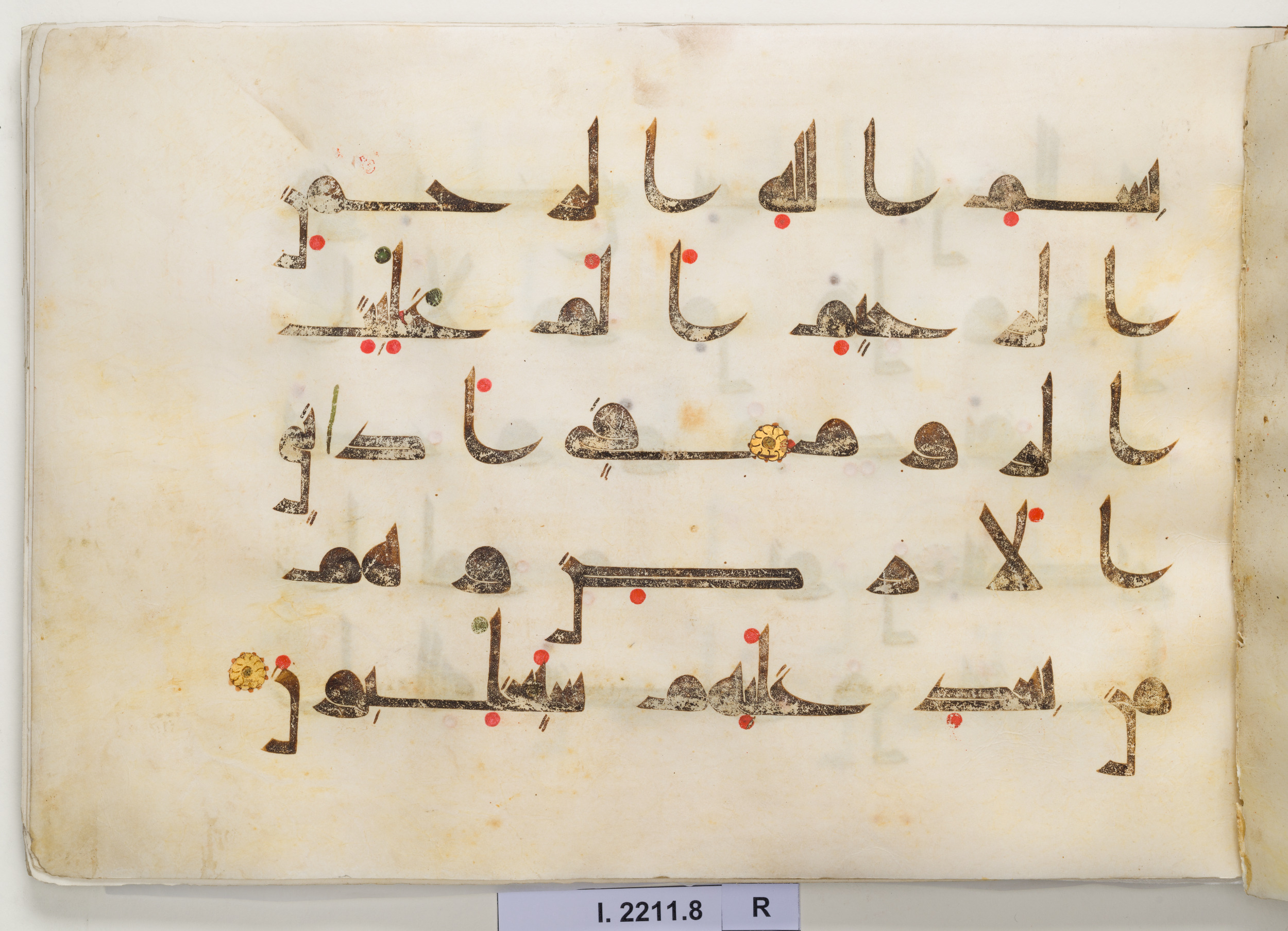
Berlin, Museum für Islamische Kunst I. 2211
This manuscript originally belonged to a larger codex that has been virtually reconstructed. A detailed overview of all parts of this codex was included in the 'Digital Muṣḥaf' project created by Keith Small.
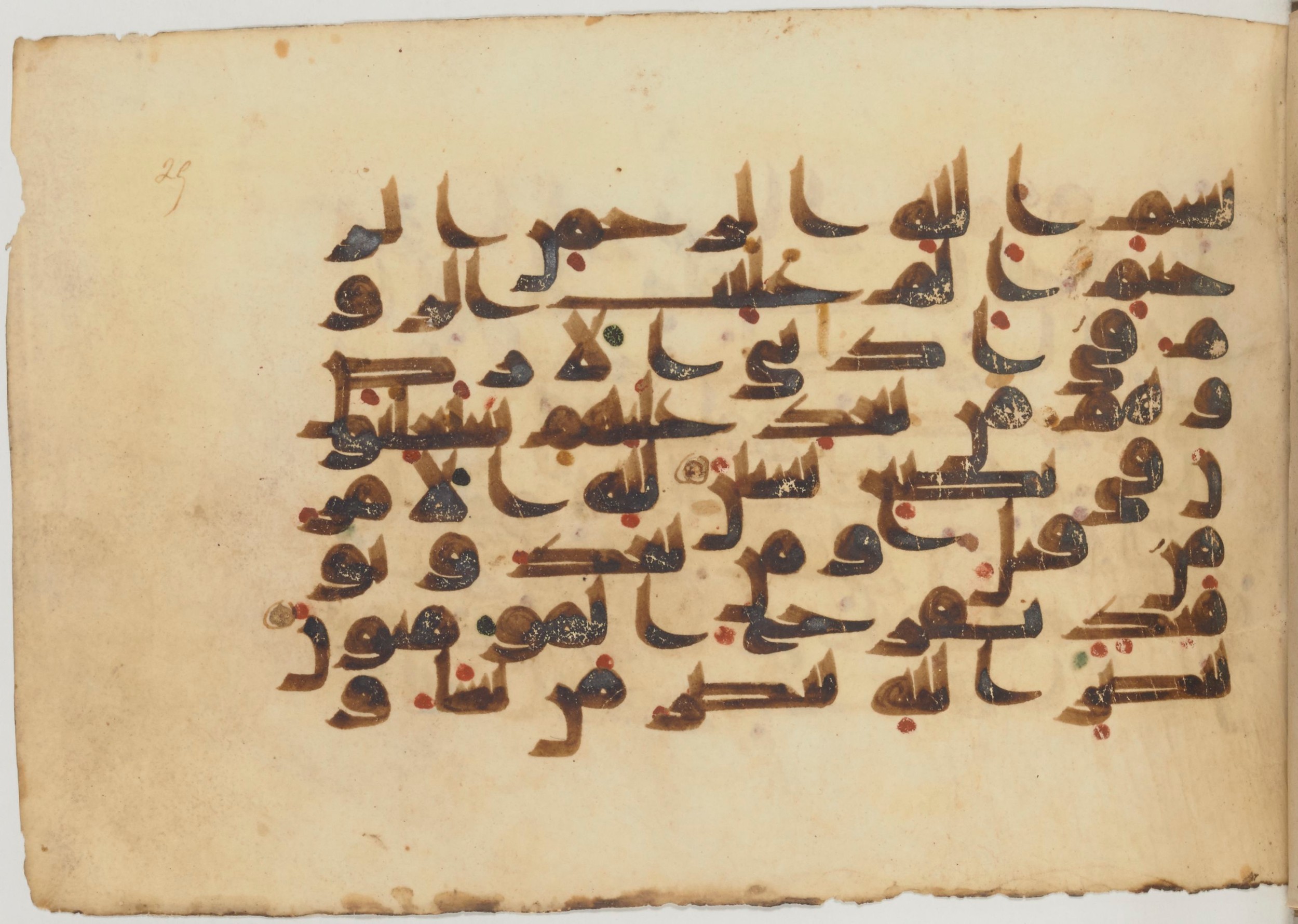
Paris, Bibliothèque nationale de France, Arabe 359 (a)
This manuscript features ornate decorations, including gold dots or rosettes separating individual verses and gold Kufic letters marking groups of five verses. Furthermore, the titles of the surahs are beautifully written in gold ink, adding to the visual richness of this Kufic text.
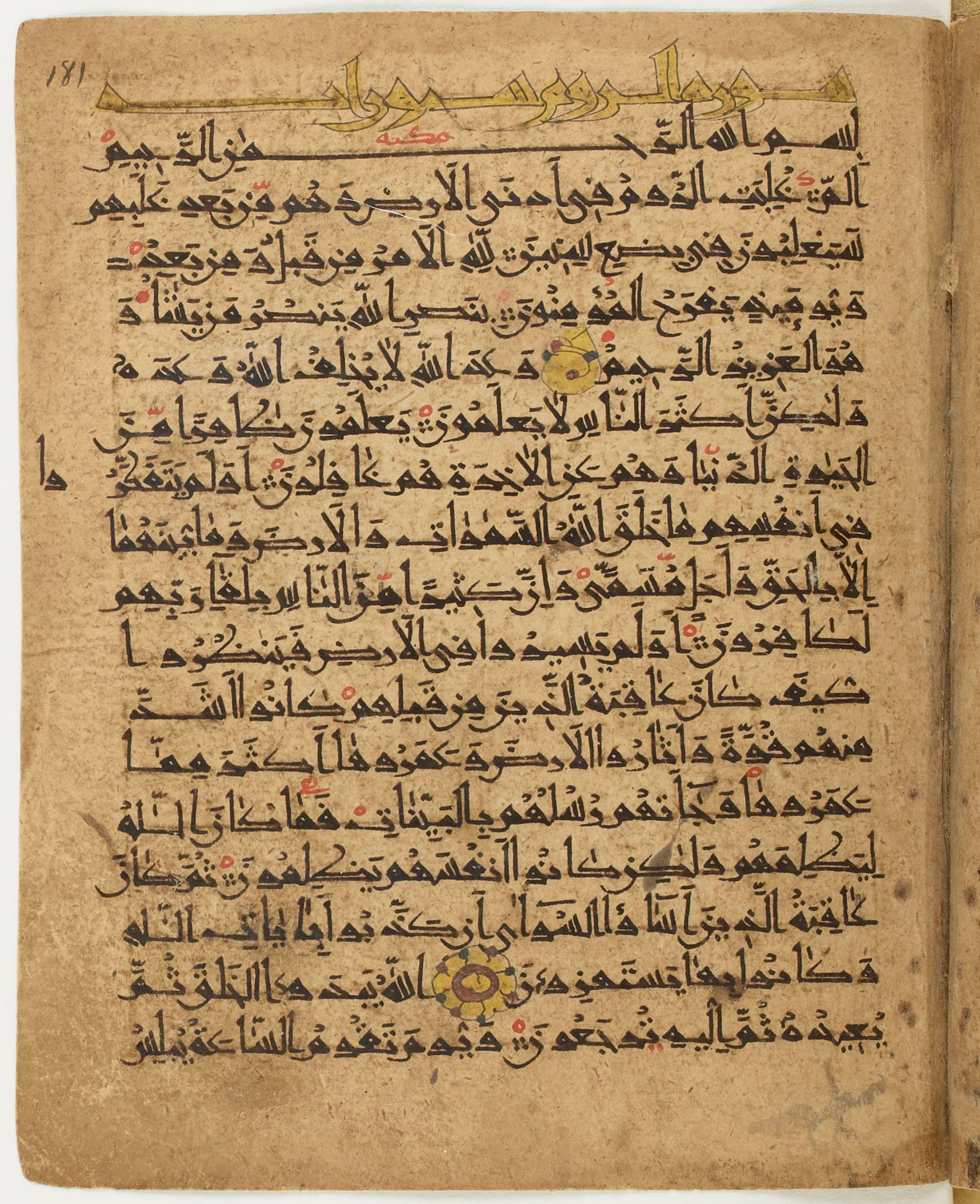
BNF Arabe 6430
This 10th-century Quranic manuscript is notable for being written on Oriental paper rather than parchment. It features complete diacritics and vocalization, with distinctive colorful verse markers including yellow Kufic 'hāʾ' letters to signal groups of five verses.
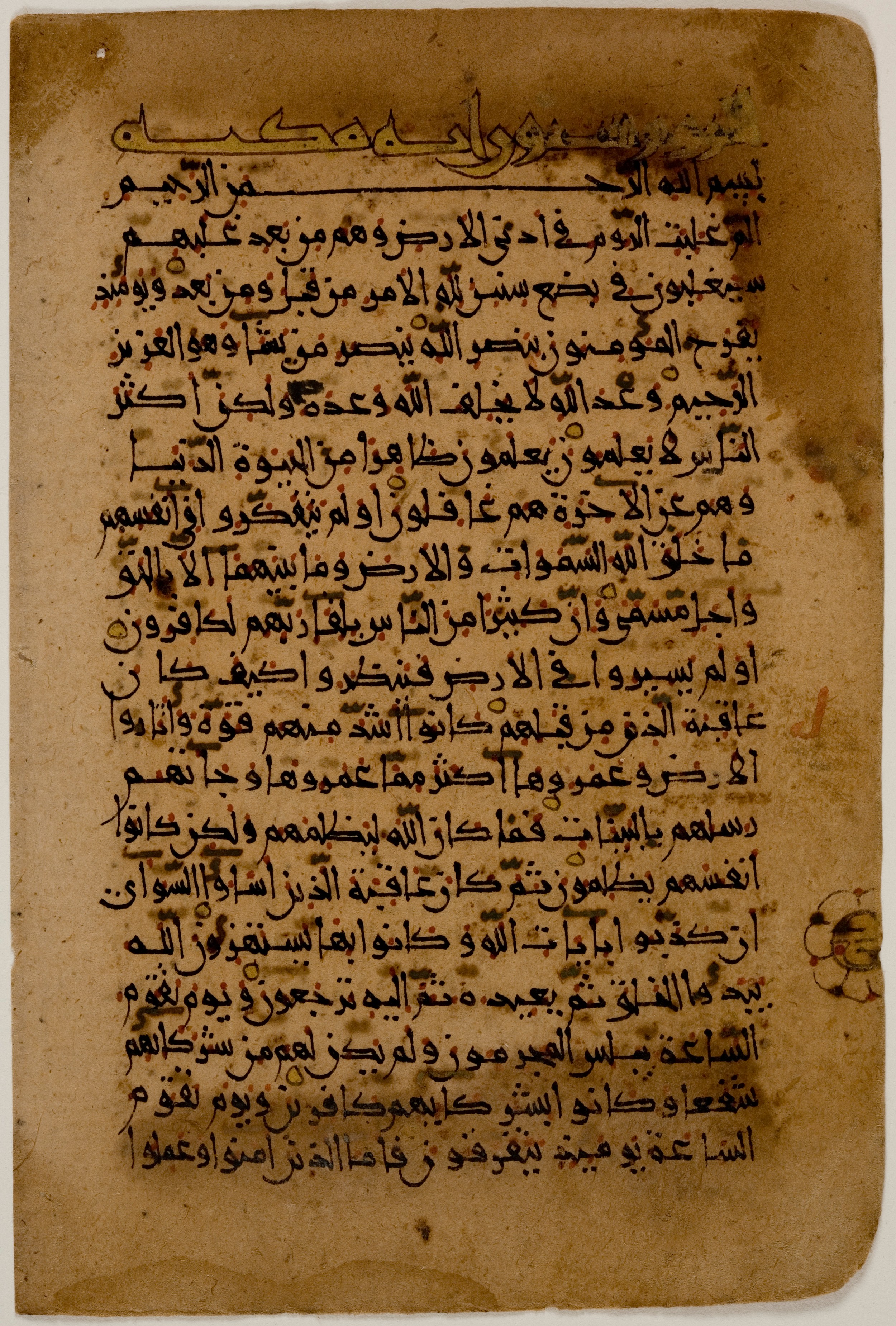
Detroit, Michigan, Detroit Institute of Arts, 28.148.5
This fragment is notably written on paper, distinguishing it from the earlier Hijazi and Kufic parchment codices and indicating a later production date. It is part of the collection at the Detroit Institute of Arts, preserving verses from Surah Al-Ankabut and Ar-Rum.