
Surah 32:0
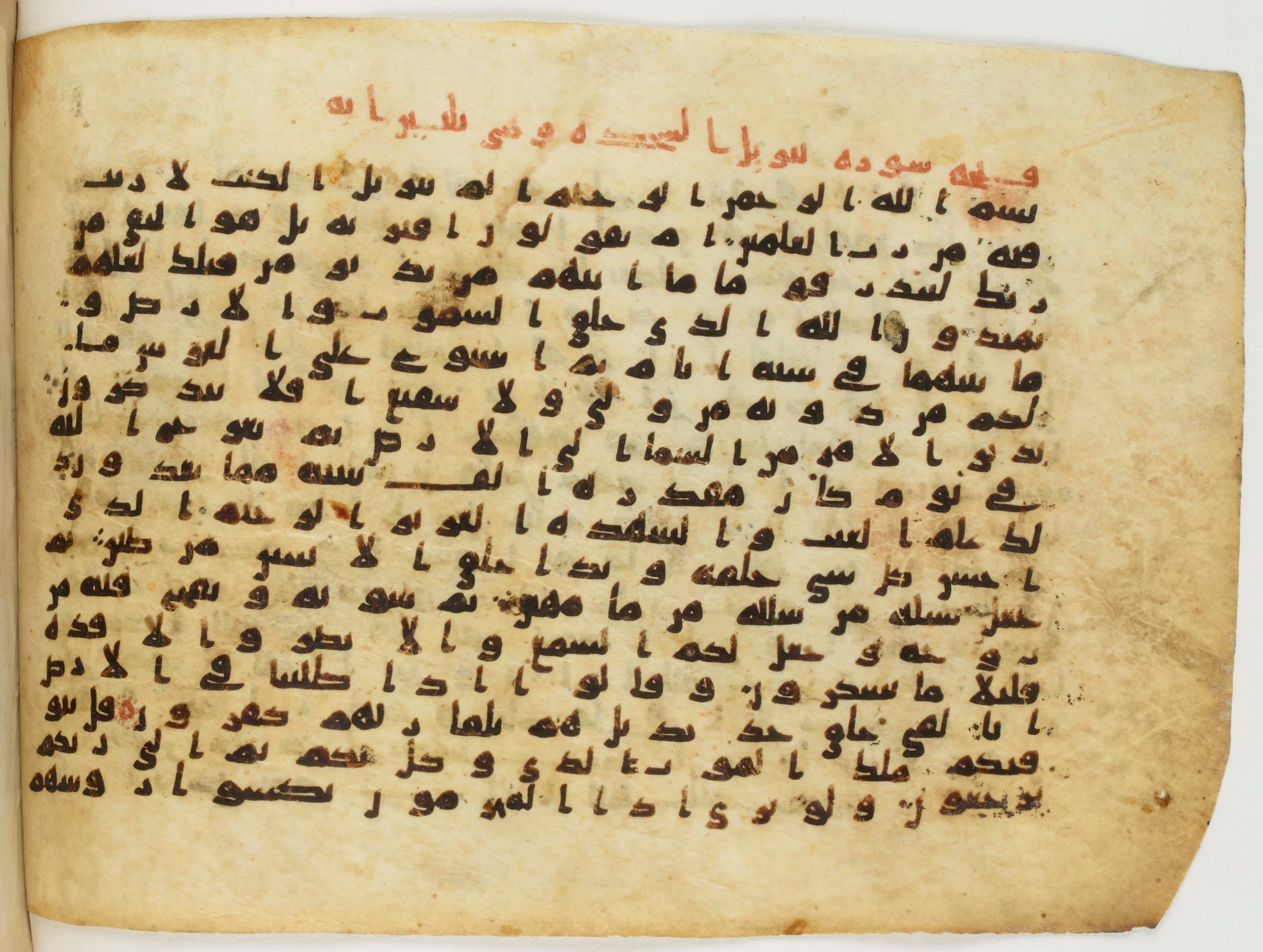
Arabe 340 (b)
This fragmentary manuscript on parchment features an unclassified script with analogies to Early Abbasid groups A and B. A later reader notably added marginal indications in green ink to show a seven-part division of the text, placed within a circle.
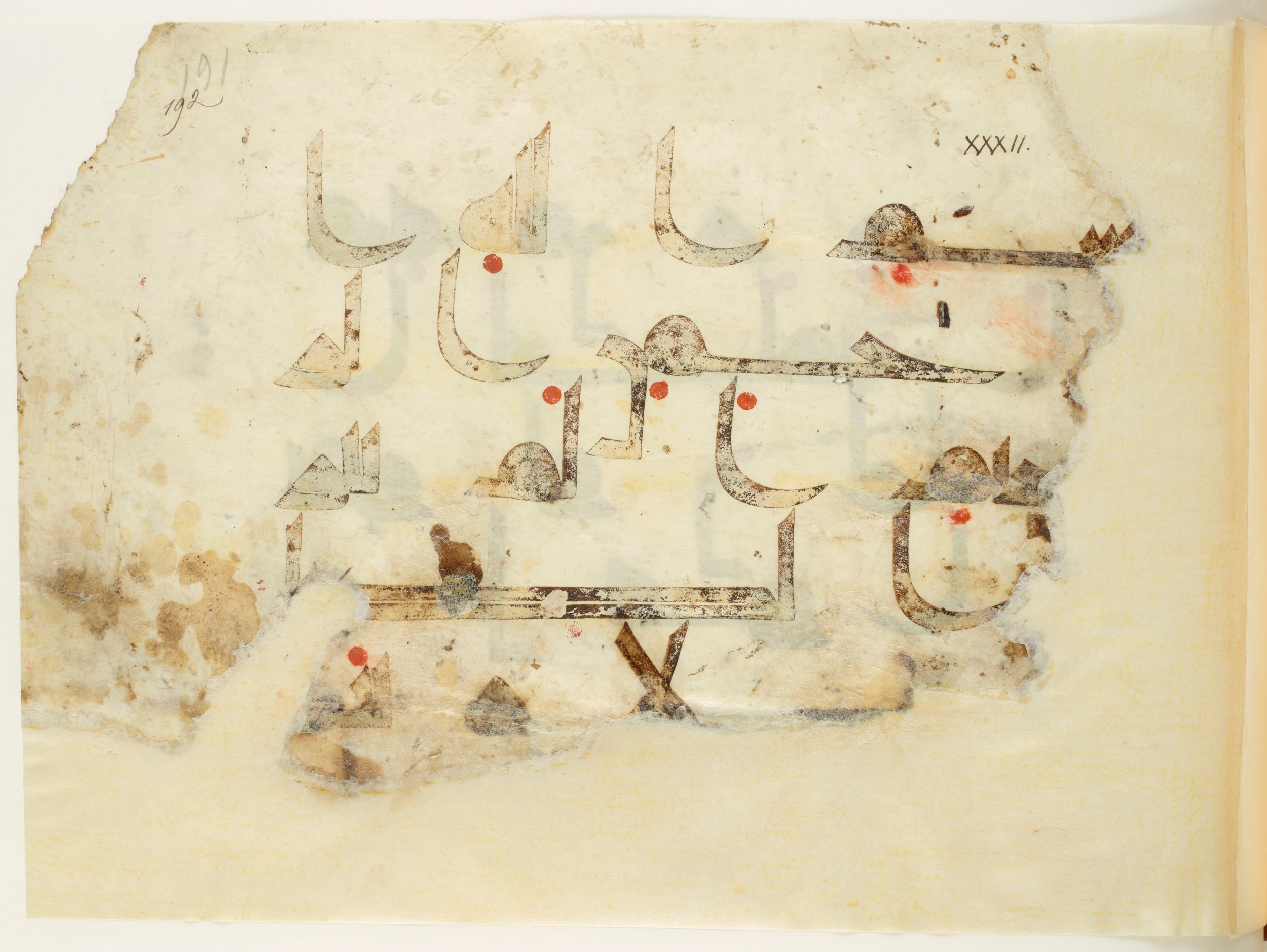
Paris, Bibliothèque nationale de France, Arabe 350 (b)
The manuscript is beautifully illuminated, using rosettes to separate verses, teardrop designs for groups of five verses, and medallions containing the name of the decade in full letters for groups of ten verses. At the end of Surah 27, the empty space is filled with a striking garland of plant motifs.
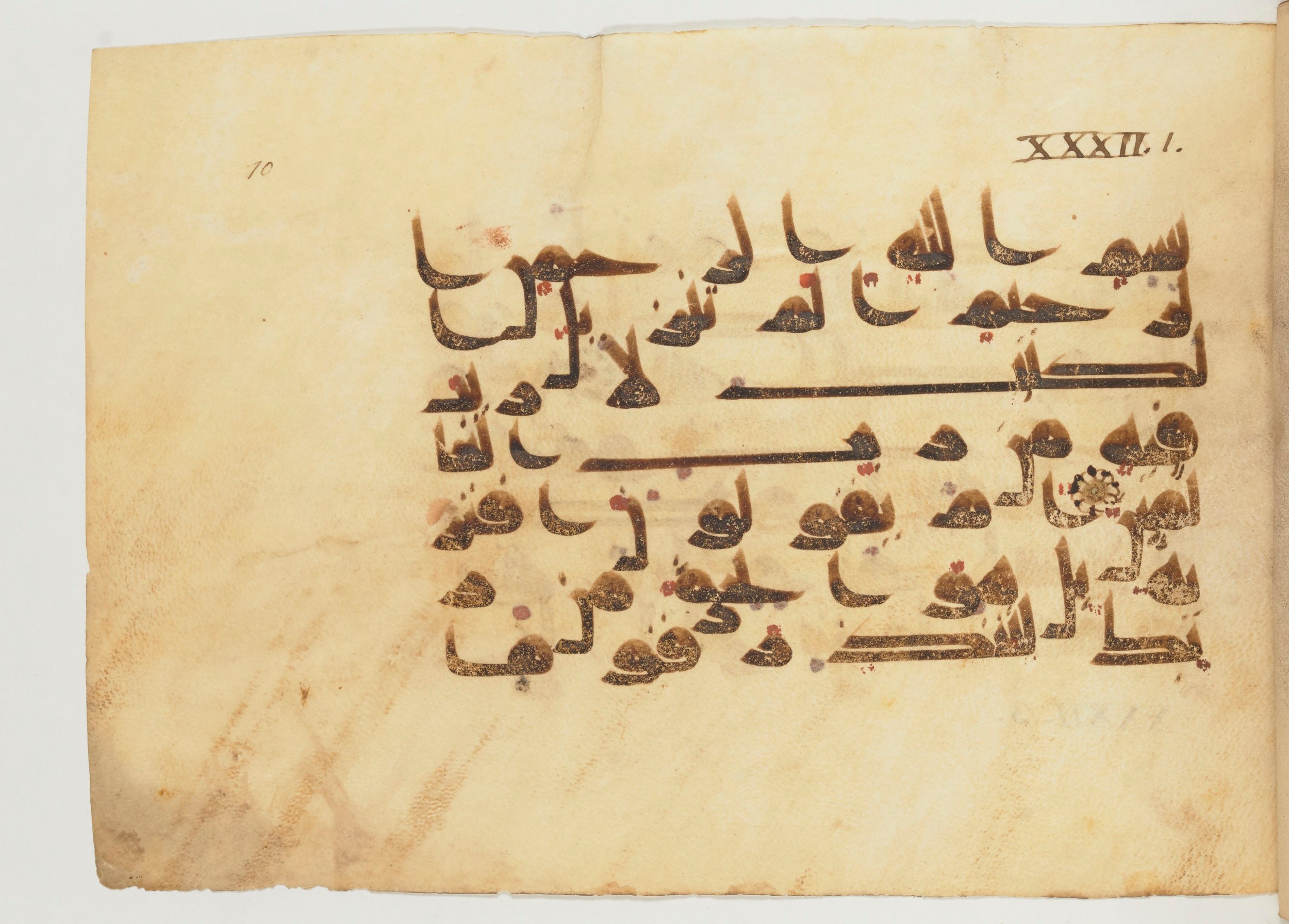
Paris, Bibliothèque nationale de France, Arabe 355 (a)
This early manuscript features notable illuminations, including surah titles and verse counts written in gold ink accompanied by lanceolate vignettes. It uses sophisticated markers for verse groupings, employing specific rosette and circle designs to delineate groups of five and ten verses.
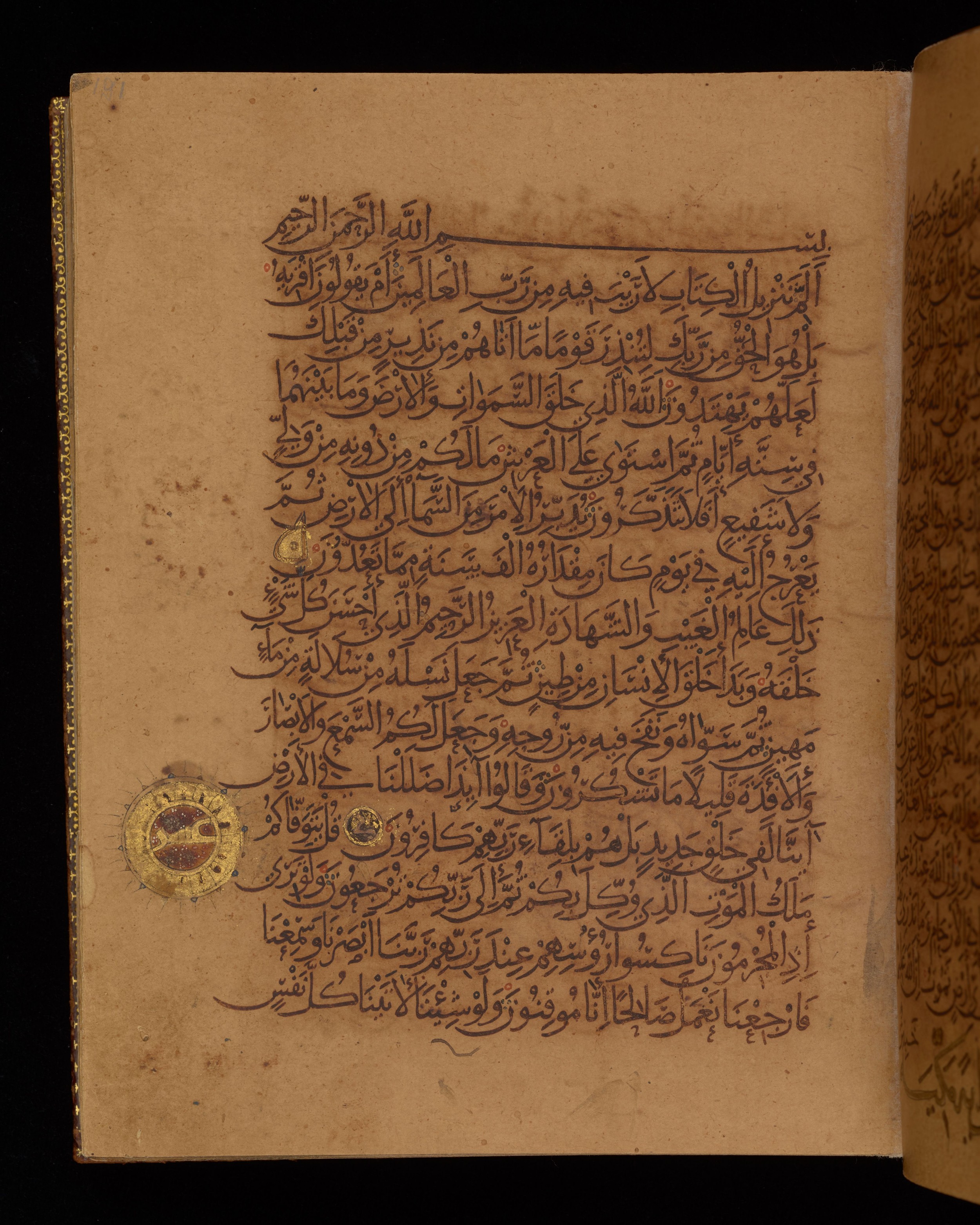
Dublin, Chester Beatty Library, Is 1431
This complete Quran was produced in Baghdad by the renowned calligrapher ʿAlī b. Hilāl, also known as Ibn al-Bawwāb, around 1000-1001 AD. He is a significant figure in Islamic art, closely associated with the adoption of the round Naskh script to transcribe the Quran.