
Surah 36:0
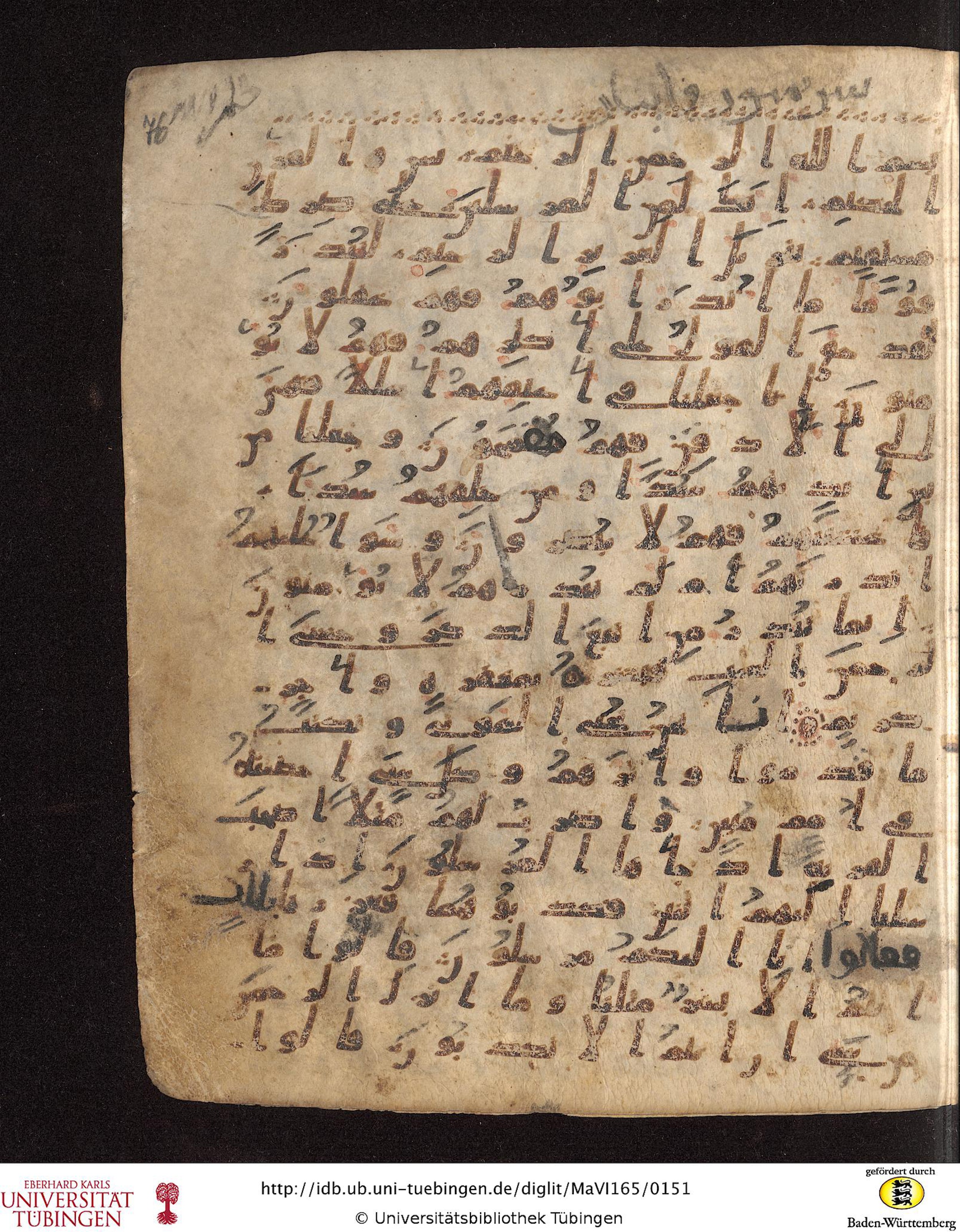
Staatsbibliothek zu Berlin, Ms. or. fol. 4313
This codex is one of the earliest surviving Quranic manuscripts, with combined radiocarbon dating of its parchment placing its production between 605 and 651 AD. The seven folios in Berlin were once part of a larger codex that is now split, with 33 additional folios currently held in the Egyptian National Library. The Berlin leaves were acquired in 1939 from the estate of Bernhard Moritz, the former director of the Khedivial Library.
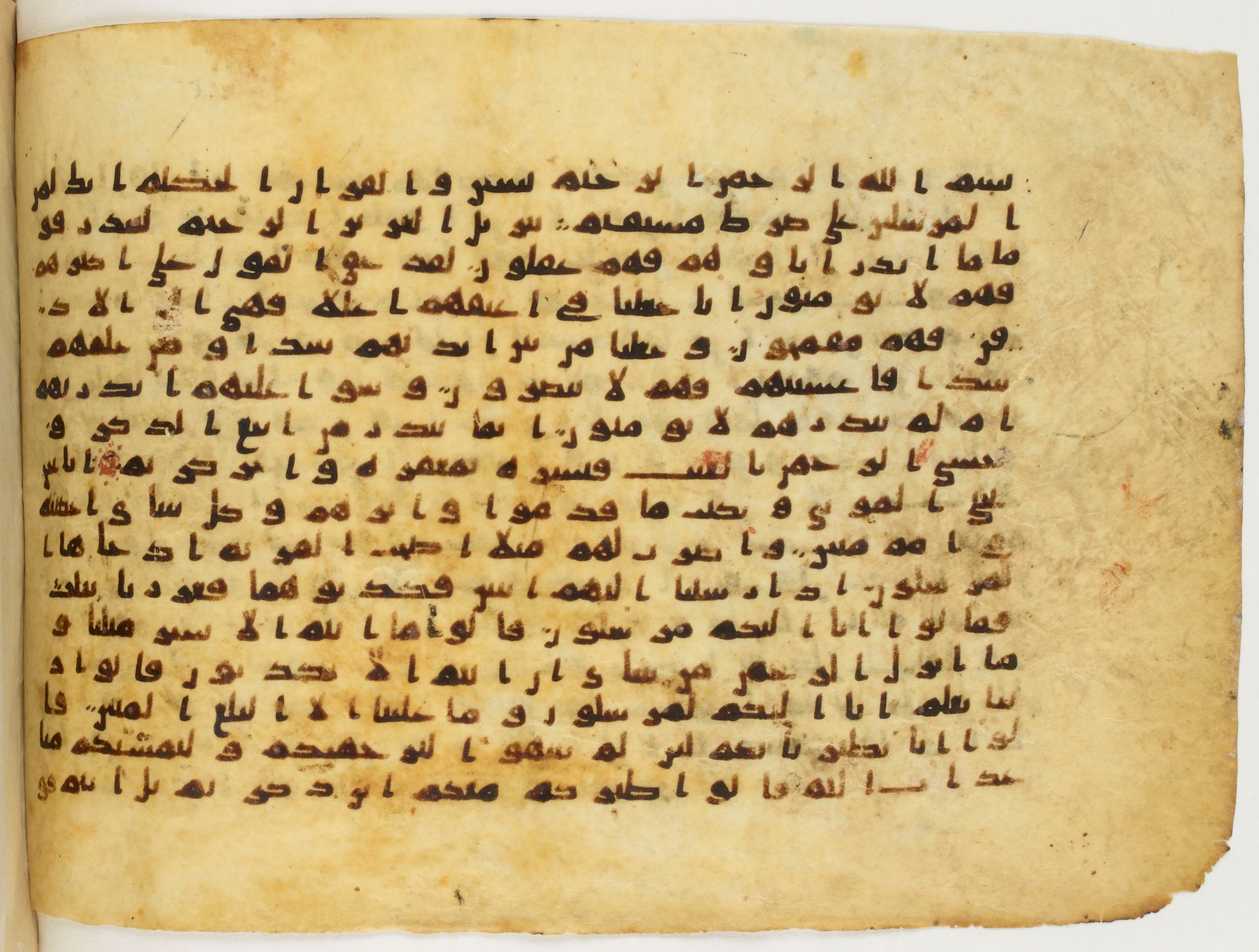
Arabe 340 (b)
This fragmentary manuscript on parchment features an unclassified script with analogies to Early Abbasid groups A and B. A later reader notably added marginal indications in green ink to show a seven-part division of the text, placed within a circle.
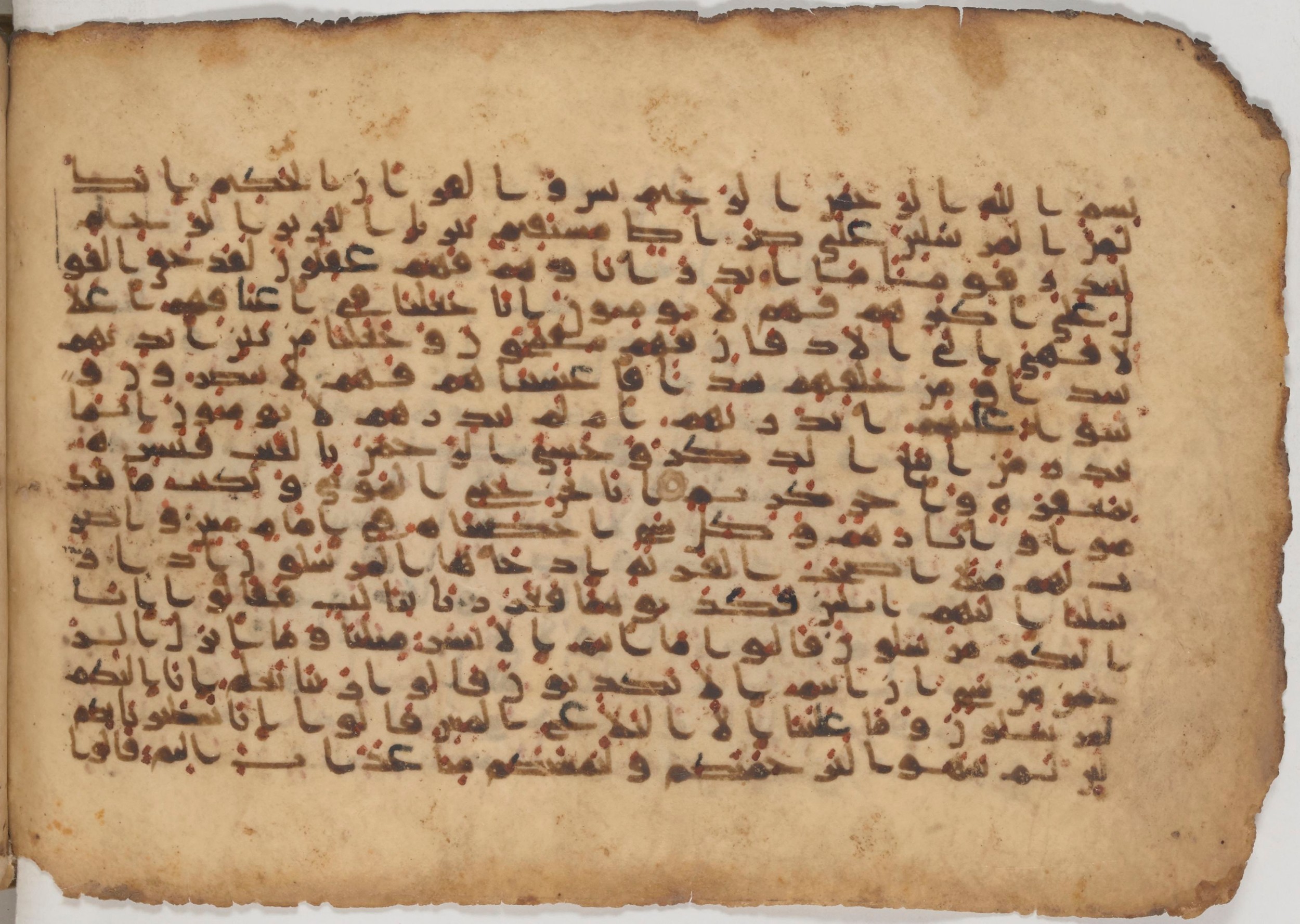
Paris, Bibliothèque nationale de France, Arabe 343
The manuscript uses decorative medallions and bands to mark every ten verses, rather than separating individual verses. A marginal note in cursive script reveals it was once owned by Aḥmad Abū al-ʿAbbās al-Huwaydī, with later readers adding pious notes in the margins.
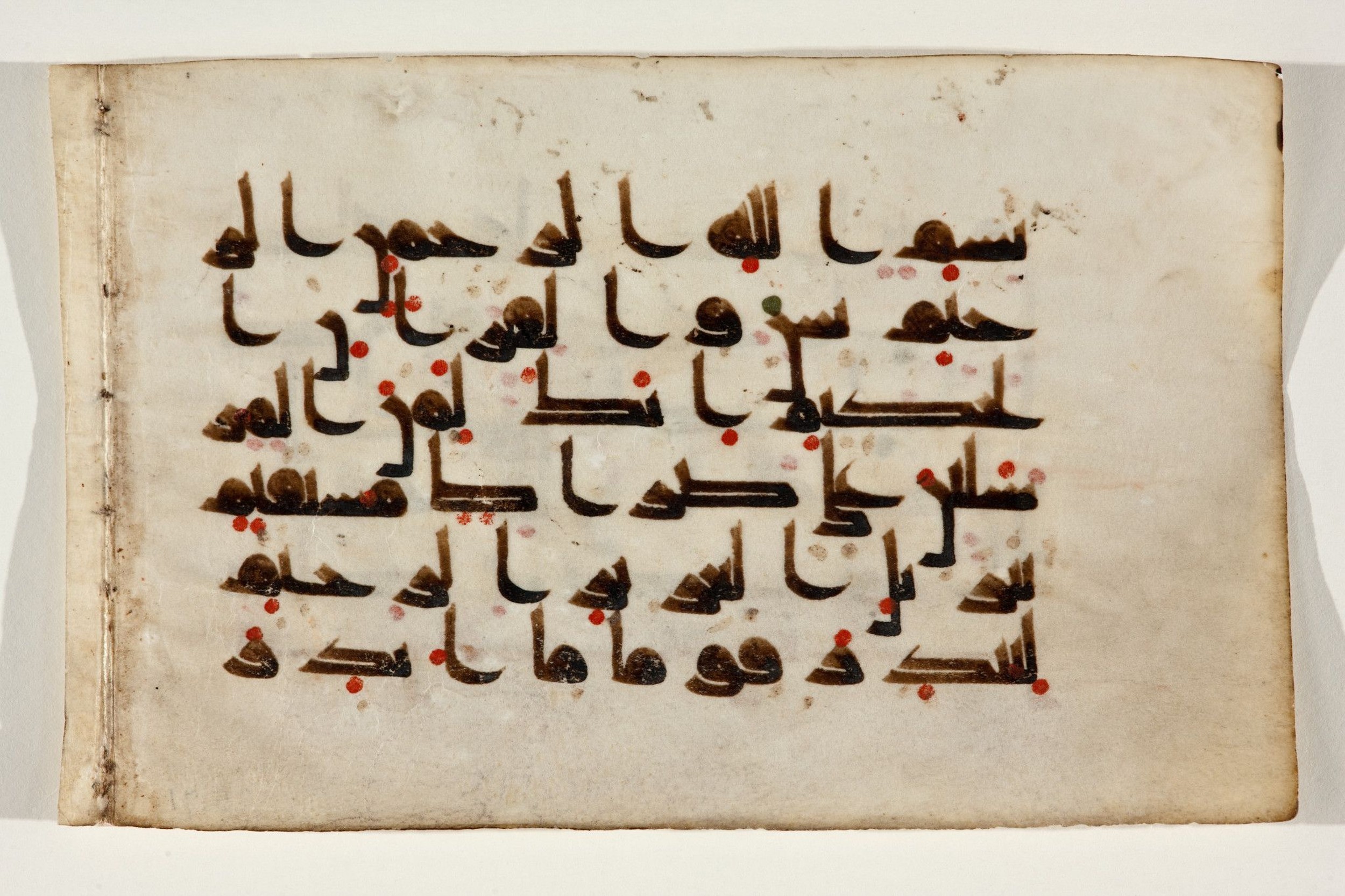
Detroit Institute of Arts 25.71
This fragment is written in the kūfī D.I script, a monumental and angular calligraphic style typical of early luxury Qur'ans from the Abbasid period. The text is written on parchment with 6 lines per page, featuring the distinctive elongated horizontal strokes characteristic of this script.