
Surah 36:51
Staatsbibliothek zu Berlin, Ms. or. fol. 4313 (Scan 1)
This codex is one of the earliest surviving Quranic manuscripts, with combined radiocarbon dating of its parchment placing its production between 605 and 651 AD. The seven folios in Berlin were once part of a larger codex that is now split, with 33 additional folios currently held in the Egyptian National Library. The Berlin leaves were acquired in 1939 from the estate of Bernhard Moritz, the former director of the Khedivial Library.
Staatsbibliothek zu Berlin, Ms. or. fol. 4313 (Scan 2)
This codex is one of the earliest surviving Quranic manuscripts, with combined radiocarbon dating of its parchment placing its production between 605 and 651 AD. The seven folios in Berlin were once part of a larger codex that is now split, with 33 additional folios currently held in the Egyptian National Library. The Berlin leaves were acquired in 1939 from the estate of Bernhard Moritz, the former director of the Khedivial Library.
Staatsbibliothek zu Berlin, Ms. or. fol. 4313 (Scan 3)
This codex is one of the earliest surviving Quranic manuscripts, with combined radiocarbon dating of its parchment placing its production between 605 and 651 AD. The seven folios in Berlin were once part of a larger codex that is now split, with 33 additional folios currently held in the Egyptian National Library. The Berlin leaves were acquired in 1939 from the estate of Bernhard Moritz, the former director of the Khedivial Library.
Muṣḥaf of Najaf Ashraf (Codex 1 of Imām ʿAlī Library)
This codex contains a colophon attributing it to ʿAlī ibn Abī Ṭālib and dating it to 40 AH (660 AD), though scholars believe this colophon was added later. It also features a waqf (endowment) deed written on the first page in 1775 AD.
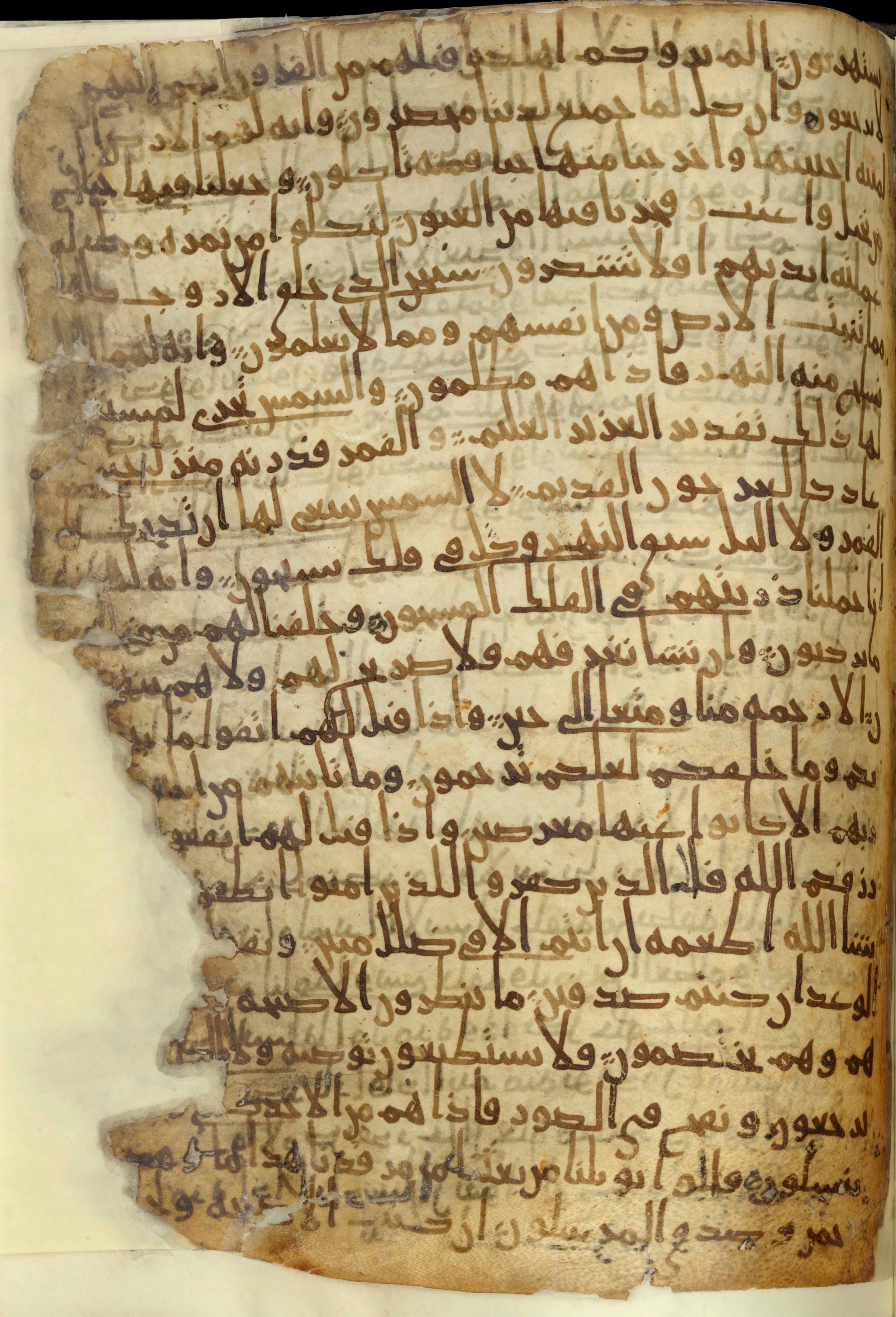
Chester Beatty Library Is 1615I
This manuscript features an unusual version of the Hijazi script and contains illumination of horizontal chevron bands between Surahs. It belongs to a larger dispersed codex that includes manuscripts MS.68, MS.69, MS.70, and MS.699 in the Museum of Islamic Art (Doha), as well as a fragment in a private collection.
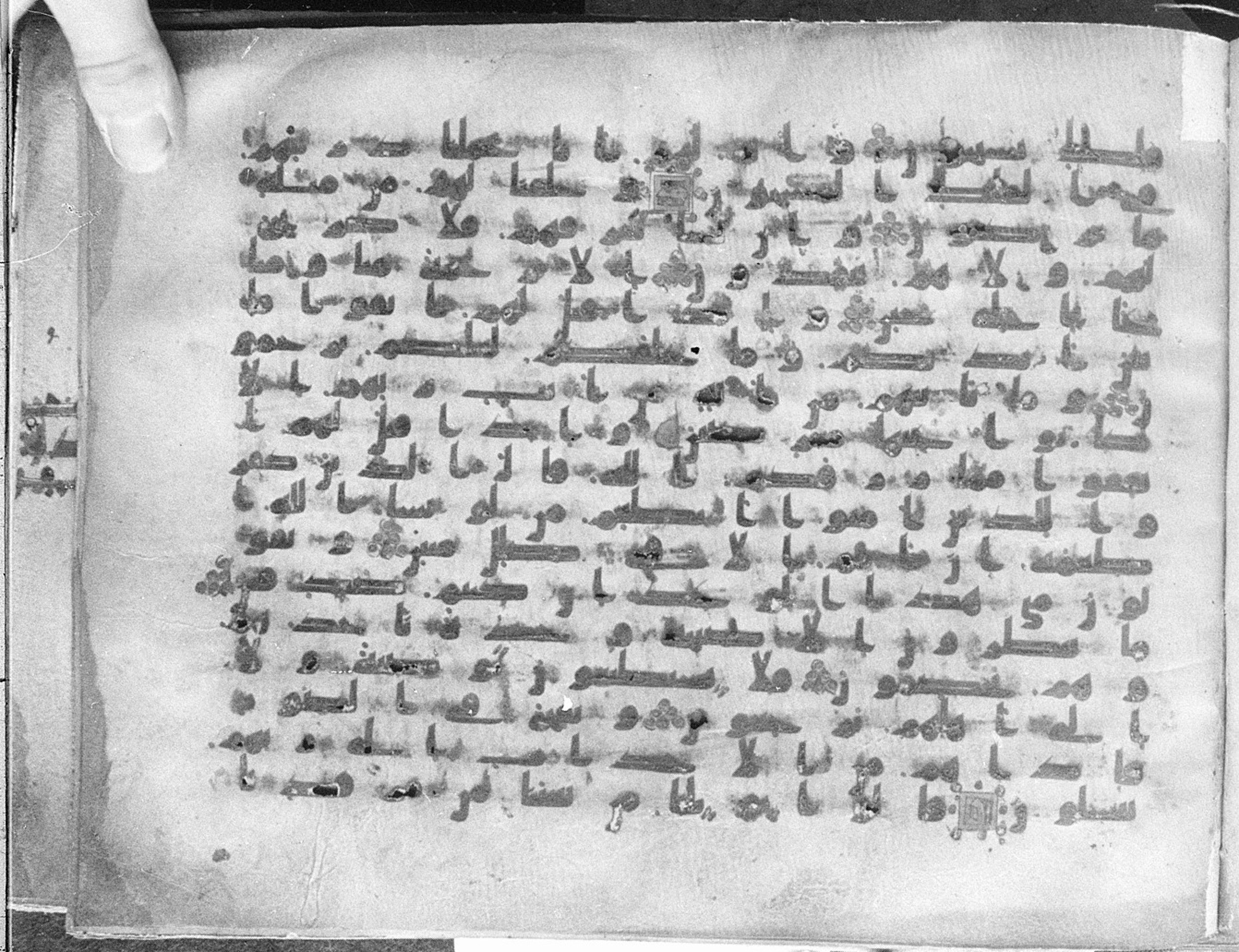
Meknes, Private library of Sherif ʿAbdarraḥmān b. Zīdān, no call number
This nearly complete early Kufic Quran was photographed by Otto Pretzl during a research trip to Morocco in 1934. While the main body belonged to the private library of Sherif ʿAbdarraḥmān b. Zīdān, fragments of this codex have since been dispersed to the Royal Library in Rabat, the Tareq Rajab Museum in Kuwait, and sold through auction houses like Christie's.
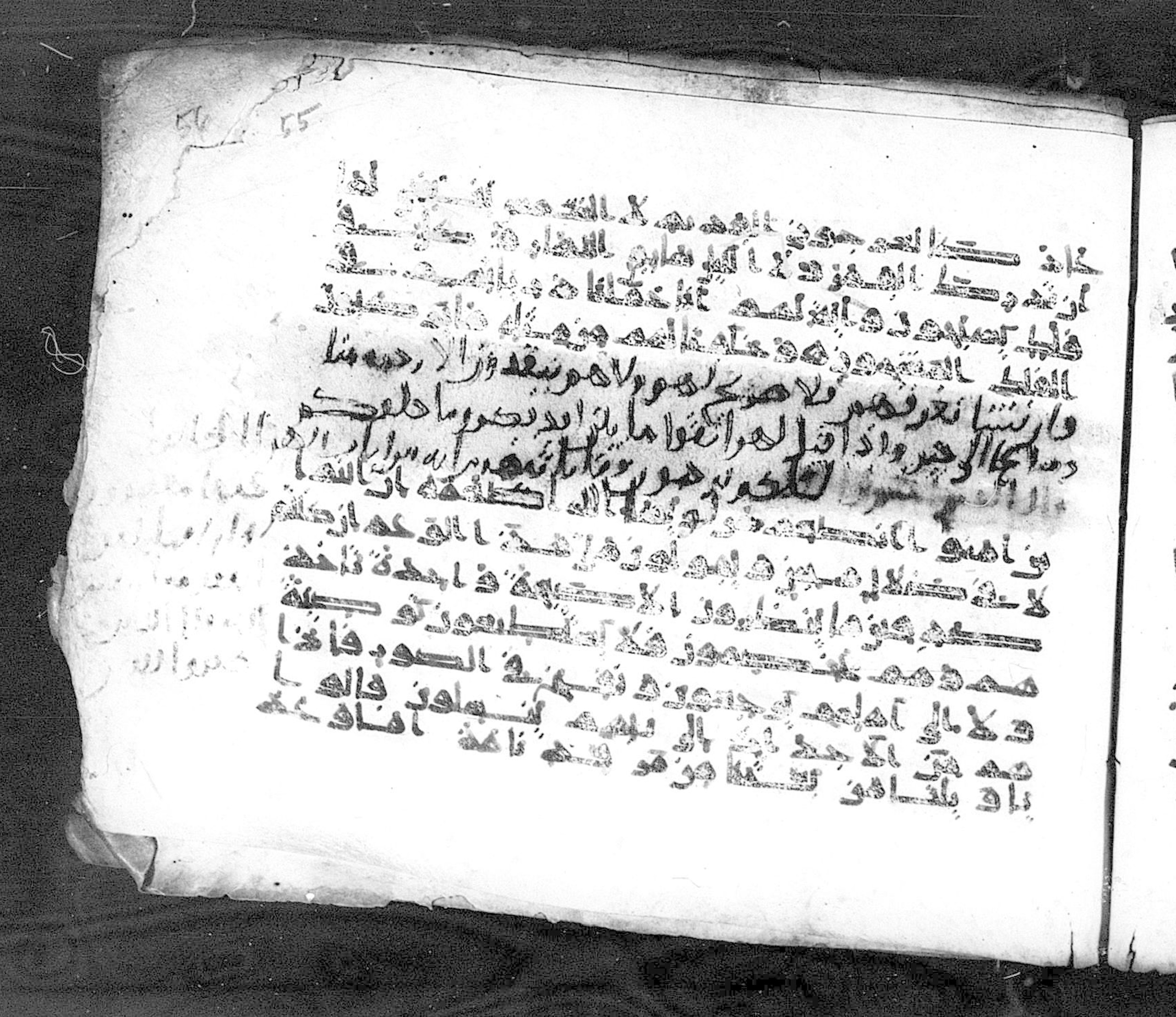
Paris, Bibliothèque nationale de France, Arabe 324 (c) (Scan 1)
Carbon dating of fragments from Arabe 324 (c) places its origin between 660-780 AD. The manuscript is part of a composite codex, where Arabe 324 (c) and Gotha Ms. orient. A 462 are original leaves, while other sections such as Arabe 324 (a) and (d) were added centuries later to replace damaged or missing pages.
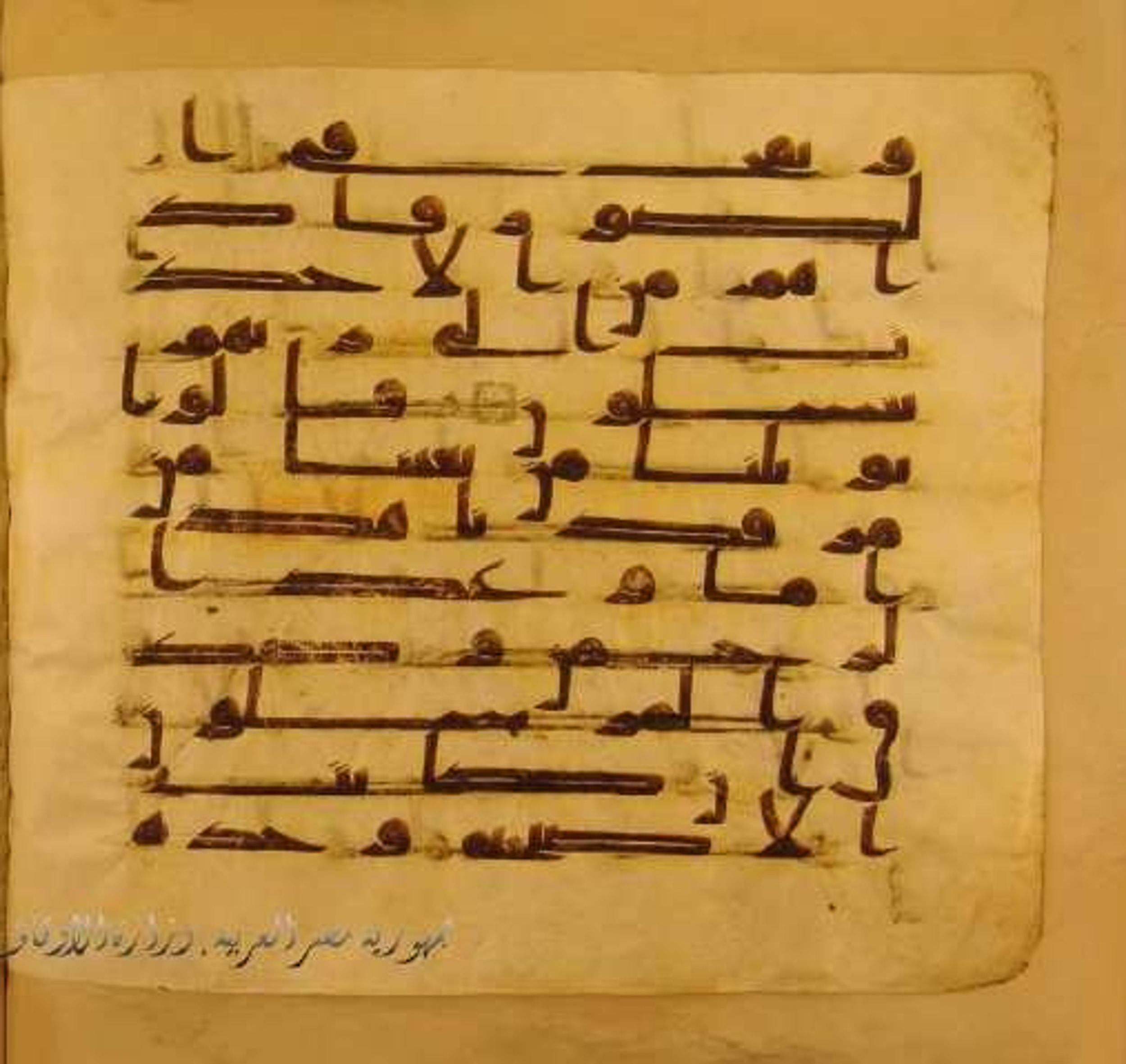
Paris, Bibliothèque nationale de France, Arabe 324 (c) (Scan 2)
Carbon dating of fragments from Arabe 324 (c) places its origin between 660-780 AD. The manuscript is part of a composite codex, where Arabe 324 (c) and Gotha Ms. orient. A 462 are original leaves, while other sections such as Arabe 324 (a) and (d) were added centuries later to replace damaged or missing pages.
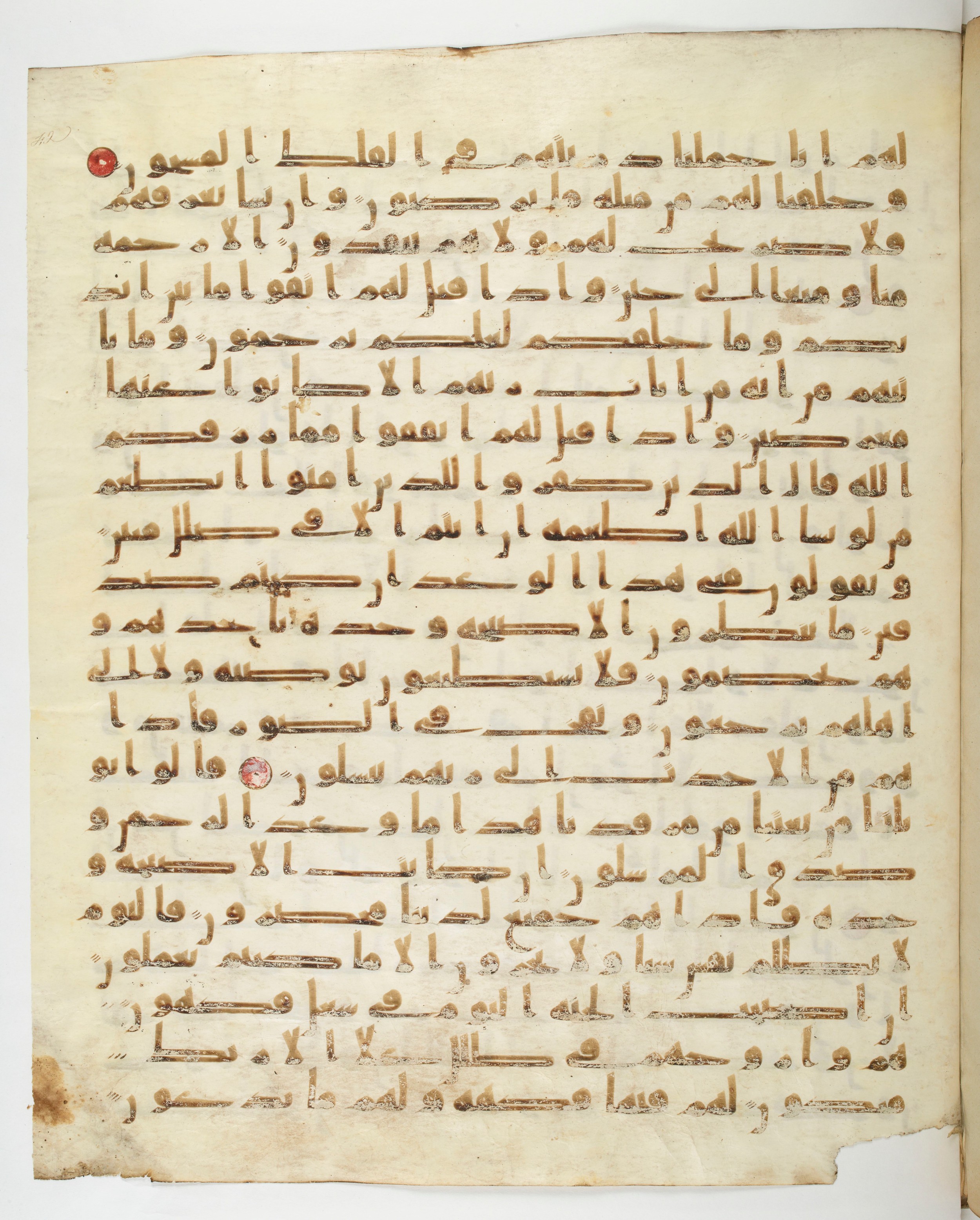
Paris, Bibliothèque nationale de France, Arabe 332 (Scan 1)
This 8th-century codex features scarce use of diacritical marks and no vocalization, reflecting its antiquity. Fragments of the original manuscript are now widely dispersed, with portions held not only in Paris but also in the Vatican Library (Vat.ar.1784), the Khalili Collections (KFQ 49), and the University of Pennsylvania Museum (E 16264 D).
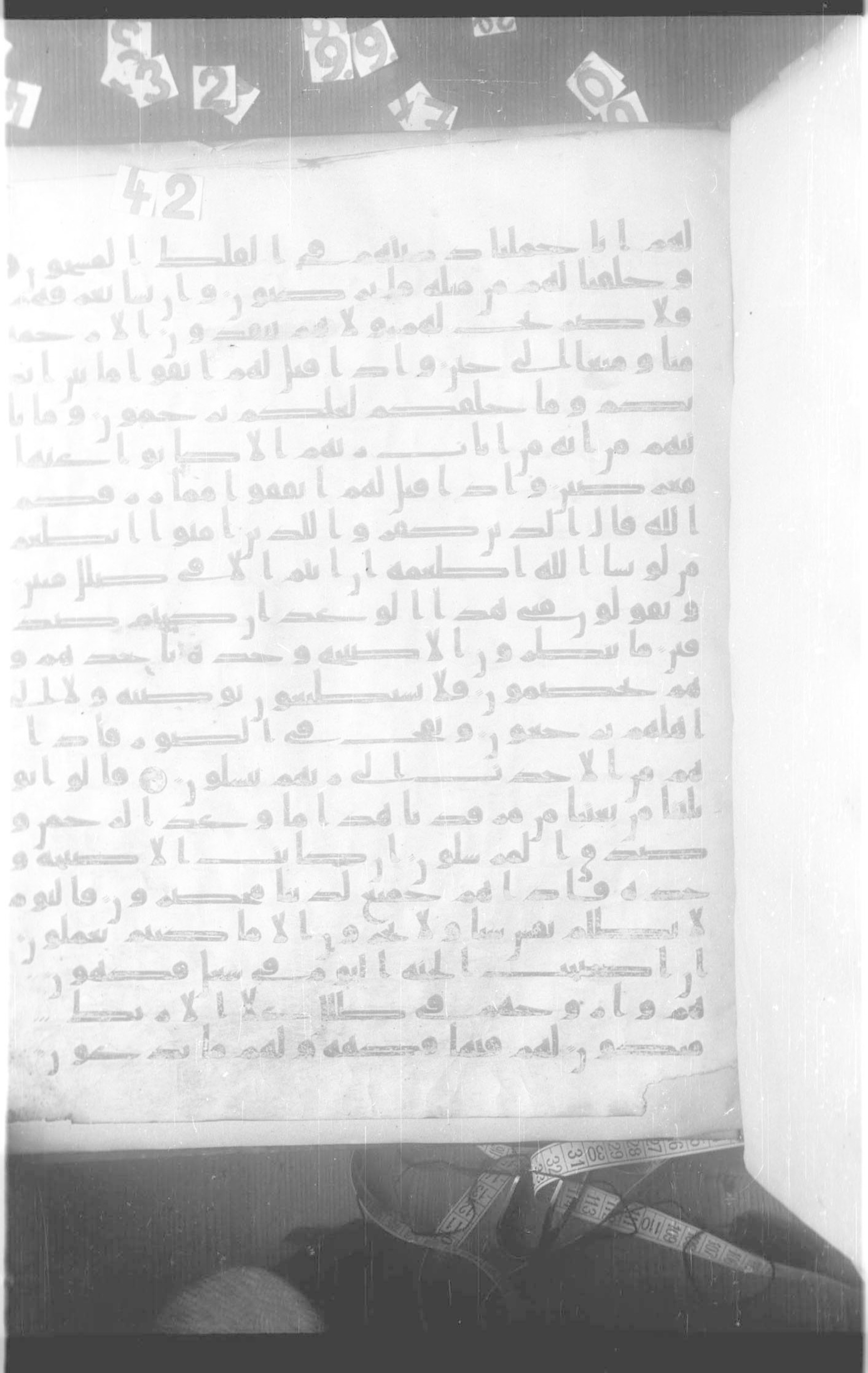
Paris, Bibliothèque nationale de France, Arabe 332 (Scan 2)
This 8th-century codex features scarce use of diacritical marks and no vocalization, reflecting its antiquity. Fragments of the original manuscript are now widely dispersed, with portions held not only in Paris but also in the Vatican Library (Vat.ar.1784), the Khalili Collections (KFQ 49), and the University of Pennsylvania Museum (E 16264 D).
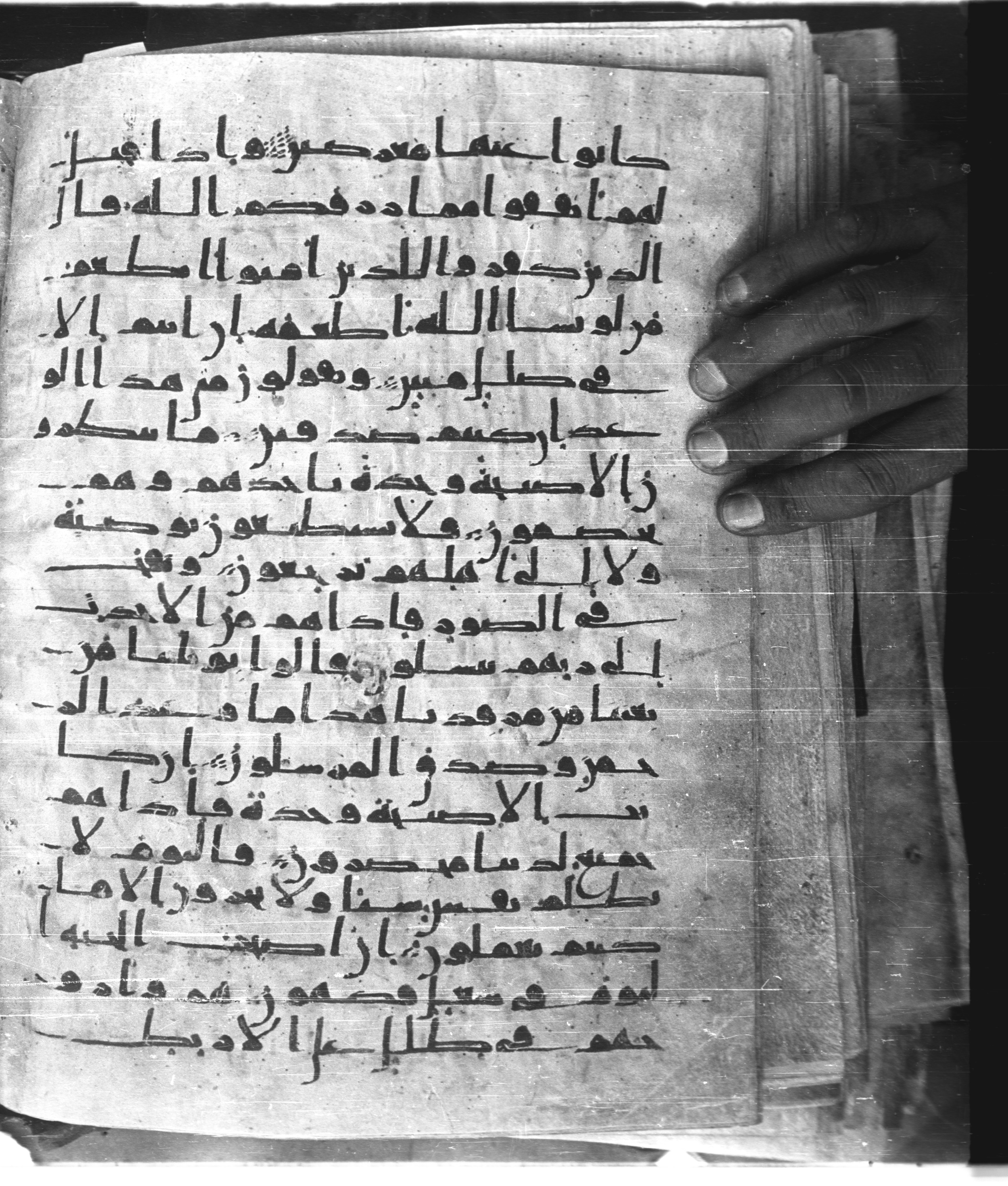
Saray Medina 1a (Karatay 3)
This almost complete codex is notable for being written by at least six different scribes in Kufic script. Originally documented in Gotthelf Bergsträßer's archives as 'Medina 1a', its folios were later repaired with paper edges, and a few missing pages were completed in Naskh script.
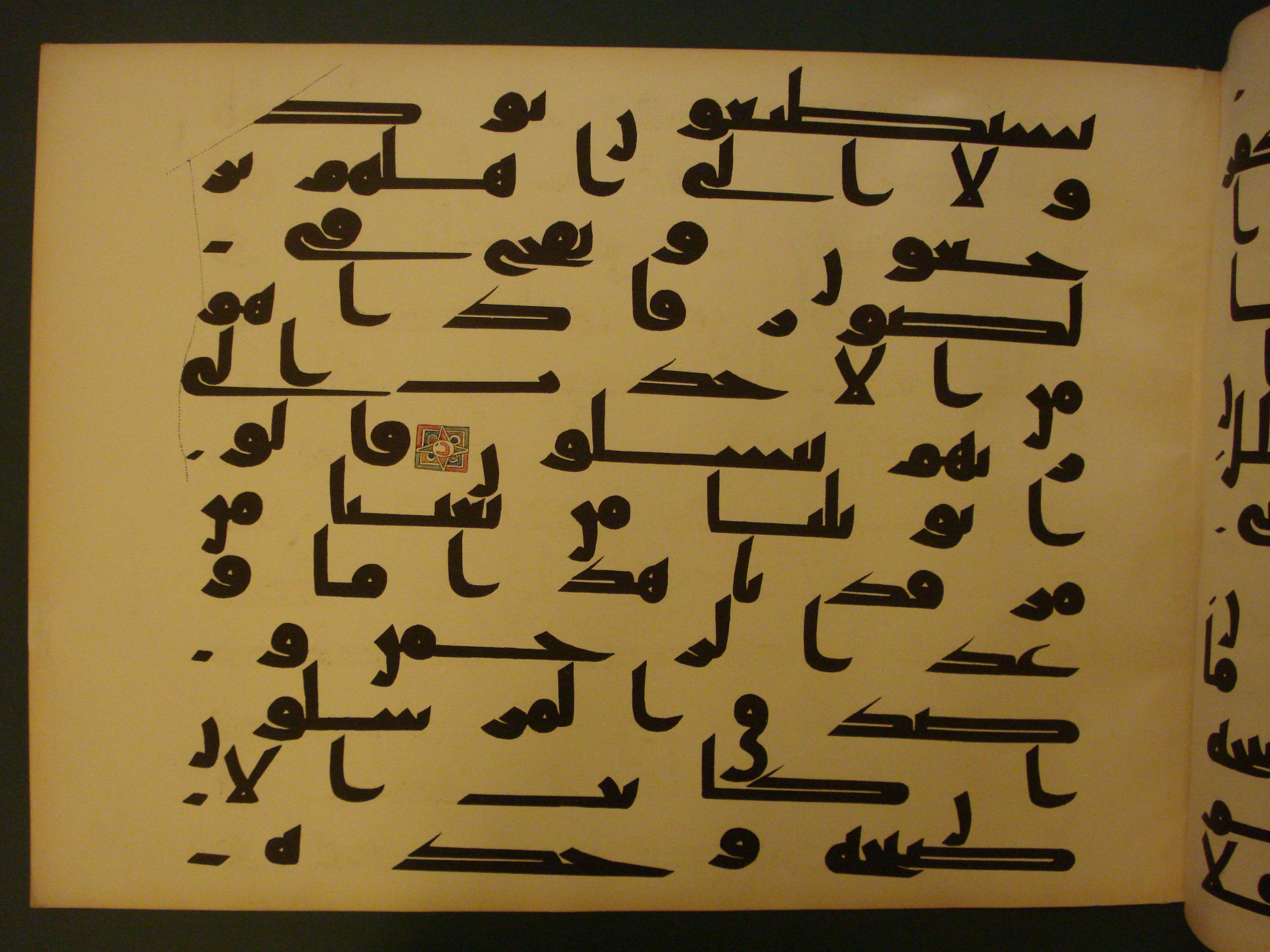
Samarkand Kufic Quran
This monumental manuscript is one of the oldest surviving Qurans, traditionally believed to be the personal copy of Caliph Uthman stained with his blood. After being taken by Russian imperial forces in 1868 to Saint Petersburg, it was repatriated to Tashkent in 1923.
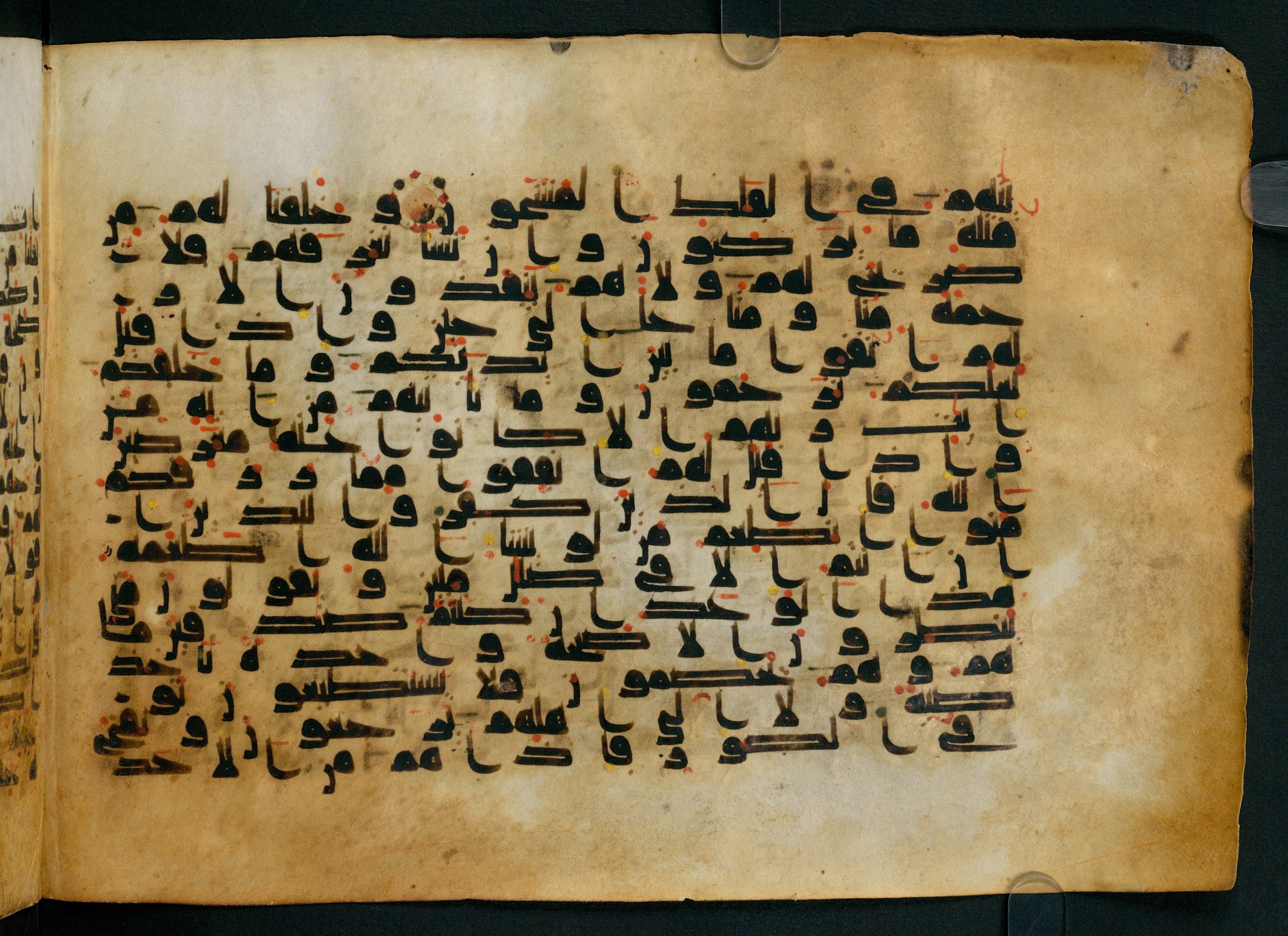
Cairo, Khedivial Library, Moritz 1905, table 31-36 (Scan 1)
The physical manuscript is currently lost and its origin is unknown; it survives today only through six photographs published in Bernhard Moritz's monumental 1905 album 'Arabic Palaeography'.
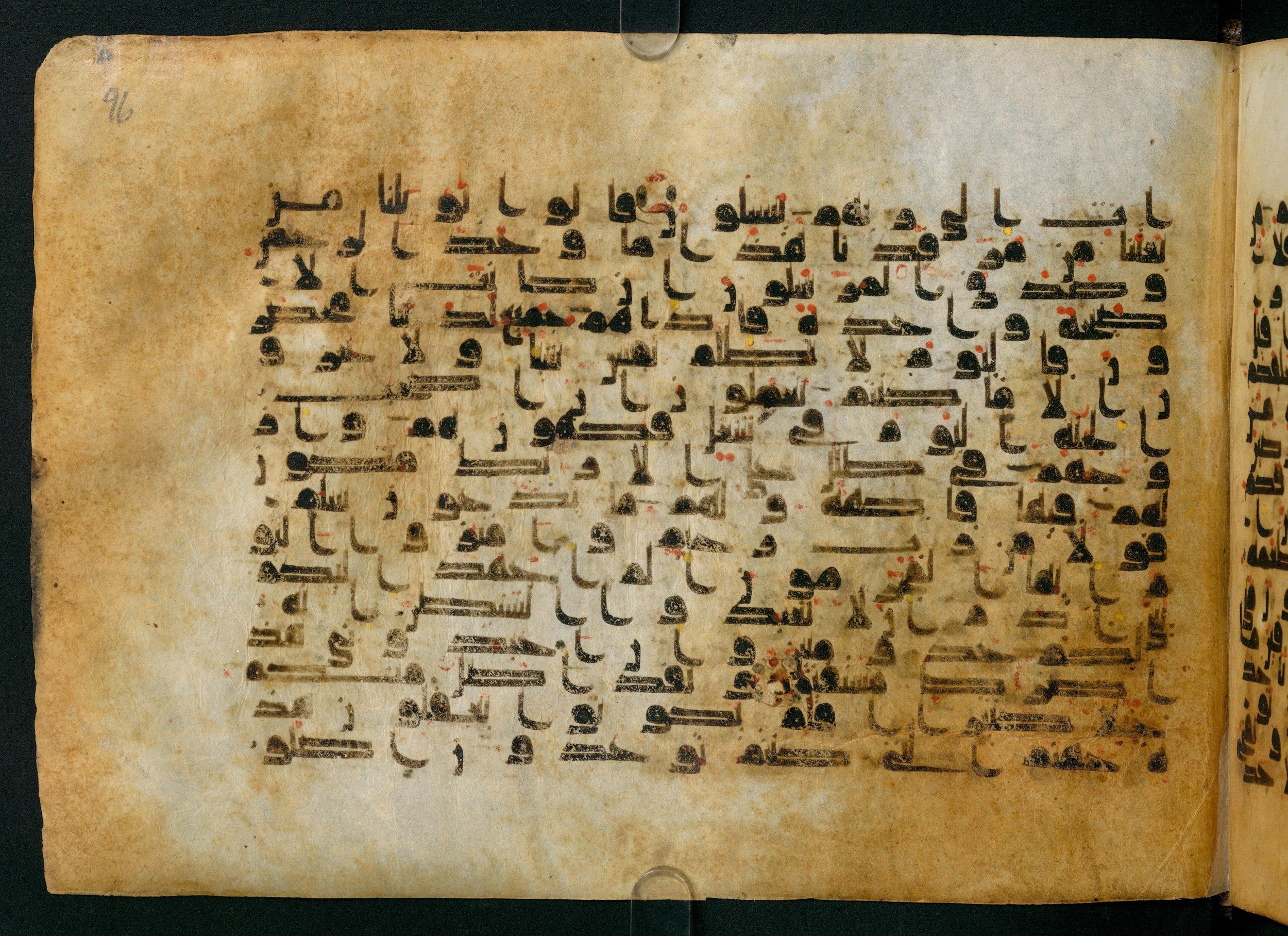
Cairo, Khedivial Library, Moritz 1905, table 31-36 (Scan 2)
The physical manuscript is currently lost and its origin is unknown; it survives today only through six photographs published in Bernhard Moritz's monumental 1905 album 'Arabic Palaeography'.
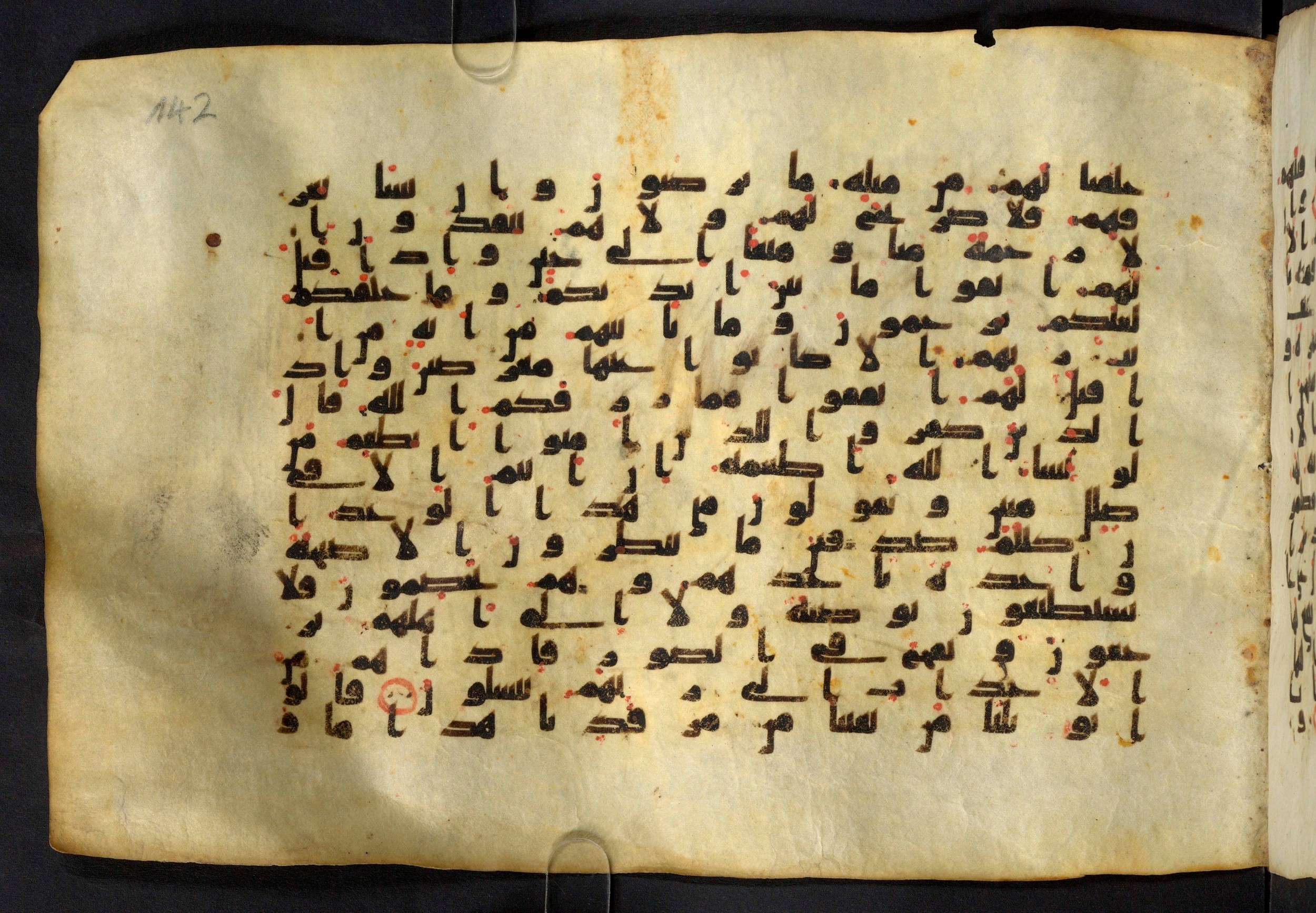
Moritz 1905, Tables 39-40
This codex fragment was documented in Bernhard Moritz's 1905 'Arabic Palaeography' album and was reportedly discovered in the ancient Egyptian city of Bahnasa (Oxyrynchos). Scholars suggest it may originally belong to the same large codex as other early Quranic fragments currently held in the Vatican, Paris, and the Khalili Collections.
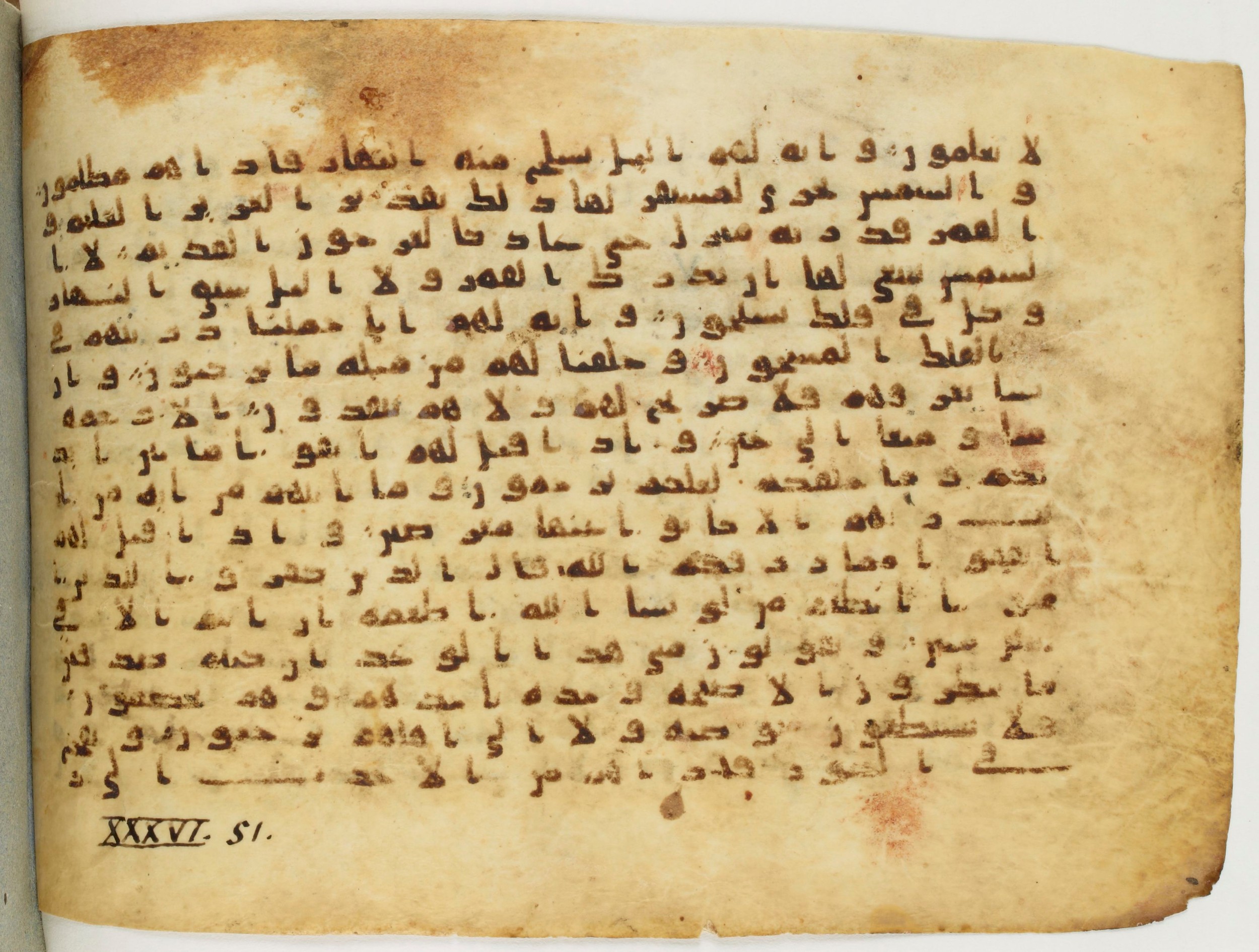
Arabe 340 (b)
This fragmentary manuscript on parchment features an unclassified script with analogies to Early Abbasid groups A and B. A later reader notably added marginal indications in green ink to show a seven-part division of the text, placed within a circle.
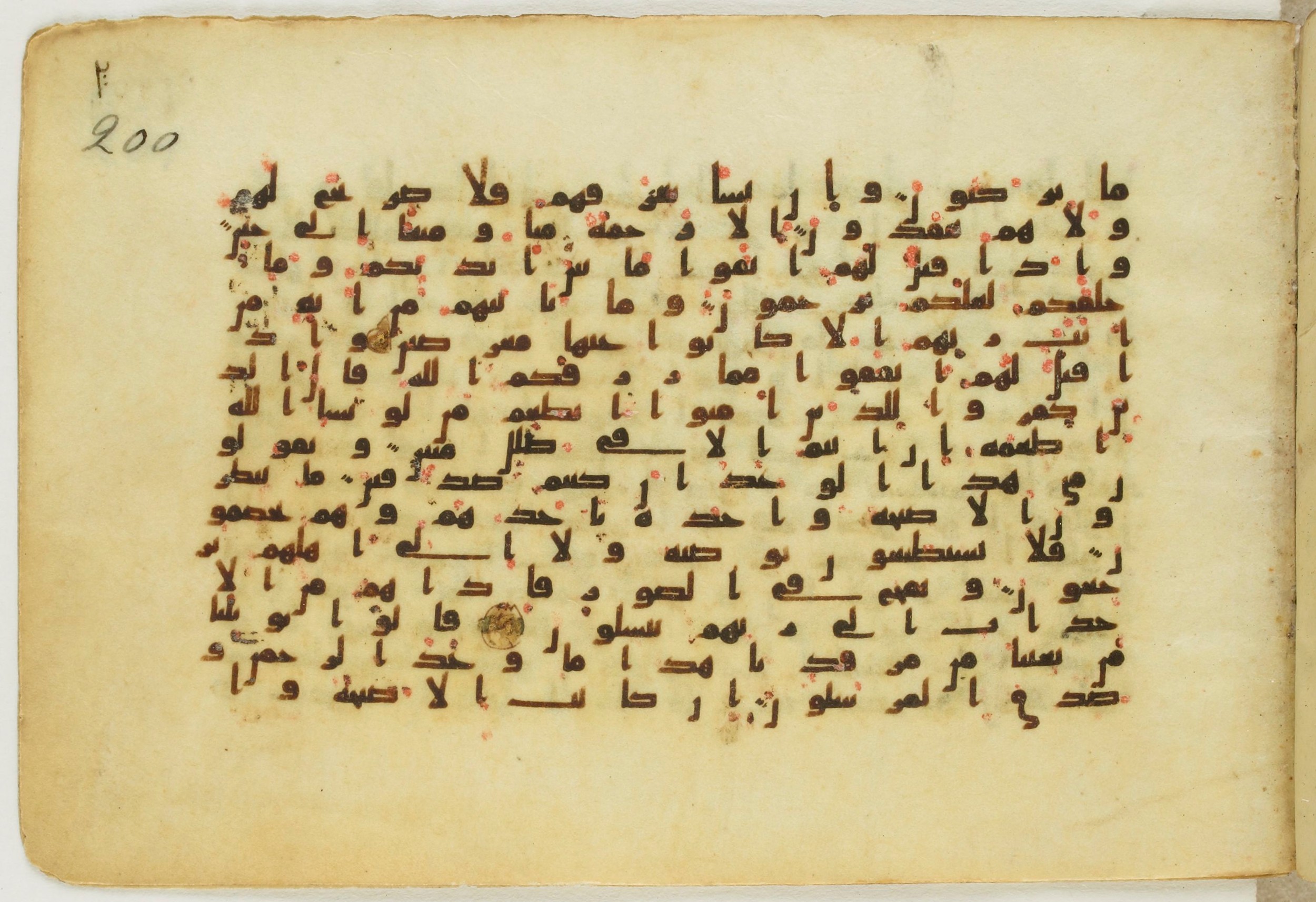
Paris, Bibliothèque nationale de France, Arabe 5122
This nearly complete 8th-century Quranic manuscript is notable for its extensive preservation, containing text from the very beginning of the Quran to its final Surah. Curiously, folio 134 has been reported missing from the French National Library since approximately 2000, and no microfilm image of it survives.
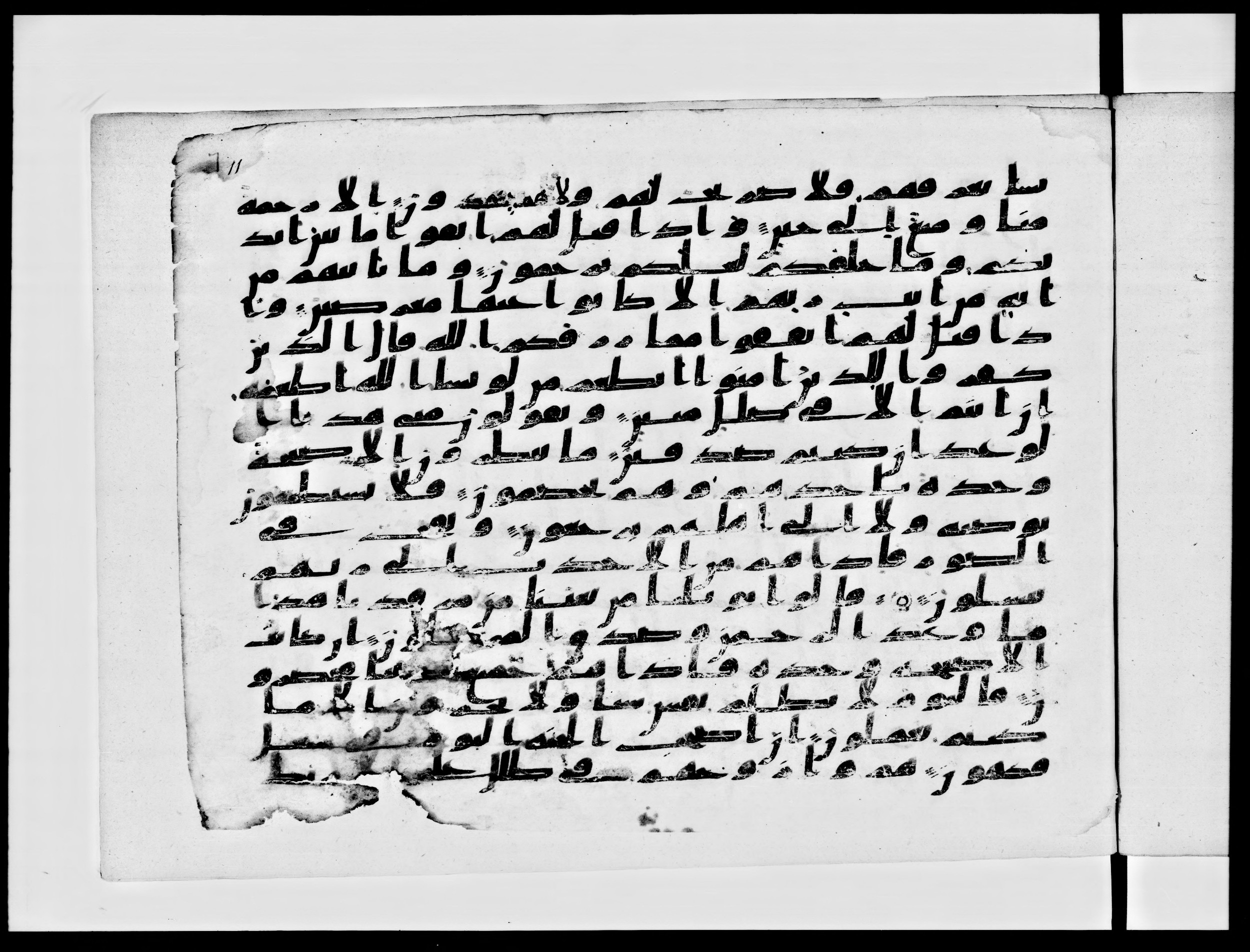
Paris, Bibliothèque nationale de France, Arabe 334 (a) (Scan 1)
This manuscript features a distinct Kufic C.Ib script with Hijazi tendencies, where the final mīm is notably triangular with an extended tail. It employs red-orange diamonds for vocalization, and the letter Qāf is uniquely indicated by an oblique stroke below it.
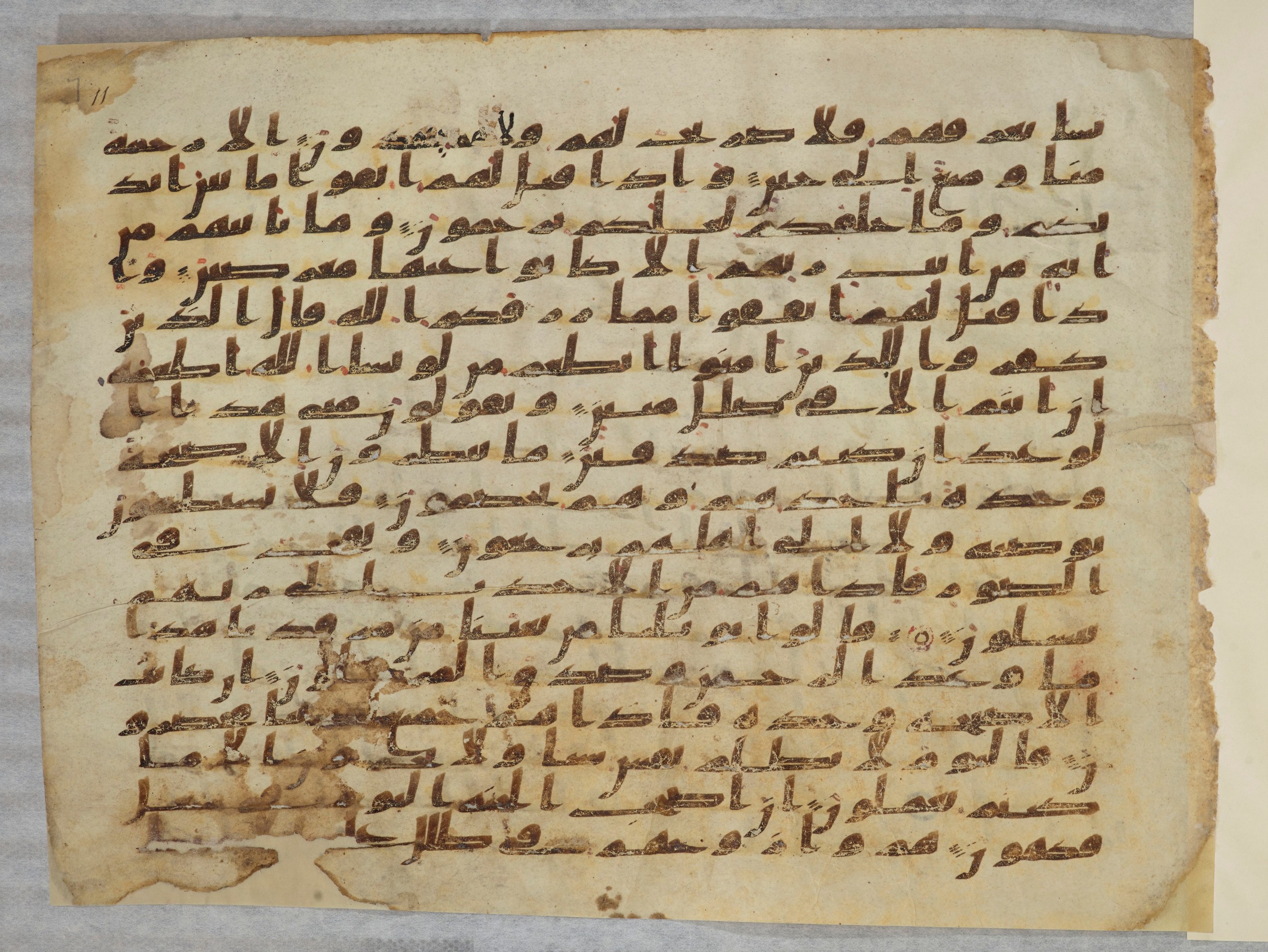
Paris, Bibliothèque nationale de France, Arabe 334 (a) (Scan 2)
This manuscript features a distinct Kufic C.Ib script with Hijazi tendencies, where the final mīm is notably triangular with an extended tail. It employs red-orange diamonds for vocalization, and the letter Qāf is uniquely indicated by an oblique stroke below it.
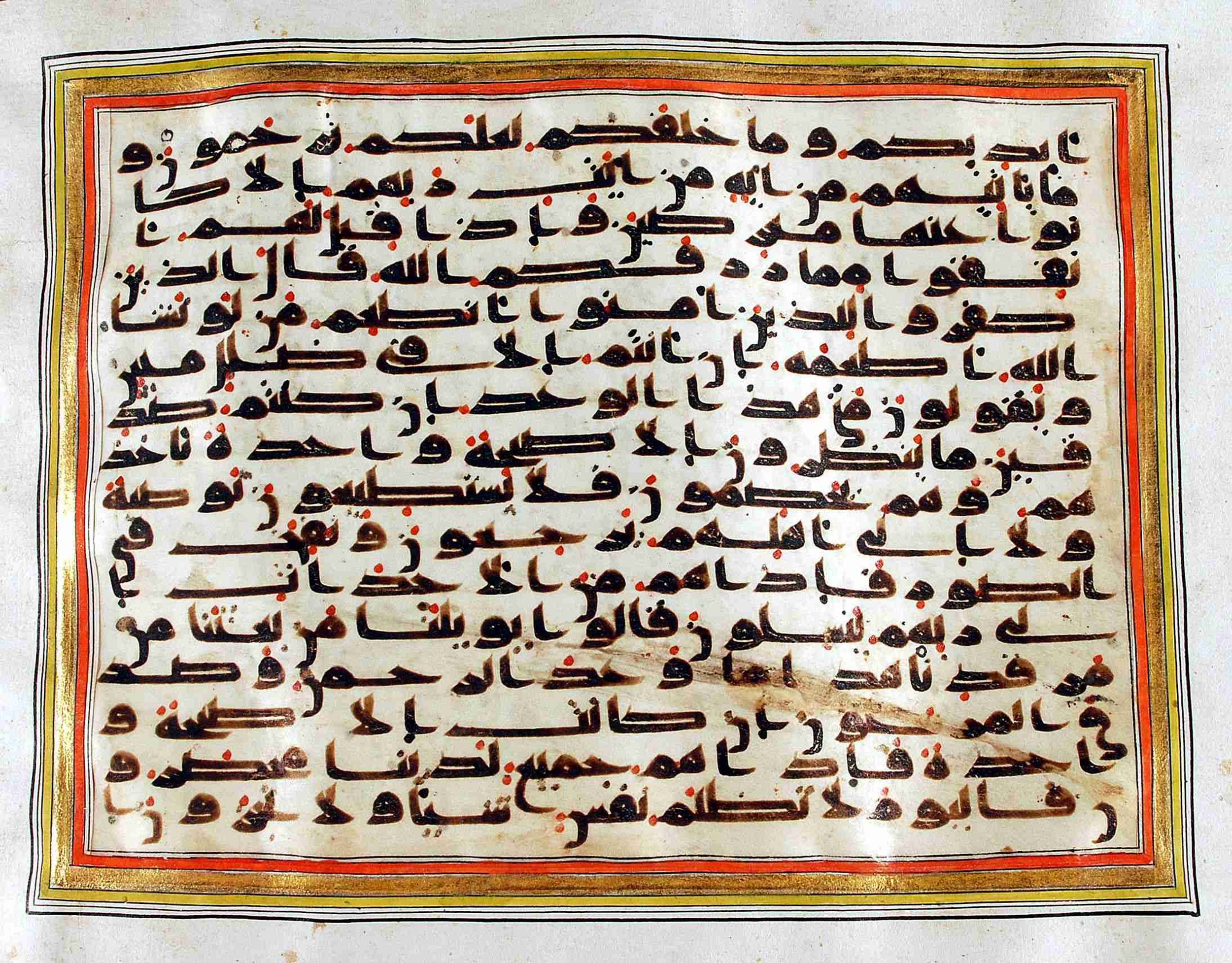
Rampur Raza Library No. 1
This manuscript is a highly prized copy traditionally ascribed to the penmanship of Ali ibn Abi Talib, the fourth Caliph. It features modern gold and colored borders on the paper margins.
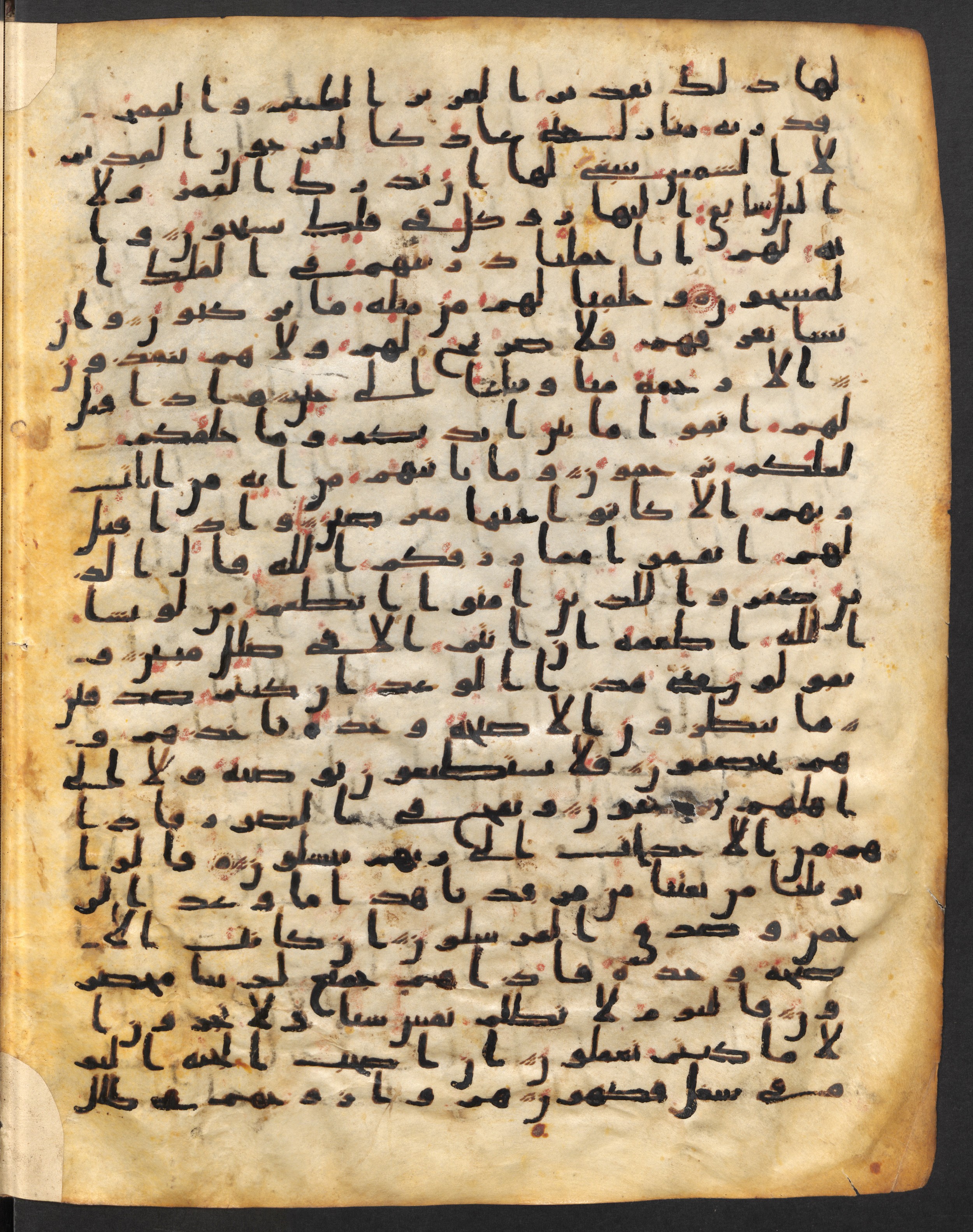
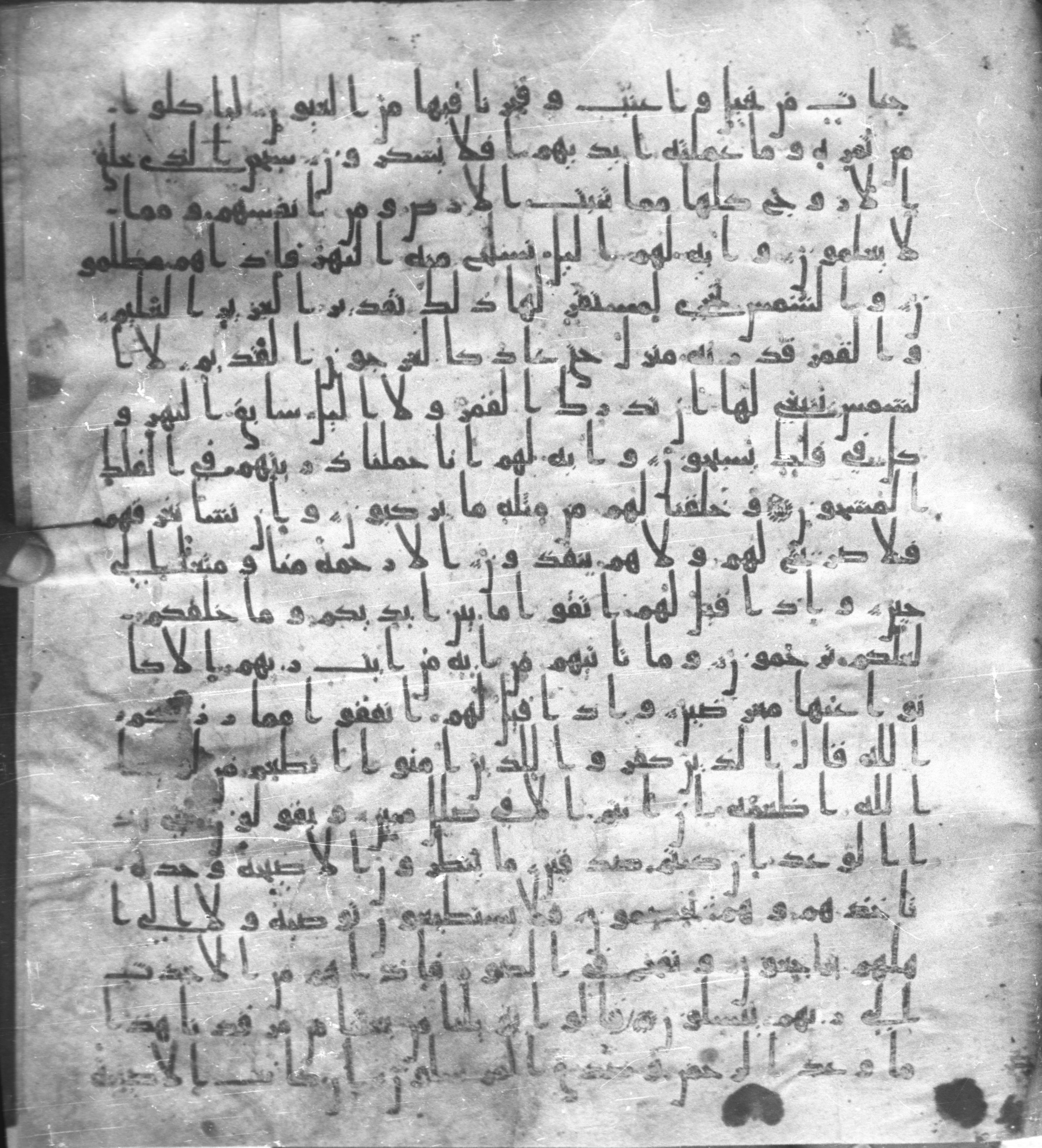
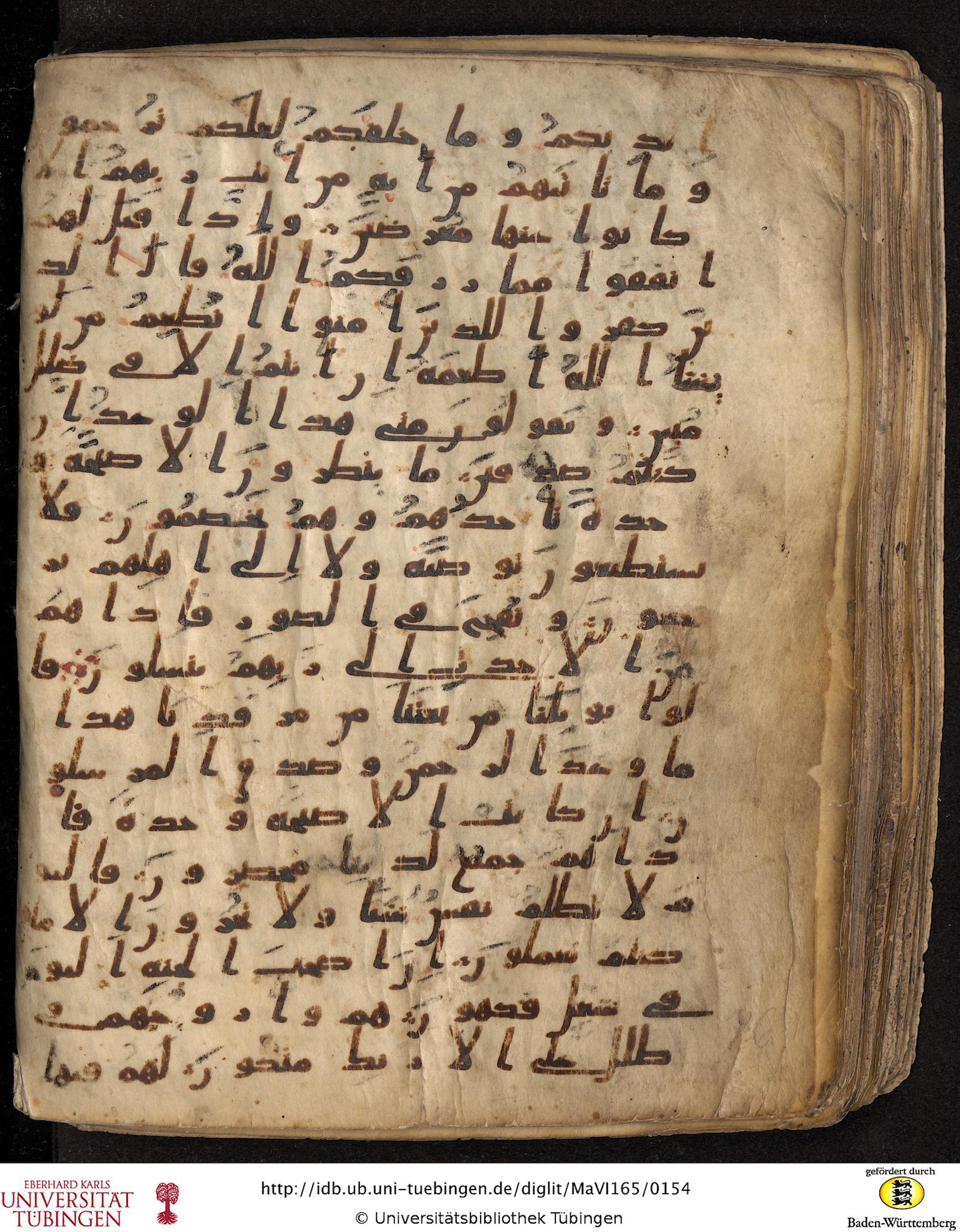
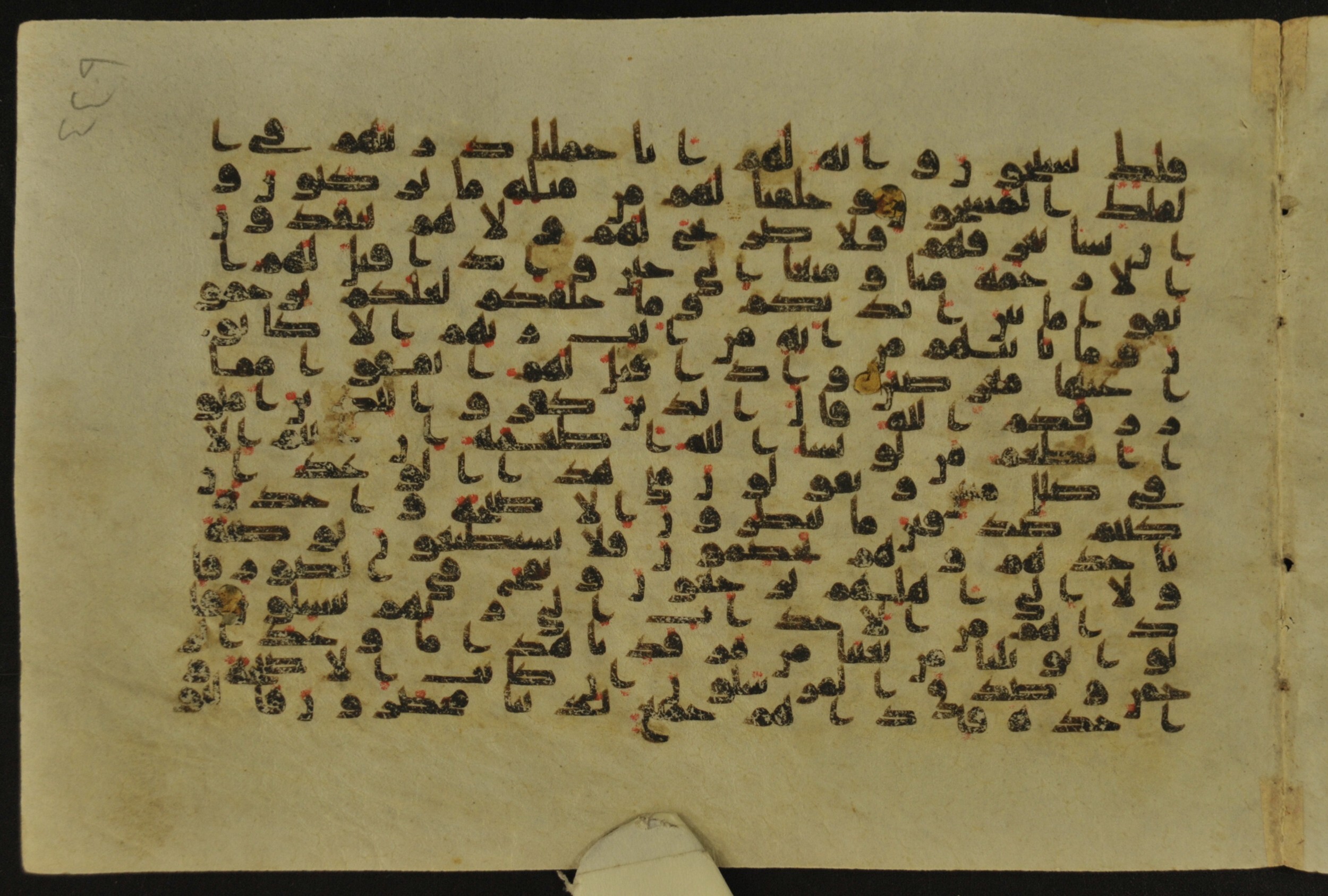
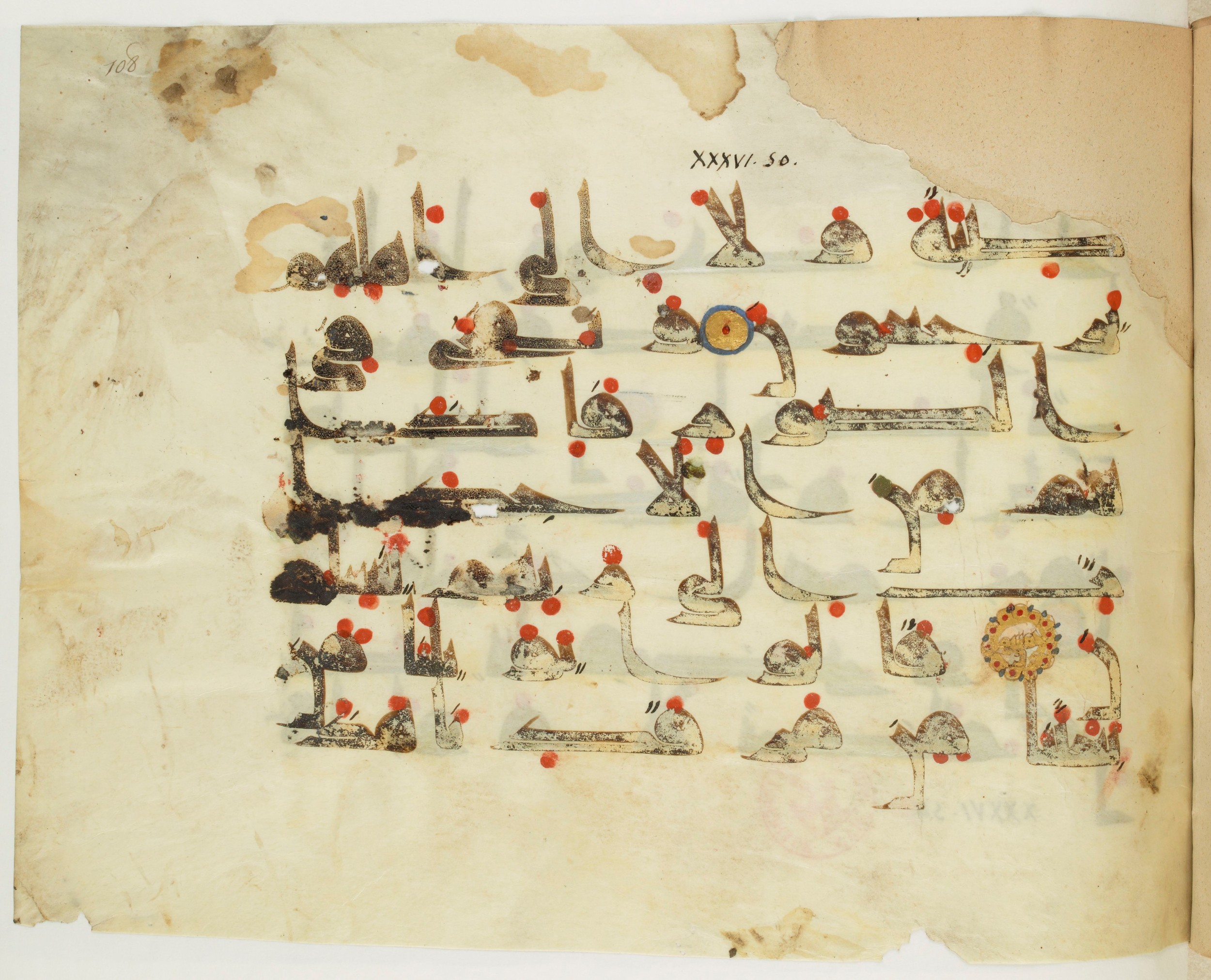
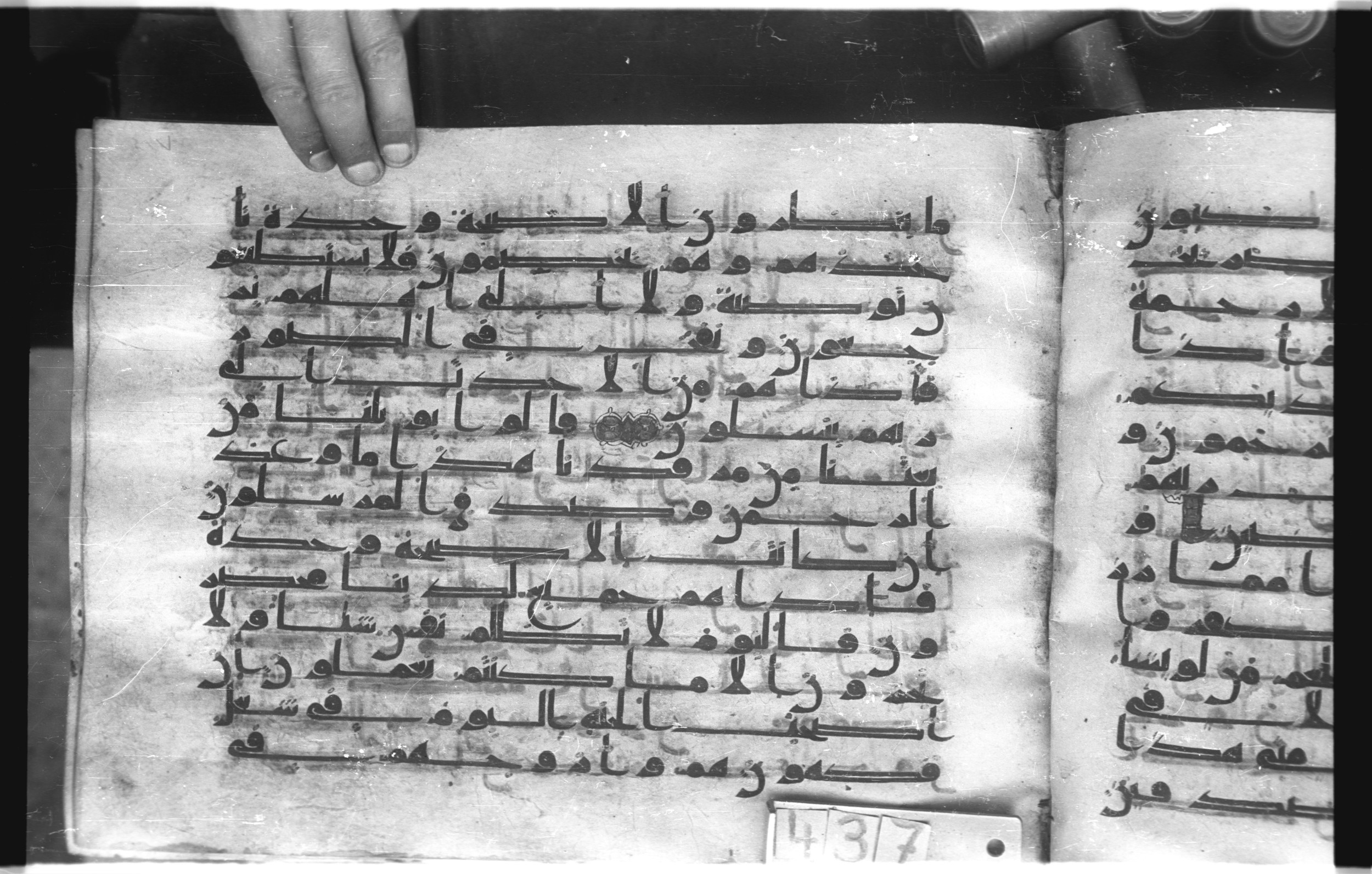
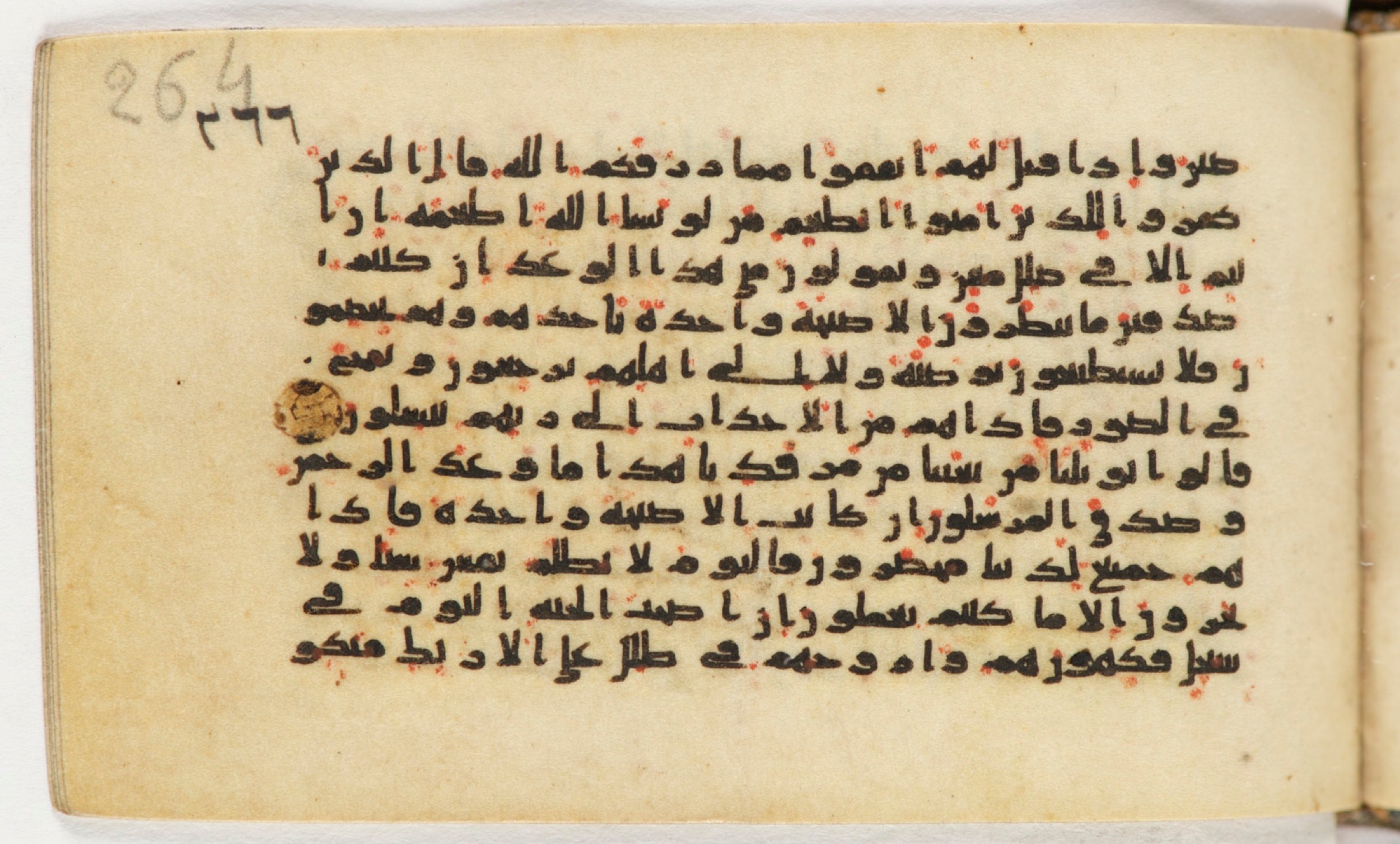
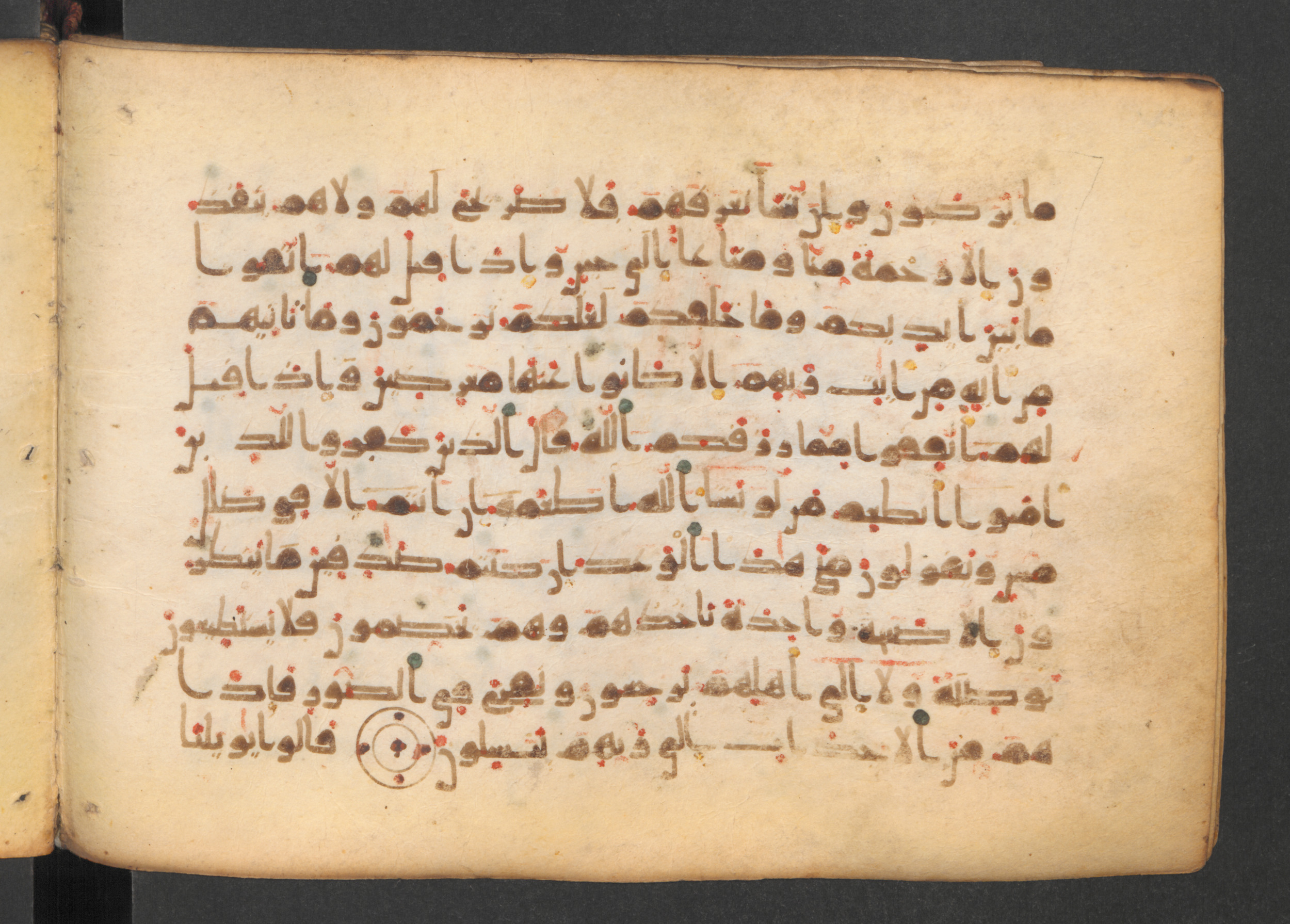
![Cairo, Khedivial Library, "qāf 3" (Gotthelf Bergsträßer archives) [maṣāḥif 387], in kūfī type C script, showing Surah 36:51 from 8th Century AD found in Egypt, currently housed at Egyptian National Library and Archives, Cairo](https://mss.readyapologia.com/quran/codex_01335/320_manuscript-1335-page-43065-image-28774.jpg)
Cairo, Khedivial Library, "qāf 3" (Gotthelf Bergsträßer archives) [maṣāḥif 387]
This extensive 8th-century manuscript is well-known today through a collection of 471 photographs taken by Gotthelf Bergsträßer around 1930, preserving its contents in his archive.
Paris, Bibliothèque nationale de France, Arabe 341 (a)
This codex is notable for its early Kufic D.III script and rich illuminations. It features golden circular vignettes for Surah headings and a highly ornate full-page decorative band with interlaced geometric patterns, leaf motifs, and red and green accents marking the beginning of the 23rd Juz'.
Istanbul, Topkapı Palace Museum, "Saray 50386" (Karatay 42)
This near-complete Kufic Quran is bound in brown leather over wood with arabesque interlacing and iron rings. It bears the foundation seal of Sultan Osman III, and its first three leaves as well as sura headings are illuminated.
Arabe 399
This manuscript features a forged colophon claiming it was copied in 798 AD by order of Caliph Harun al-Rashid. An old legend also suggested it was a diplomatic gift sent to Charlemagne, though scholars have proven both the attribution and the legend to be false.
Codex Petermann I 38
This manuscript, comprising 213 parchment folios, contains the entire second half of the Quran starting from Surah Maryam (19). It was documented by Wilhelm Ahlwardt in his 1887 catalogue of Arabic manuscripts at the Staatsbibliothek zu Berlin and is notable for its robust Early Kufic script (D.Vb) with characteristic letterforms, such as the initial and medial 'kāf' often resembling 'dāl'.
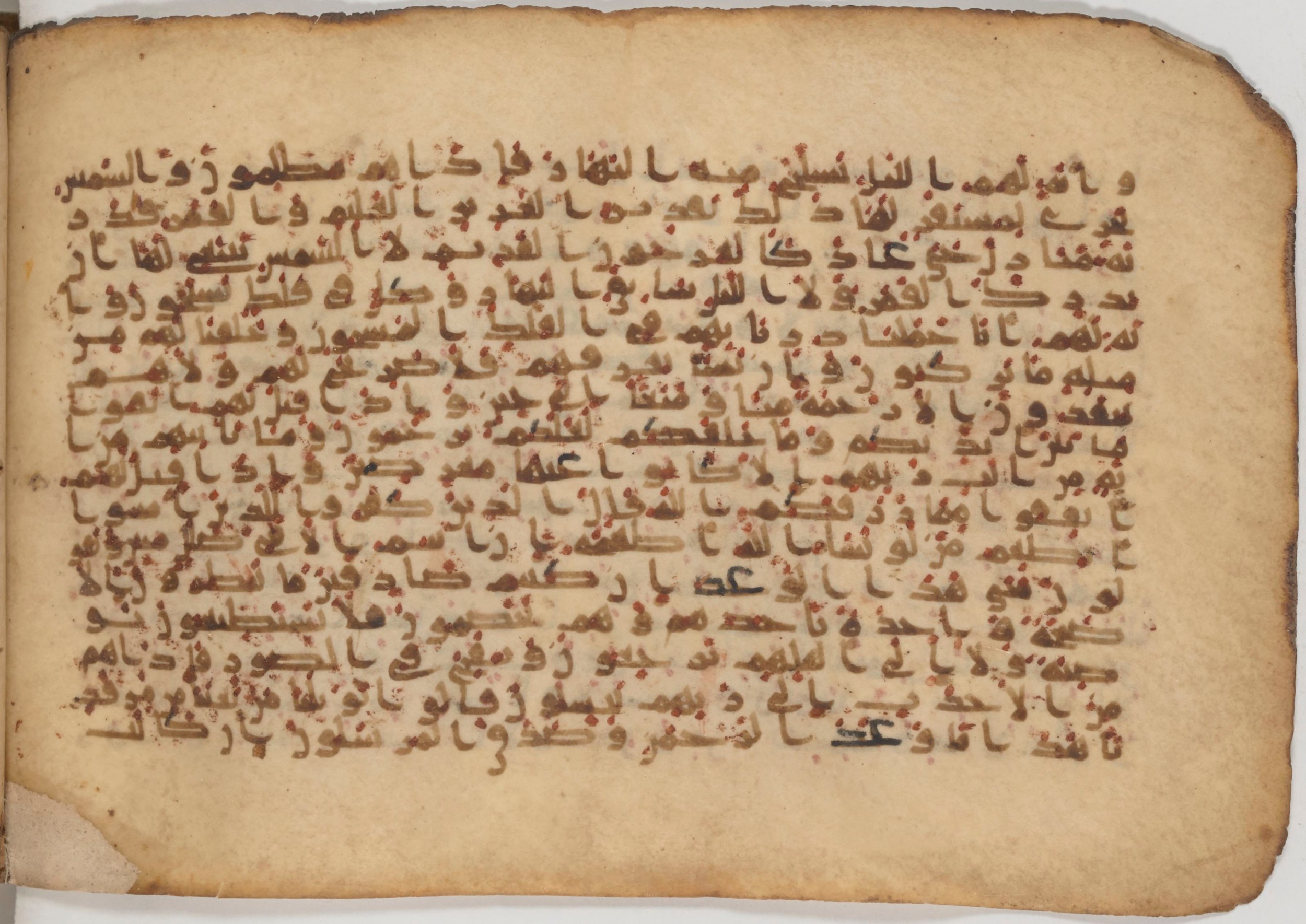
Paris, Bibliothèque nationale de France, Arabe 343
The manuscript uses decorative medallions and bands to mark every ten verses, rather than separating individual verses. A marginal note in cursive script reveals it was once owned by Aḥmad Abū al-ʿAbbās al-Huwaydī, with later readers adding pious notes in the margins.
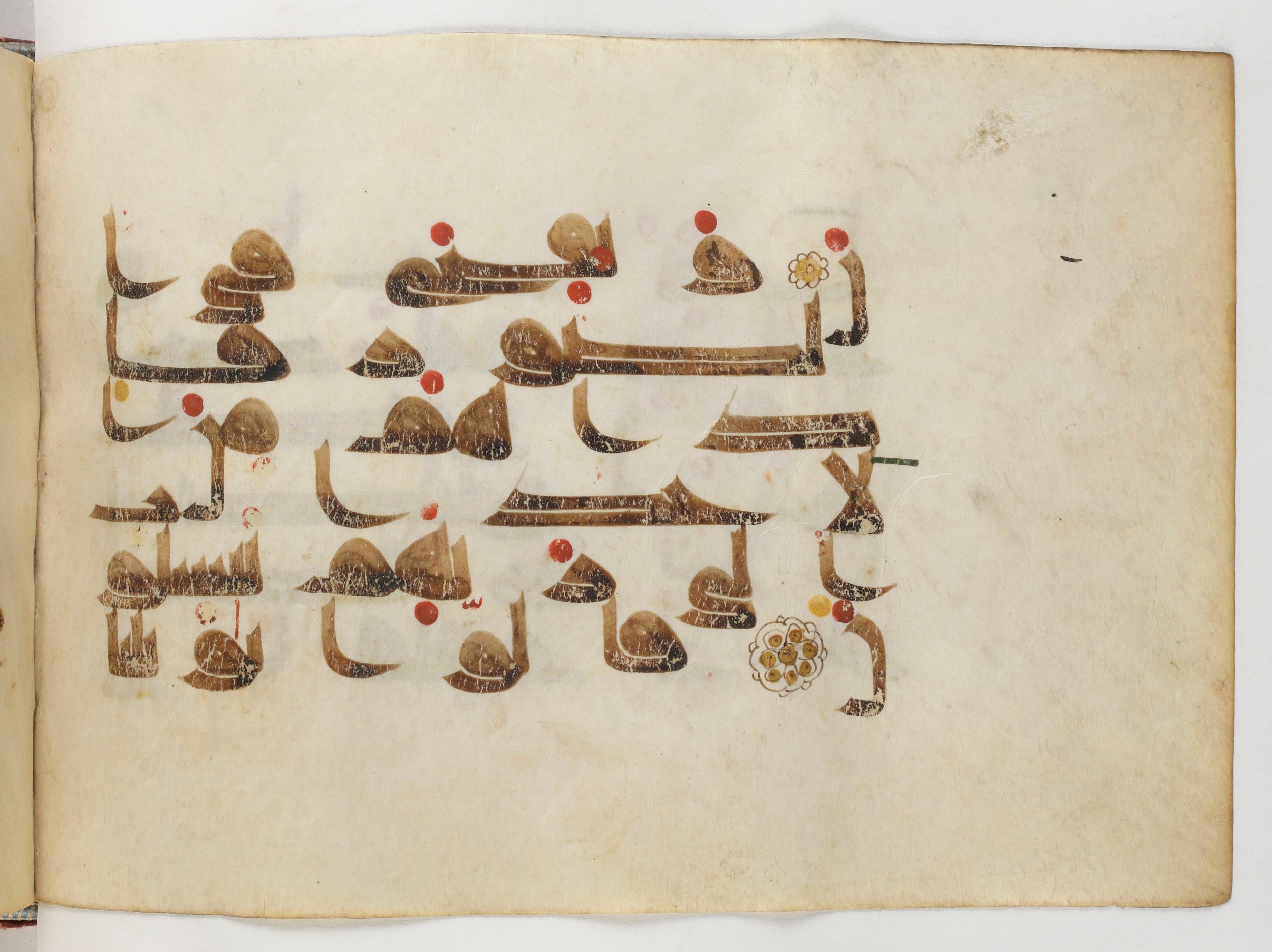
Paris, Bibliothèque nationale de France, Arabe 378
This early Abbasid manuscript features Kufic D.II script with distinctive vocalization using red dots and hamza indicated by yellow dots. It also includes illuminated medallions to separate the verses and golden Kufic letters marking groups of five verses.
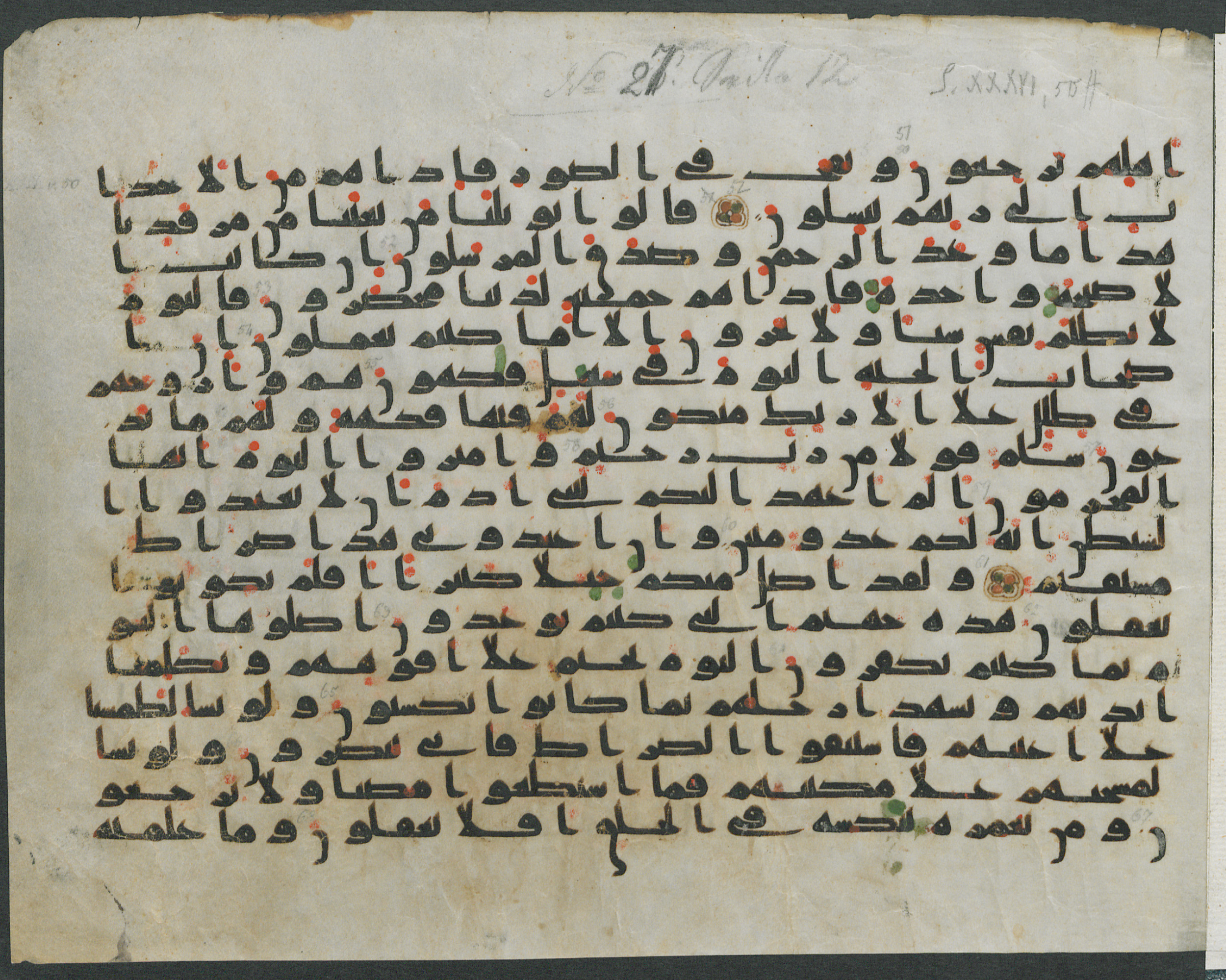
Gotha, Forschungsbibliothek Gotha, Ms. orient. A 458 (Scan 1)
This single parchment leaf features a small, elegant script that completely lacks diacritical marks. Notably, green dots are used to indicate textual variants, and only decades of verses are marked with green, red, and black decorations.
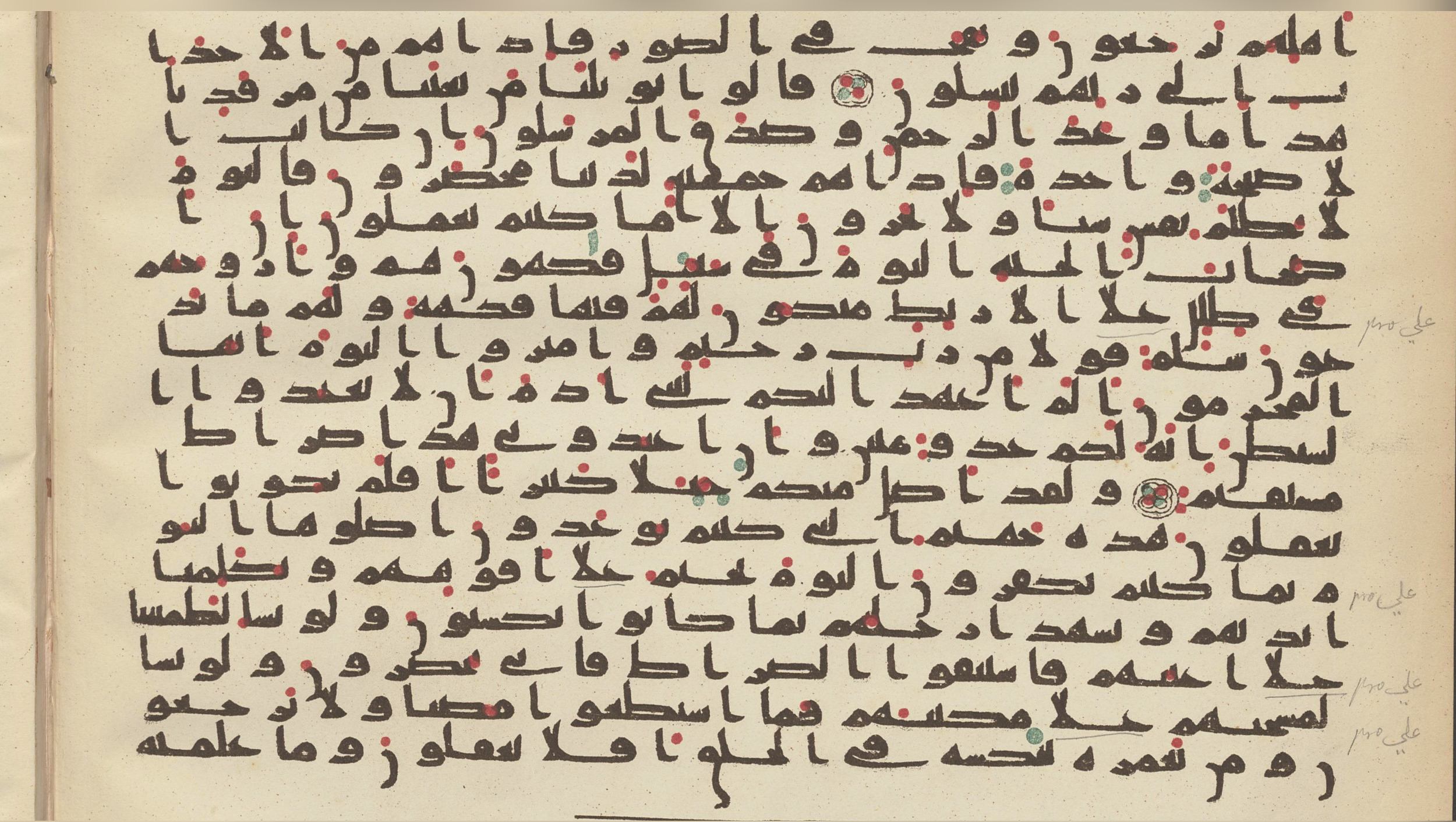
Gotha, Forschungsbibliothek Gotha, Ms. orient. A 458 (Scan 2)
This single parchment leaf features a small, elegant script that completely lacks diacritical marks. Notably, green dots are used to indicate textual variants, and only decades of verses are marked with green, red, and black decorations.
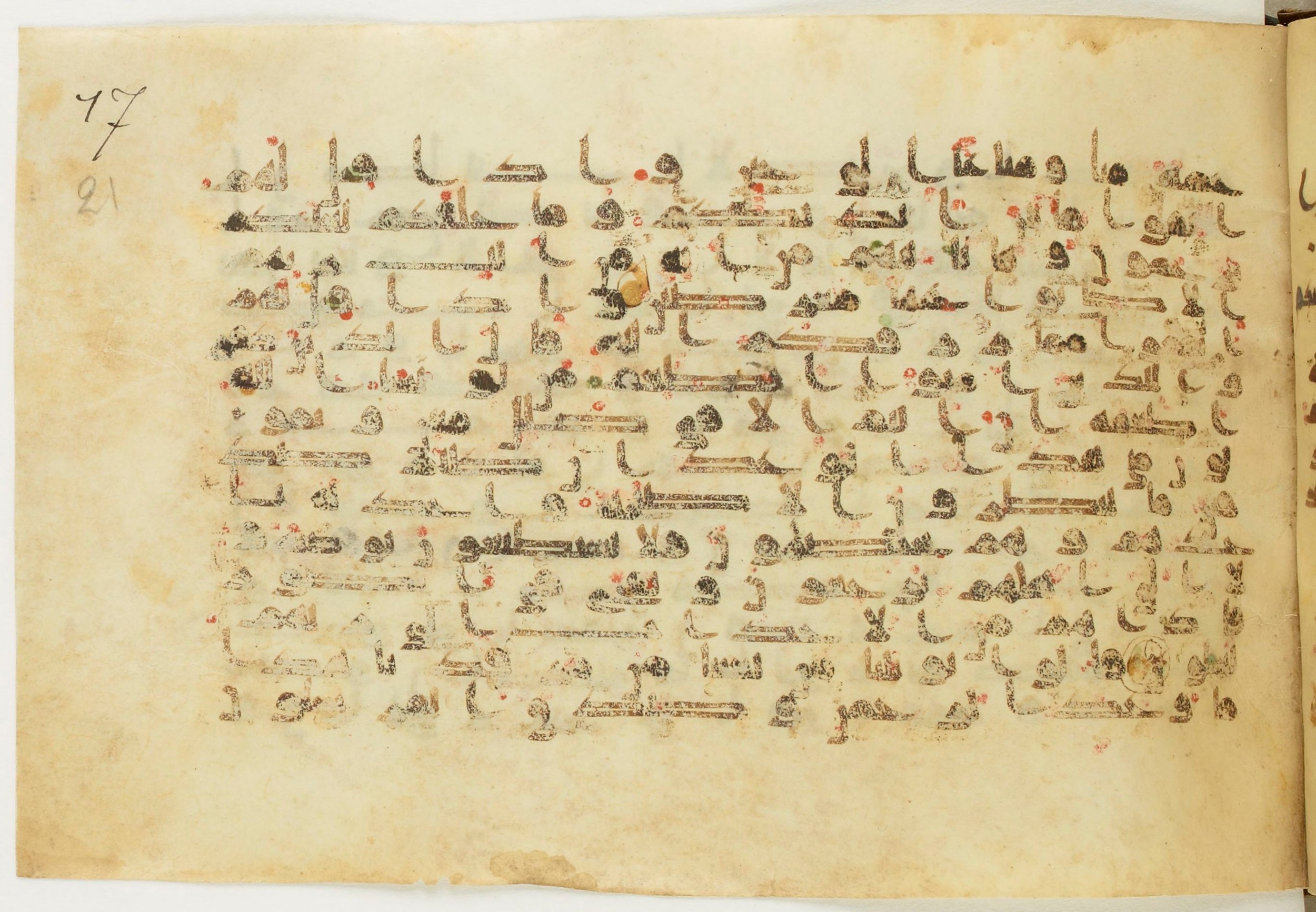
BnF Arabe 5123
The manuscript originates from the collection of J. Richard and its text is written without diacritical marks, using red dots for vocalization. It features a unique binding with 16th or 17th-century brown leather boards, possibly of Indian origin, decorated with a central plaque and stamped fleurons.
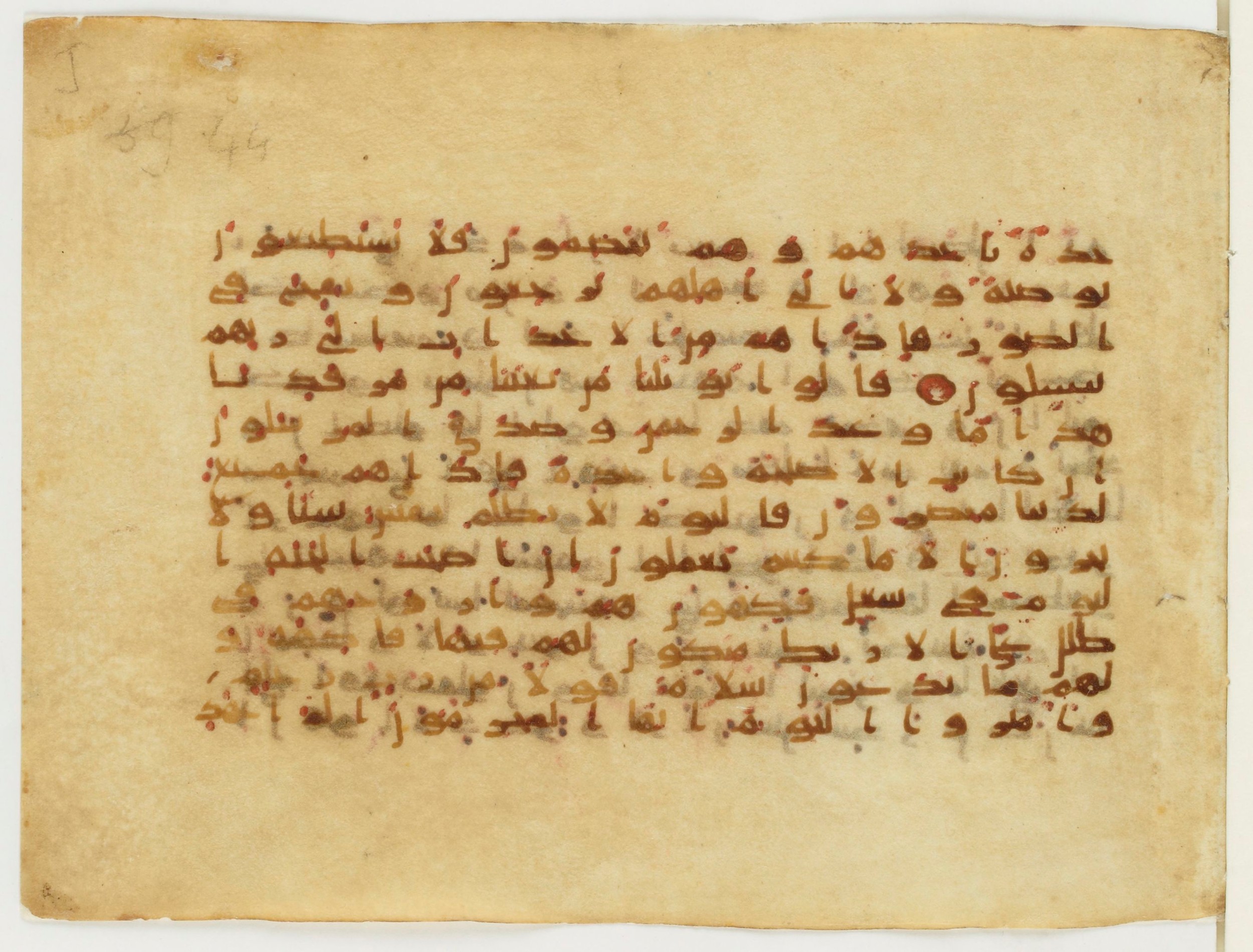
Paris, Bibliothèque nationale de France, Arabe 6140 (i)
This manuscript is part of Arabe 6140, a composite volume containing Qur'anic fragments from various periods. This specific anonymous and undated fragment lacks diacritical marks but features red dots for vocalization, with red circles used to group verses in tens.
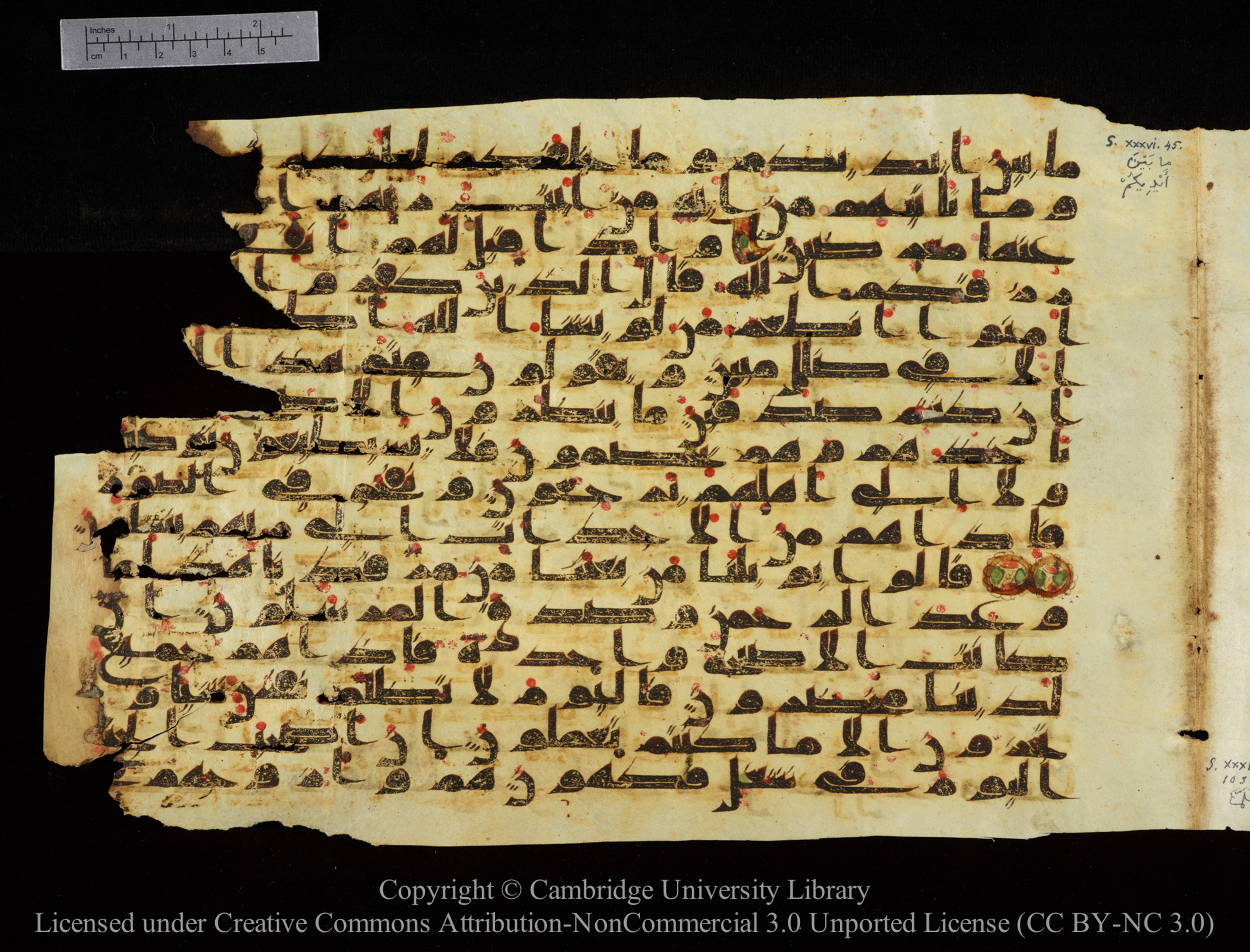
Cambridge University Library, MS Add.1147
This Abbasid-era Qur'an fragment was acquired by E.H. Palmer and E.E. Tyrwhitt Drake in 1878 during a research trip to the Sinai Peninsula. It is part of a larger collection of early Qur'anic manuscripts brought back to the University of Cambridge.
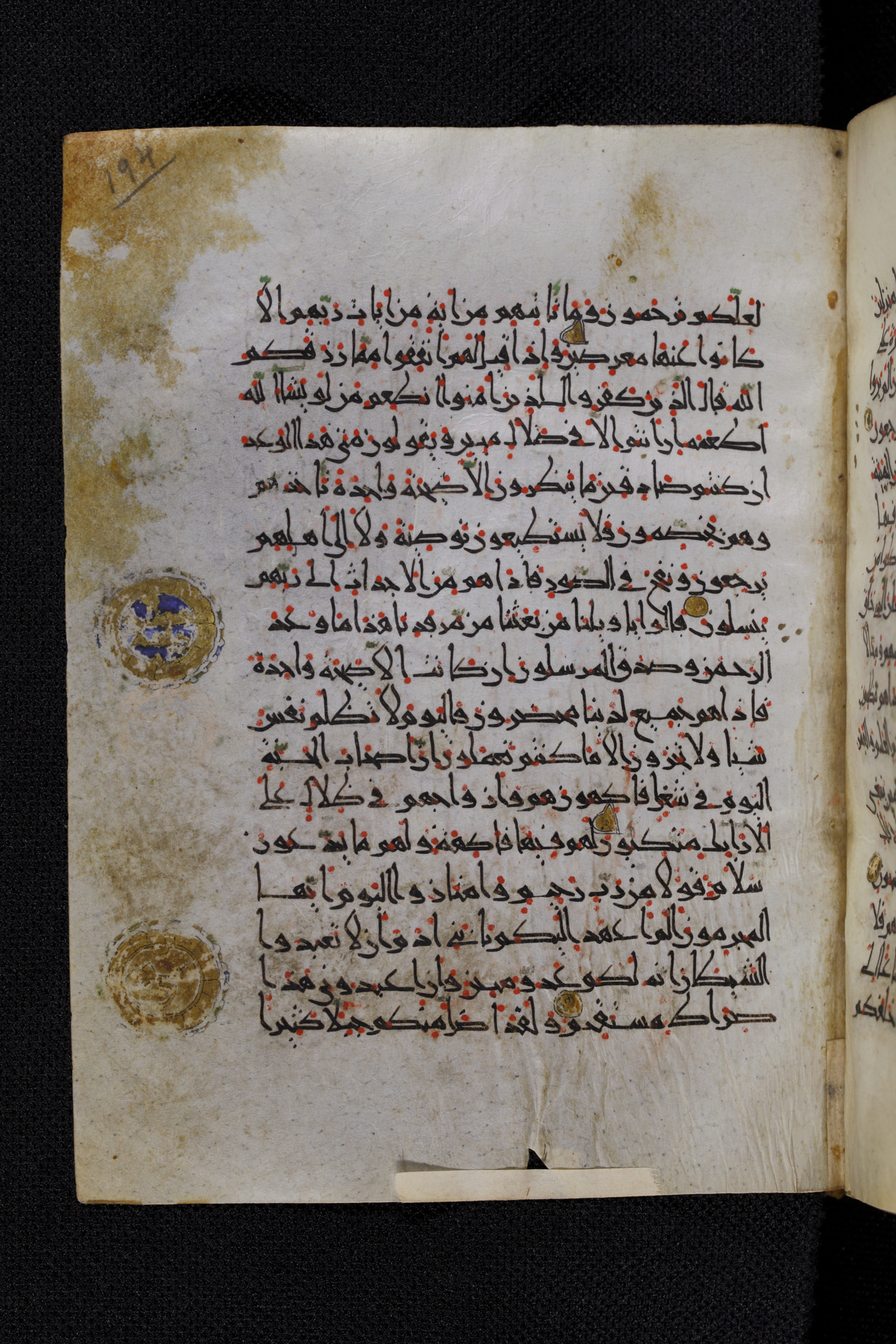
Diez A oct 172
This codex is largely complete, containing the entire Quran, though the first folio and a few other leaves were supplied by a later hand. Written on parchment, the manuscript represents an important transitional stage in the evolution of the Arabic script toward the Maghrebi style. While generally well-preserved, some of the early and late folios exhibit water damage and have been repaired.
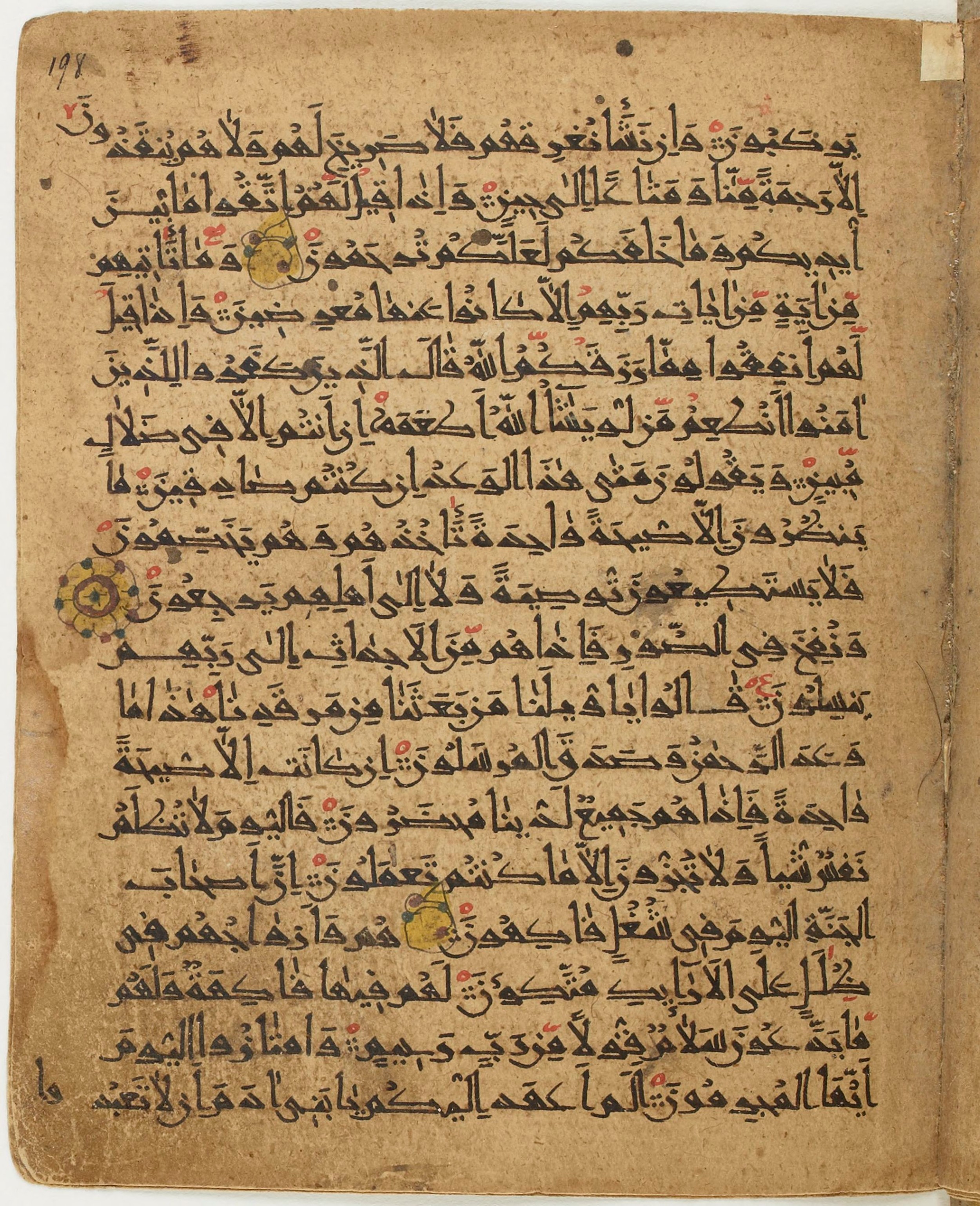
BNF Arabe 6430
This 10th-century Quranic manuscript is notable for being written on Oriental paper rather than parchment. It features complete diacritics and vocalization, with distinctive colorful verse markers including yellow Kufic 'hāʾ' letters to signal groups of five verses.
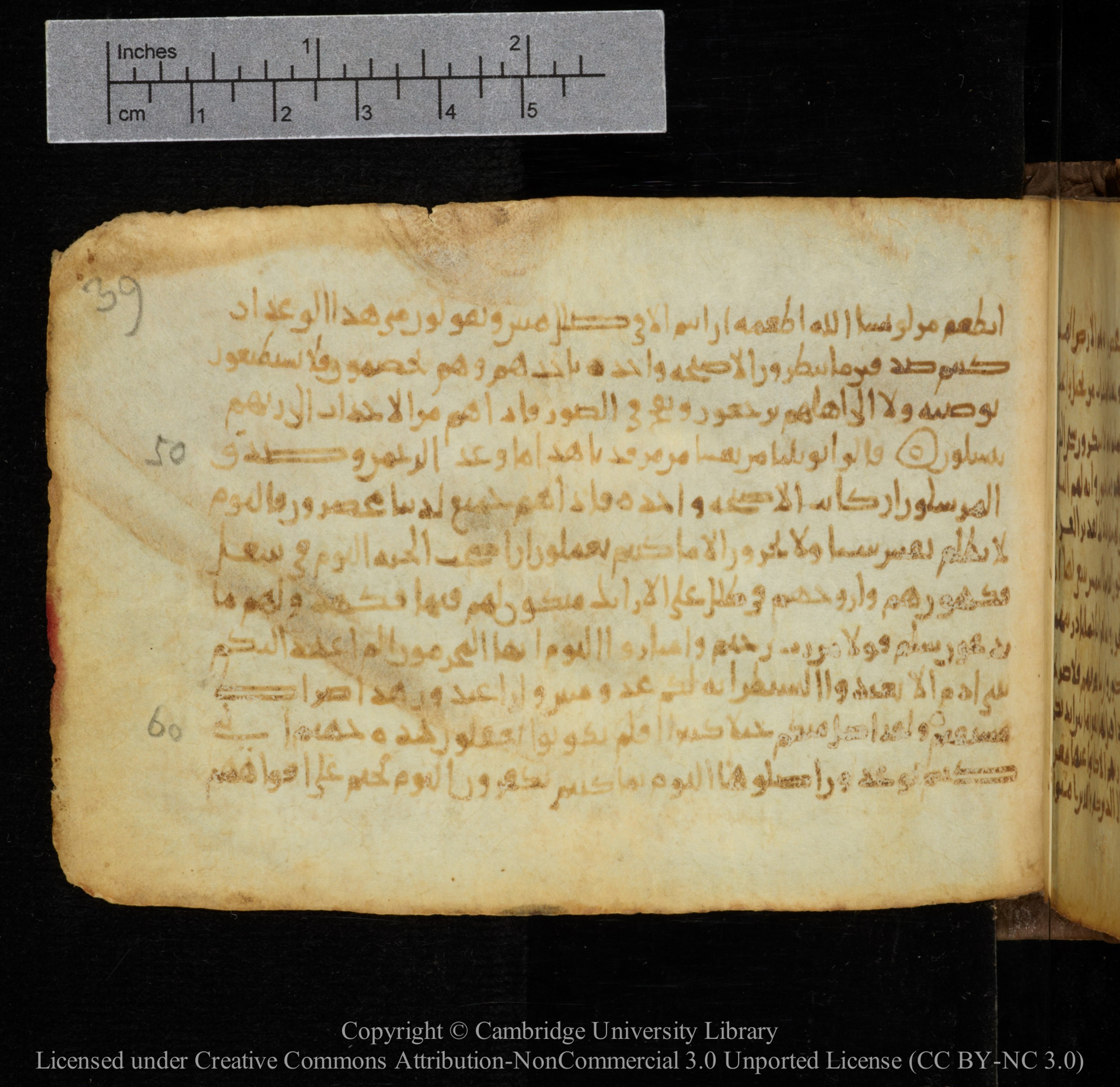
Cambridge, Cambridge University Library, MS Add.1141
This Kufic fragment was acquired by the University of Cambridge in 1878 from Edward H. Palmer and E.E. Tyrwhitt Drake. Palmer collected this and several other early Quran manuscripts during a research trip to the Sinai Peninsula.
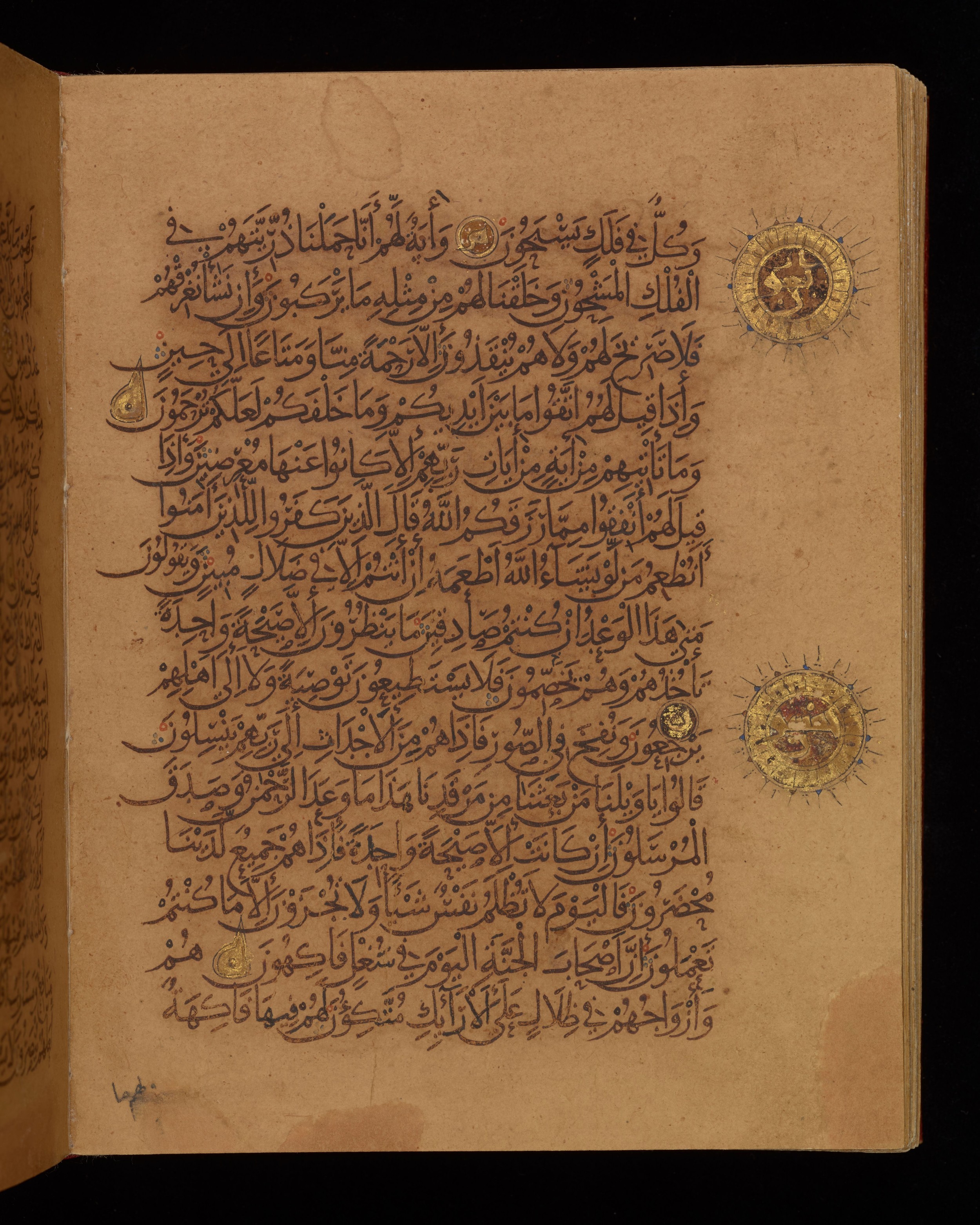
Dublin, Chester Beatty Library, Is 1431
This complete Quran was produced in Baghdad by the renowned calligrapher ʿAlī b. Hilāl, also known as Ibn al-Bawwāb, around 1000-1001 AD. He is a significant figure in Islamic art, closely associated with the adoption of the round Naskh script to transcribe the Quran.
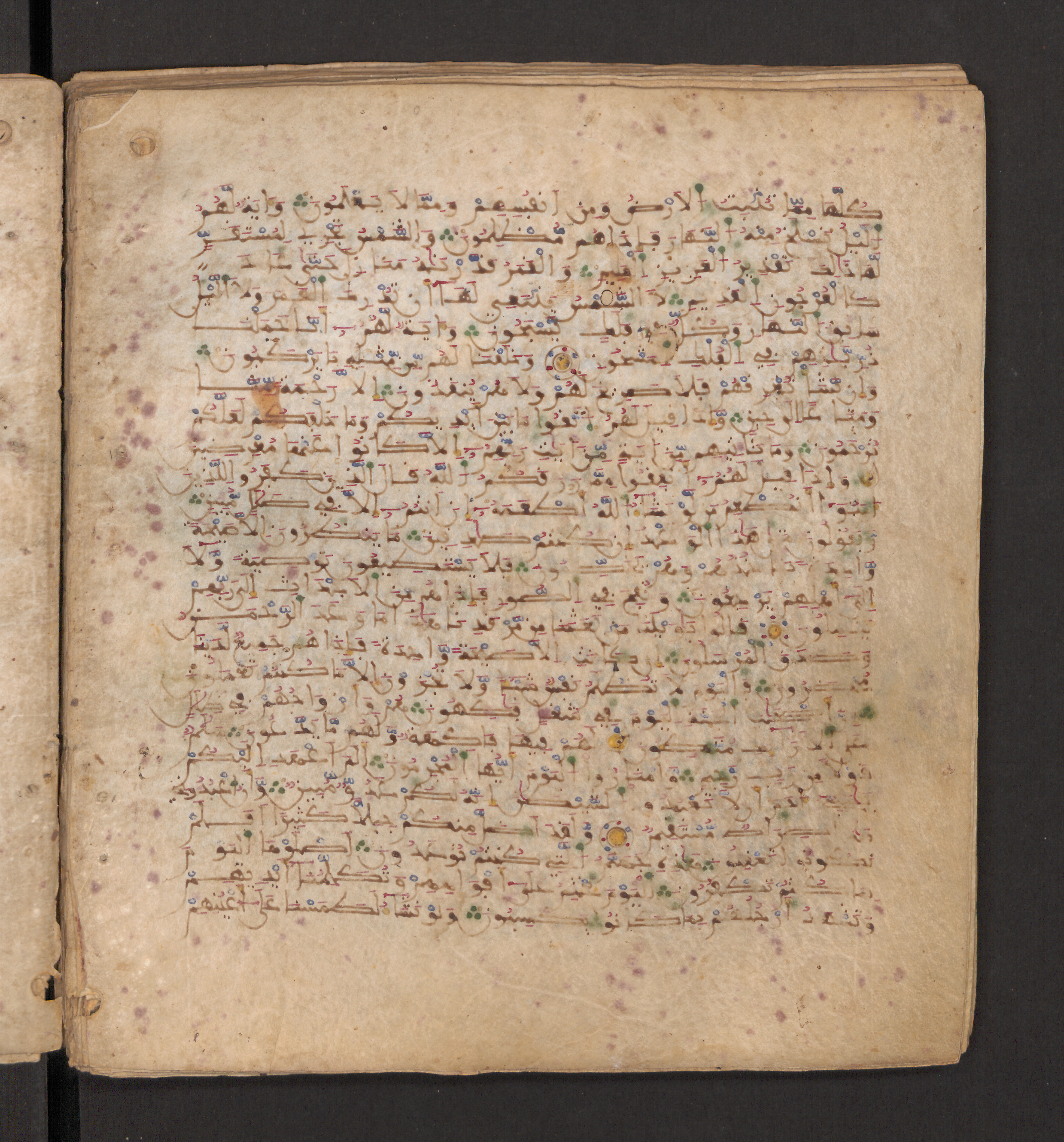
Doha, Qatar National Library, HC.MS.00715
This codex is closely related to two other Andalusian manuscripts held in Istanbul, which were written in Cordoba (1143-1144 AD) and Valencia (1182-1183 AD), suggesting a similar provenance. It features distinctive Maġribī micrography for the main text and angular chrysography for the Surah headings.
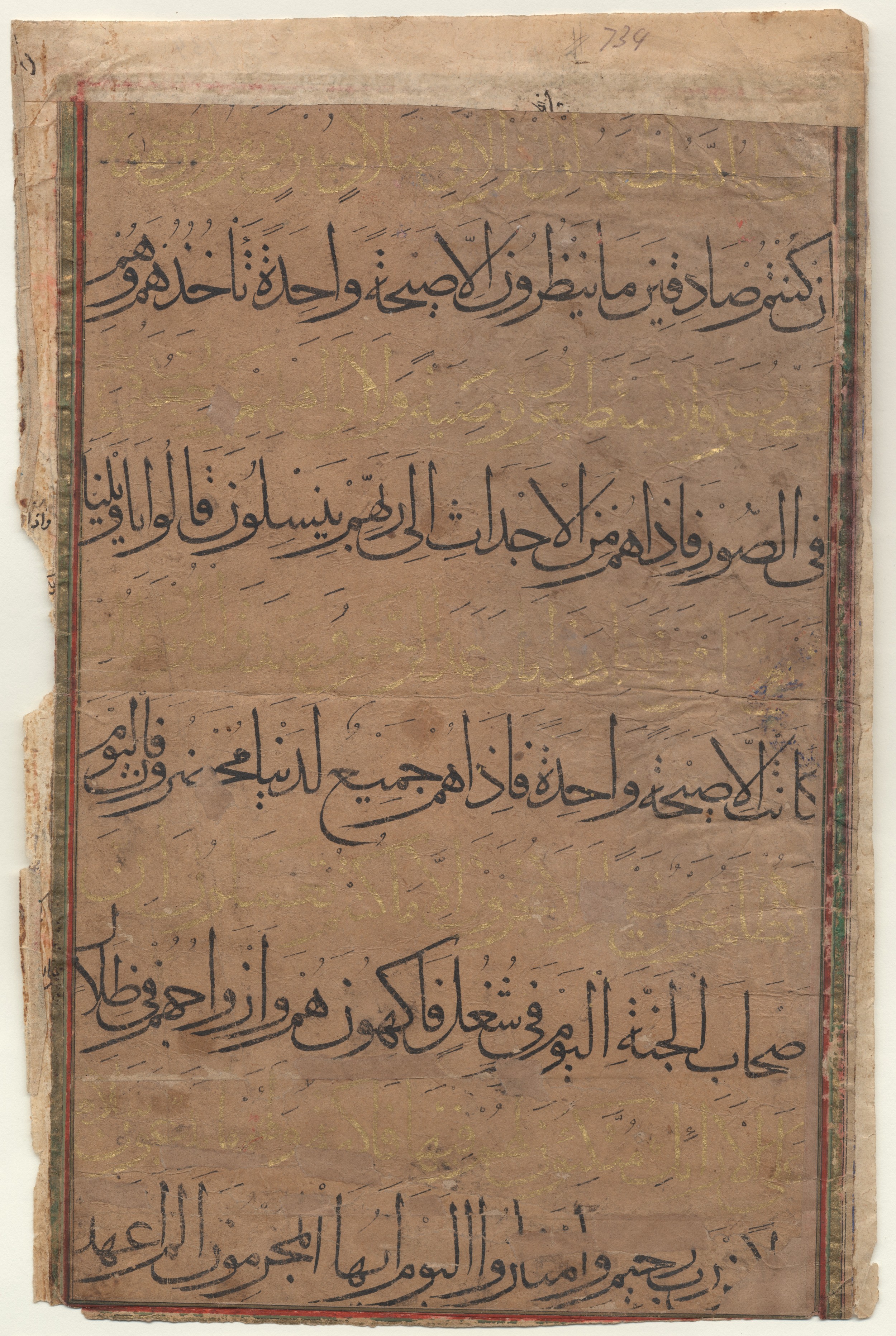
Brown University Library 6313
The manuscript features black and gold ink on paper, with the text appearing entirely in gold on every alternate line. The script most resembles the jalīl al-muḥaqqaq style associated with Yaqut al-Musta'simi (d. 1298), one of the 'Six Classic Hands'.
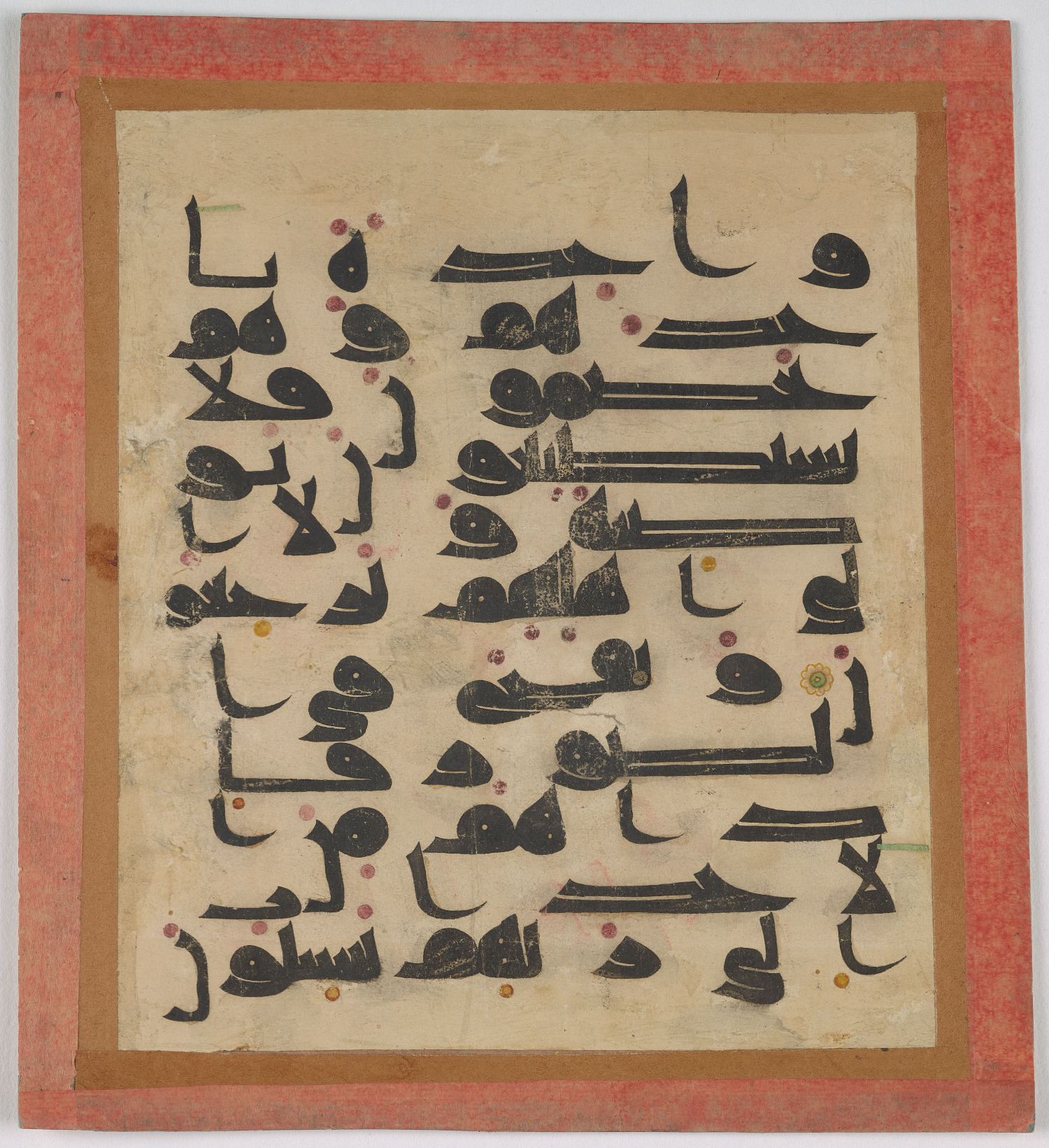
Qatar National Library HC.MS.2017.0047 (Scan 1)
This single paper folio is particularly notable because it is believed to be an eccentric, archaistic production from the 19th century, intentionally crafted to mimic the early Kūfī type D script rather than being an authentic early Islamic artifact.

Qatar National Library HC.MS.2017.0047 (Scan 2)
This single paper folio is particularly notable because it is believed to be an eccentric, archaistic production from the 19th century, intentionally crafted to mimic the early Kūfī type D script rather than being an authentic early Islamic artifact.