
Surah 39:0
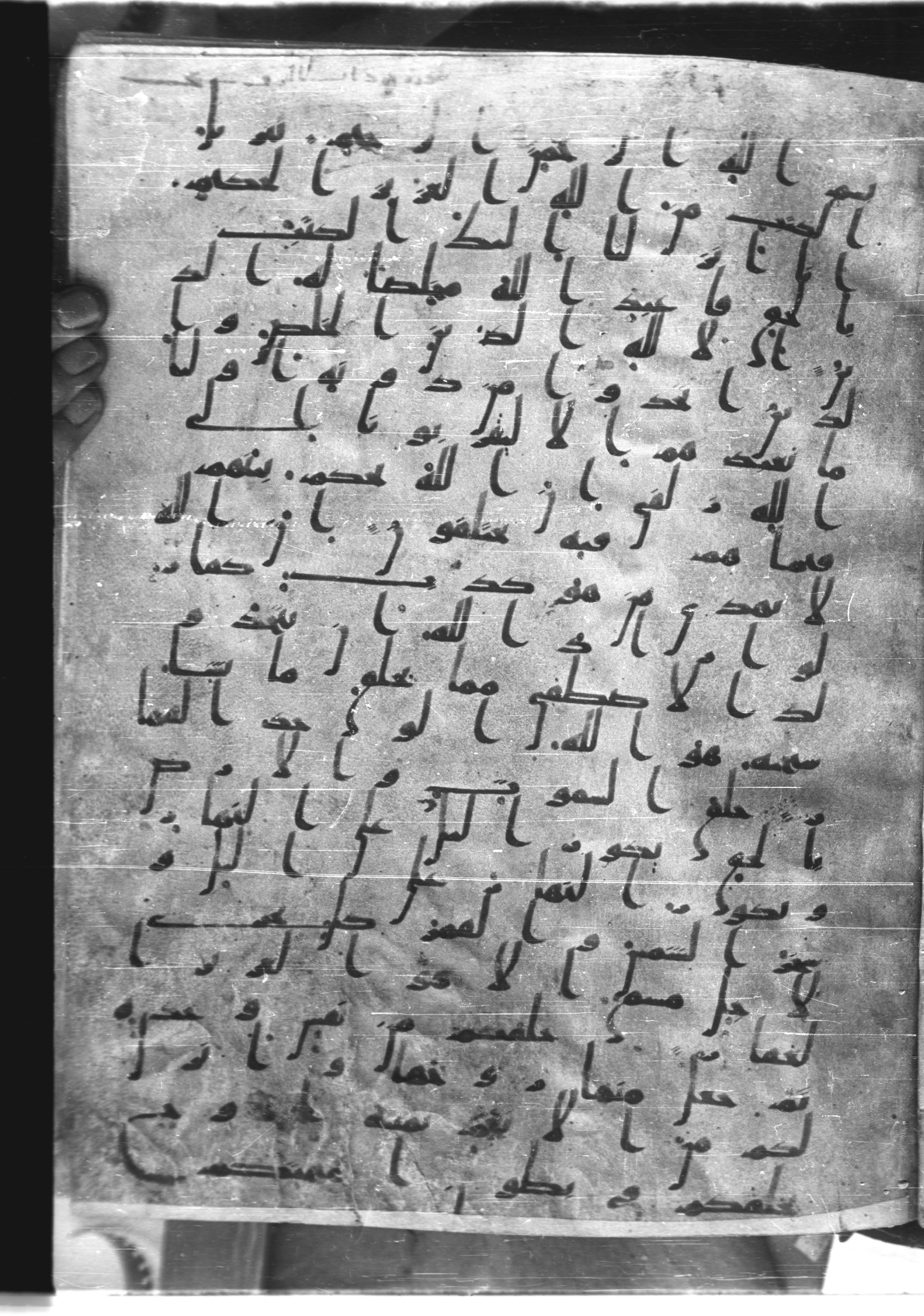
Saray Medina 1a (Karatay 3)
This almost complete codex is notable for being written by at least six different scribes in Kufic script. Originally documented in Gotthelf Bergsträßer's archives as 'Medina 1a', its folios were later repaired with paper edges, and a few missing pages were completed in Naskh script.
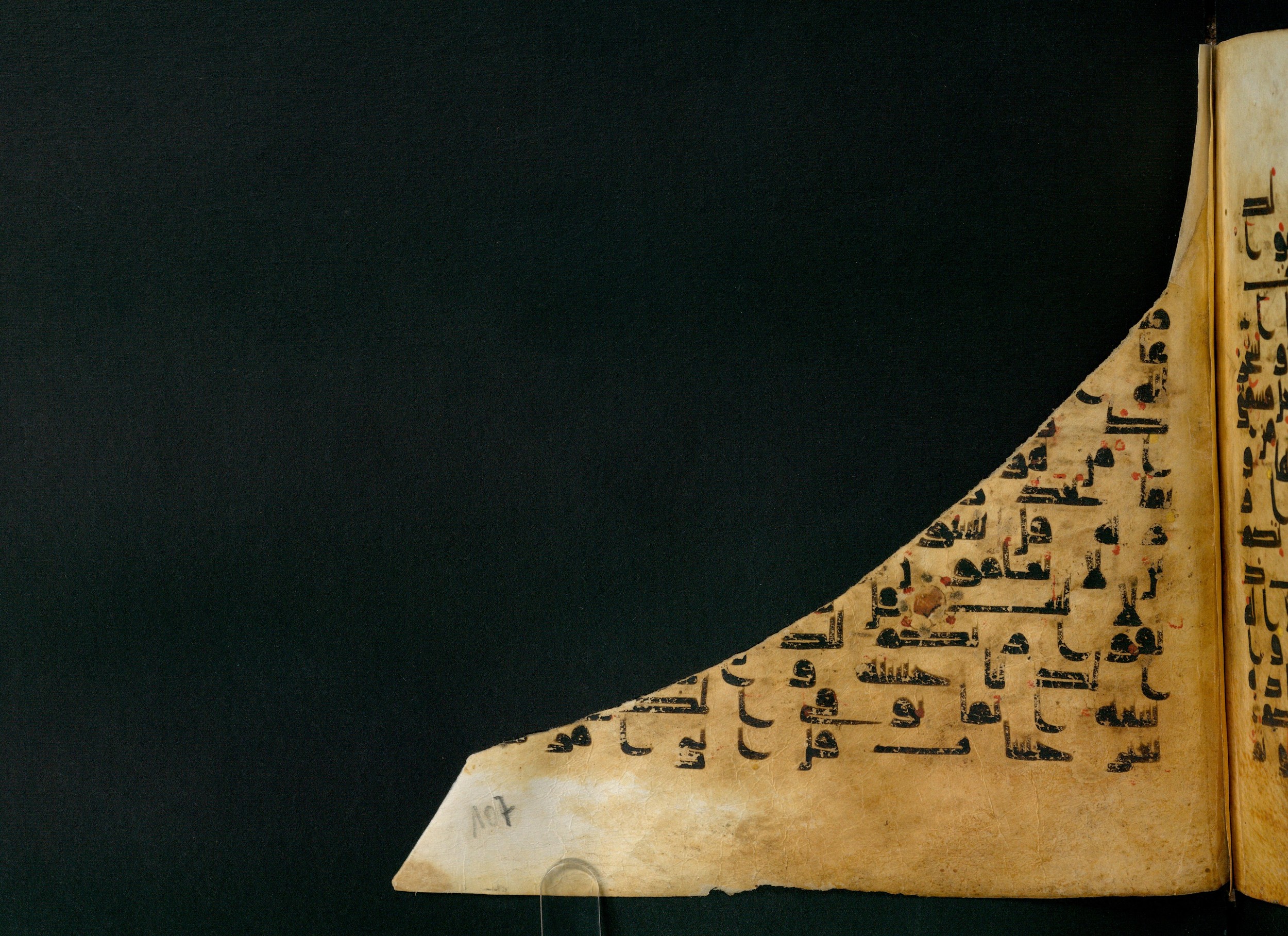
Cairo, Khedivial Library, Moritz 1905, table 31-36 (Scan 1)
The physical manuscript is currently lost and its origin is unknown; it survives today only through six photographs published in Bernhard Moritz's monumental 1905 album 'Arabic Palaeography'.
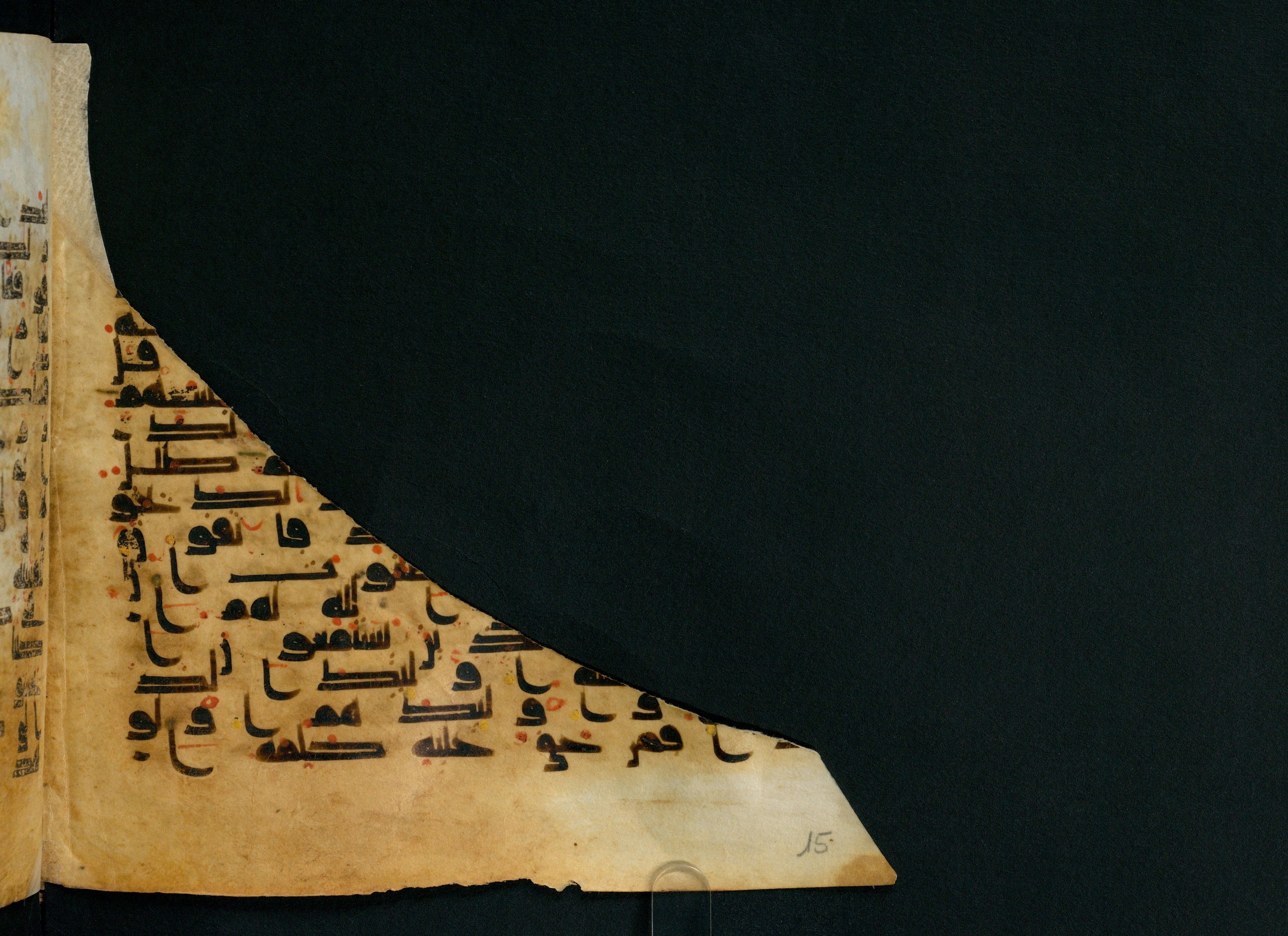
Cairo, Khedivial Library, Moritz 1905, table 31-36 (Scan 2)
The physical manuscript is currently lost and its origin is unknown; it survives today only through six photographs published in Bernhard Moritz's monumental 1905 album 'Arabic Palaeography'.
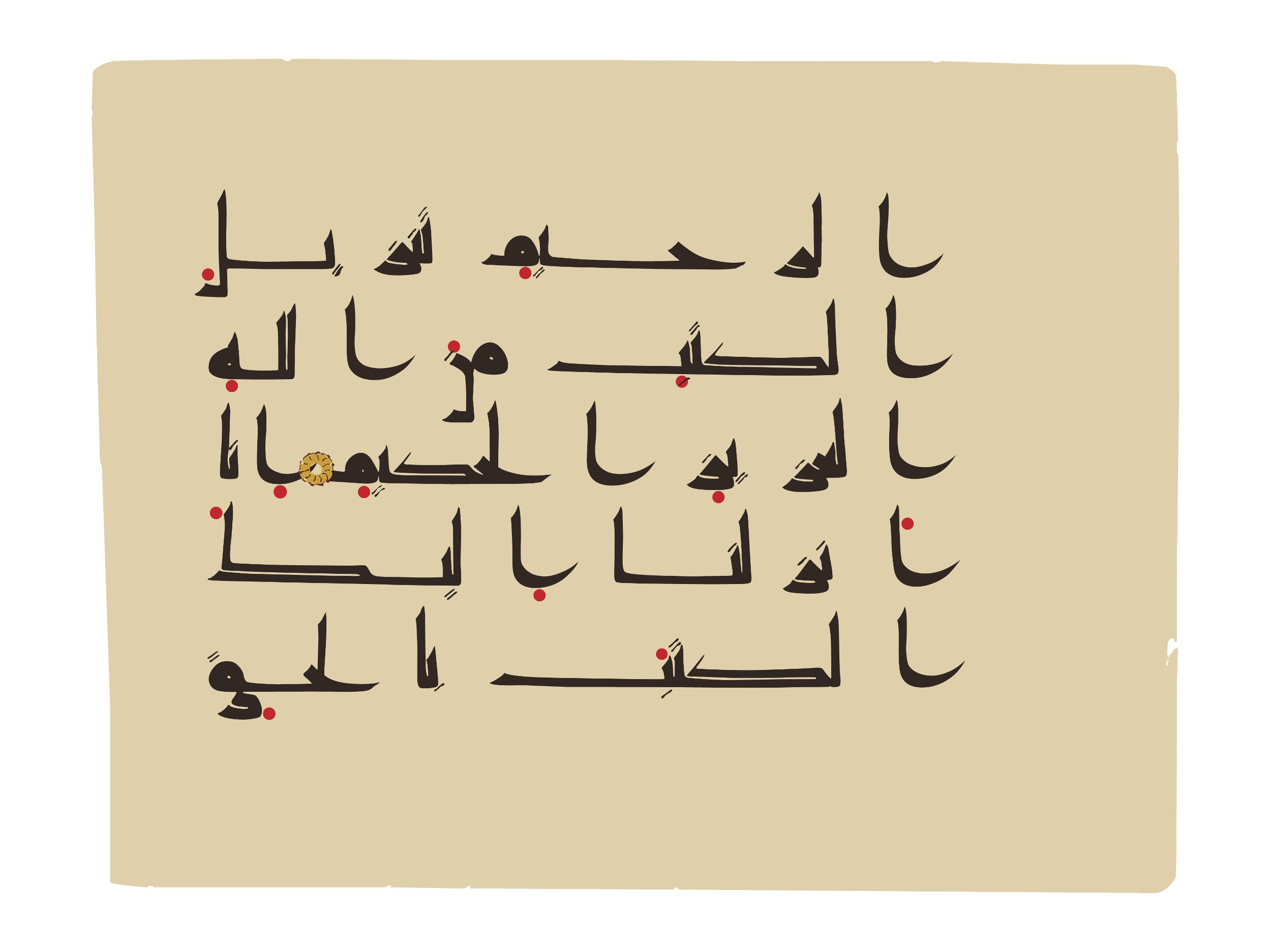
Oxford, Bodleian Library (Oxford University), Marsh 178 (Scan 1)
This manuscript originally belonged to a larger dispersed codex and features five lines of text per page in the distinctive Kufic D.I script. It has been extensively digitized and analyzed as part of the Digital Muṣḥaf project by Keith Small.
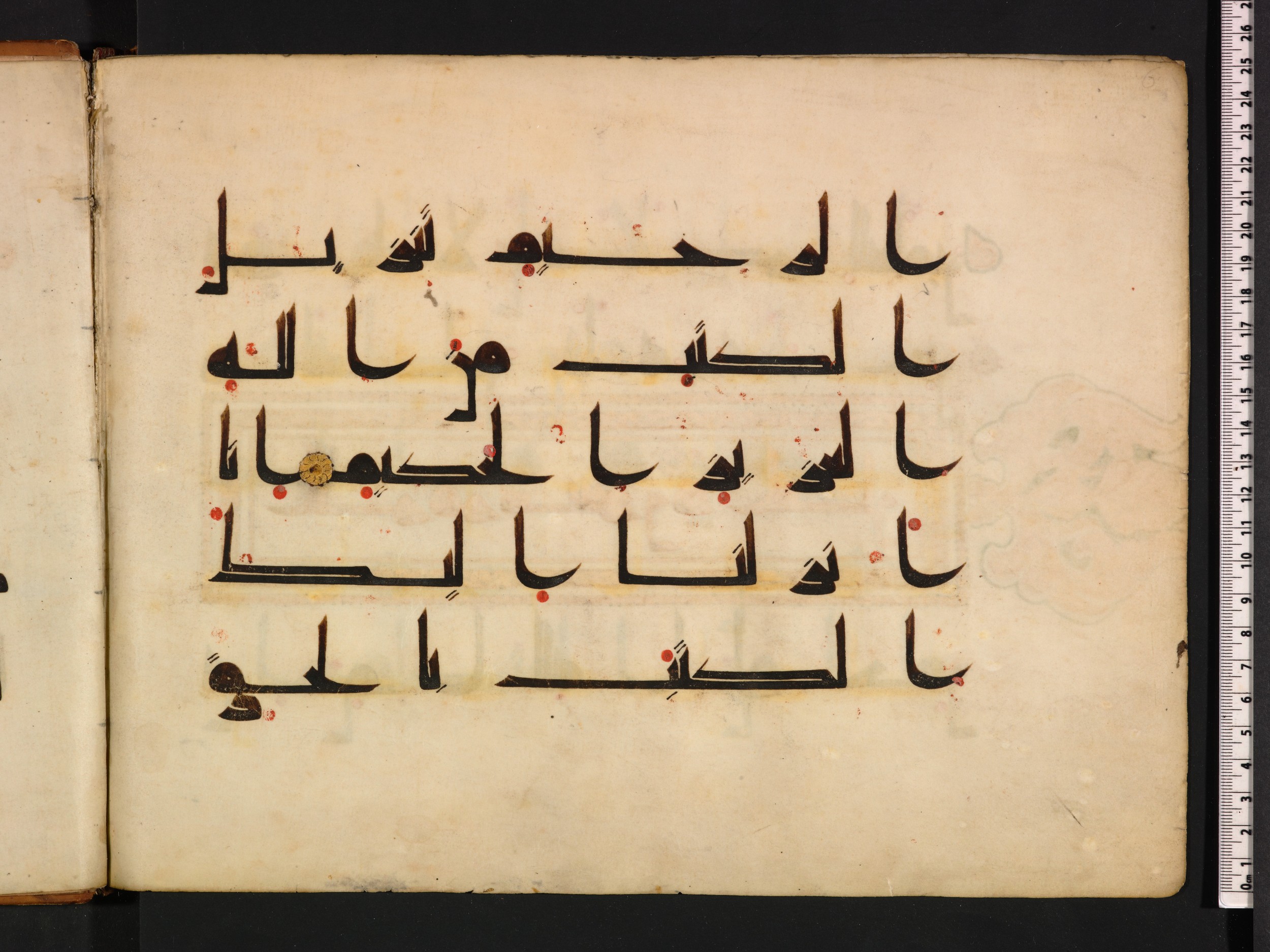
Oxford, Bodleian Library (Oxford University), Marsh 178 (Scan 2)
This manuscript originally belonged to a larger dispersed codex and features five lines of text per page in the distinctive Kufic D.I script. It has been extensively digitized and analyzed as part of the Digital Muṣḥaf project by Keith Small.
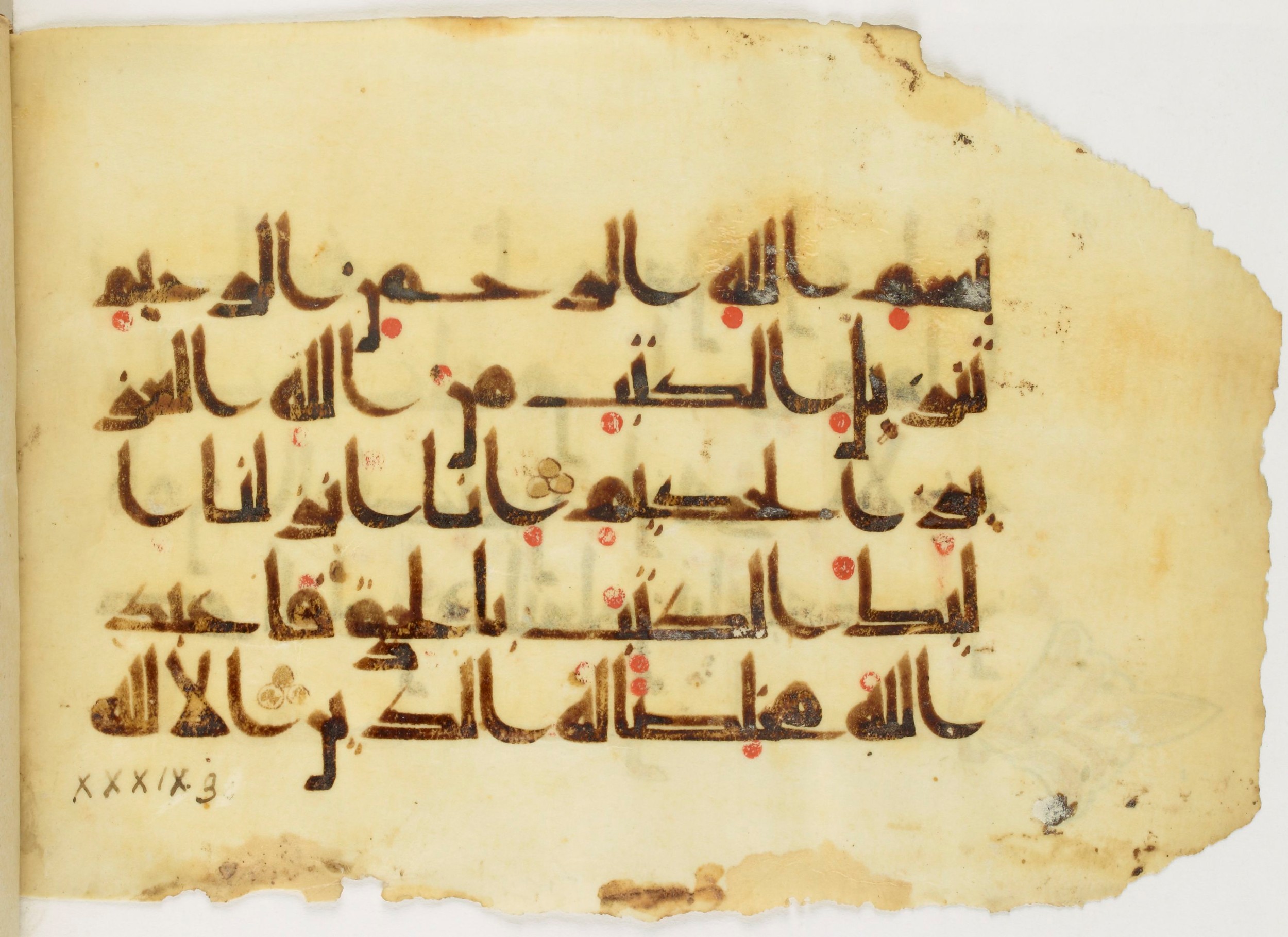
Paris, Bibliothèque nationale de France, Arabe 347 (b)
This manuscript is notable for its rich ornamentation, including golden dot groupings to separate verses and elaborate golden medallions with the names of the tens spelled out in golden characters on a red background.
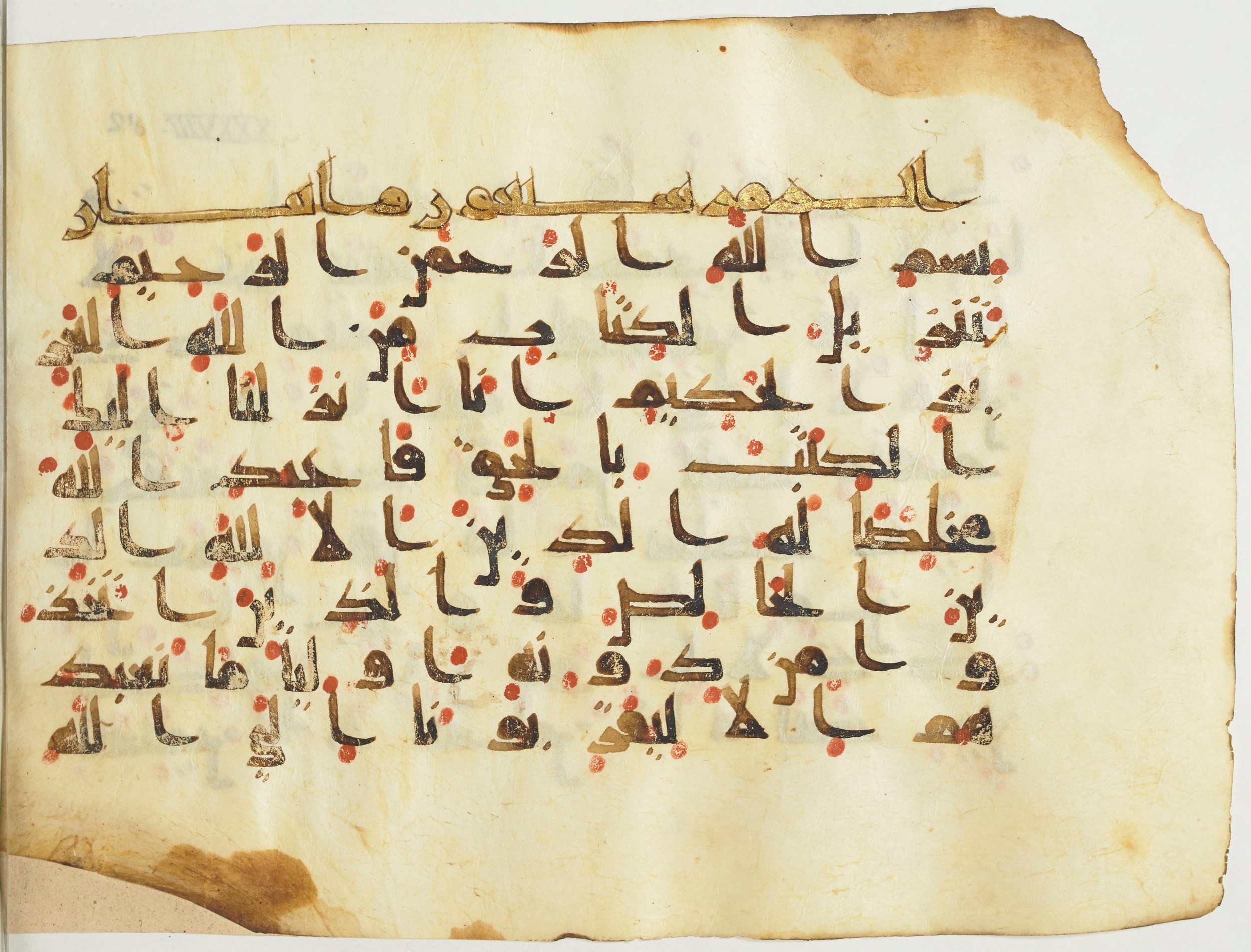
BnF Arabe 376 (a)
This early Quranic manuscript, held in the Bibliothèque nationale de France, features elegant golden Kufic hāʾ letters marking groups of five verses and detailed medallions for groups of ten. It is an important example of early Kufic script (D.I) discovered in Fustat, reflecting the artistic developments in Quranic production of its era.
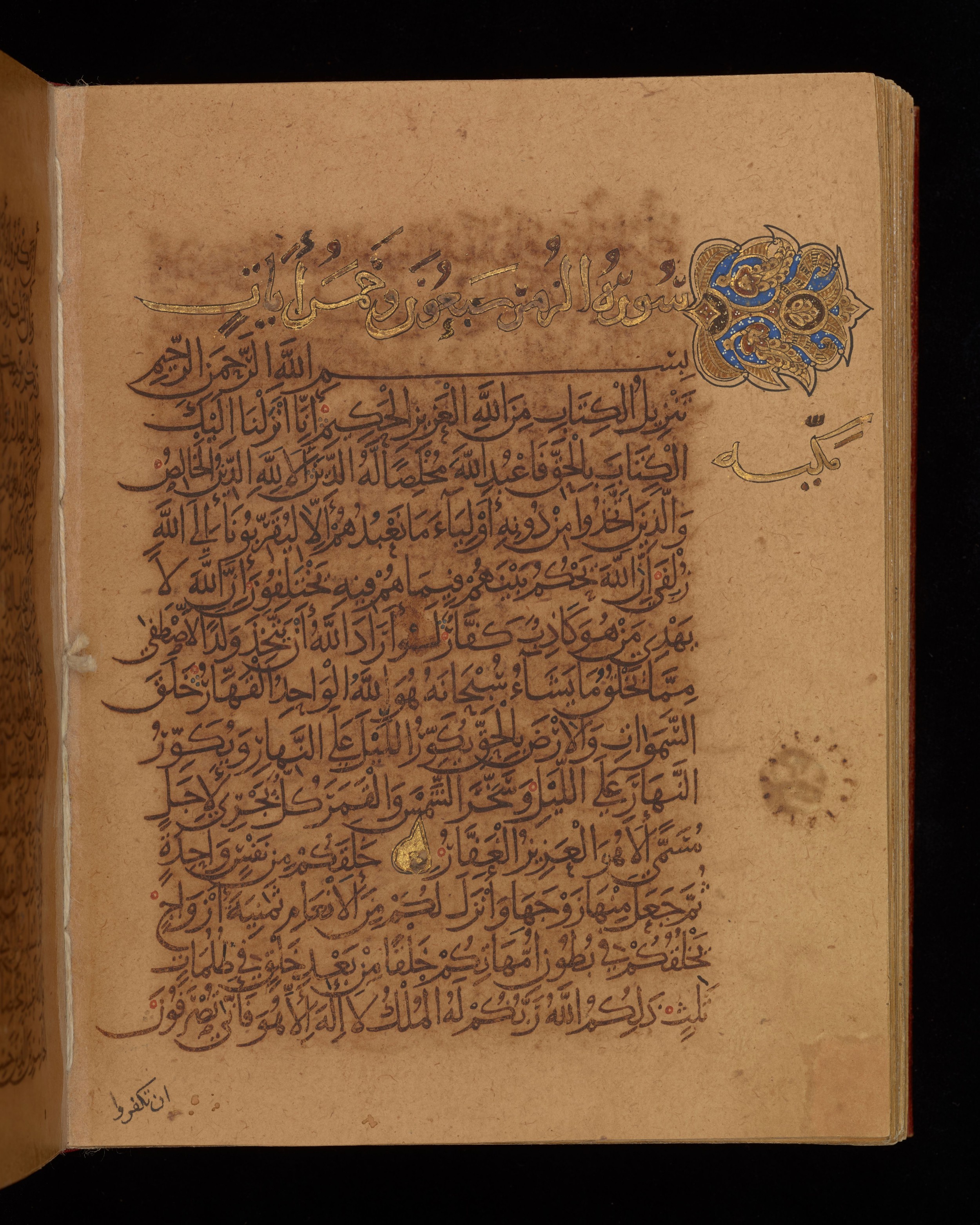
Dublin, Chester Beatty Library, Is 1431
This complete Quran was produced in Baghdad by the renowned calligrapher ʿAlī b. Hilāl, also known as Ibn al-Bawwāb, around 1000-1001 AD. He is a significant figure in Islamic art, closely associated with the adoption of the round Naskh script to transcribe the Quran.