
Surah 42:0
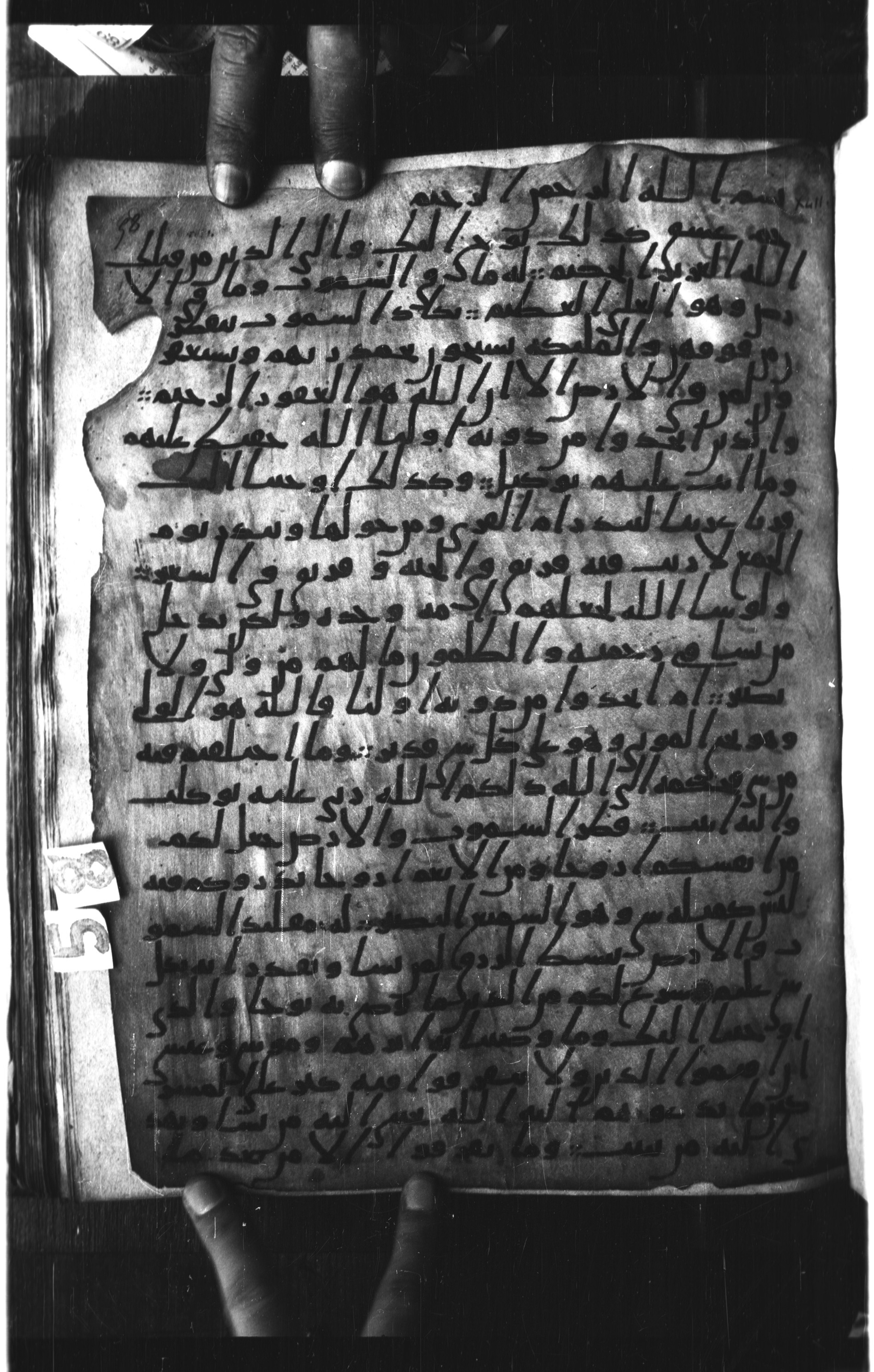
London, The British Library, Or. 2165 (Scan 1)
Considered by Gotthelf Bergsträßer to be the most important representative of the ḥiǧāzī script style due to its extensive size. It features a bold hand with tall, right-leaning hastae that sets it apart from more conventional early Kufic Qurans. Two folios from this same codex are currently preserved at the Dār al-Āṯār al-Islāmiyya in Kuwait.
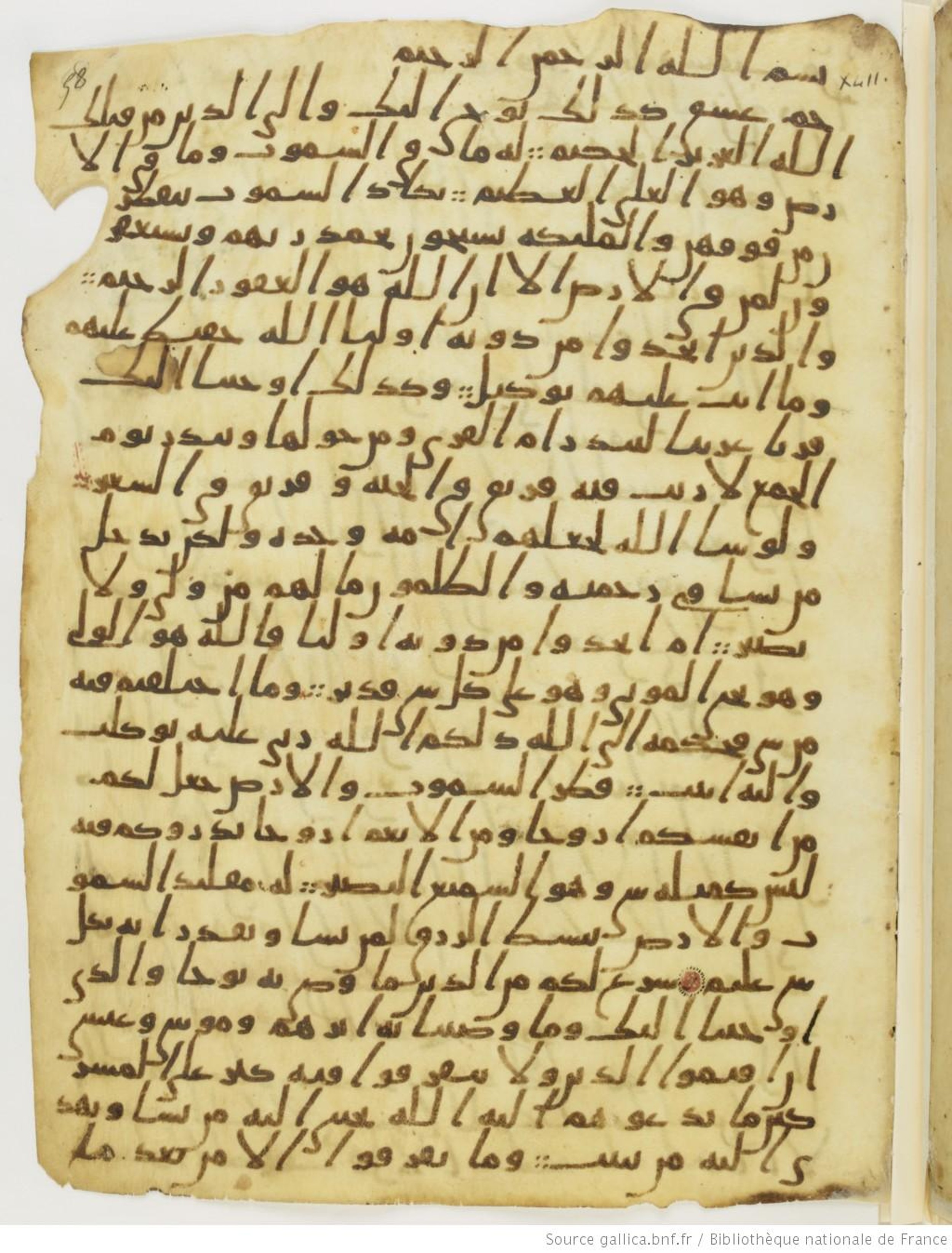
London, The British Library, Or. 2165 (Scan 2)
Considered by Gotthelf Bergsträßer to be the most important representative of the ḥiǧāzī script style due to its extensive size. It features a bold hand with tall, right-leaning hastae that sets it apart from more conventional early Kufic Qurans. Two folios from this same codex are currently preserved at the Dār al-Āṯār al-Islāmiyya in Kuwait.
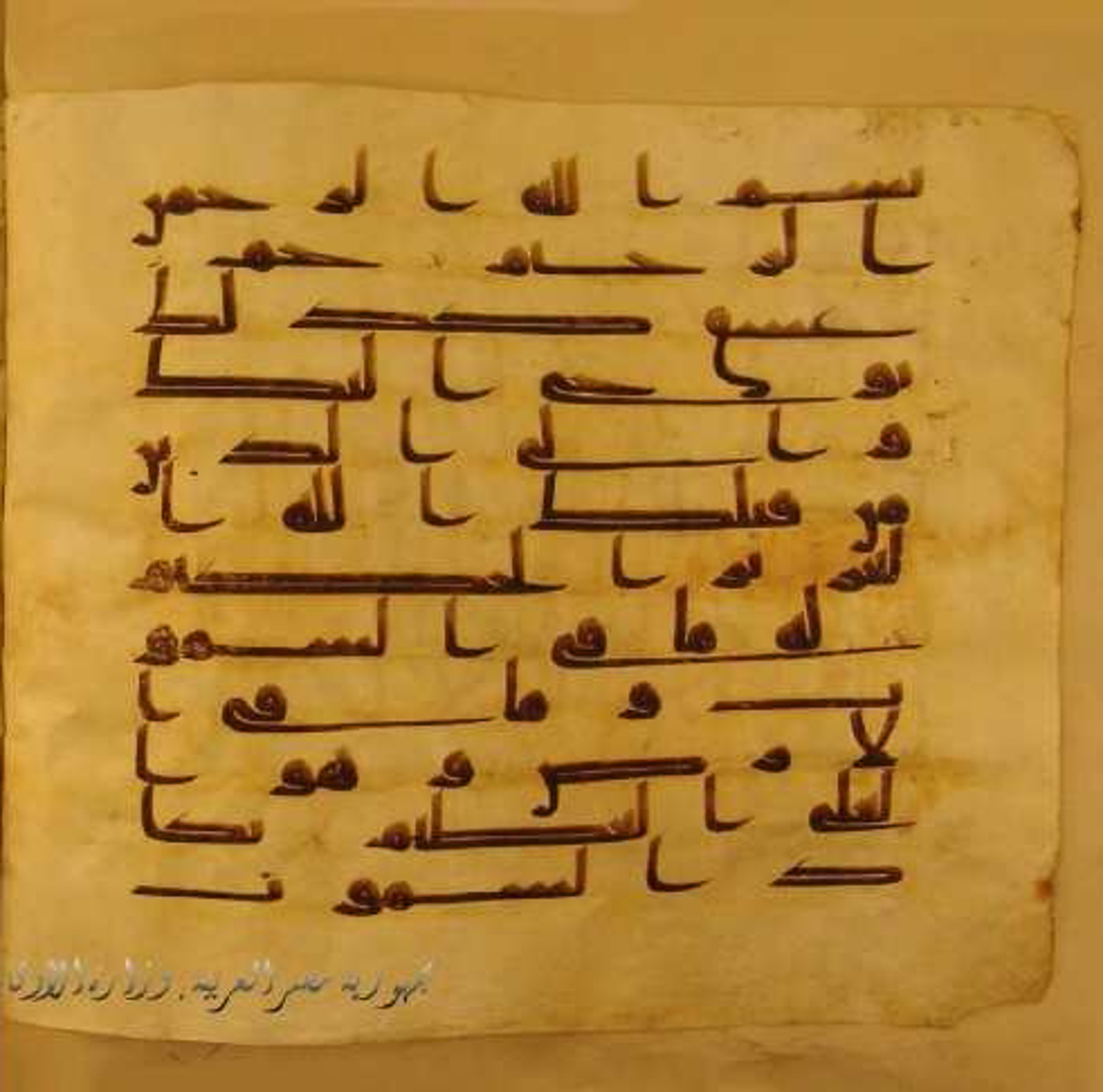
Paris, Bibliothèque nationale de France, Arabe 324 (c)
Carbon dating of fragments from Arabe 324 (c) places its origin between 660-780 AD. The manuscript is part of a composite codex, where Arabe 324 (c) and Gotha Ms. orient. A 462 are original leaves, while other sections such as Arabe 324 (a) and (d) were added centuries later to replace damaged or missing pages.
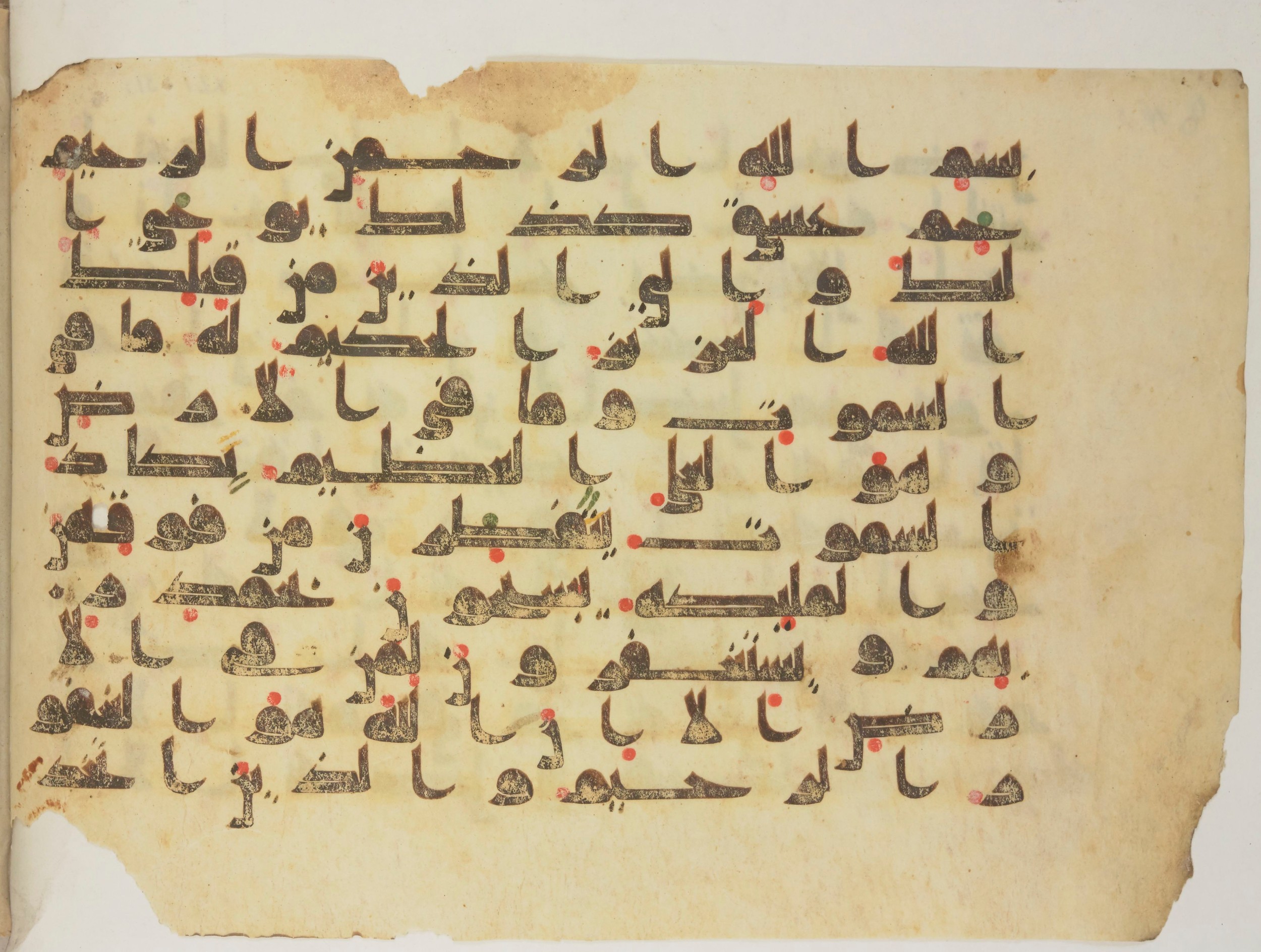
Paris, Bibliothèque nationale de France, Arabe 352 (e)
Originating from Fustat (Old Cairo), this fragment is notable for its marginal markings that indicate the division of the Quran into sevenths, fifths, and tenths to facilitate systematic recitation. The manuscript features a Kufic D.I script with oblique stroke diacritics, red dot vocalization, and golden letters indicating verse groupings.
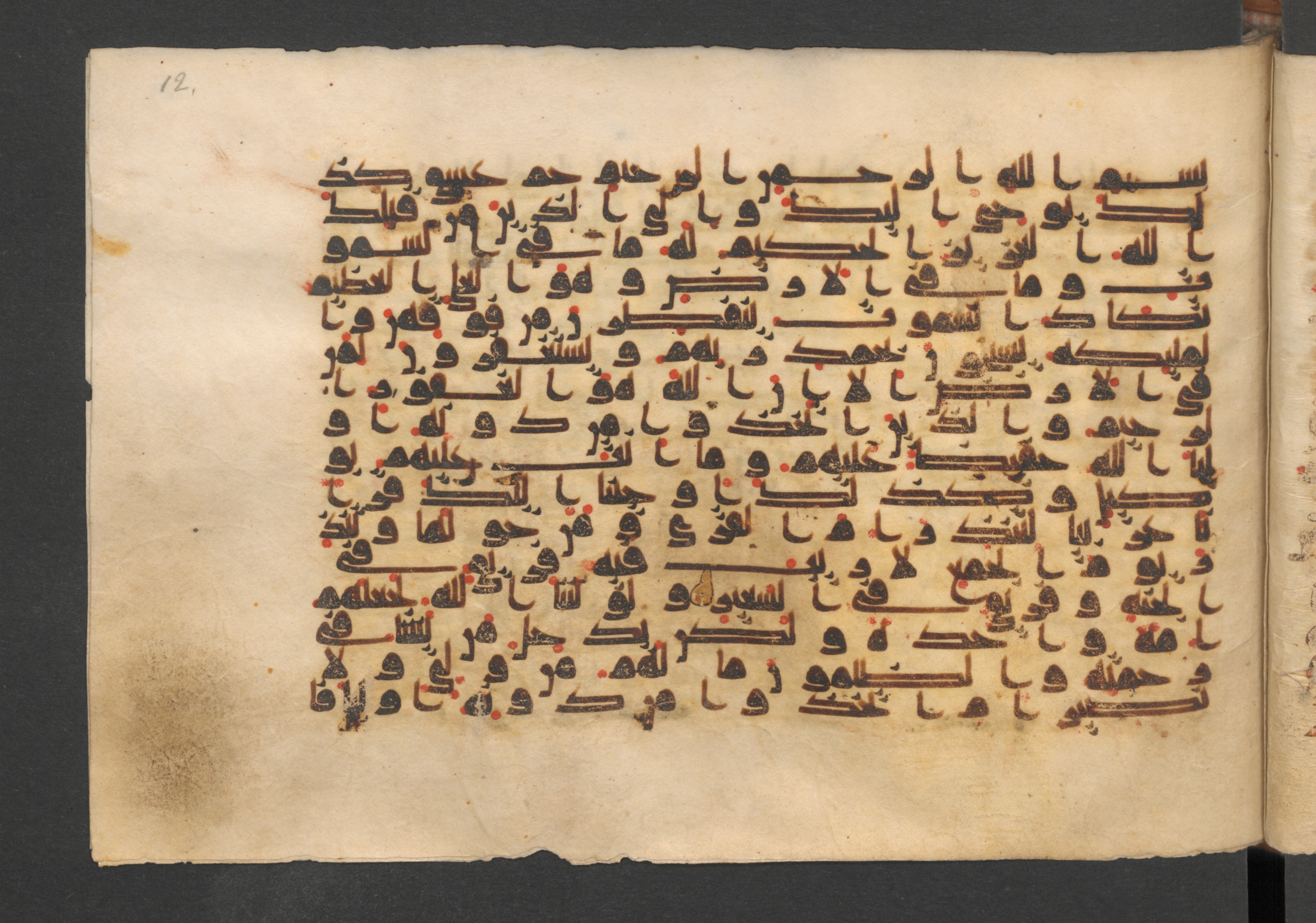
Wetzstein II 1937 (Ahlwardt 353)
This manuscript was part of the collection acquired in Damascus by Johann Gottfried Wetzstein in the 19th century, which significantly enriched the Oriental holdings of the Prussian State Library.
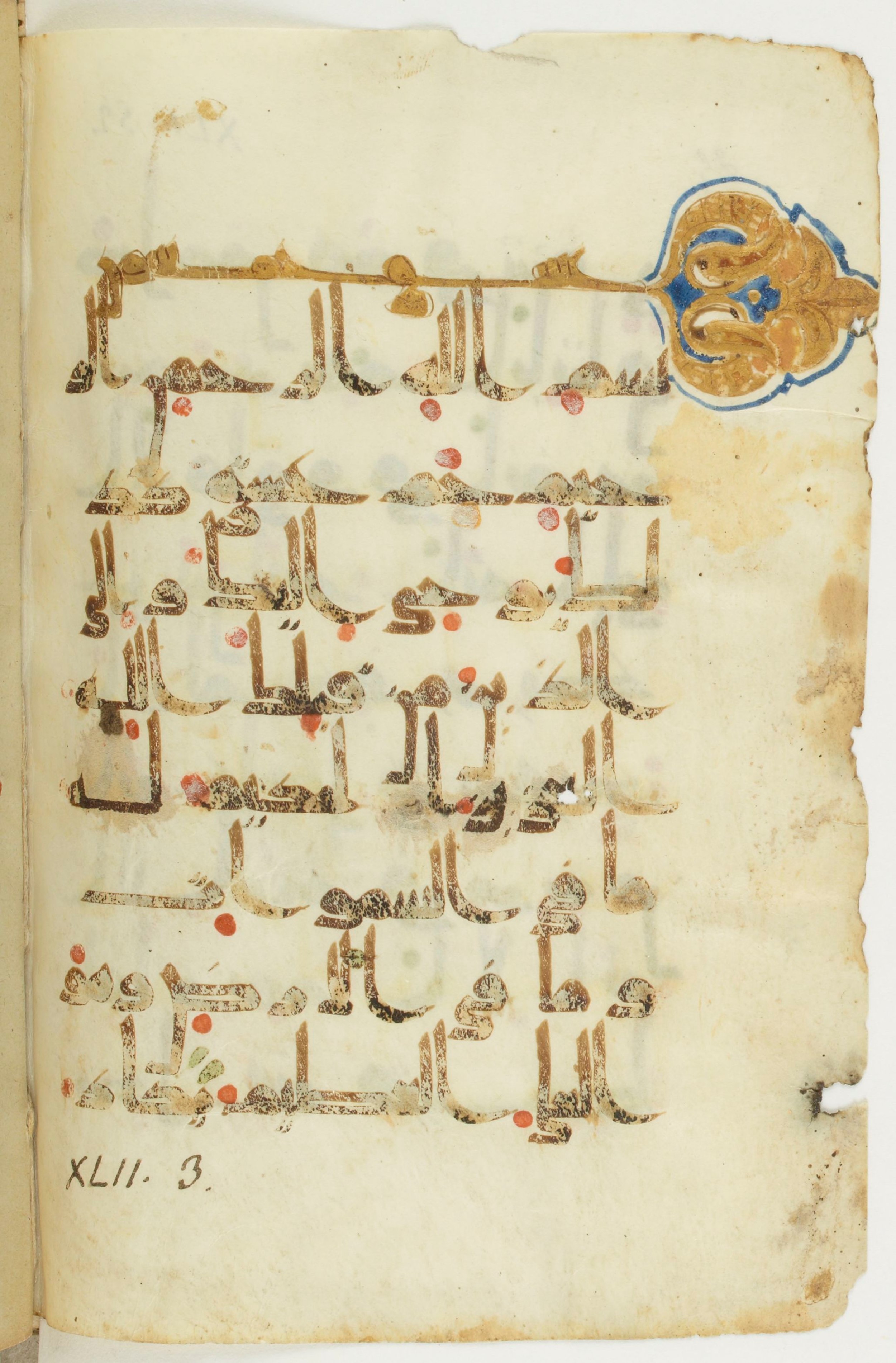
Paris, Bibliothèque nationale de France, Arabe 373 (c)
The manuscript features golden Kufic 'hā'' letters to indicate groups of five verses, and medallions with the decade's name written out in full in the margins to mark groups of ten. The title of Surah 42 and its verse count are written in gold ink alongside a composite vignette.