
Surah 43:0
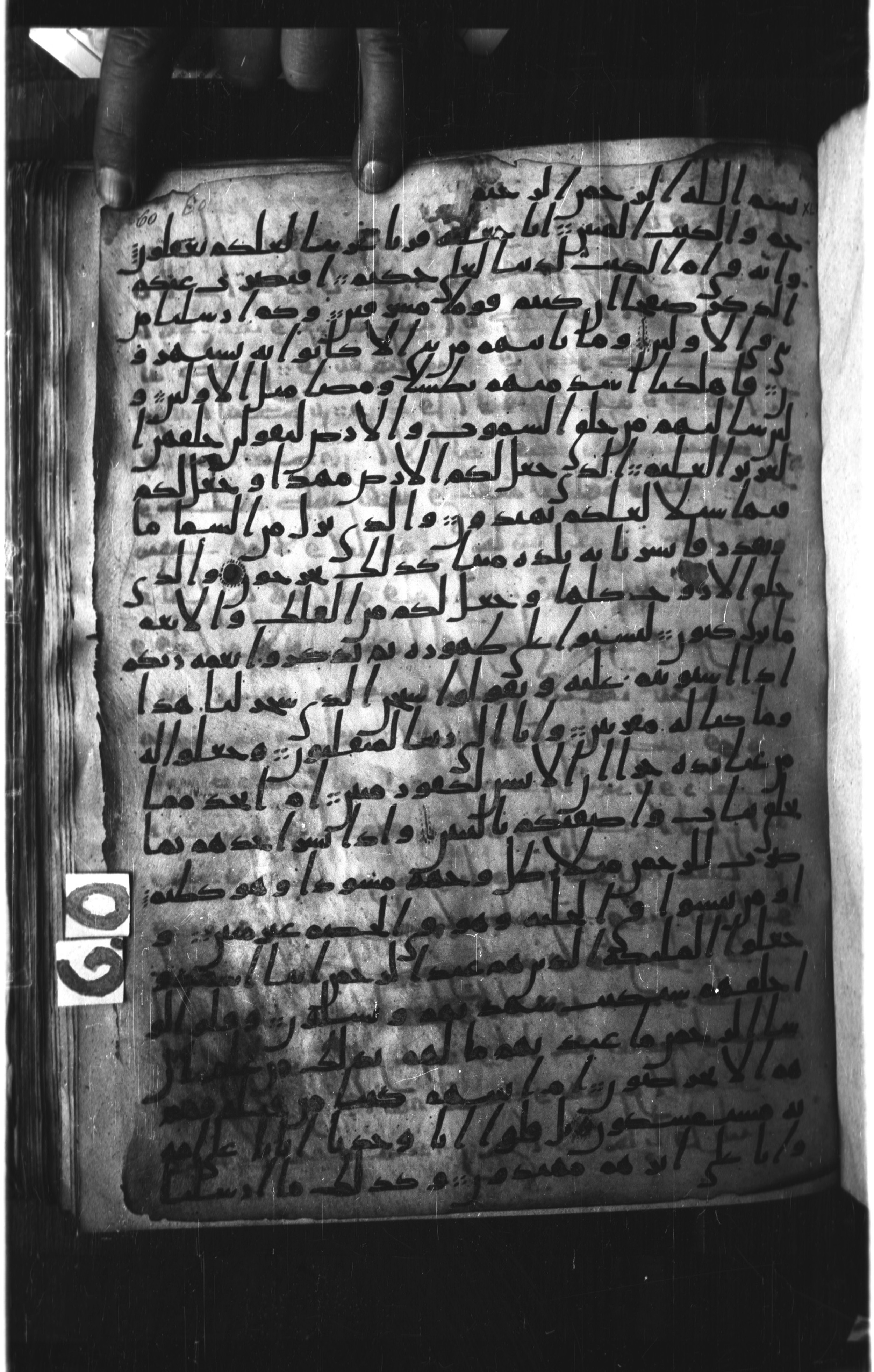
London, The British Library, Or. 2165 (Scan 1)
Considered by Gotthelf Bergsträßer to be the most important representative of the ḥiǧāzī script style due to its extensive size. It features a bold hand with tall, right-leaning hastae that sets it apart from more conventional early Kufic Qurans. Two folios from this same codex are currently preserved at the Dār al-Āṯār al-Islāmiyya in Kuwait.
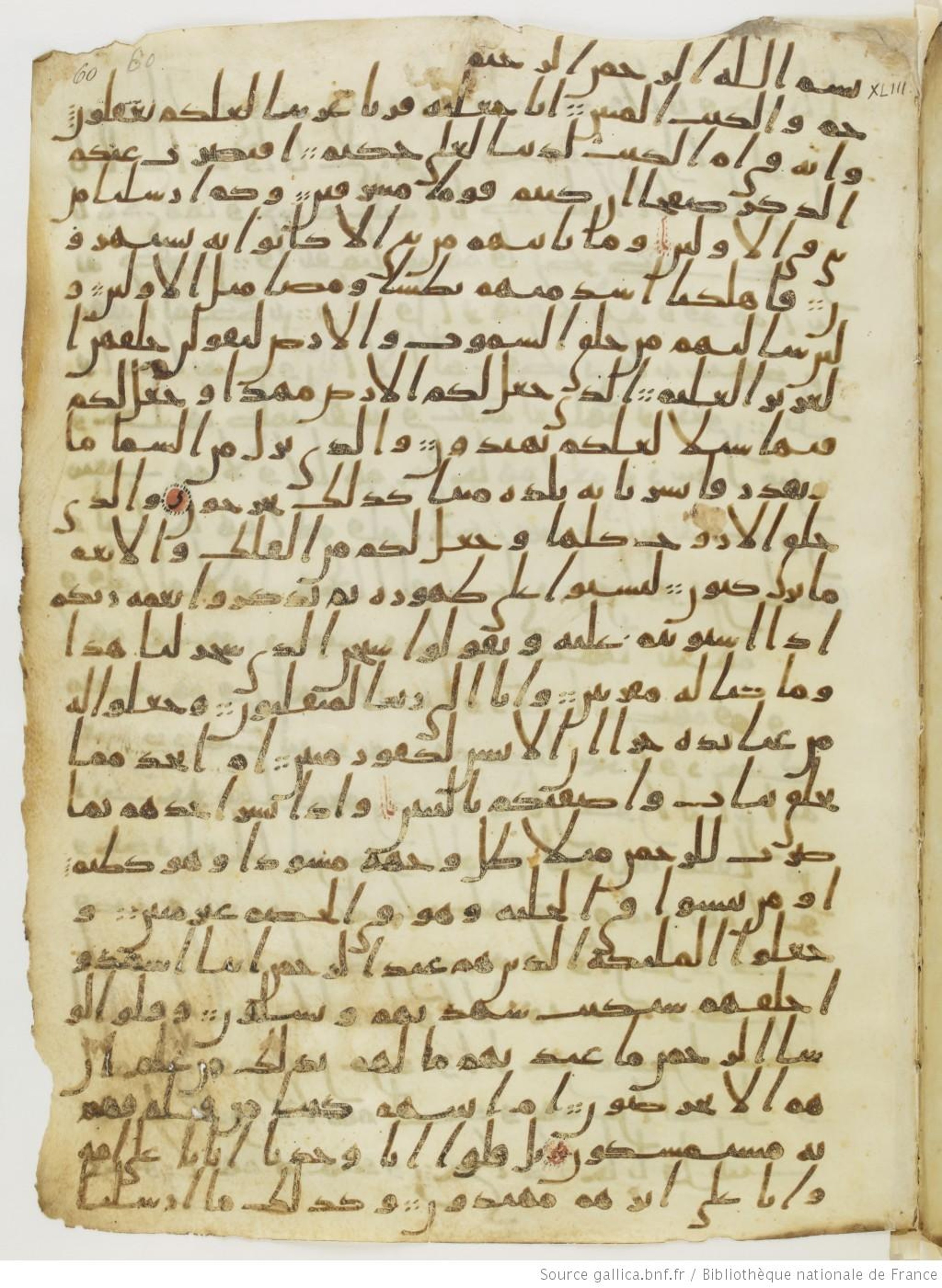
London, The British Library, Or. 2165 (Scan 2)
Considered by Gotthelf Bergsträßer to be the most important representative of the ḥiǧāzī script style due to its extensive size. It features a bold hand with tall, right-leaning hastae that sets it apart from more conventional early Kufic Qurans. Two folios from this same codex are currently preserved at the Dār al-Āṯār al-Islāmiyya in Kuwait.
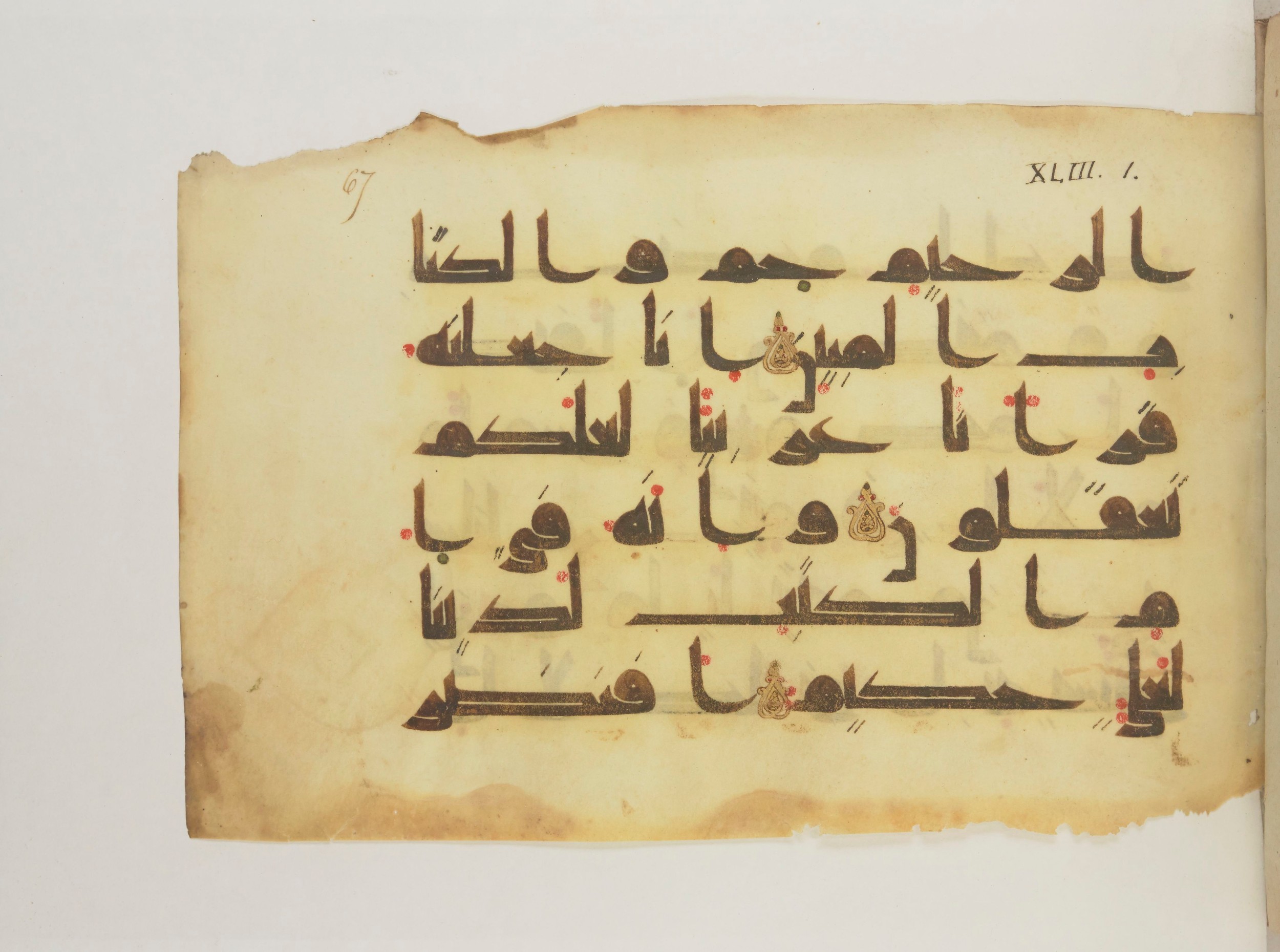
Paris, Bibliothèque nationale de France, Arabe 352 (g)
This fragment was originally part of a larger codex; it belongs together with manuscript Gotha G. 445, whose folio 1r directly follows folio 43v of Arabe 352 (g). The manuscript features tear-shaped decorations to separate verses, with golden 'ha' symbols marking groups of five verses.
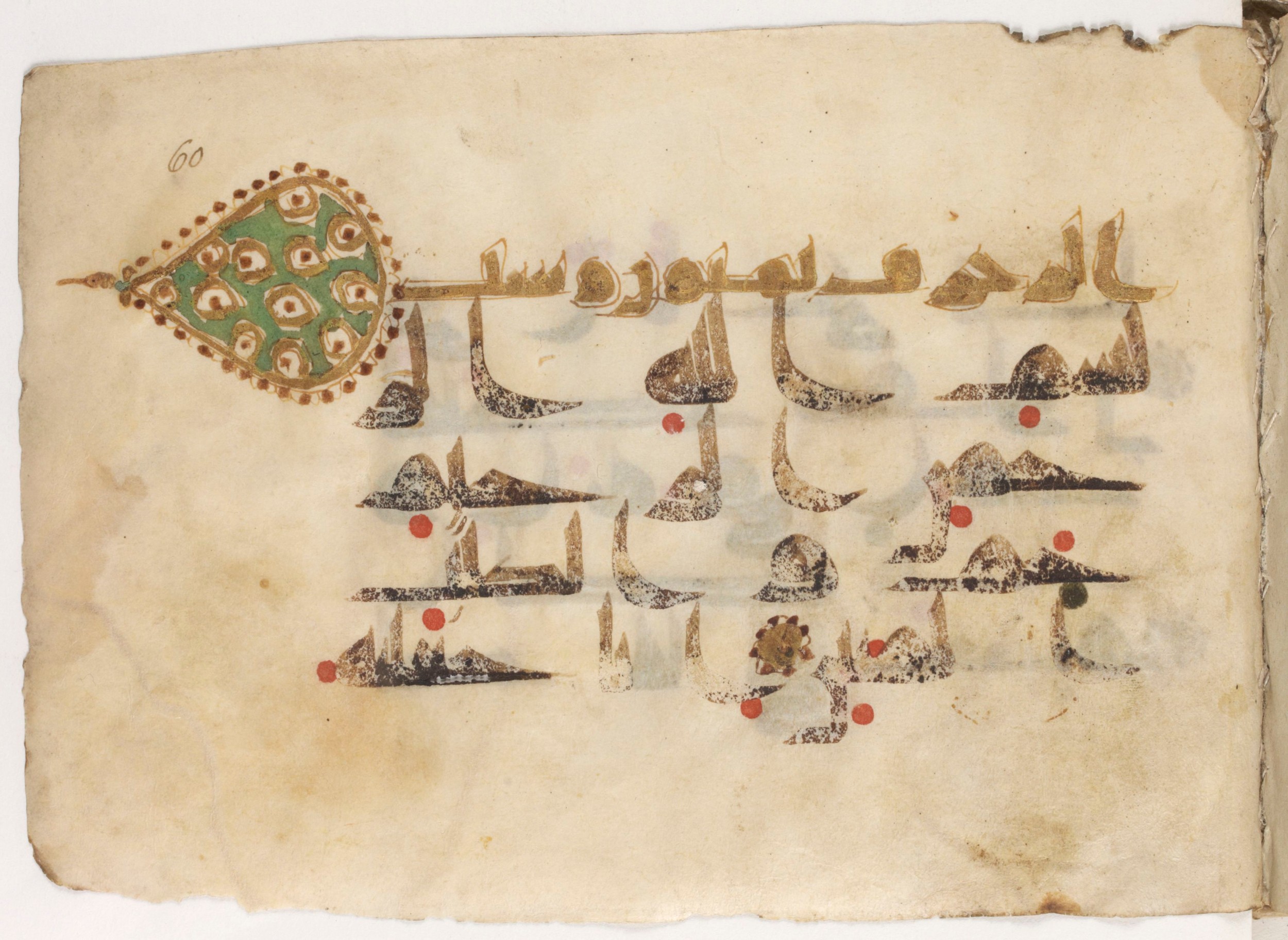
Paris, Bibliothèque nationale de France, Arabe 381 (b)
The manuscript features golden Kufic hāʾ letters signaling groups of five verses, and medallions with the name of the decade written out to mark groups of ten. Surah 43 is notably preceded by its title and verse count in golden ink, accompanied by a lanceolate vignette.
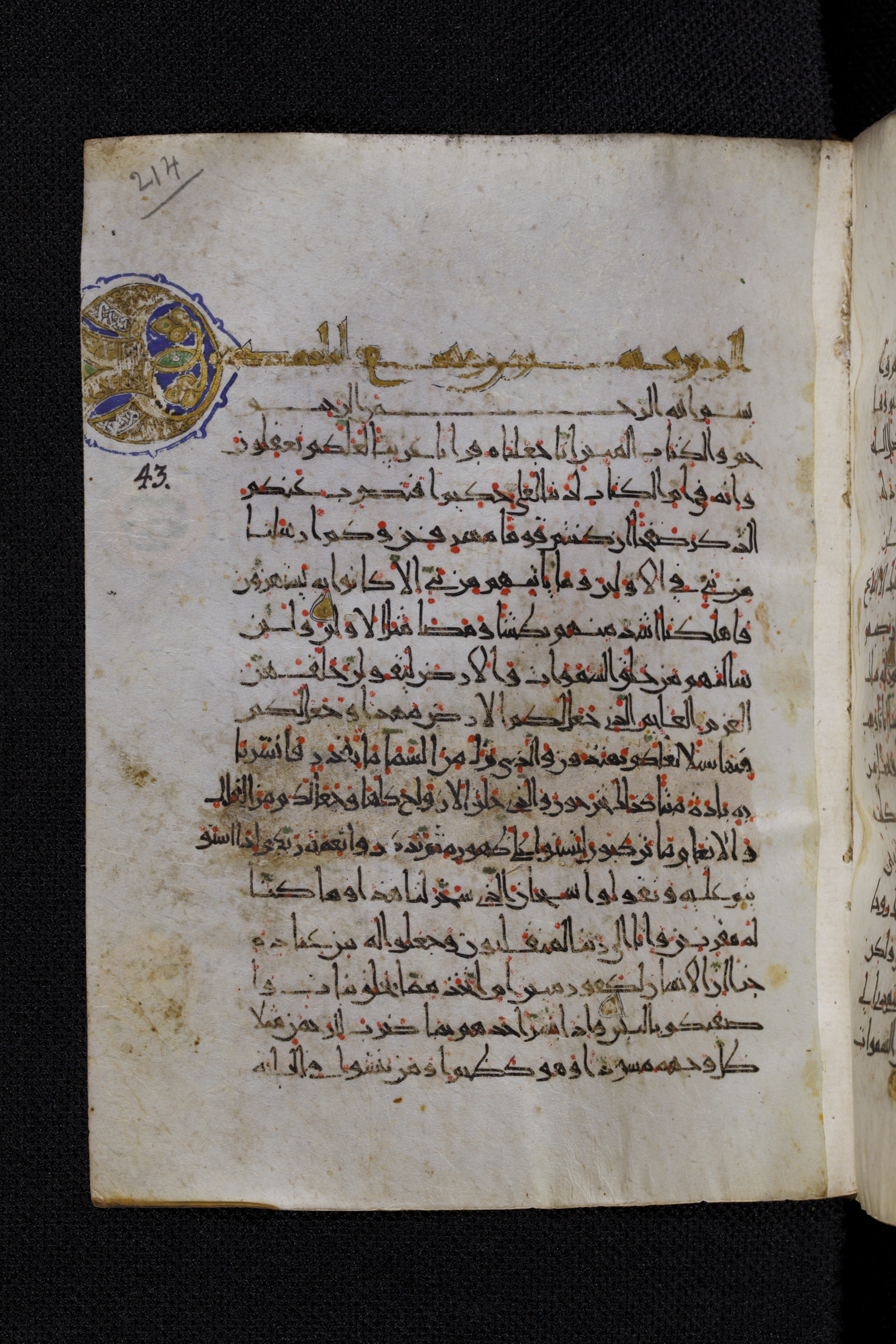
Diez A oct 172
This codex is largely complete, containing the entire Quran, though the first folio and a few other leaves were supplied by a later hand. Written on parchment, the manuscript represents an important transitional stage in the evolution of the Arabic script toward the Maghrebi style. While generally well-preserved, some of the early and late folios exhibit water damage and have been repaired.