
Surah 45:0
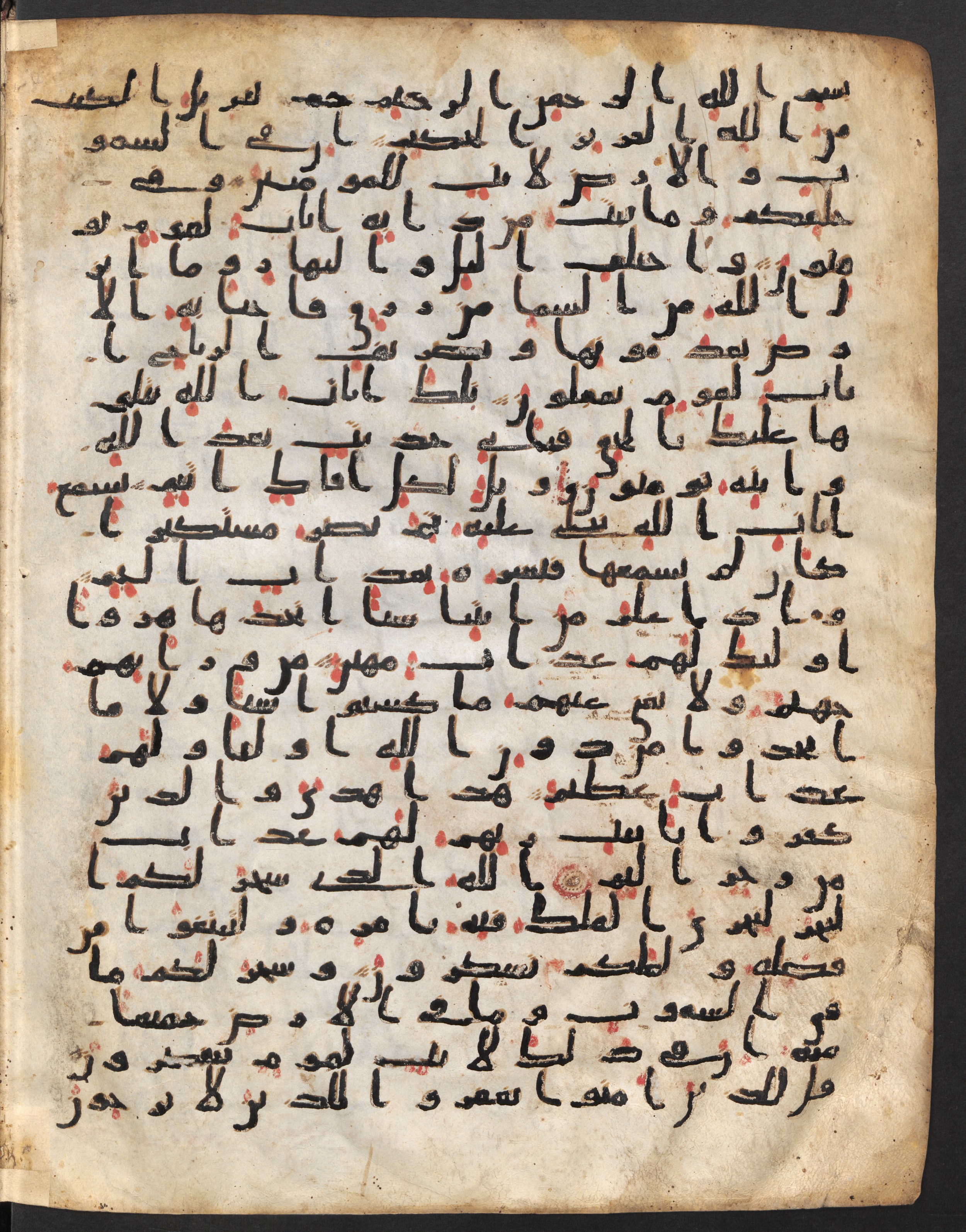
Staatsbibliothek zu Berlin, Ms. or. fol. 4313
This codex is one of the earliest surviving Quranic manuscripts, with combined radiocarbon dating of its parchment placing its production between 605 and 651 AD. The seven folios in Berlin were once part of a larger codex that is now split, with 33 additional folios currently held in the Egyptian National Library. The Berlin leaves were acquired in 1939 from the estate of Bernhard Moritz, the former director of the Khedivial Library.
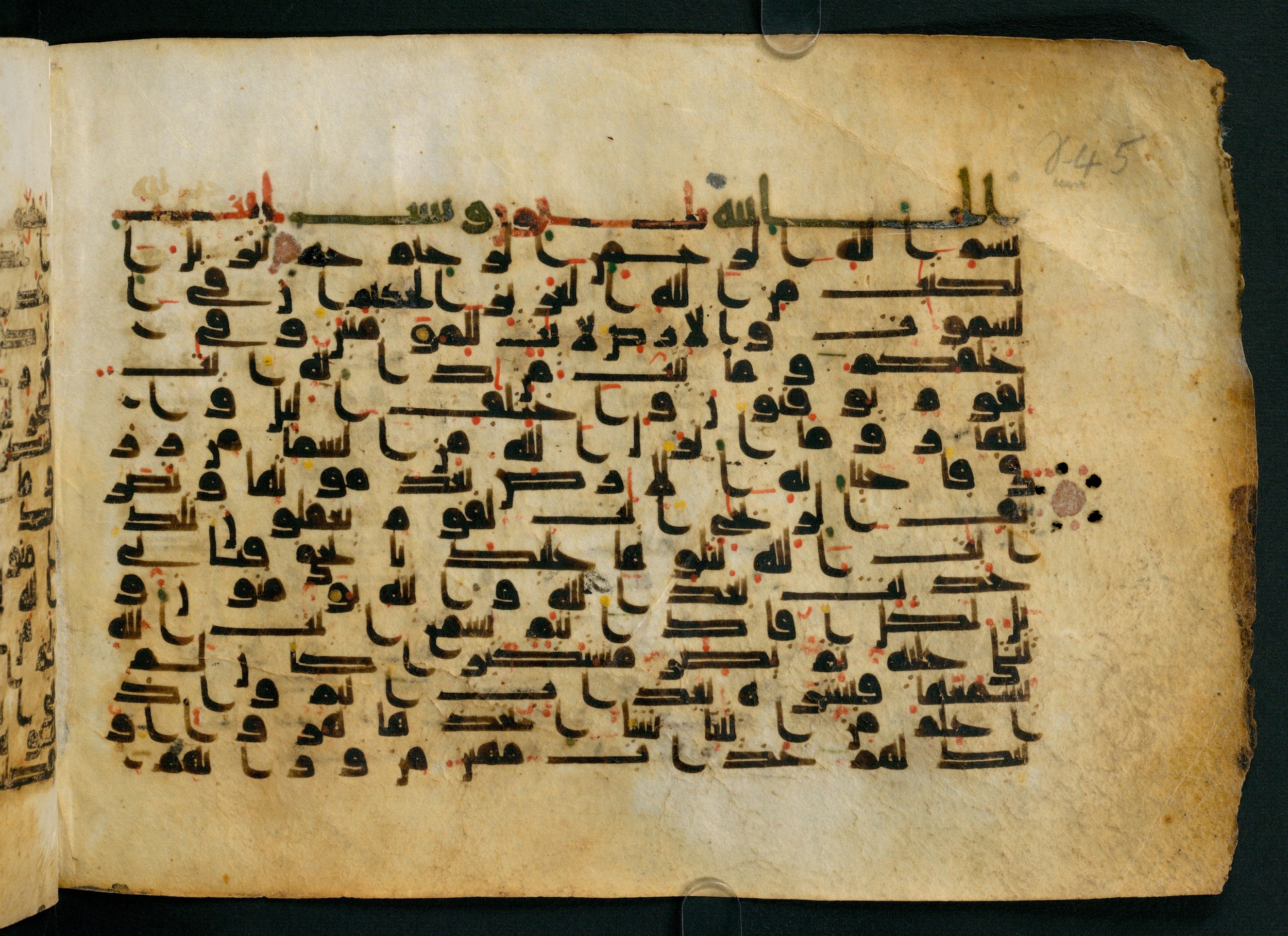
Cairo, Khedivial Library, Moritz 1905, table 31-36
The physical manuscript is currently lost and its origin is unknown; it survives today only through six photographs published in Bernhard Moritz's monumental 1905 album 'Arabic Palaeography'.
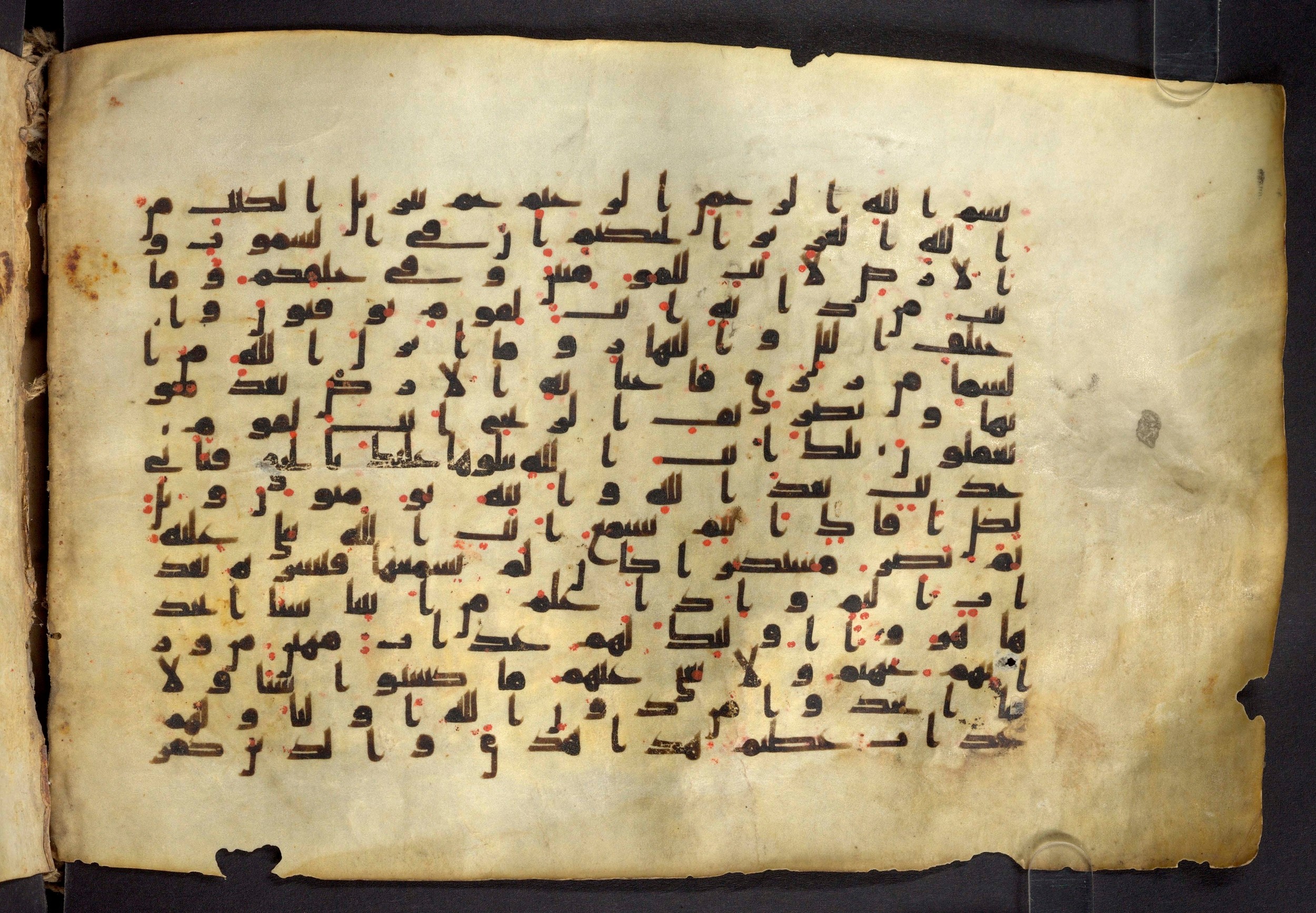
Moritz 1905, Tables 39-40
This codex fragment was documented in Bernhard Moritz's 1905 'Arabic Palaeography' album and was reportedly discovered in the ancient Egyptian city of Bahnasa (Oxyrynchos). Scholars suggest it may originally belong to the same large codex as other early Quranic fragments currently held in the Vatican, Paris, and the Khalili Collections.
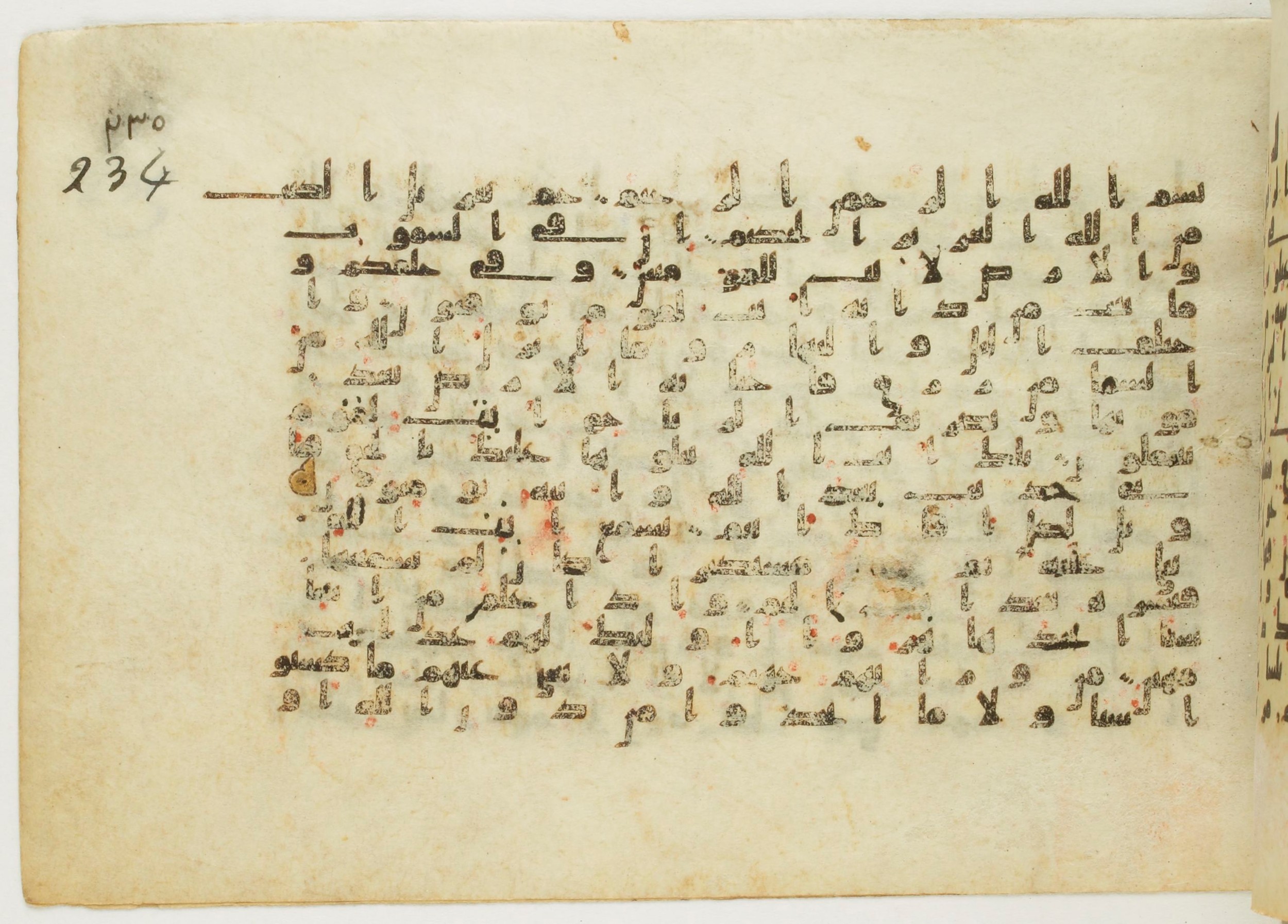
Paris, Bibliothèque nationale de France, Arabe 5122
This nearly complete 8th-century Quranic manuscript is notable for its extensive preservation, containing text from the very beginning of the Quran to its final Surah. Curiously, folio 134 has been reported missing from the French National Library since approximately 2000, and no microfilm image of it survives.
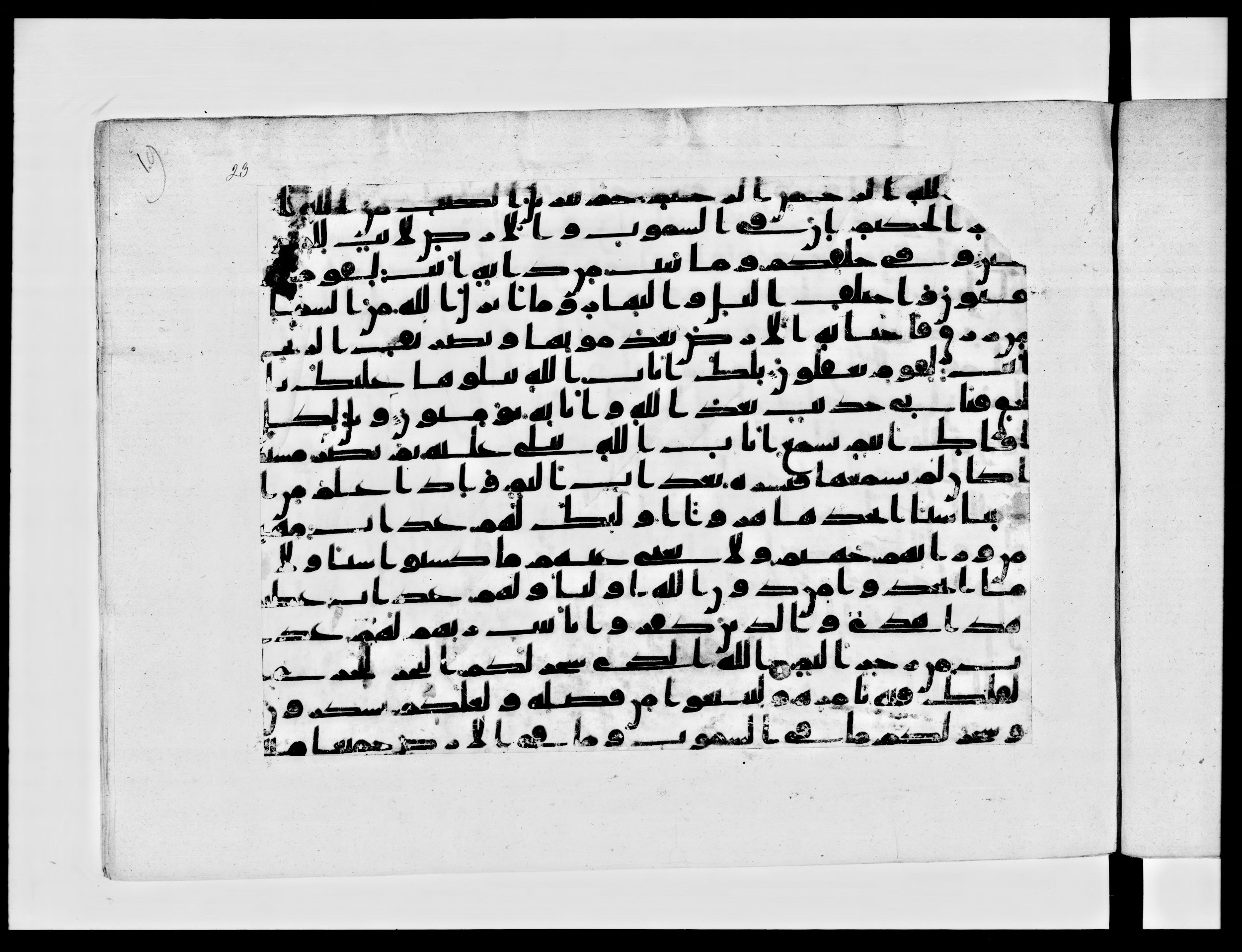
Paris, Bibliothèque nationale de France, Arabe 334 (b) (Scan 1)
This manuscript features elaborate verse separators, using groups of oblique strokes for individual verses, black ink alifs for groups of five, and red circles for groups of ten. The spaces between surahs are decorated with ornamental bands displaying the surah titles and verse counts in red ink. Diacritics are indicated by rare oblique strokes, while vocalization is marked with red dots.
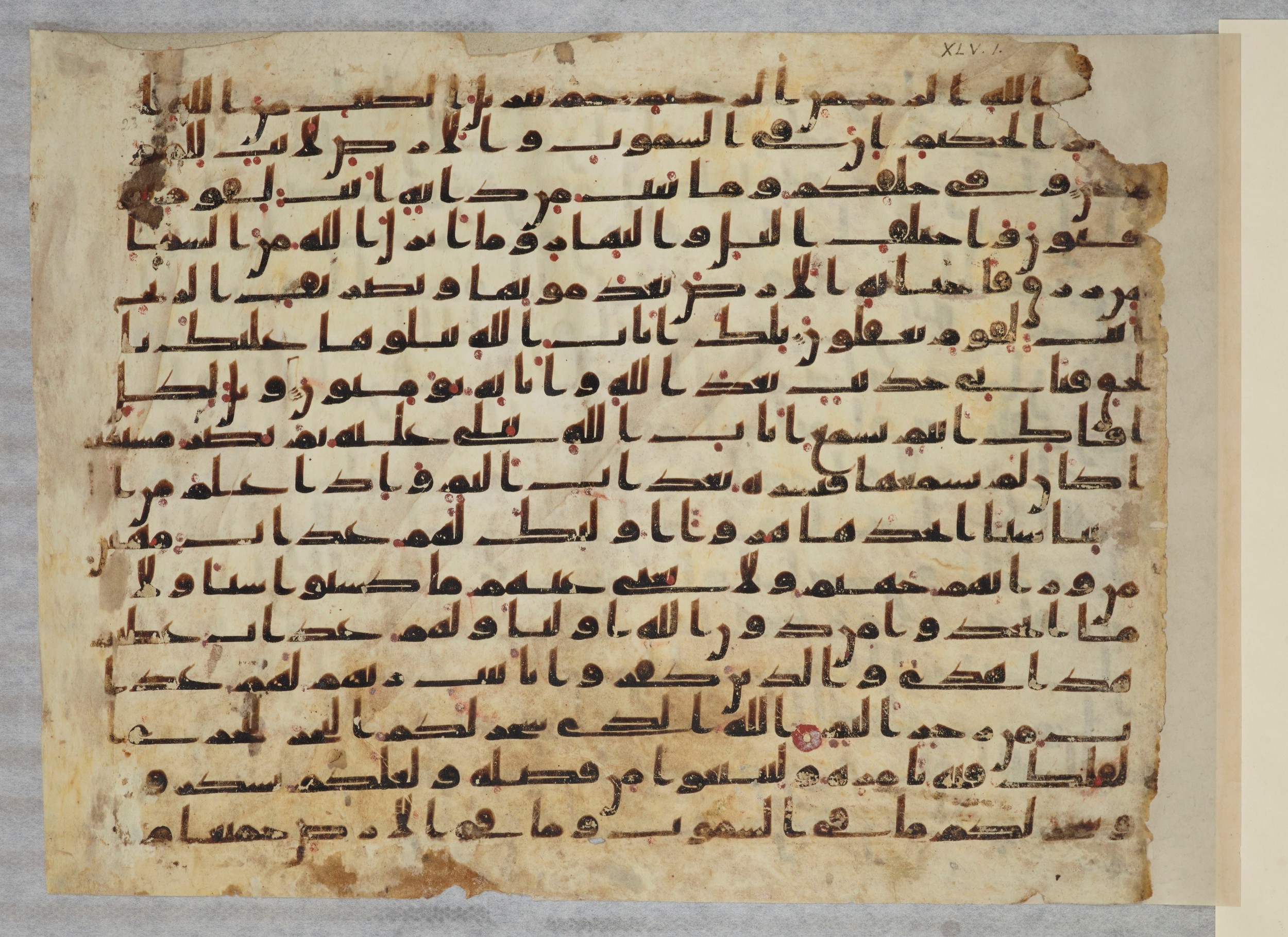
Paris, Bibliothèque nationale de France, Arabe 334 (b) (Scan 2)
This manuscript features elaborate verse separators, using groups of oblique strokes for individual verses, black ink alifs for groups of five, and red circles for groups of ten. The spaces between surahs are decorated with ornamental bands displaying the surah titles and verse counts in red ink. Diacritics are indicated by rare oblique strokes, while vocalization is marked with red dots.
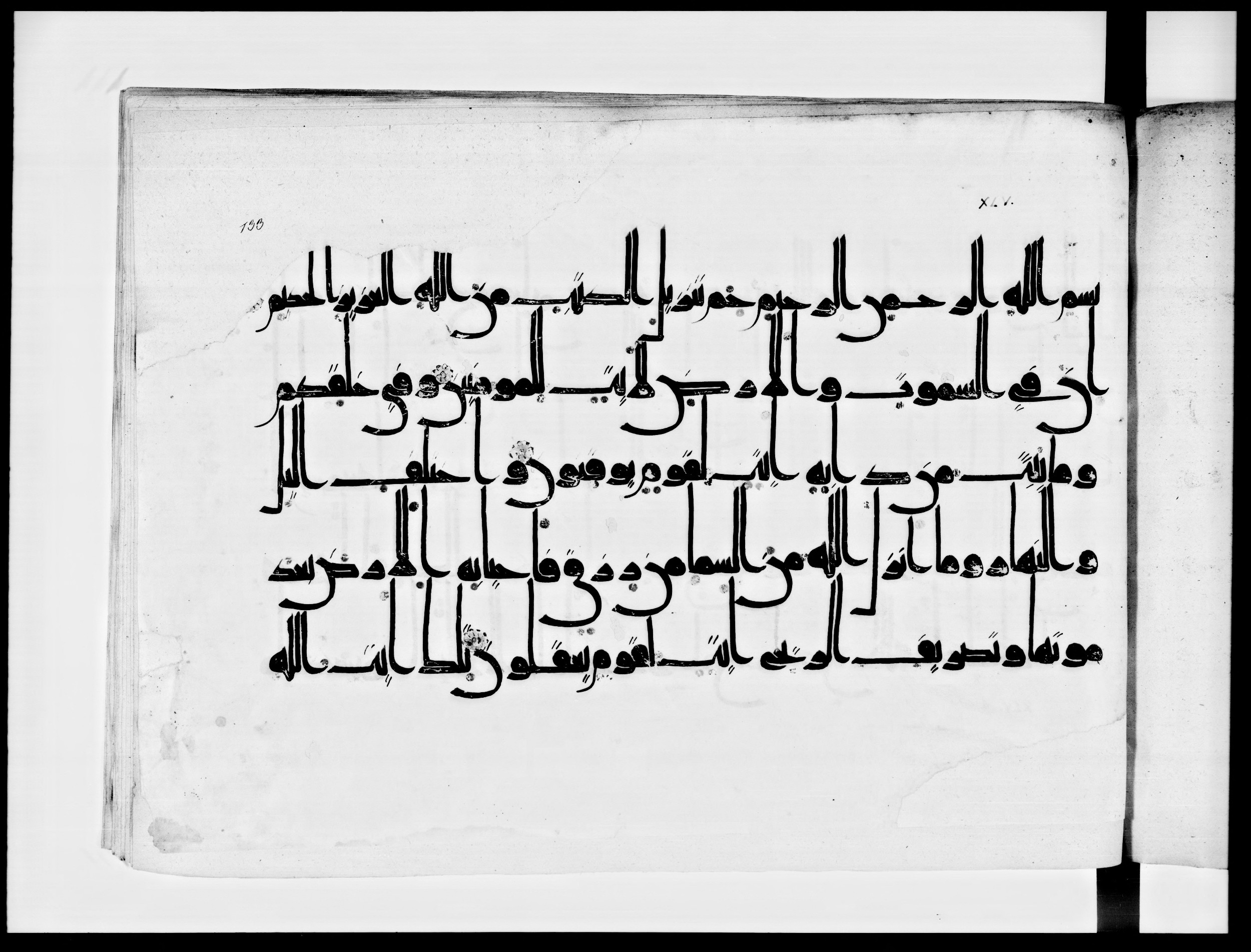
Arabe 334 (j) (Scan 1)
Originally discovered in Fustat (Old Cairo), this fragment is notable for its intricate verse division markers. It employs a golden 'hāʾ' to mark groups of five verses and varied medallion designs containing fully written words for every ten verses.
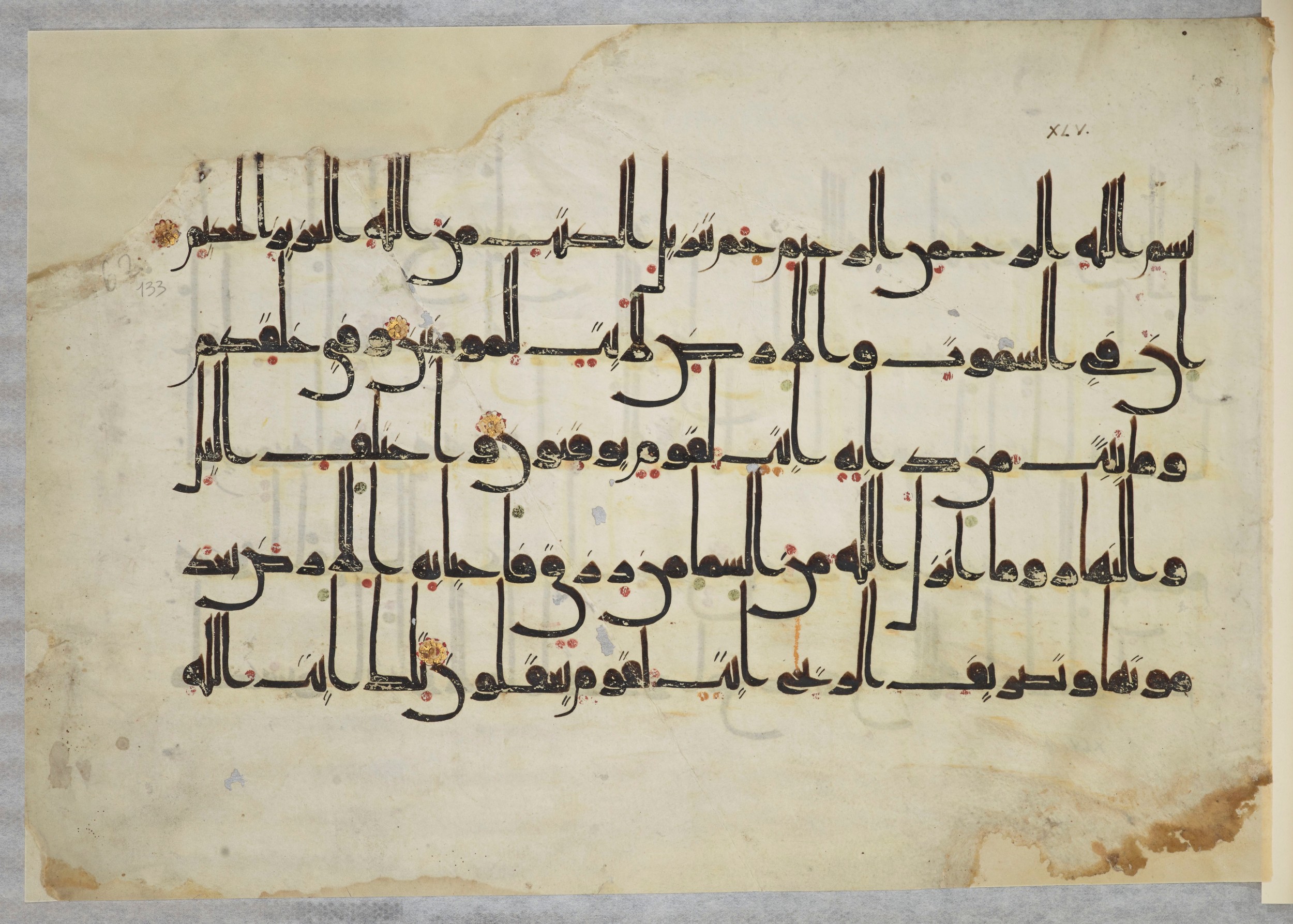
Arabe 334 (j) (Scan 2)
Originally discovered in Fustat (Old Cairo), this fragment is notable for its intricate verse division markers. It employs a golden 'hāʾ' to mark groups of five verses and varied medallion designs containing fully written words for every ten verses.
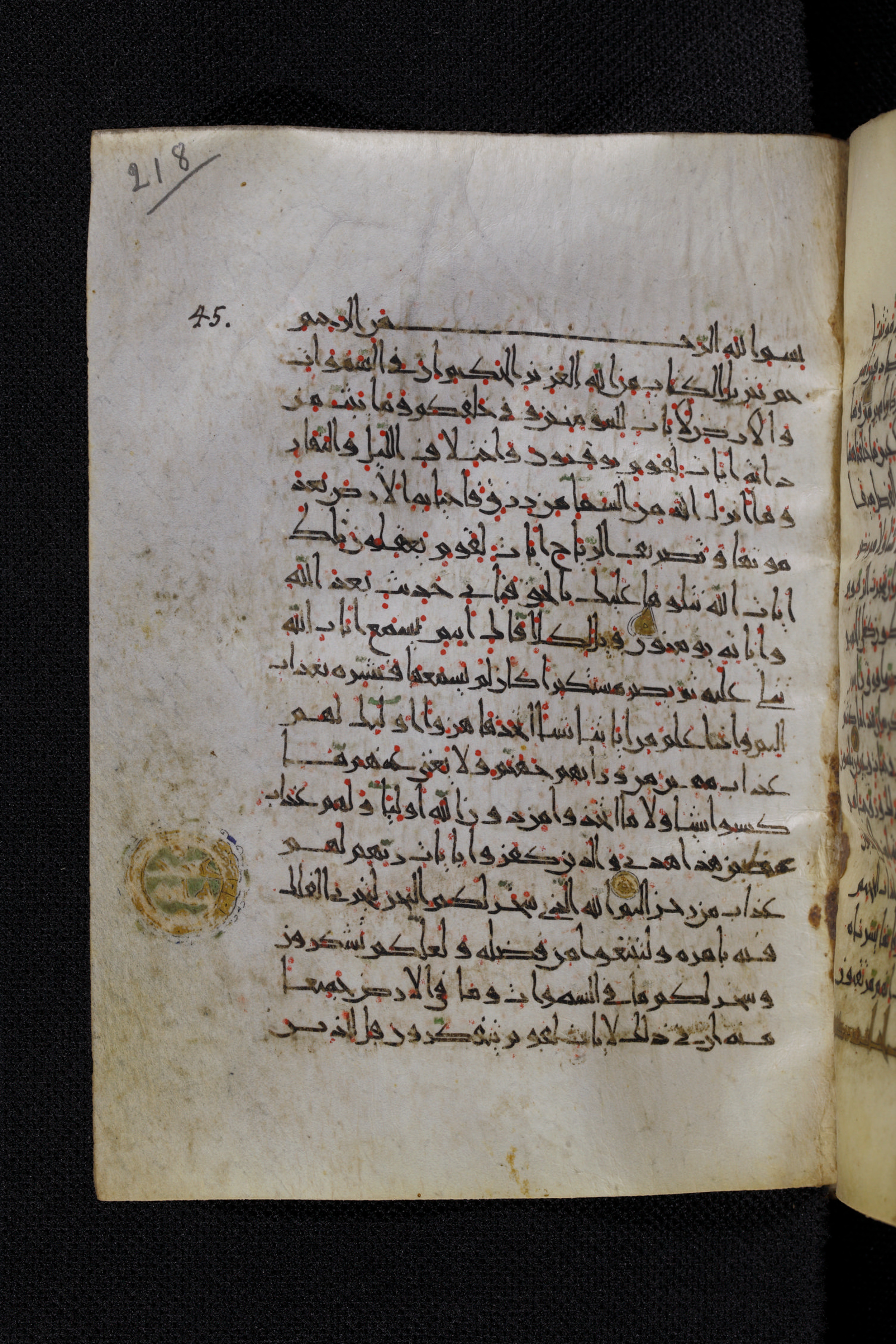
Diez A oct 172
This codex is largely complete, containing the entire Quran, though the first folio and a few other leaves were supplied by a later hand. Written on parchment, the manuscript represents an important transitional stage in the evolution of the Arabic script toward the Maghrebi style. While generally well-preserved, some of the early and late folios exhibit water damage and have been repaired.
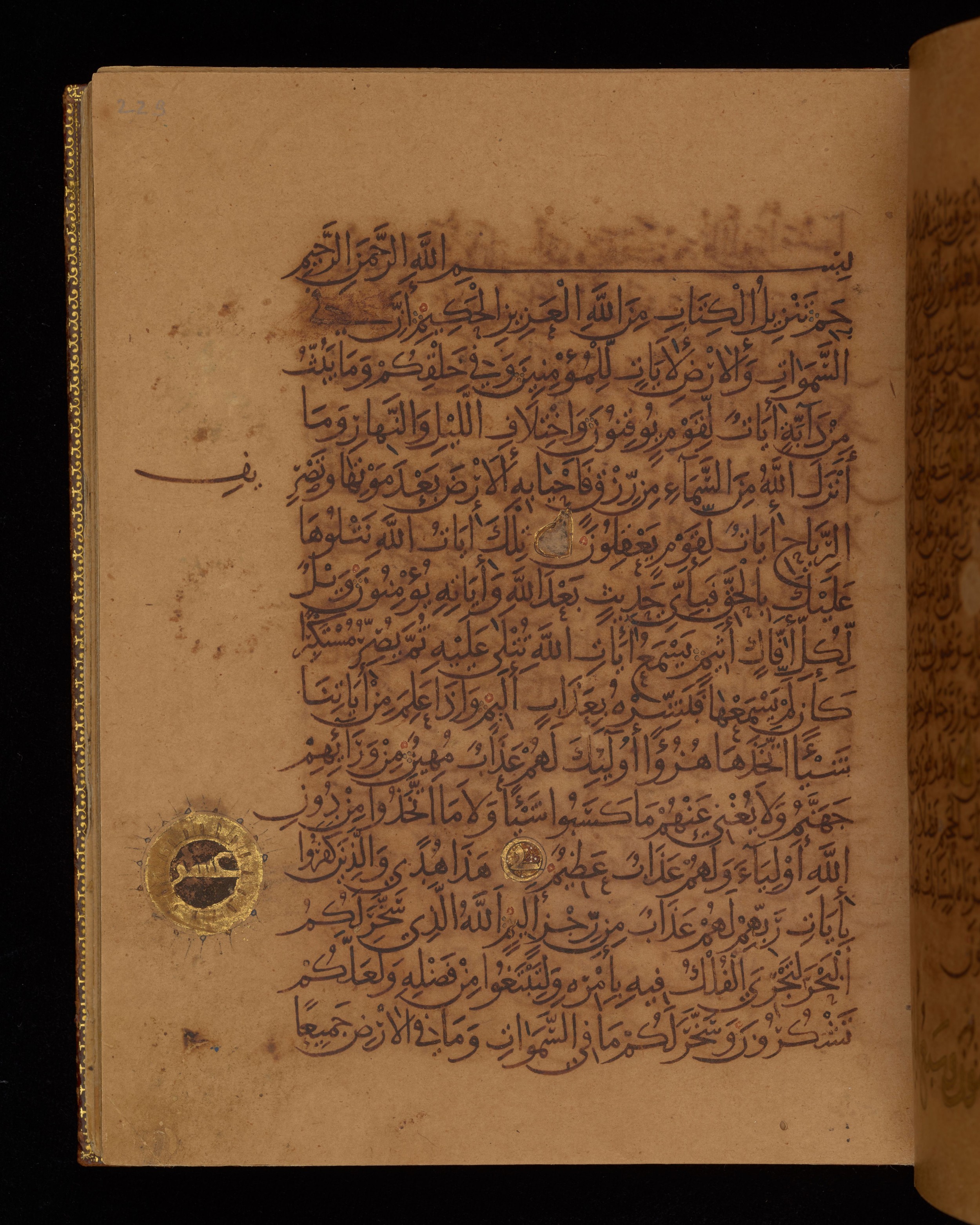
Dublin, Chester Beatty Library, Is 1431
This complete Quran was produced in Baghdad by the renowned calligrapher ʿAlī b. Hilāl, also known as Ibn al-Bawwāb, around 1000-1001 AD. He is a significant figure in Islamic art, closely associated with the adoption of the round Naskh script to transcribe the Quran.