
Surah 48:0
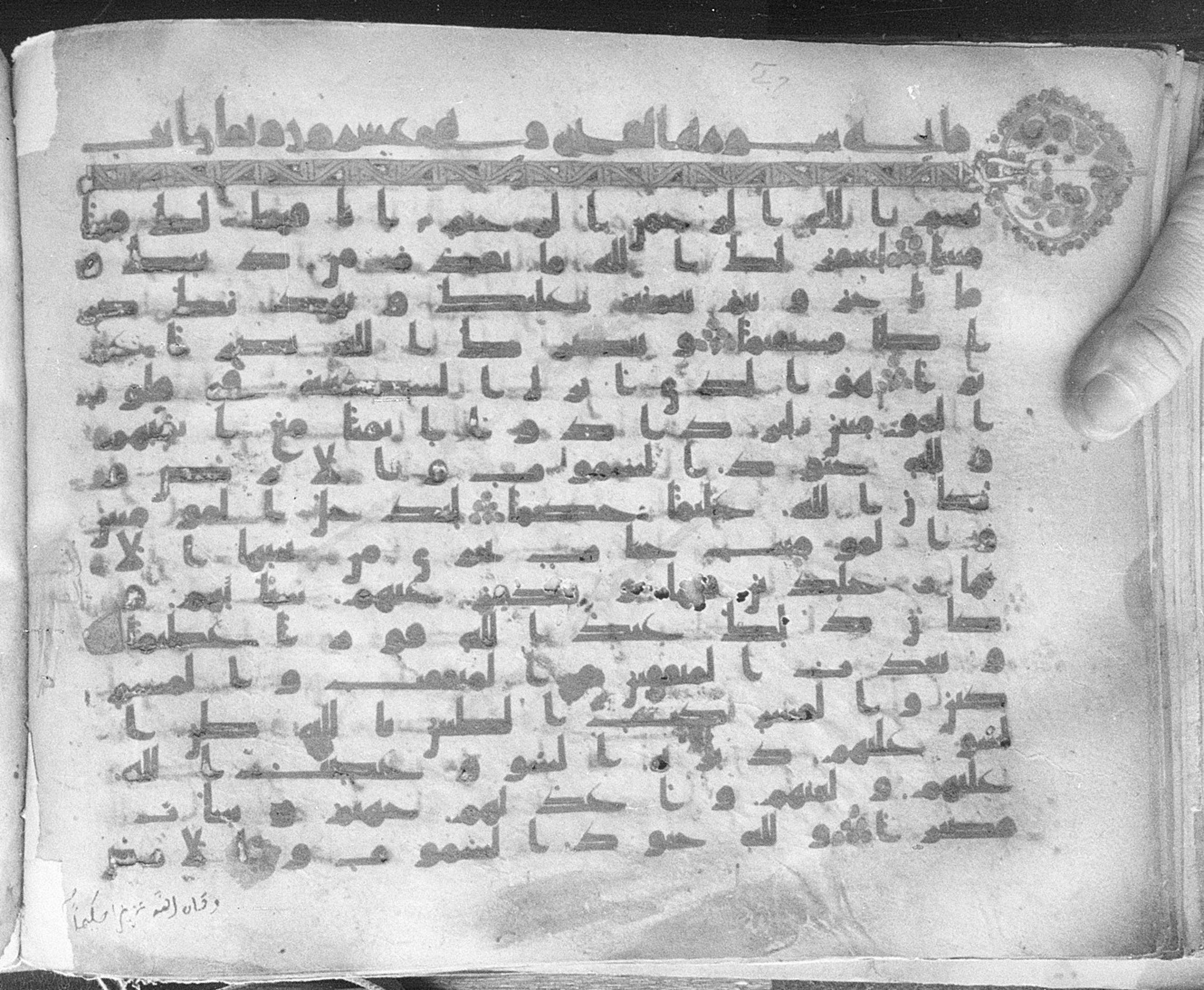
Meknes, Private library of Sherif ʿAbdarraḥmān b. Zīdān, no call number (Scan 1)
This nearly complete early Kufic Quran was photographed by Otto Pretzl during a research trip to Morocco in 1934. While the main body belonged to the private library of Sherif ʿAbdarraḥmān b. Zīdān, fragments of this codex have since been dispersed to the Royal Library in Rabat, the Tareq Rajab Museum in Kuwait, and sold through auction houses like Christie's.
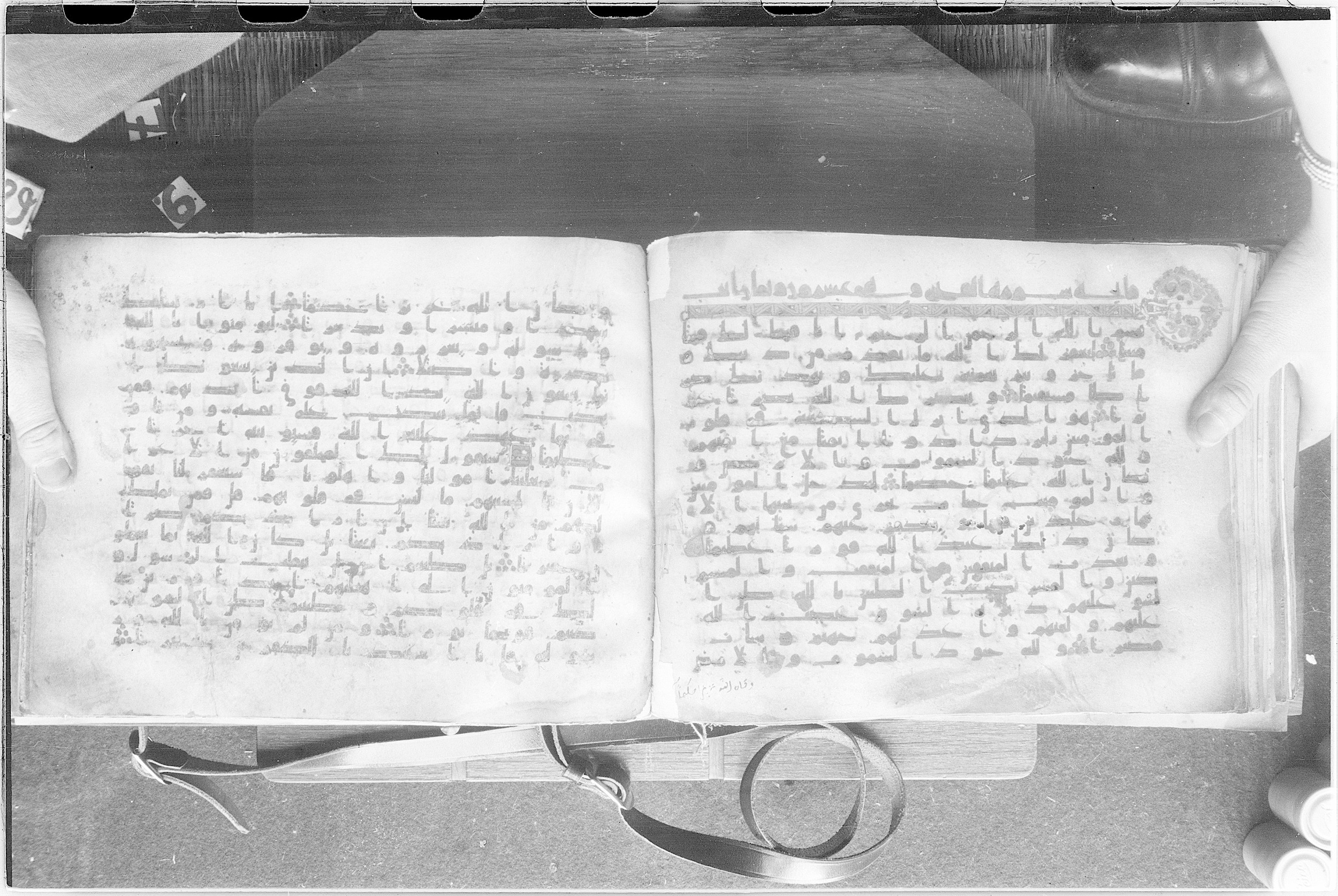
Meknes, Private library of Sherif ʿAbdarraḥmān b. Zīdān, no call number (Scan 2)
This nearly complete early Kufic Quran was photographed by Otto Pretzl during a research trip to Morocco in 1934. While the main body belonged to the private library of Sherif ʿAbdarraḥmān b. Zīdān, fragments of this codex have since been dispersed to the Royal Library in Rabat, the Tareq Rajab Museum in Kuwait, and sold through auction houses like Christie's.
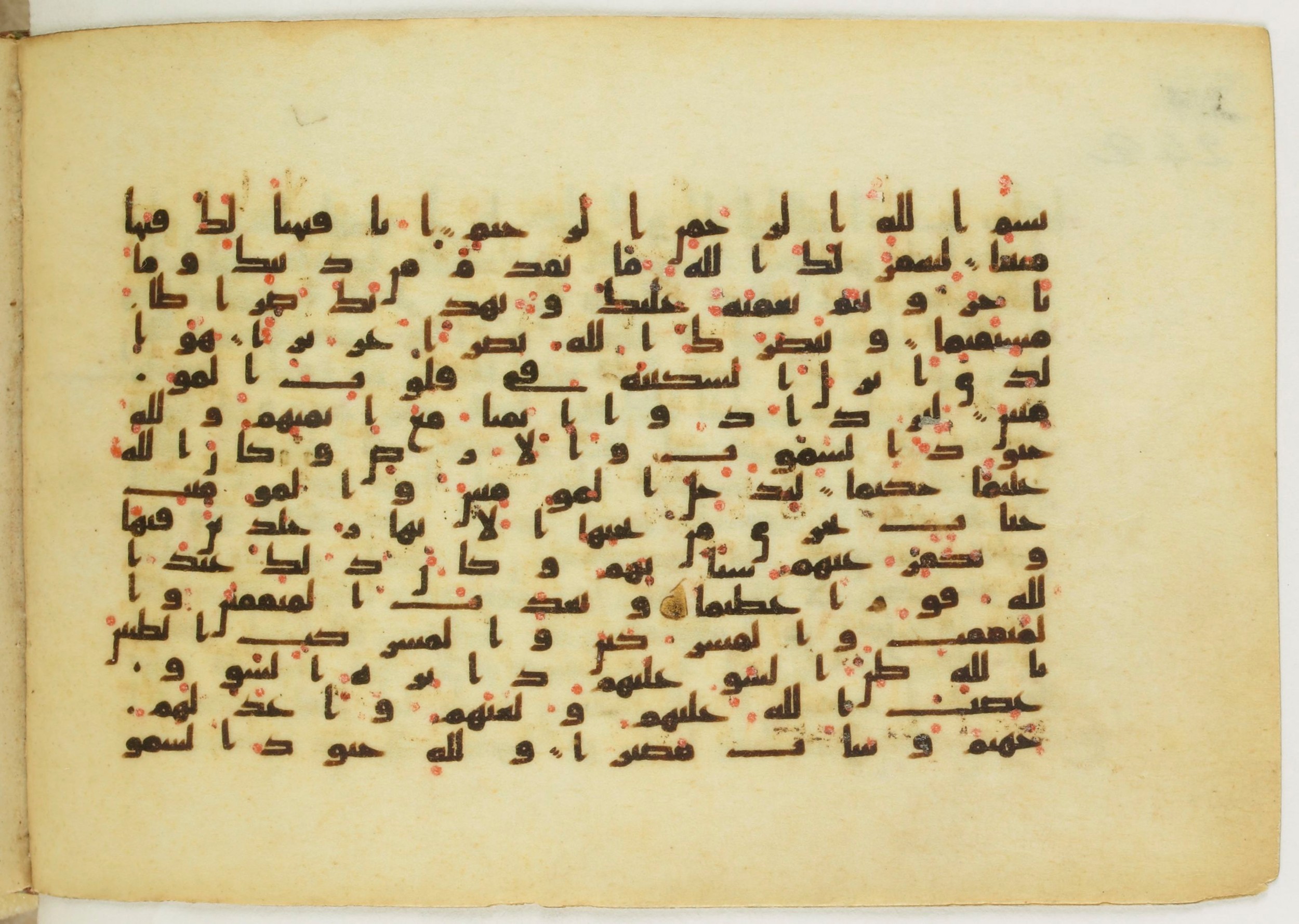
Paris, Bibliothèque nationale de France, Arabe 5122
This nearly complete 8th-century Quranic manuscript is notable for its extensive preservation, containing text from the very beginning of the Quran to its final Surah. Curiously, folio 134 has been reported missing from the French National Library since approximately 2000, and no microfilm image of it survives.
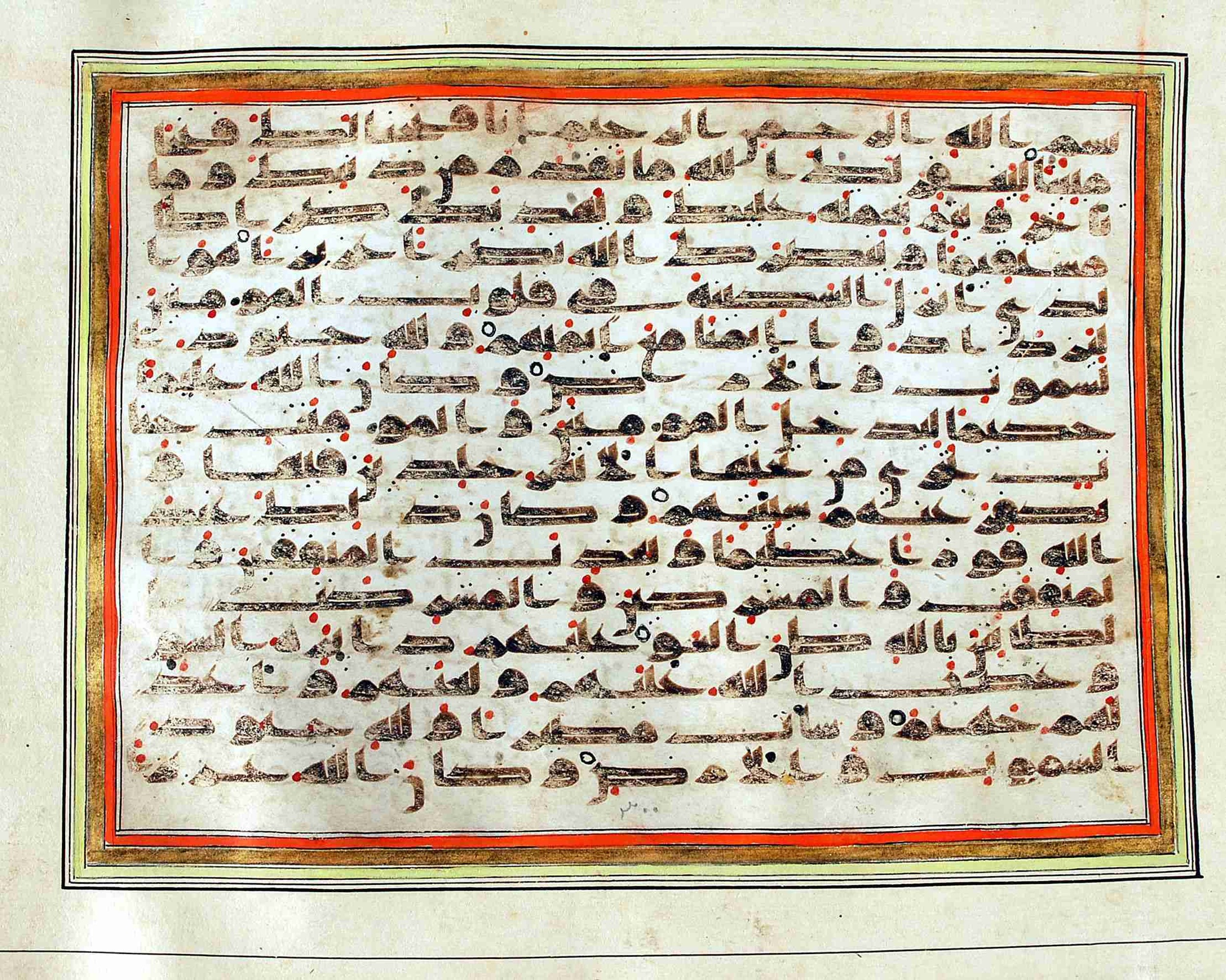
Rampur Raza Library No. 1
This manuscript is a highly prized copy traditionally ascribed to the penmanship of Ali ibn Abi Talib, the fourth Caliph. It features modern gold and colored borders on the paper margins.
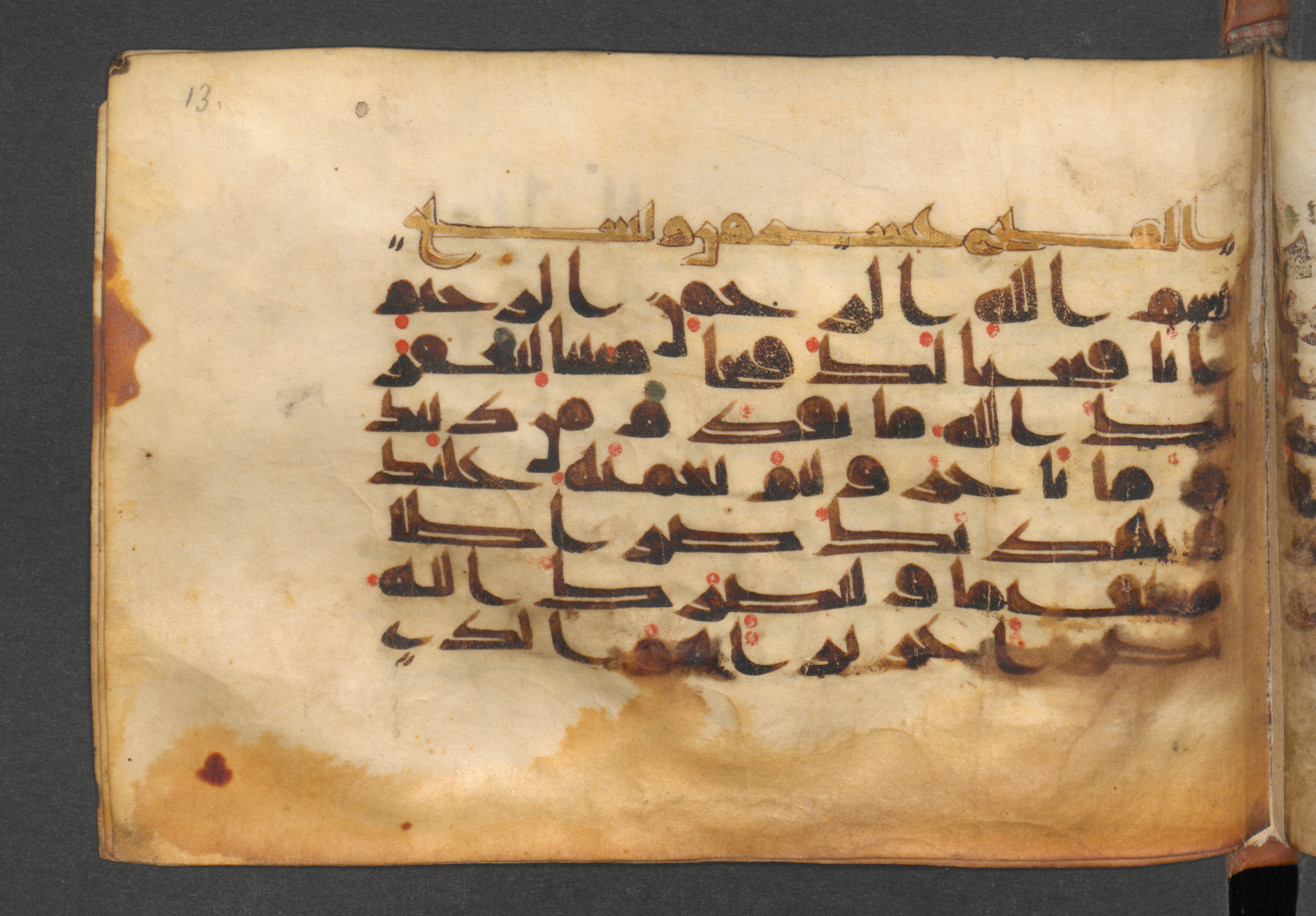
Berlin, Staatsbibliothek zu Berlin, Wetzstein II 1926 (Ahlwardt 360)
This parchment manuscript comes from the collection of Prussian diplomat Johann Gottfried Wetzstein. According to Wilhelm Ahlwardt's 1887 catalogue, its surah headings are written in gold script, and while basic diacritical marks are missing, vowels and nunation are notably indicated using red dots.
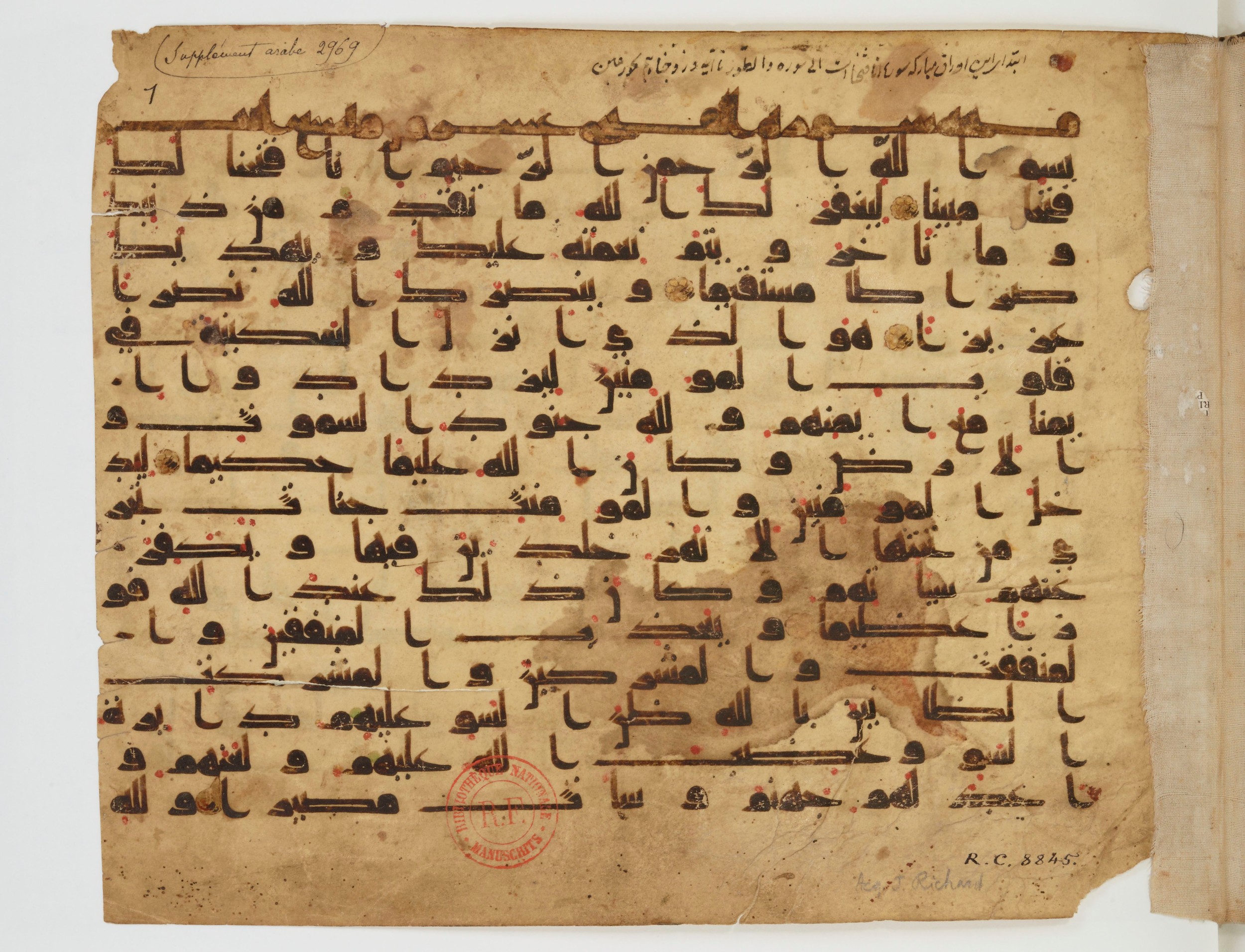
BnF Arabe 5124
This 8-folio parchment manuscript features the Kufic D.IV script with vocalization marked by red dots and added diacritical points. It uses rosettes to separate verses, and marks groups of five and ten verses with golden Kufic hāʾs and medallions. It was formerly part of the J. Richard collection.