
Surah 49:0
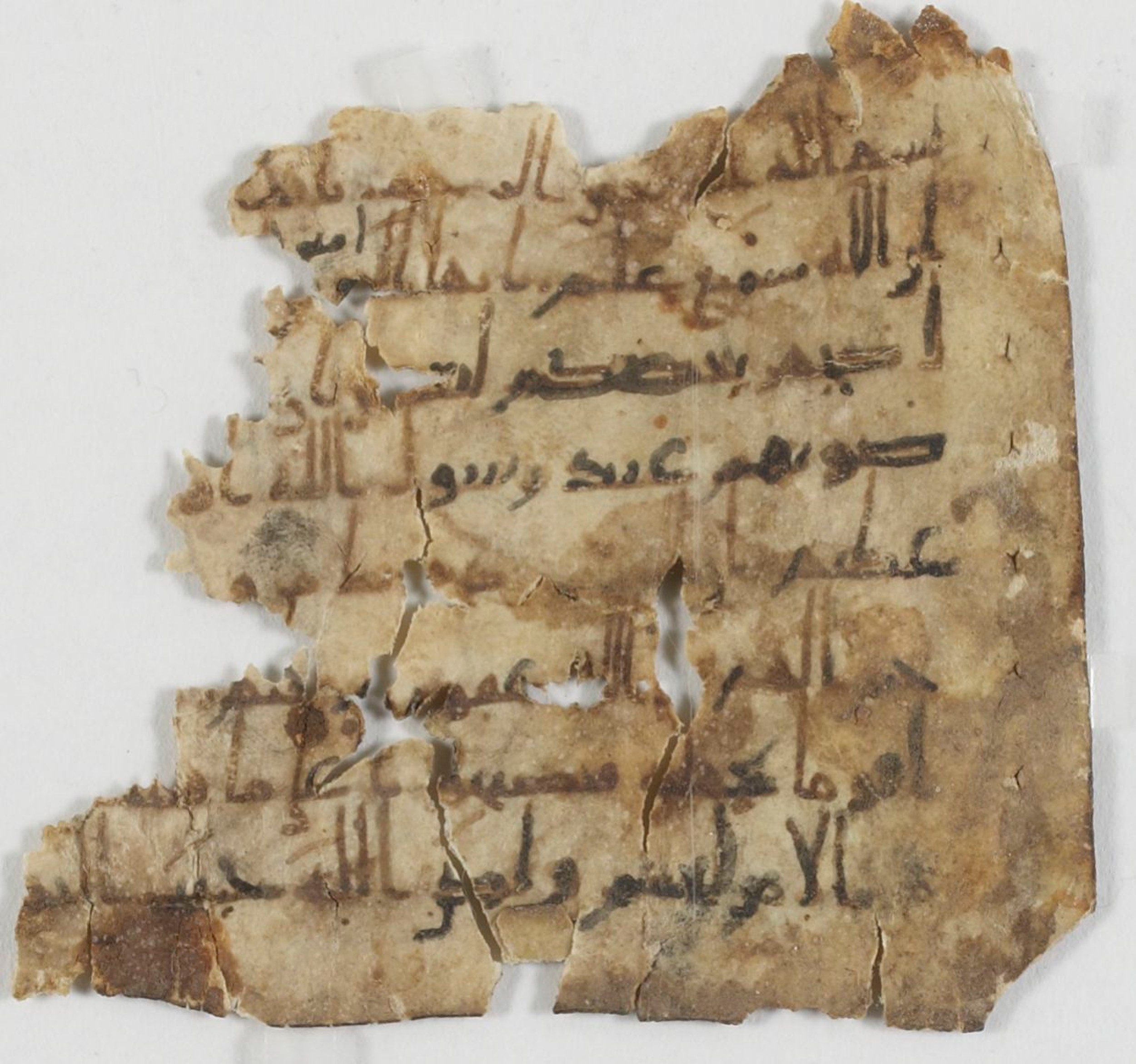
Codex Chicago A 6988 / Paris Arabe 7201
These fragments are written in the early Hijazi script and have been extensively studied by Nabia Abbott in her seminal 1939 work 'The Rise of the North Arabic Script'. The Arabe 7201 fragment was previously part of the Seymour de Ricci collection and was purchased in 1909 from an Egyptian dealer in Asyut.
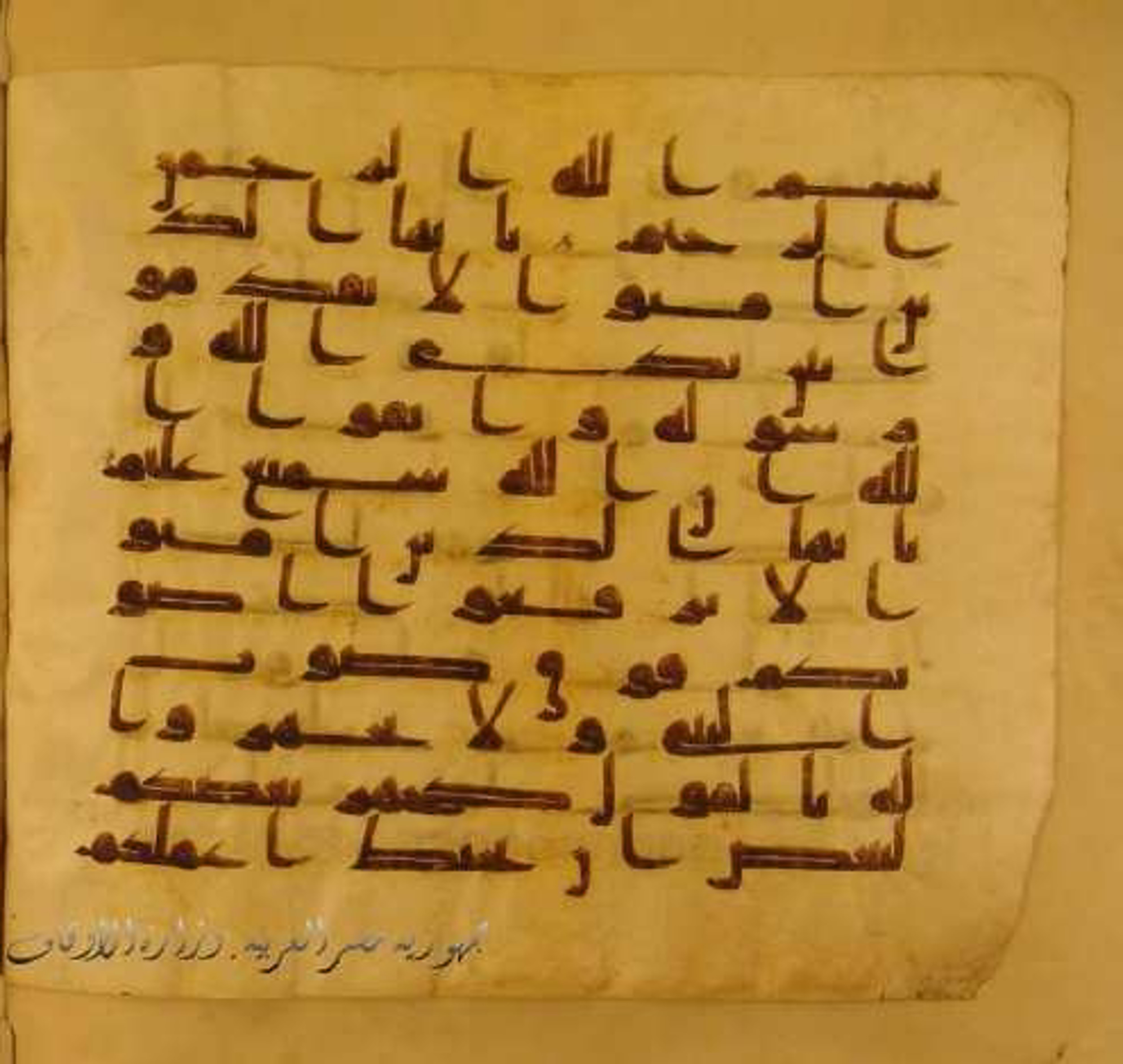
Paris, Bibliothèque nationale de France, Arabe 324 (c)
Carbon dating of fragments from Arabe 324 (c) places its origin between 660-780 AD. The manuscript is part of a composite codex, where Arabe 324 (c) and Gotha Ms. orient. A 462 are original leaves, while other sections such as Arabe 324 (a) and (d) were added centuries later to replace damaged or missing pages.
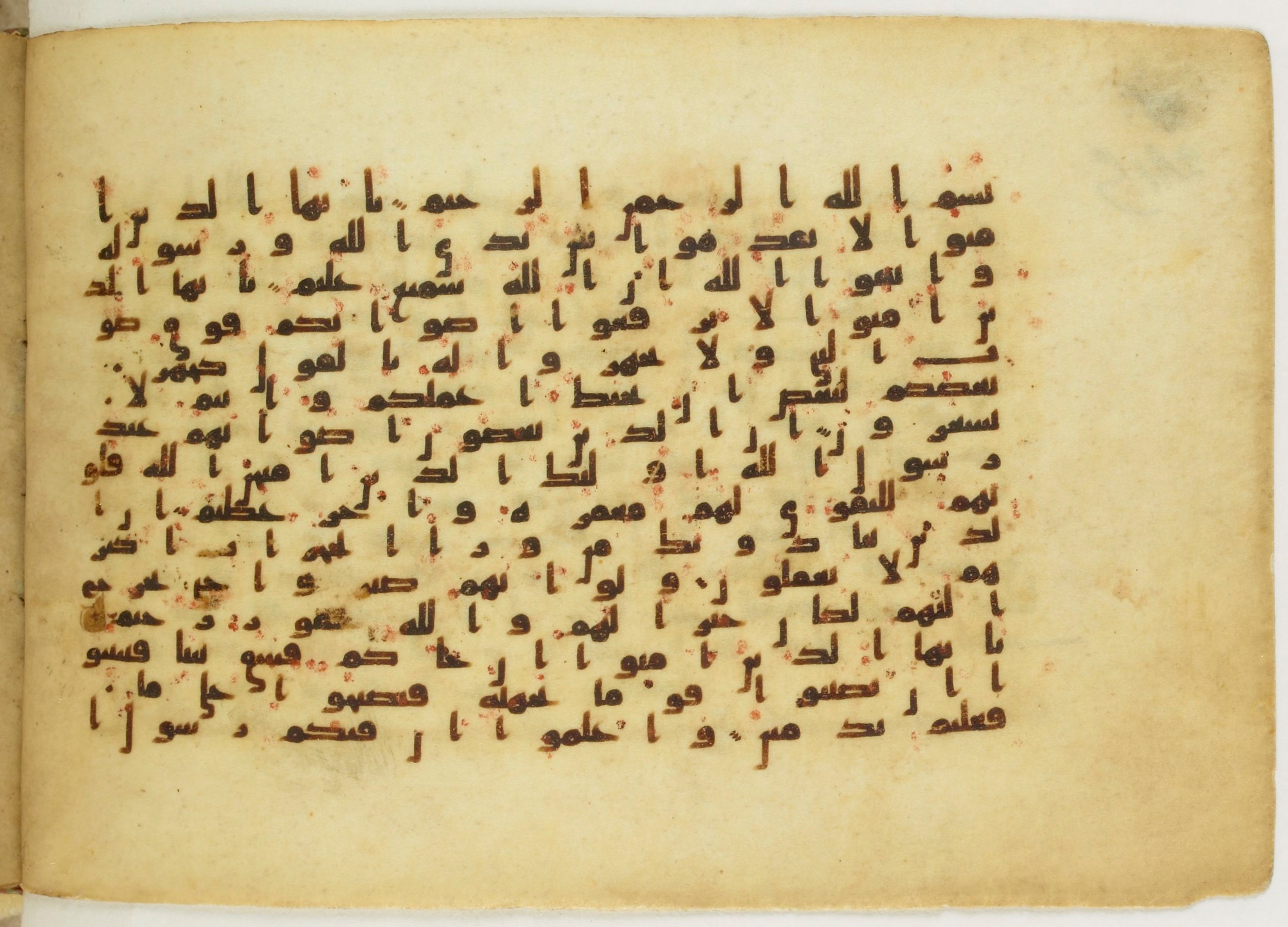
Paris, Bibliothèque nationale de France, Arabe 5122
This nearly complete 8th-century Quranic manuscript is notable for its extensive preservation, containing text from the very beginning of the Quran to its final Surah. Curiously, folio 134 has been reported missing from the French National Library since approximately 2000, and no microfilm image of it survives.
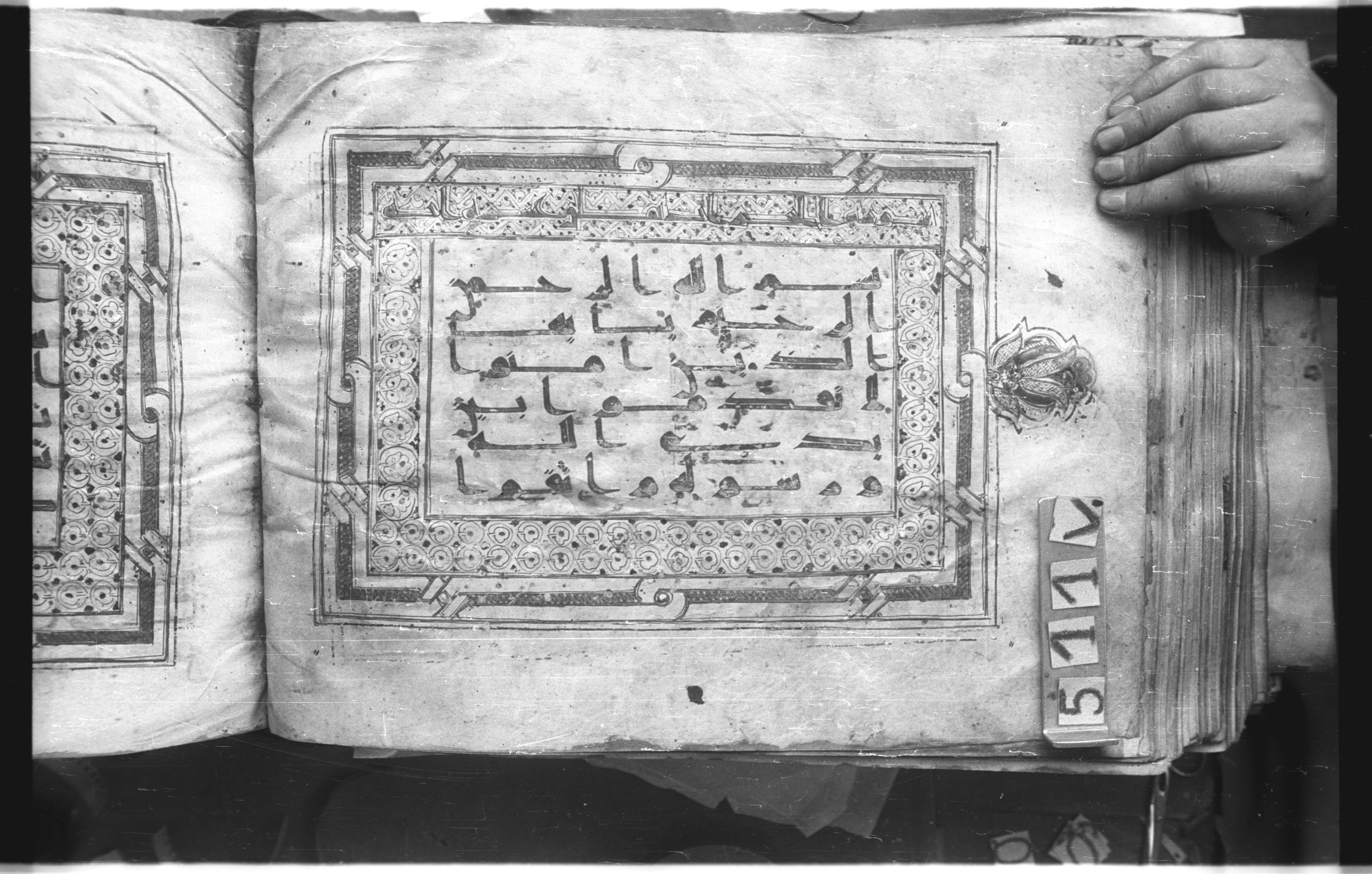
Istanbul, Topkapı Palace Museum, "Saray 50386" (Karatay 42)
This near-complete Kufic Quran is bound in brown leather over wood with arabesque interlacing and iron rings. It bears the foundation seal of Sultan Osman III, and its first three leaves as well as sura headings are illuminated.
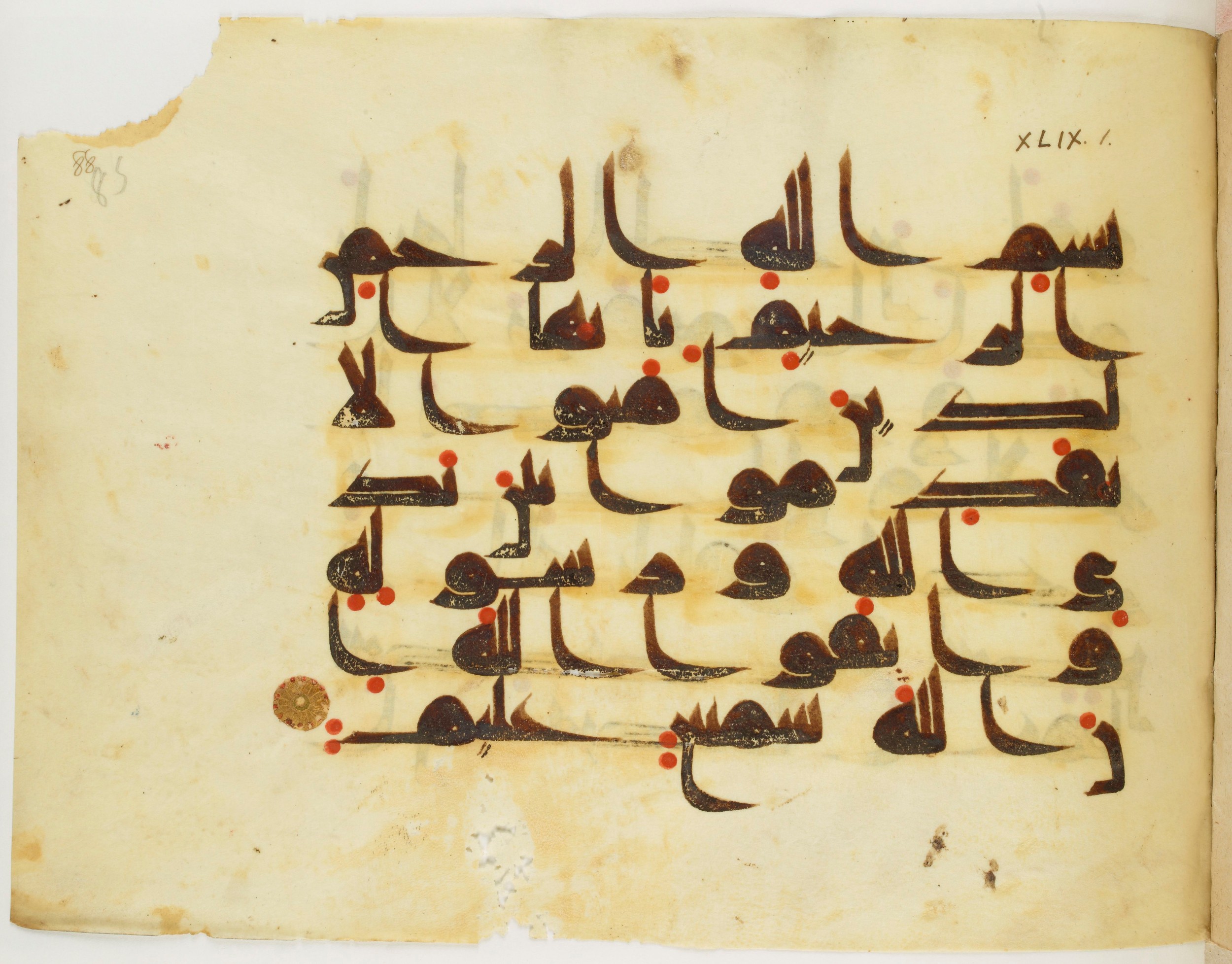
Paris, Bibliothèque nationale de France, Arabe 325 (j)
This fragmentary manuscript features Kūfī D.III script with an evolving orthography, using partially added oblique strokes for diacritics. Uniquely, it employs color-coded dots for pronunciation, using red and orange for vocalization and orange and green specifically for the hamza.
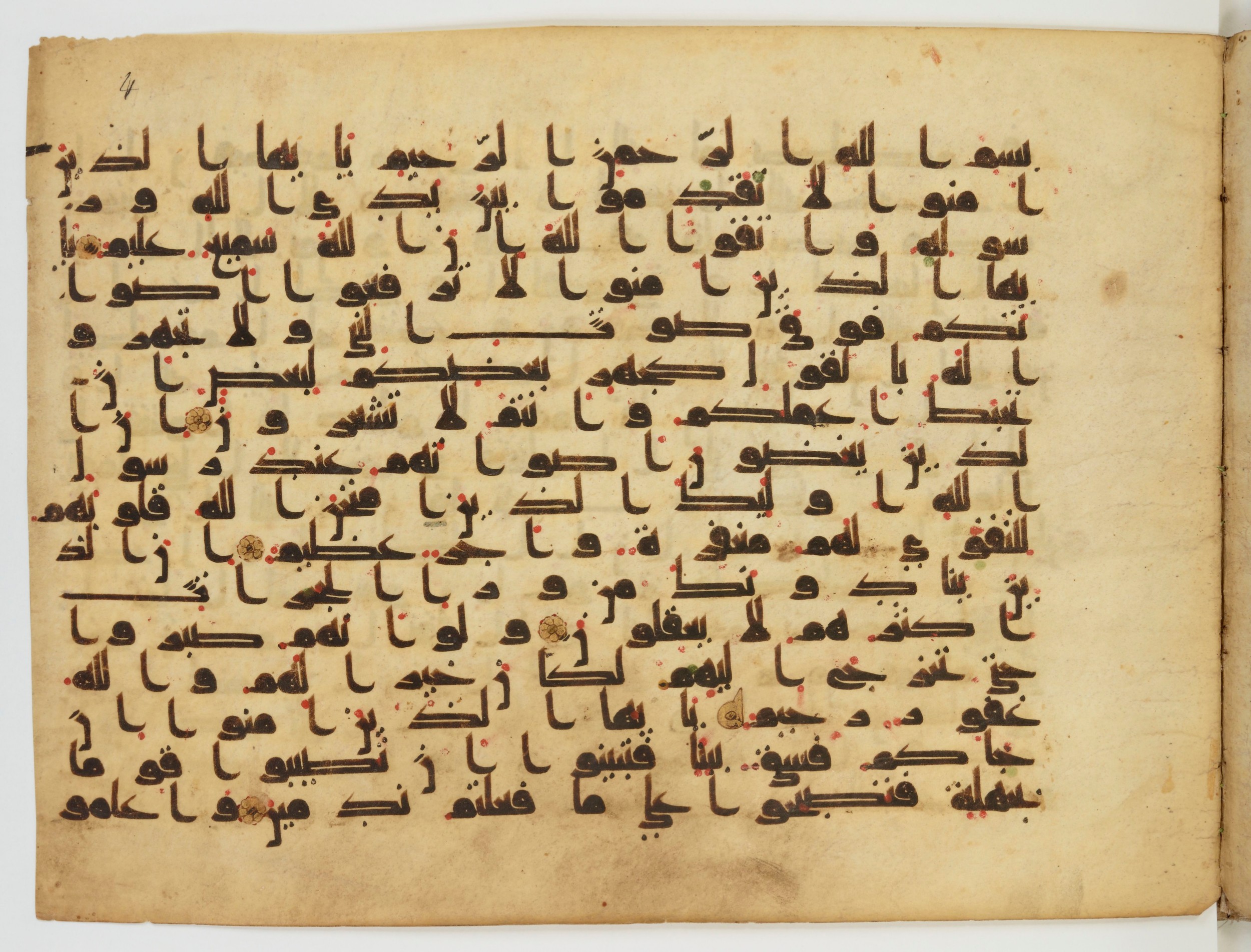
BnF Arabe 5124
This 8-folio parchment manuscript features the Kufic D.IV script with vocalization marked by red dots and added diacritical points. It uses rosettes to separate verses, and marks groups of five and ten verses with golden Kufic hāʾs and medallions. It was formerly part of the J. Richard collection.
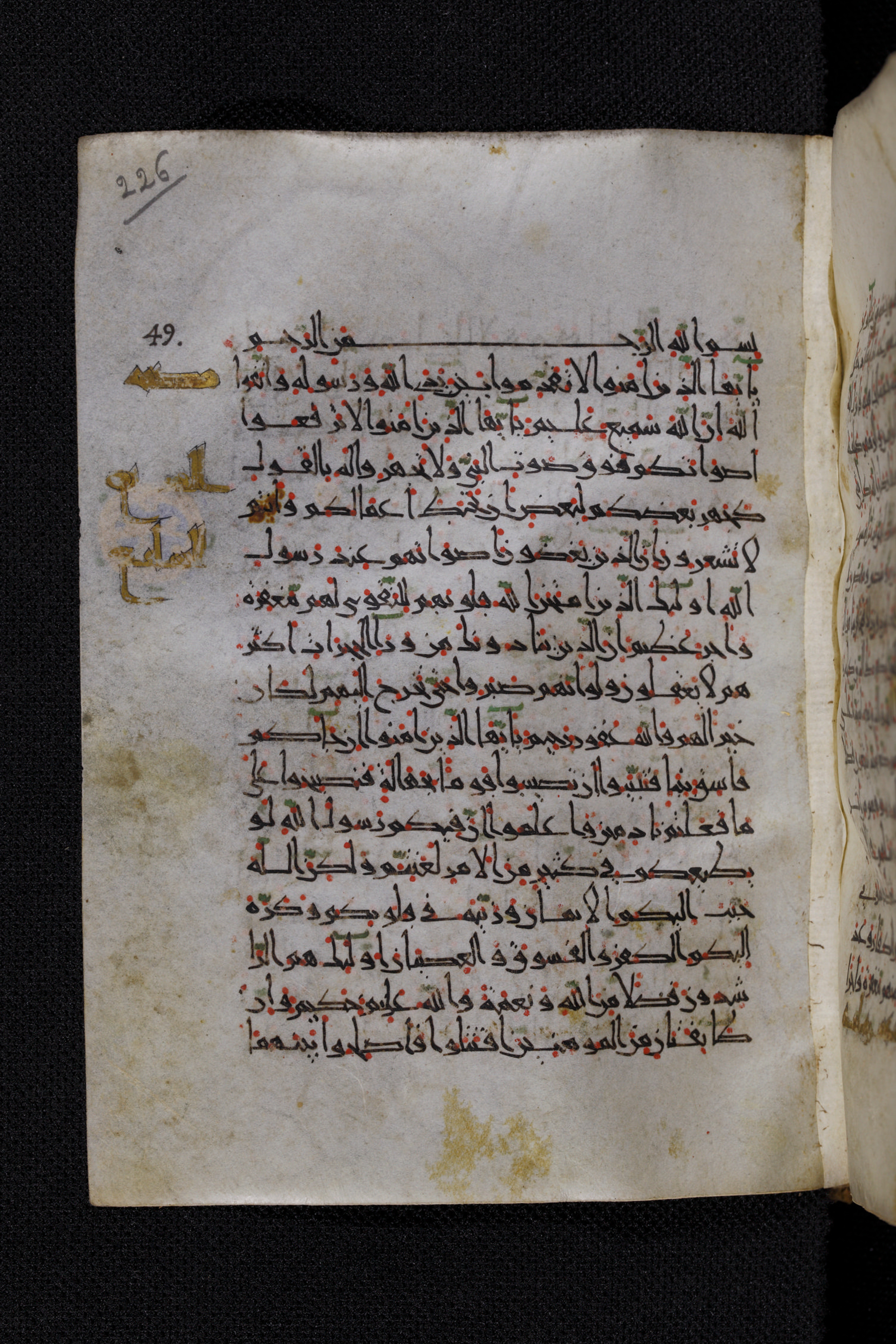
Diez A oct 172
This codex is largely complete, containing the entire Quran, though the first folio and a few other leaves were supplied by a later hand. Written on parchment, the manuscript represents an important transitional stage in the evolution of the Arabic script toward the Maghrebi style. While generally well-preserved, some of the early and late folios exhibit water damage and have been repaired.