
Surah 53:0
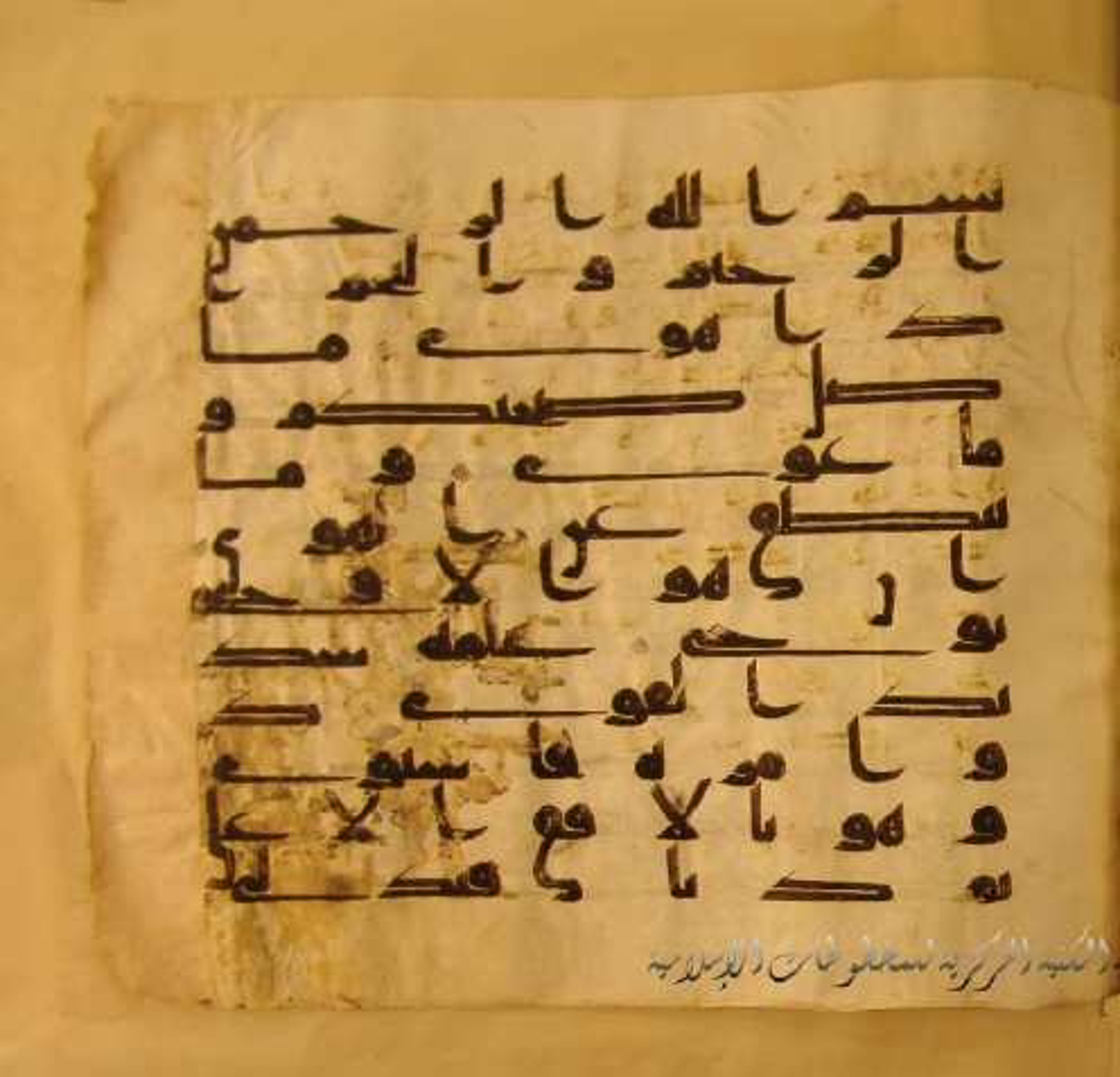
Paris, Bibliothèque nationale de France, Arabe 324 (c)
Carbon dating of fragments from Arabe 324 (c) places its origin between 660-780 AD. The manuscript is part of a composite codex, where Arabe 324 (c) and Gotha Ms. orient. A 462 are original leaves, while other sections such as Arabe 324 (a) and (d) were added centuries later to replace damaged or missing pages.
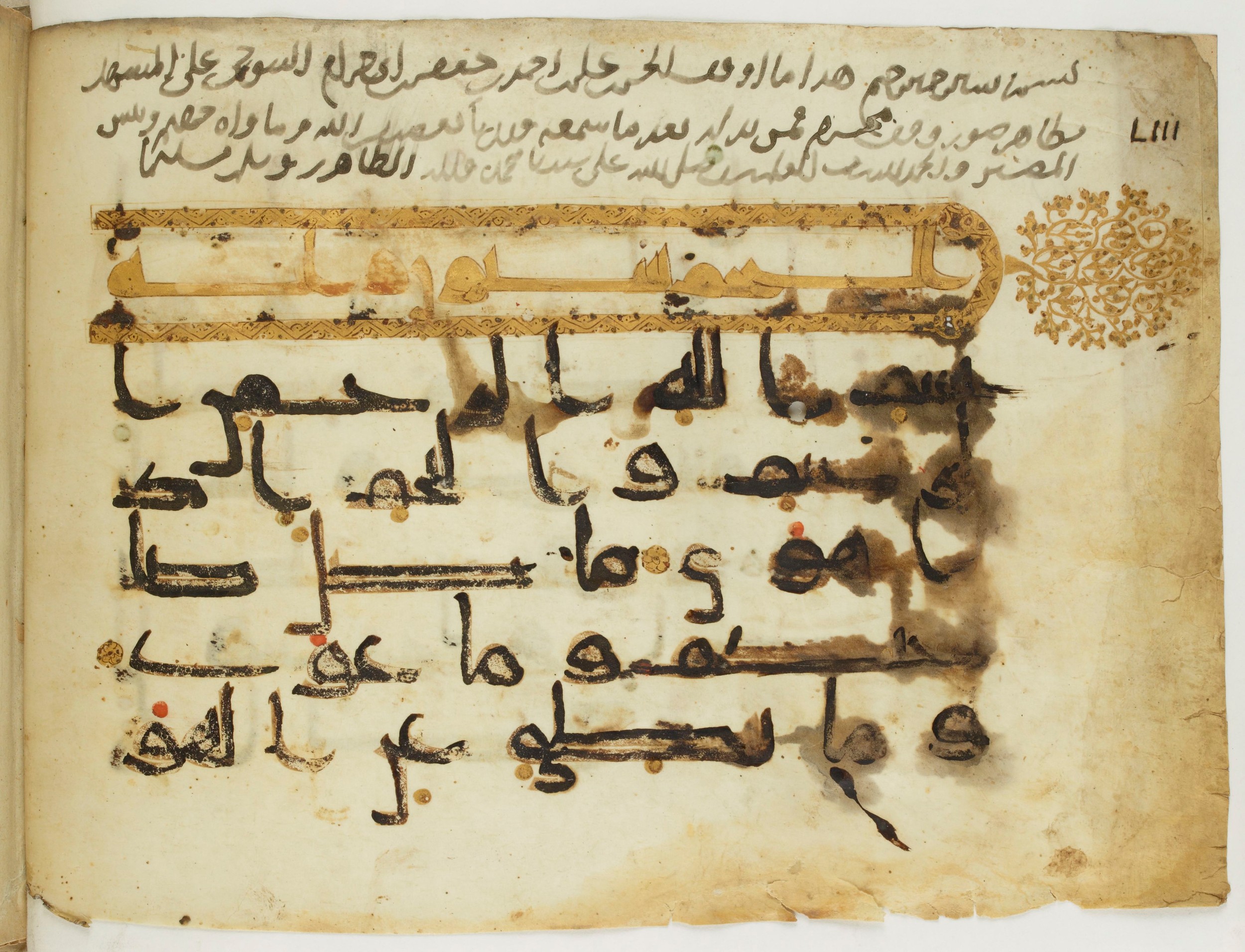
Paris, Bibliothèque nationale de France, Arabe 346 (a)
This manuscript features a fascinating cursive marginal note on folio 13v revealing that it was originally endowed as a Waqf in a shrine outside the city of Tyre. Furthermore, the text on the flesh side of the parchment was later retraced in black ink by a subsequent scribe to preserve the fading script.
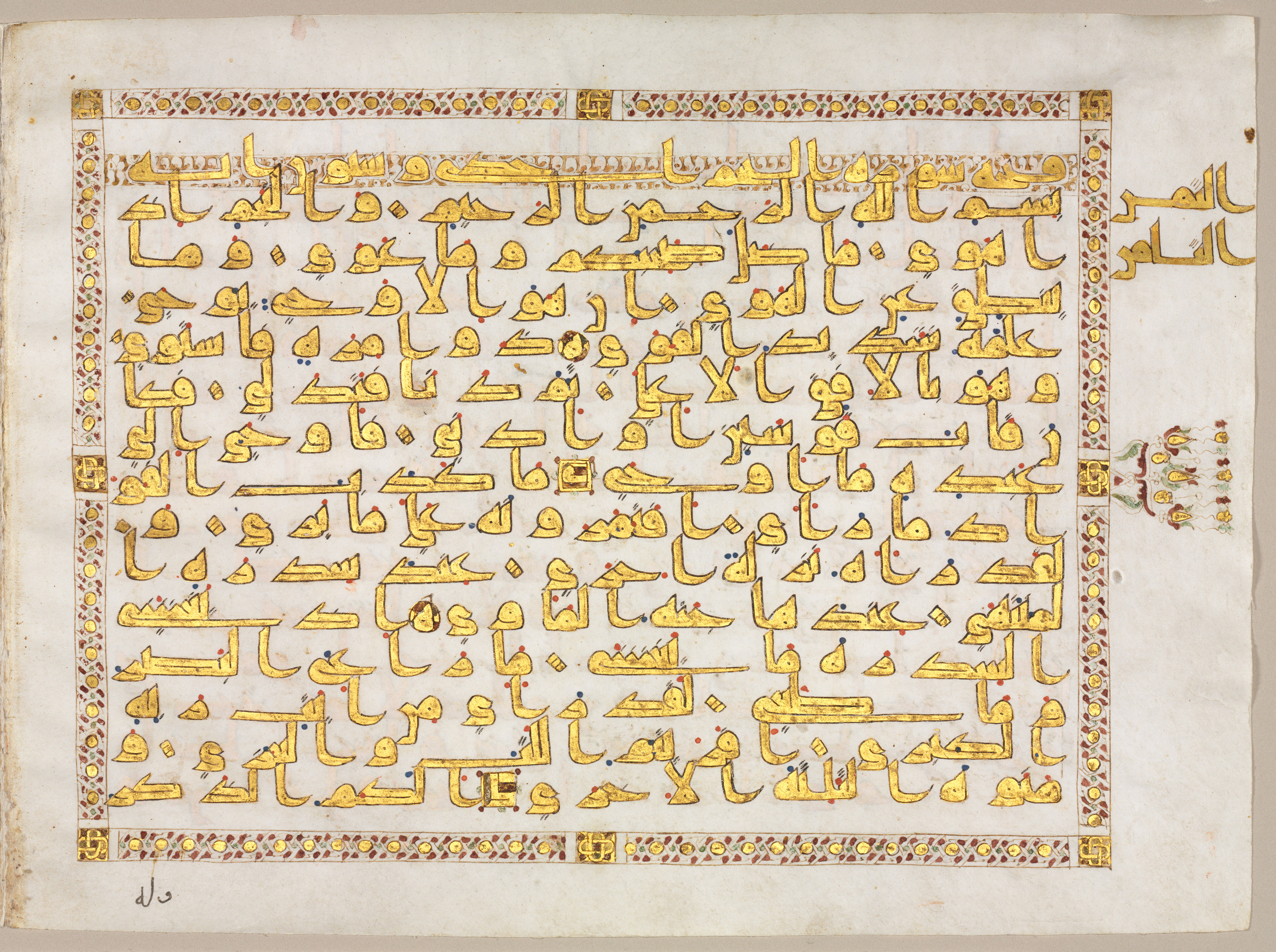
Cleveland Museum of Art, 1993.39
This manuscript is part of the famous Blue Quran, a luxurious codex characterized by its distinctive gold Kufic script on blue parchment. It was likely produced in North Africa during the 9th century under the Aghlabid or Abbasid dynasty.