
Surah 55:0
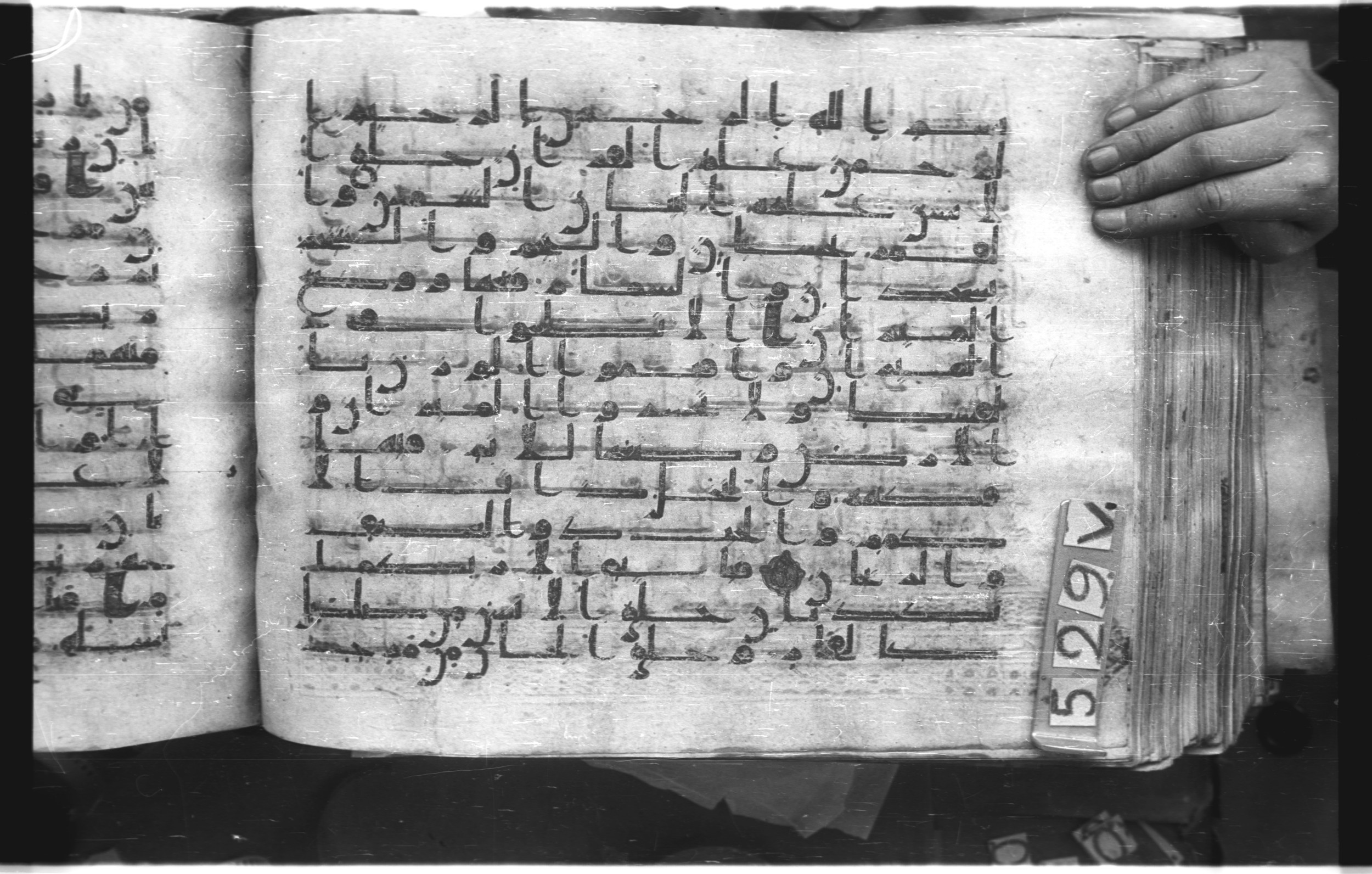
Istanbul, Topkapı Palace Museum, "Saray 50386" (Karatay 42)
This near-complete Kufic Quran is bound in brown leather over wood with arabesque interlacing and iron rings. It bears the foundation seal of Sultan Osman III, and its first three leaves as well as sura headings are illuminated.
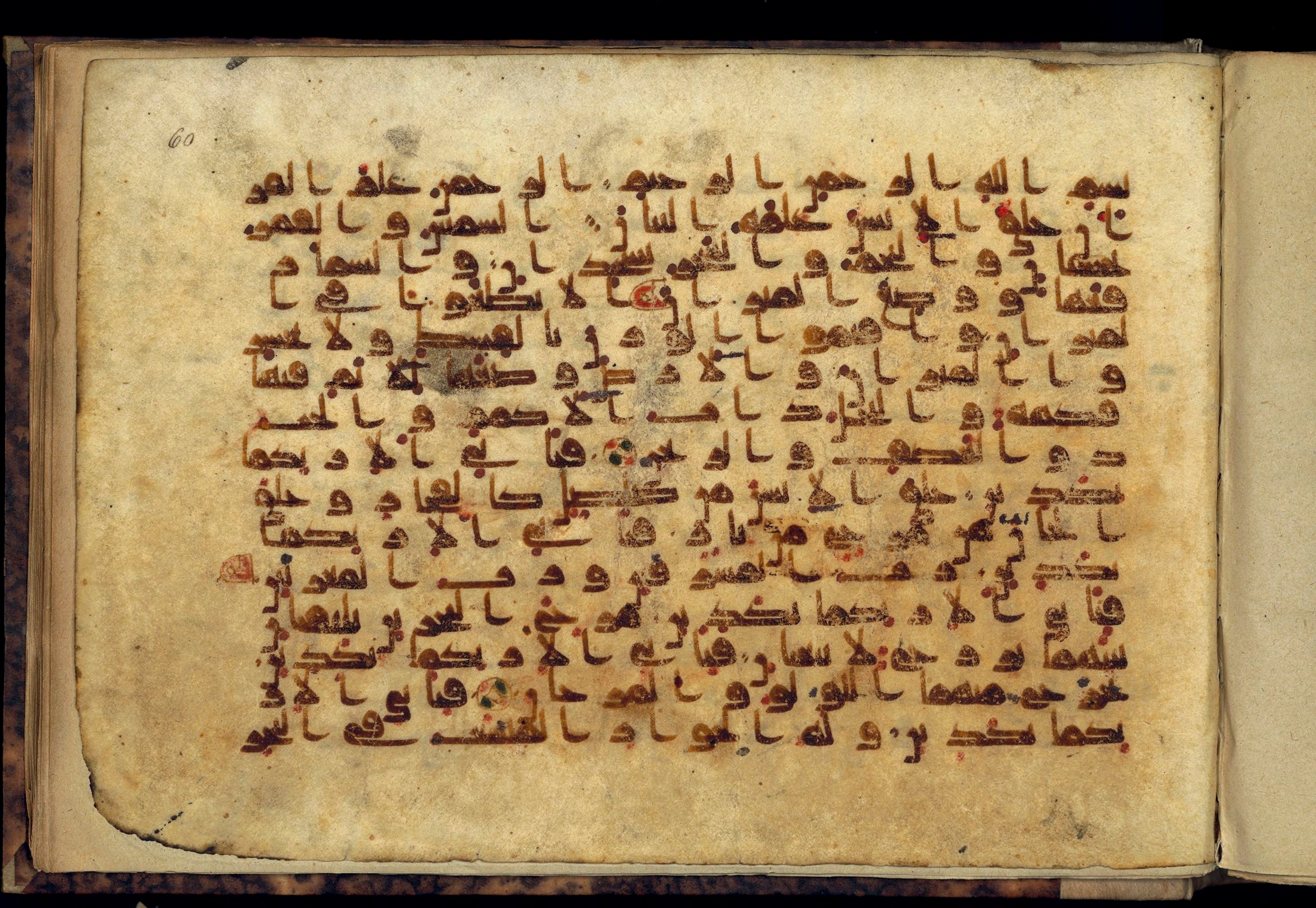
Paris, Bibliothèque nationale de France, Arabe 370 (c)
This early Quranic fragment is notable for its illuminated Surah titles, where the title and verse counts are written with words in alternating red and green ink. The manuscript also employs rare oblique strokes for diacritical marks and red dots for vocalization, alongside red Kufic 'hāʾ' letters to mark groups of five verses.
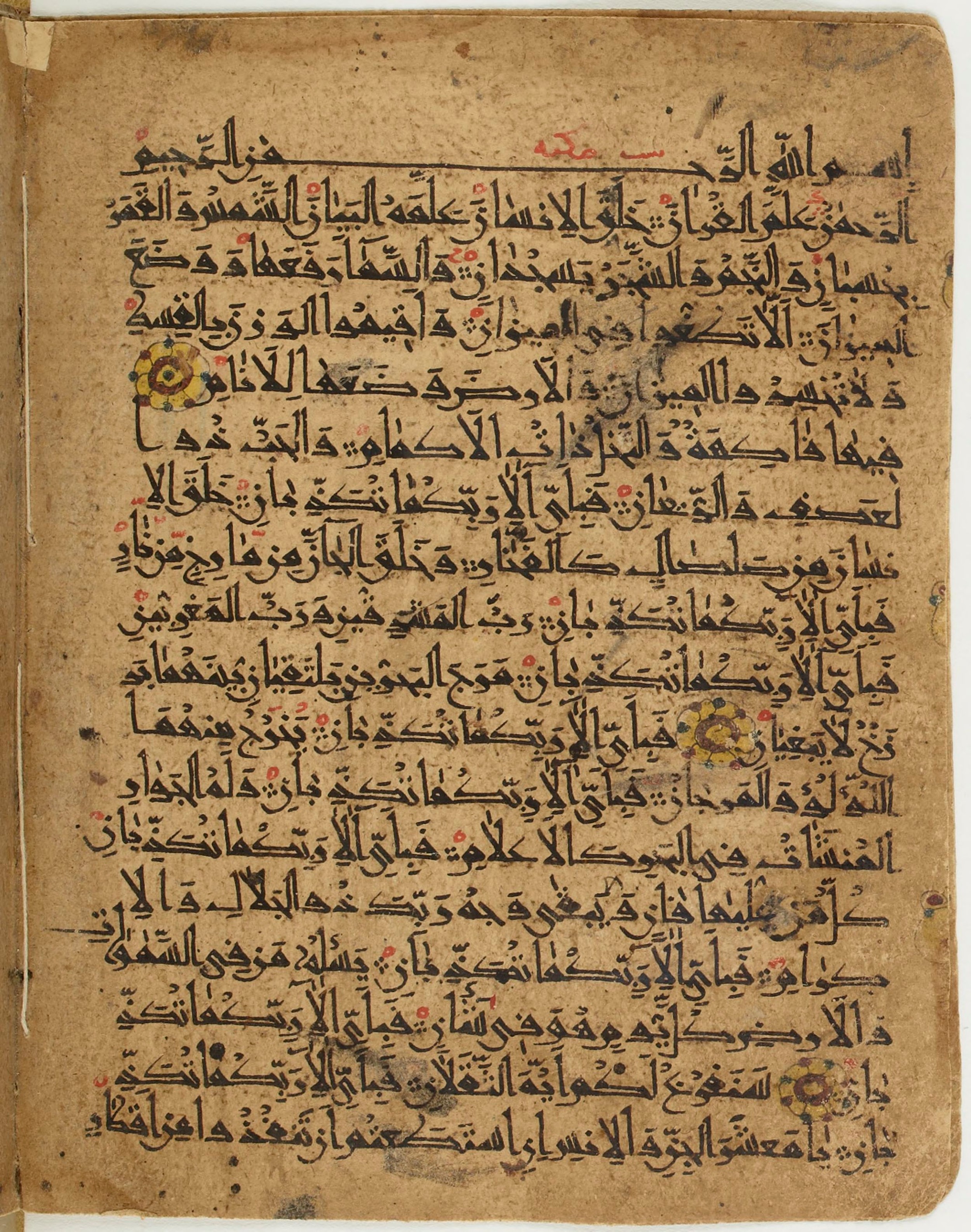
BNF Arabe 6430
This 10th-century Quranic manuscript is notable for being written on Oriental paper rather than parchment. It features complete diacritics and vocalization, with distinctive colorful verse markers including yellow Kufic 'hāʾ' letters to signal groups of five verses.
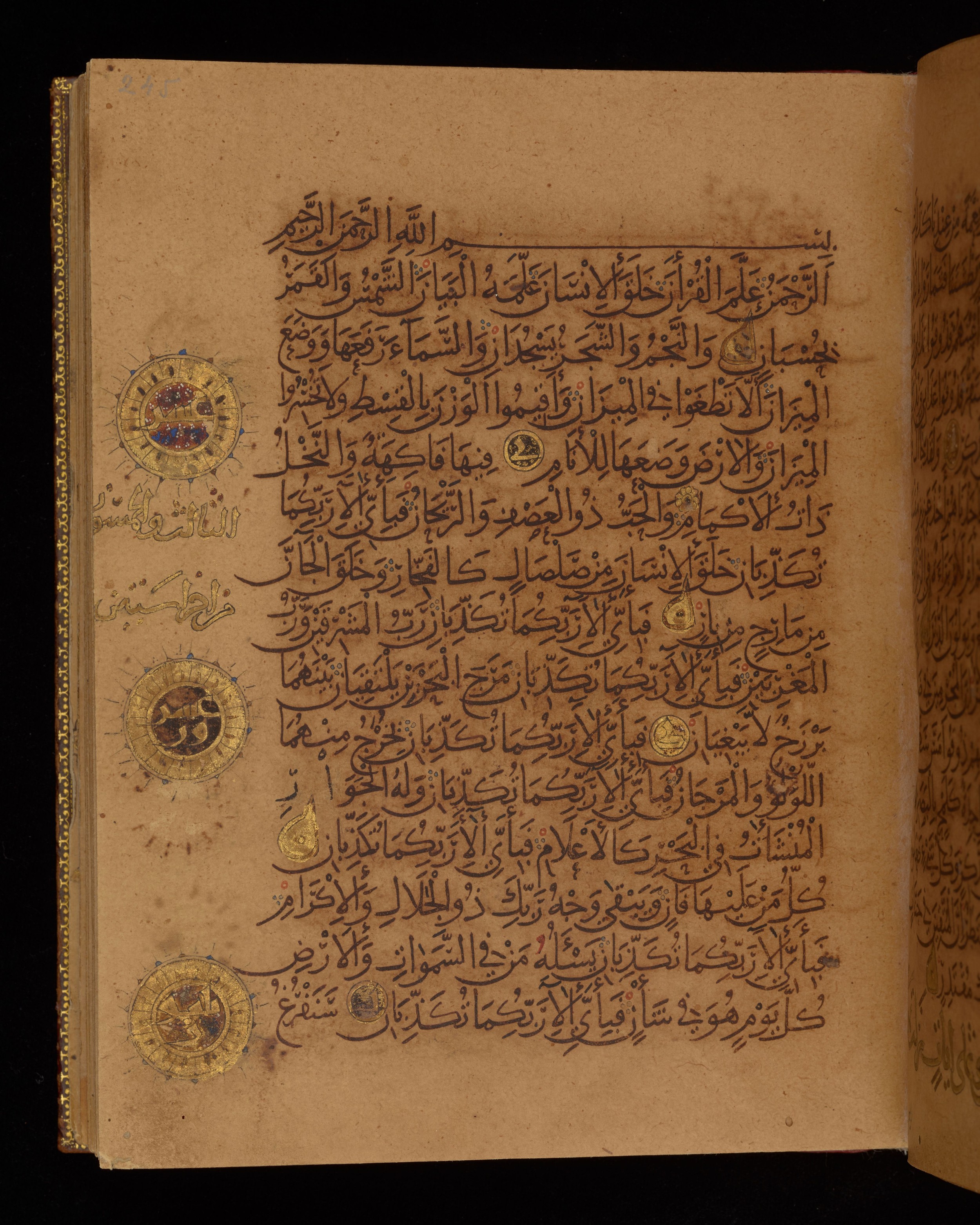
Dublin, Chester Beatty Library, Is 1431
This complete Quran was produced in Baghdad by the renowned calligrapher ʿAlī b. Hilāl, also known as Ibn al-Bawwāb, around 1000-1001 AD. He is a significant figure in Islamic art, closely associated with the adoption of the round Naskh script to transcribe the Quran.