
Surah 6:0
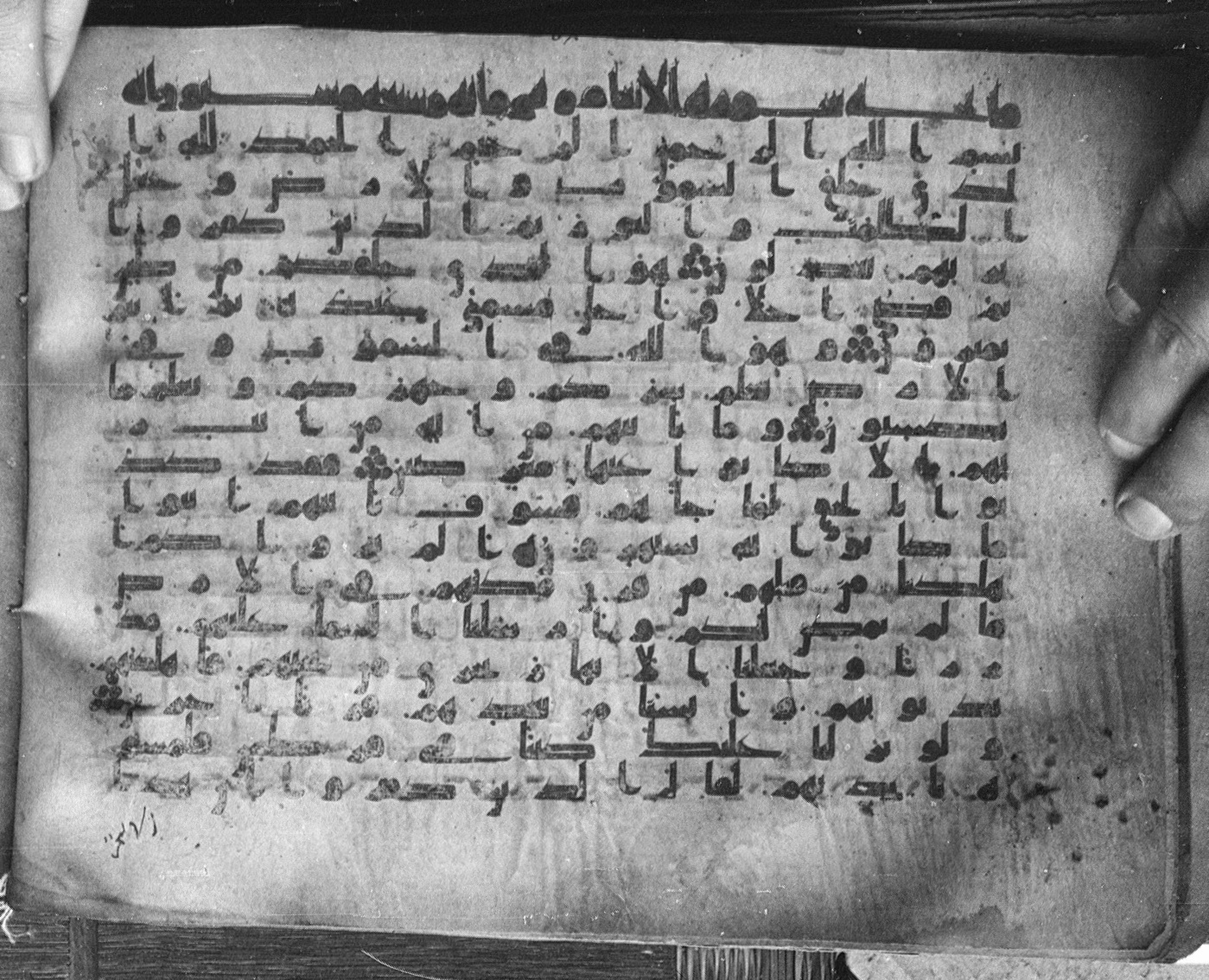
Meknes, Private library of Sherif ʿAbdarraḥmān b. Zīdān, no call number (Scan 1)
This nearly complete early Kufic Quran was photographed by Otto Pretzl during a research trip to Morocco in 1934. While the main body belonged to the private library of Sherif ʿAbdarraḥmān b. Zīdān, fragments of this codex have since been dispersed to the Royal Library in Rabat, the Tareq Rajab Museum in Kuwait, and sold through auction houses like Christie's.
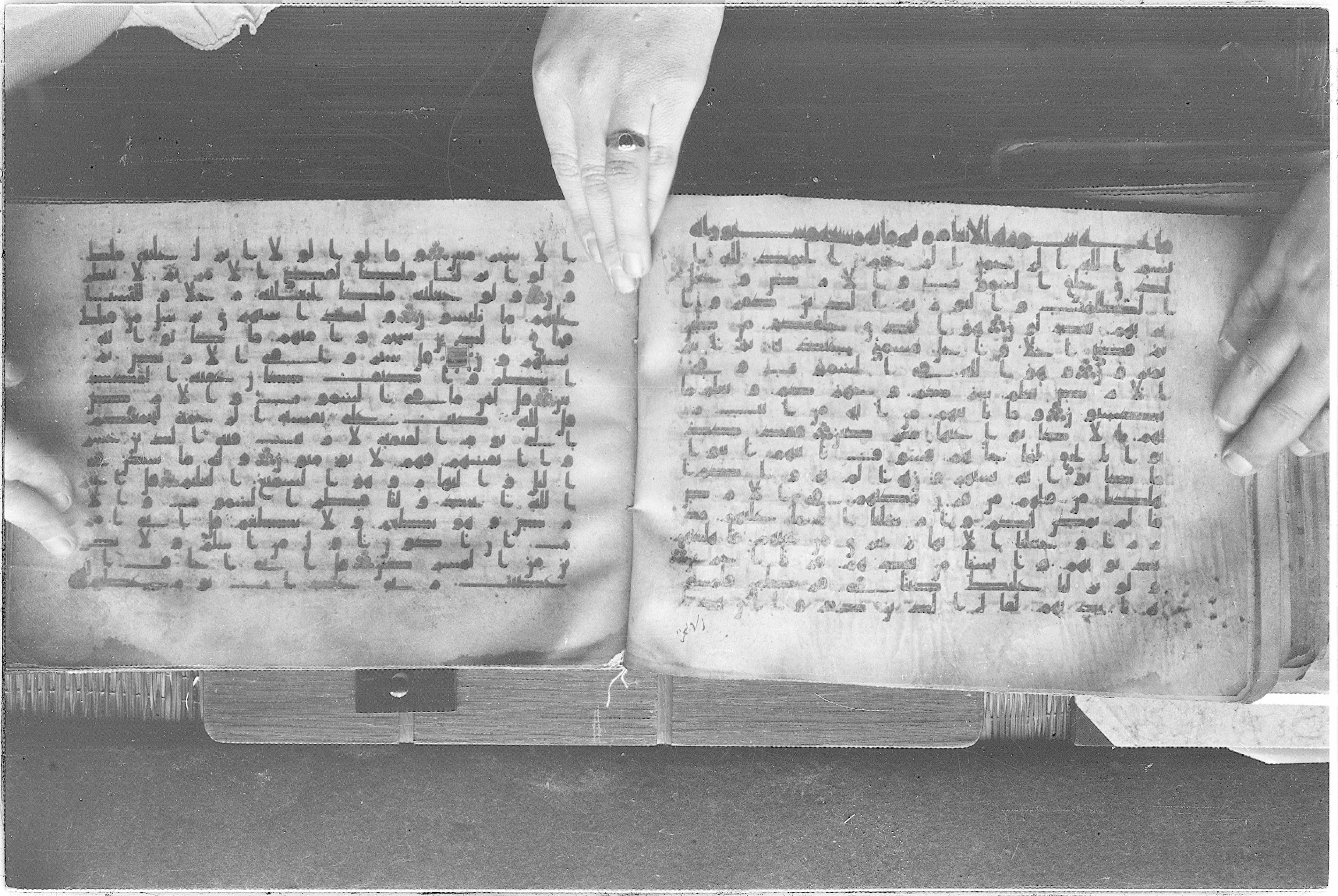
Meknes, Private library of Sherif ʿAbdarraḥmān b. Zīdān, no call number (Scan 2)
This nearly complete early Kufic Quran was photographed by Otto Pretzl during a research trip to Morocco in 1934. While the main body belonged to the private library of Sherif ʿAbdarraḥmān b. Zīdān, fragments of this codex have since been dispersed to the Royal Library in Rabat, the Tareq Rajab Museum in Kuwait, and sold through auction houses like Christie's.
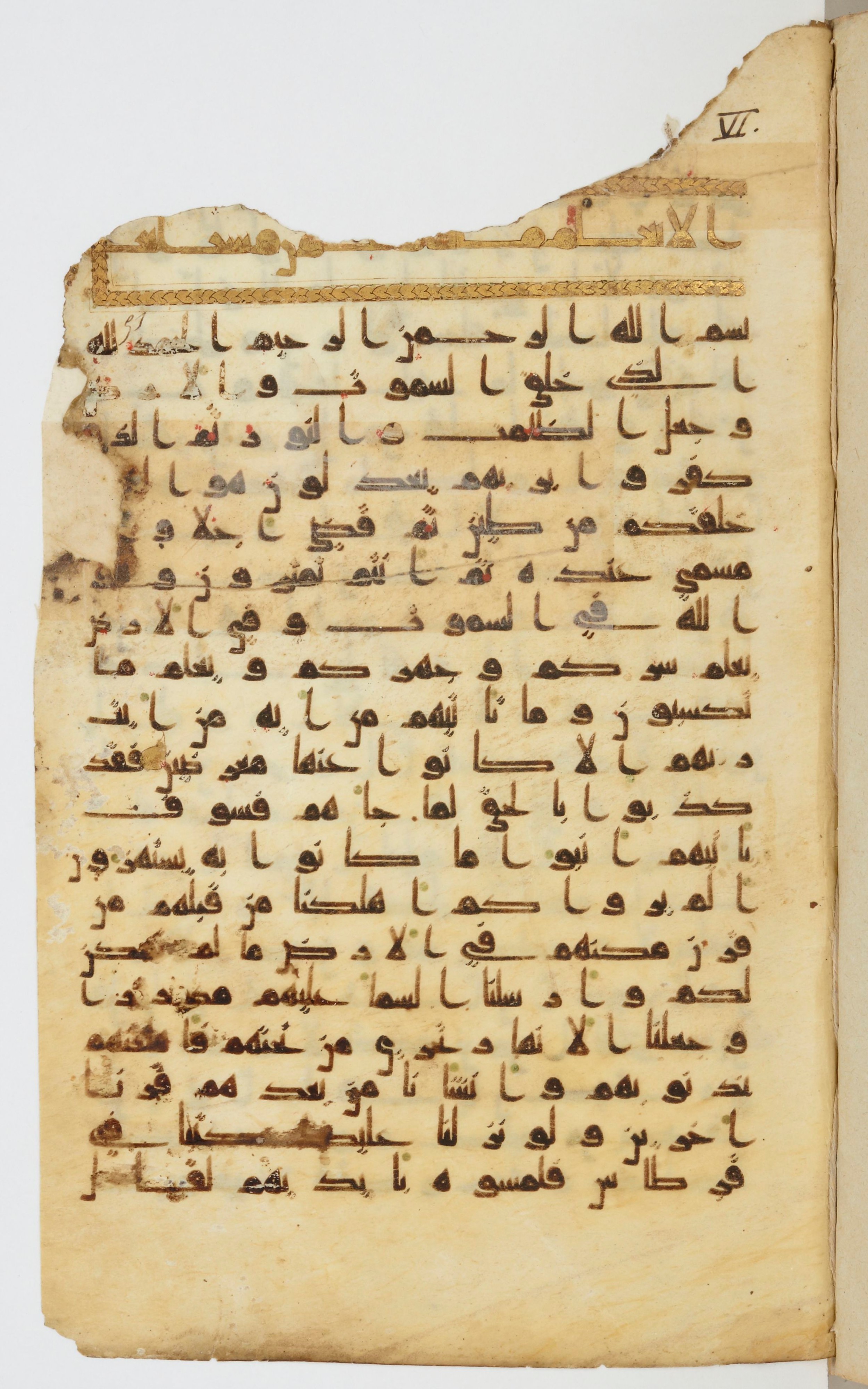
Bibliothèque nationale de France, Arabe 339
This manuscript features almost complete diacritical marks using oblique strokes, red dots for vocalization, and green dots for hamza. Each surah is introduced by an ornamental band containing its title and verse count in gold lettering, and verse groups are marked with gold hāʾ symbols and letter-numeral medallions.
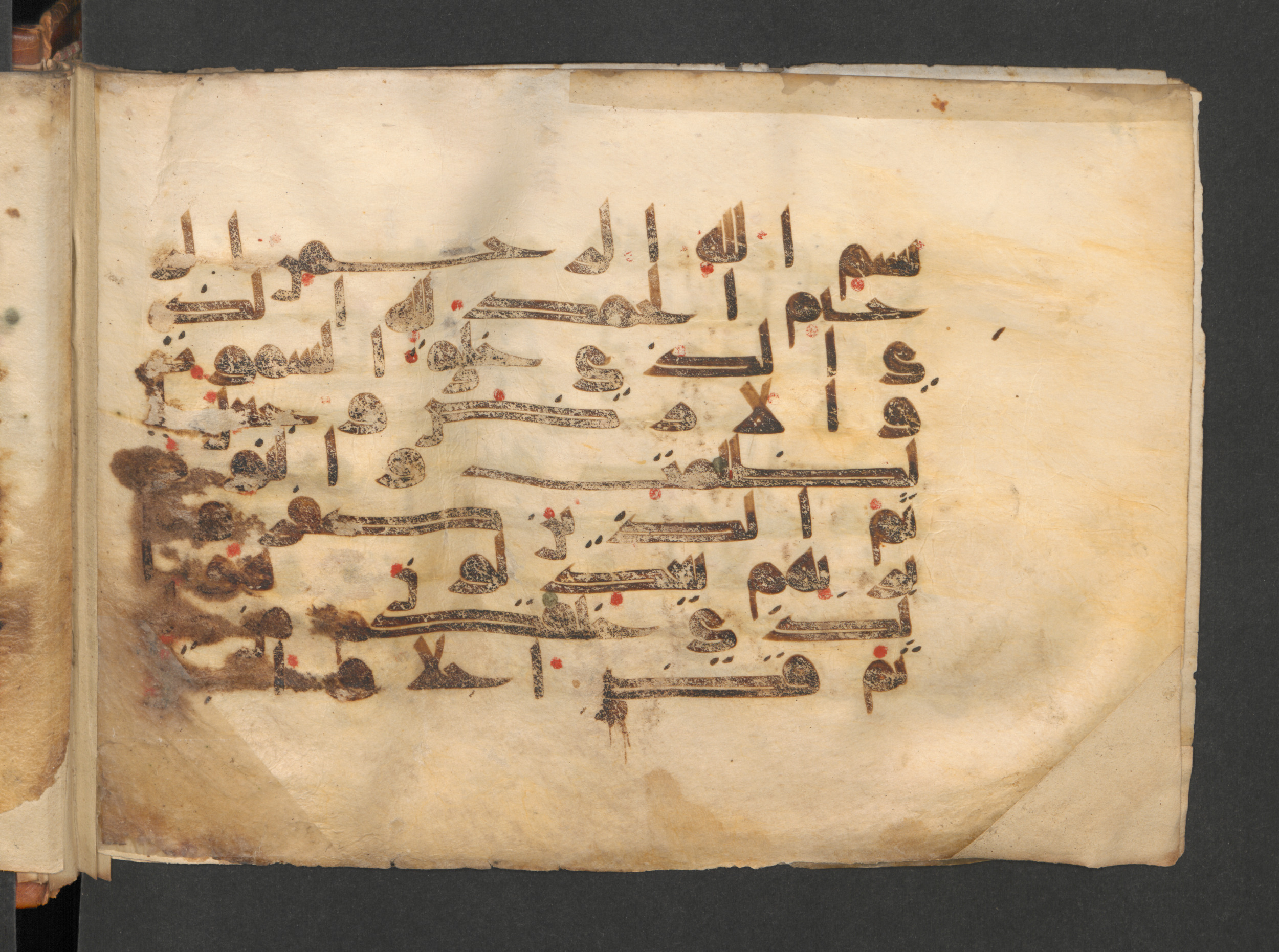
Berlin, Staatsbibliothek zu Berlin, Wetzstein II 1915 (Ahlwardt 313)
This manuscript is part of the collection acquired by Johann Gottfried Wetzstein, the Prussian consul in Damascus from 1848 to 1862. It is notable for its extensive use of early diacritical marks, including red dots for vocalization and green dots often associated with the letter 'ha'.
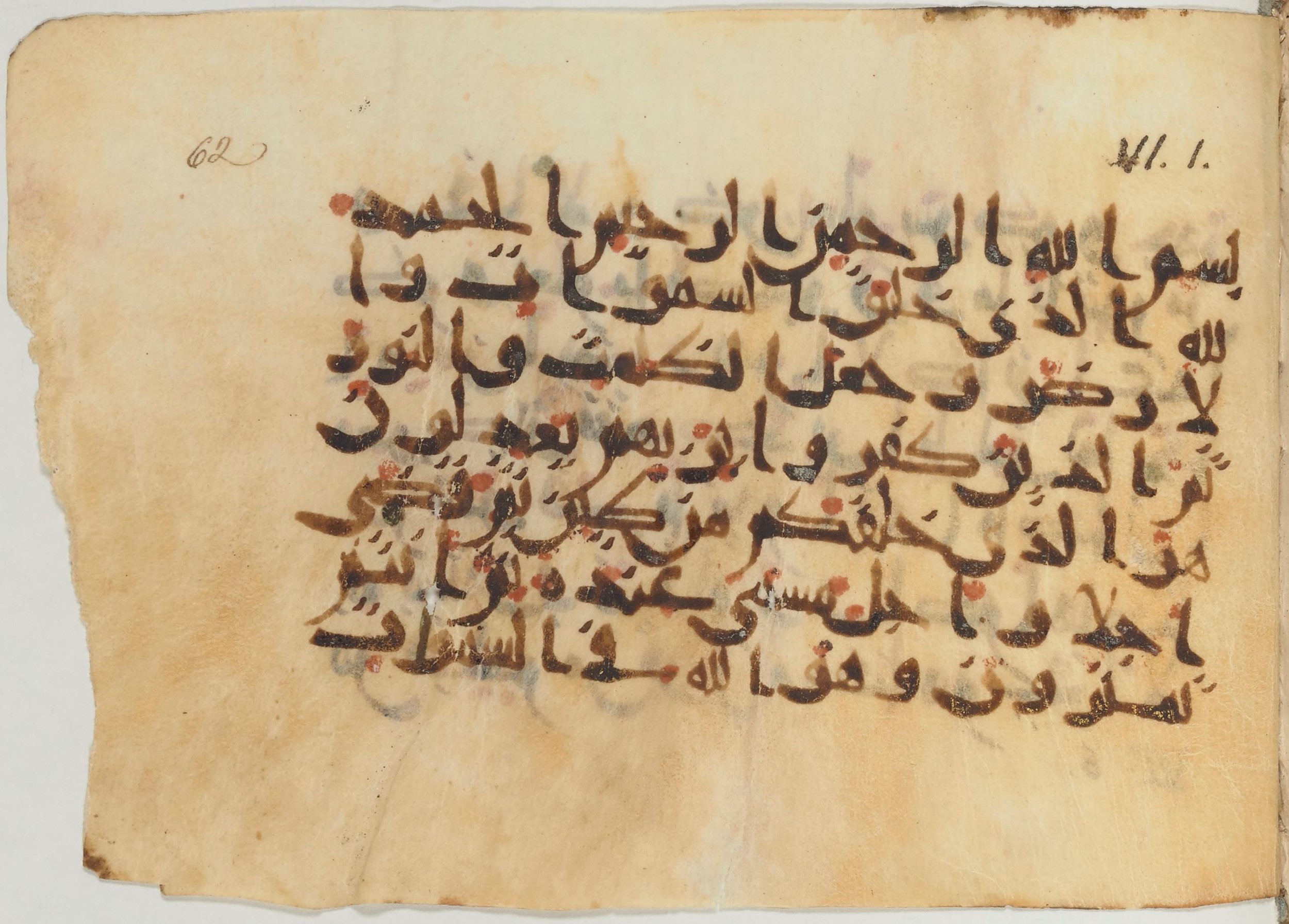
Paris, Bibliothèque nationale de France, Arabe 374 (c)
This codex utilizes distinctive golden Kufic hāʾ letters to signal groups of five verses, while surahs are preceded by their titles and verse counts in golden ink. It is part of the important early Quranic materials discovered in Fustat.
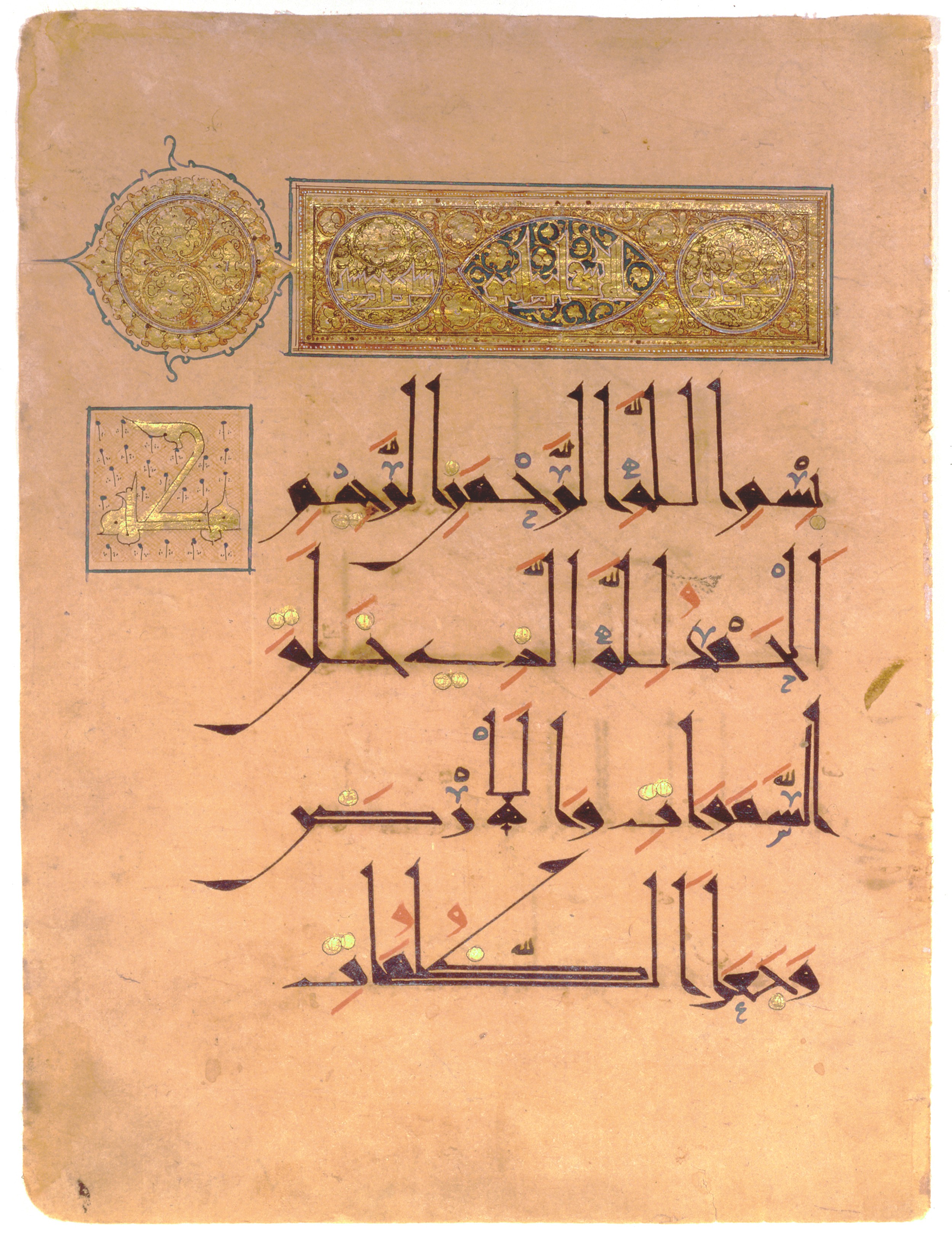
Davids Samling 5/2004
This manuscript leaf is a classical example of Eastern Kufic, characterized by long upstrokes, left-facing downstrokes, and dense serifs. It originally belonged to a thirty-volume Quran designed for daily reading during Ramadan, featuring intricate vocalization with gold dots for consonants, red for vowels, and special blue marks for doubled consonants.