
Surah 62:0
Downloading from cloud...
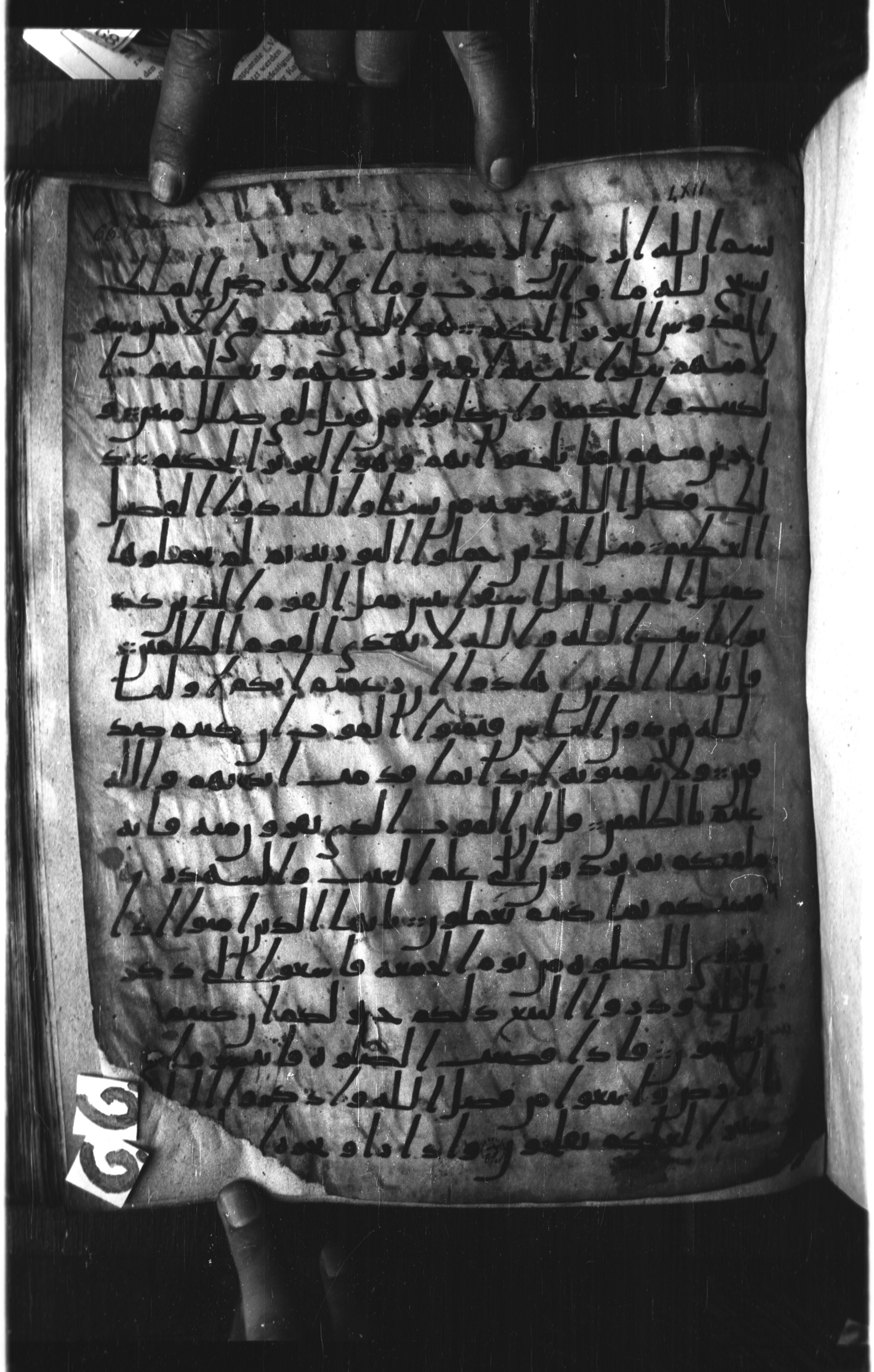
London, The British Library, Or. 2165 (Scan 1)
1 of 2codex_00012
Variants & TyposThe diacritical marks are very sparely used and appear as short horizontal lines. A notable feature of the spelling is the systematic absence of the Alif of prolongation (e.g., spelling الاموت instead of الاموات, قل for قال, and نديناه for ناديناه). Furthermore, there is no trace of vowel-points or other orthographical signs.
DateAD 750 (Mid 7th to Mid 8th Century AD)
Script Styleḥiǧāzī II
Current LocationThe British Library, London
Found LocationFustat (Old Cairo), Egypt
Quranic RangeQ 7:42-9:95, Q 10:9-39:47, Q 40:61-43:71
Context & Details
Considered by Gotthelf Bergsträßer to be the most important representative of the ḥiǧāzī script style due to its extensive size. It features a bold hand with tall, right-leaning hastae that sets it apart from more conventional early Kufic Qurans. Two folios from this same codex are currently preserved at the Dār al-Āṯār al-Islāmiyya in Kuwait.
Downloading from cloud...
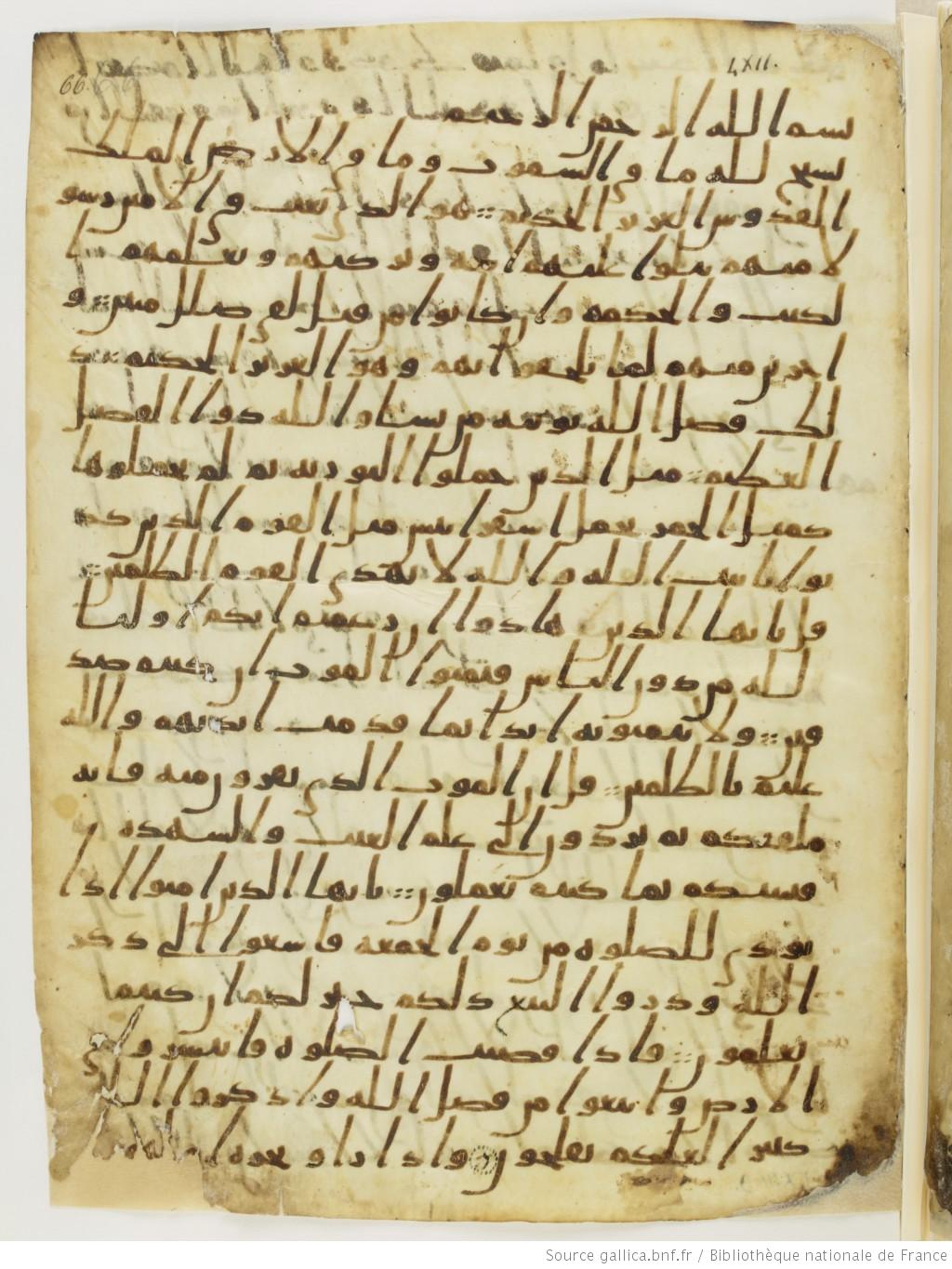
London, The British Library, Or. 2165 (Scan 2)
2 of 2codex_00012
Variants & TyposThe diacritical marks are very sparely used and appear as short horizontal lines. A notable feature of the spelling is the systematic absence of the Alif of prolongation (e.g., spelling الاموت instead of الاموات, قل for قال, and نديناه for ناديناه). Furthermore, there is no trace of vowel-points or other orthographical signs.
DateAD 750 (Mid 7th to Mid 8th Century AD)
Script Styleḥiǧāzī II
Current LocationThe British Library, London
Found LocationFustat (Old Cairo), Egypt
Quranic RangeQ 7:42-9:95, Q 10:9-39:47, Q 40:61-43:71
Context & Details
Considered by Gotthelf Bergsträßer to be the most important representative of the ḥiǧāzī script style due to its extensive size. It features a bold hand with tall, right-leaning hastae that sets it apart from more conventional early Kufic Qurans. Two folios from this same codex are currently preserved at the Dār al-Āṯār al-Islāmiyya in Kuwait.