
Surah 70:0
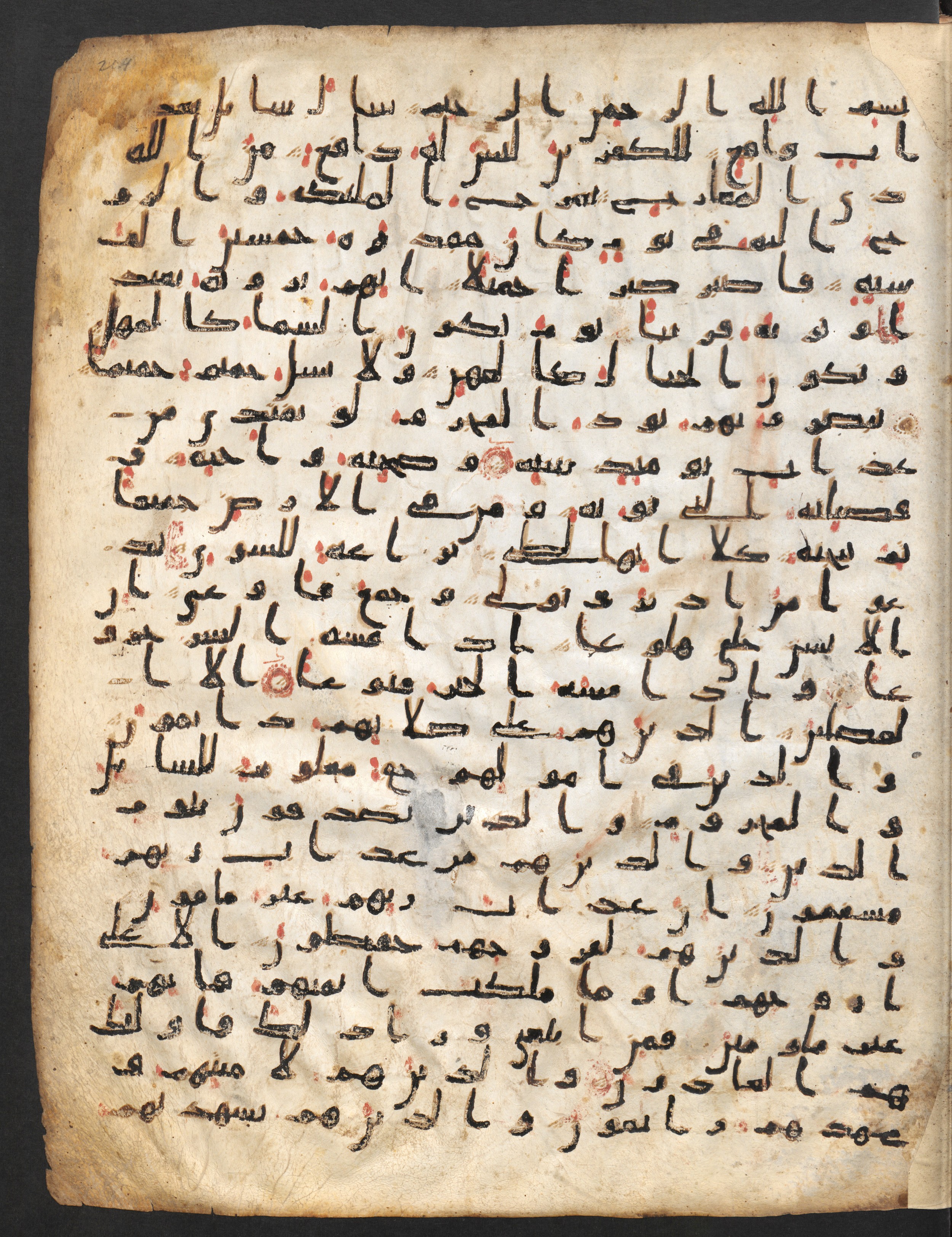
Staatsbibliothek zu Berlin, Ms. or. fol. 4313
This codex is one of the earliest surviving Quranic manuscripts, with combined radiocarbon dating of its parchment placing its production between 605 and 651 AD. The seven folios in Berlin were once part of a larger codex that is now split, with 33 additional folios currently held in the Egyptian National Library. The Berlin leaves were acquired in 1939 from the estate of Bernhard Moritz, the former director of the Khedivial Library.
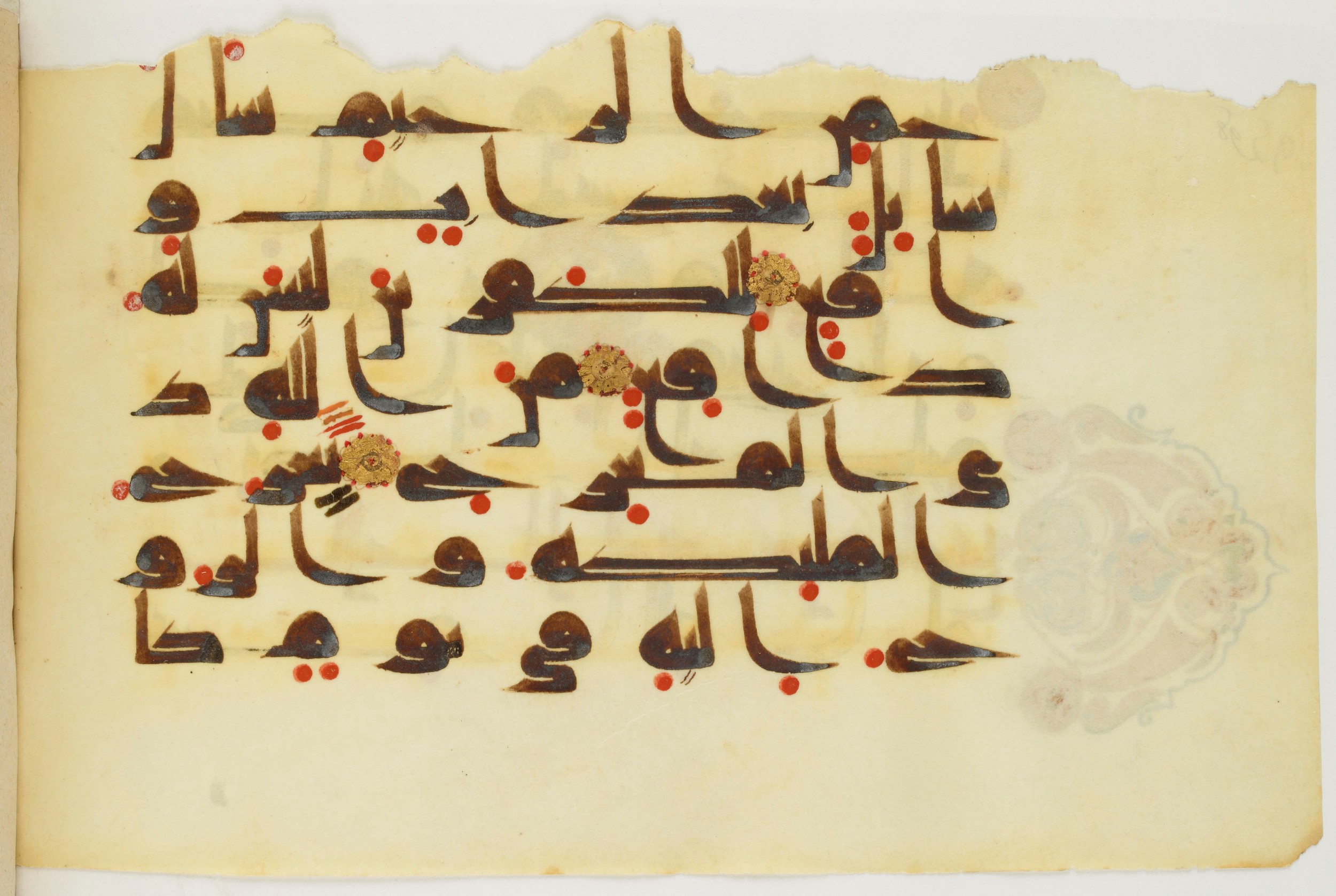
Paris, Bibliothèque nationale de France, Arabe 325 (j)
This fragmentary manuscript features Kūfī D.III script with an evolving orthography, using partially added oblique strokes for diacritics. Uniquely, it employs color-coded dots for pronunciation, using red and orange for vocalization and orange and green specifically for the hamza.
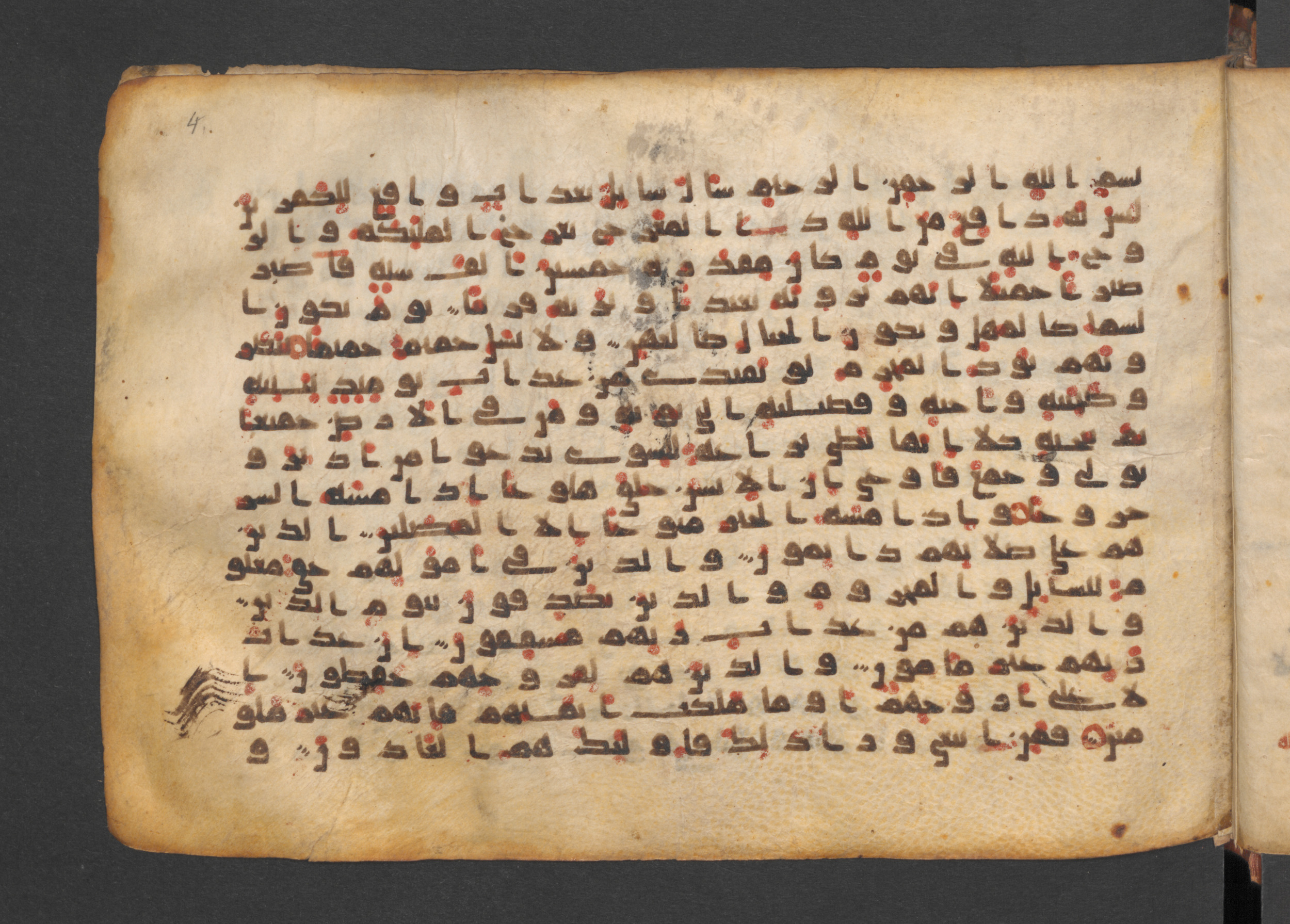
Berlin, Staatsbibliothek zu Berlin, Wetzstein II 1943 (Ahlwardt 365)
This 19-folio parchment fragment is written in the Abbasid-era kūfī D.IV script. It was acquired by Johann Gottfried Wetzstein, the Prussian consul in Damascus, during his tenure in the mid-19th century.
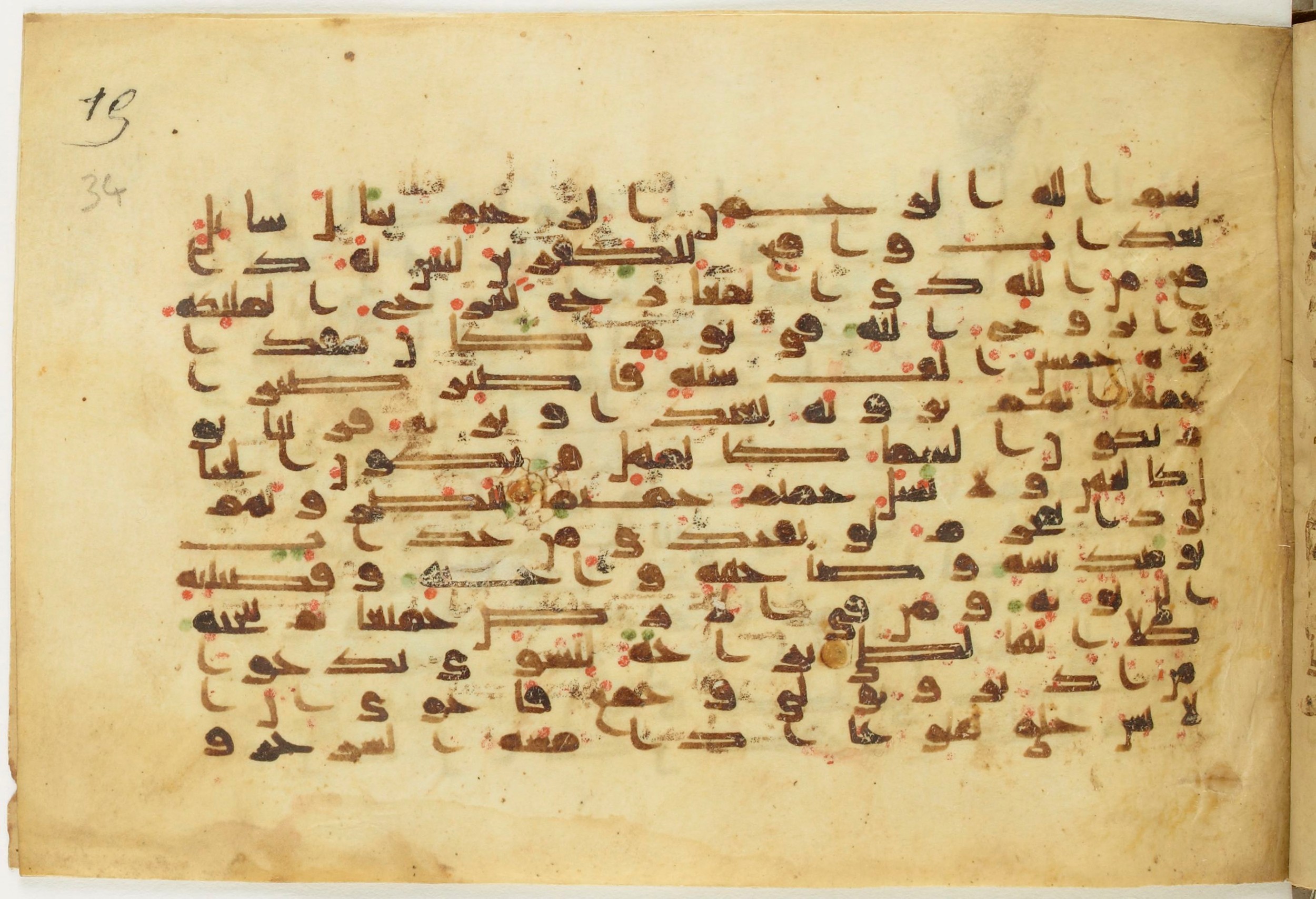
BnF Arabe 5123
The manuscript originates from the collection of J. Richard and its text is written without diacritical marks, using red dots for vocalization. It features a unique binding with 16th or 17th-century brown leather boards, possibly of Indian origin, decorated with a central plaque and stamped fleurons.
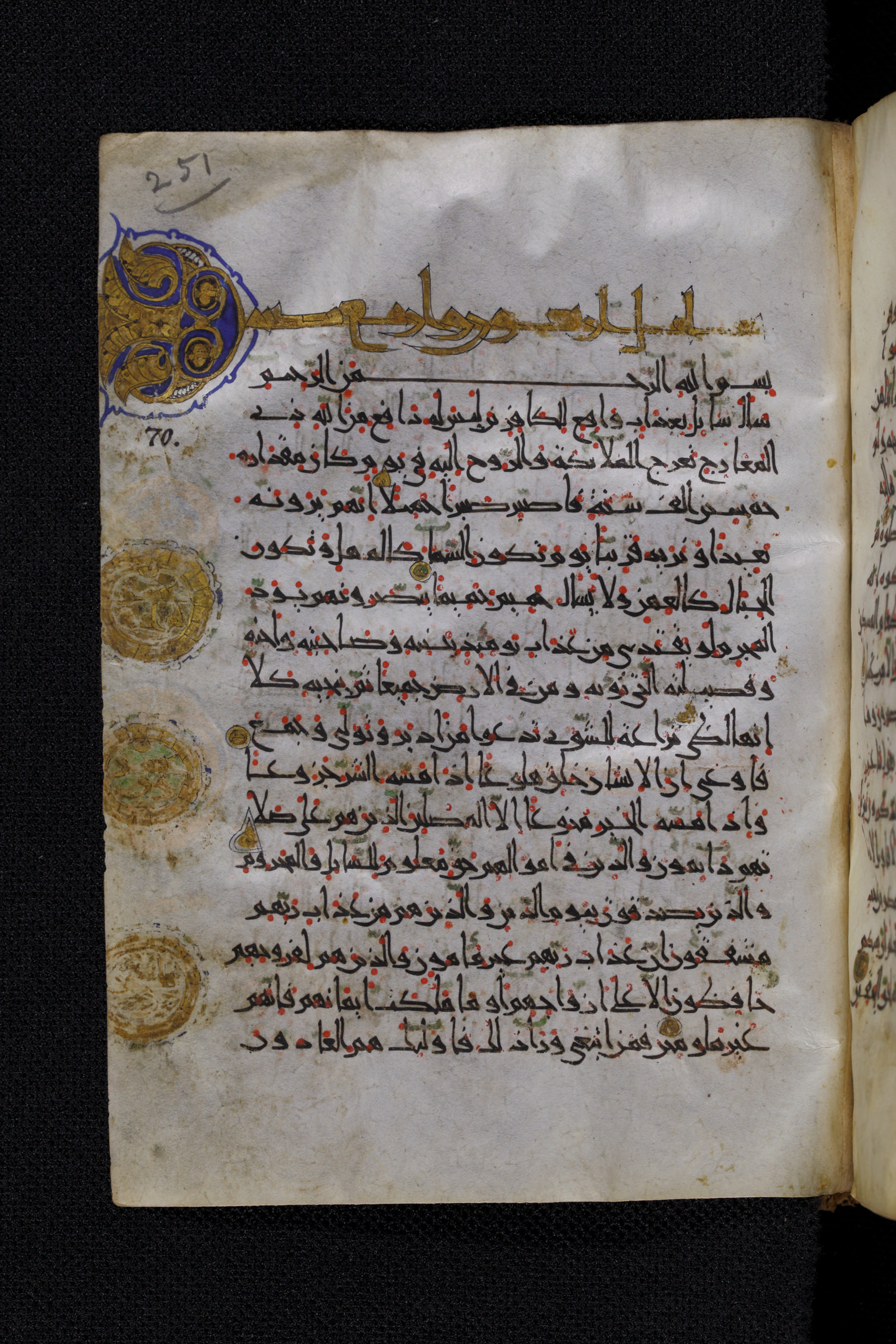
Diez A oct 172
This codex is largely complete, containing the entire Quran, though the first folio and a few other leaves were supplied by a later hand. Written on parchment, the manuscript represents an important transitional stage in the evolution of the Arabic script toward the Maghrebi style. While generally well-preserved, some of the early and late folios exhibit water damage and have been repaired.
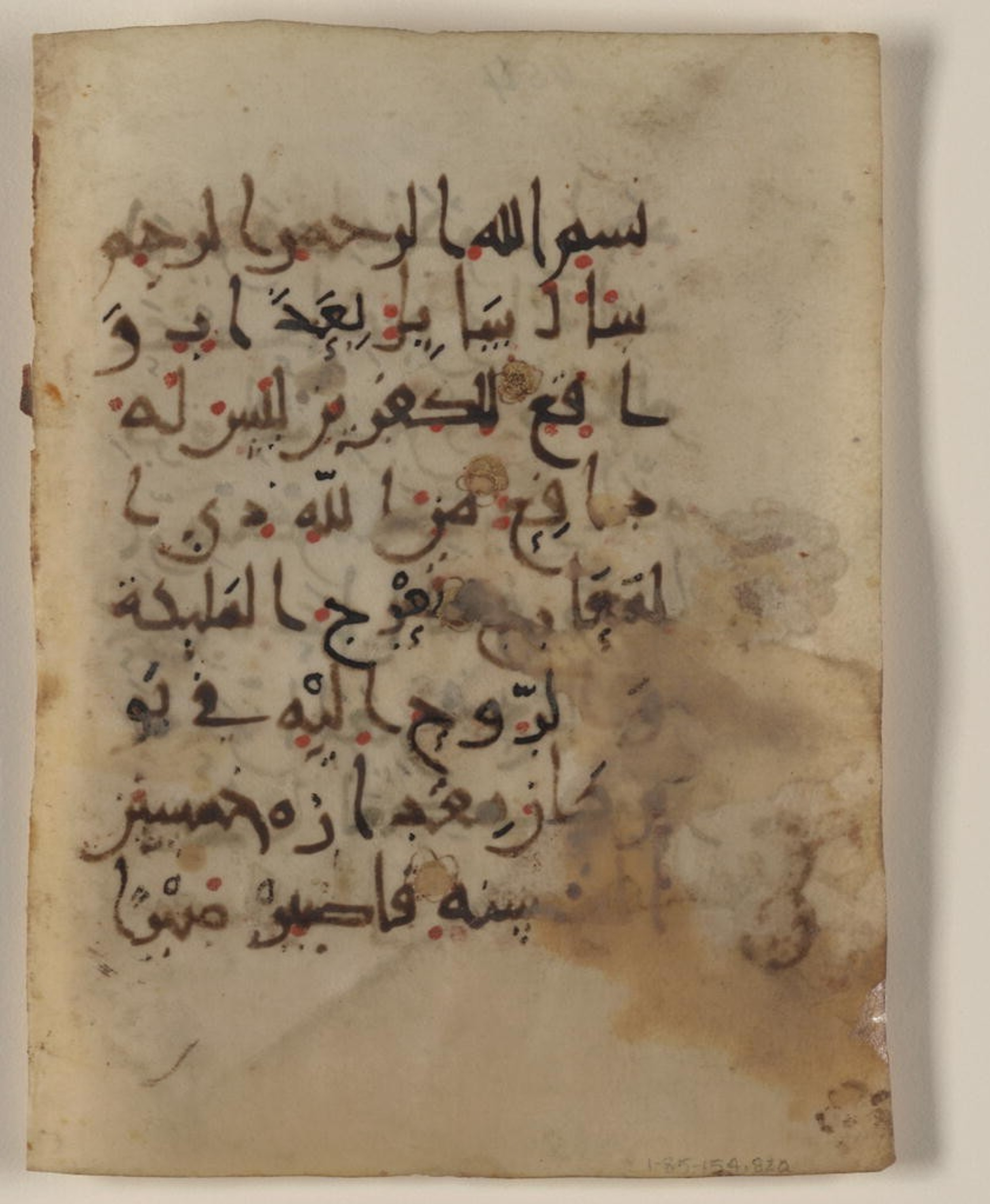
Washington DC, Library of Congress, 1-87-154.82a (Scan 1)
This fragmentary manuscript is held at the Library of Congress and is written in the New Style III script, which is characterized by stylized, geometric letterforms that emerged during the Abbasid era.
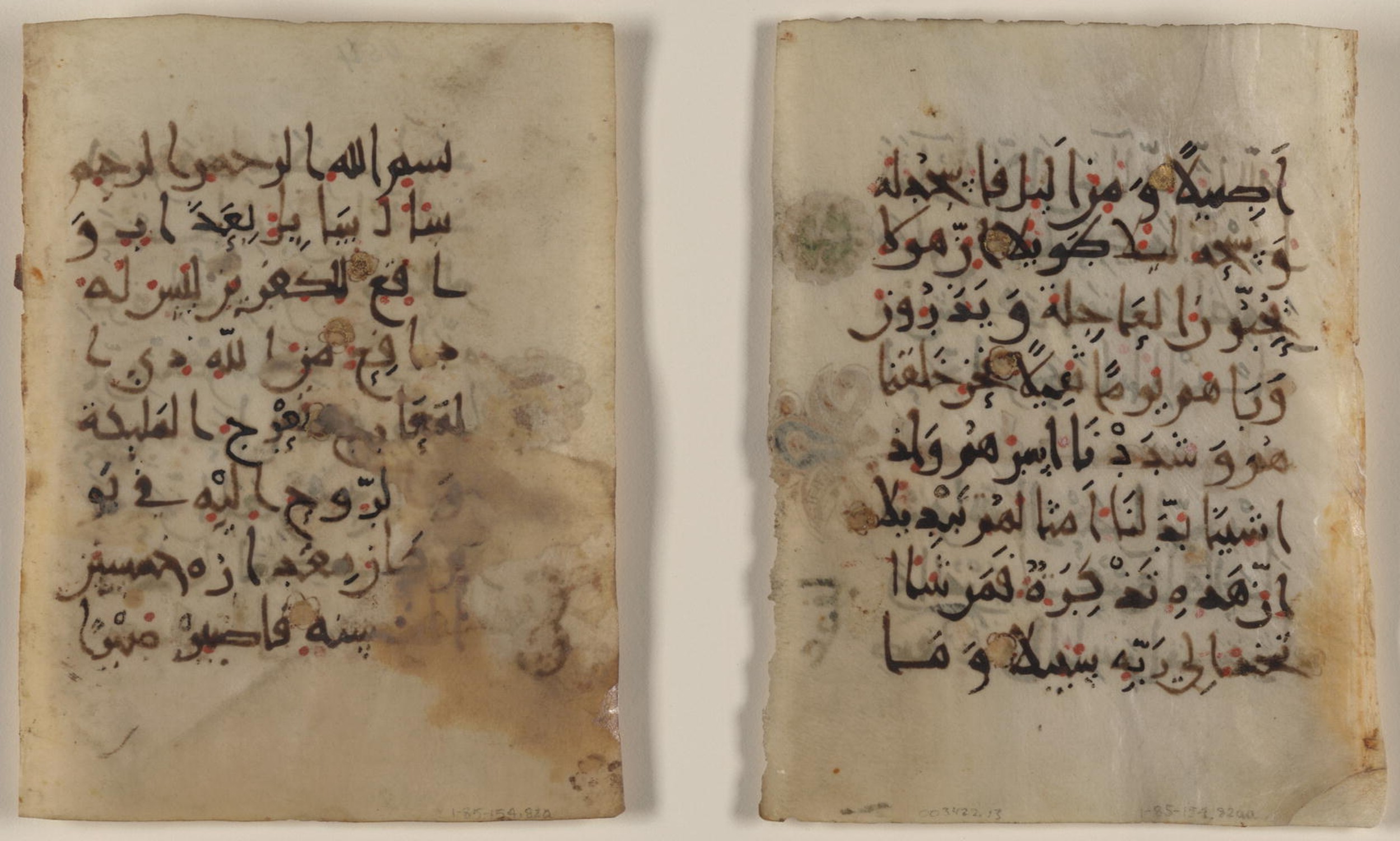
Washington DC, Library of Congress, 1-87-154.82a (Scan 2)
This fragmentary manuscript is held at the Library of Congress and is written in the New Style III script, which is characterized by stylized, geometric letterforms that emerged during the Abbasid era.