
Surah 77:0
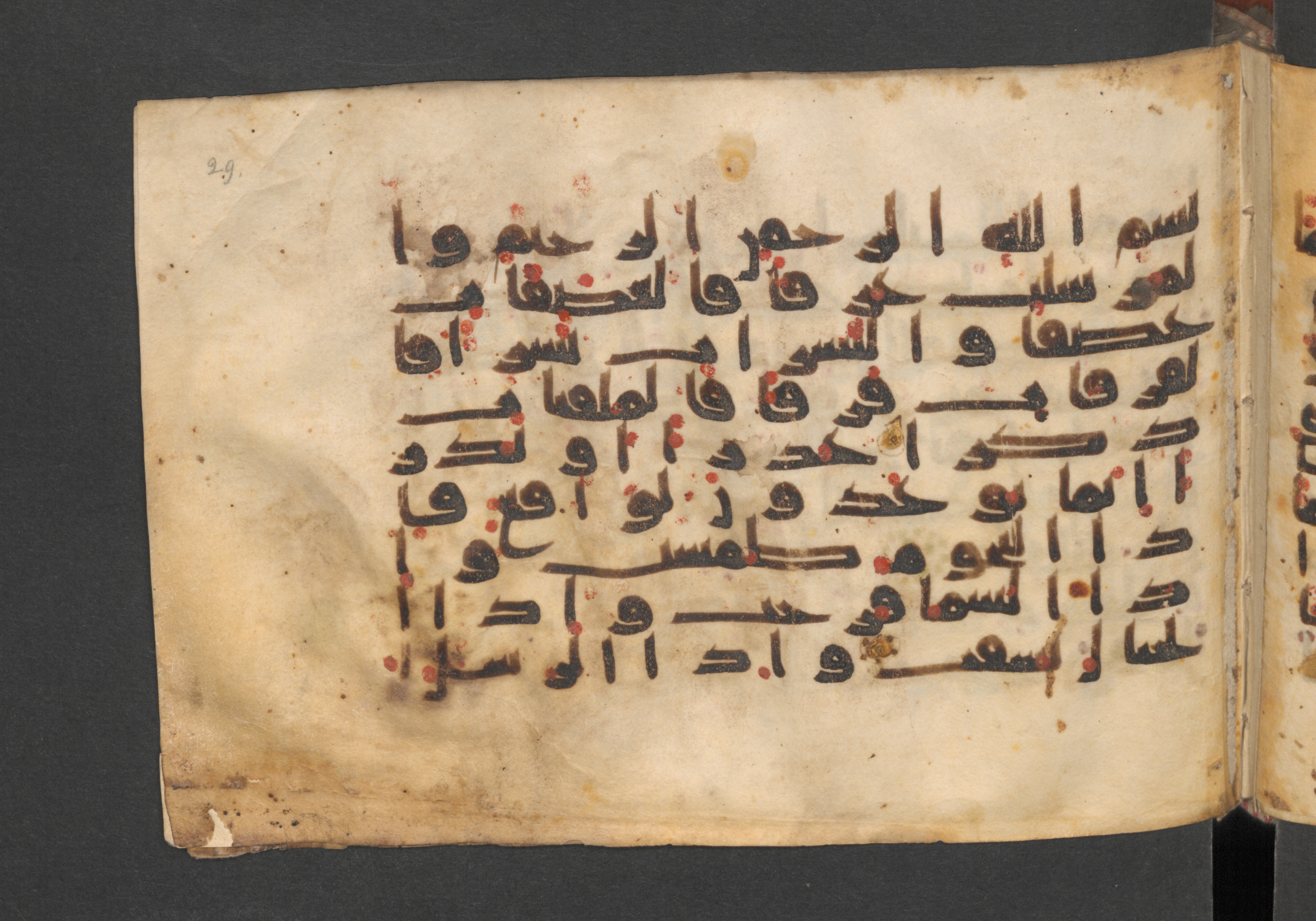
Berlin, Staatsbibliothek zu Berlin, Wetzstein II 1925 (Ahlwardt 364)
The manuscript has suffered from historical water and oil damage, causing its parchment leaves to become quite wrinkled. It features elegant gold script used exclusively for the surah titles and verse counts.

Paris, Bibliothèque nationale de France, Arabe 337 (c)
This manuscript features an early Kufic script closely related to the D.IV style, distinctively written to accentuate the angularity of the letters. It utilizes a sophisticated system of colored marks for pronunciation, including red dots for vocalization, yellow dots for the hamza, and dark green semicircles for the shadda.
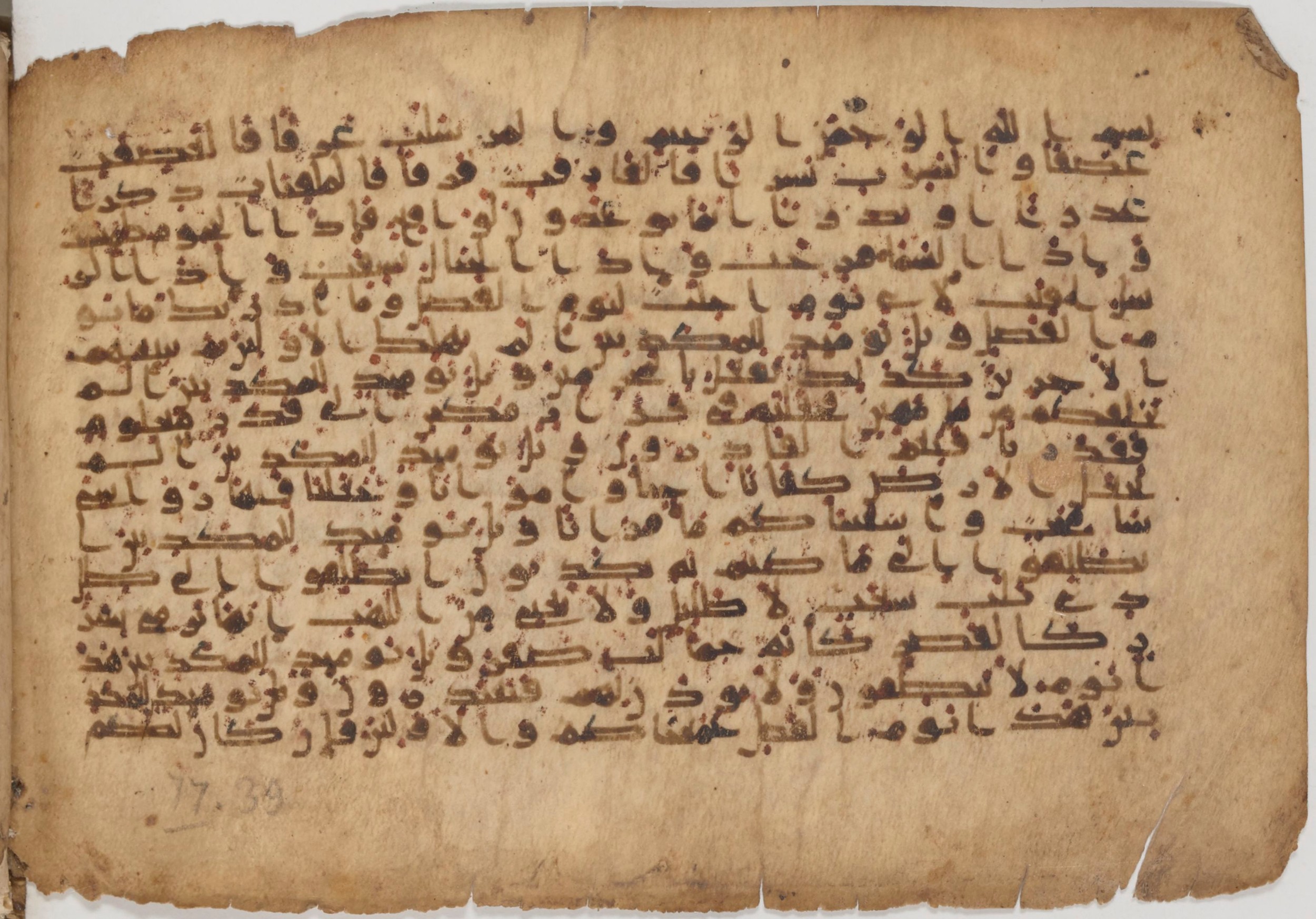
Paris, Bibliothèque nationale de France, Arabe 343
The manuscript uses decorative medallions and bands to mark every ten verses, rather than separating individual verses. A marginal note in cursive script reveals it was once owned by Aḥmad Abū al-ʿAbbās al-Huwaydī, with later readers adding pious notes in the margins.
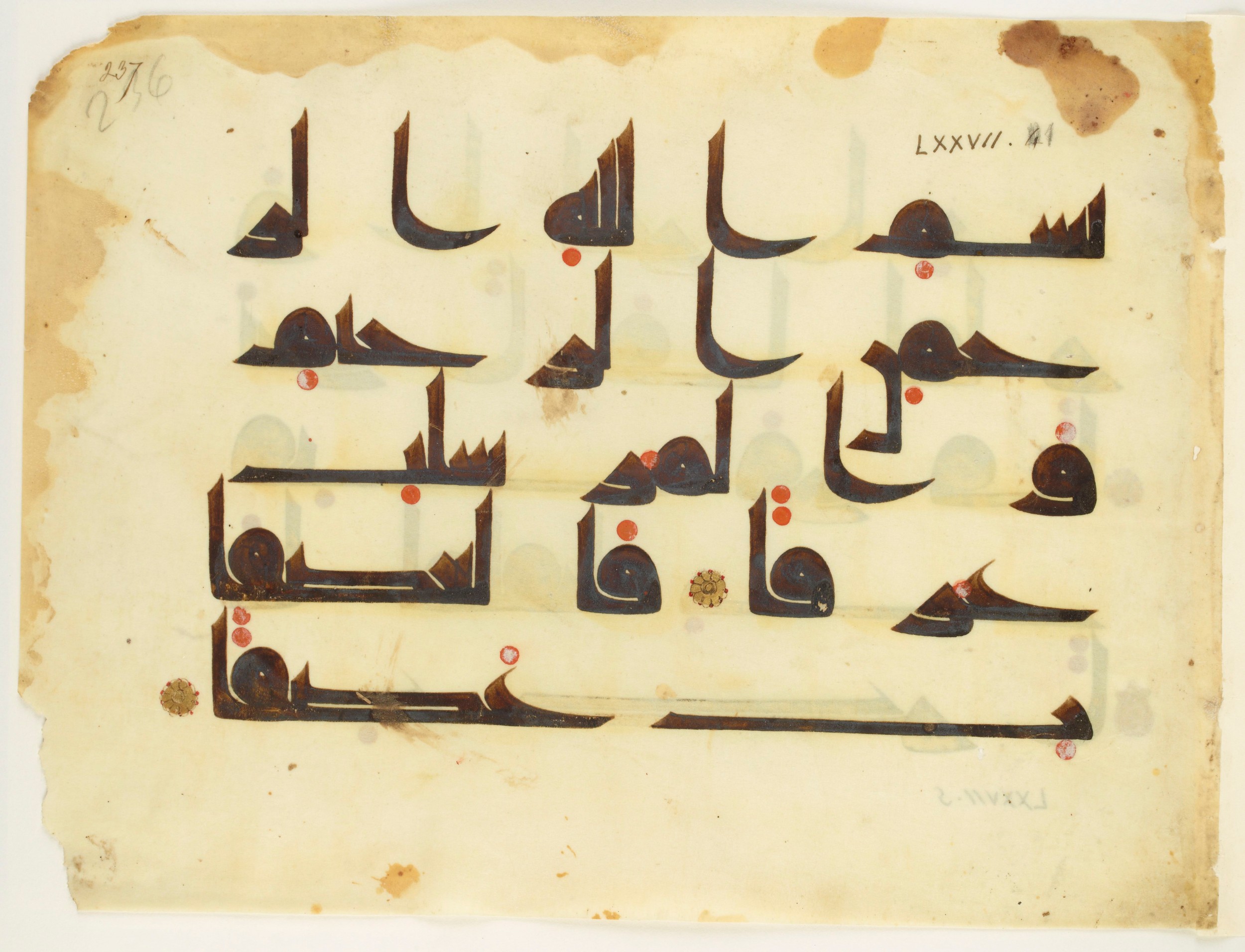
Paris, Bibliothèque nationale de France, Arabe 350 (b)
The manuscript is beautifully illuminated, using rosettes to separate verses, teardrop designs for groups of five verses, and medallions containing the name of the decade in full letters for groups of ten verses. At the end of Surah 27, the empty space is filled with a striking garland of plant motifs.
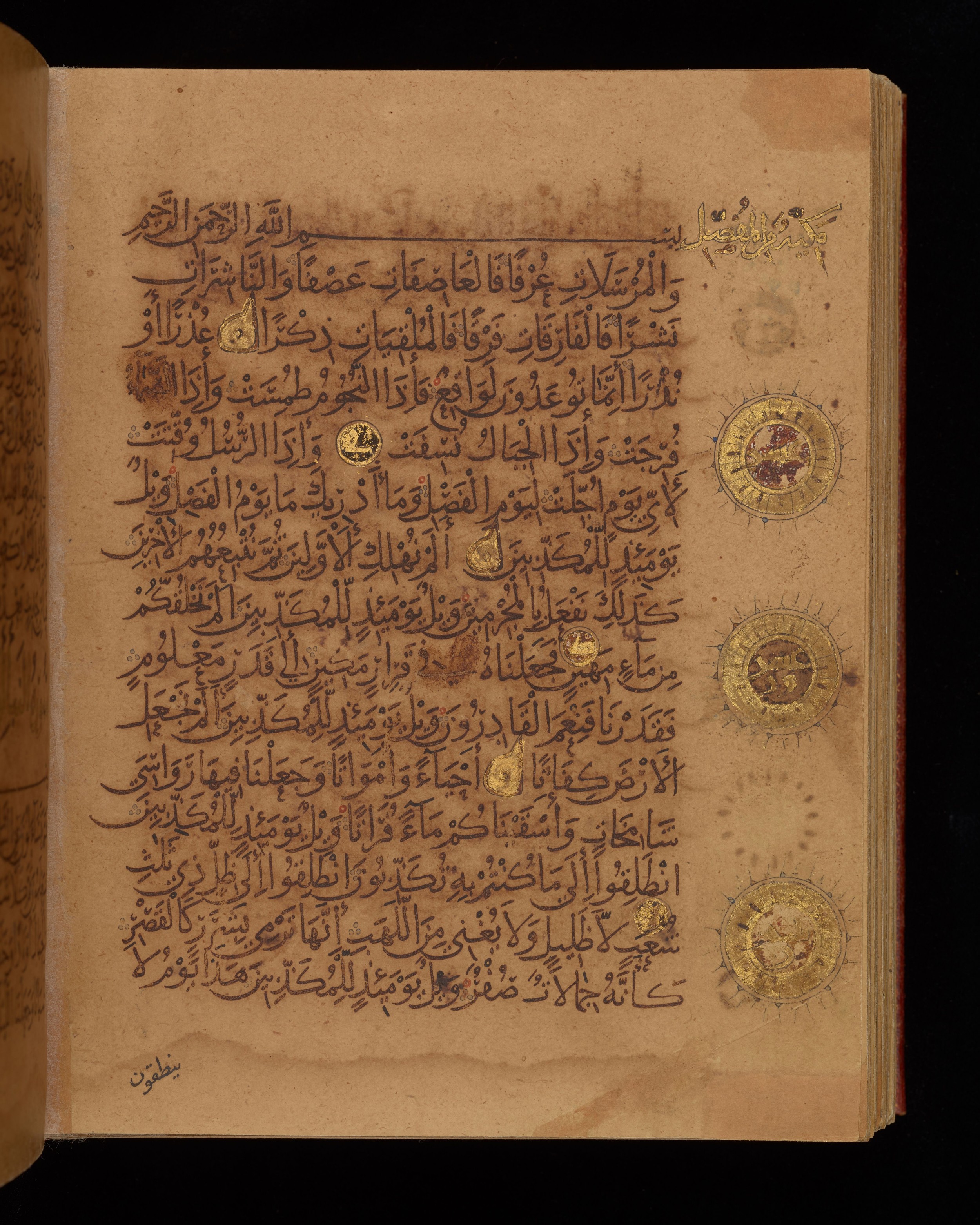
Dublin, Chester Beatty Library, Is 1431
This complete Quran was produced in Baghdad by the renowned calligrapher ʿAlī b. Hilāl, also known as Ibn al-Bawwāb, around 1000-1001 AD. He is a significant figure in Islamic art, closely associated with the adoption of the round Naskh script to transcribe the Quran.