
Surah 80:0
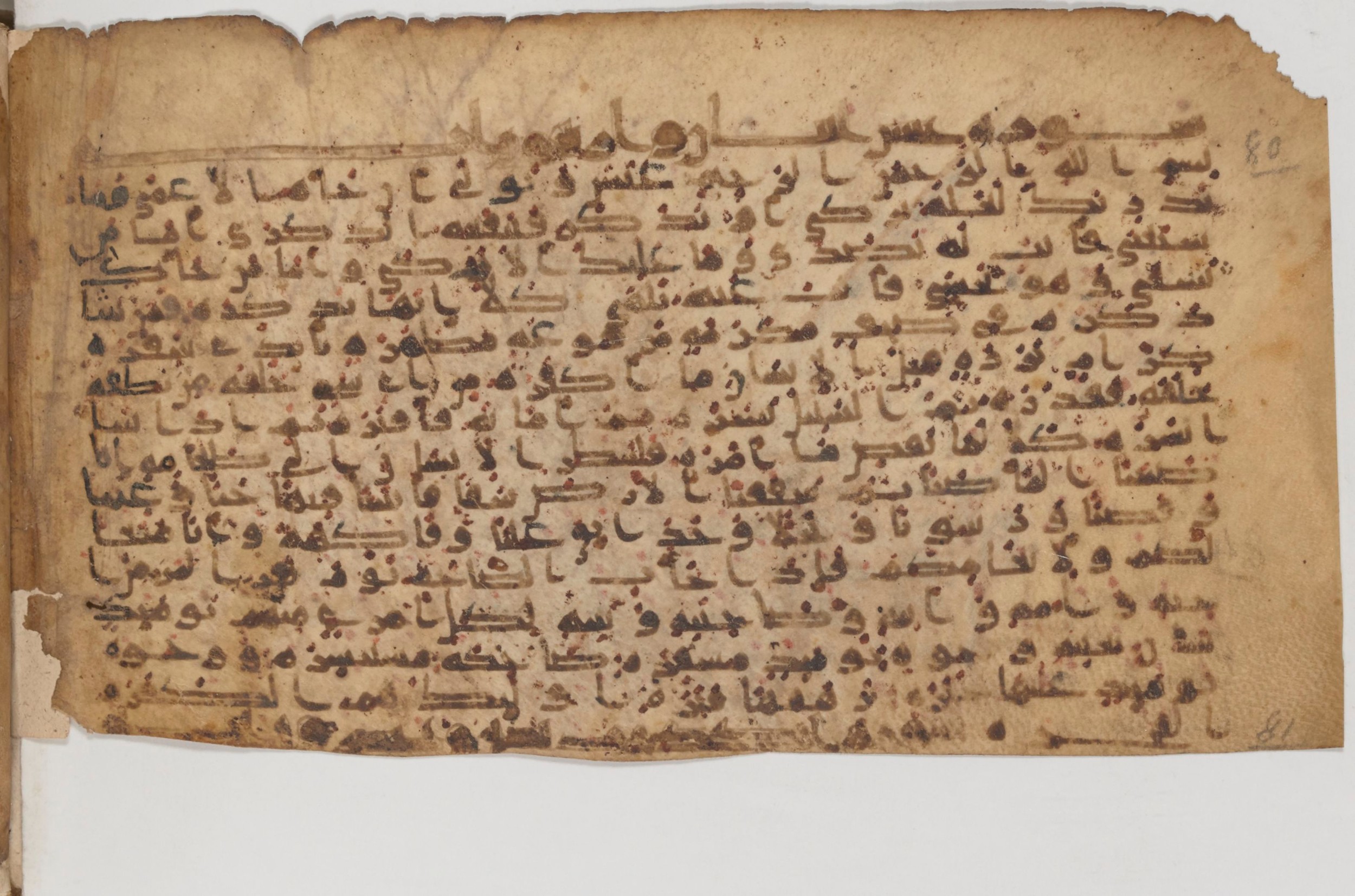
Paris, Bibliothèque nationale de France, Arabe 343
The manuscript uses decorative medallions and bands to mark every ten verses, rather than separating individual verses. A marginal note in cursive script reveals it was once owned by Aḥmad Abū al-ʿAbbās al-Huwaydī, with later readers adding pious notes in the margins.
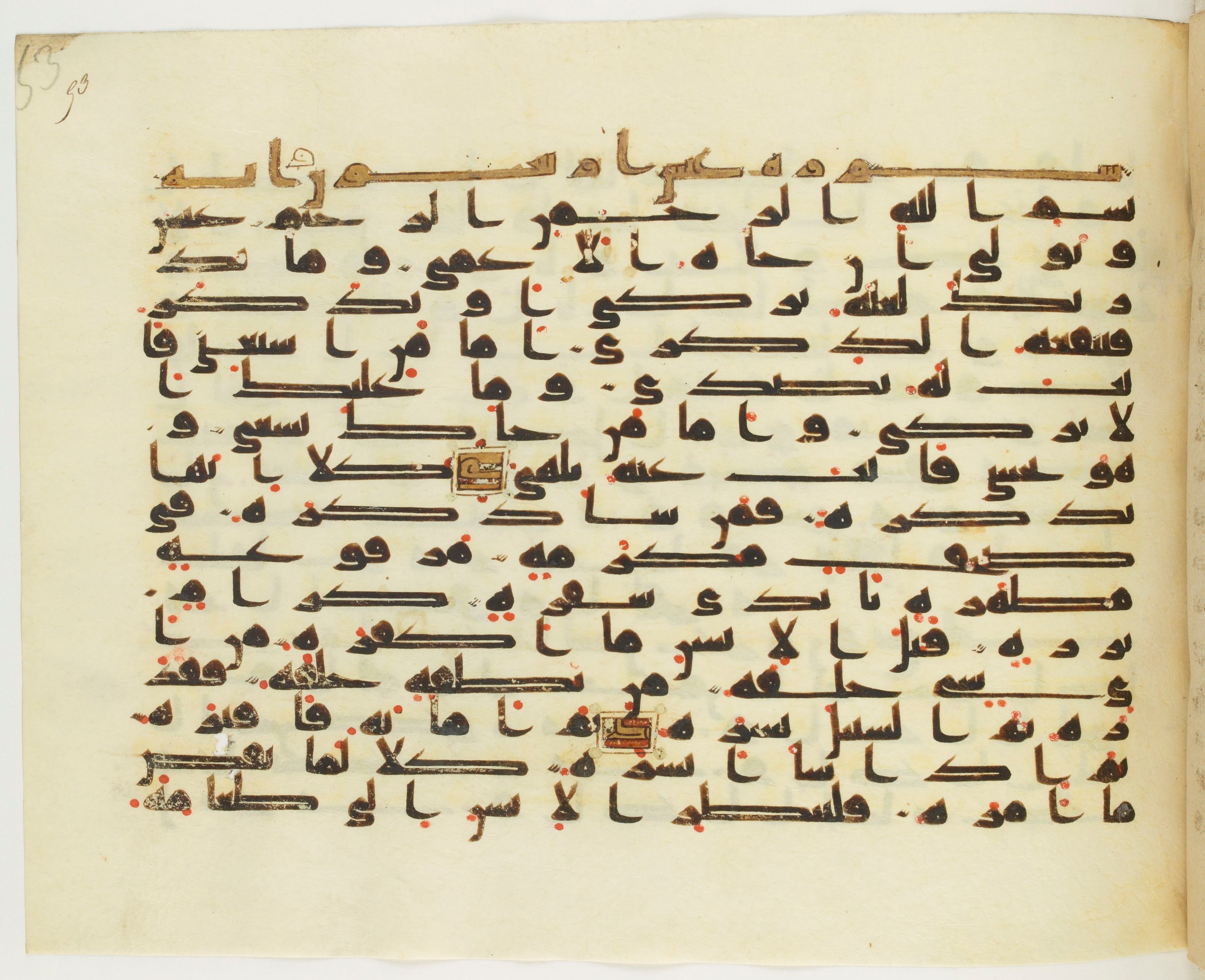
Paris, Bibliothèque nationale de France, Arabe 349 (b)
This manuscript is notable for its intricate verse markers, featuring irregular golden 'hāʾ' letters for five-verse groupings and specific squares with golden alphanumeric characters for ten-verse groupings. The final surviving folio features an archaic, three-sided golden illuminated band decorated with red and green dots, indicating the approaching end of the codex.
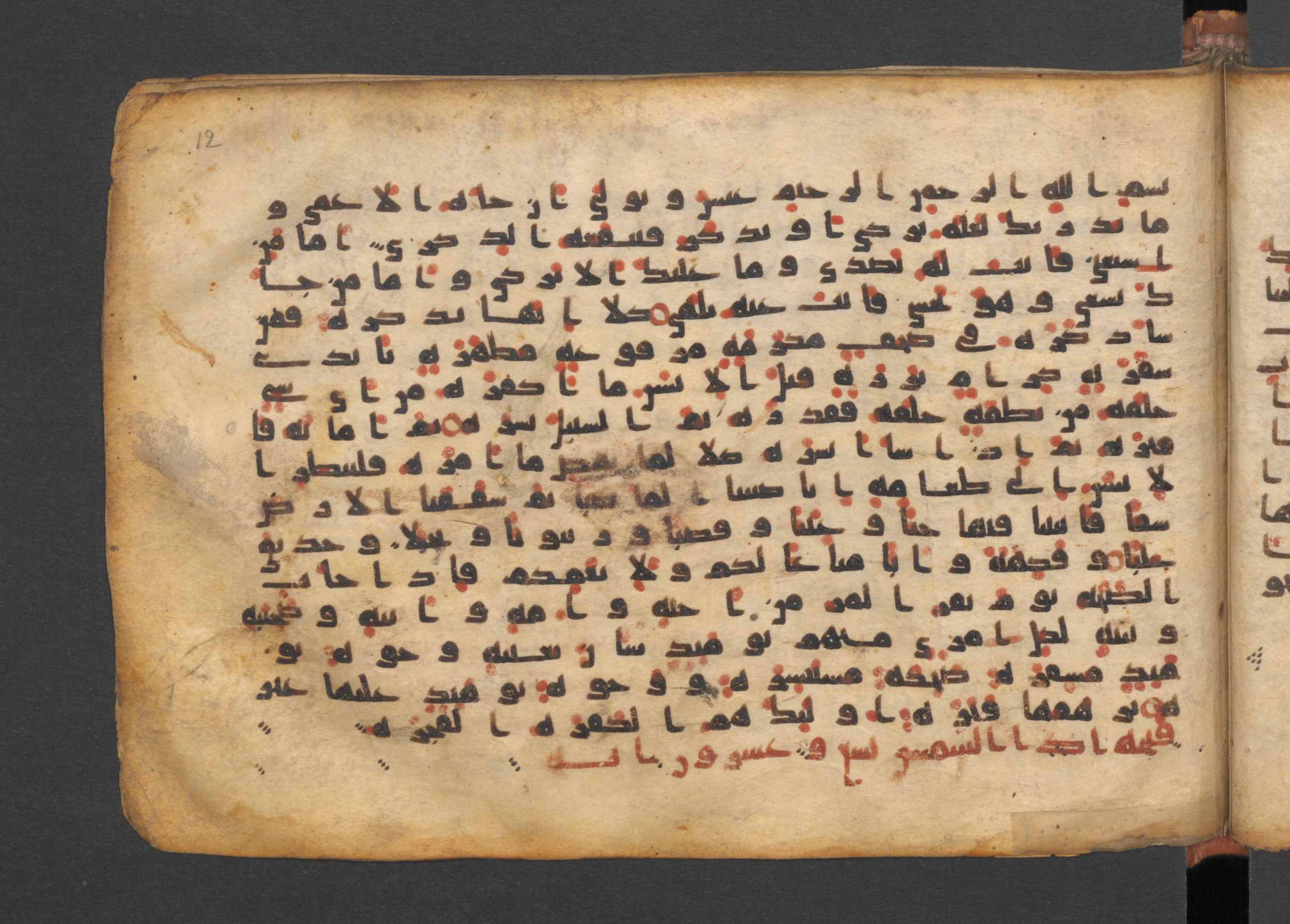
Berlin, Staatsbibliothek zu Berlin, Wetzstein II 1943 (Ahlwardt 365)
This 19-folio parchment fragment is written in the Abbasid-era kūfī D.IV script. It was acquired by Johann Gottfried Wetzstein, the Prussian consul in Damascus, during his tenure in the mid-19th century.