
Surah 98:0
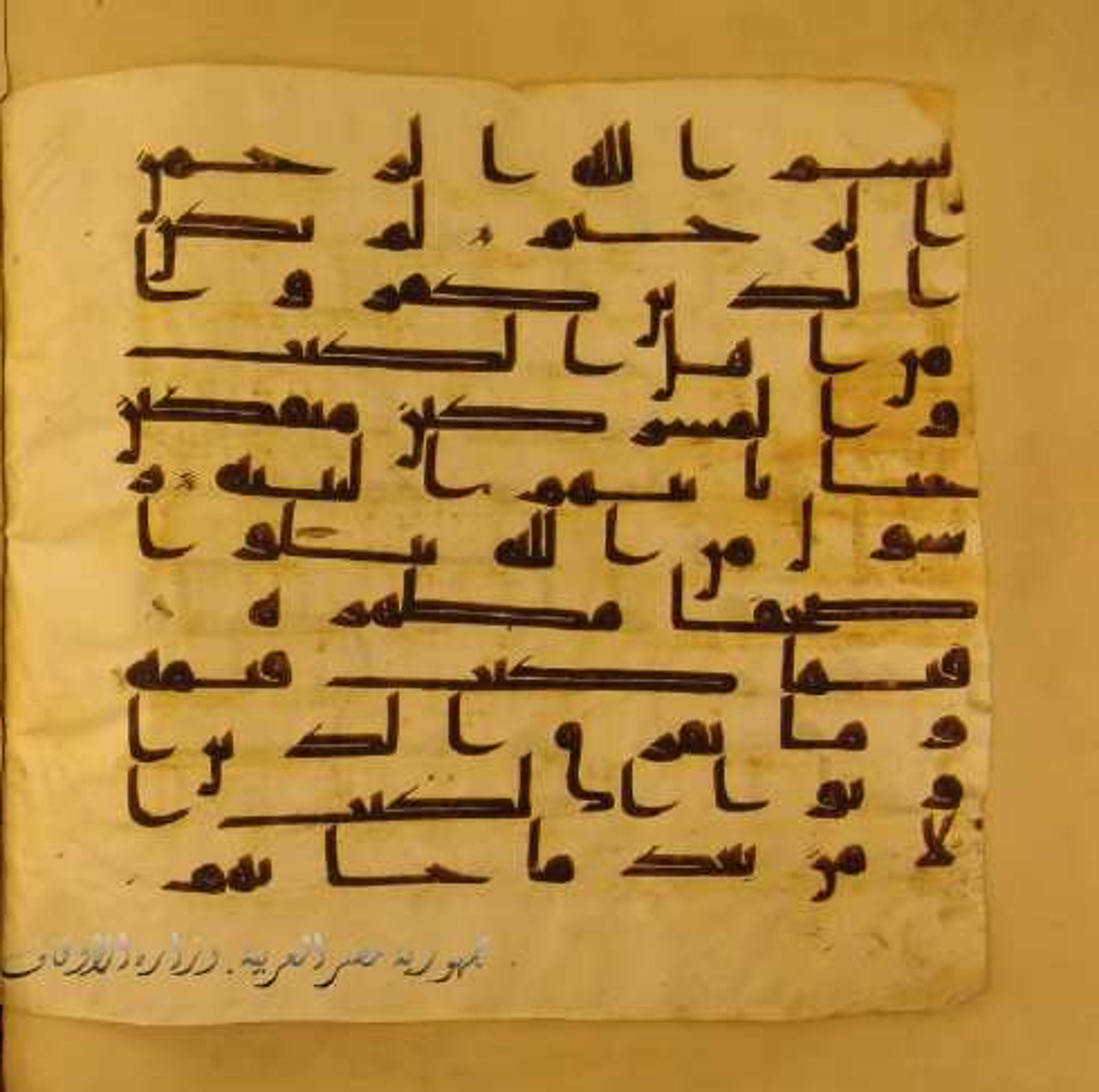
Paris, Bibliothèque nationale de France, Arabe 324 (c)
Carbon dating of fragments from Arabe 324 (c) places its origin between 660-780 AD. The manuscript is part of a composite codex, where Arabe 324 (c) and Gotha Ms. orient. A 462 are original leaves, while other sections such as Arabe 324 (a) and (d) were added centuries later to replace damaged or missing pages.
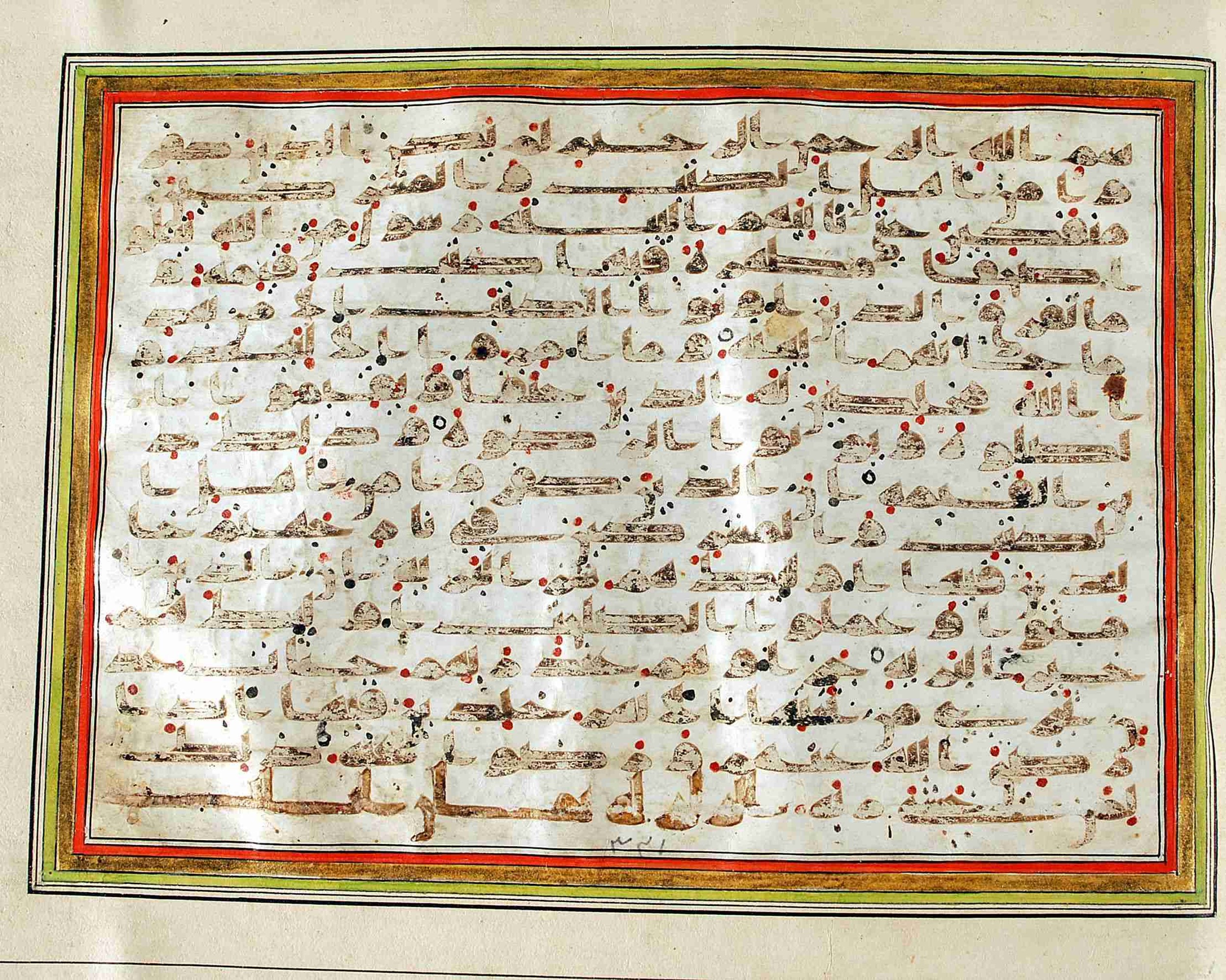
Rampur Raza Library No. 1
This manuscript is a highly prized copy traditionally ascribed to the penmanship of Ali ibn Abi Talib, the fourth Caliph. It features modern gold and colored borders on the paper margins.
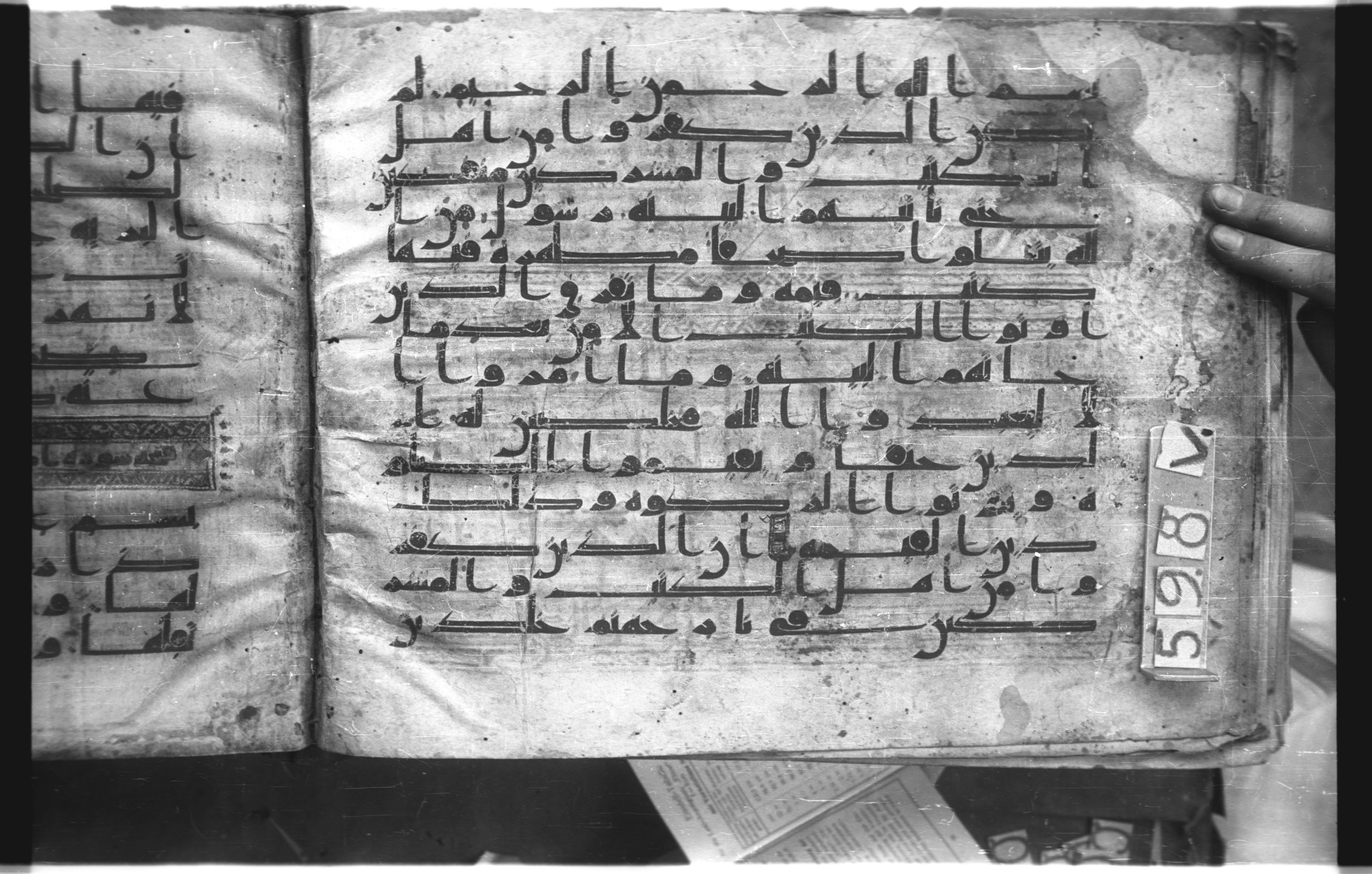
Istanbul, Topkapı Palace Museum, "Saray 50386" (Karatay 42)
This near-complete Kufic Quran is bound in brown leather over wood with arabesque interlacing and iron rings. It bears the foundation seal of Sultan Osman III, and its first three leaves as well as sura headings are illuminated.
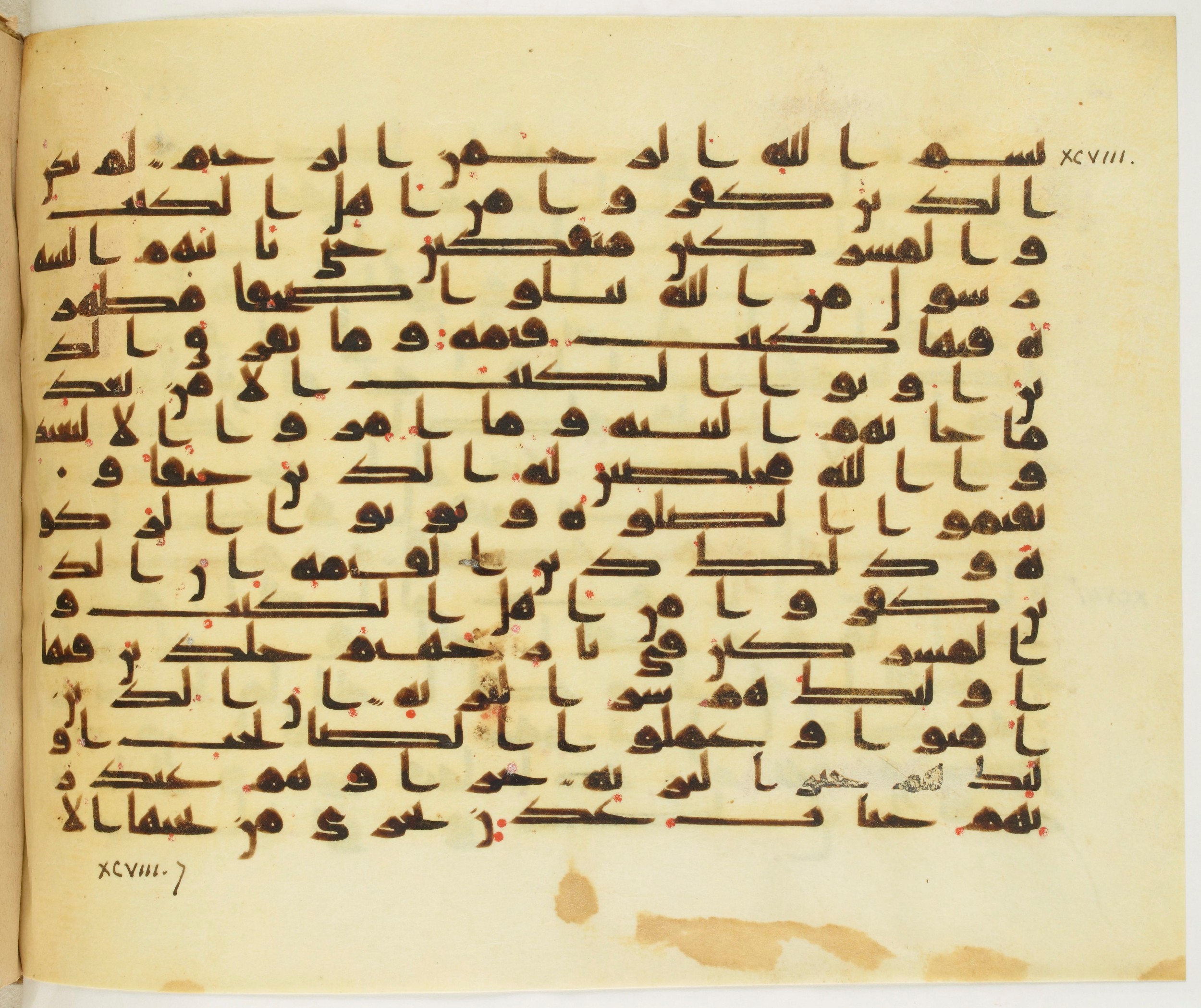
Paris, Bibliothèque nationale de France, Arabe 349 (b)
This manuscript is notable for its intricate verse markers, featuring irregular golden 'hāʾ' letters for five-verse groupings and specific squares with golden alphanumeric characters for ten-verse groupings. The final surviving folio features an archaic, three-sided golden illuminated band decorated with red and green dots, indicating the approaching end of the codex.
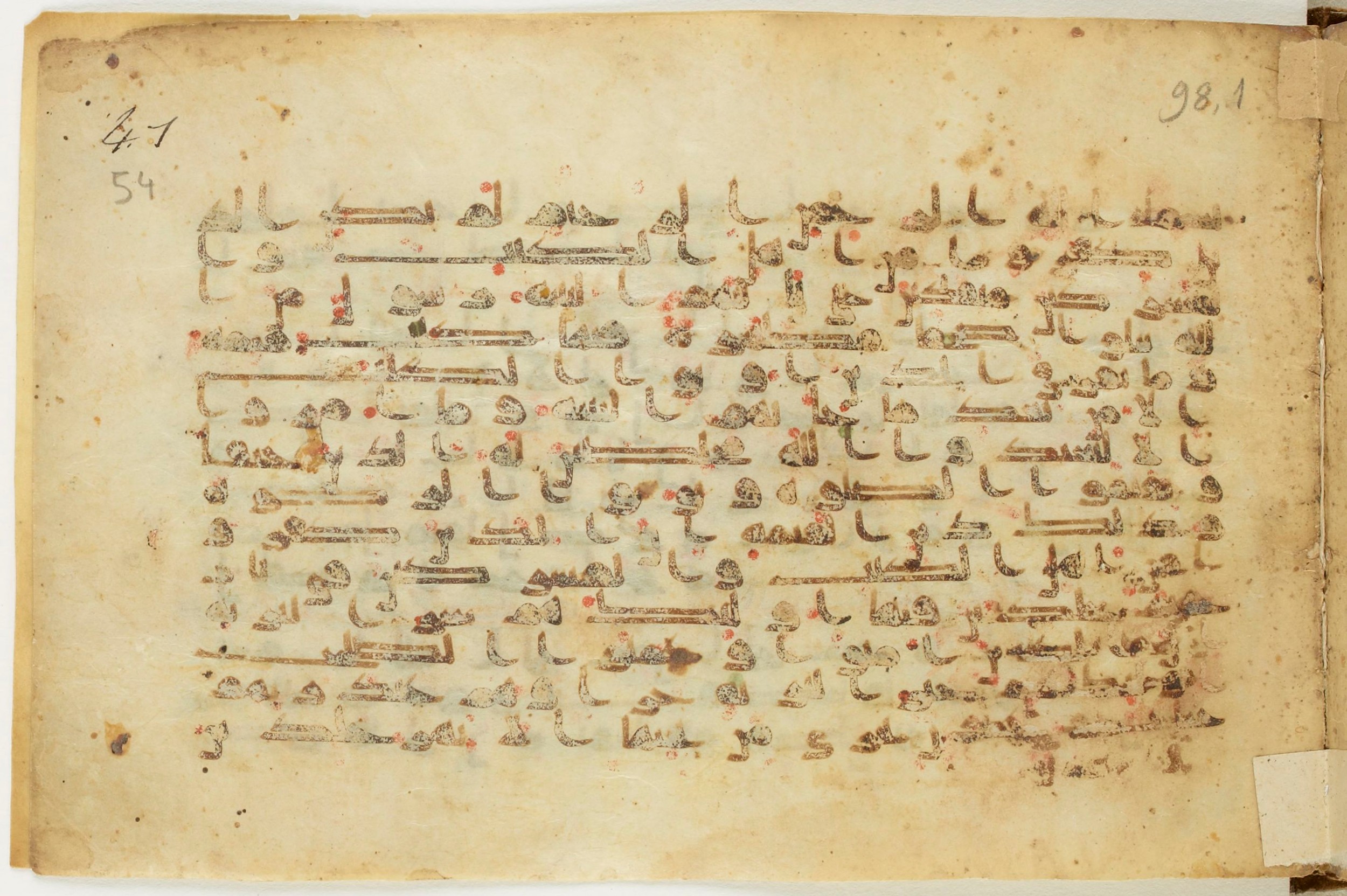
BnF Arabe 5123
The manuscript originates from the collection of J. Richard and its text is written without diacritical marks, using red dots for vocalization. It features a unique binding with 16th or 17th-century brown leather boards, possibly of Indian origin, decorated with a central plaque and stamped fleurons.